
Review · JAPAN
Tea ceremony experience in Osaka with a small group
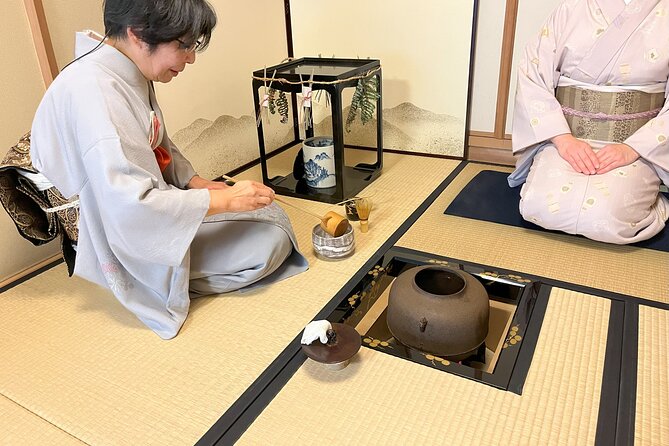
The best part of this Osaka tea ceremony is its small private setting. With no more than four people in your group, you get room to ask questions, watch the tea master’s movements, and try making matcha yourself rather than simply observing from a distance.
I like two things in particular: the session explains how to enter and behave in a tatami room, and it gives you a hands-on tea-making lesson with sweets. The main consideration is location. You’ll need to walk 10 to 15 minutes from Ibaraki-shi Station, and the precise address is sent after booking.
Key points at a glance
- Private groups of up to four: You share the session only with your own party, which makes questions and personal instruction easier.
- Two styles of tea ceremony: You first watch a traditional presentation in a tatami room, then learn the table-style Ryurei method.
- You make your own matcha: The activity moves beyond watching, giving you a practical way to understand the motions.
- Japanese sweets are included: Traditional sweets accompany both the demonstration and your own cup of matcha.
- Convenient Osaka and Kyoto position: The experience takes place in Ibaraki, between the two cities, and the session lasts about 60 to 90 minutes.
- Highly rated but lightly reviewed: The experience has a five-star rating from eight reviews, including strong praise for its calm pace and attentive teaching.
A quiet introduction to Japanese tea ceremony near Osaka
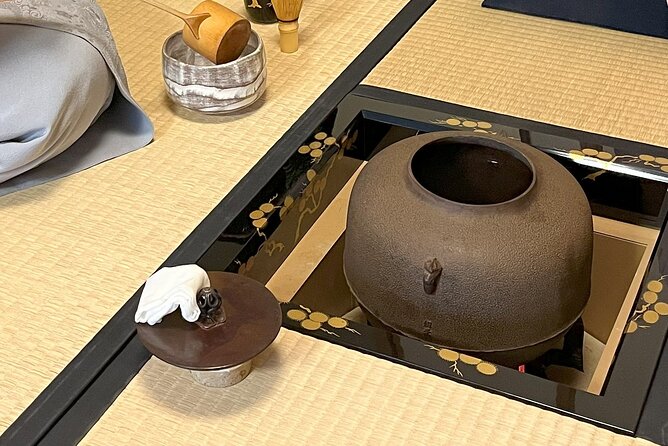
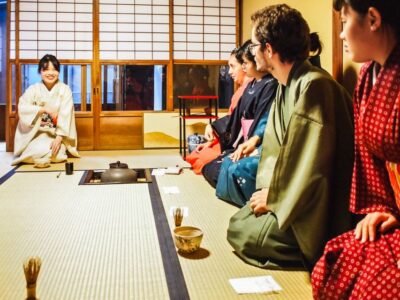
Many cultural activities give you a quick look, a photograph, and a few facts. This one is more personal. You enter a Japanese-style tatami room, learn how to approach it, watch a tea ceremony, and then prepare matcha with guidance from the tea master.
That order matters. Tea ceremony can seem formal and mysterious if you only see the finished performance. Here, the explanations give meaning to the small actions. You learn that entering the room is part of the experience, not just a way to reach your seat. The ceremony becomes easier to follow because you know what to watch for.
The setting near Ibaraki-shi also changes the feel of the outing. You are not signing up for a large presentation in central Osaka. You are heading to a smaller venue in Ibaraki Prefecture, a practical stop between Osaka and Kyoto. The activity itself lasts about an hour to an hour and a half, so it can fit into a day that includes either city.
More Tea Ceremony Experiences in Japan:
- Kyoto: Tea Ceremony in a Traditional Tea House in Kiyomizu
★ 4.9 · 3,519 reviews - Kyoto: Tea Ceremony Ju-An at Jotokuji Temple
★ 4.9 · 3,207 reviews - Kyoto: 45-Minute Tea Ceremony Lesson Experience
★ 4.3 · 2,378 reviews
What the 60 to 90 minutes includes
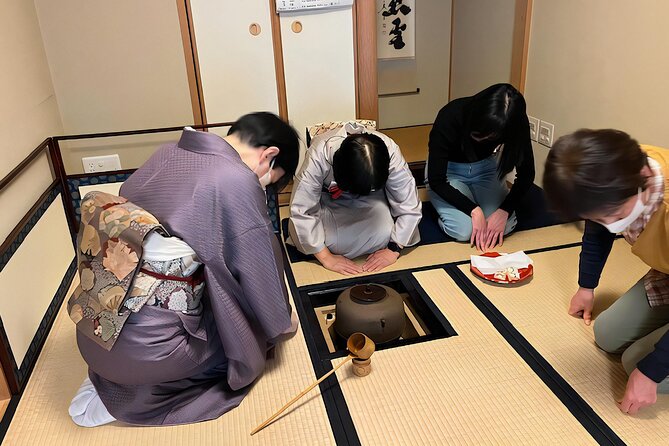
Your visit begins with an introduction to entering the tatami room. This is a useful first step for anyone unfamiliar with Japanese customs. You are not expected to know the correct movements in advance, and the tea master explains what to do before the ceremony begins.
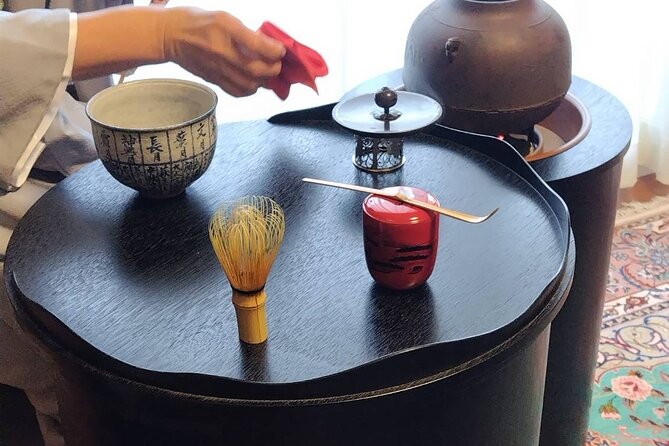
Next comes a demonstration using matcha and Japanese traditional sweets. At this stage, you can sit back and watch the sequence. The pace is described as easy to understand but detailed, which is important here. Tea ceremony is not only about drinking powdered green tea. The placement of the tools, the presentation of the bowl, and the way people move around the room all form part of the experience.
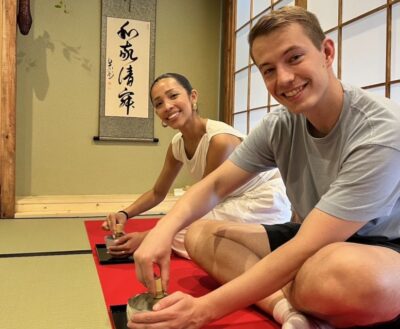
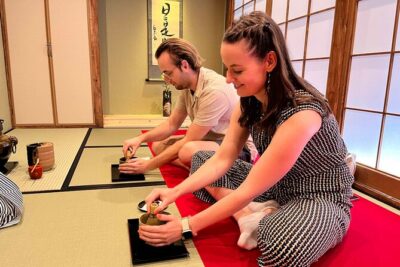
The second half introduces the Ryurei style, a table-style form of tea ceremony. This is a helpful contrast with the tatami-room presentation. You then learn how to make matcha yourself and drink the tea you prepare with a traditional sweet.
That practical turn is the strongest feature of the itinerary. You do not leave with only a general impression of tea ceremony. You have tried one of its central tasks under instruction. If your group includes people who know little about Japanese culture, this makes the session approachable. If you already have some interest in tea ceremony, it gives you a closer look at the movements and equipment.
The full session runs about 60 to 90 minutes. The published duration is approximately one hour and 30 minutes, so allow the longer end of that range when planning a train connection or another reservation.
Why the small group matters
The activity is private, with only your own group taking part. The maximum group size is four people. That is a much better fit for this kind of lesson than a large class, where you might spend most of your time watching someone else handle the tools.
A small group also makes the etiquette easier to follow. If you are unsure how to enter the room or prepare the tea, you can ask without interrupting a large audience. The tea master and assistant are described as attentive during the lesson, with particular care given to teaching participants how to perform the ceremony themselves.
This personal approach appears to be the experience’s most praised quality. The available feedback describes the session as relaxing and informative, with the teacher and assistant offering close guidance. Those two words, relaxing and informative, fit the format well. You get cultural context without being pushed through a crowded schedule.
There is one trade-off. A private lesson usually costs more per person than a large group activity. At $67.11 per person, this is not the cheapest way to sample matcha. The value depends on what you want. If you only want to drink green tea, the price is high. If you want instruction, a traditional setting, sweets, and a private group, the cost is easier to justify.
Entering the tatami room
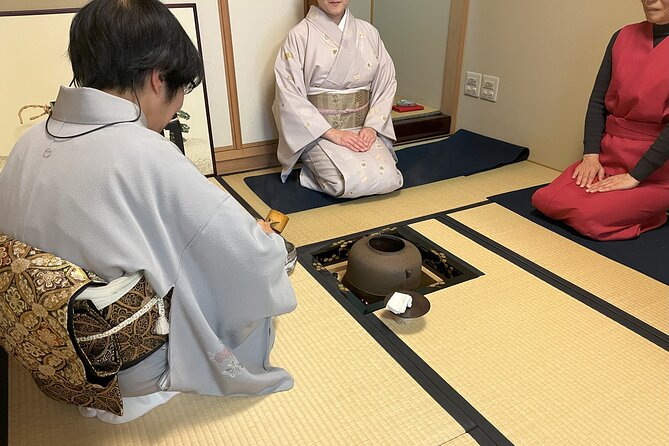
The tatami room is not just decoration. It gives you a physical setting in which Japanese manners and movement make sense. You begin by learning how to enter this kind of room, before watching the ceremony itself.
That small lesson helps you avoid feeling awkward. You do not need prior knowledge of Japanese culture, and the session is designed for first-time participants. The tea master explains the process in detail, so you can focus on following along rather than guessing.
For many people, this introduction may be more valuable than a long lecture about tea history. You learn through action. You see how the space is used, where attention goes, and how ceremony turns ordinary objects into part of a formal exchange.
The provided information does not name the tea master or assistant, so you should not expect to select a particular instructor. You receive the meeting address and phone number after booking, along with confirmation details. Calling when you arrive is part of the arrival process, and the host comes to meet you.
A few more tea experiences around Japan worth a look
- Osaka: Tea Ceremony Experience
★ 4.9 · 1,426 reviews - Kyoto: Table-Style Tea Ceremony at a Kyo-Machiya
★ 4.9 · 1,211 reviews - Kanazawa: Kenrokuen Tea Ceremony Experience
★ 4.8 · 1,139 reviews - Kimono Tea Ceremony at Kyoto Maikoya, NISHIKI
★ 5.0 · 911 reviews
Watching matcha preparation, then doing it yourself
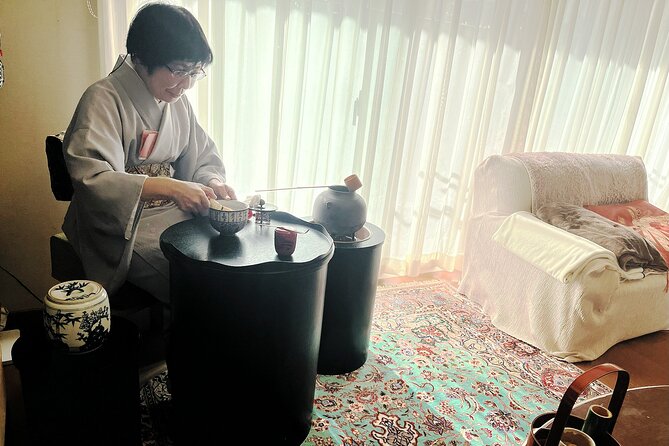
The demonstration gives you a clear model before it is your turn. You watch the tea master prepare matcha and serve it with Japanese sweets. The ceremony may look simple from the outside, but the detailed explanation helps you notice the order of the actions.
Then the focus shifts to you. Under instruction, you learn how to make your own matcha in the Ryurei, or table-style, format. This is likely the most enjoyable part for first-time participants because it changes the activity from performance to participation.
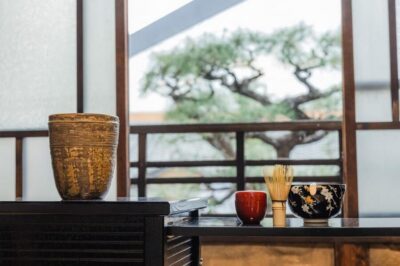
Making matcha also gives you a better sense of the drink itself. You handle the tools and prepare the tea rather than receiving a finished bowl with no context. The included sweets provide the traditional pairing and keep the tasting from feeling like a stand-alone beverage stop.
The experience does not promise a full professional tea-school course, and the 60 to 90-minute length makes that clear. Think of it as a careful introduction. You will learn the basic flow, try the preparation, and gain enough context to notice tea ceremony practices elsewhere in Japan.
Getting there from Osaka or Kyoto
The closest station is Ibaraki-shi Station on the Hankyu Kyoto Line. From there, the walk takes about 10 to 15 minutes. That is straightforward, but you should allow extra time because the exact location is supplied after booking rather than presented as a simple public venue entrance.
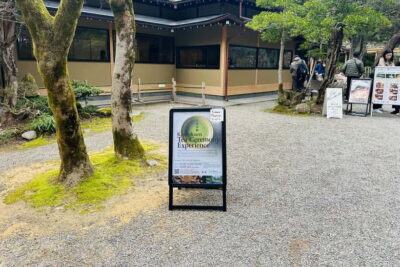
The listed meeting point is Repark Ibaraki Oike 1-Chome, at 1-chome-14-46 Oike, Ibaraki, Osaka 567-0826. When you arrive, you are asked to call the provided phone number, and the host comes to meet you.
This phone call is important. Do not assume that reaching the general address means you have found the tea room. Keep the confirmation information available, and arrive on time. If you are delayed or lost, call the number rather than trying to solve the problem alone.
The location can work well in a broader Osaka and Kyoto itinerary. Since Ibaraki is positioned between the two cities, you can plan the tea ceremony as a short cultural stop before continuing your day. Still, the activity itself does not include transportation. You pay for your own train fare and any other travel costs.
Is $67.11 a fair price?
At $67.11 per person, the price reflects several things beyond the matcha. You are paying for a private session, a small maximum group size, instruction from a tea master, the room and equipment, traditional sweets, and the chance to make tea yourself.
That makes the price reasonable for a couple, family, or group of friends that wants personal attention. It also becomes more attractive if you have limited time in Japan and want one focused cultural activity rather than a long formal tour.
The price is harder to defend if your main goal is simply to taste matcha. You can find cheaper drinks elsewhere, and this activity is not designed as a casual café visit. Its value comes from the teaching and the setting.
Group discounts are available, though the amount is not specified. Since the session is private for your group, check the final price for your party before confirming. The experience is typically booked 37 days ahead, so advance planning is sensible, especially if you need a particular date.
Who will get the most from this experience?
I would recommend this for first-time visitors who want a calm cultural activity with clear instruction. You do not need a background in Japanese traditions, and the explanations are intended to help beginners follow the ceremony.
It also suits anyone who wants to participate rather than sit through a demonstration. The chance to prepare your own matcha is the detail that gives the session purpose. Children or younger participants may enjoy that hands-on element, though the supplied information does not specify a minimum age.
Couples and small families are a natural fit because the experience is private. A group of four can share the activity without being mixed with strangers. Solo participants can also book, but the supplied information does not say whether the price changes for a smaller party.
This may not suit you if you want a large, theatrical cultural show, a central Osaka location, or a long tour covering several attractions. The activity is deliberately focused. You spend the time on tea ceremony, not on sightseeing around the neighborhood.
Practical details before you book
Confirmation is sent within 48 hours of booking, subject to availability. Since the precise address and phone number are provided as confirmation details, do not plan your route until you receive that information.
The activity begins and ends at the listed meeting point. Travel expenses are not included. You should also plan to arrive on time because the host meets you after you call on arrival.
Free cancellation is available if you cancel at least 24 hours before the local start time. Cancellations or changes made less than 24 hours before the start are not accepted for a refund. That policy is fairly flexible for a scheduled private activity, but note the cutoff when arranging train travel.
The experience has a mobile ticket, which is useful when you are moving around Osaka and Kyoto. Keep the booking information and contact number easy to access.
My verdict: a worthwhile small-group cultural lesson
Book this tea ceremony if you want more than a cup of matcha and prefer personal teaching to a large group presentation. The strongest reasons are the private four-person limit, the tatami-room introduction, and the chance to prepare your own tea in the Ryurei style.
The main drawback is the location and price. You must walk 10 to 15 minutes from Ibaraki-shi Station, pay your own transport costs, and spend $67.11 per person for a session that lasts up to 90 minutes.
For a first meeting with Japanese tea ceremony, though, the balance is good. You receive sweets, tea, equipment, instruction, and a quiet setting. If you can fit Ibaraki into your Osaka or Kyoto plans, this is a thoughtful choice for learning how the ceremony works rather than simply watching it pass by.
FAQ
Where does the tea ceremony take place?
The meeting point is Repark Ibaraki Oike 1-Chome, 1-chome-14-46 Oike, Ibaraki, Osaka 567-0826, Japan. The precise address and phone number are sent after booking as confirmation details.
How do I reach the meeting point?
The closest station is Ibaraki-shi Station on the Hankyu Kyoto Line. The walk from the station takes about 10 to 15 minutes.
How long does the experience last?
The tea ceremony session takes about 60 to 90 minutes. The listed approximate duration is one hour and 30 minutes.
Is this a private activity?
Yes. Only your own group participates, with a maximum of four people.
What is included in the price?
The price includes the tools and materials needed for the activity, Japanese traditional sweets, and matcha green tea. Travel expenses are not included.
Can I cancel for a full refund?
Yes, if you cancel at least 24 hours before the experience start time. Cancellations or changes made less than 24 hours before the local start time are not accepted for a refund.
Just added around Japan
- Yokohama : Tea Ceremony with Sweets and Souvenir★ 5.0 · 5 reviews
- Whisk Your Own Matcha: A Zen Matcha Experience at Temple★ 3.6 · 7 reviews
- Walking Tour: Yanaka,Nezu& Sendagi: Tea Ceremony & Old Tokyo★ 5.0 · 3 reviews
- Visit local home for music and tea ceremony near Disney★ 4.9 · 13 reviews
- Yokohama: Sushi & Gyoza Cooking with Matcha & GreenTea Experience★ 5.0 · 3 reviews
- Trip to Kamakura & Enoshima: Shrines, Seaside, Temples &Tea★ 5.0 · 11 reviews
- Kyoto tea town for matcha lovers★ 5.0 · 16 reviews
- Uji: Private immersion into Kyoto’s tea and reglious culture★ 5.0 · 17 reviews
Tea Ceremony Experiences, compared.
Tea Ceremony in a Traditional Tea House in Kiyomizu
Read our review →
Browse the lists this tour appears in