
Review · TOKYO
Tea Ceremony Workshop in Tokyo by the Experienced Instrucor
The most interesting part of this Tokyo tea workshop is that you do not simply watch a polished performance. You first see a formal preparation of koicha, the thick matcha once associated with samurai, then learn to whisk your own lighter usucha. That shift from quiet observation to hands-on practice gives the experience real substance.
I like the traditional 1940s tearoom, with its tatami floor and careful rituals, and I like the clear English instruction from an experienced teacher, identified in the tour details as Ms. Haneishi. The tasting of three local sweets and several teas adds flavor to the lesson, not just decoration.
The main consideration is access. The room is upstairs in an old Japanese building with a very steep staircase. You need socks, and miniskirts or tight trousers are poor choices. A chair can be provided if sitting on tatami is difficult, but the staircase has no mechanical assistance.
Key points to know before booking
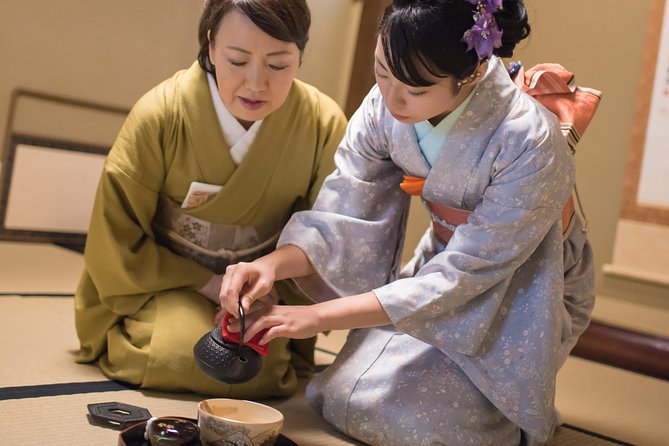
- Watch formal koicha, then make usucha: You see the precise preparation of thick matcha before trying the more approachable thin tea yourself.
- Learn inside a Urasenke-linked school: The workshop is held at a school licensed by the Urasenke Chado School in Kyoto.
- Expect a small class: The stated maximum is six people, creating room for questions and personal guidance.
- Taste more than one tea: You sample Sakura tea, koicha, usucha, and learn how matcha powder affects the drink.
- Wear socks and practical clothing: Bare feet are not allowed, and the steep staircase deserves serious attention.
- Pay about $38.47 for a cultural lesson: The price is fair if you want instruction and participation, not only a quick matcha drink.
A calm introduction to Chado near Asakusa
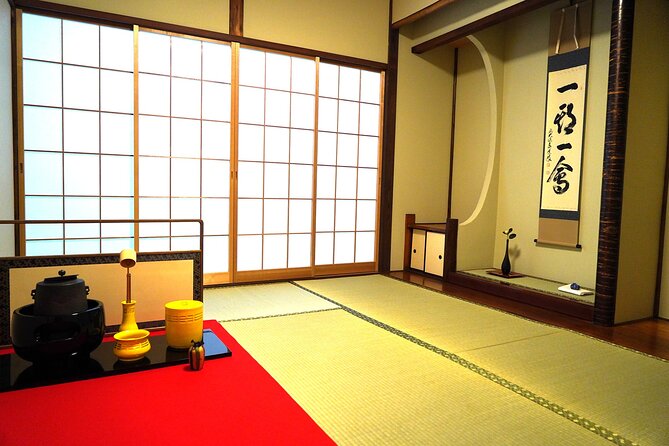
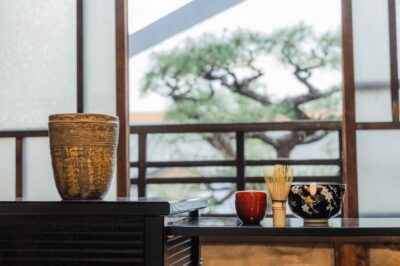
This experience takes place at 2-chome-3-12 Kotobuki in Taito City, close to Asakusa and public transportation. The tea room is on the second floor of an old Japanese-style house built in the 1940s. That setting matters. You are not in a modern café with a few decorative tatami mats. You are entering a space designed around traditional tea practice.
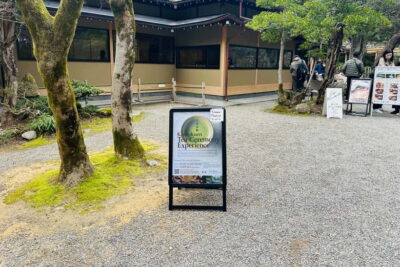
The address deserves a careful check before you set out. Some map results reportedly show 2-3-3, while the current meeting address is 2-3-12. I would use the exact address supplied with your confirmation rather than relying on a general map search.
The workshop is designed for people aged 10 and older. The group size is listed as a maximum of six, although the information also notes that the building has a weight limit and that a larger group could occasionally be asked to change time slots for safety. That is a minor logistical wrinkle, but it reflects the limits of using an old house rather than a purpose-built visitor center.
More Tea Ceremony Experiences in Tokyo:
- Kimono Tea Ceremony at Tokyo, Asakusa Maikoya
★ 5.0 · 638 reviews - Tokyo: Traditional Tea Ceremony with a Tea Master
★ 5.0 · 528 reviews - Asakusa: Kimono Tea Ceremony with Matcha and Sweet
★ 4.9 · 153 reviews
Sakura tea, a short film, and the meaning of the room
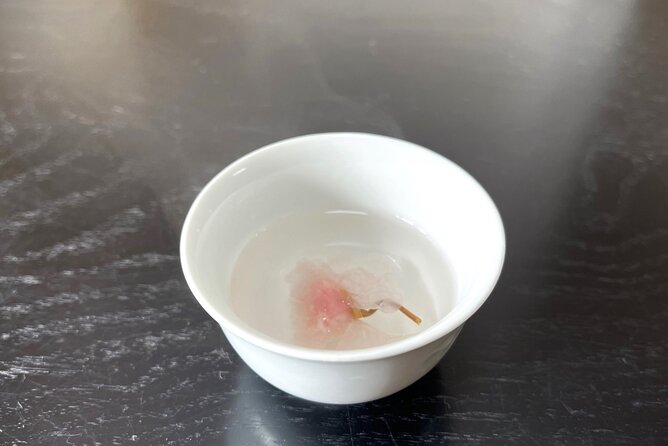
The session begins with Sakura tea, a cherry blossom tea served as a welcome drink. It is a small but fitting start. Japanese tea culture is closely tied to season, hospitality, and attention to ordinary details, so beginning with a seasonal-style drink sets the right mood.
Next comes a 10-minute introduction video covering the history and basic ideas of Chado. This is useful because the hand movements can otherwise seem mysterious. The video gives you a framework for understanding why the host moves in a particular order and why the tearoom itself is treated with such care.
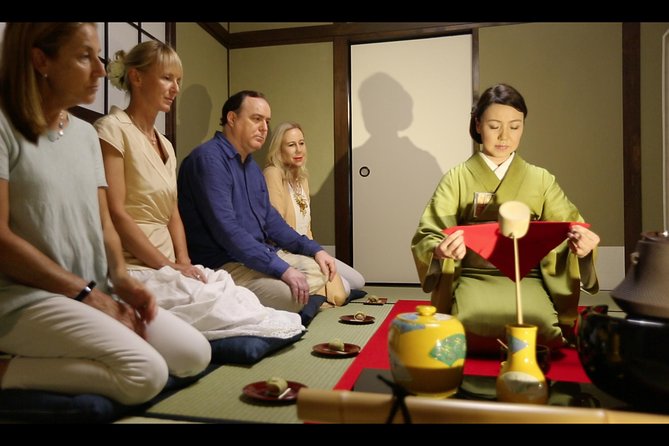
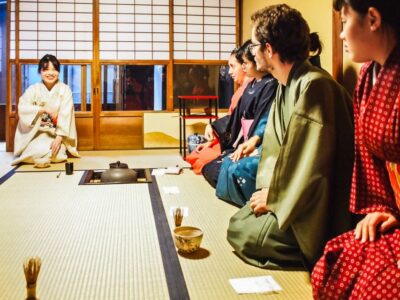
You then enter the tea room. The tatami, low setting, and quiet pace create a marked change from Tokyo’s busy streets. A short period of meditation is part of the presentation, giving you time to leave daily concerns aside and pay attention to the room, the tools, and the preparation.
I appreciate that the session does not treat Chado as a collection of pretty gestures. The teacher explains its cultural and philosophical side, including the relationship between host and guest. You learn that serving tea is not just about producing a drink. It is a carefully shaped act of welcome.
Watching the formal koicha preparation
The formal performance centers on koicha, the thick matcha served in the traditional ceremony. Unlike the lighter tea most visitors know, koicha uses a concentrated amount of matcha and little water. The result is dense and intense, with a more pronounced flavor.
This is the part where you watch closely rather than immediately reaching for the whisk. The instructor demonstrates the sequence and explains the purpose behind the movements. You see how the bowl, scoop, whisk, and serving motions fit together.
Koicha may not be your favorite drink. The flavor is stronger and the texture is heavier than usucha. That is not a flaw. It is valuable because it shows you the older form of matcha preparation instead of presenting only the sweeter, more familiar version.
The lesson also covers tea bowls from different regions of Japan. Their shapes can change how the tea feels in your hands and how you experience the drink. This detail brings the workshop beyond a simple food tasting. You begin to notice that the bowl is part of the occasion, not merely a container.
Making your own bowl of usucha
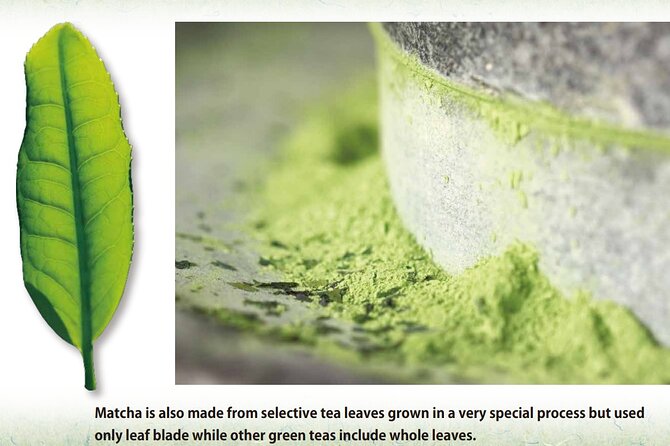
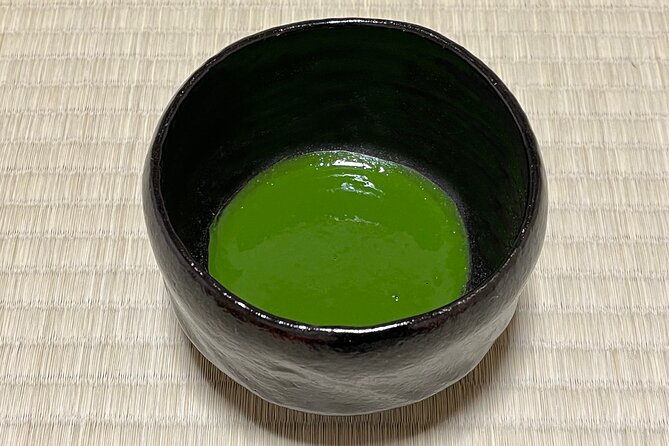
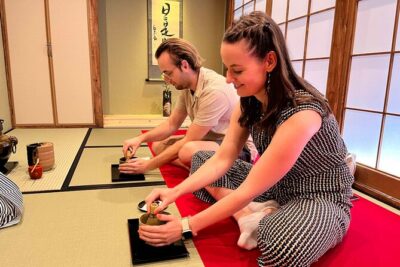
The hands-on section focuses on usucha, the thinner matcha with a layer of foam. This is the tea you are most likely to reproduce at home, and it is a good choice for practice because the method is easier to grasp than the formal koicha preparation.
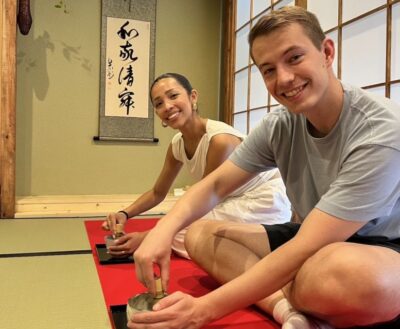
The instructor provides the materials and shows each step. You learn about matcha powder, measure it into the bowl, add water, and whisk it into a foamy drink. The act is simple in principle, but getting the texture right requires attention.
You practice serving tea as both host and guest. That distinction gives the workshop more depth. As host, you focus on preparation and presentation. As guest, you learn how to receive the bowl and appreciate the effort behind it.
Do not expect a professional result on your first attempt. The value is in trying the movements yourself and seeing how much care goes into a bowl that can look effortless when prepared by an experienced tea instructor. The class is meant to teach, not test your whisking skills.
More Workshops in Tokyo:
- Matcha Making Class in Tokyo with Authentic Japanese Sweets Set
★ 5.0 · 744 reviews - Experience all of Japanese culture and Japanese food experience classes “origami, udon, Japanese food, green tea, calligraphy” in 4 hours
★ 5.0 · 105 reviews - Tokyo Sushi Making Class : Sake Ceremony & Matcha Experience
★ 5.0 · 44 reviews - Mochi Matcha Gluten Free Japanese Sweets Class near Shibuya area
★ 5.0 · 26 reviews
Japanese sweets and several kinds of tea
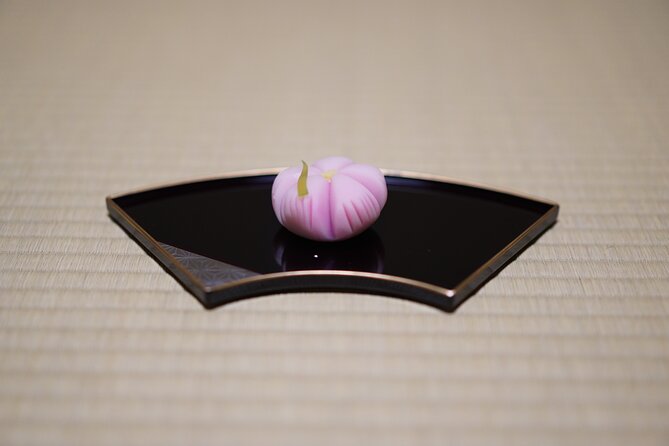
Traditional confectionery is served at different points in the session. You enjoy one confection during the presentation and three kinds of local Japanese sweets are included overall, with dry sweets served before usucha.
These sweets are not an afterthought. In Chado, food balances the bitterness of matcha and helps shape the order of the experience. The sweetness also makes the concentrated tea easier for first-time drinkers to approach.
You sample several forms of tea and learn to identify your own preferences. Sakura tea offers a gentle welcome. Koicha gives you a concentrated taste of traditional matcha. Usucha is lighter, foamy, and more familiar to many people.
I like this progression because it prevents the workshop from becoming a single-cup tasting. You get to compare drinks with different textures and strengths, then decide what suits you. One practical point is worth stating clearly: the experience is about culture and practice as much as flavor. If you only want a sweet matcha latte, this is not the right activity.
What the small setting changes
A maximum of six people is a strong feature here. Tea ceremony has many small details, and a large class would make it harder to see the host’s hands or receive help with your own bowl.
A small group also makes the room feel more personal. The instructor can explain the sequence, answer questions, and watch your technique. Several accounts describe intimate sessions with only three or four participants, including private groups. The exact group size will depend on the booking, but the stated limit is low enough to keep the lesson manageable.
The English instruction is another practical advantage. The teacher is described as fluent in English and experienced in teaching tea ceremony, with long-term practice behind her work. That matters because the session involves cultural concepts, formal gestures, and unfamiliar equipment. Clear explanations make the experience easier to follow.
At the same time, you should understand the level. This is an introduction, not a full training course for tea practitioners. If you already study Chado, you may find the lesson basic. For a first encounter, the pace is more suitable.
Clothing, sitting, and the steep staircase
Dress with the room in mind. Socks are required, and bare feet are not allowed on the tatami. Bring clean socks if you are unsure what you will be wearing after a day of sightseeing.
Miniskirts and tight trousers are not recommended. You will be moving and sitting in a traditional room, so comfortable clothing that allows modest movement is the sensible choice.
You do not have to sit in seiza, the formal kneeling position with your knees bent under you. That is good news for most people, especially during a session that includes explanation and tasting. If you cannot sit on the tatami, a chair can be provided.
The bigger concern is getting upstairs. The tearoom is on the second floor, and the staircase in this old building is very steep. There is no machine to assist with the climb. Anyone with serious difficulty using steep stairs should contact the provider before booking and decide if the setting is suitable.
Timing, meeting point, and cancellation
The activity offers multiple workshop times, which helps you fit it around sightseeing in Asakusa and the rest of Tokyo. The stated duration is approximately one day and one hour 30 minutes, though that wording is unusual for a workshop of this type. I would check the confirmed start time and expected length before planning a tight connection or another timed attraction.
The activity begins and ends at the same meeting point in Kotobuki. Since it is near public transportation, you can pair it with time in Asakusa, but allow extra time to find the correct address. The updated location is 2-3-12, not the similar address that may appear on some map results.
Confirmation is sent within 48 hours, subject to availability. Free cancellation is allowed up to 24 hours before the start time for a full refund. Cancellations or changes made inside that 24-hour window are not accepted, so do not leave adjustments until the last day.
Is $38.47 a fair price?
At about $38.47 per person, this is good value if you want a guided cultural activity with real participation. The price covers instruction, the tearoom setting, several tea tastings, traditional sweets, the formal demonstration, and the chance to prepare your own matcha.
You are also paying for access to an established school linked to the Urasenke Chado tradition. That does not make the workshop a complete tea-master course, but it gives the lesson a stronger foundation than a casual tourist demonstration.
The value is less convincing if you want only one quick bowl of matcha or a photo opportunity. You spend much of the session listening, observing, and learning the reasons behind the movements. That is precisely why I would recommend it to someone interested in Japanese culture, but not to someone looking for a fast stop between shopping and dinner.
The 98 percent recommendation rate and 4.9 rating from 189 ratings suggest that the format works very well for first-time participants. Still, the less enthusiastic assessment is useful: the content is introductory. Go in expecting a thoughtful first lesson, not an exhaustive study of every school, utensil, and rule.
Who will enjoy this workshop most?
I would choose this experience if you want a quiet break from Tokyo’s speed and a clear explanation of a tradition that can be difficult to understand from the outside. Couples may appreciate the calm, shared ritual, while families with children aged 10 and older can use it as a cultural lesson with something hands-on at the end.
It also suits visitors who prefer small classes and direct contact with an instructor. The English explanations, tasting sequence, and chance to make tea give you more to do than simply watch.
I would think twice if you dislike sitting on the floor, cannot manage a steep staircase, or have no interest in strong unsweetened tea. A chair may solve the tatami issue, but it does not solve the stairs. I would also skip it if your schedule is so tight that a late start or longer explanation would cause stress.
Should you book the Tokyo tea ceremony workshop?
Yes, if you want an approachable introduction to Chado that balances ceremony with participation. The strongest features are the old tearoom, the small class size, the English-speaking instruction, the koicha demonstration, and the chance to make usucha yourself.
Book it for the learning, calm, sweets, and cultural context. Do not book it expecting a theatrical show or a café-style matcha tasting. Check the exact address, wear socks, allow for the steep stairs, and leave enough time to enjoy the process. For about $38.47, this is a worthwhile Tokyo activity for curious visitors who want to understand why Japanese tea is about far more than the drink in the bowl.
FAQ
Where does the tea ceremony workshop take place?
It takes place at 2-chome-3-12 Kotobuki, Taito City, Tokyo 111-0042, Japan, near Asakusa and public transportation.
Where does the activity end?
The workshop ends back at the meeting point.
How long does the experience last?
The approximate duration is listed as 1 day and 1 hour 30 minutes. Because that timing is unusual for a workshop, check your confirmed schedule before making other plans.
What teas will I taste?
You receive Sakura tea, taste koicha, and prepare and drink usucha. The workshop also explains matcha powder and different tea preferences.
Can I make my own matcha?
Yes. You receive a hands-on lesson in preparing a bowl of usucha, the thin, foamy matcha tea.
Do I have to sit in seiza?
No. You do not have to sit in the formal seiza position. A chair can be provided if you cannot sit on the tatami.
What should I wear?
Wear socks because bare feet are not allowed in the tearoom. Miniskirts and tight trousers are not recommended.
Is the workshop suitable for children?
The activity is designed for participants aged 10 and older.
Is the tea room accessible by elevator?
No elevator or mechanical assistance is provided. The tearoom is on the second floor of an old building with a very steep staircase.
Can I cancel for a refund?
You can cancel up to 24 hours before the start time for a full refund. Cancellations and changes made less than 24 hours before the start time are not accepted.
Just added around Tokyo
- Yokohama : Tea Ceremony with Sweets and Souvenir★ 5.0 · 5 reviews
- Walking Tour: Yanaka,Nezu& Sendagi: Tea Ceremony & Old Tokyo★ 5.0 · 3 reviews
- 2 Hours Mochi &Nerikiri Making & Matcha Class in Bunkyo★ 5.0 · 21 reviews
- Private Kimono and tea ceremony at local home near Tokyo Disney★ 5.0 · 6 reviews
- Private Mochi・Matcha sweets Making Class Near Shibuya Area★ 5.0 · 22 reviews
- Tokyo Sweets Tour: Hidden Gems & Matcha at an Old Tea House★ 5.0 · 6 reviews
- Giant Sushi Cooking Class: Make a 1.5m Sushi Roll in Tokyo★ 5.0 · 9 reviews
- Tokyo Tea Ceremony Class at a Traditional Tea Room★ 5.0 · 2 reviews
Tea Ceremony Experiences, compared.
Tea Ceremony in a Traditional Tea House in Kiyomizu
Read our review →
Browse the lists this tour appears in