
Review · KYOTO
Traditional Tea Ceremony Experience in Kyoto
Kyoto’s tea ceremony is often pictured as a long, formal ritual on tatami, but this 30-minute introduction takes a simpler route. You sit at a table and chair while a Japanese instructor demonstrates how matcha is made, explains the purpose of the movements and utensils, and serves a single-origin tea with an ohigashi sweet.
I like two things right away: the $7 price makes this an easy cultural add-on, and the location is just one minute from Gojo Station. The short format also works well between sightseeing stops. The main catch is that the English explanation may be limited, and the venue can feel crowded or hard to hear.
Key points
- Single-origin matcha: Taste a focused tea rather than an unnamed green tea powder.
- Ohigashi sweet included: The dry Japanese sweet gives you the traditional matcha pairing.
- Table seating: You do not need to sit on the floor in a formal kneeling position.
- One-minute walk from Gojo Station: Finding the venue is easy if you use Exit 1 and look toward Gojo-dori.
- Basic tea-making demonstration: You see how hot water and matcha are combined, not just receive a finished drink.
- Optional certificate: A completion certificate costs an extra 300 JPY.
A short Kyoto tea lesson near Gojo Station
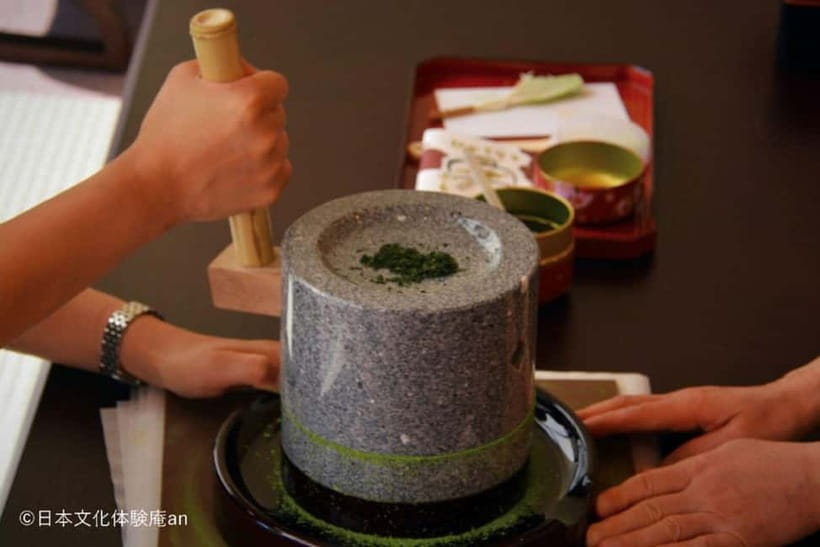
This experience is designed as a compact introduction, not a full afternoon tea school. The whole session lasts about 30 minutes, so you can fit it into a day built around temples, markets, and central Kyoto streets without giving up a major block of time.
The setting is practical. You sit at a table with chairs rather than on tatami, which matters if you dislike kneeling or simply want an easy, low-pressure introduction. The format also suits families, older visitors, and anyone who wants to learn the basic etiquette before trying tea elsewhere.
The activity is called OTE-MAE, the preparation and serving of Japanese tea. You receive a set experience built around the ceremony, including the tea, demonstration, and sweets. The focus is on watching, tasting, and picking up the main ideas behind the ritual.
Do not expect a long historical lecture or an elaborate private ceremony. The information can be quite basic, and the spoken explanation is primarily in Japanese. English translation is offered as much as possible if you request it, but you should contact the provider ahead of time if clear English instruction is important to you.
More Tea Ceremony Experiences in Kyoto:
- Kyoto: Tea Ceremony in a Traditional Tea House in Kiyomizu
★ 4.9 · 3,519 reviews - Kyoto: Tea Ceremony Ju-An at Jotokuji Temple
★ 4.9 · 3,207 reviews - Kyoto: 45-Minute Tea Ceremony Lesson Experience
★ 4.3 · 2,378 reviews
Finding the venue from Exit 1
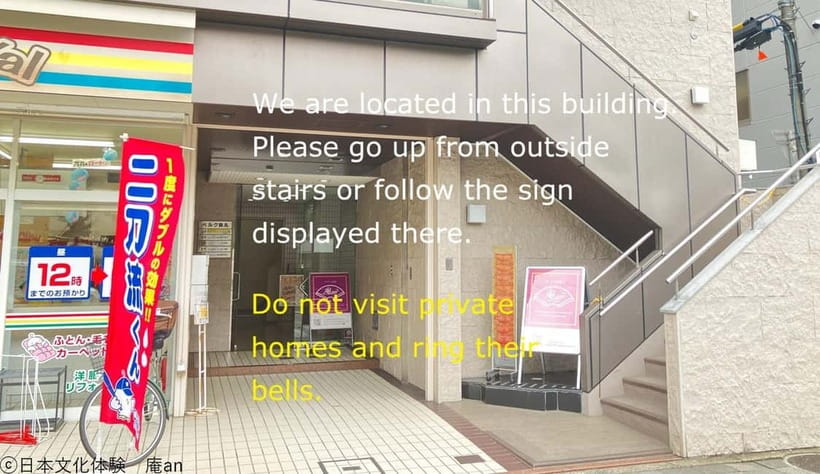
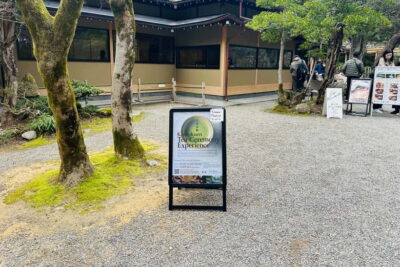
The meeting point is unusually easy for Kyoto. From Exit 1 of Gojo Station on the Karasuma Subway Line, the venue is about a one-minute walk. The entrance faces Gojo-dori, the main street, so you should look for the storefront from the road rather than search down a small side lane.
That simple route is useful in Kyoto, where an address can look close on a map but still take time to find. Give yourself a few extra minutes anyway. The session will not be held for late arrivals, and the operator says delays do not change the start time.
The listed coordinates are 34.996429, 135.761767. If you use a map app, confirm that it is guiding you to Gojo Station on the Karasuma Line. This is not a vague meeting point in a temple garden. It is a city venue facing a main road, close to public transport.
The building has no elevator. You need to use stairs to reach the venue, even though the activity is marked wheelchair accessible. That combination deserves a direct question before booking if you use a wheelchair or cannot manage stairs. The table seating may be comfortable once inside, but getting there is the practical issue.
What happens during the 30 minutes
The session begins with an introduction to the ceremony and the basic behavior expected around tea. You are shown the elements of OTE-MAE, then guided through the preparation and serving process.
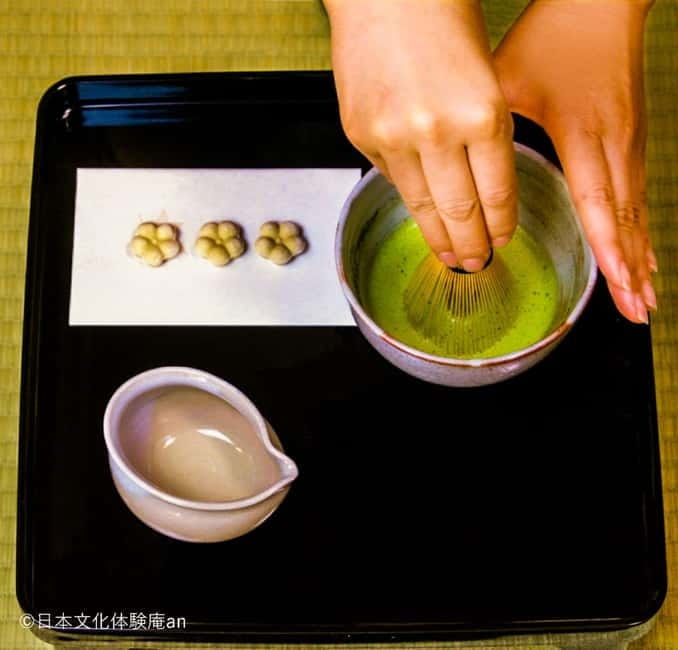
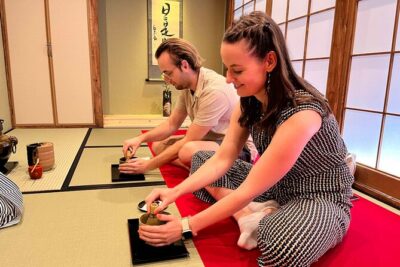
The demonstration includes the familiar step of adding hot water to matcha and mixing it. That sounds simple, but seeing the process helps explain why matcha is whisked rather than brewed like leaf tea. You also get a chance to understand that the ceremony is not only about drinking. The order of movements, the handling of utensils, and the care given to the cup all form part of the experience.
The exact amount of explanation can vary. I would treat this as a first lesson in the mechanics and manners, not a detailed seminar on Japanese tea culture. Some sessions may cover the history and social meaning of matcha more fully, but the basic version can move quickly through the practical steps.
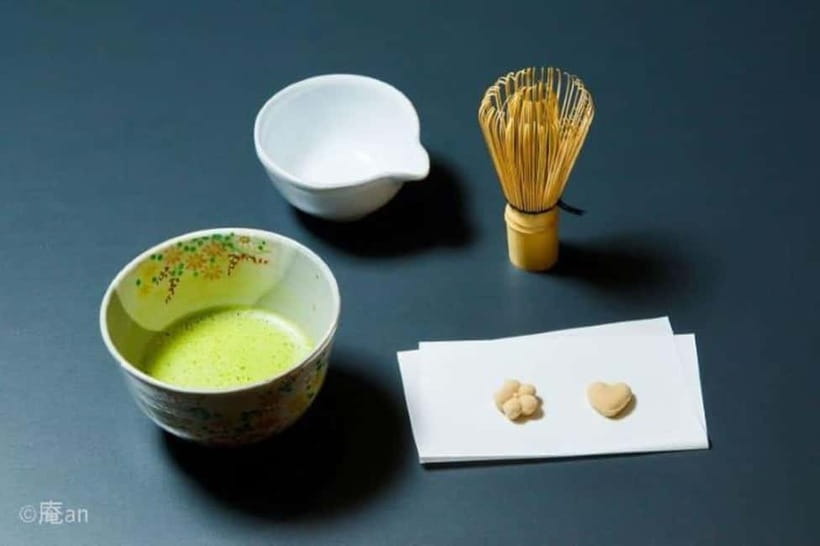
You then receive the prepared single-origin matcha. The term matters because it tells you the tea is presented with a stated source rather than as a generic green powder. You can pay attention to its color, aroma, texture, and bitterness, though the experience does not promise a formal tasting lesson.
The ohigashi is the small dried Japanese sweet served with the tea. Its role is not just decoration. The sweetness gives your palate a counterpoint to matcha’s strong, grassy bitterness. Take a bite before or alongside the tea and notice how the flavor changes.
The session has been described as lasting about 25 minutes in practice on one occasion, with roughly half the explanation delivered in English and Korean. That gives you a useful planning margin, but you should still reserve the full 30 minutes. The short length is part of the value, yet it also limits how much cultural background can fit in.
Why the table-and-chair setup helps
Traditional tea ceremony can involve sitting on tatami in a formal posture. This experience removes that barrier. You sit at a table and chair, which makes the activity less intimidating if you have never attended a ceremony before.
I also like the way this setup keeps the session approachable for a mixed-age group. Children can watch the demonstration without being expected to copy every formal position. Children under two who sit on a parent’s lap are free, according to the activity rules.
The tradeoff is atmosphere. A chair-based lesson in a city building will not feel like entering a historic tea house. If your main goal is a quiet, highly formal ceremony with tatami, seasonal decorations, and a long sequence of ritual gestures, this will feel more like an introduction.
That is not necessarily a weakness. You are paying $7 for an accessible lesson, not for an expensive private performance. The chairs make the cultural content easier to approach, especially if you have only a short time in Kyoto.
A few more tea experiences around Kyoto worth a look
- Kyoto: Table-Style Tea Ceremony at a Kyo-Machiya
★ 4.9 · 1,211 reviews - Kimono Tea Ceremony at Kyoto Maikoya, NISHIKI
★ 5.0 · 911 reviews - Kyoto: Kimono Tea Ceremony at Orizuruya Gion
★ 4.9 · 618 reviews - Kyoto: Tea Ceremony in 100-year-old Kyo-Machiya Townhouse
★ 4.8 · 546 reviews
Matcha, ohigashi, and what you actually learn
The strongest part of the activity is the combination of demonstration and tasting. You see the tea being prepared, then drink the result while the details are still fresh. This is more useful than simply receiving a bowl of matcha with no explanation.
The instructor explains the meaning of movements and utensils as much as the format allows. You should listen for the small rules: how to receive the tea, how to handle the bowl, and why the sequence matters. Even a basic grasp of these points can make later encounters with Japanese tea feel less mysterious.
Still, keep your expectations measured. The session may not answer every question about who traditionally drinks matcha, when it is served, or how tea ceremony developed over time. If those subjects matter to you, ask questions early and request English support before the session begins.
The language issue is the biggest variable. The instructor is Japanese, and Japanese is the stated language. English translation is available as much as possible, but it is not presented as a guaranteed full English tour. You may understand the physical demonstration more easily than every spoken explanation.
A little preparation helps. Read a short introduction to matcha and Japanese tea ceremony before you arrive. Then the gestures will make more sense, and you can use the half-hour for questions rather than trying to grasp every idea from scratch.
How the price compares with the time
At $7 per person, this is one of the easier Kyoto activities to add without rearranging your budget. The price includes the tea ceremony experience and the ohigashi sweet. A certificate is optional and costs 300 JPY extra.
The value comes from the low commitment. You get a taste of a major Kyoto tradition, a prepared drink, and a guided explanation in half an hour. If you are already near Gojo Station, the cost is small enough that even a modest experience can feel worthwhile.
The value is less clear if you must cross the city only for this session. Public transport, time spent reaching Gojo, and the need to arrive promptly all count. Pair it with another plan in central Kyoto rather than treating it as a stand-alone day trip.
The rating is 4.3 from 64 bookings, which fits the activity’s profile: strong appeal as a calming, educational introduction, with some limits around crowding, sound, and language. One particularly positive account described the matcha as very rich and appreciated the extra snack and playful certificate. Another described the session as educational and calming.
The certificate is not needed to enjoy the tea. Buy it only if you like small travel keepsakes or want a fun record for children. The tea, sweet, and demonstration are the real contents of the visit.
Crowding, sound, and the pace of the lesson
The venue may be crowded, and that can affect how much you hear. One account specifically noted difficulty hearing the guide. This matters because the session is short. If you miss five minutes of explanation, you lose a sizeable share of the lesson.
Try to sit where you can see the preparation clearly. Watch the movements even if a sentence slips past you. The demonstration gives you visual information that does not depend entirely on language.
A quieter, private lesson would offer more room for questions. This $7 experience appears better suited to a shared group format, where the instructor presents the same basic material to everyone. That keeps the price low but may reduce personal attention.
The pace is brisk. You will likely move from introduction to demonstration to tasting without long pauses. I see that as a plus for a first encounter, but not for someone who wants to study every utensil or ask detailed questions about tea schools and ceremony rules.
Who should book this Kyoto tea experience
I would recommend it to first-time visitors who want one clear, manageable connection with Kyoto’s tea culture. It also fits families, couples, and solo visitors who prefer a short activity with a fixed end time.
It is a good choice if you are already visiting the Gojo area or using the Karasuma Line. The one-minute walk from the station keeps the practical side easy, and the table seating removes the discomfort some people associate with formal tea rooms.
It may also suit you if you want to try matcha before paying for a longer ceremony. The low price lets you test the flavor and learn the basic etiquette without making a large commitment.
I would hesitate to recommend it as your only tea ceremony experience if you want detailed history, polished English interpretation, or a highly formal setting. The session can be crowded, the information may remain introductory, and Japanese is the official language.
The accessibility note needs care. The activity is marked wheelchair accessible, but the building has no elevator and requires stairs. Contact the provider before booking if that affects you. Do not assume the accessibility label answers the question of how you reach the room.
Booking details worth knowing
The operating hours are 10:00 to 17:00. Reservations received after 17:00 are processed the next day, so do not expect a late-night booking request to receive immediate attention.
You can cancel up to 24 hours before the activity for a full refund. Cancellation charges apply after that point, and changing the date or time after a fee has been incurred can create another specified charge. The provider does not cover your travel costs if you cancel.
Book a time that leaves a buffer before your next plan. The experience will not wait for you, and Kyoto’s transport can be slower than a map suggests when you are changing lines or walking through a crowded station.
Only people taking part can enter the experience. If someone in your party wants to wait nearby without participating, do not assume they can come inside.
Should you book it?
Book this experience if you want a low-cost, short introduction to matcha near an easy subway stop. The single-origin tea, ohigashi sweet, table seating, and preparation demonstration give you a real taste of the subject without demanding an entire morning.
Skip it if your priority is a formal tea house setting or a detailed English lecture. In that case, the limited language support, possible crowd noise, and brisk 30-minute format may leave you wanting more.
For most visitors, the decision comes down to expectations. Treat it as a friendly first lesson and tasting, not the final word on Kyoto tea ceremony. At $7, with free cancellation up to 24 hours in advance, it is a sensible add-on for a day near Gojo Station.
FAQ
How long does the tea ceremony experience last?
The stated duration is 30 minutes. One booking account described the activity as lasting about 25 minutes, so allow the full half-hour when planning your day.
Where does the experience take place?
The venue is a one-minute walk from Exit 1 of Gojo Station on the Karasuma Subway Line. The entrance faces Gojo-dori, the main street.
Is English available?
The instructor language is Japanese. English translation is provided as much as possible, and you should contact the provider if you would like English support added.
Is the experience wheelchair accessible?
The activity is marked wheelchair accessible, but the building has no elevator and you must take stairs to reach the venue. Contact the provider before booking to discuss your needs.
Is the tea and a sweet included?
Yes. The experience includes single-origin matcha and an ohigashi Japanese dried sweet.
Can I get a completion certificate?
Yes. A completion certificate is available for an additional 300 JPY. It is not included in the $7 experience price.
Just added around Kyoto
- Whisk Your Own Matcha: A Zen Matcha Experience at Temple★ 3.6 · 7 reviews
- Uji Walking Tour – Byodo-in temple and Tea Ceremony from Kyoto★ 3.5 · 3 reviews
- Traditional Tea Ceremony in Kyoto★ 4.5 · 3 reviews
- Kyoto: Authentic Tea Ceremony in a Small Group★ 5.0 · 7 reviews
- Tea ceremony at Kyoto’s Zen Temple Teahouse★ 5.0 · 2 reviews
- Tea Ceremony in 150 Years Old Townhouse with Tables and Chairs★ 5.0 · 22 reviews
- Tea Ceremony Experience in Traditional Kyoto Townhouse★ 5.0 · 19 reviews
- Silent Beauty of Kyoto Zen Walk and Tea Experience★ 5.0 · 2 reviews
Tea Ceremony Experiences, compared.
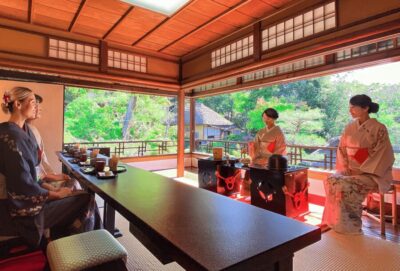
Tea Ceremony in a Traditional Tea House in Kiyomizu
Read our review →
Browse the lists this tour appears in