
Review · HIROSHIMA
Hiroshima: Morning Hiking Tour with Open-air Tea Ceremony
Hiroshima’s best morning surprise may be just behind its station: a wooded mountain trail leading to shrines, a Peace Pagoda, and a quiet cup of matcha above the city. This three-hour Futaba Mountain tour gives you a side of Hiroshima far removed from the usual Peace Memorial Park route.
I like the small groups of up to six, which make it easier to ask questions and get personal help on the climb. I also like the open-air tea ceremony, where the city, Seto Inland Sea, and Miyajima form the backdrop. The main drawback is clear: you’ll climb roughly 500 steps, then go back down, so this is not a gentle stroll.
Key points at a glance
- A mountain morning near the station: You can leave Hiroshima Station and reach a wooded trail with shrines and city views without arranging transport.
- A real physical effort: Expect about 500 steps uphill, with more steps on the return.
- Three distinct cultural stops: Hiroshima Toshogu Shrine, Kinko Inari Shrine, and the Peace Pagoda each give the walk a different focus.
- Forest bathing is not swimming: It is a guided sensory relaxation activity in the woods, sometimes with gentle movement or meditation.
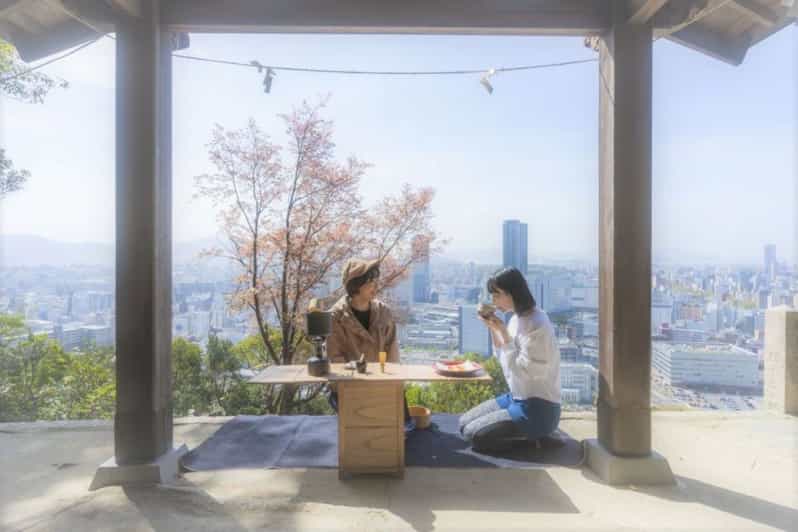
- Tea with a view: The outdoor Nodate ceremony is casual rather than a formal indoor tea-room ritual, but it offers a memorable setting.
- Excellent guide feedback: Guides including Naomi, Nana, Mimi, Michiyo, Stephanie, and others are praised for warmth, clear explanations, and personal attention.
Why this short hike gives you a different Hiroshima
Most first visits to Hiroshima center on the atomic bombing and its aftermath. That history deserves your time, but Hiroshima is also a living city surrounded by hills, shrines, and the Seto Inland Sea.
This tour gives you a morning with that quieter side. Futaba Mountain sits close to Hiroshima Station, yet the route soon trades traffic and buildings for woodland, shrine gates, stone steps, and bird-filled quiet. You still see the city, but from above and at a slower pace.
I especially like the balance. The morning is not only a hike, and it is not only a cultural demonstration. You move through historic sites, learn about Shinto customs and the area, pause for forest bathing, then share tea outdoors. That mix gives the experience more shape than a simple viewpoint walk.
The published rating is 4.8 from 58 reviews, and the strongest praise focuses on the guides. Names that appear repeatedly include Naomi, Nana, Mimi, Michiyo, and Stephanie. The quality of the morning will depend partly on who leads your group, but the guide role is important here because explanations turn a set of steps and buildings into a meaningful visit.
More Tea Ceremony Experiences in Japan:
- Kyoto: Tea Ceremony in a Traditional Tea House in Kiyomizu
★ 4.9 · 3,519 reviews - Kyoto: Tea Ceremony Ju-An at Jotokuji Temple
★ 4.9 · 3,207 reviews - Kyoto: 45-Minute Tea Ceremony Lesson Experience
★ 4.3 · 2,378 reviews
Meeting at Hiroshima Station before the city wakes
You meet on the deck on the second floor of Hiroshima Station, in front of the Shinkansen North Exit. The listed meeting choices include Hiroshima Station and the Seven Bank ATM area, so check your booking details carefully and arrive with enough time to find the correct station level.
The early start is part of the appeal. The schedule is designed to catch the morning light, avoid the worst daytime heat, and reach the upper mountain while the air is still cool. One guest described a 7:30 start as an excellent choice, especially for walking before the day warms up.
There is no hotel pickup or drop-off. That is not a major problem if you stay near Hiroshima Station, since the meeting point is central and easy to reach by rail. It matters more if your accommodation is elsewhere or if you are carrying large luggage. Bring comfortable shoes, water, and clothing suited to the season.
The group is limited to six people. That is a useful size for a narrow trail and an outdoor tea gathering. It also gives you a better chance to ask about Shinto, local customs, or Hiroshima’s past without waiting behind a large crowd.
Hiroshima Toshogu Shrine and the first cultural lesson
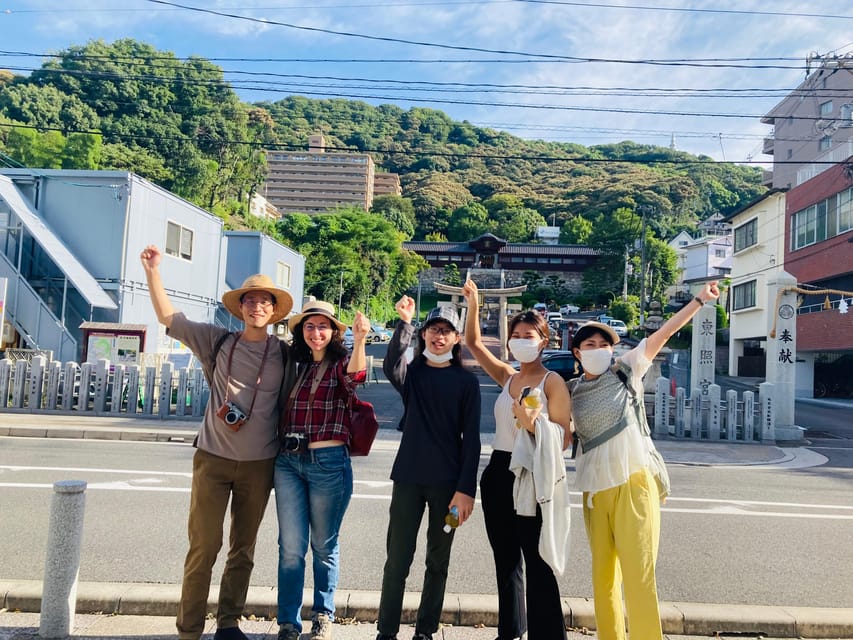
The walk begins at Hiroshima Toshogu Shrine, where the guide spends about 30 minutes showing you the shrine grounds and traditional buildings. This is a strong opening because you begin with architecture and religious practice before tackling the steeper mountain path.
Toshogu shrines are associated with Tokugawa Ieyasu, the founder of the Tokugawa shogunate. The tour information specifically highlights important cultural assets and traditional architecture at this site, while the guides explain what you are seeing and how the shrine is used.
You do not need prior knowledge of Japanese religion to enjoy this stop. A good guide can help you notice the difference between shrine and temple customs, explain the role of gates and worship areas, and point out details you might otherwise pass without a glance. Several guides are praised for explaining Shinto, Buddhism, and local history in a friendly way.
This is also where the tour’s pace becomes clear. It is not a race to the summit. You stop, listen, look closely, and then continue. That slower rhythm suits the cultural focus, though anyone hoping for a hard, uninterrupted workout may find the frequent pauses less athletic than expected.
Kinko Inari Shrine and 25 minutes of rising steps
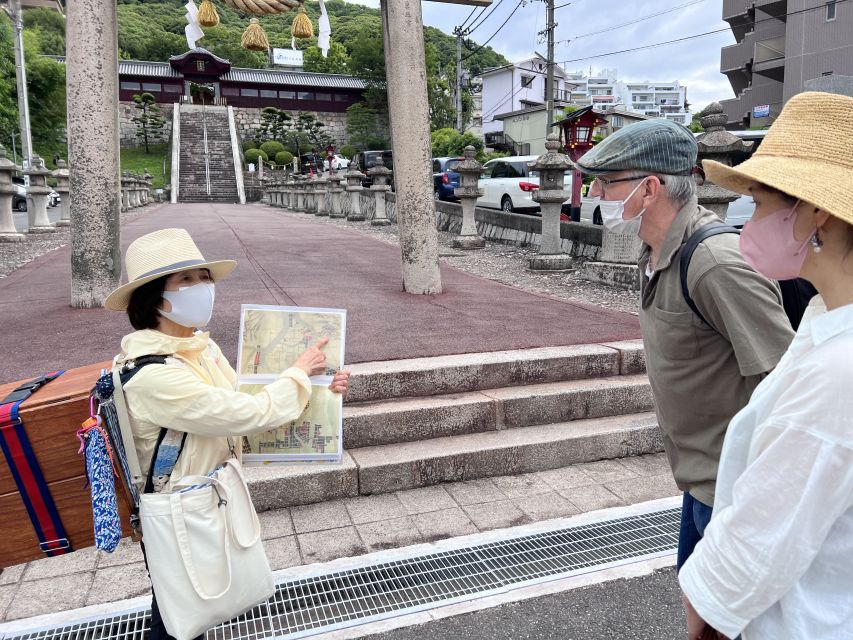
From Toshogu, the route continues toward Kinko Inari Shrine on Futaba Mountain. The uphill walk takes about 25 minutes, although your actual time can vary with the group and the number of stops.
The route includes many steps. The official warning says to expect 500 steps, while one guest counted 466, so do not treat the number as exact. The practical point is the same: you will climb a substantial stairway and repeat much of that effort on the way down.
You will find breaks along the way, and guides have been praised for keeping a comfortable pace. Still, the climb can leave your legs tired for the rest of the day. One person noted feeling the effect two days later, while another found the hike manageable. Your fitness, the season, and the weather will make a difference.
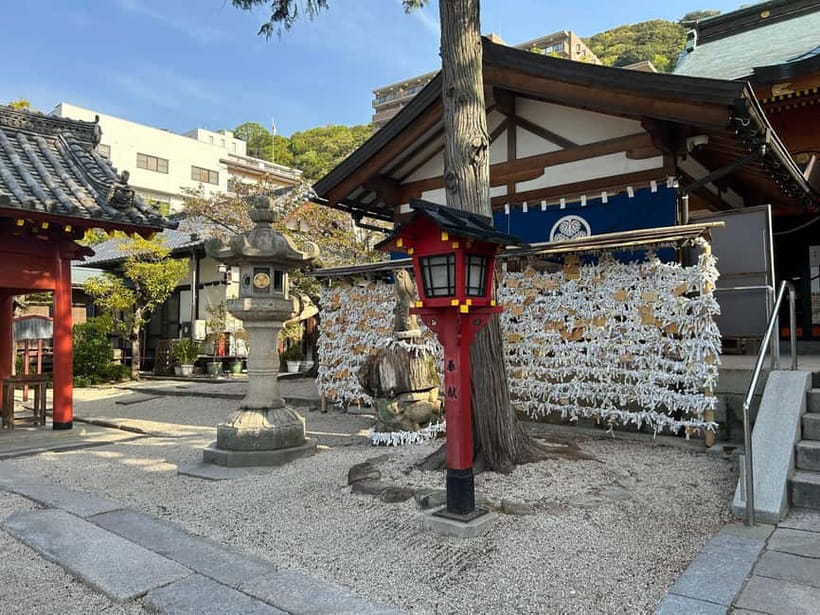
Kinko Inari Shrine adds a mountain setting to the cultural side of the tour. Here, the route feels less like a city sightseeing walk and more like a short pilgrimage through trees. The combination of greenery, shrine structures, and stone steps is one of the morning’s most distinctive features.
The tour is not suitable for people with heart problems. Even if you are generally active, you should be honest with yourself about steep steps and uneven walking. If you need a slow pace, tell the guide at the start.
A few more tea experiences around Japan worth a look
- Hiroshima Local guided Hiking Tour&Open-air Tea Ceremony
★ 5.0 · 213 reviews - From Sapa: 1-Day Guided Trek to Lao Chai & Ta Van with Lunch
★ 4.9 · 416 reviews - Half Day Sapa Trekking to Visit Lao Chai – Ta Van
★ 4.7 · 126 reviews - One Day Sapa Trekking to Lao Chai and Ta Van Villages
★ 5.0 · 80 reviews
The Peace Pagoda viewpoint over Hiroshima and Miyajima
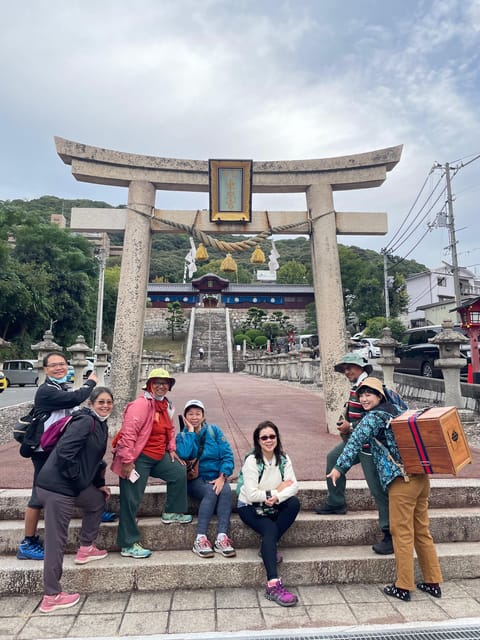
After roughly 25 minutes of hiking, you reach the Peace Pagoda, also called the Peace Tower in some descriptions. This is the high point of the outing and the place for the broadest view.
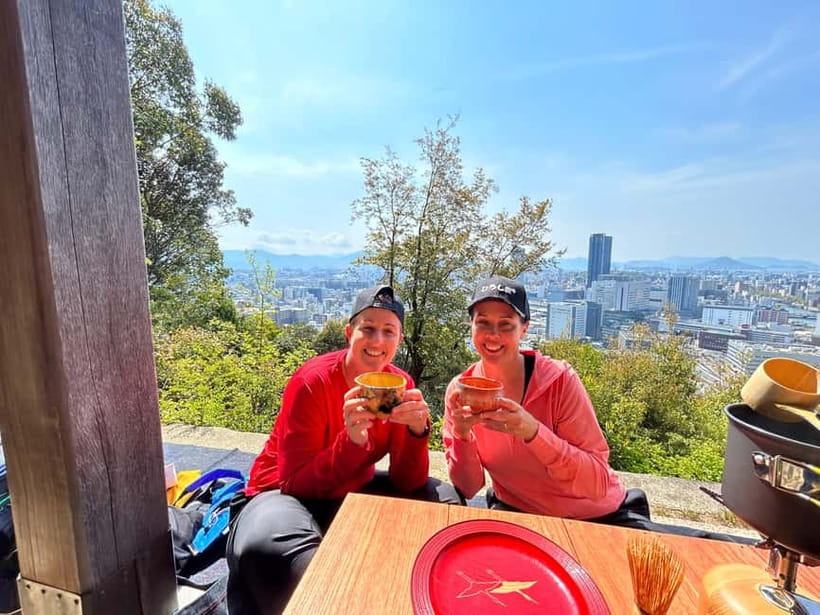
From here, you can look across Hiroshima City toward the Seto Inland Sea and Miyajima. The view gives you a useful sense of the city’s geography. Instead of seeing Hiroshima only from street level, you can understand how tightly the urban area sits between water and wooded hills.
The schedule allows about 35 minutes for the pagoda and viewpoint. That is enough time for photographs, a short rest, and an explanation from the guide. Morning sunshine is one of the advertised highlights, but the exact view will depend on clouds, haze, and the season.
This is a good place to pause before the tea ceremony. You have made the hardest part of the climb, and the reward is not just a scenic photo. The view helps connect the mountain, the city, the inland sea, and the island of Miyajima in one frame.
Keep your expectations practical. This is a mountain viewpoint reached by a stair climb, not an observation deck with elevators or facilities described in the tour details. Wear shoes with a firm grip and keep your hands free enough to manage the steps.
Forest bathing in the Futaba woods
After the climb, the experience shifts from sightseeing to attention. Forest bathing is included as a guided activity, but it does not mean taking a swim. One guest expected a bath after the hike and instead found a sensory meditation session.
The idea is simple: slow down, notice the trees and air, listen to the natural sounds around you, and allow your body to settle. The guides may add gentle movement or a short relaxation exercise. Another guest described the activity as a form of unique yoga, while others found it calm, unusual, and enjoyable.
This part works best if you accept that it is not a standard attraction. There may be no dramatic action and no formal performance. You are being asked to pay attention to the woods, which can feel refreshing after busy city sightseeing.
I see this as one of the tour’s most valuable features. Hiroshima’s major sights can be emotionally heavy and crowded. A quiet period in the forest gives you time to reset before returning to the city. It also helps explain why the mountain matters to local volunteers and people who care for the area.
Do not expect a spa treatment. Forest bathing is informal and outdoors. Its success depends on your willingness to slow down and take part.
The open-air Nodate tea ceremony
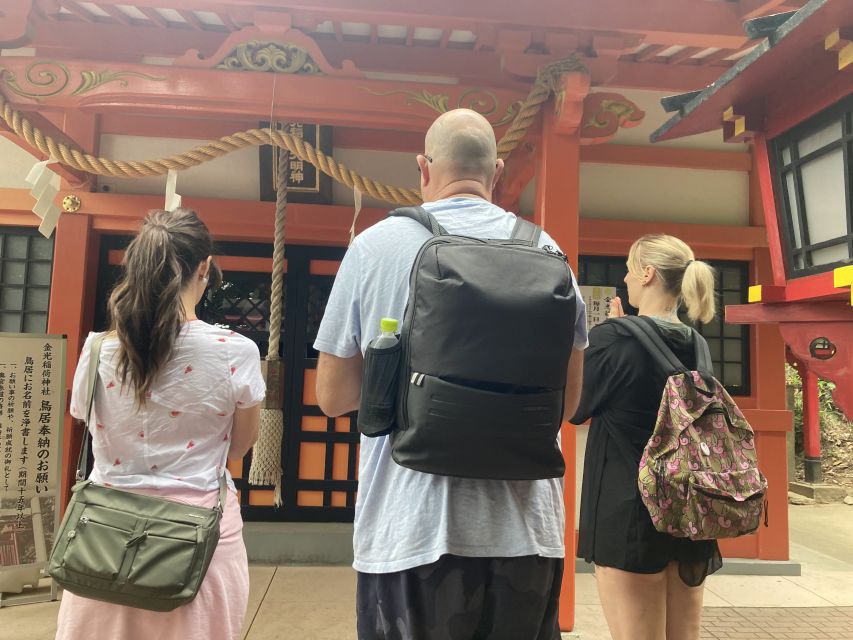
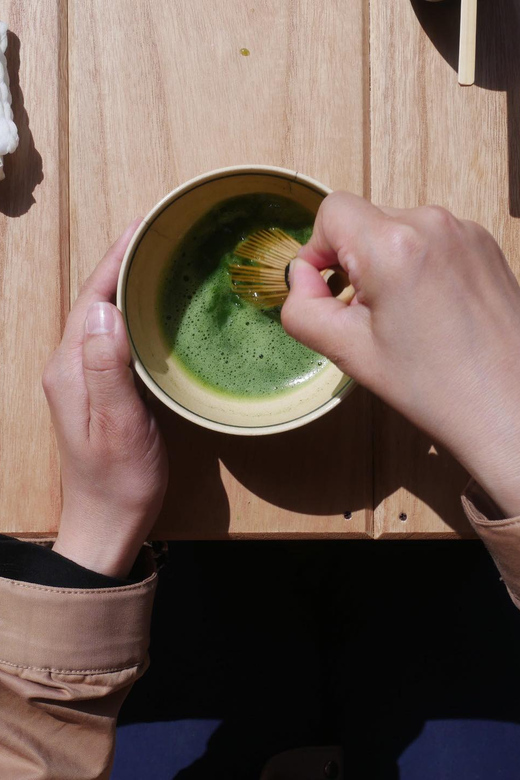
The tea ceremony takes place at Kinko Inari Shrine, after the main climb and forest activity. The guide prepares green tea outdoors, with the mountain and city view nearby. This is a Nodate ceremony, meaning tea prepared in an open-air setting rather than in a private tea room.
The setting changes the mood completely. You are not sitting in a formal room wearing a kimono. You are on a mountain, likely dressed for walking, with the morning light and trees around you. One guest made this useful distinction: the ceremony is casual, but still follows traditional tea-making rules.
Small sweets accompany the tea, and you may have the chance to help prepare matcha. One guide included a child in the process, while another guest was allowed to practice making the tea. That personal touch is especially valuable if this is your first contact with the ceremony.
The tea is not only about drinking matcha. The guide can show you how the bowl is handled, how the tea is whisked, and how the ceremony creates a moment of care and attention. The outdoor format makes it easier to ask questions and take part without feeling that you must already know the rules.
This is likely the emotional high point of the tour. You have climbed the mountain, seen Hiroshima from above, slowed down in the woods, and now sit with a warm drink in a quiet setting. The experience feels more personal than a quick tea tasting in a busy shop.
There is one practical point to keep in mind. The ceremony can run a little beyond three hours. If you have a tight lunch reservation or a train to catch, tell the guide at the beginning. One guest specifically advised allowing extra time.
What the guide adds to the morning
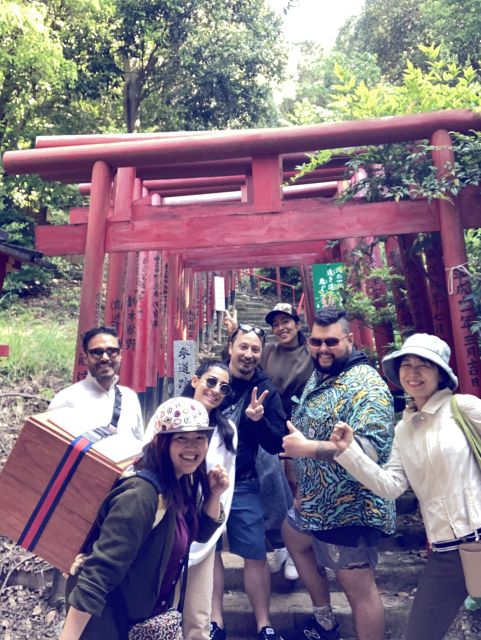
The guide is not simply there to lead you up the steps. The best part of the format is the local explanation along the way.
Naomi is praised for preparing historical material about Futaba Mountain, explaining the shrines clearly, and making the tea ceremony accessible. Nana is described as warm, energetic, and easy to talk with. Mimi receives strong praise for helping visitors learn about Hiroshima beyond the bombing and for making the forest activity approachable.
Michiyo is noted for kindness, cultural explanations, and a friendly manner, while Stephanie is described as fun, informative, and especially good at creating a relaxed experience. These comments point to an important strength: the tour relies on conversation as much as scenery.
The tour is available in Japanese and English. With a maximum of six people, you can usually ask questions during the walk rather than simply follow a flag through a crowd. The precise depth of the shrine explanation may vary. One person wanted more help from a priest or shrine worker on worship customs, so visitors seeking specialist religious detail should keep their expectations modest.
Is $106 good value for three hours?
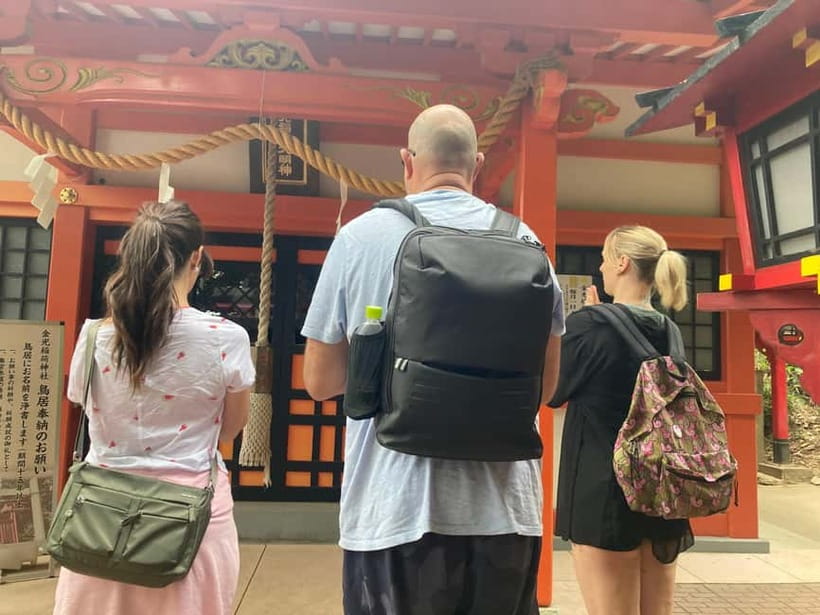
At $106 per person, this is not the cheapest way to spend a morning in Hiroshima. You are paying for a private-feeling small group, an English or Japanese guide, the guided mountain route, forest bathing, and an outdoor tea ceremony in a setting you would be unlikely to arrange easily on your own.
The value is strongest if you want several things in one outing: light hiking, shrine visits, a viewpoint, cultural explanation, and a hands-on tea experience. The price is less attractive if you only want a mountain view, since you could seek out public trails and viewpoints without paying for a guide.
Breakfast is included only if you select the breakfast option. Do not assume it comes with every booking. Hotel transport is not included, and the tour begins and ends around Hiroshima Station.
Free cancellation is available up to two days before the activity for a full refund. Starting times vary, so check availability when booking. Those details matter because the early schedule is one of the tour’s strengths, but the three-hour timing can be slightly flexible in practice.
Who should book this Futaba Mountain tour?
I would choose this for someone who wants a quieter, more personal morning in Hiroshima and is comfortable with stairs. It suits first-time visitors who want context about Shinto, Buddhism, local history, and the city beyond the Peace Memorial sites.
It also suits repeat visitors looking for something different. The forest, shrines, and open-air tea ceremony create a strong contrast with Hiroshima’s central museums and memorials.
Families can enjoy it if everyone can manage the climb and the adults are prepared for a physical morning. One family found the whole experience relaxing and enjoyable, while another guide included a child in the tea preparation. Still, small children or anyone who dislikes long stairways may struggle.
Choose another activity if you have heart problems, poor footwear, a strict schedule, or no interest in guided relaxation. The forest bathing section is gentle but unusual, and the hike is more demanding than the word morning tour might suggest.
FAQ
How long is the Hiroshima Futaba Mountain tour?
The scheduled duration is three hours, though it may run slightly longer. Allow extra time if you have a fixed lunch booking or a train to catch.
Where do I meet the guide?
Meet on the second-floor deck of Hiroshima Station, in front of the Shinkansen North Exit. Booking information also lists the Seven Bank ATM area among the meeting or drop-off choices.
How many steps are involved?
You should prepare for about 500 steps uphill. Individual counts can vary, but the route is a substantial stair climb, followed by a descent.
Is forest bathing a swim?
No. On this tour, forest bathing is a sensory relaxation activity in the woods. It may include quiet observation, meditation, or gentle movement.
Is breakfast included?
Breakfast is included only when you select the breakfast option. It is not automatically part of every booking.
What languages are available, and how large is the group?
The tour is offered in Japanese and English, with a maximum of six participants.
More Morning in Japan
- Tokyo Morning Japanese Tea and Meditation Experience in Japan
★ 5.0 · 2 reviews - Great Ocean Road Tour Plus Koalas, Forest Walk and Morning Tea
★ 4.5 · 1,068 reviews - Morning Sightseeing Cruise: 10:30am-12pm (90min)
★ 4.5 · 973 reviews - Great Ocean Road, 12 Apostles, Rainforest & Morning Tea-Melbourne
★ 5.0 · 568 reviews
Just added around Japan
- Yokohama : Tea Ceremony with Sweets and Souvenir★ 5.0 · 5 reviews
- Whisk Your Own Matcha: A Zen Matcha Experience at Temple★ 3.6 · 7 reviews
- Walking Tour: Yanaka,Nezu& Sendagi: Tea Ceremony & Old Tokyo★ 5.0 · 3 reviews
- Visit local home for music and tea ceremony near Disney★ 4.9 · 13 reviews
- Yokohama: Sushi & Gyoza Cooking with Matcha & GreenTea Experience★ 5.0 · 3 reviews
- Trip to Kamakura & Enoshima: Shrines, Seaside, Temples &Tea★ 5.0 · 11 reviews
- Kyoto tea town for matcha lovers★ 5.0 · 16 reviews
- Uji: Private immersion into Kyoto’s tea and reglious culture★ 5.0 · 17 reviews
Tea Ceremony Experiences, compared.
Tea Ceremony in a Traditional Tea House in Kiyomizu
Read our review →
Browse the lists this tour appears in