
Review · KYOTO
Kyoto: Nishiki Market Tea Ceremony with Koto Performance
Kyoto’s KOTOLILY KYOTO pairs two Japanese traditions in one compact hour: you prepare your own matcha, then listen to live koto music in a small studio near Nishiki Market. Yurika’s warm teaching and clear English help turn each step into something understandable rather than a silent ritual.
I especially like the live music between stages of the ceremony and the chance to whisk your own tea instead of simply watching someone else make it. The main thing to consider is the setting: this is a small shop, not a grand temple ceremony, and kimono wear, photos, videos, and a koto lesson cost extra.
Key points to know
- You make your own matcha: Learn the basic movements and prepare a creamy, less bitter cup with guidance.
- Yurika leads the session: Her English explanations cover tea etiquette, Japanese culture, and the koto’s story.
- Live koto music is part of the hour: Performances take place before and after the tea making.
- Nishiki Market is close by: Pair the activity with food stalls, shops, and central Kyoto sightseeing.
- Optional kimono photos add visual appeal: On-site kimono dressing, photos, and video are available for an additional fee.
- Small and intimate: The group is limited to eight people, but the studio is not suitable for wheelchair users or children under eight.
A tea ceremony with music, not just a demonstration
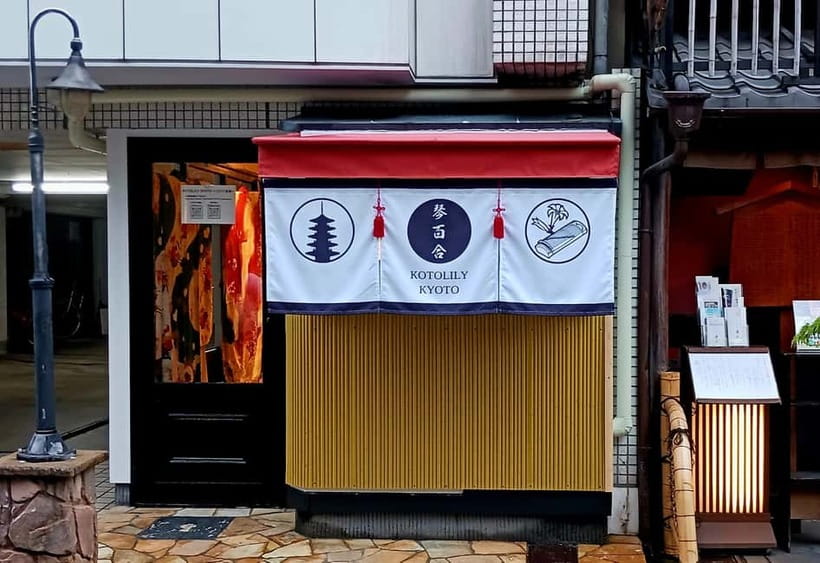
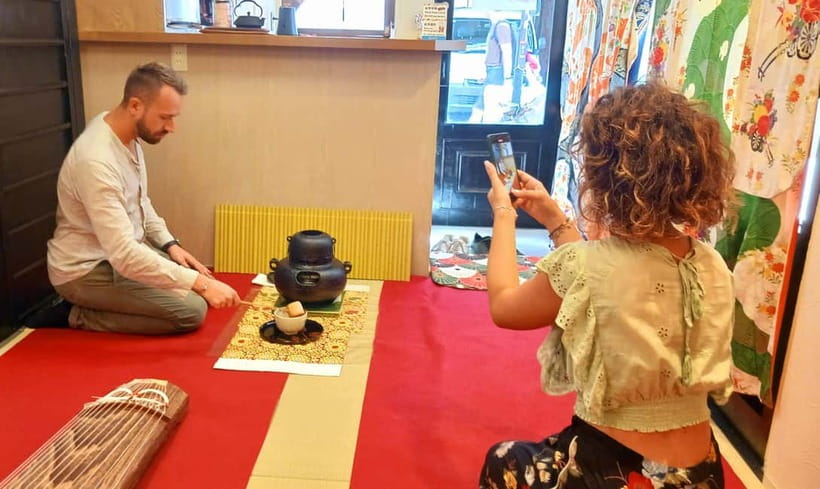
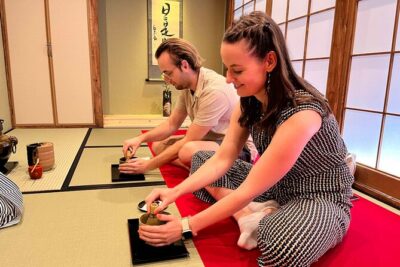
Many short cultural activities ask you to sit quietly while an expert performs each step. This one gives you a job. You handle the matcha, add water, and whisk the tea yourself while learning why the movements matter.
That makes the hour more engaging, especially if you have never tried matcha preparation. You are not expected to know Japanese etiquette in advance. Yurika guides you through the process and explains enough of the background to make the gestures feel purposeful.
The koto adds a second cultural thread. This long, traditional Japanese string instrument is often described as a Japanese harp, though its sound and playing style are distinctly its own. Yurika performs several pieces and talks about the instrument, giving you something to listen to as well as something to learn.
The result is a gentle cultural stop in central Kyoto. It does not attempt to recreate a full formal tea gathering in a temple. Instead, it offers an accessible introduction to tea, sweets, music, and Japanese hospitality in one small room.
More Tea Ceremony Experiences in Kyoto:
- Kyoto: Tea Ceremony in a Traditional Tea House in Kiyomizu
★ 4.9 · 3,519 reviews - Kyoto: Tea Ceremony Ju-An at Jotokuji Temple
★ 4.9 · 3,207 reviews - Kyoto: 45-Minute Tea Ceremony Lesson Experience
★ 4.3 · 2,378 reviews
Finding KOTOLILY KYOTO near Nishiki Market
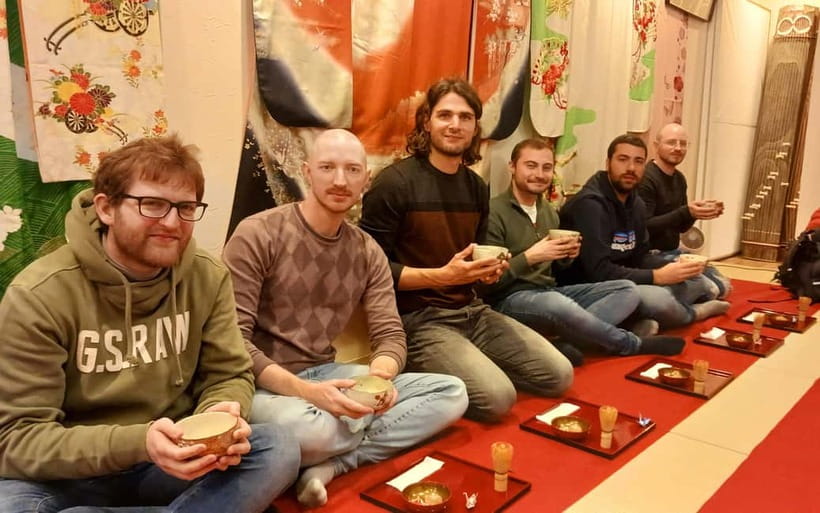
The meeting point is KOTOLILY KYOTO, next to KINMATA Restaurant and across the street from Hotel GOCO stay. Go inside the shop rather than waiting outside at the hotel. This detail matters because the nearby hotel is a landmark, not the meeting point.
The location is useful for a Kyoto sightseeing day. Nishiki Market and its surrounding shopping streets are close, so you can schedule the activity before exploring food stalls or use it as a calm break after walking through the area. It is also indoors, which makes it a practical choice on a rainy day.
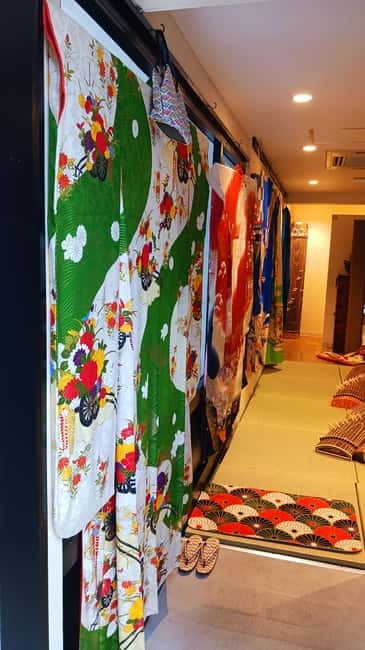
Allow a few extra minutes to locate the entrance. Central Kyoto has compact streets and busy shopping areas, and the shop itself is easy to miss if you are watching only for a large sign. Once inside, expect a small studio with kimonos displayed on the walls and space arranged for the ceremony and performance.
You will remove your shoes at the door. Wear clean socks and leave bulky luggage elsewhere if possible. A large backpack can be managed, but the room does not offer much spare space for suitcases or large shopping bags.
The first koto performance sets the mood
The activity includes live koto music before and after the tea ceremony. Starting with music gives the hour a quiet opening and lets you see the instrument before you begin handling tea tools.
Yurika’s playing is one of the strongest reasons to choose this experience over a basic matcha workshop. She is not simply putting on background music. She has studied the koto for years and explains something about its history and sound as part of the session.
You might hear traditional pieces as well as familiar musical arrangements. The performance is not presented as a full concert, so the main purpose remains the tea ceremony, but the musical interludes are substantial enough to feel like a meaningful part of the experience.
I like this structure because it prevents the class from becoming a string of instructions. You have moments to watch, moments to listen, and moments to take part. The pace also suits people who want a peaceful hour without committing half a day to a cultural program.
Making matcha with clear, friendly instruction
The tea portion begins with an explanation of matcha and the basic etiquette surrounding its preparation and serving. You then make your own tea, from adding the water to whisking the powder into a smooth drink.
The goal is a creamy cup with less bitterness. That depends on the method, and Yurika shows you how to get there rather than assuming you already know how to handle the whisk. The process is simple enough for first-time visitors but still interesting if you have prepared matcha before.
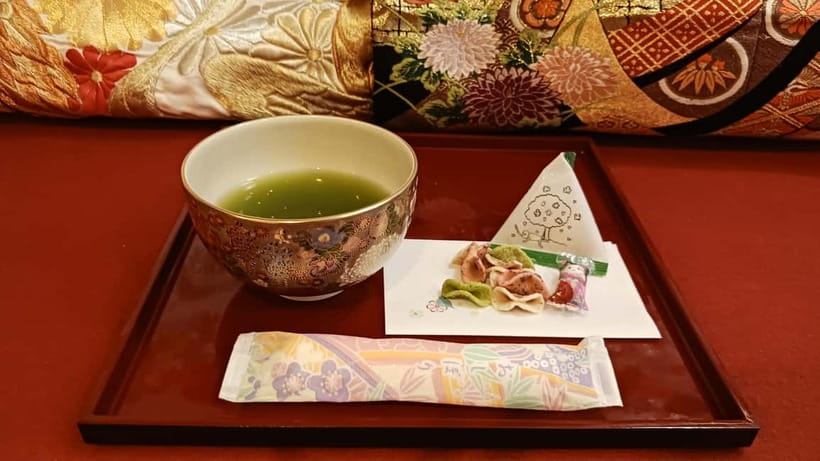
You will also receive Japanese tea sweets. Their sweetness balances the earthy flavor of matcha and helps explain why sweets are served with the tea. If you are unsure about matcha, this is a useful introduction because you can adjust your expectations through the preparation itself rather than being handed a strong cup without context.
Food allergies are a stated restriction, so this experience is not suitable if you have them. The activity does not include a meal. Think of the sweets as a small accompaniment, then plan to eat separately at Nishiki Market or elsewhere in central Kyoto.
The ceremony is participatory but not physically demanding. You sit indoors, follow instructions, and use the tea tools provided. The one-hour length works well for families with older children, couples, solo visitors, and anyone who wants a focused activity between major sightseeing stops.
More Market Visits in Kyoto:
- Active Volcano, Rice Field, Hot Spring, Fruit market, Tea Plantation with Lunch
★ 5.0 · 513 reviews - Delicious Doughnuts & Tea: Small-Group Borough Market Experience
★ 5.0 · 169 reviews - Tea Time & Doughnuts at Borough Market: A Proper London Treat
★ 5.0 · 41 reviews - Old Delhi’s heritage, Spice market, Masala Chai & food sampling
★ 5.0 · 30 reviews
What the tea etiquette adds
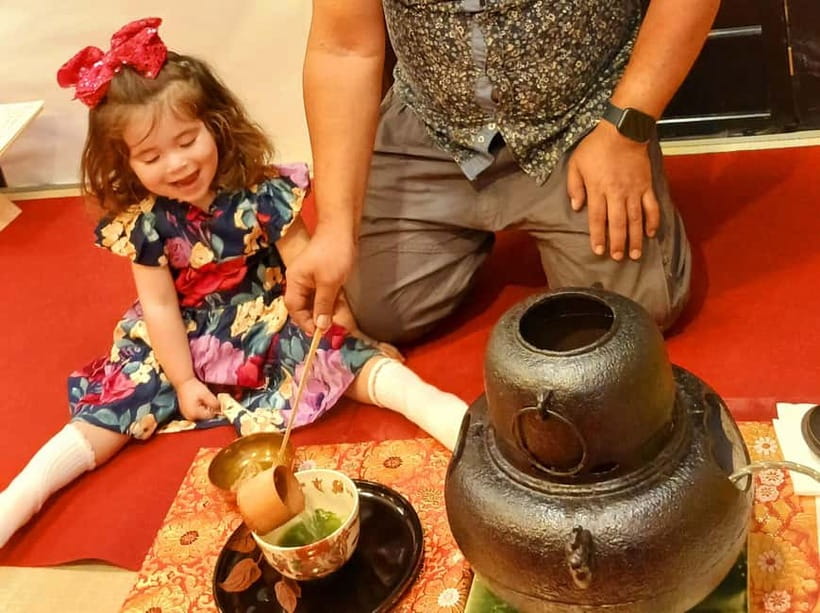
The value here is not just learning to whisk green tea. Tea etiquette gives you a small window into Japanese ideas about attention, respect, and hospitality. Each movement has a place, and the instructor explains enough of the meaning to keep the ceremony from feeling like a sequence of empty motions.
You do not need to memorize every rule. The point is to notice how preparation, presentation, and drinking fit together. That makes the experience more useful than a quick photo stop, especially if you want some cultural context during a packed Kyoto visit.
The teaching style is friendly rather than stern. Yurika uses humor and personal warmth to help people relax, which matters because visitors can feel self-conscious when handling unfamiliar utensils or following formal gestures. Her English is described as strong, and the activity is offered in English and Japanese.
If you have already attended a tea ceremony elsewhere in Japan, this session may feel familiar. Its difference is the combination of hands-on matcha making and live koto music. It is less about seeing a rare ritual in a historic building and more about gaining an approachable understanding of two traditions.
Optional kimono photos and the extra-cost choices
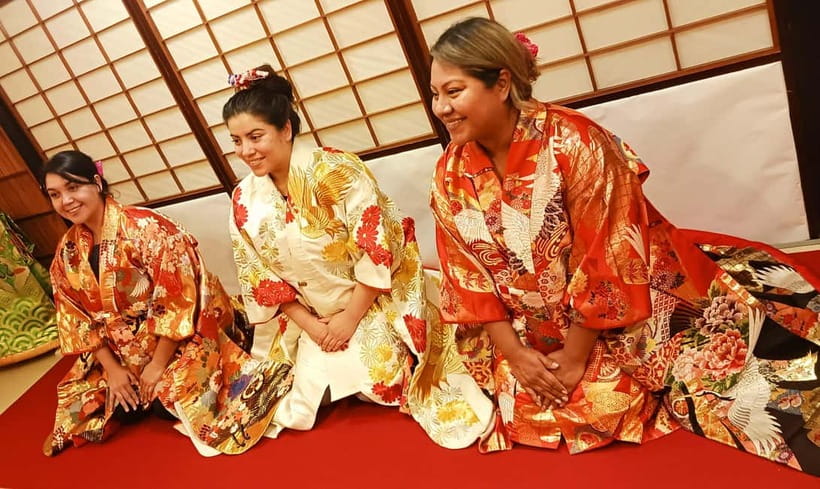
Kimonos are available on-site for an additional fee. You can arrange a kimono try-on with photos and video after the tea ceremony, and traditional hairpieces may also be available as part of the photo option.
This is worth considering if you want a polished souvenir from Kyoto. The studio has several beautiful kimono choices, and the setting is already arranged for cultural photos. You should treat this as an add-on, not part of the $56 base price.
There is one practical limitation: the standard tea session does not promise that you will wear the kimono while making and drinking the tea. The add-on is generally handled after the ceremony for photos, so book it for the images rather than assuming it changes the entire activity.
You can also ask about a short koto-playing lesson for an additional fee. The lesson is arranged on-site, so ask the staff after the ceremony if the option interests you. It is a good choice for someone who wants more than passive listening, but it is not included in the advertised experience.
These extras give you flexibility. You can keep the basic visit to one hour and $56, or turn it into a more visual and hands-on cultural session. Ask about the current cost and availability at the location before committing.
Is $56 good value for one hour?
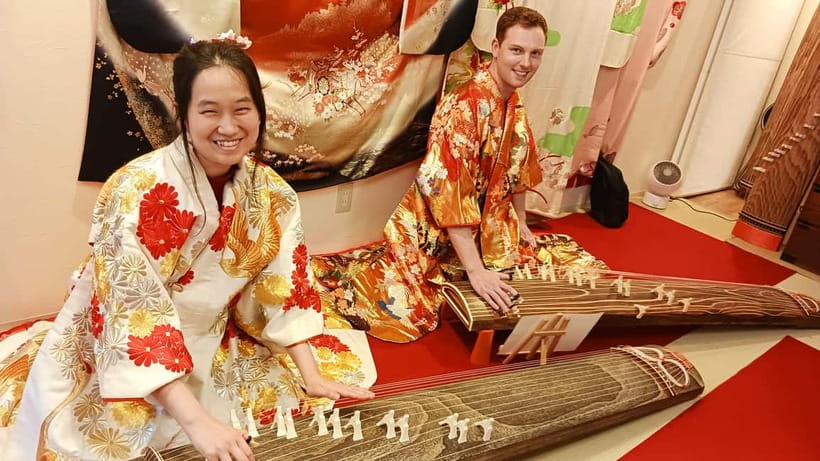
At $56 per person, this is not the cheapest way to drink matcha in Kyoto. You are paying for instruction, a small group, tea sweets, and a live musical performance, not simply for a cup of tea.
The value is strongest if you want several elements in one booking. A basic tea tasting might cost less, but it will not necessarily include a personal lesson in making matcha or a professional koto performance. The limited group size, capped at eight, also allows for more direct help than a large class.
The price makes less sense if your main goal is a long formal ceremony or a temple setting. This is a short studio experience near the shopping streets. It is designed for visitors who want an easy cultural activity that fits around a full day in Kyoto.
I would see it as a good midrange choice for first-time visitors. You get an activity, a performance, a snack, and a local host in a single hour. Add the kimono photos only if those images matter to you, since they increase the cost beyond the base booking.
Who will enjoy this Kyoto activity most?
This experience fits couples, families with older children, solo visitors, and small groups of friends. It is especially useful for anyone who wants a cultural activity explained in English without spending several hours at a formal school or ceremony.
It also suits people who are curious about matcha but do not consider themselves tea experts. You will receive enough guidance to avoid feeling lost, and the hands-on format makes the lesson easy to follow.
Music lovers have an extra reason to choose it. The koto performance is not a token addition. It is repeated during the hour, and Yurika’s playing and explanations give the instrument a clear place in the experience.
The activity is not suitable for children under eight, wheelchair users, or people with food allergies. The compact room and shoe-free setup may also be uncomfortable for anyone who needs more space or has difficulty sitting and moving in a small indoor setting.
Practical tips before you go

Wear comfortable clothes. You do not need to dress formally for the tea ceremony, and comfortable clothing makes it easier to sit and take part.
Bring a camera, but do not use flash photography. If you plan to purchase the kimono photo option, a camera or phone will help preserve the moment, but follow the staff’s instructions in the small studio.
Arrive at the shop rather than waiting at the nearby hotel. The correct place is KOTOLILY KYOTO, next to KINMATA Restaurant. Shoes come off inside, so clean socks are a thoughtful choice.
Keep large bags to a minimum. The studio can handle ordinary day bags, but a suitcase would be awkward. Nishiki Market is close enough that you can visit before or after, but plan your route so you are not rushing into the one-hour appointment.
The experience offers free cancellation up to 24 hours in advance, and you can reserve now and pay later. Check the available start times when booking, since the activity runs for one hour and does not include transportation.
Should you book KOTOLILY KYOTO?
Book it if you want a compact, personal introduction to matcha and Japanese music in central Kyoto. The combination of making tea and hearing live koto gives the hour more substance than a standard tea tasting, while Yurika’s clear explanations make the experience friendly for beginners.
Skip it if you want a grand temple setting, a full formal tea ceremony, or a full meal. Also keep the add-on costs in mind if the kimono photos or koto lesson are central to your plans.
For most visitors, the base experience offers solid value at $56. It gives you something to do, something to taste, and something to hear, all within easy reach of Nishiki Market. Schedule it when you want a quiet cultural pause in the middle of a busy Kyoto day.
FAQ
How long does the tea ceremony experience last?
The activity lasts one hour. Check the available starting times when booking.
Where does the activity take place?
It takes place at KOTOLILY KYOTO in central Kyoto, next to KINMATA Restaurant and across the street from Hotel GOCO stay. Enter the shop rather than waiting at the hotel.
Is the activity offered in English?
Yes. The instructor languages are English and Japanese.
What is included in the $56 price?
The price includes the tea ceremony experience, matcha green tea making, tea sweets, and a live koto performance.
Are kimono photos included?
No. Kimono wear, photos, and video are available on-site for an additional fee. Ask the staff after the tea ceremony.
Can children or wheelchair users join?
Children under eight cannot join, and the activity is not suitable for wheelchair users. People with food allergies should also avoid this experience.
More Shopping Tours in Kyoto
- Paris VIP Shopping Experience-Lounge Access, Tea time & Transfer
★ 4.0 · 52 reviews - Taipei Fresh Market Tour and Colorful Bubble Tea Making
★ 5.0 · 6 reviews - Taipei: Taiwan Traditional Breakfast & Market & Tea Tasting
★ 5.0 · 6 reviews - [NEW]JPN CULTURE – Buy@Toyosu Market SUSHI Making +TEA +Maid Cafe
★ 5.0 · 5 reviews
Just added around Kyoto
- Whisk Your Own Matcha: A Zen Matcha Experience at Temple★ 3.6 · 7 reviews
- Uji Walking Tour – Byodo-in temple and Tea Ceremony from Kyoto★ 3.5 · 3 reviews
- Kyoto: Authentic Tea Ceremony in a Small Group★ 5.0 · 7 reviews
- Tea ceremony at Kyoto’s Zen Temple Teahouse★ 5.0 · 2 reviews
- Traditional Tea Ceremony in Kyoto★ 4.5 · 3 reviews
- Tea Ceremony in 150 Years Old Townhouse with Tables and Chairs★ 5.0 · 22 reviews
- Silent Beauty of Kyoto Zen Walk and Tea Experience★ 5.0 · 2 reviews
- Tea Ceremony Experience in Traditional Kyoto Townhouse★ 5.0 · 19 reviews
Tea Ceremony Experiences, compared.
Tea Ceremony in a Traditional Tea House in Kiyomizu
Read our review →
Browse the lists this tour appears in