
Review · KYOTO
Kyoto: Tea Ceremony, in traditional Japan house (ENG/ES/NLD)
Kyoto’s tea ceremony is much more than a cup of green tea. In this 100-year-old home near Omiya, you’ll learn why the room, flowers, scroll, gestures, sweets, and changing seasons all matter. A Japanese teacher with decades of practice performs the ceremony, while English, Dutch, or Spanish support keeps the lesson clear.
I like the small group of six, since you can see the careful movements and ask questions without whispering across a crowded room. I also like that you prepare your own bowl of matcha after watching the teacher. The main drawback is practical: sitting on the floor can be tiring, and the experience is not suitable for wheelchair users.
Key points
- A real tea room in a century-old Japanese house, once owned by a family connected to kimono fabrics.
- Two bowls of matcha, one prepared by the teacher and one whisked by you.
- Seasonal details matter, from the flowers and hanging scroll to the utensils and sweets.
- Small groups of up to six make it easy to see the ceremony and ask questions.
- English, Dutch, and Spanish support is available, with Spanish offered upon request.
- Socks are required, and chairs can be provided if kneeling is difficult.
Entering the old house near Shinrenji
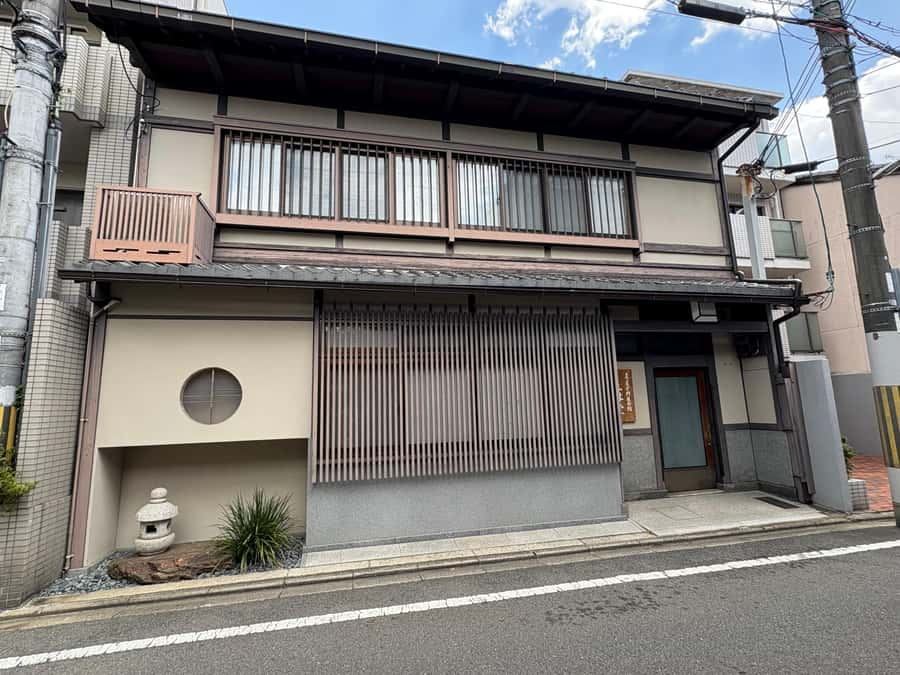
The experience takes place across from Shinrenji, about five minutes from the Hankyu Omiya or Shijo Omiya bus stop. Look for the person holding a tablet with the GetYourGuide logo. The meeting point is not a grand public attraction, so having the temple and the address ready on your phone will make arrival easier.
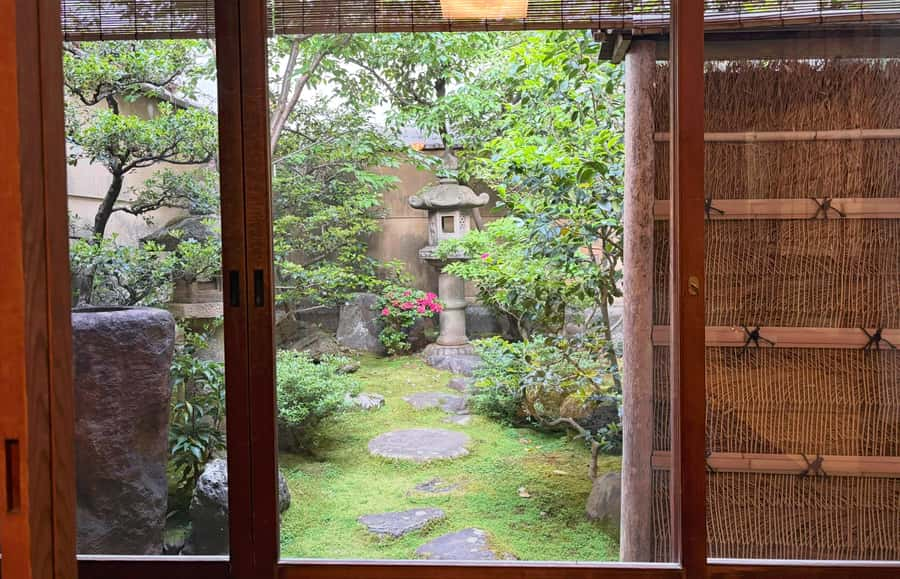
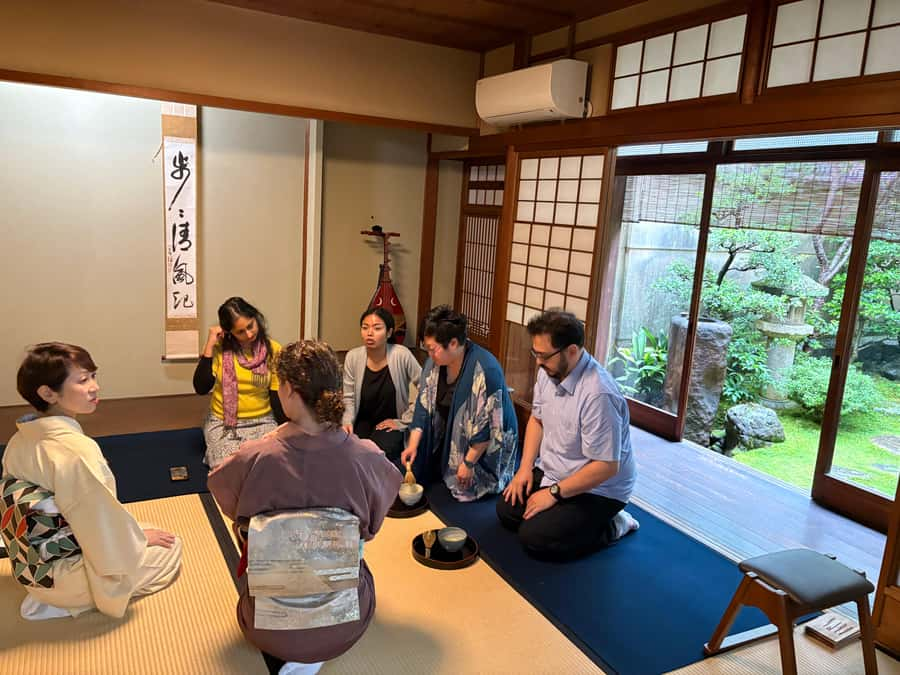
You enter a traditional Japanese home with a view toward a small garden. The house is about 100 years old and once belonged to a family that sold kimono fabrics. It later came into the possession of the temple across the road, and the tea room was retained because the former owners practiced tea ceremony themselves.
That background gives the setting more meaning than a modern activity room would. You are not simply sitting in a staged display. The tea room is part of the house’s story, and its compact design helps you notice the details that are easy to miss in a larger venue.
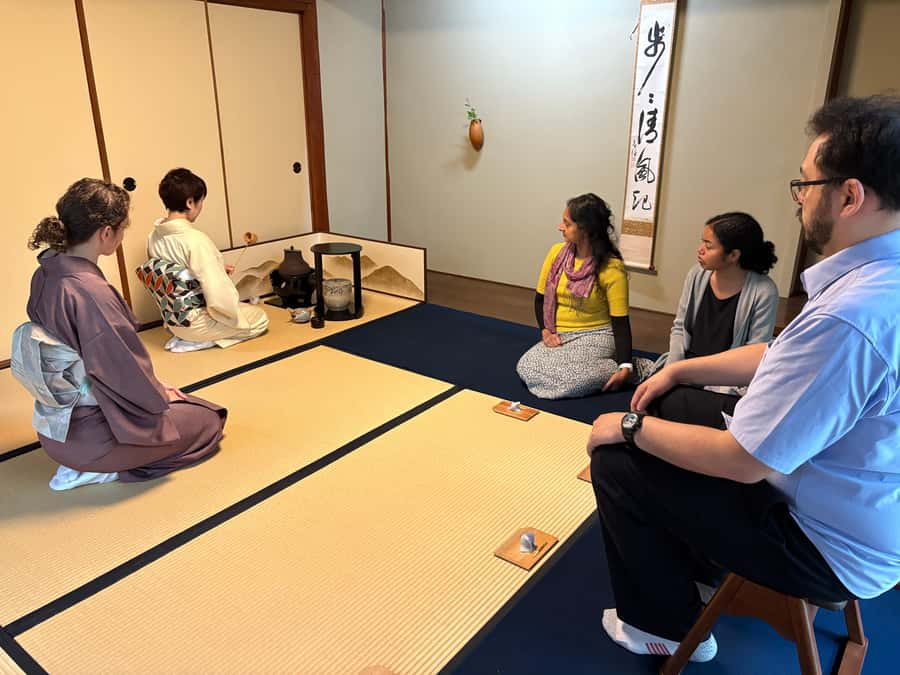
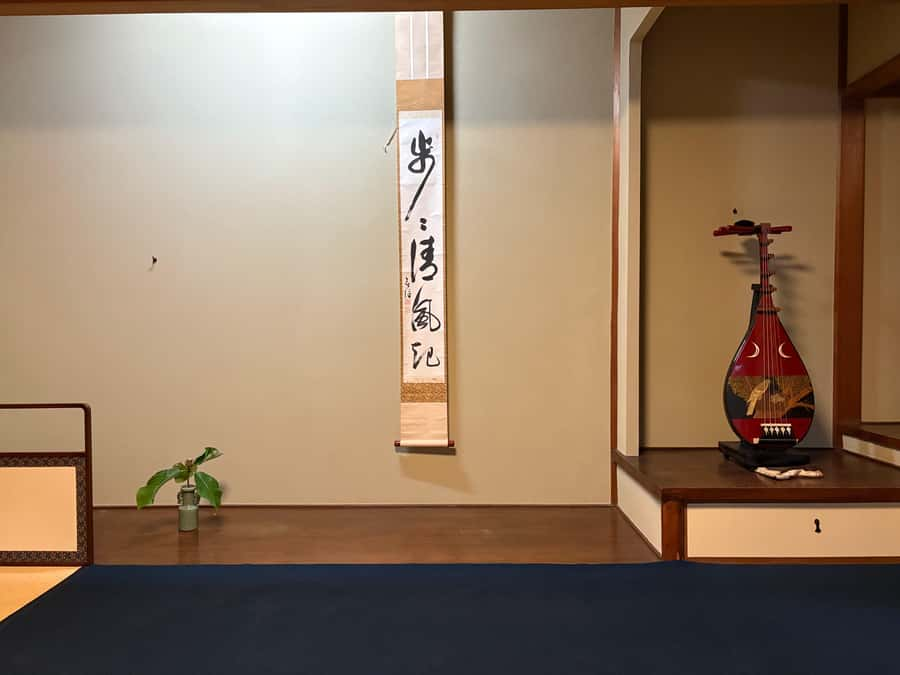
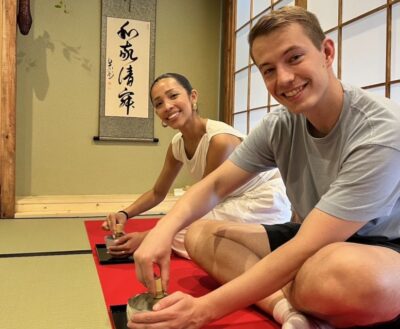
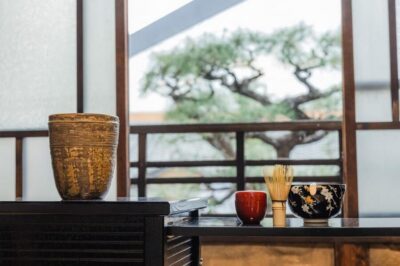
Take a moment to look around before the ceremony begins. Seasonal flowers are displayed, and a hanging scroll carries a seasonal saying. The utensils and sweets change with the time of year, so the room is not arranged as a fixed museum exhibit. Its details are meant to fit the season and the occasion.
More Tea Ceremony Experiences in Kyoto:
- Kyoto: Tea Ceremony in a Traditional Tea House in Kiyomizu
★ 4.9 · 3,519 reviews - Kyoto: Tea Ceremony Ju-An at Jotokuji Temple
★ 4.9 · 3,207 reviews - Kyoto: 45-Minute Tea Ceremony Lesson Experience
★ 4.3 · 2,378 reviews
What sadō means beyond drinking tea
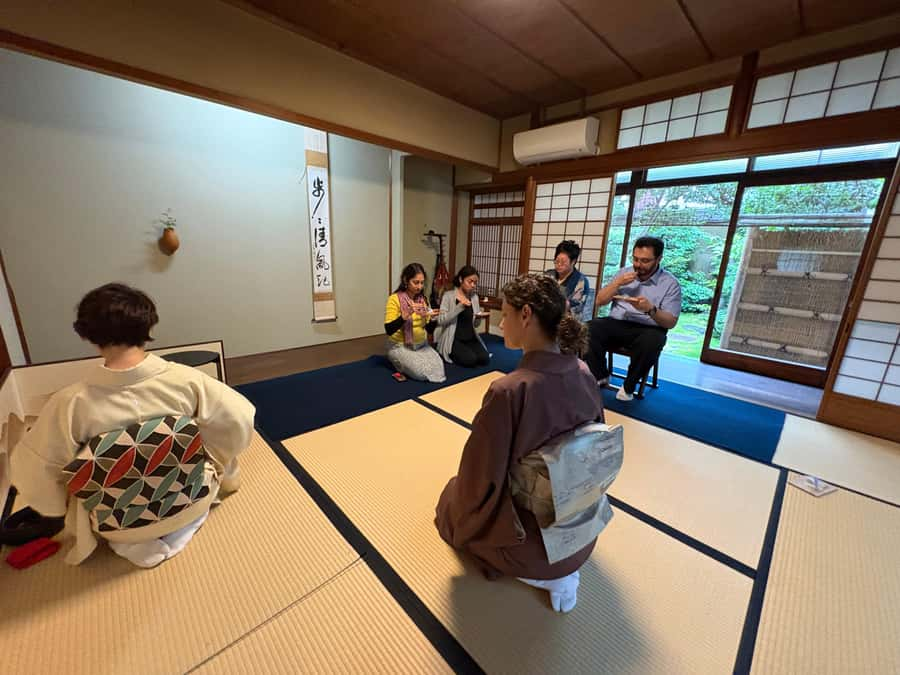
The Japanese words sadō and chanoyu refer to the way of tea. The point is not simply to drink matcha, and the ceremony is not a performance designed only for photographs. It is an art built around preparation, attention, respect, and hospitality.
The introduction explains the history and use of tea ceremony, then gives you the basic language for understanding what you see. That context is important. Without it, the movements can look slow and mysterious. With it, you begin to understand why the teacher turns a bowl a certain way, handles each utensil with care, and gives attention to the guest before the tea is served.
The atmosphere is deliberately casual. Questions are encouraged, so you can ask about the tea room, the objects, the movements, or the customs around drinking. This is a good fit if you are curious but worried that a formal Japanese ceremony might feel intimidating.
The Japanese teacher brings decades of experience to the demonstration. The activity information describes a teacher with 50 years of practice, while one Spanish-language session was presented as having more than 30 years of experience. Either way, you are watching someone who has spent a large part of life learning and repeating these movements, not a guide rushing through a tourist presentation.
Watching the teacher prepare the tea
After the introduction, the teacher performs the ceremony. The room is small, which works in your favor. With no more than six people, you should have a clear view of the bowl, whisk, scoop, and other utensils.
The ceremony’s quiet rhythm is part of its appeal. You are given time to notice the order of the actions and the care taken with each object. The teacher’s movements are elegant, but the explanation keeps them from becoming empty decoration.
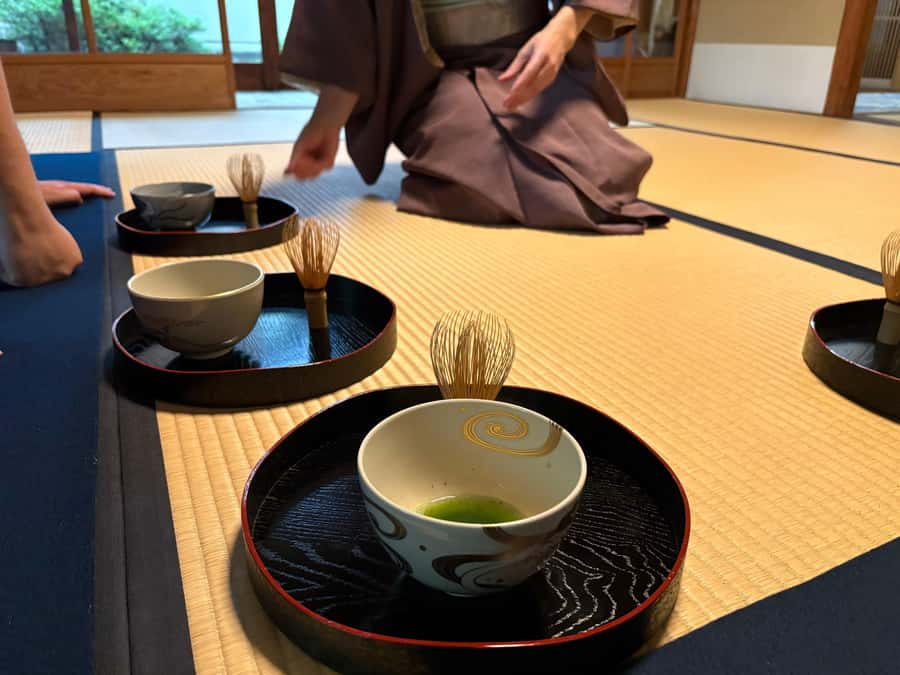
You receive one bowl of matcha prepared by the teacher, along with a seasonal Japanese sweet and a smaller sweet. Most of the sweets contain anko, or sweet red bean paste. They are made to order, and no alternative sweets are available, so this matters if you dislike red bean or have dietary concerns.
The sweet is not an extra snack added at random. In tea ceremony, it balances the bitter edge of matcha and prepares your palate for the tea. The changing sweets also connect the experience to the season. You might not get the same item on another visit, since the selection depends on the time of year.
You may take photographs and videos. Still, I would keep your phone down during much of the demonstration. The ceremony is easier to understand when you watch the sequence directly rather than through a screen.
Whisking your own bowl of matcha
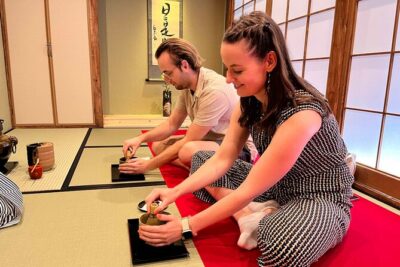
The hands-on part comes after the demonstration. You prepare your own bowl of matcha, with guidance from the host or teacher. This is where the ceremony becomes less mysterious and more physical.
Whisking looks simple until you try it. The tea powder and water need to be worked together into a smooth drink, and the motion takes practice. You will likely gain more respect for the teacher’s calm, even movements after making your own bowl.
You also receive a second small sweet with your tea. The result is not meant to be a test of skill. It is a chance to take part in one small section of the ceremony and understand how much attention goes into a bowl that can be prepared in only a short time.
The relaxed tone helps here. You are free to ask questions while learning, and the setting does not demand perfect form from a first-time participant. That makes the activity suitable for people who want cultural context without committing to a full formal tea lesson.
A few more tea experiences around Kyoto worth a look
- Kyoto: Table-Style Tea Ceremony at a Kyo-Machiya
★ 4.9 · 1,211 reviews - Kimono Tea Ceremony at Kyoto Maikoya, NISHIKI
★ 5.0 · 911 reviews - Kyoto: Kimono Tea Ceremony at Orizuruya Gion
★ 4.9 · 618 reviews - Kyoto: Tea Ceremony in 100-year-old Kyo-Machiya Townhouse
★ 4.8 · 546 reviews
Why six people is the right group size
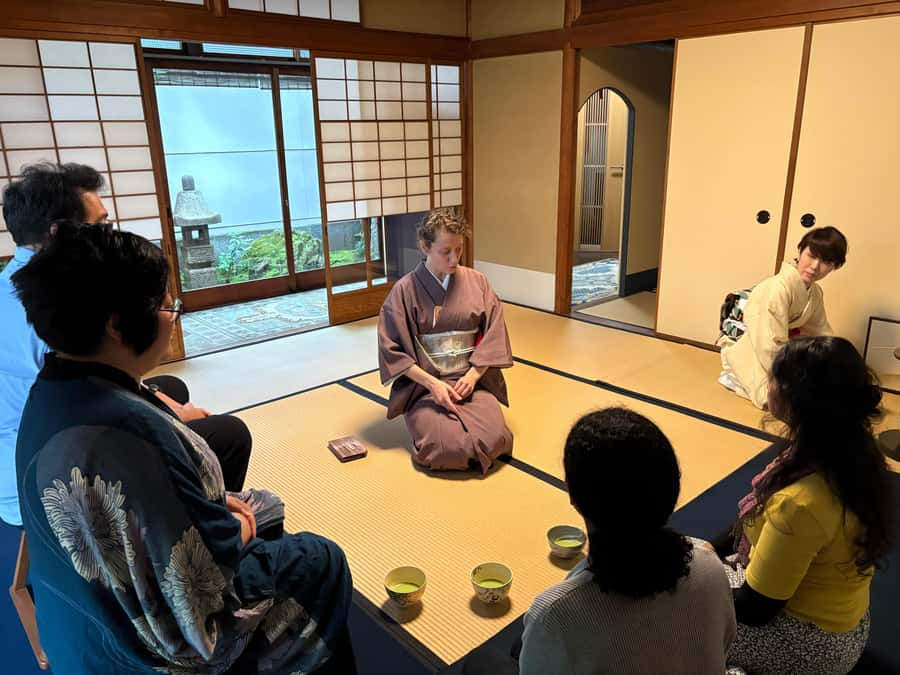
The maximum group size is six. That limit has a clear benefit: everyone can see the teacher’s hands and hear the explanations. In a large group, the central movements can disappear behind shoulders, and questions often get saved for the end. Here, the format is more personal.
The length is listed as one hour. There is one small qualification: if the time slot does not fill to six people, the session may finish sooner because the teacher has fewer bowls to prepare. That is not necessarily a problem, but you should know that one hour is the full expected duration, not a guaranteed minimum.
The experience can also work for families. A session included a baby, and the hosts were described as kind and friendly. The activity does not provide a special children’s program, but the casual atmosphere gives families more flexibility than a strict, silent ceremony might.
English support is available, and Dutch and Spanish can also be arranged. The English assistance comes from a native English speaker who translates the Japanese explanations. Spanish is available upon request, and José and his wife helped provide a fully Spanish-language experience for one group. If language is important to you, request your preferred language in advance rather than assuming every session will operate in all three languages.
Sitting on the floor and other practical points
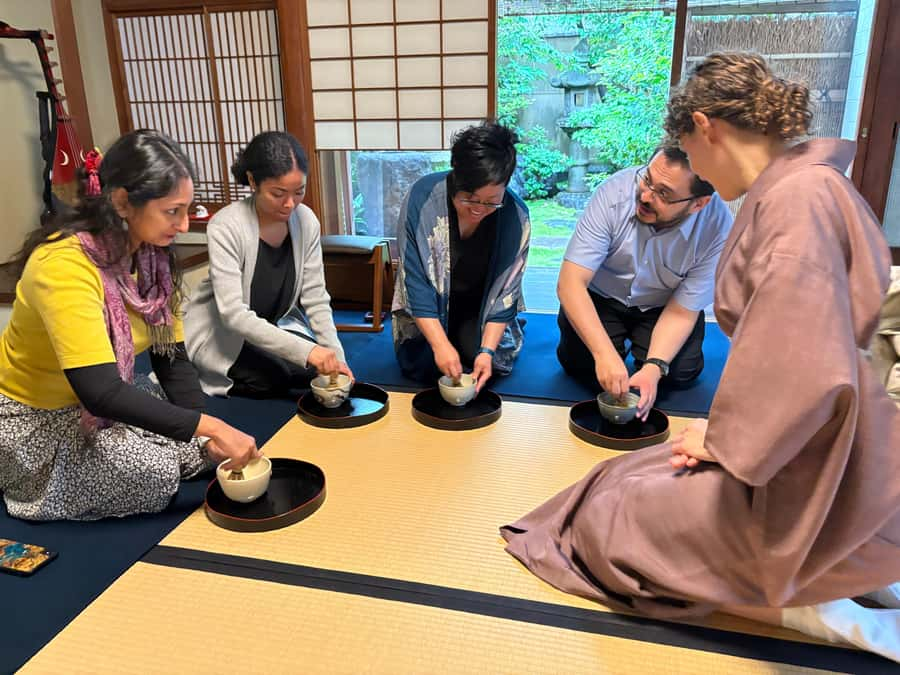
Traditional tea ceremony often uses seiza, the formal kneeling position with your legs tucked under your thighs and your weight resting on your heels. It looks composed, but it can become uncomfortable quickly, especially if your knees or ankles are stiff.
Chairs are available. Ask for one before the ceremony begins if kneeling is difficult. You do not need to prove anything by sitting in pain. The activity is not suitable for wheelchair users, and the traditional house setting may be difficult for people with limited mobility.
You must wear socks or bring a pair. Bare feet are not allowed in the tea room. This is a simple rule, but an easy one to miss when packing for a warm Kyoto day.
Matcha contains a high amount of caffeine. If you cannot consume caffeine for medical reasons, you will not be able to drink the tea. There is no alcohol or casual drink service, and outside drinks are not allowed in the room.
The activity does not include a kimono, hotel pickup, or transportation. That keeps the price focused on the tea ceremony itself, but you should plan your route to the house. The location near Omiya and Shijo Omiya makes it fairly easy to reach by public transport.
Is $45 a fair price?
At $45 per person, this is not the cheapest way to taste matcha in Kyoto. You can buy a bowl of tea and a sweet at many cafés for far less.
The comparison is not quite fair, though. Here you receive a one-hour introduction, a formal demonstration by an experienced teacher, two bowls of matcha, two Japanese sweets, interpretation, and time to ask questions. You are also paying for access to a private-feeling tea room in an old house, not just for the drink.
I think the price is reasonable if you want to understand the ceremony. It is especially good value for a first visit, since the explanation helps you notice details in other tea rooms and cultural settings later in your trip.
It is less suitable if you only want a quick taste of matcha or a costume photograph. There is no kimono included, and the focus is on the tea tradition rather than dressing up.
Free cancellation is available up to 24 hours before the start time, and you can reserve now and pay later. Those policies are useful if your Kyoto schedule is still shifting.
Who will enjoy this Kyoto tea experience?
I would choose this for you if you want a quiet cultural activity with real instruction, not a rushed photo stop. It suits first-time visitors who have heard of tea ceremony but do not know what the movements mean.
It is also a strong choice for language-conscious visitors. English is supported, Dutch is available, and Spanish can be requested. The Spanish option is particularly useful for anyone who wants to discuss the ceremony in native Spanish rather than rely on translated fragments.
Families may appreciate the friendly, flexible setting, and small groups make it easier to keep children engaged. Still, the floor seating, quiet atmosphere, caffeine, and red bean sweets may not work for every child.
I would hesitate if you have serious mobility limitations, cannot sit on the floor even with a chair, cannot consume caffeine, or dislike anko. You should also skip it if your main goal is wearing a kimono, since that is not part of the experience.
Should you book it?
Book this tea ceremony if you want the meaning behind the gestures, not just a cup of matcha. The century-old house, seasonal decorations, experienced teacher, and six-person limit create a setting where you can actually see and ask questions.
The strongest reason to go is the balance between formality and ease. You watch a practiced ceremony, then make your own tea without being expected to perform like an expert. Bring socks, request a chair if needed, confirm your preferred language, and allow for the possibility that a small group may finish early.
For a visitor seeking an accessible, personal introduction to Japanese tea culture near central Kyoto, $45 is a sensible spend.
FAQ
How long does the tea ceremony last?
The scheduled duration is one hour. If fewer than six people join the time slot, the ceremony may finish sooner because less tea needs to be prepared.
How many people can join the group?
The group is limited to a maximum of six participants.
What is included in the experience?
You receive the tea ceremony, two bowls of matcha, one prepared by the teacher and one prepared by you, plus one seasonal Japanese sweet and one small sweet.
Is the experience available in English, Dutch, or Spanish?
Yes. English and Dutch support are available, and Spanish is available upon request. A native English speaker translates the Japanese explanations.
Do I need to sit on the floor?
Sitting in the traditional seiza position is usual, but chairs are available upon request.
What should I bring?
Bring or wear socks, since bare feet are not allowed in the tea ceremony room.
Just added around Kyoto
- Whisk Your Own Matcha: A Zen Matcha Experience at Temple★ 3.6 · 7 reviews
- Uji Walking Tour – Byodo-in temple and Tea Ceremony from Kyoto★ 3.5 · 3 reviews
- Traditional Tea Ceremony in Kyoto★ 4.5 · 3 reviews
- Kyoto: Authentic Tea Ceremony in a Small Group★ 5.0 · 7 reviews
- Tea ceremony at Kyoto’s Zen Temple Teahouse★ 5.0 · 2 reviews
- Tea Ceremony in 150 Years Old Townhouse with Tables and Chairs★ 5.0 · 22 reviews
- Silent Beauty of Kyoto Zen Walk and Tea Experience★ 5.0 · 2 reviews
- Tea Ceremony Experience in Traditional Kyoto Townhouse★ 5.0 · 19 reviews
Tea Ceremony Experiences, compared.
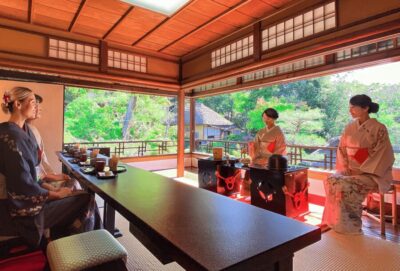
Tea Ceremony in a Traditional Tea House in Kiyomizu
Read our review →
Browse the lists this tour appears in