
Review · KYOTO
Kyoto: Tea Ceremony with Maiko Premium
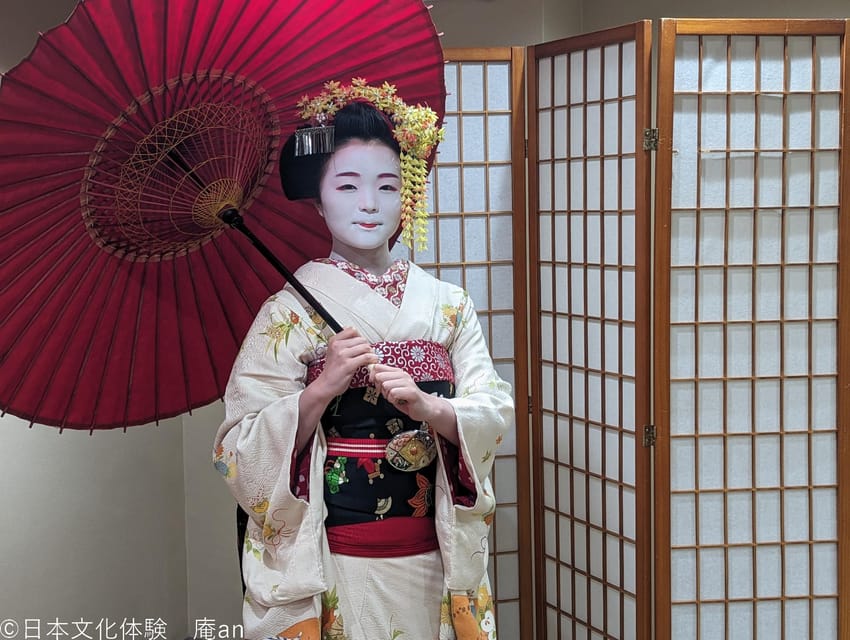
Kyoto’s Maiko Premium experience brings you close to a Maiko for far more than a quick photo. You make your own matcha, ask direct questions about her life, watch two traditional dances, and join a playful game. The personal Q&A and the dance performance are the strongest parts.
I like the compact 90-minute format, which fits neatly into a busy Kyoto day, and I like the chance to take a commemorative photo beside the Maiko. The main caution is the setting: this is a modern building near Gojo Station, not an old tea house or tatami room. The atmosphere is friendly, but the plain room and advertising backdrop can soften the magic in your pictures.
Key points to know before booking
- Meet a Maiko up close: Ask about her training, daily routine, kimono, hairstyle, and traditional work.
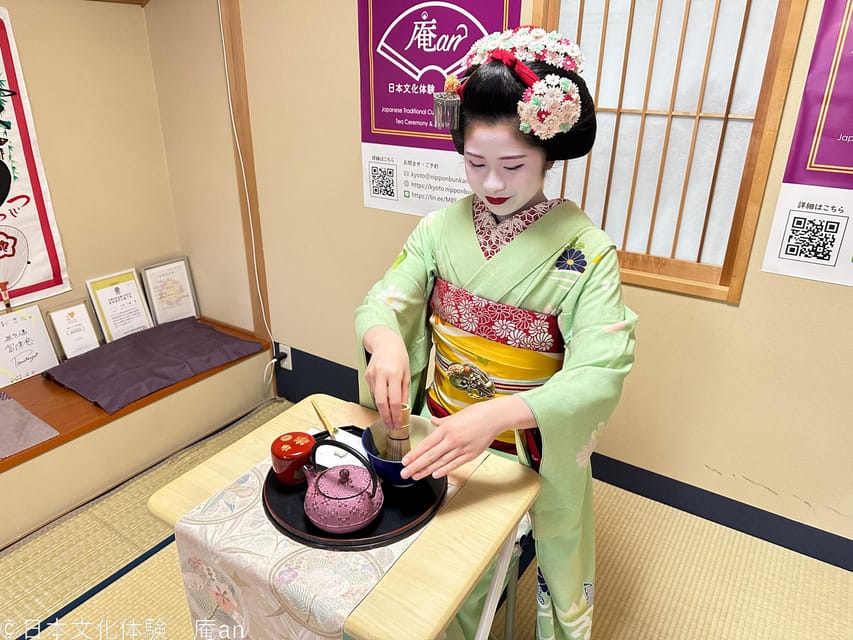
- Make your own matcha: The Maiko demonstrates the basic steps, then you prepare tea yourself with two Japanese sweets.
- Watch two dances: Each performance expresses a seasonal scene, love story, or moment from daily life.
- Premium means the full program: Games and dances are part of this version, making it a better choice than a shorter tea-only visit.
- Expect a modern venue: The event is held in a building with tables and chairs, not in a traditional ochaya.
- Arrive early: Gojo Station is one minute away, but late arrivals cannot delay the program.
Why this Maiko meeting is different from a standard tea ceremony
A formal Japanese tea ceremony is quiet, precise, and highly ritualized. This program takes a more open, visitor-friendly approach. You learn the basic method of making matcha, but the real purpose is meeting a Maiko and seeing several parts of her professional life in one sitting.
That makes the experience useful for anyone who wants cultural context without committing to a long, highly formal ceremony. You are not simply watching someone in an elaborate kimono. You can ask questions, watch her perform, and take part in activities that show how Maiko entertain through conversation, dance, and games.
The program also helps explain why Maiko remain such an important part of Kyoto’s traditional culture. Samurai culture belongs to the past, while Maiko culture continues in the present. Their kimono, hairstyles, gestures, and training are not costume details added for a show. They reflect a demanding way of life that still exists in Kyoto.
One important distinction matters here. The venue is not an ochaya, the traditional establishment associated with Maiko and Geiko entertainment. You should book this for access and conversation, not for the architecture. The modern room may feel less atmospheric, but it makes the experience easier to arrange and more approachable for first-time visitors.
More Tea Ceremony Experiences in Kyoto:
- Kyoto: Tea Ceremony in a Traditional Tea House in Kiyomizu
★ 4.9 · 3,519 reviews - Kyoto: Tea Ceremony Ju-An at Jotokuji Temple
★ 4.9 · 3,207 reviews - Kyoto: 45-Minute Tea Ceremony Lesson Experience
★ 4.3 · 2,378 reviews
Arriving near Gojo Station
The meeting point is one minute from Exit 1 of Gojo Station on the Subway Karasuma Line. The entrance faces Gojo-dori, so you should look for the storefront from the main street rather than expecting a small doorway hidden down a lane.
The location is one of the program’s practical strengths. You do not need to trek into Kyoto’s Gion district or search through a maze of narrow streets. That saves time, especially if you have dinner, a temple visit, or an evening train planned afterward.
Give yourself extra time. The event cannot be held for people delayed by transport or by trouble finding the entrance. The building has no elevator, so you need to use stairs to reach the venue. This is worth considering if anyone in your party has difficulty with stairs.
The stated operating hours are 10:00 to 17:00, and reservations received after 17:00 are handled the following day. That detail matters if you are booking close to your visit date.
The 90-minute schedule, step by step
The published schedule gives you a clear idea of the pace:
- Greeting from the Maiko
- Tea ceremony and matcha preparation
- Two Japanese sweets
- Question and answer session
- Photo with the Maiko
- Senjafuda gift
- Two traditional dances
- Interactive game
- Short chatting time after the Maiko leaves
The experience is planned to finish its main program at about 75 minutes, followed by chatting time and room departure at about 90 minutes. One account found the active portion shorter than expected, so I would treat 90 minutes as the full reservation window, not a guarantee that every minute will feel equally packed.
The order may also shift slightly. The event can take place in a room where people are having lunch or dinner, so the setting is not always a completely private performance room. That does not remove the main activities, but it can affect the mood and noise level.
Making matcha with the Maiko
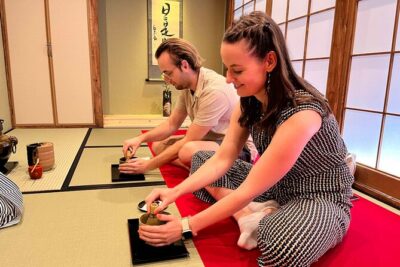
The tea portion begins with a demonstration. The Maiko shows you how to prepare matcha and explains what to do, then you make your own bowl of tea.
This is a basic, hands-on introduction rather than an advanced tea-school lesson. That is a good fit for most visitors. You learn enough to understand the motions and purpose of the ceremony, then get to try it instead of only watching.
Two dried Japanese sweets are included. They provide the small sweet bite traditionally paired with bitter matcha. Free snacks and a drink are also included in the program details, while additional drinks may be available for purchase inside at a moderate price.
I would not book this mainly for the tea. Matcha preparation is the opening activity, and the tea itself is described as a standard serving. Its value comes from the connection to the Maiko and the chance to take part.
A few more tea experiences around Kyoto worth a look
- Kyoto: Table-Style Tea Ceremony at a Kyo-Machiya
★ 4.9 · 1,211 reviews - Kimono Tea Ceremony at Kyoto Maikoya, NISHIKI
★ 5.0 · 911 reviews - Kyoto: Kimono Tea Ceremony at Orizuruya Gion
★ 4.9 · 618 reviews - Kyoto: Tea Ceremony in 100-year-old Kyo-Machiya Townhouse
★ 4.8 · 546 reviews
The Q&A is the heart of the visit
The question and answer session is where the program becomes personal. You can ask about the Maiko’s daily life, training, clothing, hairstyle, customs, and work. This direct conversation gives you information that is difficult to get from a museum display or a guidebook.
Questions are handled in Japanese, with English translation provided as much as possible if you request it. The quality of the exchange can depend on the interpreter and the individual session. Some Maiko and hosts have strong English skills. Karen, for example, was praised for being friendly and informative, while another session featured a ceremony host who spoke both Japanese and English.
You should prepare a few questions before arriving. Ask about the time required to become a Geiko, how the kimono is worn, what a normal working day involves, or how she learned to dance. One session included the point that Maiko training can take five years, though the details you hear will depend on the performer and the questions asked.
The group format means you may not get a long private conversation. Still, the program allows enough time for questions, and the interaction is more direct than a performance viewed from a distant stage. Children can also take part, and families have found the question period accessible when the host keeps the exchange lively.
Two dances that show the Maiko’s formal side
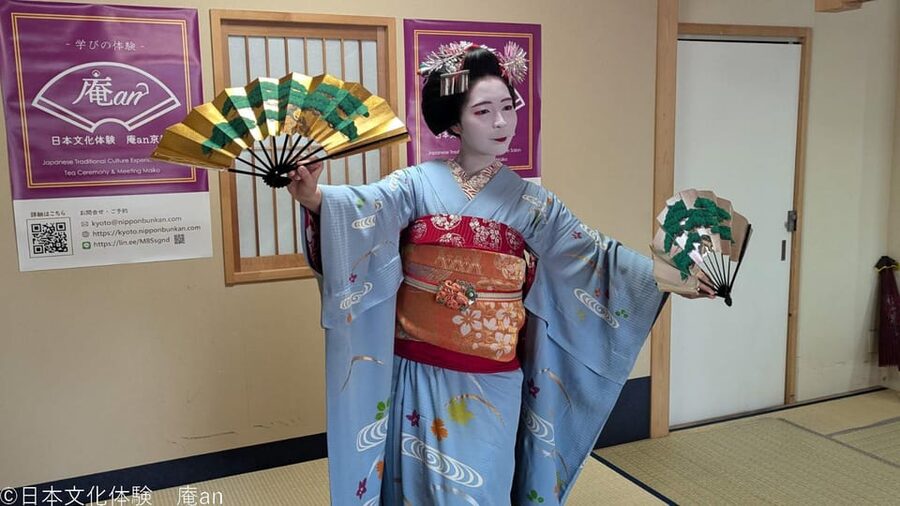
The Maiko performs two traditional dances. The themes can include Japan’s seasons, love stories, or ordinary scenes from life. Watch the hands, posture, controlled steps, and careful use of the kimono rather than expecting a fast stage show.
This is usually the most visually striking portion. The dances are short enough to fit the program but formal enough to show why Maiko training is so demanding. The performance gives you a better sense of the discipline behind the elegant appearance.
If you want good photographs, sit where you have a clear view and keep your phone ready before the music begins. You may take photos and videos during parts of the presentation, but follow the host’s instructions. The photo setting is functional rather than beautiful. Several large advertisements and a company name or QR code may appear behind the Maiko, which can be distracting in your pictures.
That background is the most common design weakness of the experience. A screen, artwork, or more traditional backdrop would suit the dances better. You can still take a meaningful photo, but do not expect a polished studio portrait.
A game that keeps the room lively
After the formal portions, the mood loosens with a simple interactive game. Volunteers can join, while everyone else can clap and cheer. The game is designed for participation rather than serious competition, and the Maiko’s skill gives it a playful edge.
This part works especially well for families. Children as young as four have enjoyed the program, and the game gives younger participants something active to do after the quieter tea and dance segments. Adults tend to enjoy it for the same reason: it breaks the formality and lets you interact with the Maiko in a relaxed way.
The game also shows another side of Maiko hospitality. The role is not only about looking graceful. Conversation, humor, and simple group entertainment are part of the experience. You do not need to volunteer, but joining in can make the program more memorable.
The photo, Senjafuda, and departure
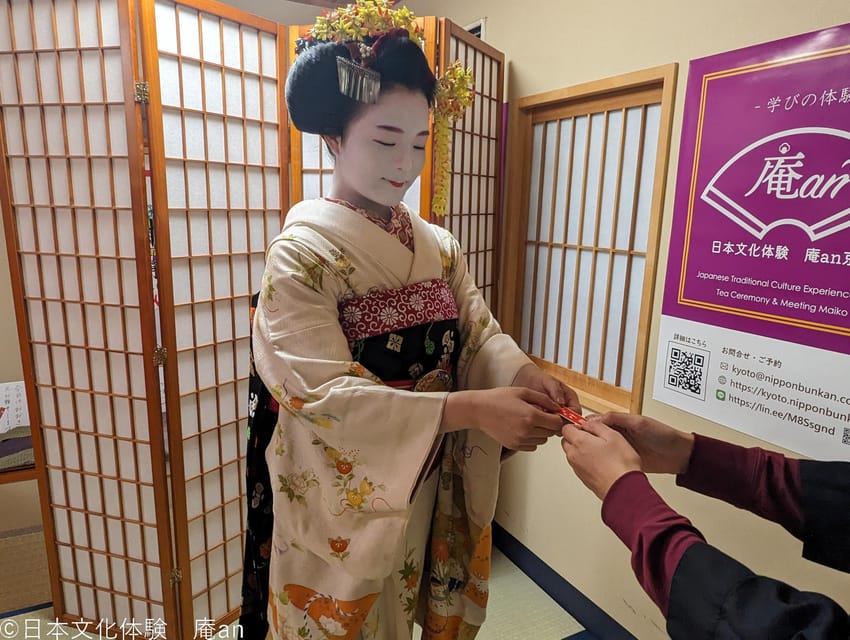
The photo opportunity allows you to stand beside the Maiko for a commemorative picture. This is a rare chance to get a close image without trying to spot a Maiko on a Kyoto street. Be considerate with your time, follow the staff’s instructions, and remember that the Maiko is working.
As a special gift, she presents a Senjafuda, a lucky paper charm associated with a performer’s name. It is a small keepsake, but it gives the visit something tangible to take home beyond photographs.
The Maiko leaves around the 75-minute point, followed by chatting time before you depart. If you arrive early, you may see the Maiko arrive by taxi. Staying a little after the formal program can also give you the chance to wave goodbye as she leaves, provided the staff allows it and you do not delay the next part of the schedule.
The venue: convenient, relaxed, and not traditional
This experience works best if you separate the performer from the room. The Maiko’s kimono, dance, conversation, and training provide the cultural substance. The venue simply provides a practical place to gather near a subway station.
You will sit in a room with tables and chairs, and the Maiko may sit on a stool behind a small table. It is not a tatami room with paper screens, nor is it a traditional ochaya. Some sessions may share the room with people having lunch or dinner.
That arrangement can feel less intimate than the description suggests. Noise from other people can affect the Q&A, and the plain wall or advertising signs may disappoint anyone hoping for a classic Kyoto setting. On the other hand, the relaxed room can make the event less intimidating. You do not need special clothing, special preparation, or prior knowledge of tea ceremony manners.
What you get for about $50
At about $50 per person, the value is strongest in the number of elements included. You receive matcha preparation, two sweets, a direct Q&A, a photo, a Senjafuda, two dances, and a game within 90 minutes.
The premium label matters. The dances and games are the features that turn a basic tea demonstration into a fuller meeting with a Maiko. If you mainly want to prepare matcha, a simpler tea activity may be enough. If you want the performance, questions, photographs, and interaction, choose Premium.
Optional seating upgrades cost 3,300 yen for the first row, 2,200 yen for the second row, and 1,100 yen for the third row. The upgrade may help with viewing and photographs, but the base price already includes the main program. I would pay extra only if being near the front matters greatly to you.
Children under two can attend free when sitting on a parent’s lap. If a separate seat or meal is needed, the charge is the same as for one adult. Everyone entering must participate in the experience.
Who should book this Kyoto activity?
I would recommend it to first-time Kyoto visitors who want a clear introduction to Maiko culture without spending an entire evening at a formal dinner. It also suits families, couples, and people who enjoy asking questions rather than only watching a performance.
It is a good choice for photographers who want a close portrait opportunity, though you should accept the advertising in the background. It is also useful for anyone with limited time because Gojo Station is so close and the program has a fixed 90-minute shape.
You may want something else if your main goal is a traditional room, a private encounter, or an elaborate tea ceremony with strict ritual. This is a group activity, and the venue does not recreate an old Kyoto entertainment house.
English support is available as much as possible, but Japanese is the stated language of the instructor. Contact the provider in advance if translation is important to your decision. The experience can still work for English speakers, especially when the host helps explain the exchange, but interpretation may not cover every sentence.
Booking, cancellations, and practical planning
You can cancel up to eight days in advance for a full refund. After the cancellation fee applies, changing the date or time can also create a specified charge. Do not count on compensation for transport costs if you cancel or miss the event.
Plan to arrive early, with about 15 minutes to spare. That gives you time to find the street entrance, climb the stairs, and settle before the greeting begins. The event will not wait for late arrivals.
The experience has earned an overall rating of 4.3 from 280 ratings, which fits the pattern of the program: very strong performance and interaction, with recurring concerns about the modern room, backdrop, and occasional timing. Go in for the Maiko, not the décor, and you will have the right expectations.
Should you book the Maiko Premium experience?
Yes, if you want several kinds of interaction in one compact Kyoto activity. The direct Q&A, two dances, and game give you more than a staged photo session, while the matcha preparation adds a simple hands-on link to Japanese tea culture.
Book it with realistic expectations. You will not enter an old ochaya, and the room may have tables, stools, other diners, or company advertising behind the performer. But for around $50, the chance to meet a Maiko, hear about her life, watch her dance, make matcha, and take home a Senjafuda is a strong cultural value.
Choose the Premium version if you want the complete program. It is especially worthwhile for families and for anyone who wants to leave Kyoto with a better understanding of the person behind the kimono.
FAQ
Where does the Maiko tea ceremony take place?
The venue is one minute from Exit 1 of Gojo Station on the Subway Karasuma Line. The entrance faces Gojo-dori.
How long does the experience last?
The full experience lasts about 90 minutes. The main program is scheduled to finish after about 75 minutes, followed by chatting time before departure.
Is this held in a traditional Japanese tea house?
No. The event takes place in a building with tables and chairs. It is not an ochaya or a traditional Japanese house.
What is included in the tea ceremony?
You receive a matcha demonstration and make your own tea. The program includes two dried Japanese sweets, snacks, and a drink.
Can I ask the Maiko questions?
Yes. A Q&A session is part of the program, and you can ask about her daily life, training, and traditions.
Will the performer always be a Maiko?
No. Depending on the situation, a Geiko may appear instead of a Maiko.
Is English available?
Japanese is the stated language. English translation will be provided as much as possible if you request it, and you should contact the provider if English assistance is important.
Can young children attend?
Children under two are free when sitting on a parent’s lap. If a separate seat or meal is required, the same fee as one person applies. Everyone who enters must participate.
Just added around Kyoto
- Whisk Your Own Matcha: A Zen Matcha Experience at Temple★ 3.6 · 7 reviews
- Uji Walking Tour – Byodo-in temple and Tea Ceremony from Kyoto★ 3.5 · 3 reviews
- Traditional Tea Ceremony in Kyoto★ 4.5 · 3 reviews
- Kyoto: Authentic Tea Ceremony in a Small Group★ 5.0 · 7 reviews
- Tea ceremony at Kyoto’s Zen Temple Teahouse★ 5.0 · 2 reviews
- Tea Ceremony in 150 Years Old Townhouse with Tables and Chairs★ 5.0 · 22 reviews
- Tea Ceremony Experience in Traditional Kyoto Townhouse★ 5.0 · 19 reviews
- Silent Beauty of Kyoto Zen Walk and Tea Experience★ 5.0 · 2 reviews
Tea Ceremony Experiences, compared.
Tea Ceremony in a Traditional Tea House in Kiyomizu
Read our review →
Browse the lists this tour appears in