
Review · JAPAN
Authentic Japanese Tea Ceremony Experience in Kamakura
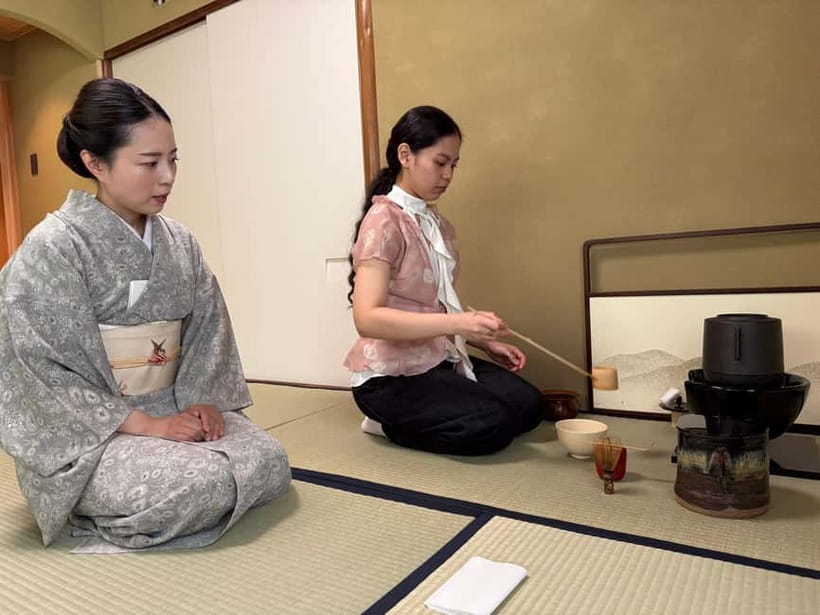
The most memorable part of this Kamakura experience is the chance to see the full tea ritual up close, then try it yourself. In one quiet hour, you learn why each movement matters, from entering the tea room to preparing matcha and receiving seasonal wagashi.
I like the small group size, which is capped at six, and the practical format. You do not only watch a performance. You also whisk and serve tea under guidance. The English instruction is another strong point, especially if Japanese customs are new to you.
The main drawback is location clarity. Kita-Kamakura Station is easy to reach, but the tea room is about a 5 to 7-minute walk and is near Restaurant Ko, so you should allow time to find the exact entrance. You must also remove your shoes and bring socks.
Key Points Before You Book
- Two servings of matcha: Enjoy freshly whisked tea with seasonal Japanese sweets during the session.
- You make tea yourself: The instructor guides you through whisking and serving, with no prior experience needed.
- Six people maximum: The small group keeps the room calm and allows time for questions.
- Traditional sukiya-zukuri room: The setting follows the simple, refined style associated with Japanese tea houses.
- English and Japanese instruction: You can follow the history, etiquette, and demonstrations without needing Japanese.
- A short walk from Kita-Kamakura: The meeting point is about 5 to 7 minutes from the station, near Restaurant Ko.
A Quiet Hour in Historic Kamakura
Kamakura makes a fine setting for a tea ceremony. It is close enough to Tokyo for a simple day trip, yet it has a slower pace and a strong connection to temples, gardens, and traditional arts. The tea room is about an hour from central Tokyo and only a short walk from JR Kita-Kamakura Station.
This is not a large cultural show with a crowd watching from rows of seats. The group limit is six people. That matters because the tea ceremony depends on attention to small details. In a tiny group, you can watch the hand movements, hear the explanation, and ask questions without fighting for the instructor’s attention.
The session lasts about 60 minutes. That makes it easy to fit into a day of sightseeing in Kamakura. You can pair it with nearby temple visits, a walk around the station area, or a broader day trip from Tokyo. The short length is useful, though it also means the introduction to tea culture remains focused rather than extensive.
More Tea Ceremony Experiences in Japan:
- Kyoto: Tea Ceremony in a Traditional Tea House in Kiyomizu
★ 4.9 · 3,519 reviews - Kyoto: Tea Ceremony Ju-An at Jotokuji Temple
★ 4.9 · 3,207 reviews - Kyoto: 45-Minute Tea Ceremony Lesson Experience
★ 4.3 · 2,378 reviews
Finding the Tea Room Near Kita-Kamakura Station
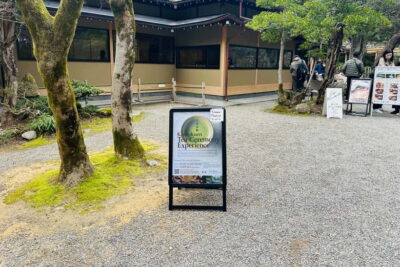
The meeting point is Tea Room Chikusuian, written in Japanese as 茶室 竹翠庵. It is near Restaurant Ko and roughly a 5 to 7-minute walk from Kita-Kamakura Station.
Give yourself a little extra time before the start. One piece of practical feedback from the available comments was that the location details could be clearer for international visitors. The distance itself is short, but small local roads and a traditional tea room can be harder to identify than a large commercial venue.
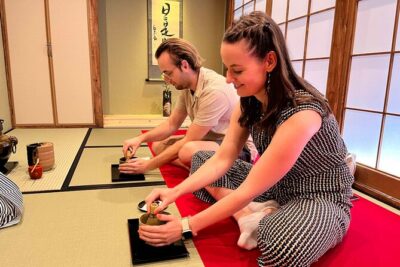
Once you arrive, you will enter a traditional tea room built in the sukiya-zukuri style. This style favors simplicity, natural materials, and careful proportion. The room is not presented as a modern classroom. The setting helps you understand that tea ceremony is not simply a way to prepare a drink. The room, tools, guest, host, and movements all form part of the experience.
Shoes must come off before entering the tatami room. Bring clean socks, as this is specifically required. Modest clothing is recommended, but there is no formal dress code.
What the First Few Minutes Teach You
The session begins with an introduction to the tea ceremony and its place in Japanese culture. The instructor explains the history and meaning of sadō, the way of tea, and the customs that shape the experience.
You will also hear about omotenashi, the Japanese idea of thoughtful hospitality. In this setting, omotenashi is not just polite service. It is expressed through preparation, attention, timing, and care for the person receiving the tea.
This background is useful because the ceremony can otherwise seem mysterious. A host may pause, turn a bowl, or handle a utensil in a particular way. Without context, those actions can look decorative. With an explanation, you begin to see them as part of a carefully ordered exchange between host and guest.
The instructor speaks Japanese and English, so you can follow the explanation without relying only on observation. That is especially helpful during the etiquette portion, where small details may be easy to miss.
Watching the Tea Ceremony Demonstration
The instructor then performs a traditional tea ceremony. This is the most formal section of the hour, and it gives you time to watch before you are asked to participate.
Expect a measured pace. The tea is whisked with care, utensils are handled in a set order, and the host’s movements are deliberate. The point is not speed. The ritual creates a calm rhythm and asks both host and guest to pay attention to the present moment.
You will see the instructor prepare matcha and serve it with wagashi, seasonal Japanese sweets. The sweets are not an afterthought. They balance the bitter, grassy flavor of powdered green tea and form part of the traditional presentation.
The demonstration also gives you a chance to notice etiquette in action. You learn how a guest receives the bowl, how manners shape the exchange, and why the ceremony is built around respect and mindfulness. The instructor explains the reasons behind the actions rather than asking you to memorize a list of rules.
That approach makes the activity friendly for first-time visitors. You do not need previous knowledge of Japanese tea culture, and you do not need to worry about getting everything right on your first try.
A few more tea experiences around Japan worth a look
- Osaka: Tea Ceremony Experience
★ 4.9 · 1,426 reviews - Kyoto: Table-Style Tea Ceremony at a Kyo-Machiya
★ 4.9 · 1,211 reviews - Kanazawa: Kenrokuen Tea Ceremony Experience
★ 4.8 · 1,139 reviews - Kimono Tea Ceremony at Kyoto Maikoya, NISHIKI
★ 5.0 · 911 reviews
Two Servings of Matcha and Seasonal Wagashi
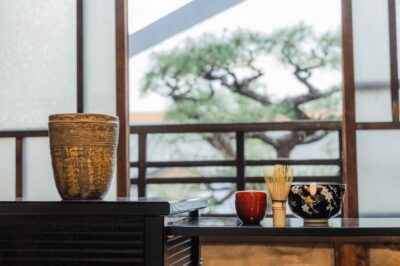
You receive two servings of freshly whisked matcha during the experience. The tea is powdered green tea prepared with hot water and a bamboo whisk. It has a stronger and more direct flavor than the green tea served in many restaurants.
The wagashi adds an important contrast. Seasonal Japanese sweets are often shaped and presented with care, and their sweetness helps soften the tea’s bitterness. Because the sweets change with the season, the exact appearance and flavor are not specified in advance.
For many people, this tasting is the most accessible part of the session. You can enjoy the tea and sweets without needing to understand every rule. At the same time, the instructor connects the food to the larger ceremony, so the tasting does not feel like a separate snack break.
If you are unsure about matcha, this format gives you a gentle introduction. You are not handed a large serving or left to figure out the taste alone. The ceremony explains how the tea fits into the meal of the moment and the interaction between host and guest.
Your Turn to Whisk and Serve Tea
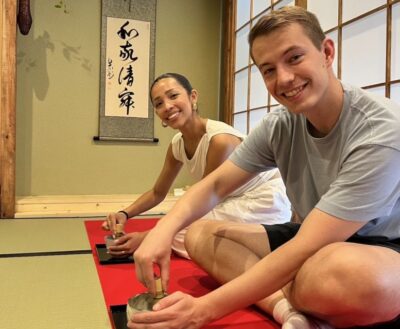
The hands-on section is what gives this experience more value than a simple demonstration. After watching the instructor, you try making tea yourself.
You will use the supplied tea ceremony utensils and receive step-by-step guidance. The activity does not require prior experience. The instructor shows you how to whisk the matcha and how to serve it, allowing you to practice the movements in a supportive setting.
This part may feel less polished than the instructor’s performance, and that is exactly the point. You learn how much coordination goes into even a short tea ritual. The whisk, bowl, water, and tea must come together in the right way, and your movements become part of the hospitality you offer another person.
You also gain a better sense of why the ceremony moves slowly. Careful preparation is not only about appearance. It helps the host focus on the guest and helps the guest notice what is happening.
The small group limit is useful here. With no more than six participants, the instructor can guide each person through the process. If you have never used a bamboo whisk, you can ask for help rather than copy movements from a distance.
Etiquette, Tatami, and Seating Details
The tea ceremony takes place on tatami, so shoes must be removed. Socks are required, and this is worth planning for before you leave your hotel. Clean, comfortable socks are a better choice than treating this as an afterthought.
Kneeling may be part of the traditional setting, but chairs are available if kneeling is difficult. You should notify the provider in advance if you need a chair. This is a useful accommodation, though the activity is not suitable for wheelchair users.
The experience is recommended for ages seven and up. Families with older children can use the session as a direct way to introduce Japanese customs. Children who enjoy hands-on activities may prefer this to a museum explanation, but they still need to manage a quiet room and a careful ceremony.
Pregnant women are listed as unsuitable for this activity. If this applies to you, choose another cultural activity in Kamakura rather than assuming the seating arrangement will work.
Photos are allowed at designated times. You should not treat the ceremony like a constant photo opportunity. The restrictions help protect the calm of the room and keep phones from interrupting the ritual. Listen for the instructor’s cue before taking pictures.
Is One Hour Enough?
One hour is enough to cover the main parts of the experience: the room, the background of sadō, the demonstration, two servings of matcha with wagashi, and your own attempt at making tea.
The time limit is also the main boundary. You will not receive a full academic study of tea schools, Japanese architecture, or the many regional customs connected with tea. If you want a long workshop with repeated practice, this will feel brief.
I see the short format as a benefit for most people planning a busy Kamakura day. You receive a real introduction without giving up half a day. It also works well for visitors who want one focused cultural activity rather than a full schedule of formal lessons.
The quality of the hour depends on your willingness to slow down. If you rush through it while thinking about the next train or temple, you will miss much of its value. Arrive ready to sit, watch, listen, and take part.
What the $36 Price Includes
At $36 per person, the experience sits in the reasonable range for a small-group cultural activity. Your price covers the tea ceremony performance, matcha, Japanese sweets, rental utensils, and your own guided tea preparation.
The value comes mainly from the personal instruction and the setting. You are not paying only for a cup of tea. You are paying for access to a traditional room, an English-speaking instructor, an explanation of etiquette, and a chance to perform the basic steps yourself.
A larger group could offer a cheaper introduction, but it would likely give you less direct time with the instructor. Here, the six-person limit makes the price easier to justify, particularly if you care about asking questions or practicing the movements.
The experience is less useful if you only want to taste matcha quickly. You can find tea elsewhere for less. Book this for the cultural context, the formal demonstration, and the chance to participate.
Free cancellation is available up to 24 hours before the start for a full refund. You can also reserve and pay later, which helps if your Kamakura plans may change.
Who Will Enjoy This Tea Ceremony Most
This experience is a good match for first-time visitors to Japan who want a clear introduction to an important custom. The English instruction and step-by-step practice remove much of the uncertainty.
Couples may appreciate the quiet setting and shared activity. Families with children aged seven and up can use it as a cultural lesson with a practical element. It also suits anyone interested in Japanese hospitality, Zen ideas, traditional arts, or mindful routines.
I would recommend it to visitors who prefer small groups over large demonstrations. The group size gives the activity a personal feel without making it too demanding.
It may not suit you if you dislike sitting on tatami, cannot remove your shoes, or want a fast and casual food experience. It is also not appropriate for wheelchair users or pregnant women according to the stated restrictions. The chairs help if kneeling is difficult, but you should arrange one ahead of time.
My Booking Advice
I would book this tea ceremony if you want a calm, practical introduction to Japanese culture during a day in Kamakura. The strongest features are the small group, the English explanation, and the fact that you make and serve tea instead of only watching.
Plan the walk from Kita-Kamakura Station carefully, bring socks, and arrive with enough time to locate Tea Room Chikusuian near Restaurant Ko. If you want a grand performance or a long technical lesson, choose a longer workshop. If you want one focused hour with matcha, wagashi, etiquette, and a real chance to take part, the $36 price is fair.
FAQ
How long does the Japanese tea ceremony experience last?
The session lasts approximately 60 minutes.
Where is the meeting point?
Meet at Tea Room Chikusuian, written as 茶室 竹翠庵. It is near Restaurant Ko and about a 5 to 7-minute walk from JR Kita-Kamakura Station.
How many people can join the group?
The group is limited to a maximum of six participants.
Is the activity offered in English?
Yes. The instructor provides the experience in Japanese and English.
What is included in the price?
The price includes matcha, Japanese sweets called wagashi, rental tea ceremony utensils, and the traditional tea ceremony performance.
Do I get to make tea myself?
Yes. You receive step-by-step guidance to whisk and serve matcha yourself. No previous experience is required.
What should I bring?
Bring socks. Shoes must be removed before entering the tatami tea room.
Can I use a chair instead of kneeling?
Chairs are available if kneeling is difficult. You should notify the provider in advance.
Can I cancel my reservation?
You can cancel up to 24 hours before the experience for a full refund. Reserve now and pay later is also available.
Just added around Japan
- Yokohama : Tea Ceremony with Sweets and Souvenir★ 5.0 · 5 reviews
- Whisk Your Own Matcha: A Zen Matcha Experience at Temple★ 3.6 · 7 reviews
- Walking Tour: Yanaka,Nezu& Sendagi: Tea Ceremony & Old Tokyo★ 5.0 · 3 reviews
- Visit local home for music and tea ceremony near Disney★ 4.9 · 13 reviews
- Yokohama: Sushi & Gyoza Cooking with Matcha & GreenTea Experience★ 5.0 · 3 reviews
- Trip to Kamakura & Enoshima: Shrines, Seaside, Temples &Tea★ 5.0 · 11 reviews
- Kyoto tea town for matcha lovers★ 5.0 · 16 reviews
- Uji: Private immersion into Kyoto’s tea and reglious culture★ 5.0 · 17 reviews
Tea Ceremony Experiences, compared.
Tea Ceremony in a Traditional Tea House in Kiyomizu
Read our review →
Browse the lists this tour appears in