
Review · KYOTO
Maiko Dance and Tea Ceremony on a Noh Stage in Kyoto
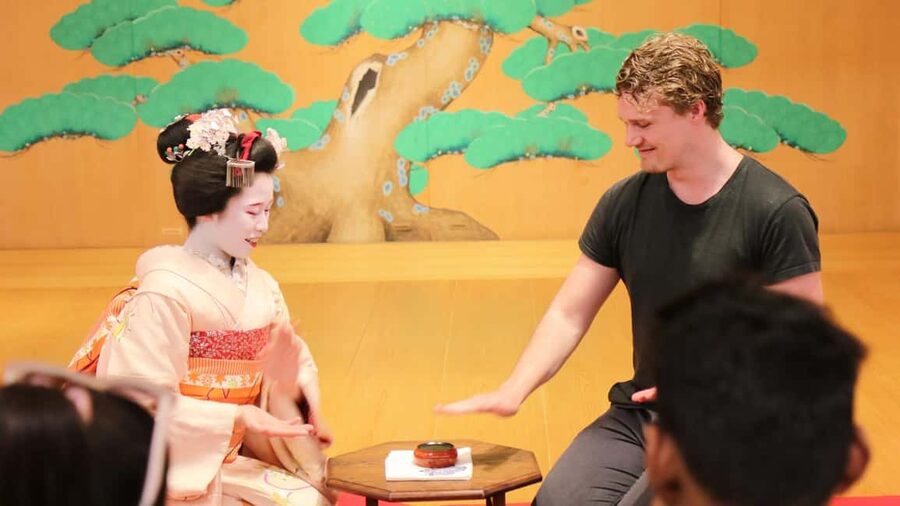
Kyoto’s Noh stage gives this short cultural experience its special setting. You watch a maiko, an apprentice geisha, perform a graceful dance, then see her prepare matcha with the careful movements that make a tea ceremony feel less like a snack break and more like a small work of art. I especially like the mix of performance and participation: you are not only watching, but also tasting tea and sweets.
I also like the practical format. The experience lasts just 60 to 90 minutes, includes an English interpreter, and leaves room for photos and conversation with the maiko. The main consideration is price: at $141 per person, this is a premium cultural activity for a relatively short visit. It makes the most sense if you want a polished, focused introduction to Kyoto traditions rather than a long sightseeing tour.
Key points at a glance
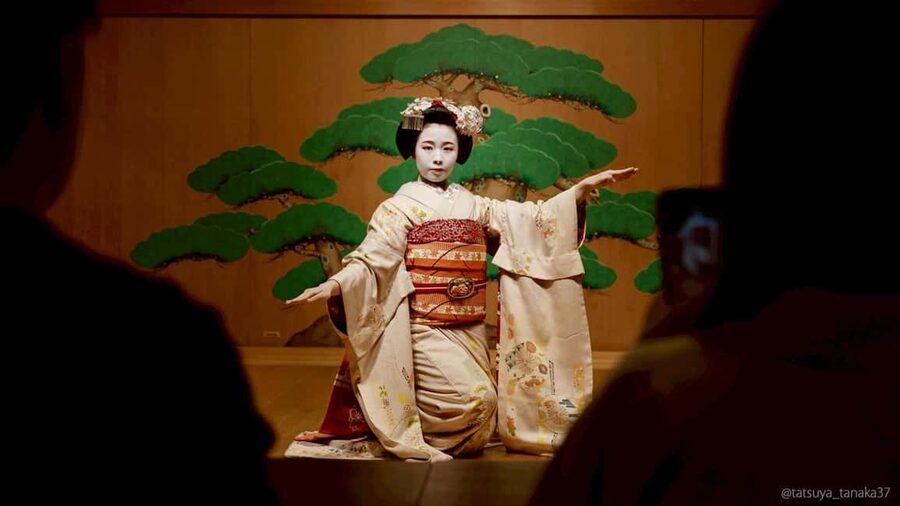
- A maiko performs on an authentic Noh stage: The setting gives the dance a formal, traditional backdrop that you will not get in an ordinary event room.
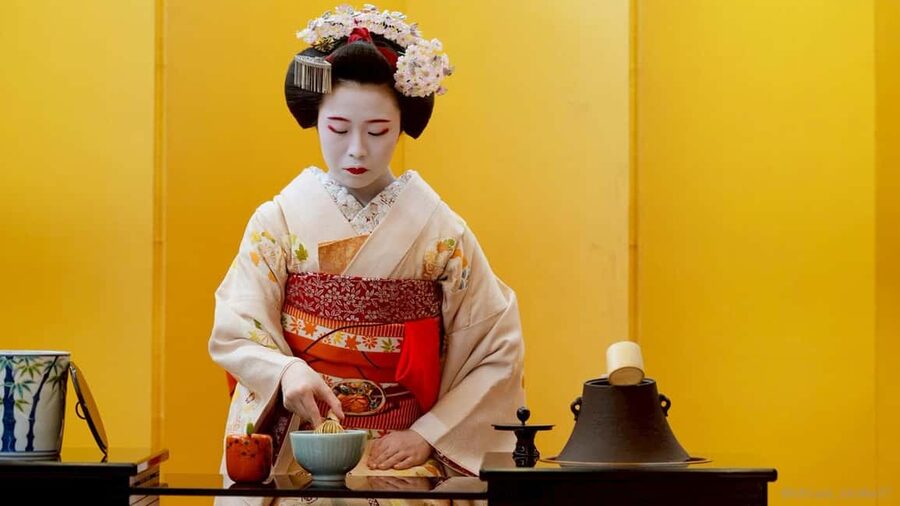
- Matcha is prepared by the maiko: You see the tea ceremony performed with refined movements, then enjoy the freshly prepared tea with seasonal Japanese sweets.
- English interpretation is included: A professional interpreter helps explain what you are seeing in English and Japanese.
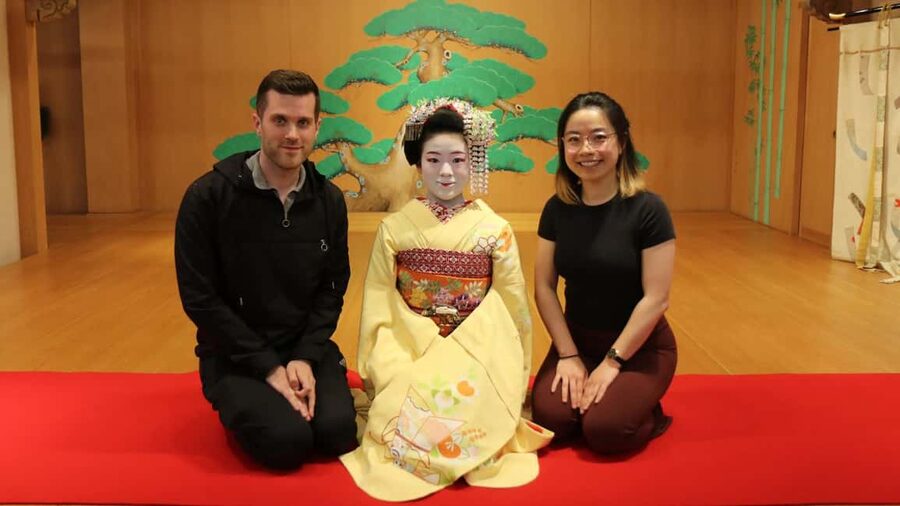
- Photos and conversation are part of the experience: You have an opportunity to take pictures and speak with the maiko in a small, personal setting.
- The visit lasts 60 to 90 minutes: It fits neatly into a Kyoto sightseeing day, though the price is high for the length.
- Shoes come off indoors: Arrive with socks and reach the first-floor reception at Kurochiku Tensho-kan at least 15 minutes early.
Entering Kurochiku Tensho-kan and the Noh stage
Your visit begins at the first-floor reception of Kurochiku Tensho-kan. The exact meeting point can vary with the option you book, so check your confirmation carefully. The instructions ask you to arrive at least 15 minutes before the scheduled start, a sensible rule for an experience that depends on a quiet, orderly beginning.
You will remove your shoes before entering the indoor performance area. Bring socks. This is a small detail, but it matters in Japan, particularly when you are moving into a formal traditional space. Comfortable seating is arranged, so you can relax rather than worry about maintaining a formal kneeling position for the entire event.
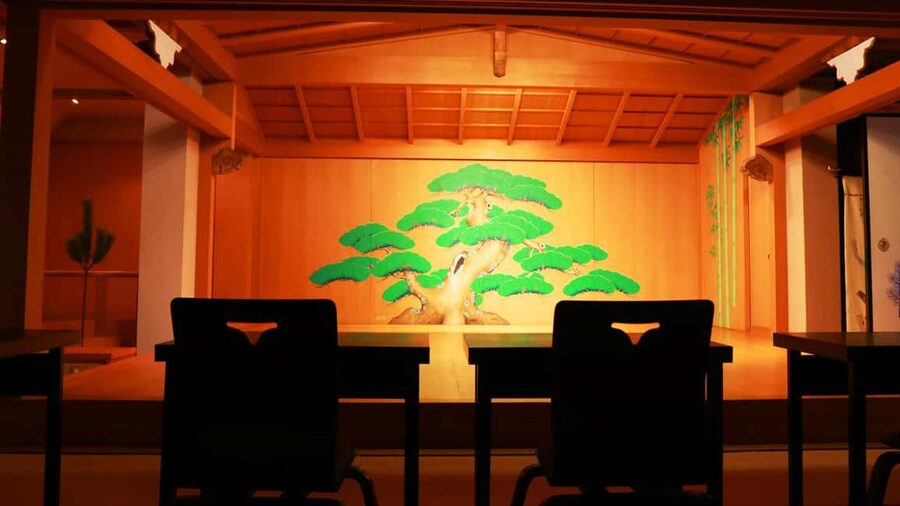
The Noh stage is more than a decorative platform. It gives the program a feeling of ceremony and place. Noh theater is known for its restrained movement, formal presentation, and focus on atmosphere. The maiko dance is not a Noh performance, but presenting it on an authentic Noh stage places it within a setting built for traditional Japanese arts.
That setting is one of the strongest reasons to consider this activity. A dance in a modern theater could still be beautiful, but the wooden stage and quiet surroundings help you pay attention to gesture, clothing, music, and movement. You are given a clear cultural frame before the tea ceremony begins.
The supplied details do not specify the group size, so I would not book this expecting a guaranteed private session. Still, the experience is described as intimate, with time for photographs and conversation. That makes it more personal than a large public stage show.
More Tea Ceremony Experiences in Kyoto:
- Kyoto: Tea Ceremony in a Traditional Tea House in Kiyomizu
★ 4.9 · 3,519 reviews - Kyoto: Tea Ceremony Ju-An at Jotokuji Temple
★ 4.9 · 3,207 reviews - Kyoto: 45-Minute Tea Ceremony Lesson Experience
★ 4.3 · 2,378 reviews
Watching the maiko dance
The first major part of the visit is the maiko performance. A maiko is an apprentice geisha, and her dance reflects the disciplined world of traditional entertainment in Kyoto. The appeal is not speed or spectacle. It is the controlled movement, formal posture, and small details that reward close attention.
Watch the hands and the way the dance uses space. A slight turn, a measured step, or the movement of a sleeve can carry more weight than a large theatrical gesture. The Noh stage helps here because its simple setting does not compete with the performer.
You may not understand every cultural reference in the dance, which is where the English-speaking staff and professional interpreter matter. The interpreter provides access to the program in English and Japanese, helping you follow the purpose and customs behind what you see. This is especially useful if you are new to Japanese performance traditions.
The performance also gives you a chance to slow down. Kyoto sightseeing can become a parade of temples, gardens, shops, and train connections. This program asks you to sit still and notice something carefully. For many visitors, that change of pace is part of the value.
The experience is not presented as a full evening of multiple performances. It is a compact cultural session, with the dance forming one part of a larger program. If you want an extended theater production, this will feel brief. If you want one well-framed encounter with a maiko, the shorter format is easier to fit into your plans.
The tea ceremony with matcha and seasonal sweets
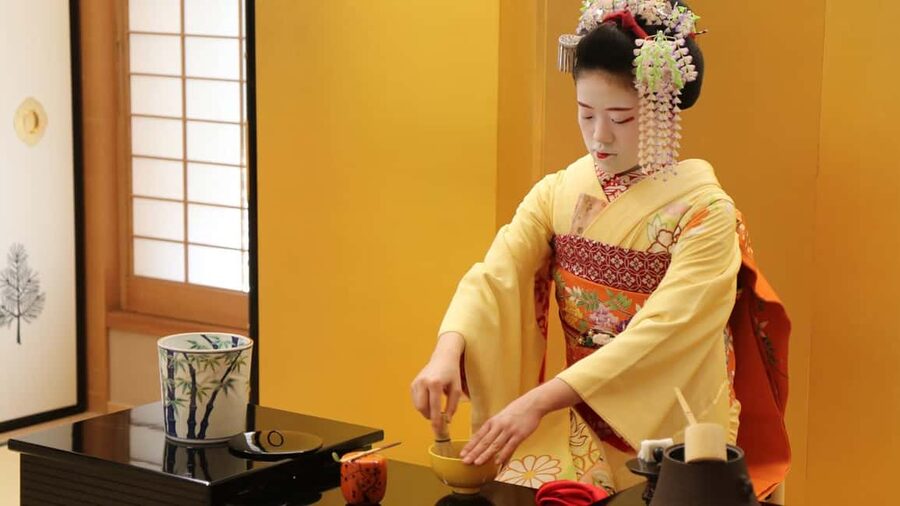
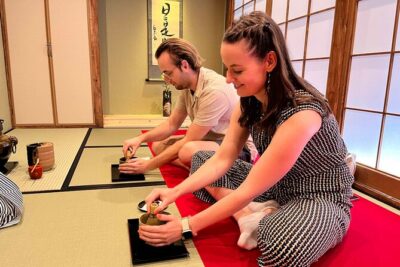
After the dance, the maiko prepares matcha. This is not simply a demonstration followed by a cup handed to you. The preparation itself is central. The careful motions show the discipline and attention associated with Japanese tea culture.
You are served freshly prepared matcha along with seasonal Japanese sweets. The sweet is not just a dessert added for convenience. Japanese sweets traditionally balance the bitter, grassy flavor of matcha, so the pairing helps you understand how the ceremony works as a complete sensory experience.
Pay attention to the contrast between the bright taste of the tea and the sweetness of the confection. Also notice the presentation and the rhythm of the preparation. The quiet handling of the bowl and utensils, the visual appearance of the sweet, and the aroma of the tea all play a part.
The program describes the ceremony as an experience for all five senses. That may sound grand for a short activity, but the point is practical: you are seeing the movements, tasting the tea and sweets, feeling the bowl, and hearing the explanations in a calm traditional setting.
You do not need to be a tea expert to enjoy this part. The interpreter can help you understand what is happening, and the format is designed for visitors. The ceremony is a good fit if you prefer learning through a direct experience rather than reading a long explanation in a museum.
One limitation is that the supplied information does not describe every step or specify how actively you will prepare the tea yourself. The wording makes clear that the maiko prepares the matcha. I would therefore expect this to be primarily a guided presentation and tasting, not a long hands-on tea class.
Photos and conversation with the maiko
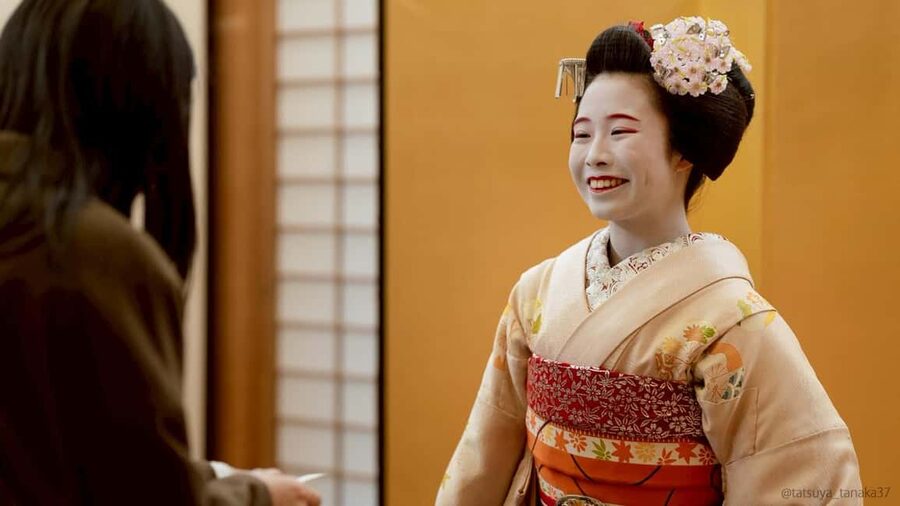
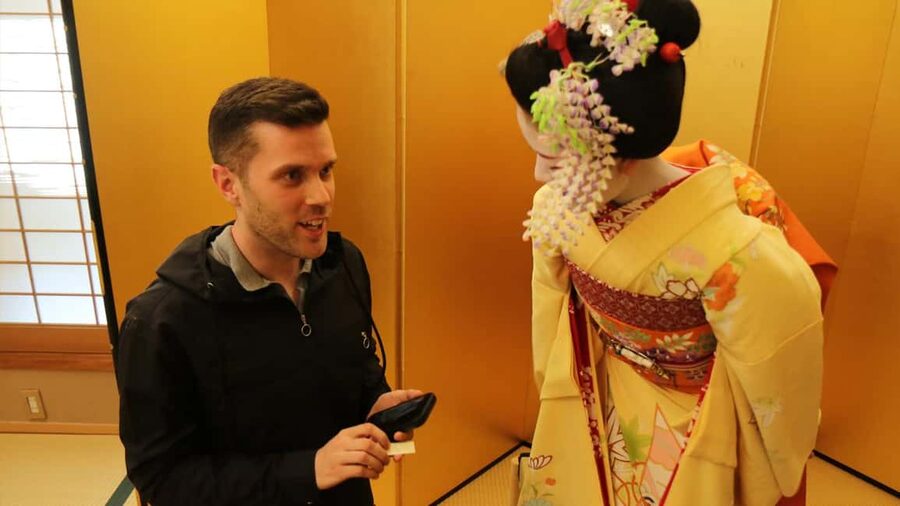
A valuable part of the program comes after the formal elements, when you can take photos and chat with the maiko. This gives the experience a human side. You are not watching from a distant seat and leaving as soon as the curtain falls.
The opportunity for conversation is particularly useful if you are curious about the maiko’s role, the dance, or the tea ceremony. Ask through the interpreter if needed. Since the available information does not promise a set question-and-answer session or a fixed amount of conversation time, be ready for this portion to depend on the day’s schedule.
Photography is included as an opportunity, but the information does not spell out every camera rule. Follow the staff’s instructions, especially during the dance and tea preparation. A phone or small camera should be practical, but do not assume that every moment can be photographed.
The photo opportunity also affects the value of the $141 price. If you only want to see a dance, cheaper performances may exist elsewhere in Kyoto. Here, you are paying for the combination of the formal stage, maiko appearance, tea service, interpreter, sweets, and personal interaction.
Each participant also receives a Japanese-patterned handkerchief. It is a modest included item, not a reason to book by itself, but it gives you a useful keepsake from the experience.
A few more tea experiences around Kyoto worth a look
- Kyoto: Table-Style Tea Ceremony at a Kyo-Machiya
★ 4.9 · 1,211 reviews - Kimono Tea Ceremony at Kyoto Maikoya, NISHIKI
★ 5.0 · 911 reviews - Kyoto: Kimono Tea Ceremony at Orizuruya Gion
★ 4.9 · 618 reviews - Kyoto: Tea Ceremony in 100-year-old Kyo-Machiya Townhouse
★ 4.8 · 546 reviews
What the $141 price really covers
At $141 per person, this is not a budget activity. The duration is only one to one and a half hours, so the cost per hour is high compared with a standard museum visit or self-guided temple stop.
The price becomes easier to understand when you consider what is bundled together. You receive:
- A maiko dance on an authentic Noh stage
- A matcha tea ceremony
- Seasonal Japanese sweets
- A professional English interpreter guide
- The maiko dispatch fee
- A Japanese-patterned handkerchief
- Time for photos and conversation
You are paying for access to a scheduled cultural performance and a specialist appearance, not simply admission to a building. The interpreter is also important. Without English explanation, you might appreciate the beauty but miss the meaning behind the actions.
I would call the value fair for someone who places a high priority on traditional culture and wants a compact, organized program. It is less attractive for a visitor watching every yen or someone mainly interested in general Kyoto sightseeing.
The lack of private transportation is worth noting. You arrange your own way to the meeting point, and the transportation cost is not included. Since the meeting point may vary by booking option, check the exact location before committing to the time.
Reserve only if the format matches your interests. This is a focused cultural encounter, not a broad tour of Kyoto, a meal, or an evening entertainment package.
Who will enjoy this Kyoto experience most
I would recommend it most strongly to first-time visitors who want a clear introduction to a traditional Japanese art but do not have time for a longer cultural course. The interpreter and short duration make it approachable.
It also suits you if you enjoy visual details. The dance, kimono, tea utensils, seasonal sweets, wooden stage, and formal movements provide plenty to observe. You do not need prior knowledge, but curiosity helps.
Couples, solo visitors, and small family groups can all find something to enjoy here. The comfortable seating is helpful if you do not want to sit formally on the floor for an extended period. Children may appreciate the color and performance, though the quiet, formal mood may not suit every young child.
This is also a good choice for a rainy Kyoto day. The activity takes place indoors, and the program gives you a substantial cultural experience without requiring a long walk between sights. You still need to arrange transportation to the venue, but once there, the event is contained.
I would hesitate to recommend it if your main aim is an extended tea lesson. The maiko prepares the matcha, and the information does not promise that each participant makes a bowl. I would also hesitate if the $141 price feels uncomfortable for a short program.
Timing, reservations, and practical details
Advance reservations are required. Check availability for the starting times, then allow enough time to reach the venue. Arriving 15 minutes early is part of the instructions, not a suggestion to ignore when planning a tight day.
The activity lasts between one hour and 90 minutes. That range gives you room to place it before or after another Kyoto sight, but do not schedule a major attraction on the other side of the city with no buffer. The exact meeting point may depend on the option you choose.
English and Japanese are available. A professional English interpreter guide is included, so you do not need to depend on translation apps to follow the main explanations.
The experience is indoors, and you remove your shoes. Wear clean, comfortable socks and clothing that allows you to sit easily. Nothing in the supplied information requires formal dress, but a neat, respectful outfit fits the setting.
Cancellation is free up to 24 hours before the start time for a full refund. You can also reserve now and pay later, which helps if your Kyoto schedule is still changing. If the operator cancels because of insufficient participants or operational reasons, an alternative date or refund is provided.
The operator is 株式会社くろちく, or Kurochiku. The venue information identifies Kurochiku Tensho-kan as the place to report, though your booking option determines the exact meeting details.
How this compares with ordinary Kyoto sightseeing
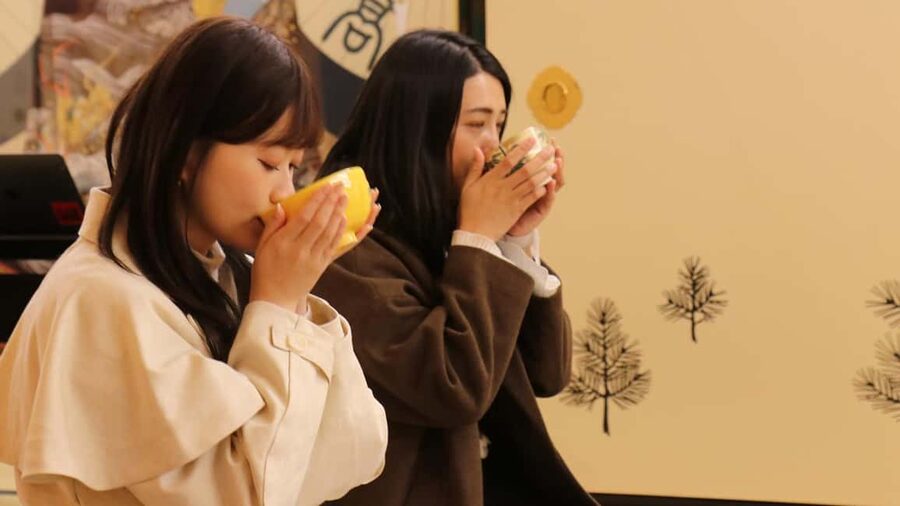
A temple visit lets you set your own pace, take your own route, and spend little or nothing on admission. This experience gives you something different: a scheduled encounter with a maiko and a guided explanation of customs that can be difficult to understand from architecture alone.
You also receive a more personal setting than a large stage performance. The possibility of photos and conversation adds contact with the performer, while the tea ceremony turns the visit into an activity rather than a show.
The tradeoff is flexibility. You must reserve in advance, reach the correct meeting point, remove your shoes, and follow the timing of the program. You cannot wander in and out as you might at a temple.
For a first visit to Kyoto, I would not replace the city’s major sights with this activity. I would add it if traditional performing arts and tea culture are high on your list. It works best as one carefully chosen cultural stop among temples, gardens, food markets, and neighborhood walks.
Should you book the maiko dance and tea ceremony?
Book it if you want a polished, compact introduction to Kyoto’s traditional arts, especially if seeing a maiko is a priority. The authentic Noh stage, seasonal sweets, English interpretation, and chance to speak with the maiko give the program more substance than a simple photo stop.
Think twice if you are seeking a long hands-on tea class, a full evening performance, or the lowest possible price. At $141, the value depends on how much you care about the setting, the performer, and the cultural explanation.
For the right visitor, the short format is a strength. You get a graceful dance, a carefully prepared bowl of matcha, a seasonal sweet, and a quiet hour away from Kyoto’s busy streets. Bring socks, arrive early, and treat the experience as a formal cultural appointment rather than a quick tourist attraction.
FAQ
How long does the maiko dance and tea ceremony last?
The activity lasts between one hour and 90 minutes. Starting times depend on availability.
Where do I meet for the experience?
The meeting point may vary depending on the option booked. The instructions direct you to arrive at the first-floor reception of Kurochiku Tensho-kan at least 15 minutes before the start time.
Is an English guide available?
Yes. A professional English interpreter guide is included, and the available languages are English and Japanese.
Is matcha included?
Yes. Matcha and seasonal Japanese sweets are served during the tea ceremony.
Do I need to bring anything?
Bring socks because you participate indoors after removing your shoes.
Can I cancel for a refund?
Yes. You can cancel up to 24 hours in advance for a full refund. If the operator cancels because of insufficient participants or operational reasons, an alternative date or refund is provided.
Just added around Kyoto
- Whisk Your Own Matcha: A Zen Matcha Experience at Temple★ 3.6 · 7 reviews
- Uji Walking Tour – Byodo-in temple and Tea Ceremony from Kyoto★ 3.5 · 3 reviews
- Traditional Tea Ceremony in Kyoto★ 4.5 · 3 reviews
- Kyoto: Authentic Tea Ceremony in a Small Group★ 5.0 · 7 reviews
- Tea ceremony at Kyoto’s Zen Temple Teahouse★ 5.0 · 2 reviews
- Tea Ceremony in 150 Years Old Townhouse with Tables and Chairs★ 5.0 · 22 reviews
- Silent Beauty of Kyoto Zen Walk and Tea Experience★ 5.0 · 2 reviews
- Tea Ceremony Experience in Traditional Kyoto Townhouse★ 5.0 · 19 reviews
Tea Ceremony Experiences, compared.
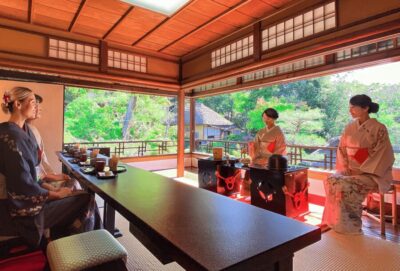
Tea Ceremony in a Traditional Tea House in Kiyomizu
Read our review →
Browse the lists this tour appears in