
Review · BEIJING
Beijing Tai Chi and Tea Ceremony Experience
Tai Chi is the heart of this Beijing morning: slow movement, steady breathing, and a clear link to Taoist ideas about balance and the flow of Qi. Eric teaches basic forms, relaxation, and self-massage in English, so you get more than a quick photo opportunity.
I like the beginner-friendly instruction and the easy move from physical practice to Chinese tea culture. I also like the small private format, where Eric can adjust the lesson to your experience. The main consideration is price: at $95 per person for about three hours, this is a culture lesson rather than a budget activity, and transportation and a full meal are not included.
Key points at a glance
- One hour with Eric: Learn basic Tai Chi movements, relaxation forms, Taoist ideas, and self-massage from an English-speaking master.
- Four to five Chinese teas: Taste several styles and learn how to judge tea quality for yourself.
- Kungfu tea ceremony: Alice guides you through the careful brewing and serving customs used in Chinese tea culture.
- Three to five snacks: Small bites accompany the tea tasting, but this is not sold as a full meal.
- Private group experience: Only your own group participates, which allows the lesson to match your ability.
- Simple morning timing: Meet at 9:00 am at Jixiaolan Former Residence, with the activity ending back at the meeting point.
Starting near Jixiaolan Former Residence at 9:00 am
Your morning begins at Jixiaolan Former Residence in the Qianmen area of Beijing. The meeting point is near public transportation, but private transport is not included, so you need to make your own way there.
The early start suits the activity. Tai Chi asks for attention and calm, and a 9:00 am beginning gives the experience a gentle rhythm before you fill the day with sightseeing. Wear comfortable walking shoes, especially if you plan to reach the meeting point by subway or on foot.
The exact setting for the Tai Chi lesson is not described in detail, so you should not book this expecting a particular park, temple courtyard, or scenic view. The value is in the teaching, not in a guaranteed backdrop. If the setting matters greatly to you, confirm the precise practice location before booking.
Since the activity is private, only your group takes part. That matters if one person is a complete beginner and another already knows some Tai Chi. Eric can check your experience level and shape the lesson accordingly rather than forcing everyone into a fixed class.
More Tea Ceremony Experiences in Beijing:
- Traditional Chinese Tea Ceremony Experience
★ 4.7 · 74 reviews - Beijing Culture: Tea Ceremony, Heritage Instrument & Calligraphy
★ 5.0 · 57 reviews - Chinese Tea ceremony in Beijing Hutong courtyard
★ 4.7 · 26 reviews
Learning Tai Chi with Eric
The first hour introduces Tai Chi through both movement and ideas. Eric explains Taoist principles, then leads you through basic relaxation forms and typical Tai Chi movements. You also learn self-massage methods, giving the session a practical element beyond memorizing a short sequence.
You do not need to arrive with previous training. The lesson is designed to explain why Tai Chi remains popular around the world and how its slow, controlled actions are linked with relaxation and general health. Eric’s teaching style, as described through the experience, is patient and adaptable. He checks your level before organizing the class, which is especially useful if this is your first contact with Tai Chi.
A beginner lesson should not be confused with a full martial arts course. In one hour, you can expect an introduction to posture, movement, relaxation, and the cultural ideas behind the practice. You are unlikely to master a complete system in that time. The advantage is that you get a clear starting point without needing to commit to a longer course.
The Taoist explanation adds meaning to the movements. Tai Chi is presented as a way to improve the body’s Qi through relaxation and to seek harmony between people and nature. You can treat that as traditional Chinese philosophy rather than a medical promise. The activity explains the cultural framework, but it should not replace professional medical advice or exercise instruction for a health condition.
I particularly like the focus on mind, eyes, and body noted in the teaching approach. That combination gives you something concrete to work on. Instead of simply waving your arms slowly, you pay attention to where you look, how you stand, and how each motion connects to the next.
From movement to self-massage
Self-massage is a useful part of the lesson because it gives you a technique you can remember after leaving Beijing. The description does not specify which areas or methods are covered, so you should regard it as an introduction rather than a detailed therapeutic treatment.
The lesson also explains why relaxation is central to Tai Chi. The aim is not speed or muscular force. You work through controlled movements and calm attention, which can make the hour feel quite different from a standard sightseeing stop.
The activity uses health language such as improving Qi and overall well-being. Listen to this as an explanation of Taoist tradition and Chinese wellness culture. The experience can encourage calm and body awareness, but no specific health result is guaranteed.
Tasting four to five Chinese teas
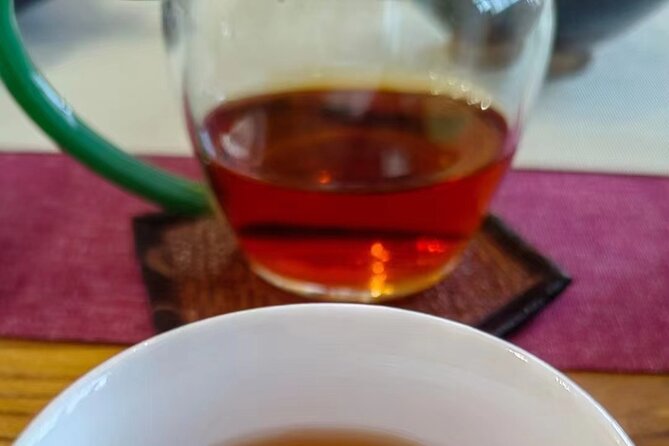
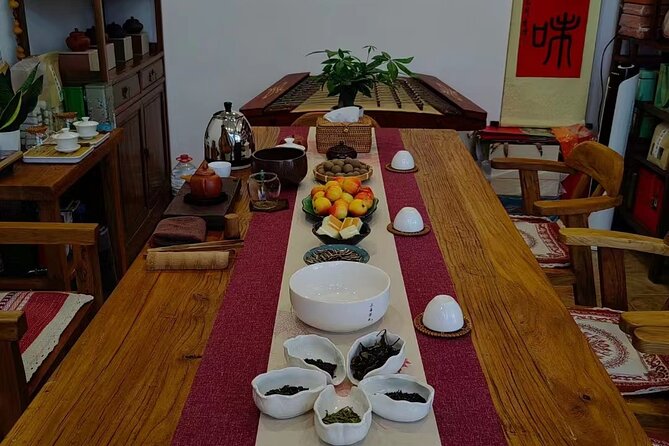
After Tai Chi, the focus shifts to tea. In the tea house, you taste four to five different Chinese teas and learn how to distinguish quality for yourself. This is more useful than a single cup served without explanation because comparison helps you notice differences in aroma, taste, appearance, and preparation.
Alice leads the tea portion and explains Chinese tea history, culture, and the role tea plays in daily life. She also introduces the connection between tea drinking, quiet reflection, and Taoist practice. The tea is treated as both a daily drink and a tool for cultivating a settled temperament.
The tasting includes three to five snacks. These add something to the session, but the experience does not include a full meal. The price information lists food as not included, so plan to eat breakfast before arriving or arrange another meal afterward. The snacks should be understood as tasting accompaniments, not lunch.
The tea portion is likely the strongest choice for anyone interested in everyday Chinese culture. Tea is not presented only as a souvenir or a purchase. You learn how it is prepared, served, judged, and used as a pause in the day.
A few more tea experiences around Beijing worth a look
- Beijing: Dumpling Making Workshop with Meal and Tea
★ 4.7 · 69 reviews - Beijing: Mutianyu Great Wall and Tea House Private Tour
★ 5.0 · 11 reviews - Beijing Culture Event: Tradition Music, Tea Ceremony, Calligraphy
★ 5.0 · 11 reviews - Beijing: Temple Of Heaven+Tai Chi Class+Tea Ceremony
★ 5.0 · 8 reviews
Alice’s Kungfu tea ceremony
The Kungfu tea ceremony is the most formal part of the tea house visit. Alice demonstrates the careful process of preparing and serving tea, while explaining the customs behind it. The point is not simply to drink more tea. It is to watch how water, leaves, timing, vessels, and presentation work together.
The term Kungfu here refers to skill and care in preparation. You get a chance to see how a tea ceremony creates a slower pace and encourages attention. That links naturally with the morning’s Tai Chi lesson, though the two practices use different methods.
Alice also helps you judge tea quality yourself. This is a practical benefit if you plan to buy tea in Beijing or elsewhere in China. You may not leave as a tea expert, but you should have a better sense of what questions to ask and what differences to notice.
Tea is the only drink specifically described as part of the experience, although the inclusions also mention coffee and/or tea. You should not assume that a particular coffee service or a full selection of refreshments will be available. The central offering is clearly the Chinese tea tasting.
What the $95 price really covers
At $95 per person, this is not the cheapest way to spend a morning in Beijing. The price makes more sense if you value personal instruction, English explanations, and a private group rather than simply wanting to watch Tai Chi in a public park.
You are paying for about three hours that combine two connected subjects: movement and tea. The Tai Chi lesson includes a master-led introduction, while the tea session includes several teas, snacks, tea-quality guidance, and a ceremony. Group discounts may improve the value for families or friends traveling together.
The private format is important in judging the cost. A large public class might offer a lower price, but it would not necessarily allow the instructor to check your experience level or adjust the pace. Here, your group receives the full attention of the activity rather than joining a mixed crowd.
Still, there are clear limits. Private transportation is not included, and food is listed separately from the tea and snacks. You also need to reach the meeting point independently and make your own arrangements for a more substantial meal.
For a solo participant, $95 may feel high for a three-hour introduction. For a couple, family, or small group that wants a tailored cultural lesson, the price can be easier to justify. Group discounts are worth checking before you reserve.
Who will enjoy this morning most
This experience suits you if you want to understand Chinese culture through participation rather than only through monuments and museums. It is a good match for first-time Tai Chi students, people curious about Taoism, and anyone who enjoys food and drink traditions explained at a relaxed pace.
It also works well for a mixed-interest group. One person can appreciate the exercise, another can focus on tea, and both parts are connected by ideas of calm, attention, and balance.
The activity may be less suitable if you want intense exercise, a full martial arts workout, or a long sightseeing route. The Tai Chi portion lasts about one hour, and the rest of the time is devoted to tea. It is a cultural introduction, not a fitness boot camp or a city tour.
You should also consider your schedule. The start is fixed at 9:00 am, and the activity returns to the meeting point when it ends. If you have a tightly timed morning reservation elsewhere, allow extra time for getting to and from the meeting point.
Practical details before you book
Confirmation is provided at booking, and the activity accepts a mobile ticket. You can cancel for a full refund if you do so at least 24 hours before the local start time. Changes or cancellations made less than 24 hours before the experience are not accepted for a refund.
Comfortable walking shoes are the sensible choice. The meeting point is near public transportation, but the activity does not provide private transfers. Since the tour is private, the number of participants is determined by your own group rather than by a shared coach arrangement.
The experience is usually booked about 22 days ahead. That does not guarantee that every date will sell out, but it is a useful sign that you should reserve early if your Beijing schedule is fixed. The four existing ratings are all five stars, with especially strong praise for Eric’s patience and English instruction and Alice’s tea presentation.
Should you book Beijing Tai Chi and Tea Ceremony?
Book it if you want a calm, personal introduction to two important parts of Chinese culture. Eric’s adaptable beginner lesson, the self-massage techniques, Alice’s tea guidance, and the chance to taste four to five teas give the morning more substance than a quick demonstration.
Skip it if your main goal is low-cost sightseeing, a full meal, or a dramatic historic setting. At $95, the value rests on the teaching and private format. For a small group that wants to slow down, learn a few Tai Chi basics, and understand tea beyond simply drinking it, this is a thoughtful use of a Beijing morning.
FAQ
Where does the Beijing Tai Chi and Tea Ceremony Experience start?
It starts at Jixiaolan Former Residence, also written as Ji Xiao Lan Gu Ju, in the Qianmen area of Beijing.
What time does the activity begin?
The start time is 9:00 am.
How long does the experience last?
The experience lasts approximately three hours.
Is the activity private?
Yes. Only your own group participates in the activity.
Who teaches the Tai Chi portion?
Eric, an English-speaking Tai Chi master, teaches the Tai Chi portion and adjusts the lesson to the group’s experience level.
What is included in the Tai Chi lesson?
The lesson includes Taoist Tai Chi knowledge, basic relaxation forms, typical Tai Chi movements, and self-massage methods.
How many teas will I taste?
You will taste approximately four to five different Chinese teas.
Are snacks included?
The tea session includes approximately three to five snacks, but food is listed as not included, so the snacks should not be treated as a full meal.
Can I cancel for a refund?
Yes. You can cancel at least 24 hours before the local start time for a full refund. Cancellations or changes made less than 24 hours before the start are not accepted for a refund.
Just added around Beijing
- Traditional Chinese Tea Ceremony Experience★ 5.0 · 7 reviews
- Beijing: Mutianyu Great Wall and Tea House Private Tour★ 5.0 · 11 reviews
- Private Beijing Spiritual Tour with Lunch and Tea Ceremony★ 5.0 · 2 reviews
- Private Tour: Tiananmen Area Night Walk with Lao She Teahouse Show★ 5.0 · 3 reviews
- Beijing Culture Event: Tradition Music, Tea Ceremony, Calligraphy★ 5.0 · 11 reviews
- Temple of Heaven Private Tour and Tea Tasting at Maliandao Tea Street★ 5.0 · 2 reviews
- Private Tour to the Temple of Heaven and Tea tasting at the Maliandao Tea city★ 5.0 · 3 reviews
- 3-hour Morning/Afternoon Tea Tasting on Maliandao Street & Dimsum★ 5.0 · 7 reviews
Tea Ceremony Experiences, compared.
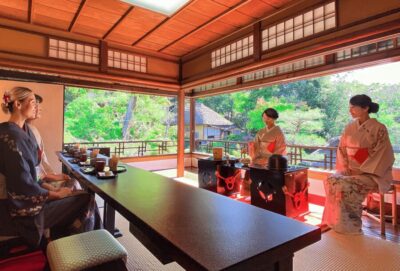
Tea Ceremony in a Traditional Tea House in Kiyomizu
Read our review →
Browse the lists this tour appears in