
Review · BEIJING
Private Beijing Spiritual Tour with Lunch and Tea Ceremony
Beijing’s spiritual life comes into focus on this private tour, which links Buddhism, Confucianism, and Taoism in one well-planned day. You’ll see grand halls, ancient figures, sacred objects, and quiet courtyards, then sit down for Chinese food and a tea ceremony.
I like the easy door-to-door plan, especially in a city as spread out as Beijing. I also like the chance to compare three traditions rather than visiting temples as isolated sights. The main drawback is pace: the tea ceremony may feel rushed, and six to seven hours leaves limited time at each temple.
- Three major traditions in one morning and afternoon: Visit Lama Temple, Confucius Temple, and White Cloud Temple.
- An 18-meter Maitreya Buddha: See one of Lama Temple’s most memorable objects.
- A five-minute temple-to-temple walk: Confucius Temple and the Guozijian Museum sit close together.
- A local Chinese lunch: The meal gives the tour a practical food stop, not just sightseeing.
- Private, climate-controlled transport: Hotel pickup and drop-off make the day simpler.
- Tea after the temples: Taste Chinese tea such as jasmine, oolong, or Green Dragon tea.
Three Spiritual Traditions, One Beijing Day
This tour works because it gives you a clear theme. Beijing has no shortage of temples, museums, and historic buildings, but it is easy to collect sights without understanding how they fit together. Here, each stop represents one of China’s major spiritual and philosophical traditions.
Buddhism focuses on religious practice, meditation, compassion, and devotion. Confucianism centers on learning, ethics, family duty, and social order. Taoism brings attention to harmony, nature, ritual, and the balance of life. Your guide connects these ideas to the buildings and statues in front of you.
That approach is especially useful if this is your first visit to China. You do not need a background in Asian history to follow the day. The guide explains the major ideas while pointing out details that could be easy to miss on your own.
The tour begins at 9:00 a.m. with a hotel pickup. A private vehicle takes you to the first temple in about 20 minutes. Since only your group participates, you can ask questions at your own pace, though the actual timing will still depend on the guide and the size of your group.
Lama Temple and the 18-Meter Maitreya Buddha
Lama Temple, also called Yonghegong, is the first major stop. You have about an hour here, with admission included.
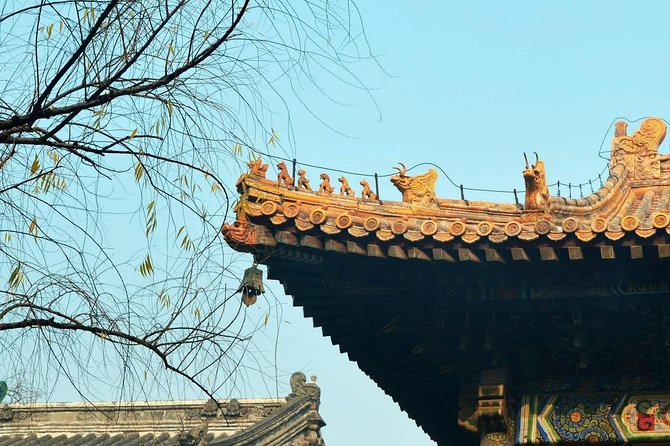
The temple contains five main halls filled with colorful carvings, sacred objects, and detailed murals. The layout leads you through a series of courtyards and buildings, so this is not a single-room museum visit. It feels more like a small religious compound, with each hall offering another layer of decoration and ritual meaning.
The great draw is the enormous Maitreya Buddha. The statue rises 18 meters above the ground, making it an unforgettable sight even if you know little about Buddhist art. Your guide can explain why the figure matters and help you read the temple’s imagery rather than simply moving you from one hall to the next.
An hour is enough for a focused introduction, but not for a slow examination of every carving. If you like taking photographs or pausing at religious objects, you may need to keep your time under control. The private format helps because you can tell your guide what interests you most.
Lama Temple is also a good place to notice the contrast between Beijing’s busy streets and the quiet inside a functioning religious site. The tour is not only about architecture. It gives you a look at Buddhist practice and the role monasteries have played in Chinese culture.
More Tea Ceremony Experiences in Beijing:
- Traditional Chinese Tea Ceremony Experience
★ 4.7 · 74 reviews - Beijing Culture: Tea Ceremony, Heritage Instrument & Calligraphy
★ 5.0 · 57 reviews - Chinese Tea ceremony in Beijing Hutong courtyard
★ 4.7 · 26 reviews
Confucius Temple and Guozijian Museum
From Lama Temple, you walk about five minutes to the Temple of Confucius and Guozijian Museum. This short transfer is one of the day’s practical pleasures. You avoid getting back into the car, and the close location lets the morning flow naturally from Buddhism into Confucian thought.
The temple is described as the second-largest Confucian temple in China, after the one in Qufu, Confucius’ hometown. Its restored main hall contains a statue of Kongzi, the Chinese name for Confucius.
Compared with Lama Temple, this stop may feel quieter and more restrained. That difference is useful. You can see how Confucian sites place less emphasis on large devotional statues and more on the legacy of a teacher whose ideas shaped education, government, family life, and public conduct.
The Guozijian Museum adds context to the temple. Confucian learning was closely tied to education and official life, so the combined visit helps explain why study and examinations carried such weight in traditional China. Your guide’s explanation matters here, since the buildings alone may not tell you why the site was important.
You have about an hour at this stop. I would use it to ask direct questions about Confucius, education, and how Confucian values continue to affect Chinese society. The tour’s strength is comparison, and this is where the contrast with Buddhist practice becomes clearest.
Lunch at a Local Chinese Restaurant
Lunch comes after the first two temples. The price includes a Chinese-style meal at a local restaurant, along with bottled water.
The food stop gives the day a welcome break. It also keeps the experience connected to ordinary life, rather than treating temples as objects sealed away from modern Beijing. One especially appealing detail is the chance to eat food familiar to the guide from his own youth. If your guide is Ramon, his explanations and personal connection to the meal may add another human touch to the stop.
Specific dishes are not provided, so you should tell the operator about dietary requirements when booking. Do not assume that the menu will match a standard Western lunch or that every preference can be handled without advance notice.
The meal is included, which improves the value of the tour. You do not have to spend time finding a restaurant between temple visits, and the private vehicle can continue on the planned route afterward. Still, food is a personal matter. If you are seeking a famous restaurant or a long, leisurely meal, this tour is not designed around dining.
White Cloud Temple, Beijing’s Taoist Center
After lunch, you drive about 30 minutes to White Cloud Temple, also called Baiyun Taoist Temple. You have about two hours here, making it the longest temple stop of the day.
White Cloud Temple was once among China’s most influential Taoist temples. It is also one of the Three Great Ancestral Courts of the Complete Perfection School of Taoism. These details give the stop real weight, but you do not need to memorize the titles. The useful point is that this is not simply a pretty old building. It has an important place in Taoist religious life.
Your guide introduces the temple as the First Temple under Heaven and explains its role in Taoism. The longer visit allows more room for questions and for a slower look at the grounds than you get at the first two stops.
Taoism can be difficult to explain through architecture alone. Concepts such as harmony, balance, and the relationship between people and the natural world are not always obvious in a courtyard or statue. A private guide can make those ideas easier to connect with what you see.
This stop also gives the itinerary a good rhythm. Lama Temple is visually elaborate and Buddhist. Confucius Temple is quieter and tied to scholarship. White Cloud Temple provides a third tradition with its own rituals, symbols, and institutional story.
The schedule says the tea house follows the Taoist temple, within this final two-hour portion. That means the time must cover both the temple and tea. If you want a very slow temple visit and a long ceremony, ask your guide early how the afternoon will be divided.
A few more tea experiences around Beijing worth a look
- Active Volcano, Rice Field, Hot Spring, Fruit market, Tea Plantation with Lunch
★ 5.0 · 513 reviews - Bandung: White Crater Hotspring Tea Plans And Lunch Included
★ 4.9 · 419 reviews - From Sapa: 1-Day Guided Trek to Lao Chai & Ta Van with Lunch
★ 4.9 · 416 reviews - São Miguel: Furnas Volcano & Tea Plantation Tour with Lunch
★ 4.9 · 375 reviews
A Traditional Tea Ceremony After the Temples
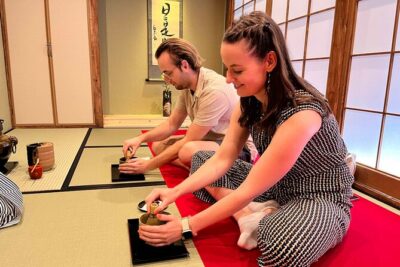
The final cultural activity is a tea ceremony at a traditional tea house. You taste Chinese tea, with possible choices including Green Dragon, jasmine tea, or oolong tea.
Tea is a fitting finish because it shifts the day from religious buildings to a living cultural practice. You can ask about preparation, flavor, and the differences between tea styles. The ceremony offers a quieter ending after several hours of walking, driving, and listening.
Set your expectations carefully. This is an included tea experience, not a long specialist tea course. One account of the tour found the presentation rushed, so you may want to tell the presenter or guide that you would like enough time to ask questions and taste the tea properly.
The ceremony’s value depends on your interest. If you enjoy learning through food and drink, it adds something distinctive to the day. If you care mainly about temples, it may feel like a short add-on. Either way, it gives you a chance to pause before the ride back to your hotel.
What the Private Format Changes
The private setup is more than a comfort feature. It gives you a guide focused on your group, a vehicle with air conditioning, and hotel pickup and drop-off. That matters in Beijing, where crossing the city can take time and public transport may not suit every group.
You are scheduled to leave at 9:00 a.m. and return after the tea experience. The total outing lasts about six to seven hours. That is long enough to create a strong theme without taking the entire day.
The private format also helps families and small groups. Children must be accompanied by an adult, and most people can take part. If you have mobility concerns, dietary needs, or a preference for fewer stairs and less walking, discuss those points before the tour. The supplied details do not promise a specific accessibility plan.
A private tour can also be less predictable than a fixed group excursion. The guide may spend more time on a subject you care about, but traffic, questions, or temple conditions could affect the schedule. Keep later plans flexible.
The guide makes a major difference. Ramon is specifically associated with clear explanations of all three temples, patient answers, and Spanish-language service. If you want a Spanish-speaking guide or hope to request Ramon, ask the provider when booking rather than assuming he will lead every departure.
Is the $188 Price Good Value?
At $188 per person, the tour is not the cheapest way to see Beijing temples. You are paying for more than admission. The price includes a private air-conditioned vehicle, hotel transfers, a professional guide, entrance fees, lunch, bottled water, and the tea experience.
For a couple, family, or small group that values convenience, the cost can make sense. You avoid arranging several taxi rides, planning a lunch stop, and working out how the three traditions connect. The guide also provides the cultural framework that turns separate temples into one coherent experience.
The value is weaker if you prefer to explore slowly and independently. You could spend longer at one temple, skip the tea ceremony, or choose your own restaurant. This tour is built for structure and explanation, not maximum freedom.
Group discounts are offered, though the amount is not specified. Since the tour is private, ask about the final price for your party size before booking. The more people in your group, the easier it may be to justify the included transport and guide.
Free cancellation is available if you cancel at least 24 hours before the start time. Changes or cancellations inside that window are not accepted for a refund, so keep the local cutoff in mind.
Who Should Book This Beijing Temple Tour?
I would choose this tour if you want a clear introduction to China’s three major spiritual traditions and prefer not to manage Beijing transport yourself. It suits first-time visitors, families, small groups, and anyone who wants a guide to explain what the statues, halls, and rituals mean.
It is also a good choice if lunch and tea are part of your idea of a complete cultural day. The combination feels more rounded than a temple-only outing, though the tea portion may be brief.
I would hesitate if your main goal is detailed religious study, extended photography, or a long food experience. The schedule is full, and each part has a set place. You will see a lot, but you will not have unlimited time at any one stop.
Should You Book It?
Book this private Beijing Spiritual Tour if you want three important temple traditions explained in one manageable day, with hotel transport, lunch, and tea already arranged. Its best features are the strong theme, private guide, impressive Maitreya Buddha, short walk between the first two stops, and substantial time at White Cloud Temple.
Before booking, confirm the guide language, ask about dietary needs, and request a little extra time for the tea ceremony if that matters to you. If Ramon is available for your language and date, his clear explanations and patient answers could add real value. For an independent visitor who wants to set every minute, choose a self-guided day instead.
FAQ
What traditions does the tour cover?
The tour covers Buddhism at Lama Temple, Confucianism at the Temple of Confucius and Guozijian Museum, and Taoism at White Cloud Temple.
How long does the experience last?
The tour lasts approximately six to seven hours.
What time does the tour start?
Hotel pickup begins at 9:00 a.m.
Is hotel pickup and drop-off included?
Yes. Hotel pickup and drop-off are included, with transport provided in a private air-conditioned vehicle.
Is lunch included?
Yes. The tour includes lunch at a Chinese local restaurant and bottled water.
What happens during the tea portion?
You visit a traditional tea house, take part in a tea ceremony, and taste Chinese tea such as Green Dragon, jasmine tea, or oolong tea.
Is this a private tour?
Yes. Only your group participates in the private activity.
Can I cancel for a full refund?
Yes, if you cancel at least 24 hours before the experience start time. Cancellations or changes made less than 24 hours before the start are not accepted for a refund.
Just added around Beijing
- Traditional Chinese Tea Ceremony Experience★ 5.0 · 7 reviews
- Beijing: Mutianyu Great Wall and Tea House Private Tour★ 5.0 · 11 reviews
- Private Tour: Tiananmen Area Night Walk with Lao She Teahouse Show★ 5.0 · 3 reviews
- Private Tour to the Temple of Heaven and Tea tasting at the Maliandao Tea city★ 5.0 · 3 reviews
- Beijing Culture Event: Tradition Music, Tea Ceremony, Calligraphy★ 5.0 · 11 reviews
- Temple of Heaven Private Tour and Tea Tasting at Maliandao Tea Street★ 5.0 · 2 reviews
- 3-hour Morning/Afternoon Tea Tasting on Maliandao Street & Dimsum★ 5.0 · 7 reviews
- Beijing Tai Chi and Tea Ceremony Experience★ 5.0 · 4 reviews
Tea Ceremony Experiences, compared.
Tea Ceremony in a Traditional Tea House in Kiyomizu
Read our review →
Browse the lists this tour appears in