
Review · KANAZAWA
Kenrokuen Tea Ceremony Experience in Kanazawa
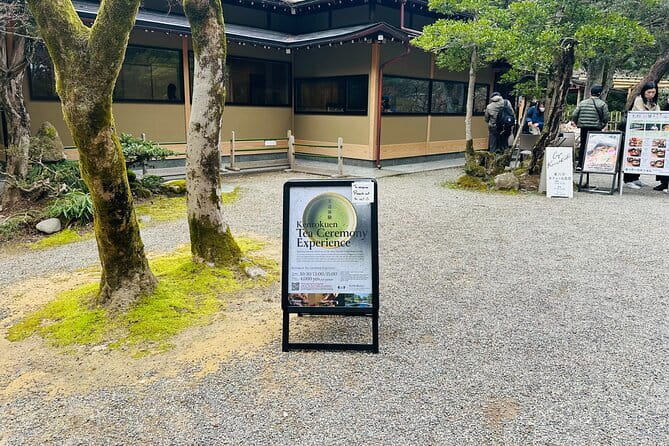
The best part of this 50-minute tea ceremony is that you do not just watch someone make matcha. A tea master explains the movements, utensils, and customs, then hands you the tools so you can whisk your own tea. It takes place at Kenrokutei, a historic reception space inside Kanazawa’s famous Kenrokuen Garden.
I like the small group size, capped at four people, and the choice of a standing-style ceremony if sitting on the floor is difficult. I also like the balance of instruction and participation: you learn, taste matcha with wagashi sweets, and then try the process yourself.
The main drawback is strict timing. Arrive more than 10 minutes late and the reservation may be canceled, with no refund. You also pay Kenrokuen’s 320-yen entrance fee separately, so the total cost is higher than the listed $39.40 price.
Key points to know before booking

- Historic Kenrokutei setting: Meet inside a former reception place used by Kanazawa’s lords for important visitors.
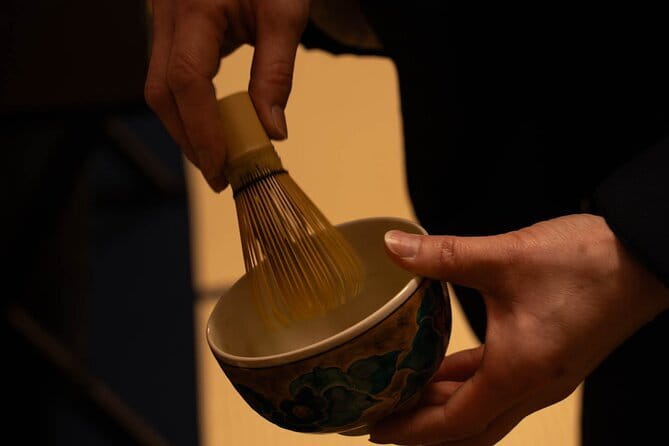
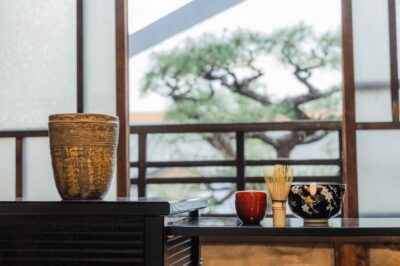
- You make your own matcha: The tea master first demonstrates, then explains how to use the whisk, bowl, scoop, and other utensils.
- Small group format: The activity allows a maximum of four people, making the instruction easier to follow.
- Floor or standing-style option: You can request the standing format if kneeling or sitting on the floor is uncomfortable.
- Wagashi and matcha included: The experience includes traditional Japanese sweets and tea, while garden admission costs extra.
- Strict arrival rule: Arrive on time. More than 10 minutes late can mean cancellation without a refund.
A tea ceremony inside Kenrokuen Garden
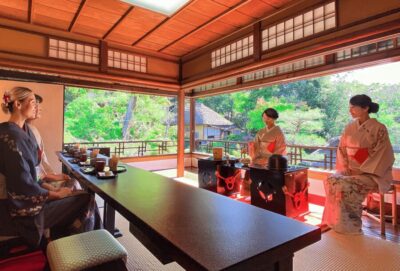
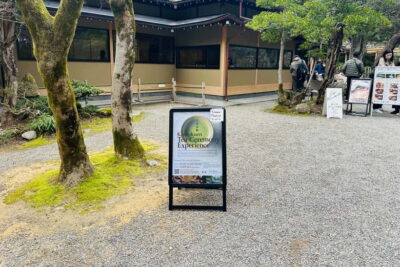
Kenrokuen is one of Kanazawa’s main sights, and this experience gives you a reason to pause inside it rather than simply walk through, take photographs, and move on. The tea ceremony takes place at Kenrokutei, a historic building where important guests were entertained by local lords in the past.
That setting matters. You are not attending a generic workshop in a modern classroom. The ceremony unfolds in a place connected to Kanazawa’s old hospitality traditions, with the garden immediately around you. The activity itself takes place in a dedicated tea room or ceremony space, according to the descriptions provided, so the focus remains on the ritual rather than on passing crowds.
I would plan to visit Kenrokuen before the ceremony, not after. You need to pay the garden entrance fee separately, and the meeting point is inside the grounds at 1-20 Kenrokumachi. Arriving early gives you time to enter the garden, find Kenrokutei, and settle in without turning the punctuality rule into a source of stress.
The garden admission is 320 yen. That is a modest extra cost, but it changes the real price of the outing. At $39.40 per person, the tea ceremony is not the cheapest cup of matcha in Kanazawa. You are paying for instruction, a historic setting, sweets, a hands-on session, and a small group rather than just for the drink.
More Tea Ceremony Experiences in Japan:
- Kyoto: Tea Ceremony in a Traditional Tea House in Kiyomizu
★ 4.9 · 3,519 reviews - Kyoto: Tea Ceremony Ju-An at Jotokuji Temple
★ 4.9 · 3,207 reviews - Kyoto: 45-Minute Tea Ceremony Lesson Experience
★ 4.3 · 2,378 reviews
What happens during the 50-minute session
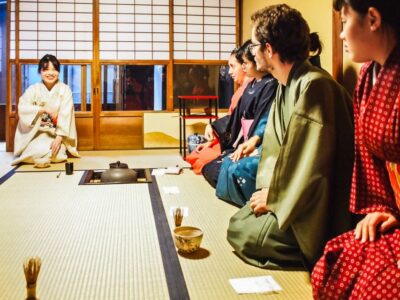
The session begins with a meeting at Kenrokutei. The tea master or hostesses introduce the setting and the basic idea behind the ceremony. You then choose the standing-style format if sitting on the floor is not suitable for you.
The demonstration comes first. This is useful because the ceremony has a set rhythm, and the small gestures can be hard to understand if you are asked to copy them without context. You learn how the tea is prepared, how the utensils are handled, and how the bowl is used.
The instruction is not limited to making a drink. The movement of each utensil and the way you handle the bowl form part of the ceremony. The explanations cover the history, roles, and flow of the process, so you can see why the tea preparation is deliberate rather than simply slow.
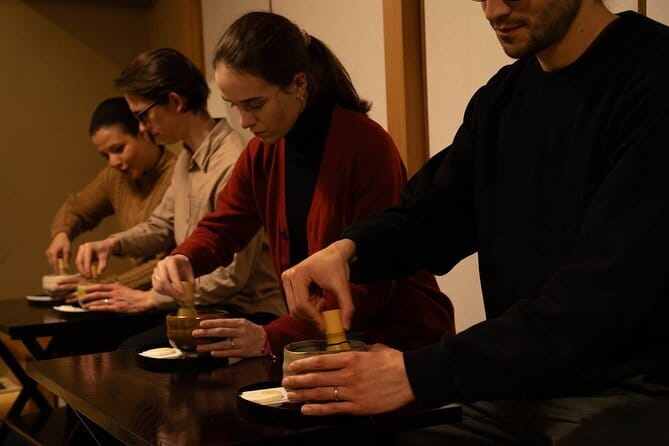
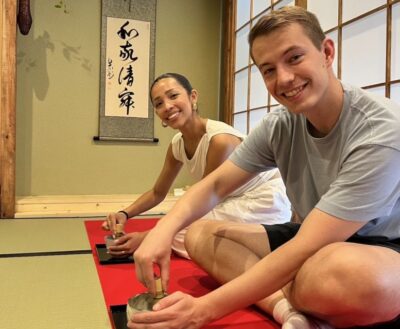
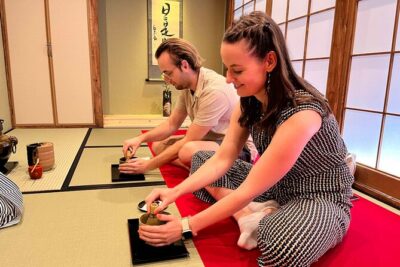
After watching, you prepare your own matcha. You use the traditional tools under guidance, whisk the tea, and drink what you make. This is the moment that turns the session from a demonstration into a workshop. You do not need to arrive with any experience, and the teaching is designed to let you take part without already knowing tea ceremony etiquette.
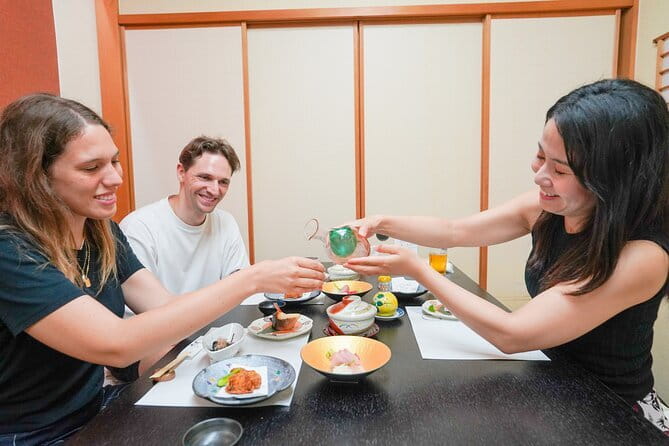
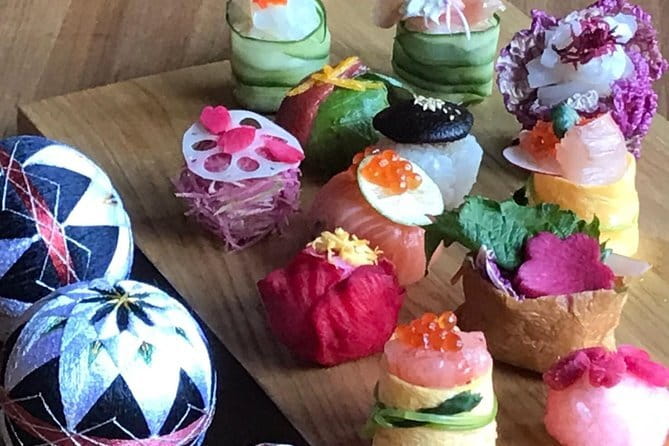
The final food element is wagashi, the traditional sweet served with matcha. The sweets are made by a distinguished confectioner, and the menu description calls them a selection of exquisite wagashi. Reviews also describe the treats as a highlight, with one Japanese-language account mentioning two kinds of sweets and tea. The exact selection may vary, but you should expect a carefully chosen sweet to balance the bitter edge of matcha.
The activity ends back at the meeting point. A photograph of the ceremony is included as part of the experience, giving you a simple record of the occasion.
Why the hands-on part is worth your time
You can order matcha at cafés throughout Japan, but drinking a bowl of tea does not explain the ceremony around it. Here, the preparation is the point. The tea provides the sensory finish, while the utensils, gestures, and explanation provide the cultural context.
I especially value the chance to make the tea yourself. Whisking matcha looks easy until you try to produce the light foam shown by the instructor. The process gives you a better feel for the care involved, and it also keeps the experience from becoming too formal or passive.
The hands-on element works well for first-time visitors because it gives you something clear to do. You listen, watch, copy the movements, and taste the result. The ceremony remains respectful, but it is not presented as a test.
That balance is important. Japanese tea ceremony can appear solemn to an outsider, with rules that are not immediately obvious. The instructors explain what is happening and invite you to participate. The experience is structured, but it is also interactive and approachable.
The English support is another practical strength. Several accounts describe clear English explanations, including one session where the English translation was praised as especially strong. If you need translation services beyond the standard explanation, you are asked to arrange a private reservation by email. That protects the quiet setting for a shared group and is worth arranging before you book.
Kenrokutei and the feel of the setting
Kenrokutei gives the ceremony a stronger sense of place than a stand-alone tea workshop. Its past use for receiving important guests links the activity to Kanazawa’s local history and the culture of formal hospitality.
The surroundings also make the timing worthwhile. Kenrokuen is a major destination in its own right, so combining the garden and tea ceremony saves you from crossing town for a separate activity. You can walk among the garden’s ponds, paths, trees, and traditional features, then step into a quieter room for a focused cultural experience.
The garden entrance is not included, so do not arrive at the gate assuming your mobile ticket covers everything. Keep the garden admission in your budget and allow time for the entrance process. The meeting point is specific, and the late-arrival rule is firm.
The ceremony is not a garden walking tour. Once you begin, the attention is on the tea room and the host. If your main goal is a broad explanation of Kenrokuen’s plants, design, or history, this is not the right activity. Its garden connection is mainly the setting and the chance to pair two experiences in one visit.
A few more tea experiences around Japan worth a look
- Osaka: Tea Ceremony Experience
★ 4.9 · 1,426 reviews - Kyoto: Table-Style Tea Ceremony at a Kyo-Machiya
★ 4.9 · 1,211 reviews - Kanazawa: Kenrokuen Tea Ceremony Experience
★ 4.8 · 1,139 reviews - Kimono Tea Ceremony at Kyoto Maikoya, NISHIKI
★ 5.0 · 911 reviews
Sitting on the floor, standing, and group size
Traditional tea ceremony settings often involve sitting on the floor, which can be uncomfortable for some people. This activity offers a standing-style format for those who have difficulty sitting that way. You should request or select the suitable option when booking rather than waiting until the session starts.
The maximum group size is four people. That is a useful limit for a demonstration involving small utensils and detailed gestures. You should be able to see what is happening and follow the instruction without the noise of a large class.
The small size also helps preserve the quiet mood. The activity is held with other groups, and participants must be at least seven years old. Children need to be comfortable listening and keeping the atmosphere calm. This is not a drop-in entertainment show, and the age rule reflects the setting.
The standing option improves comfort, but it does not turn the session into a casual café visit. You still need to pay attention to the sequence and handle the utensils carefully. The format is more accessible, not less traditional.
Price, timing, and practical value
At $39.40 per person, plus the 320-yen Kenrokuen admission, this is a mid-priced cultural activity for a session lasting about 50 minutes. The cost is easier to justify if you want instruction and participation rather than only a bowl of matcha.
I would compare it with the price of a simple tea or dessert stop. A café gives you flexibility and a lower bill, but it will not usually explain the tea ceremony, teach you the tools, or let you prepare the matcha yourself. This activity also includes wagashi and a ceremony photograph.
The value depends on your interest. If you are curious about Japanese customs and want a guided introduction, the price is fair. If you dislike formal rituals or mainly want to taste matcha, you may find the session expensive for the amount of tea served.
The average booking lead time is about 10 days, so I would not leave it until the last morning of your Kanazawa stay. The group limit is four, and the activity has a set start time. Book early if you have a fixed Kenrokuen visit planned.
The cancellation terms are generous only before the deadline. You can cancel up to 24 hours before the start time for a full refund. Changes or cancellations made less than 24 hours ahead are not accepted for a refund. The separate late-arrival rule is even more important: arriving more than 10 minutes late can cancel the booking.
Plan to reach Kenrokuen early. The combination of garden admission, walking to Kenrokutei, and finding the correct building can take longer than expected, especially if you are unfamiliar with the grounds.
Who will enjoy this tea ceremony most
I would recommend this experience to first-time visitors who want a clear introduction to tea ceremony without committing to a long formal program. The demonstration gives you cultural context, while making your own matcha gives you an active role.
It also suits couples, solo visitors, and small families with children aged seven or older. The four-person maximum makes it a good choice if you prefer personal attention to a large group lesson.
It is particularly useful for anyone already planning to visit Kenrokuen. You can combine a major Kanazawa sight with a focused cultural activity and avoid losing time on transport between separate parts of the city.
You may want to skip it if your schedule is too tight for a fixed appointment, if you are likely to arrive late, or if sitting and quiet participation do not appeal to you. The standing option helps with floor seating, but the ceremony still asks for patience and attention.
I would also choose another activity if you need extensive language help but have not arranged a private reservation. Standard English explanations are available, but the organizers specifically ask visitors who need translation services to contact them in advance.
Should you book the Kenrokuen tea ceremony?
Book it if you want more than a taste of matcha. The strongest part is the progression from explanation to demonstration to your own bowl of tea, all in a historic setting inside Kenrokuen. The wagashi, small group, English guidance, standing option, and ceremony photograph add practical value.
Keep the extra garden admission and strict arrival rule in mind. At roughly 50 minutes, it is easy to fit into a Kanazawa sightseeing day, but only if you plan your route carefully.
My advice is simple: schedule Kenrokuen first, arrive early, and treat the tea ceremony as a cultural lesson rather than a quick refreshment stop. For that purpose, this is a thoughtful and well-focused choice.
FAQ
How long does the Kenrokuen tea ceremony last?
The experience lasts approximately 50 minutes.
Is admission to Kenrokuen Garden included?
No. Kenrokuen admission is separate and costs 320 yen.
Where does the tea ceremony begin?
You meet at Kenrokutei, located at 1-20 Kenrokumachi, Kanazawa, Ishikawa 920-0936, inside Kenrokuen Garden.
Can I choose a standing-style tea ceremony?
Yes. A standing-style format is available if you have difficulty sitting on the floor.
Can I make my own matcha?
Yes. The tea master first demonstrates the process and explains the utensils, then you prepare and drink your own tea.
What happens if I arrive late?
If you arrive more than 10 minutes late, your reservation may be canceled. You should arrive early enough to pay the separate garden admission and reach Kenrokutei on time.
Just added around Japan
- Yokohama : Tea Ceremony with Sweets and Souvenir★ 5.0 · 5 reviews
- Whisk Your Own Matcha: A Zen Matcha Experience at Temple★ 3.6 · 7 reviews
- Walking Tour: Yanaka,Nezu& Sendagi: Tea Ceremony & Old Tokyo★ 5.0 · 3 reviews
- Visit local home for music and tea ceremony near Disney★ 4.9 · 13 reviews
- Yokohama: Sushi & Gyoza Cooking with Matcha & GreenTea Experience★ 5.0 · 3 reviews
- Trip to Kamakura & Enoshima: Shrines, Seaside, Temples &Tea★ 5.0 · 11 reviews
- Kyoto tea town for matcha lovers★ 5.0 · 16 reviews
- Uji: Private immersion into Kyoto’s tea and reglious culture★ 5.0 · 17 reviews
Tea Ceremony Experiences, compared.
Tea Ceremony in a Traditional Tea House in Kiyomizu
Read our review →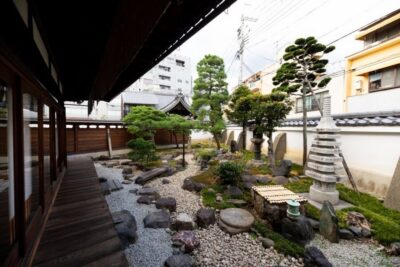
Browse the lists this tour appears in