
Review · JAPAN
Kimono Dressing & Tea Ceremony Experience at a Beautiful Garden
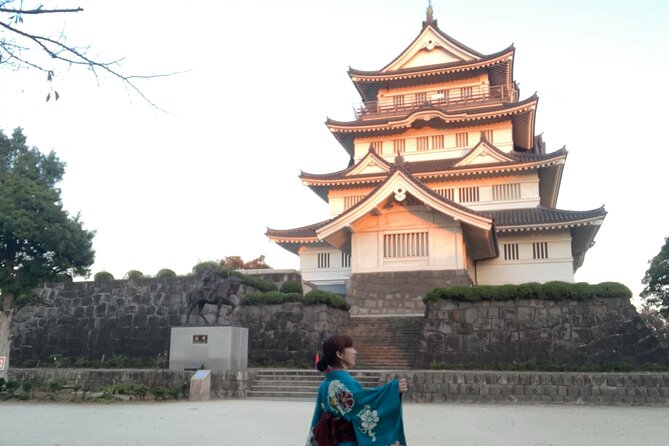
The best part of this Chiba experience is the chance to wear a real kimono before entering a traditional tea room at Mihama-en. You are not simply watching a ceremony. You take part in a small set of Japanese customs, with time to walk beside the pond and seasonal flowers.
I like the private format, since your group gets Grace’s full attention instead of sharing a hurried photo stop with strangers. I also like the choice of clothing, including hakama for men and Japanese-style costume options for women. The main consideration is the price: at $80 per person for about two hours, it is worthwhile for people who want a cultural activity, but less so if you only want a quick kimono photograph.
Key points to know before booking
- Grace brings local context: Your guide has lived in Chiba for about 18 years and raised her children there.
- Shorai-tei is the setting: Dressing and tea take place in a traditional tea room by Mihama garden.
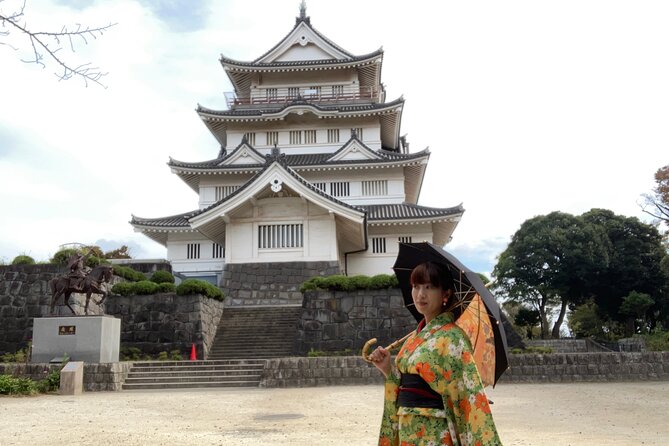
- You choose your look: Women can select a kimono or Japanese-style costume, while men can choose a kimono with a hakama-style appearance.
- The garden walk comes first: After dressing, you stroll around the pond, view seasonal flowers, and take photos.
- Matcha is part of the lesson: The tea portion includes matcha green tea and traditional Japanese sweets.
- Plan ahead: Confirmation comes within 48 hours, but the tea room must be available. The activity is often reserved about 27 days in advance.
Meeting Grace in Chiba
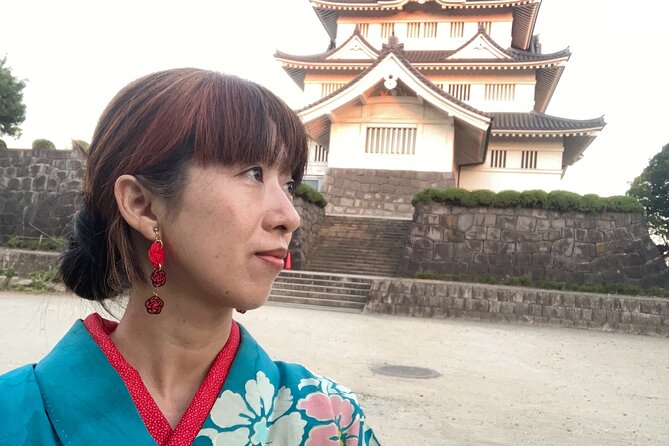
This experience begins at Shoraitei, 2-chome-116 Hibino, in Chiba’s Mihama Ward. It is near public transportation, and the activity ends at the same meeting point, which keeps the logistics simple.
Your guide is Grace, a mother of two who has lived in Chiba for roughly 18 years. She raised her children in the city and presents the experience as a personal introduction to Japanese culture, not just a costume rental. That local connection matters. You get a guide who knows the area and can help explain why the clothing, garden, and tea customs fit together.
Grace is also described as a host, historian, and interpreter. Ari may assist with the dressing and photography. Having more than one person available is useful because kimono dressing requires careful adjustment, and one helper can focus on clothing while another helps with photos or explanations.
This is a private activity. Only your group participates, so you can ask questions, move at a comfortable pace, and spend more time taking pictures if the schedule allows. It also makes the experience a better fit for families, couples, and friends who prefer not to perform a cultural activity in front of a large group.
More Kimono Tea Ceremonies in Japan:
- Kimono Tea Ceremony at Kyoto Maikoya, NISHIKI
★ 5.0 · 911 reviews - Kimono Tea Ceremony at Tokyo, Asakusa Maikoya
★ 5.0 · 638 reviews - Kyoto: Kimono Tea Ceremony at Orizuruya Gion
★ 4.9 · 618 reviews
Choosing a kimono, costume, or hakama
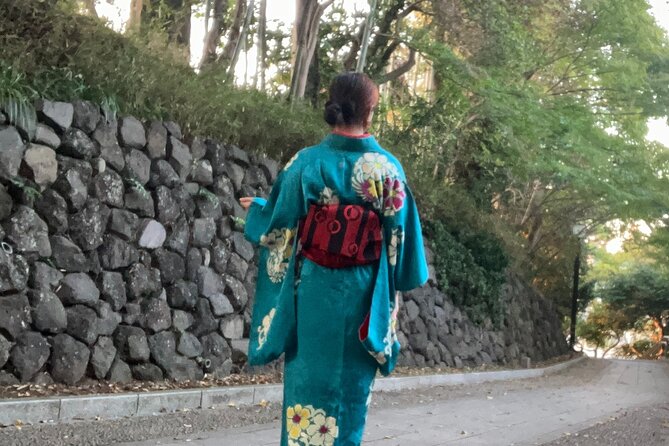
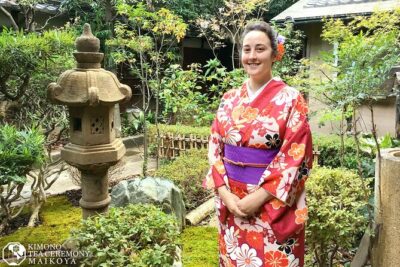
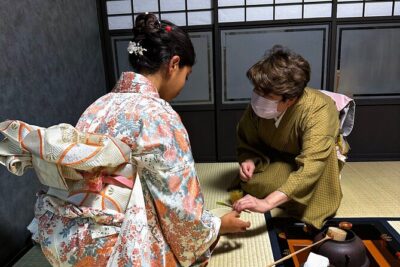
The clothing selection is the first major part of the visit. Kimono are prepared for the activity, and the staff dress you rather than leaving you to manage the layers and ties alone. That is important because wearing a kimono correctly is not as simple as slipping on a robe.
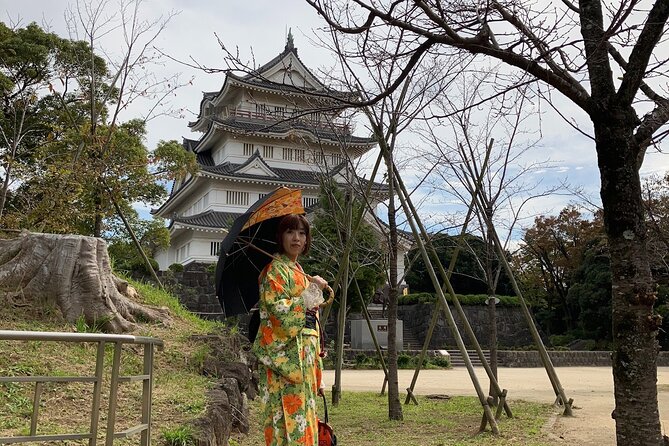
Women can choose from kimono and Japanese-style cosplay costumes. The costume option gives the experience a more playful tone, while a traditional kimono creates a quieter, more formal look for the tea room and garden. If your main goal is photography, ask about the available choices before dressing so you can select the style that suits your group.
Men can choose a kimono with a hakama style. Hakama are the pleated trousers associated with formal traditional dress, and the look can suggest a samurai-era appearance without turning the entire activity into a staged show. This gives couples and mixed groups a chance to coordinate their clothing while keeping each person’s outfit distinct.
The supplied information does not list exact sizes, colors, or the number of garments. If those details matter to you, ask when confirming your reservation. The available selection may depend on the day and on the tea room’s schedule.
A garden walk around Mihama-en
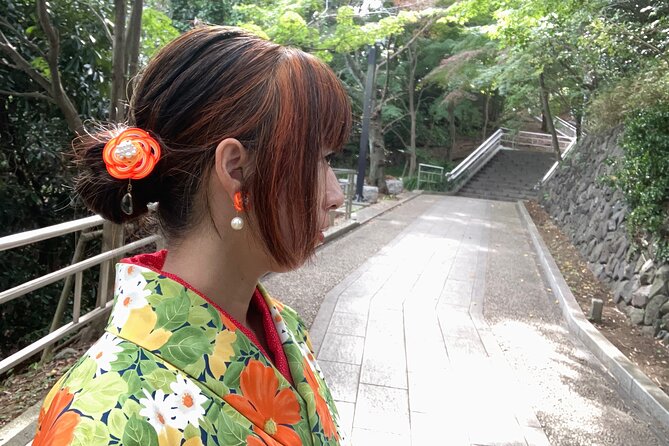
Once you are dressed, you walk around the garden near the tea room. The route includes the pond and seasonal flowers, giving you an outdoor setting for photographs before the tea ceremony begins.
This portion is valuable because kimono is meant to be seen in motion, not only displayed indoors. Walking carefully through a garden lets you notice how the clothing changes your pace and posture. It also gives Grace a natural moment to explain details as you go.
You should expect a gentle garden stroll rather than a long sightseeing tour. The activity lasts about two hours in total, and the tea ceremony still needs time. If you want many photographs, use the garden portion wisely. Ask your companion or the staff to take several pictures while you are fully dressed, including some beside the pond and among the seasonal flowers.
The garden also gives the experience a sense of place. You are not posing against a generic studio backdrop. You are visiting a garden connected to an actual tea room, with the changing seasons adding some variety to the setting. The appearance will naturally depend on when you visit.
One practical point is comfort. Traditional clothing can feel more restrictive than everyday clothes, and walking in it may require shorter steps. The garden stroll is a good chance to enjoy the outfit, but you should not expect to move at your usual pace.
Entering Shorai-tei for tea
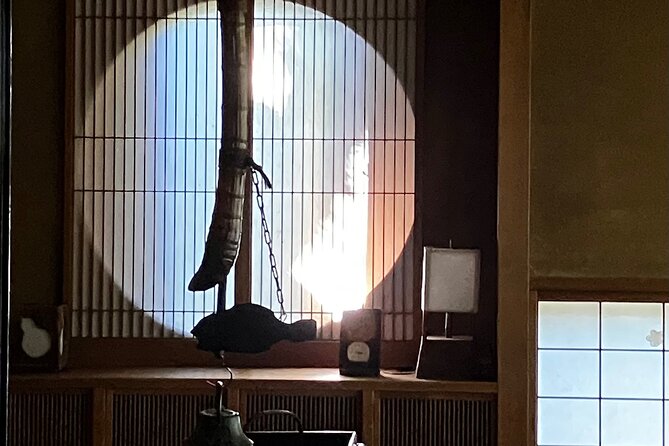
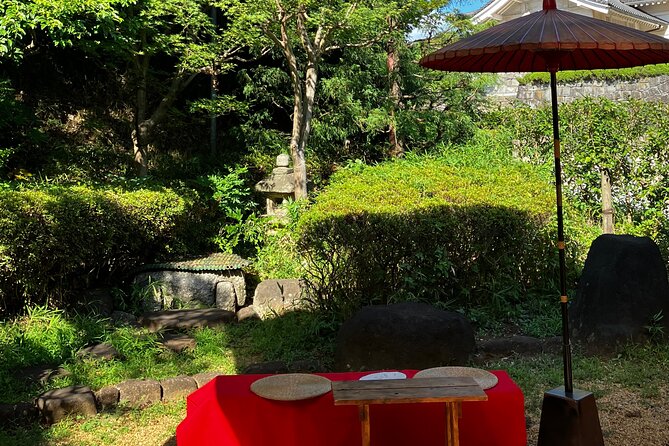
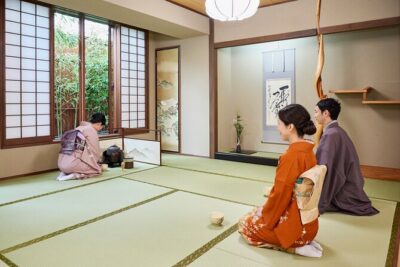
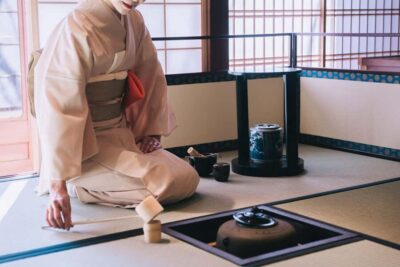
The tea ceremony takes place at Shorai-tei, a traditional tea room by Mihama garden. Traditional tea ceremonies are often held here, so the room gives the activity a setting that matches the customs being introduced.
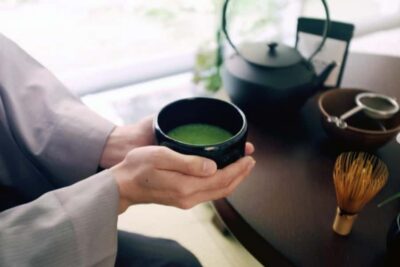
The tea portion centers on matcha green tea. Matcha has a strong aroma, a vivid green color, and a flavor that combines mild bitterness with sweetness. If you have only had sweetened green tea before, matcha may taste more intense. That is part of the lesson. You get a chance to experience the drink as it is used in a formal Japanese setting.
Traditional sweets are served with the tea. Their role is not only to provide dessert. Tea ceremony sweets are selected for the season and made with careful shapes and delicate flavors. The sweet helps balance the bitterness of the matcha, giving you a small example of how the tea service is arranged.
Do not expect a long lecture or a complete course in tea ceremony. In two hours, the guide can introduce the main actions and meaning, but this is an accessible cultural encounter rather than professional training. The private setting gives you room to ask questions, which is one of the strongest reasons to choose this activity over a larger demonstration.
The tea room also changes the mood. The garden walk is relaxed and photographic. Inside Shorai-tei, the focus shifts to quiet movement, presentation, and attention to small details. Wearing the kimono during this part helps connect the clothing to the ceremony instead of treating it as a separate dress-up activity.
More Tea Ceremony Experiences in Japan:
- Kyoto: Tea Ceremony in a Traditional Tea House in Kiyomizu
★ 4.9 · 3,519 reviews - Kyoto: Tea Ceremony Ju-An at Jotokuji Temple
★ 4.9 · 3,207 reviews - Kyoto: 45-Minute Tea Ceremony Lesson Experience
★ 4.3 · 2,378 reviews - Osaka: Tea Ceremony Experience
★ 4.9 · 1,426 reviews
What makes the private format useful
A private booking is especially helpful for first-time visitors who are unsure about the proper behavior during a tea ceremony. Grace can explain what to do for your group, and you can ask for clarification without worrying about slowing down a larger class.
It is also useful for families. Children may have questions or need a little extra time with the clothing and photographs. The information does not give a minimum age or specific child sizes, so families should confirm those points before booking. Still, the private structure is more forgiving than a fixed group session.
Couples can make the activity feel like a shared photo and culture session. A husband and wife can choose complementary clothing, walk the garden together, and take pictures before sitting down for tea. One detailed account of the experience specifically praised the range of kimono and hakama choices, as well as the help provided by Grace and Ari.
Solo participants can enjoy the guide’s attention too, though photography may require assistance. Since the activity is private, ask the staff to take photos during the garden walk rather than relying only on self-timer pictures.
Is $80 per person good value?
At $80 per person, this is not the cheapest way to wear a kimono in Japan. The price makes more sense when you count the complete package: dressing assistance, use of the clothing, a garden walk, photographs, a private guide, access to a traditional tea room, matcha, and seasonal sweets.
The two-hour length is also important. A short dressing-only session may cost less, but it would not give you the same combination of outdoor time and tea ceremony. If you want a deeper cultural activity during a Chiba stay, the price is reasonable. If your priority is simply a quick outfit change and one picture, you may find the cost harder to justify.
The private nature adds value for couples and families. You are paying for a personal appointment rather than a large group event. Grace’s local background adds another layer, especially if you want to ask about Chiba, Japanese customs, or daily life beyond the standard tourist route.
The limited number of published ratings means you should not treat the perfect score as proof that every detail will suit everyone. The available praise focuses on the interactive nature of the experience, the clothing choices, and Grace’s role as host and interpreter. Those are the elements most likely to determine whether the price feels worthwhile to you.
Booking timing and small practical details
Confirmation is sent within 48 hours of booking, subject to availability. The tea room must be checked before the reservation is finalized, so do not assume that an open date on a booking calendar guarantees an immediate confirmation.
This experience is booked, on average, about 27 days ahead. That is a useful planning signal. If your trip dates are fixed, reserve early, especially if you want a particular day or season in the garden.
The venue changed from Gaihana-tei to Mihama-en in April 2025. Check your confirmation for the current meeting details, since the information you receive should reflect the tea room being used for your date.
A mobile ticket is provided. The activity is near public transportation, but no specific train station or route is listed here. Check the exact route before leaving and allow enough time to reach Shoraitei at the stated address.
Cancellation is free up to 24 hours before the start time. A cancellation made less than 24 hours ahead is not refunded, and late changes are not accepted. That policy is worth noting because the tea room has to be reserved for your private group.
Who should book this Chiba experience?
I would recommend it most strongly to people who want participation rather than observation. You dress in traditional clothing, walk through a garden, take photographs, and take part in tea service. The activity gives you something to do at each stage.
It suits couples who want a shared memory, families looking for a calm cultural activity, and friends who enjoy taking photographs together. It is also a good option if you have already seen major Tokyo sights and want a more personal introduction to Japanese customs in nearby Chiba.
You may want to skip it if you dislike formal clothing, do not enjoy posed photographs, or want a long sightseeing tour. The garden walk is brief enough to fit into a two-hour activity, but it is not a substitute for a full garden visit. You should also confirm clothing availability if you need a specific size or style.
Should you book it?
Book this experience if you want a well-contained introduction to kimono and tea ceremony with a local guide. Grace’s connection to Chiba, the private format, the choice of hakama and costume styles, and the traditional setting at Shorai-tei give the visit more substance than a basic costume photo stop.
At $80 per person, it is best viewed as a cultural appointment, not a bargain attraction. The strongest value comes from the combination of personal assistance, garden time, and matcha service. Reserve ahead, confirm the current Mihama-en meeting details, and ask about clothing choices if those are important to you.
FAQ
How long does the kimono and tea ceremony experience last?
The experience lasts approximately two hours.
Where does the activity begin?
It begins at Shoraitei, 2-chome-116 Hibino, Mihama Ward, Chiba, 261-0021, Japan.
Where does the activity end?
The activity ends back at the meeting point.
Who is the guide?
The guide is Grace, who has lived in Chiba for about 18 years and raised her two children there. Ari may also assist with the experience.
What clothing can participants choose?
Women can choose a kimono or a Japanese-style cosplay costume. Men can choose a kimono with a hakama-style appearance.
Is the tea room location still Gaihana-tei?
The serving location changed from Gaihana-tei to Mihama-en in April 2025. Check your confirmation for the current details.
Can I cancel for a full refund?
Yes. You can cancel for a full refund up to 24 hours before the experience start time. Cancellations or changes made less than 24 hours in advance are not accepted for a refund.
Just added around Japan
- Yokohama : Tea Ceremony with Sweets and Souvenir★ 5.0 · 5 reviews
- Whisk Your Own Matcha: A Zen Matcha Experience at Temple★ 3.6 · 7 reviews
- Walking Tour: Yanaka,Nezu& Sendagi: Tea Ceremony & Old Tokyo★ 5.0 · 3 reviews
- Visit local home for music and tea ceremony near Disney★ 4.9 · 13 reviews
- Yokohama: Sushi & Gyoza Cooking with Matcha & GreenTea Experience★ 5.0 · 3 reviews
- Trip to Kamakura & Enoshima: Shrines, Seaside, Temples &Tea★ 5.0 · 11 reviews
- Uji: Private immersion into Kyoto’s tea and reglious culture★ 5.0 · 17 reviews
- Kyoto tea town for matcha lovers★ 5.0 · 16 reviews
Kimono & Tea Ceremonies, compared.
KYOTO Tea Ceremony with kimono near by Imamiya Jinjya Shrine
Read our review →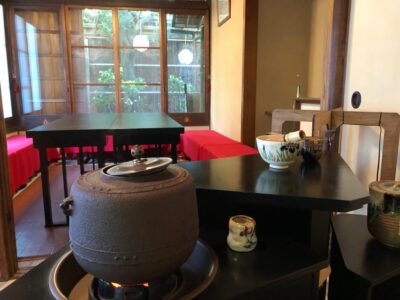
Kimono and Tea Ceremony Experience at Cultural Asset
Read our review →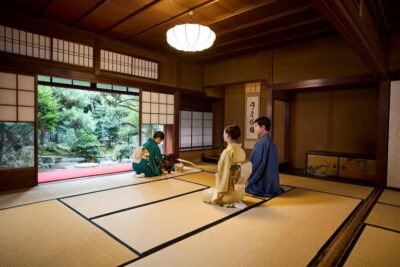

Browse the lists this tour appears in