
Review · KYOTO
Kimono Tea Ceremony Experience at Kyoto Oritzuruya, Nishiki
Kyoto Oritzuruya turns a formal tea ceremony into something you can approach without worrying about every small rule. You choose a kimono, have your hair arranged, learn the cleansing ritual and tea etiquette, then whisk your own matcha in a traditional tea room near Nishiki Market.
I especially like the choice of more than 200 kimonos and the chance to select hair ornaments, obi details, and other accessories. I also like that you do not only watch: you prepare your own bowl of matcha and enjoy it with wagashi from a century-old confectionery. The main consideration is that the experience gives more time to dressing and photographs than to the tea ceremony itself.
Key points to know
- More than 200 kimono designs: Staff help you choose a style, size, sash, and hair accessories.
- Simple hairstyling for women: Hair is arranged as part of the traditional look.
- You prepare your own matcha: An instructor demonstrates the technique, then you use a bamboo whisk.
- Small group of up to 10: The setting is more personal than a large bus tour.
- Optional calligraphy: Add a private lesson and take home your own character artwork.
- Nishiki Market location: The activity begins and ends at 452 Jūmonjichō, close to public transportation and central Kyoto sights.
Choosing a Kimono Near Nishiki Market
The experience begins at Nishiki Orizuruya, at 452 Jūmonjichō in central Kyoto. That location is useful because you can pair the activity with time around Nishiki Market and the surrounding shopping streets. Transportation to the meeting point is your responsibility, and there is no hotel pickup.
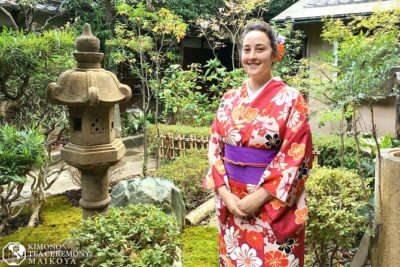
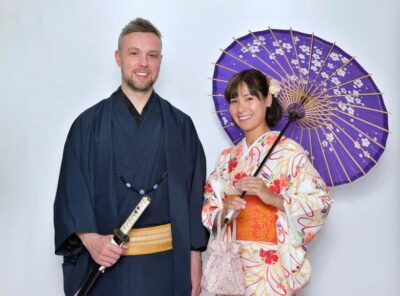
The first big moment is choosing what to wear. With more than 200 kimono designs, you are not simply handed a standard costume. You can look through colors and patterns, then ask the staff for help with the fit and overall combination. The selection includes a wide range of sizes, including options for plus-size participants.
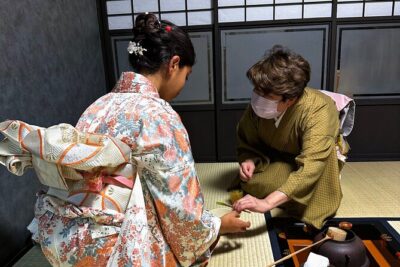
Staff also help choose the obi, or sash, the obijime cord, sandals, and hair ornaments. Women receive simple hairstyling, with flowers, hair sticks, or other adornments available to complete the look. A light, moisture-wicking underlayer is provided beneath the kimono, which is a useful comfort detail, especially if you are visiting Kyoto in warm weather.
The dressing process takes real time. A kimono has several layers and must be tied correctly, so this is not a quick costume change. That care is part of the lesson, but it also means the 90-minute schedule can feel tight. If your main goal is the tea ceremony, understand that a good share of the visit is spent getting ready.
More Kimono Tea Ceremonies in Kyoto:
- Kimono Tea Ceremony at Kyoto Maikoya, NISHIKI
★ 5.0 · 911 reviews - Kyoto: Kimono Tea Ceremony at Orizuruya Gion
★ 4.9 · 618 reviews - KYOTO Tea Ceremony with kimono near by Imamiya Jinjya Shrine
★ 5.0 · 343 reviews
Hair, Accessories, and Photographs
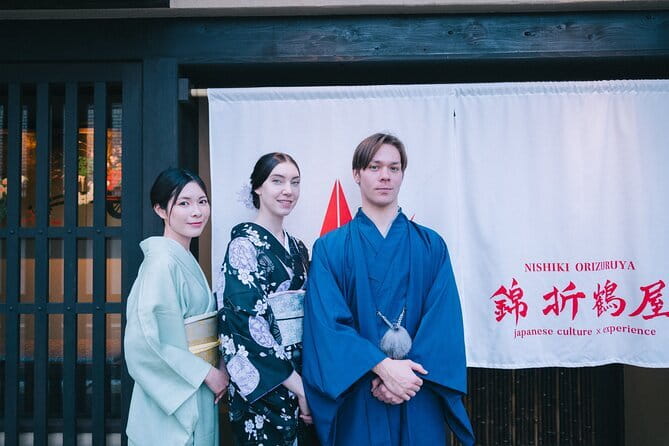
Once dressed, you have a brief chance for photographs. Staff can take pictures, and you can also take your own images while wearing the kimono. This is one of the most popular parts of the activity, and it gives you a record of the colors and details you selected.
The mood here is friendly and attentive. Several staff members may help with dressing and accessories, which can make the process feel more like being prepared for a special occasion than simply putting on rented clothing.
There is no makeup service included, so plan accordingly if that matters to you. The included hairstyling is simple, not a full salon appointment. You are paying for a cultural activity with a traditional look, not a professional photo shoot.
A particularly useful perk is the chance to continue wearing the kimono outside after the ceremony, with return required by 6 p.m. This gives you time to walk around the nearby area and take more pictures. Ask the staff about the exact return arrangements on the day, and remember that walking in sandals and a tightly wrapped kimono is slower than ordinary sightseeing.
Entering the Tea Room and Learning the Rituals
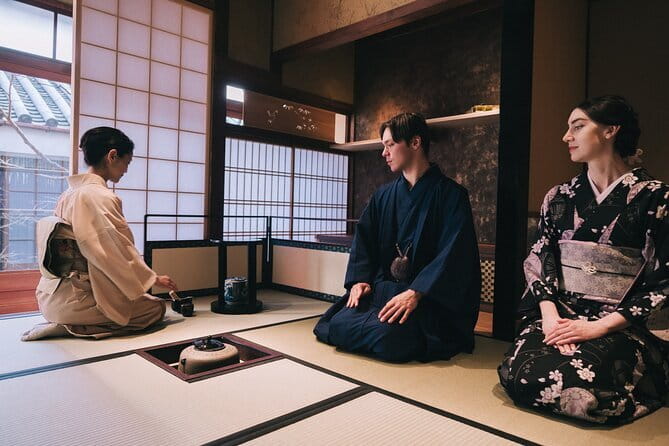
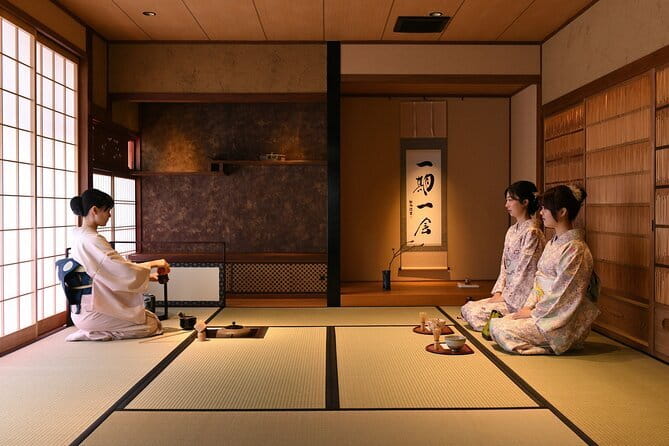
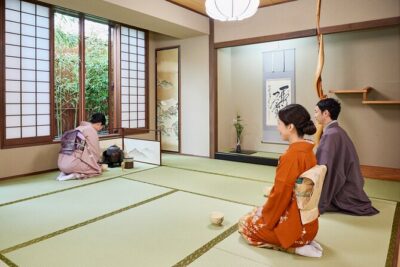
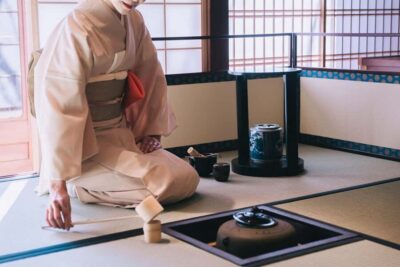
After dressing, you are guided to the tea room. The instructor explains the basic purification process and the careful actions that come before the tea is served. You learn why the host cleans and prepares each item, how the room is arranged, and how the tea is offered.
This is where the experience has its strongest cultural value. Japanese tea ceremony is not simply about drinking powdered tea. The quiet movements, the handling of utensils, the order of the steps, and the attention shown to the person receiving the tea all matter.
The setting is formal, but the instruction is aimed at first-time participants. You do not need previous knowledge of tea ceremony manners. The staff guide you through the process so you can concentrate on watching and taking part rather than worrying about making a mistake.
Still, keep your expectations in check. The instructor performs the central ceremony, while you observe many of the formal movements. You then prepare your own matcha, but you are not leading the full ceremony from start to finish. If you want an in-depth study of tea philosophy or a long demonstration, this will likely feel introductory.
Some participants sit on the floor, as is traditional. A small table and chair can be provided for someone who cannot sit comfortably on the floor, and the activity has accommodated people with bad knees. It is wise to mention any physical concern when you arrive rather than waiting until the ceremony begins.
Whisking Matcha With a Bamboo Chasen
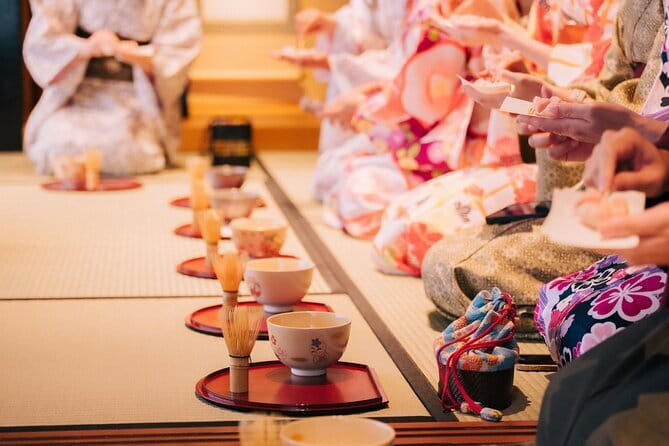
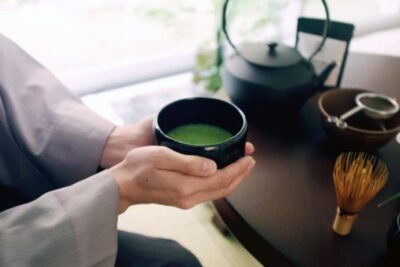
The hands-on section is simple but satisfying. You receive the utensils and learn how to use a traditional bamboo whisk, called a chasen. The goal is to mix the matcha with hot water into a smooth, lightly frothy drink.
You will not need to bring equipment or buy extra tea. Matcha, utensils, and wagashi sweets are included. The sweets are served to balance the tea’s bitter, grassy flavor, and they add a small but important part of the Japanese tea experience.
This activity is well suited to families and first-time visitors because you get a clear task. You can watch the instructor’s technique, then try it yourself. The result may not be perfect, but that is not the point. You leave knowing the basic motion and understanding more about how matcha is prepared.
The tea portion can feel brief if you expected a long, fully participatory ceremony. The best way to view it is as an introduction with a hands-on lesson, not formal training in the tea arts. That distinction matters when comparing this activity with a specialist tea school.
More Tea Ceremony Experiences in Kyoto:
- Kyoto: Tea Ceremony in a Traditional Tea House in Kiyomizu
★ 4.9 · 3,519 reviews - Kyoto: Tea Ceremony Ju-An at Jotokuji Temple
★ 4.9 · 3,207 reviews - Kyoto: 45-Minute Tea Ceremony Lesson Experience
★ 4.3 · 2,378 reviews - Kyoto: Table-Style Tea Ceremony at a Kyo-Machiya
★ 4.9 · 1,211 reviews
Optional Calligraphy as a Personal Souvenir
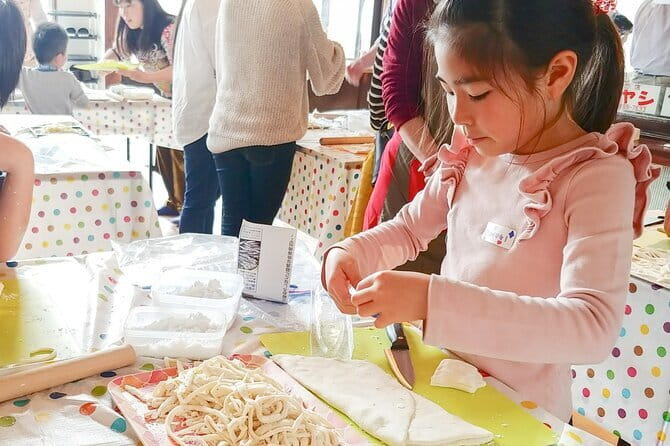
Calligraphy is available as an optional addition. You learn the basics of the art and create your own piece to take home. The extra session has been especially well suited to people who want more than photographs from the experience.
The calligraphy lesson can add a quieter, more focused creative element. Instead of choosing a souvenir from a shop, you make one yourself and leave with a character or phrase connected to the day. The available information does not specify the extra price, so check the booking option before you reserve.
If you are deciding how to spend limited time in Kyoto, calligraphy is most worthwhile for anyone interested in Japanese writing, crafts, or a keepsake with personal meaning. If your priority is simply wearing the kimono and learning the tea ritual, the main experience may be enough.
How Much Time and Money Should You Allow?
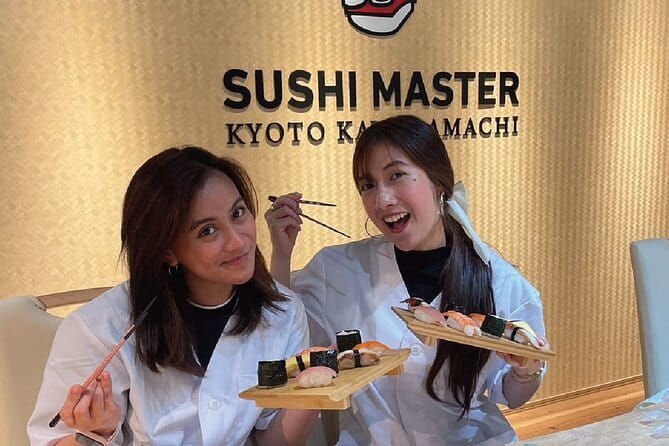
The listed price is $50.87 per person, and the activity lasts about 1 hour and 30 minutes. For that price, you receive kimono rental, dressing assistance, simple hairstyling for women, tea ceremony instruction, matcha, wagashi, utensils, a licensed guide, and all listed fees and taxes.
I consider that reasonable value if you would otherwise pay separately for kimono rental, hair styling, and a tea ceremony. The value is strongest for people who want several cultural activities combined in one central Kyoto appointment.
The price is less compelling if you only want to taste matcha or take a quick photograph. You are paying for staff time, dressing, the traditional setting, and instruction. It is also worth remembering that transportation, hotel pickup, and drop-off are not included.
The group is limited to 10 participants. That is small enough for staff to help with clothing and questions, though the dressing room can still feel busy when several people arrive together. The total duration is efficient for a packed Kyoto itinerary, but it leaves little room for delays.
Who Will Enjoy This Most?
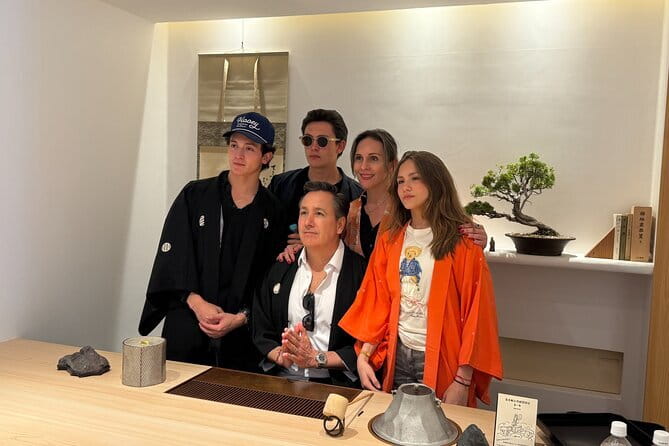
This experience fits first-time visitors who want an easy introduction to Japanese customs. It is also a good choice for couples, families, honeymooners, and solo visitors who want photographs without arranging a separate kimono rental.
I would particularly recommend it if you are nervous about tea ceremony etiquette. The staff take care of the complicated parts, and the instructor explains what is happening before you try the matcha preparation.
The activity also works well for people who value visual memories. Choosing the fabric, hair ornaments, sash, and sandals becomes part of the experience, and wearing the kimono around the nearby streets adds extra time for photographs.
It may not satisfy you if your central goal is a serious study of tea ceremony. The main ceremony is demonstrated for you, and the cultural explanation is necessarily limited by the 90-minute format. One critical assessment found the presentation too staged and the question period too shallow. That is a fair warning: this is a polished introduction designed for visitors, not an extended spiritual or academic lesson.
Practical Details Before You Go
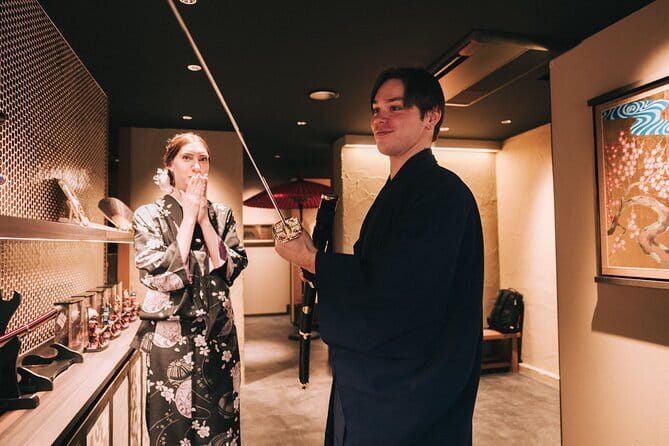
You receive confirmation at booking. The digital voucher must be opened on your smartphone, and you must press the Use button on the website page before presenting it to staff. A screenshot or printed ticket will not be accepted.
Make sure your phone can connect to the internet when you arrive. This small requirement is easy to overlook, especially if you are using a travel SIM, pocket Wi-Fi, or hotel Wi-Fi that does not reach the street.
If you need to change the date or time, you must cancel the existing reservation and book again. Free cancellation is available up to 24 hours before the start time. Changes or cancellations made less than 24 hours ahead are not accepted for a refund.
The activity may be canceled in poor weather. In that case, you are offered another date or a full refund. Since the activity takes place indoors but may include time walking outside in the kimono, check the local forecast if you are hoping to continue exploring afterward.
Plan to arrive at the stated meeting point rather than expecting a pickup. The central Nishiki location is near public transportation, but the activity ends back where it begins.
Is This Kyoto Tea Ceremony Worth Booking?
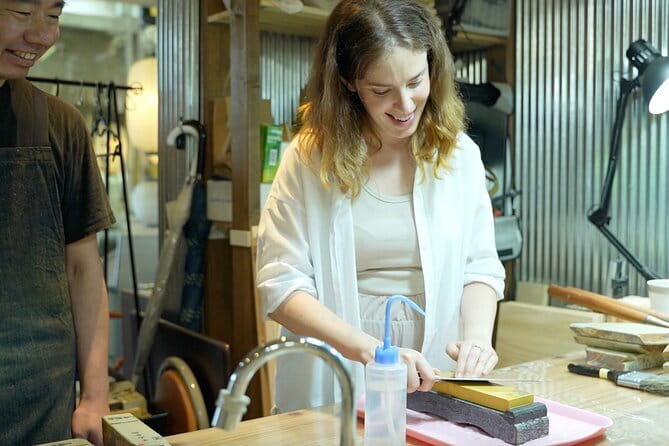
Book it if you want the full visitor-friendly package: kimono selection, hairstyling, photographs, a guided tea ceremony, and your own bowl of matcha. The small group, broad range of kimono sizes, helpful staff, and optional calligraphy make it a strong choice for a first cultural activity in Kyoto.
Skip it if you want a long, highly formal ceremony with extensive discussion of tea philosophy. You will observe much of the ceremony rather than perform every ritual, and some of the time is devoted to dressing and pictures.
For most visitors, the best approach is to treat this as a well-organized cultural introduction. It gives you a taste of several Japanese traditions in one convenient central location, while still leaving time to explore Nishiki Market afterward.
FAQ
How long does the kimono tea ceremony experience last?
The experience lasts approximately 1 hour and 30 minutes.
Where does the activity begin and end?
It begins and ends at Nishiki Orizuruya, 452 Jūmonjichō, Nakagyo Ward, Kyoto, 604-8121, Japan.
How many people can join the activity?
The group has a maximum of 10 participants.
Is hairstyling included?
Simple hairstyling is included for women. Hair ornaments and other accessories can be selected as part of the dressing process.
Is food and drink included?
Yes. Matcha and wagashi Japanese sweets are included, along with the utensils used for preparing the tea.
Can I choose my own kimono?
Yes. You can choose from more than 200 kimono designs, with staff helping you select the kimono, sash, cord, hair accessories, and sandals.
Is calligraphy included?
Calligraphy is an optional session, not part of the listed main inclusions. It allows you to learn basic techniques and create a piece to take home.
Can I cancel for a refund?
You can cancel up to 24 hours before the start time for a full refund. Cancellations or changes made less than 24 hours in advance are not accepted for a refund.
Just added around Kyoto
- Whisk Your Own Matcha: A Zen Matcha Experience at Temple★ 3.6 · 7 reviews
- Uji Walking Tour – Byodo-in temple and Tea Ceremony from Kyoto★ 3.5 · 3 reviews
- Tea ceremony at Kyoto’s Zen Temple Teahouse★ 5.0 · 2 reviews
- Traditional Tea Ceremony in Kyoto★ 4.5 · 3 reviews
- Kyoto: Authentic Tea Ceremony in a Small Group★ 5.0 · 7 reviews
- Tea Ceremony in 150 Years Old Townhouse with Tables and Chairs★ 5.0 · 22 reviews
- Silent Beauty of Kyoto Zen Walk and Tea Experience★ 5.0 · 2 reviews
- Tea Ceremony Experience in Traditional Kyoto Townhouse★ 5.0 · 19 reviews
Kimono & Tea Ceremonies, compared.
KYOTO Tea Ceremony with kimono near by Imamiya Jinjya Shrine
Read our review →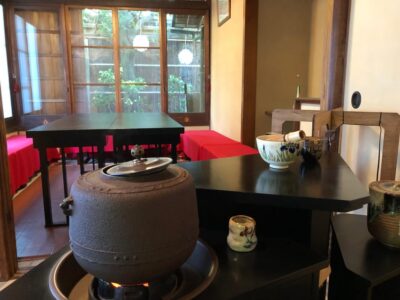
Kimono and Tea Ceremony Experience at Cultural Asset
Read our review →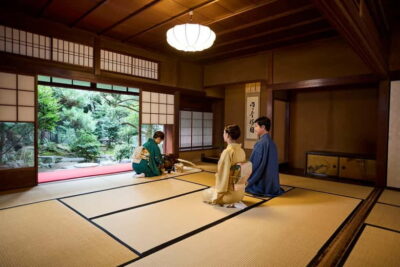
Browse the lists this tour appears in