
Review · KYOTO
Kyoto Private Tea Ceremony at a Japanese Inns
Kyoto’s temples may close for the night, but this candlelit tea ceremony keeps the city’s traditional side open after dark. Inside a long-established ryokan, you’ll dress in a bridal uchikake or men’s haori, pose with props, settle into a short Zen meditation, and learn how matcha is prepared. I especially like the private 20-tatami room and the chance to make your own tea rather than only watch a demonstration.
I also like the welcoming approach of hosts Matsuda and Mayumi, who use translation devices so children and adults can ask questions in their own language. The main consideration is the price: at $97.98 per person, it is not a cheap cup of tea, and the full program lasts only about 59 minutes. You’re paying for a private cultural setting, costumes, photography help, and guided participation.
Key points at a glance
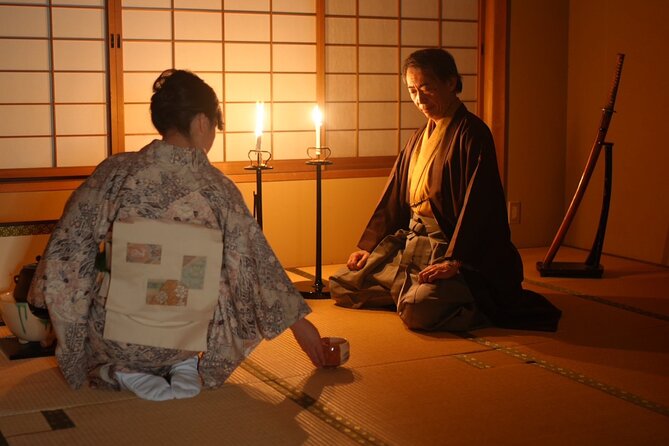
- A private 20-tatami ryokan room: The ceremony takes place in a banquet hall normally closed to the public, with candlelight creating a quiet evening setting.
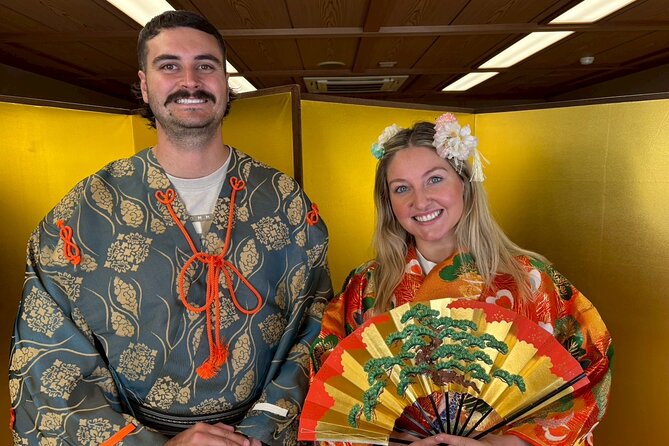
- Kimono or haori photos come first: You can wear a bridal uchikake or men’s haori and use props such as folding fans and swords.
- A short Zen pause: The four-minute meditation gives the evening a calm start before the tea ceremony begins.
- You make your own matcha: After watching the 20-minute demonstration, you spend about 20 minutes whisking tea yourself.
- Translation devices are provided: You do not need Japanese, and the devices are useful for families with children who speak different languages.
- A compact private activity: The group is limited to two to six people, and the tour starts and ends at the same Kyoto address.
Entering the candlelit ryokan room
The setting does much of the work here. Instead of visiting a busy public tea room during the day, you enter a private 20-tatami banquet hall inside a Kyoto inn. The room is normally closed to the public, so this evening program offers a more controlled and personal setting than a quick demonstration in a large cultural center.
Candlelight is central to the mood. The room is described as pitch-black apart from flickering candles, creating a theatrical atmosphere that feels quite different from Kyoto’s daytime temple visits. I like this timing for an evening when you want something quieter and more focused after sightseeing.
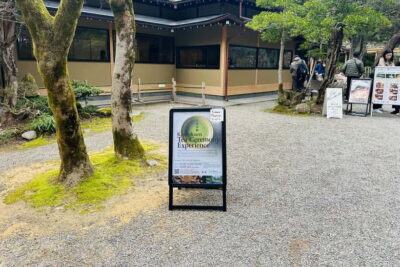
The venue is listed as ZEN: Tea Ceremony Experience in Kyoto, at 490 Kanayacho, Ryofuso, fourth floor, in Shimogyo Ward. The experience begins and ends there. It is near public transportation, but the supplied information does not give a precise station, walking time, or directions from Kyoto Station, so allow time to find the building and fourth-floor venue.
The activity is private, with only your own group participating. Group size runs from two to six people. That matters because tea ceremony instruction can feel much more personal with a small group, and the photography portion should be easier to manage than it would be in a large class.
More Tea Ceremony Experiences in Kyoto:
- Kyoto: Tea Ceremony in a Traditional Tea House in Kiyomizu
★ 4.9 · 3,519 reviews - Kyoto: Tea Ceremony Ju-An at Jotokuji Temple
★ 4.9 · 3,207 reviews - Kyoto: 45-Minute Tea Ceremony Lesson Experience
★ 4.3 · 2,378 reviews
Fifteen minutes of kimono photos
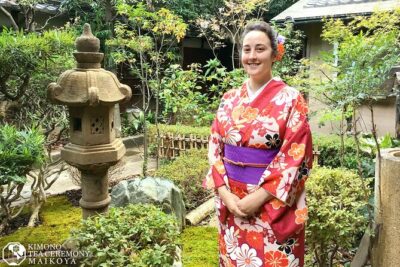
The first part lasts about 15 minutes and focuses on costume and photographs. You may wear a bridal uchikake or a men’s haori, depending on your group and the available costume choices. Props include folding fans and swords, and staff assist with photography using professional lighting.
This is not a full-day kimono rental. It is a short portrait session built into the tea ceremony, so you should view it as a fun cultural introduction rather than a long period of wearing formal dress around Kyoto. The advantage is convenience: you get photographs without arranging a separate studio visit or spending hours in a rental costume.
Photos are welcome throughout the activity. Staff assistance is especially useful for families and small groups, since someone can help take pictures instead of leaving one person out of every frame. The lighting also fits the evening theme, giving the opening portion a more polished look than casual phone snapshots.
For children, the costume and prop session may be the most immediately engaging part. The supplied age pricing lists adults at ¥15,000 and children under 15 at ¥3,000. The booking information also displays a price of $97.98 per person, so check the final amount and how children are charged before paying.
Four minutes to settle the mind
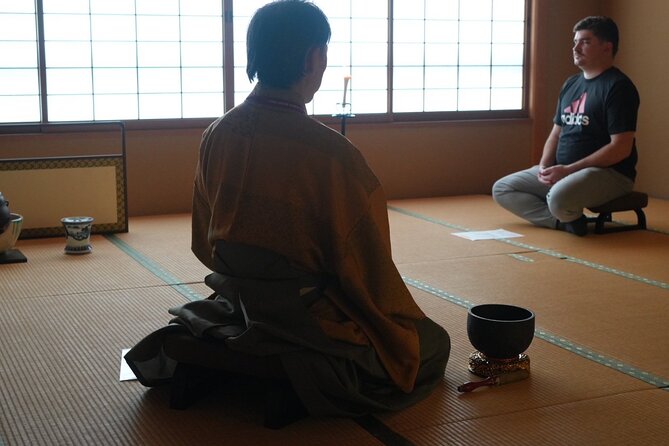
After the photos, the program turns quieter with a four-minute Zen meditation. This is brief, but that is part of its appeal. You do not need to commit to a long meditation lesson or arrive with prior experience. Instead, you get a short pause that helps shift the room from photo session to tea gathering.
I would not book this activity mainly for the meditation. Four minutes is enough to introduce stillness, not enough to provide a full Zen practice. Its value is in the transition. The costumes and props are playful, while the meditation prepares you to pay attention to the small movements that follow.
The candlelit room should make this portion feel especially calm, although the exact lighting and atmosphere may vary on the evening. The program is designed for visitors from different countries, and the translation devices can help explain what is happening without requiring Japanese language skills.
Watching a traditional tea ceremony
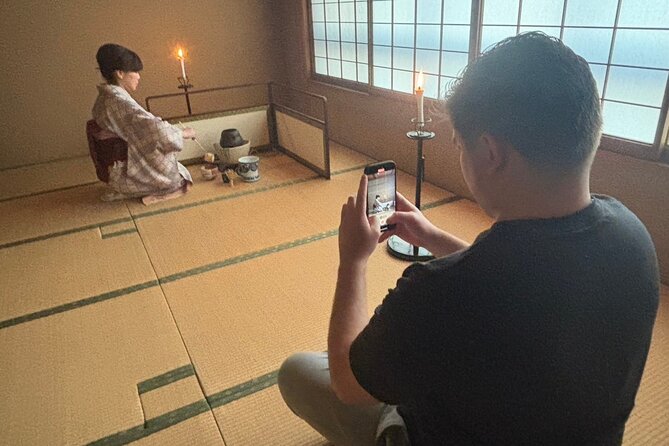
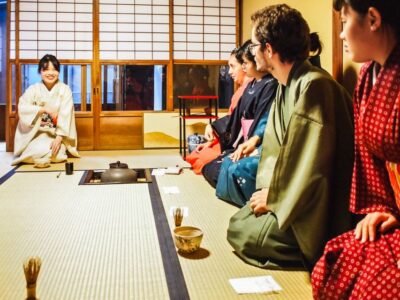
The demonstration lasts about 20 minutes. You are welcomed as a participant in a tea gathering, receive a bowl of matcha, and watch the sequence of preparing and serving the tea. Sweets and matcha are included.
This part gives you context for the drink itself. Matcha is not simply powdered green tea poured into a cup. The ceremony places attention on the bowl, the utensils, the movements, and the relationship between the person preparing the tea and the person receiving it.
The format appears designed for first-time visitors. You do not need to know the etiquette in advance, and the guide can explain the details through translation devices. That makes the activity suitable for families and mixed-language groups. The hosts’ warm approach is also important here. A formal ceremony can feel intimidating if you are worried about making a mistake, but the structure gives you a clear role and a chance to ask questions.
Keep your expectations realistic. This is a short demonstration within a one-hour program, not an advanced study of tea ceremony. You will gain an introduction and a personal taste of matcha, but not a full lesson in every rule or historical school of tea.
More Private Experiences in Kyoto:
- Private Tea Ceremony and Sake Tasting in Kyoto Samurai House
★ 5.0 · 163 reviews - Private Kyoto Sushi Cooking Class & Tea Ceremony with Emika
★ 5.0 · 66 reviews - Kyoto: Private Tea Ceremony with a Garden View
★ 4.9 · 61 reviews - Kyoto Private Tea Ceremony with Tea Master at Home
★ 5.0 · 58 reviews
Twenty minutes of whisking your own matcha
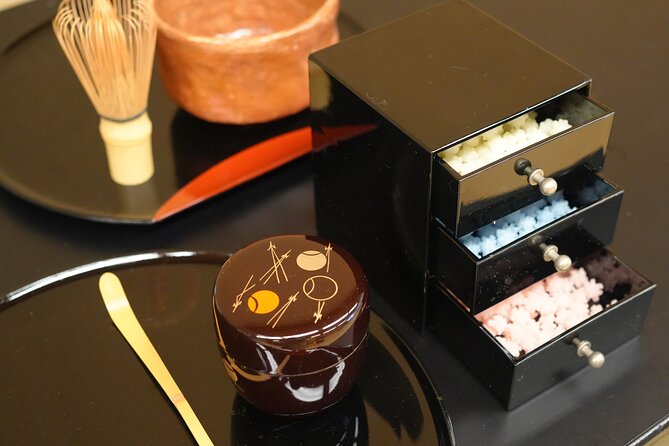
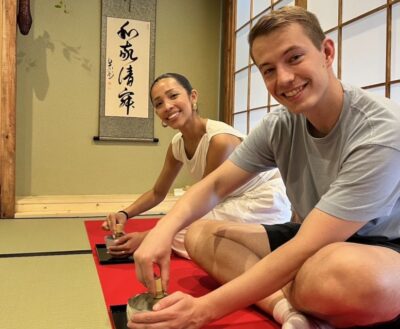
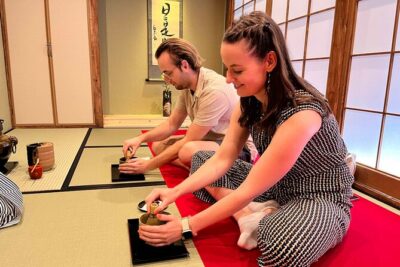
The most hands-on portion comes after the demonstration. You spend about 20 minutes whisking your own matcha. This is the part I find most valuable for the price, since you are not only watching a ritual but also learning through touch and movement.
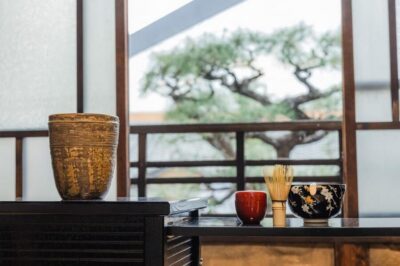
You can see how the powder, water, and whisk work together, then drink the tea you prepared. The activity includes tea ceremony utensils, so you do not need to bring anything. Sweets are served with the matcha, adding a small but traditional pairing to the session.
Making matcha also gives children something concrete to do. The short time frame keeps it from becoming tiring, and the translation devices let participants ask questions regardless of their first language. The hosts can guide the process, while your group gets the satisfaction, and sometimes the uneven foam, of making the bowl yourself.
Photos remain welcome during this portion. If you want pictures of the whisking process, ask the staff for help before you begin so you can focus on the instructions rather than managing your phone.
How the translation devices change the experience
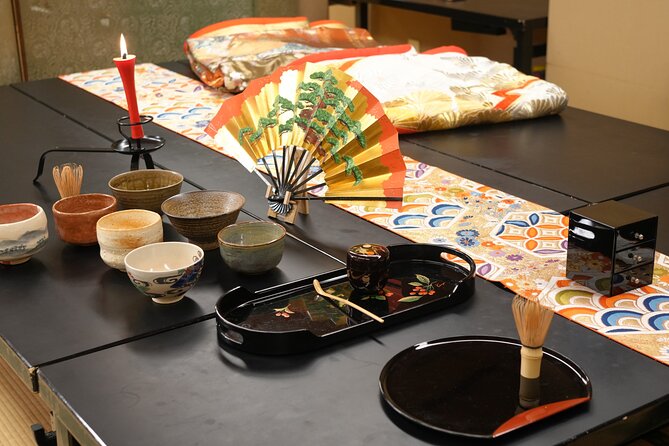
Language support is one of the strongest practical features. The hosts use the latest translation devices, allowing communication without requiring Japanese. This is especially helpful when the group includes children who cannot speak English, since they can ask questions in their own language.
A translation device cannot replace the ease of a shared first language, and there may be short pauses while information is translated. Still, it removes a major barrier from an activity built around small details. You can ask why a utensil is used, what to do with the bowl, or how to whisk the tea without relying only on gestures.
The hosts named in the supplied information are Matsuda and Mayumi. Their role is not just to serve tea. They guide the costume session, help with photographs, explain the ceremony, support the meditation, and assist with matcha making. The personal welcome is a key reason this program feels like more than a photo stop.
Is the $97.98 price fair?
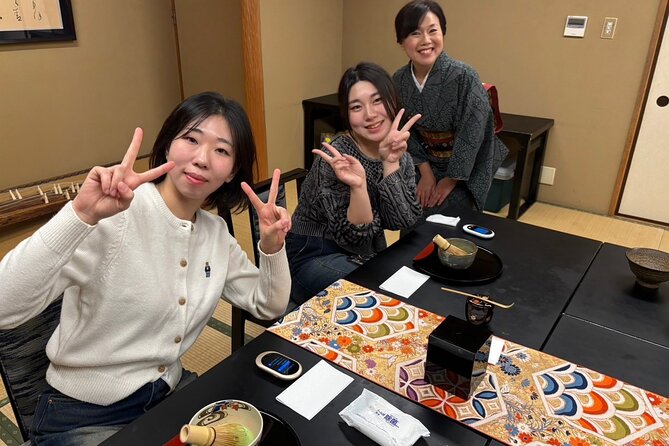
At $97.98 per person, this is a premium one-hour activity. The listed local pricing gives ¥15,000 for adults and ¥3,000 for children under 15, while the booking details show the dollar amount. Since exchange rates and booking platforms can change, confirm the exact total at checkout.
The value depends on what you compare it with. You are paying for a private room, a licensed guide, costume use, professional lighting, photography assistance, matcha, sweets, utensils, translation support, and guided participation. A simple cup of tea would cost far less. A separate kimono photo session plus a private cultural lesson could cost more and require additional planning.
The short duration is the main limitation. One hour can fit the listed schedule, but it leaves little spare time if your group needs extra help with costumes, translation, or photographs. I see this as a focused evening activity, not a major half-day cultural program.
For adults who want a polished introduction to tea ceremony, the price can make sense. For families, the low child price may improve the value considerably. A group of two to six also avoids paying for a large shared class where individual attention is limited.
Who will enjoy this Kyoto evening?

I would recommend this for first-time visitors who want a gentle introduction to Japanese customs without committing to a formal, lengthy ceremony. The program explains the main actions, lets you try the tea yourself, and adds photos that help mark the occasion.
Families are a strong match. The costumes, props, photography, matcha whisking, and translation devices create several points of interest for children. The four-minute meditation is short enough that it should not dominate the evening, though children who dislike quiet activities may prefer the photo and tea-making sections.
Couples and small groups of friends may appreciate the private-room format. You can take photographs together, share the ceremony, and avoid being placed with strangers. The venue also offers an atmospheric option after Kyoto’s major attractions have closed for the night.
This may be less suitable if you want an extended study of tea ceremony, a full kimono rental for walking around Kyoto, or a long meditation session. It is an introduction with several connected activities, not a specialist workshop.
Booking, timing, and cancellation details
Advance reservation is required, and the activity is commonly booked about eight days ahead. If this is important to your evening plans, I would not leave it until the last minute.
The ticket is mobile, and confirmation is provided at booking. The activity requires a minimum number of participants. If that minimum is not reached, you can be offered another date or experience, or receive a full refund.
The stated cancellation rule is simple: cancel at least 24 hours before the start time for a full refund. Cancellations and changes within 24 hours are not accepted for a refund. Cutoff times follow Kyoto local time.
The experience also lists good weather as a requirement. If poor weather causes cancellation, you can choose another date or receive a full refund. Since the activity is indoors, this condition may be worth checking directly with the provider if the forecast looks uncertain.
Should you book ZEN Tea Ceremony Experience?
Book it if you want a short, private Kyoto cultural activity with costumes, photographs, matcha making, and clear language support. The candlelit ryokan room gives the evening a special setting, while the small group size keeps the program personal.
I would be more cautious if your main goal is a long or highly formal tea ceremony. The 59-minute schedule moves quickly, and the price is high for the amount of tea you drink. But if you value the full package, especially the private room, staff photography, translation devices, and chance to whisk your own matcha, it offers solid value for a memorable evening.
FAQ
Where does the tea ceremony take place?
It takes place at ZEN: Tea Ceremony Experience in Kyoto, located at 490 Kanayacho, Ryofuso, fourth floor, Shimogyo Ward, Kyoto, 600-8323, Japan.
How long does the activity last?
The experience lasts approximately 59 minutes.
What is included in the tea ceremony?
The activity includes matcha green tea, sweets, costumes, a katana, tea ceremony utensils, photography assistance from staff, and a licensed guide.
Can I take photographs during the experience?
Yes. Photos are welcome throughout the activity, and staff assist with photography. Professional lighting is used during the kimono photo session.
Do I need to speak Japanese?
No. Translation devices are provided so participants can communicate regardless of language.
How many people can join the private activity?
The group size is two to six people, and only your own group participates.
What happens during the activity?
The program includes about 15 minutes of kimono or haori dressing and photos, four minutes of Zen meditation, a 20-minute tea ceremony demonstration, and about 20 minutes of whisking your own matcha.
Does the activity begin and end at the same place?
Yes. It starts and ends at the ZEN tea ceremony venue.
What is the cancellation policy?
You can cancel at least 24 hours before the start time for a full refund. Cancellations or changes made within 24 hours are not refunded or accepted. If the provider cancels because of poor weather or because the minimum number of participants is not reached, you can be offered another date or experience, or receive a full refund.
Just added around Kyoto
- Whisk Your Own Matcha: A Zen Matcha Experience at Temple★ 3.6 · 7 reviews
- Uji Walking Tour – Byodo-in temple and Tea Ceremony from Kyoto★ 3.5 · 3 reviews
- Traditional Tea Ceremony in Kyoto★ 4.5 · 3 reviews
- Kyoto: Authentic Tea Ceremony in a Small Group★ 5.0 · 7 reviews
- Tea ceremony at Kyoto’s Zen Temple Teahouse★ 5.0 · 2 reviews
- Tea Ceremony in 150 Years Old Townhouse with Tables and Chairs★ 5.0 · 22 reviews
- Silent Beauty of Kyoto Zen Walk and Tea Experience★ 5.0 · 2 reviews
- Tea Ceremony Experience in Traditional Kyoto Townhouse★ 5.0 · 19 reviews
Tea Ceremony Experiences, compared.
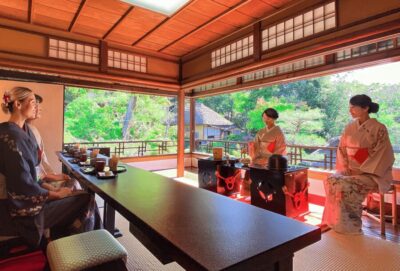
Tea Ceremony in a Traditional Tea House in Kiyomizu
Read our review →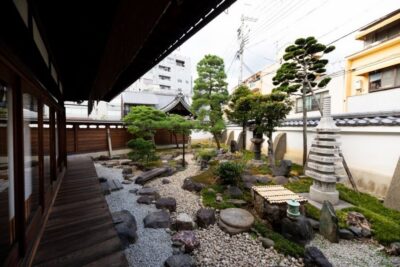
Browse the lists this tour appears in