

Review · KYOTO
Kyoto: Mindful Tea Ceremony in 100-Year-Old Teahouse
Kyoto’s Oboro tea ceremony is less about perfect manners than about slowing down. In a 100-year-old teahouse, candlelight, a garden view, simmering water, and the scent of matcha do much of the work. The ceremony gives you a quiet break from Kyoto’s crowded streets without turning tradition into a stiff performance.
I like the small group of up to eight, which leaves room for questions and keeps the room peaceful. I also like the gentle teaching style from hosts including Taku and Naoki, who explain the purpose behind each movement in clear English. The main consideration is the short 45-minute format: it offers a thoughtful introduction, but not a full study of Japanese tea culture.
What makes this Kyoto tea ceremony special
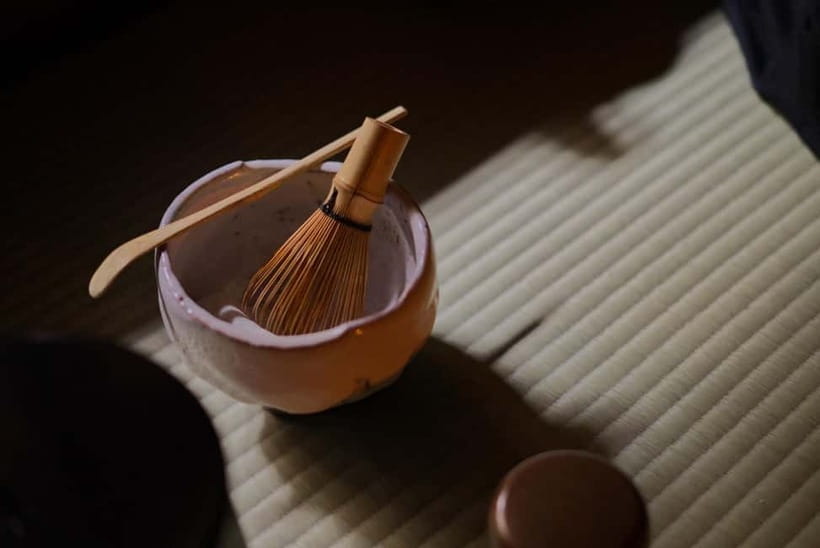
- Candlelight replaces harsh overhead lighting, helping the room feel calm from the moment you arrive.
- Three stages of the experience create a quiet sense of progression, from the welcome drink to the main tea room and final reflection.
- The 100-year-old traditional house gives the ceremony a physical connection to Kyoto’s past.
- The host explains each step, including utensil purification, whisking, presentation, and the meaning of the tea.
- Seasonal sweets and welcome tea give you more than a single bowl of matcha to taste.
- A handmade candle to take home extends the peaceful mood beyond the teahouse.
Entering Oboro and leaving the city behind
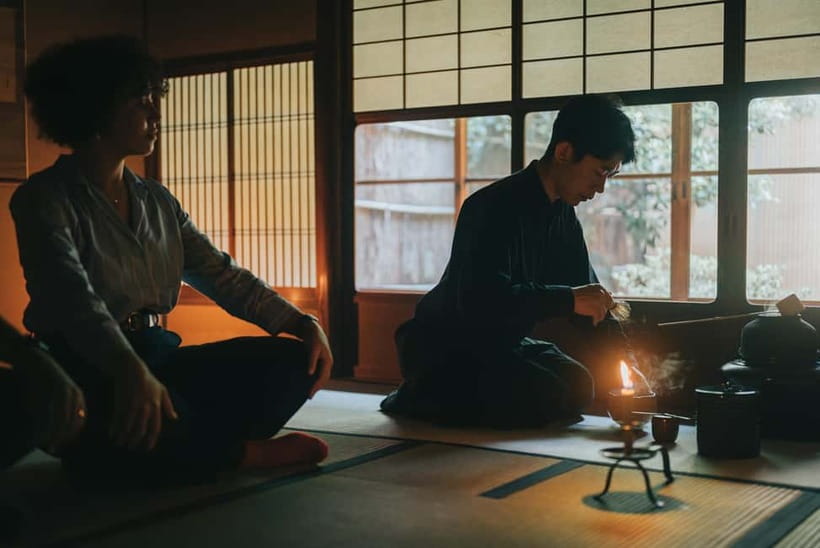
You’ll find Oboro in Kyoto, and Google Maps is the most useful way to locate the address. Arrive 10 minutes early. Shoes must come off, so socks are required, and comfortable clothing will make the floor-level or traditional setting easier to enjoy.
The first room is softly lit by candles rather than bright ceiling lights. That small choice matters. Kyoto can be noisy and visually busy, especially after a morning of temples, shopping streets, and train rides. Here, the change in light immediately tells you to lower your pace.
The host greets you, helps store belongings if needed, and gives a short explanation of what will happen. This opening is helpful for first-time visitors because you are not expected to know Japanese etiquette in advance. You can watch quietly, ask questions, or simply follow along.
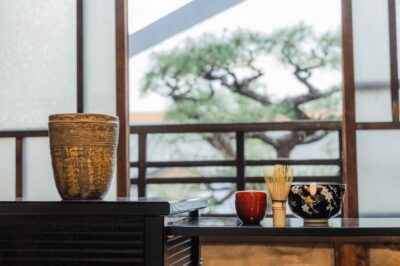
The setting is deliberately spare. Minimal decoration keeps your attention on the room’s small details, such as the garden outside, the tea tools, the sound of water heating, and the aroma of freshly prepared matcha. I find that this is where the experience begins to feel different from a standard cultural demonstration. You are not just watching a sequence of actions. You are being asked to notice the sequence.
More Tea Ceremony Experiences in Kyoto:
- Kyoto: Tea Ceremony in a Traditional Tea House in Kiyomizu
★ 4.9 · 3,519 reviews - Kyoto: Tea Ceremony Ju-An at Jotokuji Temple
★ 4.9 · 3,207 reviews - Kyoto: 45-Minute Tea Ceremony Lesson Experience
★ 4.3 · 2,378 reviews
The welcome tea and seasonal sweet
Before the main ceremony, you settle into comfortable seats and receive a welcome tea with a seasonal sweet. This gives the session a gentle beginning rather than moving straight into formal matcha preparation.
The welcome drink can vary with the season. In summer, the tea ceremony uses chilled water and ice, and one visitor especially appreciated the smooth, cold green tea served at the start. The sweet is not simply a snack. It balances the sharper flavor of matcha and prepares your palate for the tea that follows.
I like this part because it makes the ceremony friendly to people who are unsure about matcha. If you normally find green tea too strong or bitter, the pairing and the slower pace may change your impression. Still, taste is personal, and the ceremony does not turn matcha into a sweet café drink. You should expect a distinct tea flavor.
The welcome tea also gives you time to listen to the host. The explanations cover tea ceremony customs, the role of the tools, and the basic history and meaning of the practice. Questions are welcome, but the overall mood remains quiet rather than conversational in a loud, social way.
Moving into the main tearoom
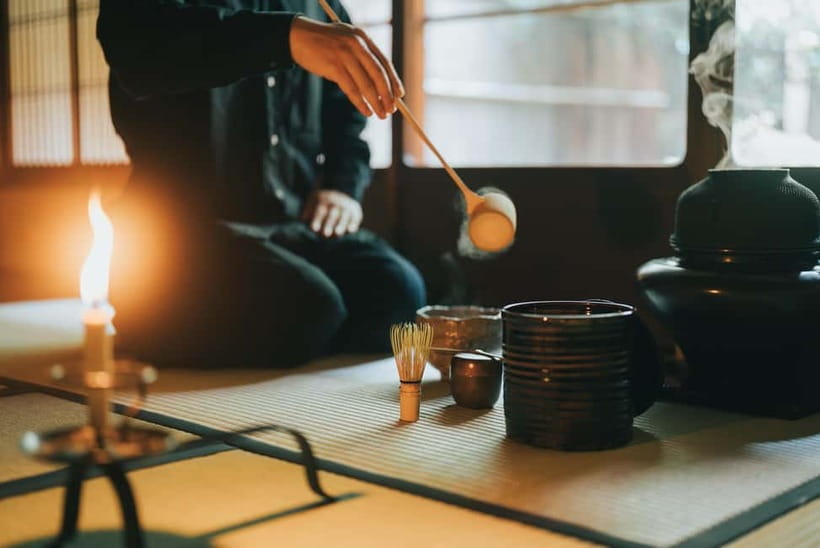
The main tearoom is designed to remove distractions. You may notice the garden through the window, the traditional interior, and the careful arrangement of every object. One of the most appealing details is the way the house itself becomes part of the experience. The building is not a modern event room dressed up for tourists. Its age and traditional design help you feel the passage from ordinary Kyoto into a more reflective setting.
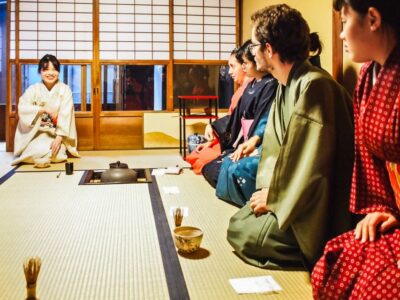
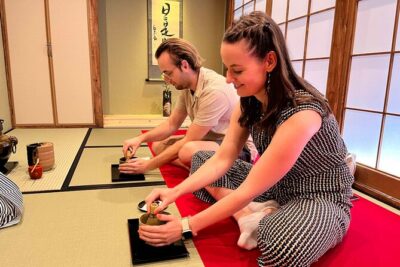
The ceremony is conducted with quiet attention. The host purifies the utensils, measures and prepares the matcha, whisks it, and presents the bowl with a graceful bow. Each act has a purpose, and the host explains that purpose in English rather than leaving you to guess.
This is useful if you have seen tea ceremony demonstrations before but never understood what the gestures mean. It is also helpful if you worry about making a mistake. You are not tested on etiquette, and there are no strict rules forcing you to copy every movement perfectly.
The atmosphere does ask for cooperation. Silence is requested during the ceremony, and flash photography is not allowed. You may take photographs without flash, but I would keep your camera away for much of the session. The room’s appeal depends on attention, and constant picture-taking would work against what the experience is trying to create.
Learning how to receive and taste matcha
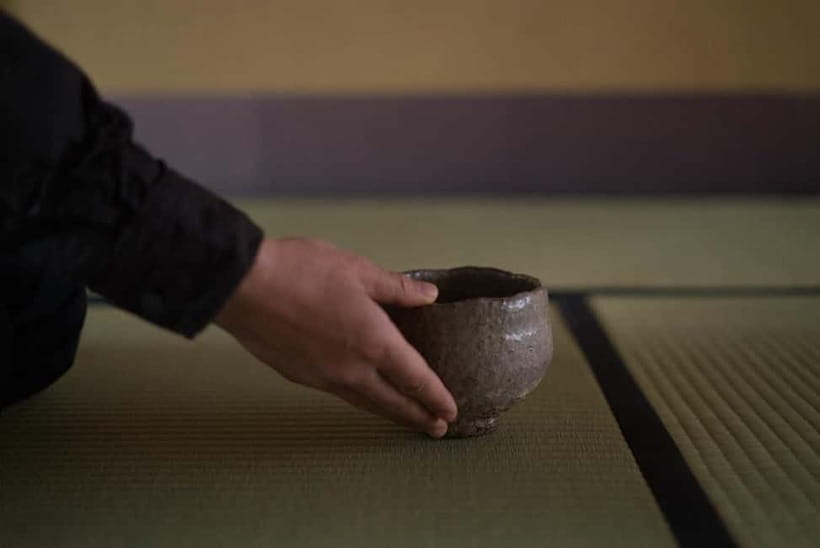
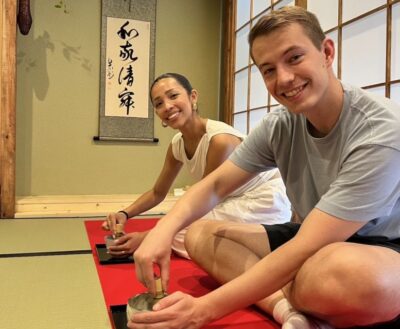
When the bowl is presented, you’ll be shown how to lift it and drink the tea with care. The point is not to perform a flawless ritual. It is to recognize the effort involved in preparing and serving something as simple as tea.
You’ll notice the warmth of the bowl, the texture of the foam, and the flavor of the matcha. In summer, the chilled preparation offers a different sensation from the warmer version used at other times. The ceremony makes these small changes noticeable because the pace is slow enough for you to pay attention.
The host may also explain how different matcha qualities compare and what makes a tea enjoyable. This is one of the more practical parts of the session. You leave with a better sense of what you are tasting, rather than simply being told that matcha is important in Japanese culture.
The teaching stays relaxed. You can observe without speaking, ask questions between stages, or share the experience quietly with the small group. That balance is important. A formal ceremony can feel intimidating when every motion is treated as a rule. Oboro presents the tradition with respect while allowing newcomers to feel at ease.
A few more tea experiences around Kyoto worth a look
- Kyoto: Table-Style Tea Ceremony at a Kyo-Machiya
★ 4.9 · 1,211 reviews - Kimono Tea Ceremony at Kyoto Maikoya, NISHIKI
★ 5.0 · 911 reviews - Kyoto: Kimono Tea Ceremony at Orizuruya Gion
★ 4.9 · 618 reviews - Kyoto: Tea Ceremony in 100-year-old Kyo-Machiya Townhouse
★ 4.8 · 546 reviews
Why the three-room flow matters
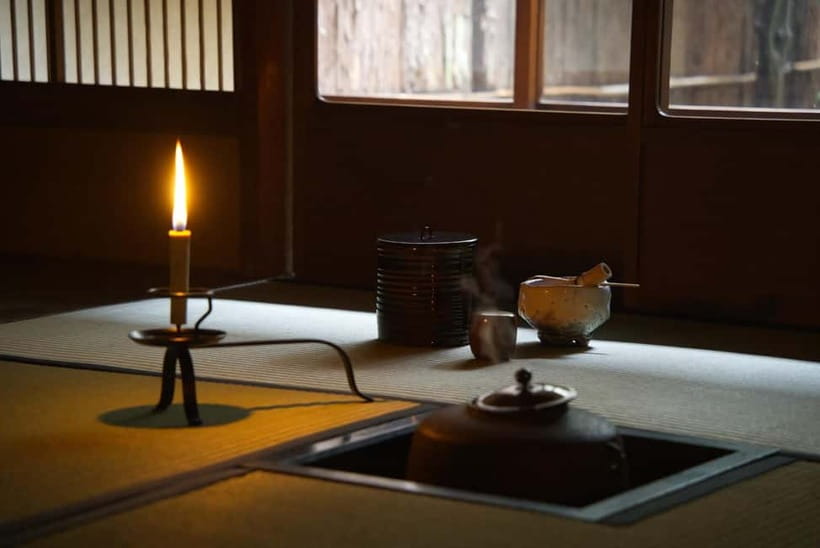
One especially interesting feature is the movement through three rooms, each linked to a different phase of the experience. The rooms create a sense of transition without requiring a long walk or a complicated schedule.
The first space helps you arrive mentally. The welcome tea and soft light give you time to settle. The main tearoom then brings your attention to the actual preparation and serving of matcha. Finally, the ending allows a moment of reflection before you return to Kyoto’s faster rhythm.
This structure gives the 45 minutes a clear shape. You are not simply seated in one room while someone performs tea-making movements. You move through stages that make the activity feel more like a short ritual of arrival, attention, and departure.
It is still important to keep your expectations realistic. The experience is an introduction, not a multi-hour course in tea ceremony. If you want detailed instruction in every form of etiquette, a longer specialist workshop may suit you better. If you want an approachable and peaceful first encounter, the compact format works well.
The hosts make the difference
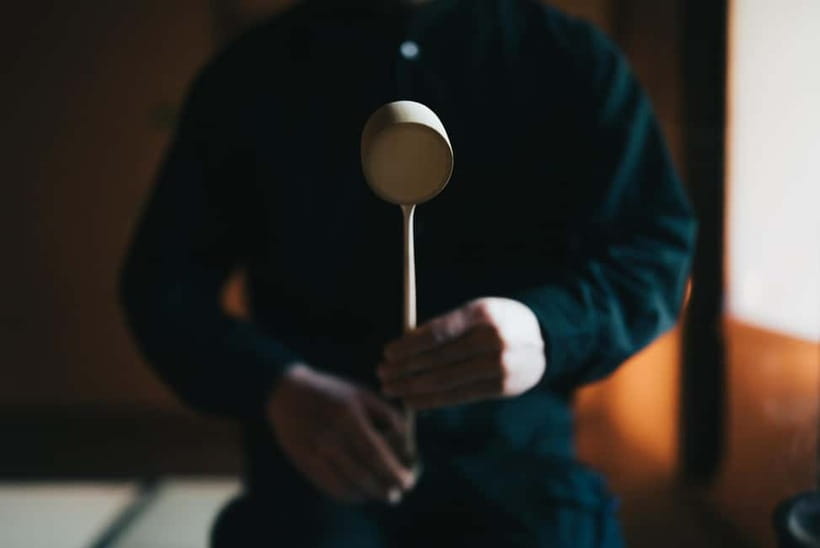
The human side of the experience is a major strength. Taku is described as passionate and clear in his explanations, while Naoki is praised for bringing a calm and thoughtful presence to the ceremony. Another account highlights a young tea master who explained the tradition with visible commitment, showing how an old practice can remain active and personal for a new generation.
You should expect English instruction throughout. The hosts explain the process, answer questions, and describe the cultural meaning behind the actions. They also make space for people who need a quieter experience. One participant had to leave before the end because of a time limit and found the hosts understanding after giving notice in advance.
That flexibility does not mean the session is casual in every way. Arriving more than 10 minutes late means you cannot enter, since opening the door would interrupt the quiet setting. Plan enough time to find the address, remove your shoes, and settle in before the ceremony begins.
The value of $45 for 45 minutes
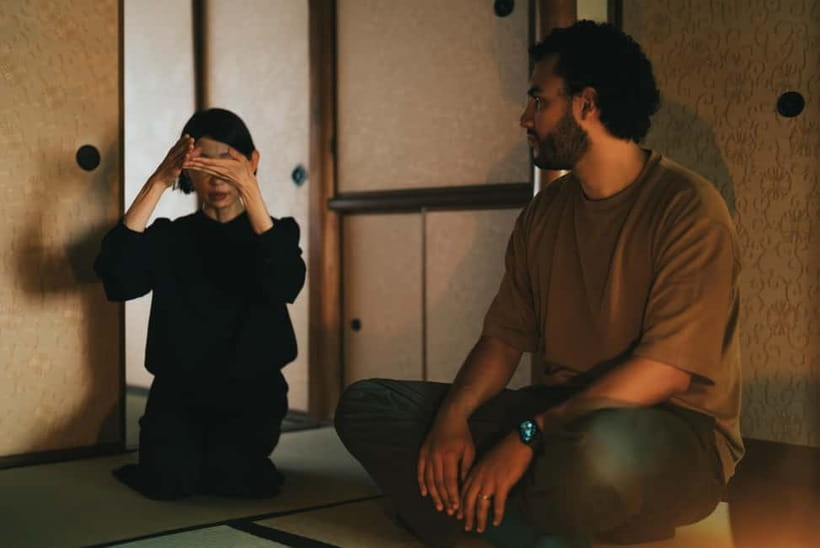
At $45 per person, this is not the cheapest way to taste matcha in Kyoto. You can find tea in cafés for far less. The price makes more sense when you consider what is included: English instruction, the equipment, seasonal sweets, the candlelit setting, and a guided ceremony in an old traditional house.
You are paying for context and care, not just a drink. The host explains the tools and gestures, the room is prepared for a small group, and the session is built around concentration rather than quick service. The handmade candle to take home adds a thoughtful final touch.
The value is strongest if you want a cultural activity with a peaceful mood. It is less compelling if your only goal is to sample matcha or take photographs of a traditional room. At 45 minutes, it also fits neatly into a day of sightseeing, though you should not mistake its short length for a rushed experience.
Who will enjoy Oboro most
I would recommend this ceremony to first-time visitors who want a respectful introduction to Japanese tea culture without strict formal training. It also suits couples, solo visitors, and small groups looking for a quiet change from temples and shopping streets.
You do not need prior knowledge of tea ceremony etiquette. The host explains what you need to know, and the relaxed format removes much of the worry about doing something incorrectly.
This is also a good choice for anyone who values atmosphere. The candlelight, traditional house, garden view, gentle sounds, and careful movements matter as much as the tea itself. Several people left feeling calmer and refreshed, which makes the activity particularly appealing after a busy day in Kyoto.
The experience is not suitable for children under six, people with back problems, or wheelchair users. Shoes must be removed, socks are required, and the quiet environment may not suit anyone looking for a lively or highly social activity.
Practical tips before you book
Wear comfortable clothes and clean socks. Since shoes come off, socks are more than a minor detail. Clothing that allows you to sit comfortably will make the ceremony easier to enjoy.
Arrive 10 minutes early. Use Google Maps and search for Oboro: Mindful Tea Ceremony if the address is difficult to find. The late-entry rule is firm after 10 minutes, because the session depends on silence and an undisturbed opening.
Bring curiosity rather than a checklist of gestures to copy. Watch how the host handles the bowl and tools, but do not worry about matching every movement. The ceremony is meant to help you pause, not to make you pass an etiquette exam.
Photography without flash is allowed, but restraint is wise. A few quiet photographs can preserve the memory. Holding your phone throughout the ceremony will make it harder to notice the details that give the experience its value.
The activity offers free cancellation up to 24 hours before the start time, and you can reserve now and pay later. Those options are useful when your Kyoto schedule is still changing.
Should you book this Kyoto tea ceremony?
Book it if you want a small, calm, well-explained introduction to matcha in a genuine traditional setting. The old house, candlelight, garden view, seasonal tea, and careful English instruction create more than a quick tasting. You get a short lesson in attention, hospitality, and the meaning behind tea ceremony practice.
Skip it if you dislike quiet activities, cannot sit comfortably, or want a long and highly formal training session. The 45-minute length is enough for a memorable encounter, but not enough for an exhaustive course.
For most visitors, the $45 price is fair because the setting and teaching are central to the experience. I would place Oboro on a Kyoto itinerary after a busy sightseeing day, when you are ready to put down the map, lower your voice, and let one bowl of tea receive your full attention.
FAQ
Where does the tea ceremony take place?
It takes place at Oboro: Mindful Tea Ceremony in Kyoto, on Honshu, Japan. If you have trouble finding the address, search for Oboro: Mindful Tea Ceremony on Google Maps.
How long does the experience last?
The tea ceremony lasts 45 minutes.
How much does it cost?
The listed price is $45 per person.
Is the instruction available in English?
Yes. The instructor and explanations are in English.
How many people can join?
The activity is limited to eight participants.
What is included in the price?
The price includes English instruction, all necessary tea ceremony equipment, seasonal sweets, and the candlelight matcha experience.
What should I wear?
Wear comfortable clothes and socks. Shoes must be removed before entering the session.
Can I take photographs?
Yes, photography is allowed without flash. Flash photography is not allowed.
How early should I arrive?
Arrive 10 minutes early so you have time to prepare. Entry is not allowed if you arrive more than 10 minutes late.
Is the ceremony suitable for everyone?
It is not suitable for children under six, people with back problems, or wheelchair users. The quiet environment and shoe removal are also important considerations.
What happens in summer?
In summer, the tea ceremony is prepared with chilled water and ice.
Can I cancel my booking?
Yes. You can cancel up to 24 hours in advance for a full refund. A reserve-now-and-pay-later option is also available.
Just added around Kyoto
- Whisk Your Own Matcha: A Zen Matcha Experience at Temple★ 3.6 · 7 reviews
- Uji Walking Tour – Byodo-in temple and Tea Ceremony from Kyoto★ 3.5 · 3 reviews
- Traditional Tea Ceremony in Kyoto★ 4.5 · 3 reviews
- Kyoto: Authentic Tea Ceremony in a Small Group★ 5.0 · 7 reviews
- Tea ceremony at Kyoto’s Zen Temple Teahouse★ 5.0 · 2 reviews
- Tea Ceremony in 150 Years Old Townhouse with Tables and Chairs★ 5.0 · 22 reviews
- Tea Ceremony Experience in Traditional Kyoto Townhouse★ 5.0 · 19 reviews
- Silent Beauty of Kyoto Zen Walk and Tea Experience★ 5.0 · 2 reviews
Tea Ceremony Experiences, compared.
Tea Ceremony in a Traditional Tea House in Kiyomizu
Read our review →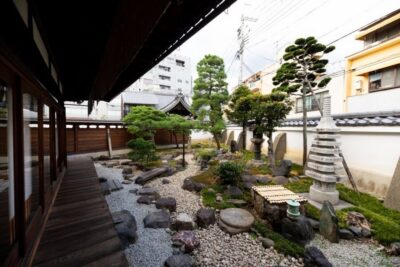
Browse the lists this tour appears in