
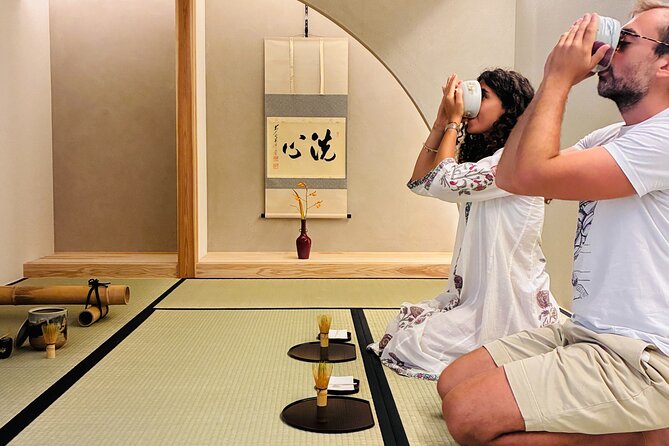
Review · KYOTO
Kyoto: Newly Opened Tea Ceremony – Sanjo Chasuian
Sanjo Chasuian puts the most satisfying part of a tea ceremony in your hands: after watching the host prepare matcha, you choose a tea bowl and whisk your own cup. You also receive a second bowl made by the host, along with a seasonal sweet from a Kyoto confectioner with more than a century of experience. I like that the lesson explains the meaning behind each movement before the quiet ceremony begins.
I also like the setting’s nijiriguchi, the low crawl-in doorway that marks the step from ordinary life into the tea room. It gives the hour a real sense of occasion. The main consideration is timing: the door is locked when the session starts, and even one minute late means you cannot join or receive a refund.
Key points
- Two bowls of matcha: One is prepared for you by the host, and one you make yourself or with a companion.
- Five minutes from Karasuma Oike Station: The central location works well before or after visiting Kyoto Castle and nearby streets.
- Seasonal Kyoto wagashi: A traditional sweet from a confectioner with more than 100 years of history accompanies the tea.
- A real nijiriguchi: You enter through the low doorway used in traditional tea-room design.
- English guidance in a small group: Sessions are limited to 10 people and explain both the ritual and its background.
- Bring socks: Shoes come off, and socks are required. Chairs are available if sitting on the floor is difficult.
Why this one-hour tea ceremony works
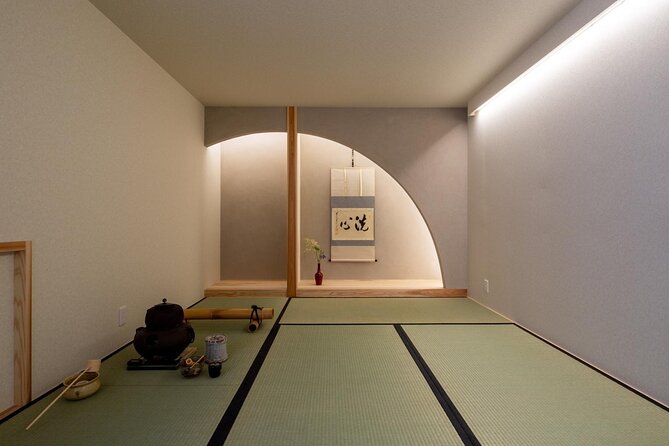
Kyoto offers many ways to encounter matcha. You can order a bowl at a café, watch a demonstration, or sit through a formal tea service without knowing what is happening. Sanjo Chasuian takes a more useful middle path. You learn the ideas behind the ceremony, watch the host perform it, then take part yourself.
That structure matters. The tea ceremony is not simply a recipe for powdered green tea. The host explains how the room, utensils, gestures, sweets, and guests all contribute to a moment of attention and respect. Once you understand the sequence, the quiet parts feel purposeful rather than mysterious.
The session lasts one hour, which is long enough to feel substantial but short enough to fit into a busy Kyoto day. I would place it before dinner, after sightseeing in central Kyoto, or early in your visit when you want a calm introduction to Japanese customs.
The activity has a rating of 4.8 from 288 reviews, with especially strong praise for the warm hosts, clear English explanations, peaceful mood, and chance to make matcha. One minor concern appears in the feedback: one person found the instructor’s English pronunciation a little hard to follow. That is worth keeping in mind, though the wider pattern points to careful explanations and plenty of time for questions.
More Tea Ceremony Experiences in Kyoto:
- Kyoto: Tea Ceremony in a Traditional Tea House in Kiyomizu
★ 4.9 · 3,519 reviews - Kyoto: Tea Ceremony Ju-An at Jotokuji Temple
★ 4.9 · 3,207 reviews - Kyoto: 45-Minute Tea Ceremony Lesson Experience
★ 4.3 · 2,378 reviews
Finding Sanjo Chasuian near Karasuma Oike
The facility is about a five-minute walk from Subway Karasuma Oike Station, a useful location in central Kyoto. It is also described as being not far from Kyoto Castle, so you can pair the ceremony with a visit to the former imperial residence or with a walk through the surrounding city streets.
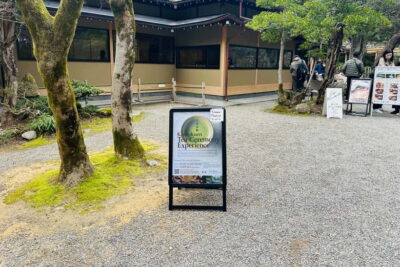
At the address, look for the large plate showing the Sanjo Chasuian logo and name. Open the door, and staff will be waiting inside. This is a small facility rather than a large attraction with a busy reception area, so recognizing the sign matters.
Plan to arrive early. Entry begins only five minutes before the scheduled time, and the door closes once the session starts. Kyoto’s trains and streets can run on time, but crowded intersections, confusing station exits, or a wrong turn can still cost you a minute. I would aim to be in the neighborhood at least 10 to 15 minutes before your booking.
Bring socks, or wear them. You remove your shoes, and socks are required for the tea-room setting. Chairs are available, but the experience is not suitable for wheelchair users.
Crossing the nijiriguchi into the tea room
The nijiriguchi is one of Sanjo Chasuian’s most memorable details. This small, low entrance traditionally required a person to bend or crawl into the tea room. It helped set the room apart from the outside world and reminded everyone entering that ordinary status and rank were left at the door.
You do not need to know the symbolism in advance to appreciate the effect. The doorway changes your pace. You slow down, pay attention, and become aware that you are entering a carefully prepared space rather than simply taking a seat for a drink.
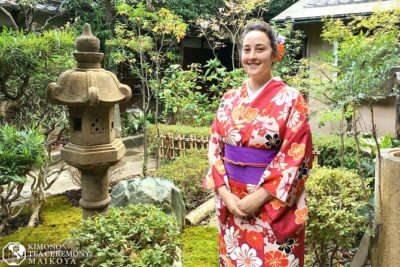
Chairs are available for anyone who prefers not to sit low or kneel. That is helpful, especially because a tea ceremony can involve stillness and posture that feel unfamiliar. The facility does not offer standard kimono rental or dressing, though an optional uchikake, a coat-style kimono, may be available for ¥1,500 including tax. You ask about it on the day, since advance reservations are not accepted and quantities are limited.
Do not treat the optional garment as part of the basic booking. It is an extra touch, not a required part of the ceremony.
Learning the meaning before the movements
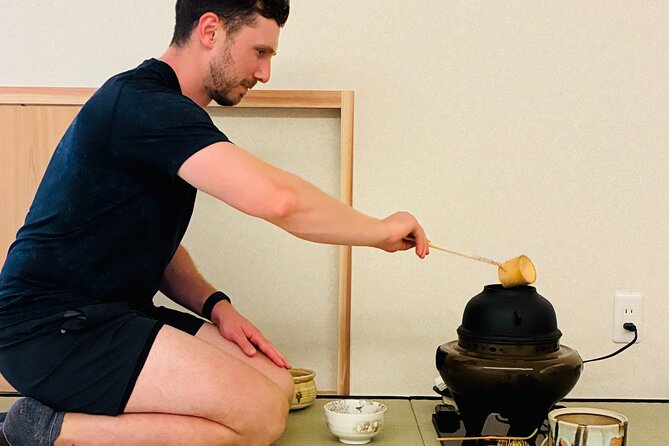
The session begins with an explanation of tea ceremony history, matcha, and the steps you are about to see. Hosts including Yuko and Reina have been praised for explaining the process carefully in English and answering questions in a friendly way.
This introduction is one of the strongest parts of the format. The formal service is quiet, and conversation is limited while the host prepares the tea. If you had no explanation beforehand, you might miss the meaning of a bow, the way a bowl is presented, or the care given to each utensil. Here, you receive the background first, then watch the ceremony with a better sense of what matters.
The pace is calm rather than rushed. You can ask questions before the formal portion begins, and the hosts explain what will happen before they begin. One particularly useful feature is that you understand the sequence without needing a running commentary during the performance.
The English guidance is intended for international visitors. It is clear enough for most people, though one person found an instructor’s pronunciation somewhat difficult to understand. If you have questions, ask them during the teaching portion rather than waiting until the formal ceremony is underway.
A few more tea experiences around Kyoto worth a look
- Kyoto: Table-Style Tea Ceremony at a Kyo-Machiya
★ 4.9 · 1,211 reviews - Kimono Tea Ceremony at Kyoto Maikoya, NISHIKI
★ 5.0 · 911 reviews - Kyoto: Kimono Tea Ceremony at Orizuruya Gion
★ 4.9 · 618 reviews - Kyoto: Tea Ceremony in 100-year-old Kyo-Machiya Townhouse
★ 4.8 · 546 reviews
The host’s bowl of matcha and seasonal wagashi
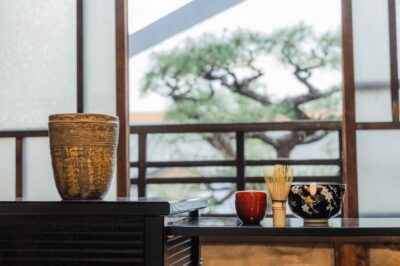
The first bowl is prepared by the host. You watch the measured movements, the handling of the bowl, and the whisking of the bright green tea. This is not a speed demonstration. The deliberate pace is part of the lesson.
The matcha comes from Kyoto, and you receive a traditional seasonal Japanese confection, often called wagashi. The sweet is supplied by a Kyoto confectioner with more than 100 years of history. Its role is practical as well as decorative: the sweetness prepares your palate for matcha’s bitter, grassy edge.
The sweet is not an afterthought. Japanese tea gatherings use food to balance the tea and reflect the season. The shape and appearance may change through the year, so this part gives the ceremony a connection to the calendar rather than presenting matcha as a generic souvenir drink.
You receive one bowl made by the host, then another bowl that you prepare yourself. That two-part structure gives you a useful comparison. The host’s tea shows the smooth result of practice, while your own cup lets you feel how much movement and attention go into the drink.
Making your own matcha
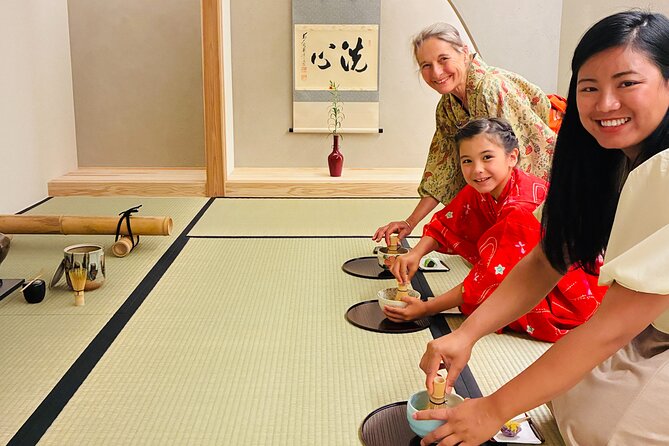
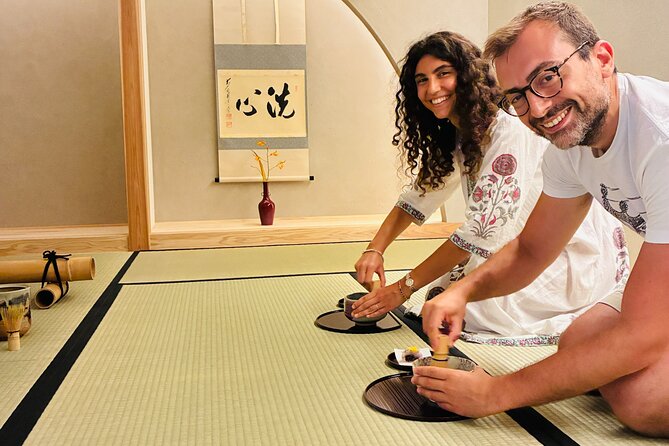
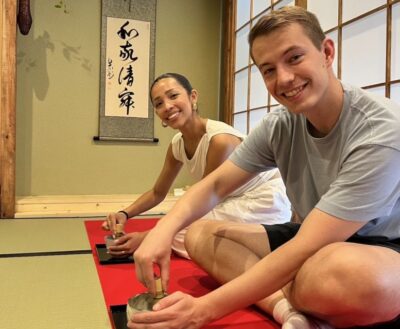
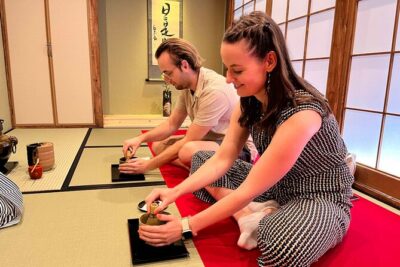
For the second bowl, you choose a tea bowl and learn how to whisk the matcha. You can make it yourself or prepare it with a companion. The host demonstrates the technique, then gives you the chance to try.
This hands-on section is where the ceremony becomes personal. You notice the angle of the whisk, the effort needed to create a fine foam, and the focus required to keep the movement steady. The task looks simple until you try it, which makes the host’s earlier performance easier to appreciate.
You do not need previous experience. The instructions are designed for beginners, and the hosts guide you through each stage. Several sessions have also included photographs or videos taken by the host while participants prepare their tea, which is useful if you want a record without interrupting the activity to handle your phone.
The result does not need to be perfect. The value is in trying the method and understanding the care behind the ritual. If you are traveling with a partner or friend, making the second bowl together adds a relaxed contrast to the host’s formal service.
What the one-hour format feels like
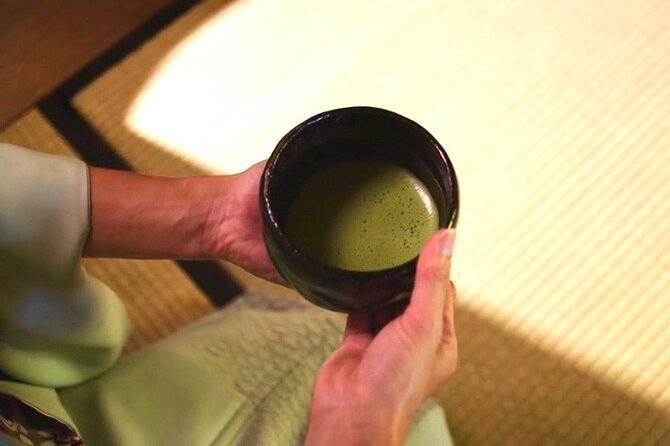
An hour sounds brief, but the schedule makes good use of it. You receive a cultural explanation, watch a formal tea preparation, taste matcha with a seasonal sweet, and prepare a second bowl yourself. There is also time for questions and a closer look at the tea-room customs.
I like the balance. A longer ceremony could become demanding if you are unfamiliar with sitting still or following formal etiquette. A shorter demonstration might leave you with a few photographs but little understanding. Sanjo Chasuian gives you enough context to make the experience meaningful without taking half a day.
The shared plan is a group session with other people and is limited to 10 participants. A small group keeps the instruction personal while allowing the ceremony to retain its quiet mood. It is not a private booking, so you should expect to share the room and the host’s attention.
Children under six are not considered suitable for this activity. Children under five, or anyone who requires an interpreter, must book the private plan. If you choose the shared plan incorrectly, participation and a refund are not available. This is a calm, focused setting, not an activity designed for young children.
Price, location, and what you receive
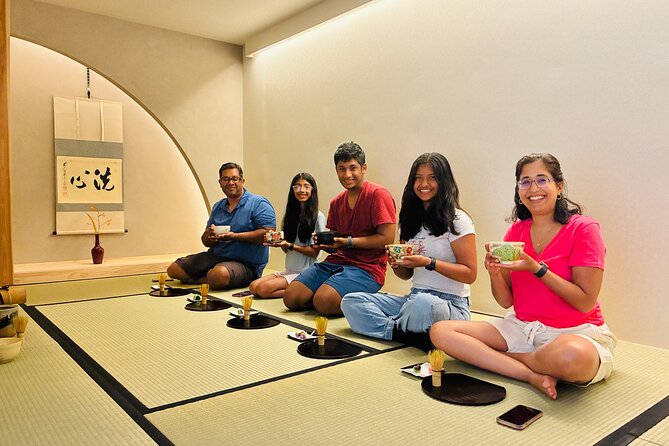
The listed price is $31 per person. For Kyoto, that is a fair price for a one-hour cultural lesson that includes two bowls of matcha, a seasonal confection, an English-speaking instructor, and a hands-on activity in a dedicated tea room.
The value is stronger than a simple cup of tea because you receive instruction and context. You are paying for the host’s preparation, the setting, the formal service, and the chance to make matcha yourself. If you only want to taste matcha, a café will cost less. If you want to understand how the ceremony works, this format offers more.
The facility also sells matcha, tea bowls, and selected tea items. The opportunity is convenient if you want to take something home, but buying is not required. The activity remains complete without an extra purchase.
A grand opening discount was offered until September 15. Since that date may have passed, check the current price rather than assuming the discount still applies. Free cancellation is available up to 24 hours before the start, and you can reserve now and pay later, which helps if your Kyoto schedule is still changing.
Who should book Sanjo Chasuian
I would recommend this activity if you want an approachable introduction to Japanese tea culture without committing to a long formal gathering. It suits first-time visitors, couples, solo participants, and anyone who wants one quiet hour between temples, shopping, and meals.
It is especially useful for you if you like learning by doing. The host’s bowl gives you a model, and your own bowl gives you a practical sense of the technique. The combination is more memorable than watching a demonstration alone.
The experience also works well for people who want cultural background, not just a photo opportunity. The explanations cover history and meaning, and the nijiriguchi adds a physical reminder that the tea room operates by its own rules.
You should think twice if you dislike sitting quietly, have difficulty following English instruction, are traveling with a child under six, or need wheelchair access. The strict start time is another real concern. Plan your route carefully and arrive early.
Final call: Is this Kyoto tea ceremony worth booking?
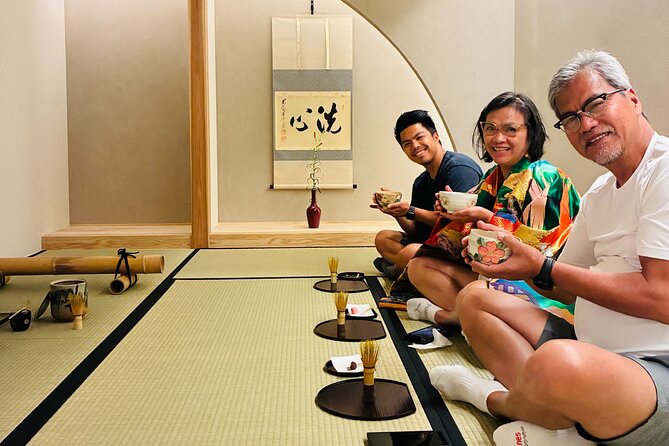
Yes, if you want a short, well-organized introduction to matcha and the customs around it. The strongest reasons to book are the two bowls of tea, the seasonal wagashi, the nijiriguchi, and the chance to whisk your own cup under guidance from hosts such as Yuko and Reina.
I would not book it solely for kimono photographs, since standard rental and dressing are not included. I would also skip it if your schedule is too tight to arrive early, because the no-late-entry rule is firm.
For most people, $31 buys more than a drink. It buys a quiet change of pace, a useful cultural lesson, and a small ritual you can understand rather than simply watch. Book it when you want Kyoto to slow down for an hour.
FAQ
How long does the Sanjo Chasuian tea ceremony last?
The tea ceremony lasts one hour. Starting times vary, so check availability when booking.
How much does the tea ceremony cost?
The listed price is $31 per person. A grand opening discount was offered until September 15, so check the current price before booking.
How many bowls of matcha are included?
Two bowls are included. The host prepares one, and you prepare the second yourself or with a companion.
Is the experience available in English?
Yes. The guidance and explanations are provided in English, and the instructor speaks English.
What food is included?
A traditional seasonal Japanese confection is included. It comes from a Kyoto confectioner with more than 100 years of history.
Do I need to bring anything?
You need to bring or wear socks. Shoes are removed for the tea-room experience.
Can children join the shared plan?
Children under six are not suitable for the activity. Children under five, or anyone requiring an interpreter, must book the private plan rather than the shared plan.
What happens if I arrive late?
Entry is allowed from five minutes before the start. Once the session begins, the door is locked. Even one minute late means you cannot participate, and no refund is provided.
Just added around Kyoto
- Whisk Your Own Matcha: A Zen Matcha Experience at Temple★ 3.6 · 7 reviews
- Uji Walking Tour – Byodo-in temple and Tea Ceremony from Kyoto★ 3.5 · 3 reviews
- Kyoto: Authentic Tea Ceremony in a Small Group★ 5.0 · 7 reviews
- Tea ceremony at Kyoto’s Zen Temple Teahouse★ 5.0 · 2 reviews
- Traditional Tea Ceremony in Kyoto★ 4.5 · 3 reviews
- Tea Ceremony in 150 Years Old Townhouse with Tables and Chairs★ 5.0 · 22 reviews
- Silent Beauty of Kyoto Zen Walk and Tea Experience★ 5.0 · 2 reviews
- Tea Ceremony Experience in Traditional Kyoto Townhouse★ 5.0 · 19 reviews
Tea Ceremony Experiences, compared.
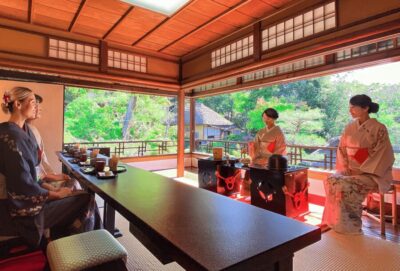
Tea Ceremony in a Traditional Tea House in Kiyomizu
Read our review →
Browse the lists this tour appears in