
Review · KYOTO
Kyoto: Tea Ceremony Experience
A tea ceremony gives you more than a cup of green tea. In a traditional Kyoto machiya, you watch each movement happen with care, learn why the utensils and room arrangement matter, then make your own bowl of frothy matcha. The demonstration is calm and precise, while the hands-on part keeps the 45-minute visit from feeling like a lecture.
I like the clear English instruction, especially when hosts such as Ikuko explain the ceremony’s history and symbolism without making it feel stiff. I also like the location, tucked just off Ninenzaka and close to Kiyomizu-dera, so you can pair it with a full Higashiyama sightseeing day. The main consideration is comfort: much of the session may involve sitting on the floor, though chairs and tables are available.
Key points at a glance
- Make your own matcha: You whisk a bowl yourself after watching the host demonstrate the proper method.
- Seasonal Kyoto sweet included: A traditional sweet balances matcha’s sharp, earthy bitterness.
- Traditional machiya setting: The tea room introduces you to room layout, decoration, utensils, and etiquette.
- English guidance throughout: Hosts explain the ritual, answer questions, and help first-time tea drinkers.
- Excellent Higashiyama location: The venue is near Kiyomizu-dera, Kodai-ji, Yasaka-jinja, Maruyama Park, Chion-in, and Gion.
- Flexible seating options: Floor seating is part of the traditional setting, but chairs and tables can be arranged.
What the 45-minute Kyoto tea ceremony is really like
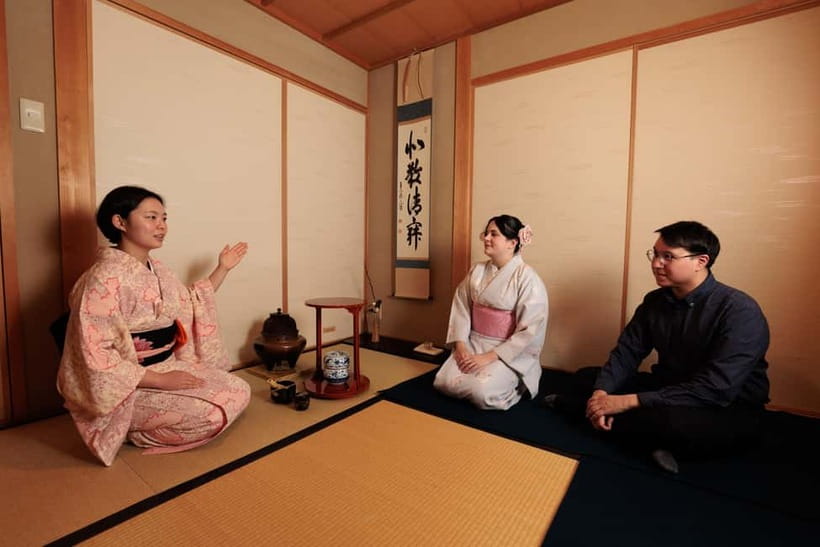
This is a compact cultural lesson rather than a full training course for a tea master. In less than an hour, you get an introduction to matcha, a host-led demonstration, a traditional sweet, and a chance to prepare tea yourself.
That balance works well for a busy Kyoto schedule. You do not need to set aside half a day, and you still get enough context to understand what you are seeing. The visit has a quiet pace, which makes it a welcome pause after the crowds around Kiyomizu-dera and Ninenzaka.
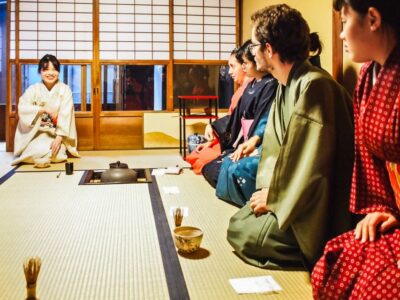
The session is offered as a private or small-group experience. That matters because the best part is the chance to ask questions. You can ask about the three schools of tea ceremony, the purpose of a utensil, or why the room is arranged in a certain way. A larger crowd would make that conversation harder.
More Tea Ceremony Experiences in Kyoto:
- Kyoto: Tea Ceremony in a Traditional Tea House in Kiyomizu
★ 4.9 · 3,519 reviews - Kyoto: Tea Ceremony Ju-An at Jotokuji Temple
★ 4.9 · 3,207 reviews - Kyoto: 45-Minute Tea Ceremony Lesson Experience
★ 4.3 · 2,378 reviews
Finding the machiya near Ninenzaka
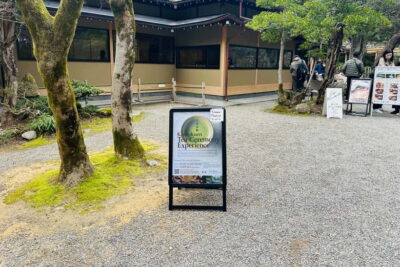
The meeting point takes some attention. The tea house is down an alley branching from Ninenzaka, not directly on the main street. The simplest landmark is the Park Hyatt hotel. Across from the hotel is a Studio Ghibli store, and the alley is just to the left of that shop.
Allow a few extra minutes to find the entrance, especially if you are arriving during a busy sightseeing period. Clear directions are sent before the visit, and there is a sign at the alley. Staff may also come to the door to guide you inside.
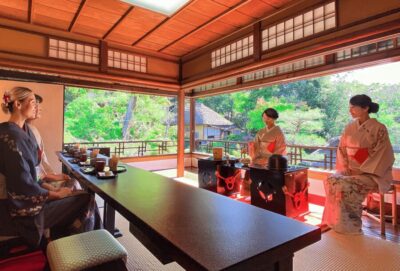
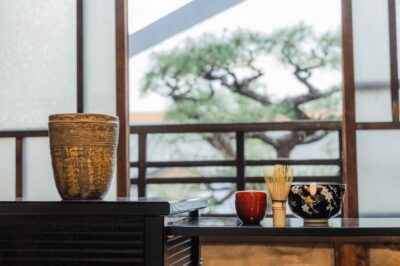
The setting is a strong part of the experience. You leave the crowded stone lanes of Higashiyama and enter a traditional machiya, where the room itself becomes part of the lesson. The host points out decorations and explains how the arrangement helps create the right mood for tea.
The location also makes this easy to combine with other plans. Kiyomizu-dera, Kodai-ji, Yasaka-jinja, Maruyama Park, Chion-in, and Gion are all within reach. You can visit the temple area first, attend the ceremony, then continue through Gion. Buses run along Higashi Oji, about 10 minutes away, and you can reach central Kyoto on foot in roughly 25 minutes through the geisha district.
The opening lesson: matcha, utensils, and the room
The host begins with a short introduction to matcha and the tea ceremony. This is where the activity earns its cultural value. You are not simply shown how to whisk powdered tea. You learn why the ceremony places so much weight on order, attention, and respect.
The instructor introduces the main utensils used in the preparation. You also learn about the steps of the ritual and the meaning of the room’s decoration. These details help you read the ceremony as more than a series of elegant hand movements.
The explanations are aimed at beginners. If matcha is new to you, you can ask basic questions without feeling out of place. If you already drink matcha, you will still gain a better sense of the formal tradition behind the drink.
The instruction is in English. Several people describe the hosts as warm, clear, and easy to understand, with Ikuko receiving particular praise for her patient explanations. The style is informative without becoming overly formal. That is important in a ceremony that can otherwise seem mysterious to someone seeing it for the first time.
Watching the formal demonstration
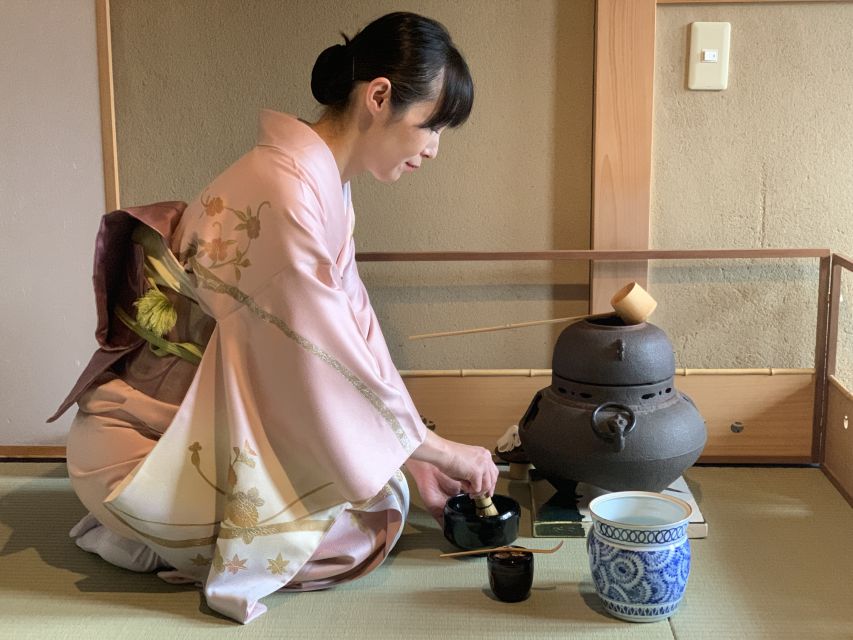
After the introduction, the host performs the tea ceremony. This is the most quietly absorbing part of the session. The deliberate movements, careful handling of the utensils, and attention to presentation show how much meaning can be carried by a simple bowl of tea.
The demonstration lasts around 10 minutes, according to one detailed account, leaving enough time for the explanation and your own preparation. You are encouraged to watch closely and ask questions afterward.
You will not learn the entire formal ceremony yourself in 45 minutes. That would require far more time and practice. Instead, you learn the basic ideas and see the ritual performed properly before trying one part of it on your own. This is a sensible format for a short Kyoto activity.
A seasonal sweet is served with the tea. It is not just a snack. Traditional sweets are designed to balance matcha’s strong, bitter flavor, and the contrast makes the tea easier for first-time drinkers. The sweet also gives the host a chance to explain how food and tea work together in the ceremony.
A few more tea experiences around Kyoto worth a look
- Kyoto: Table-Style Tea Ceremony at a Kyo-Machiya
★ 4.9 · 1,211 reviews - Kimono Tea Ceremony at Kyoto Maikoya, NISHIKI
★ 5.0 · 911 reviews - Kyoto: Kimono Tea Ceremony at Orizuruya Gion
★ 4.9 · 618 reviews - Kyoto: Tea Ceremony in 100-year-old Kyo-Machiya Townhouse
★ 4.8 · 546 reviews
Making your own bowl of frothy matcha
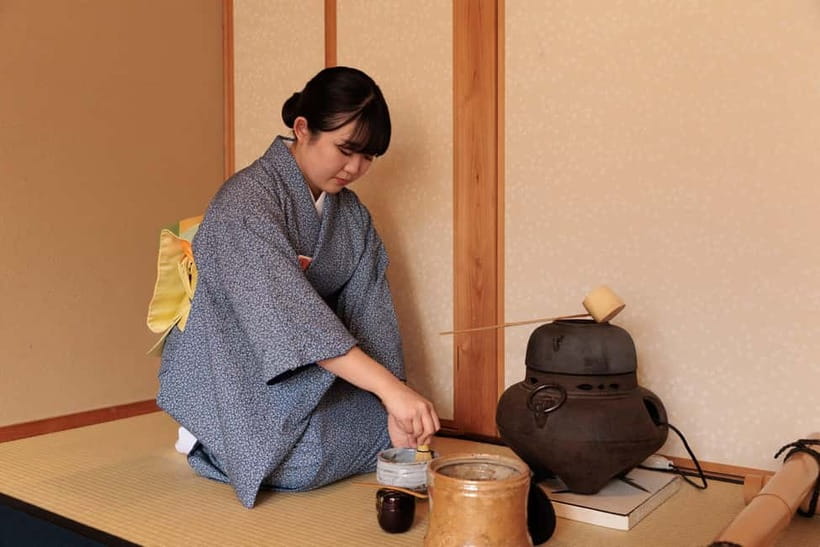
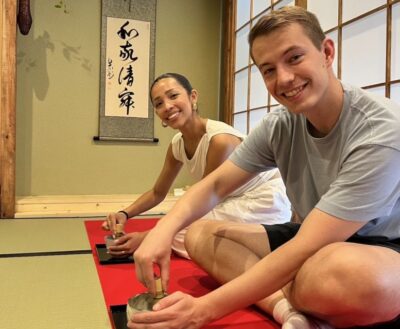
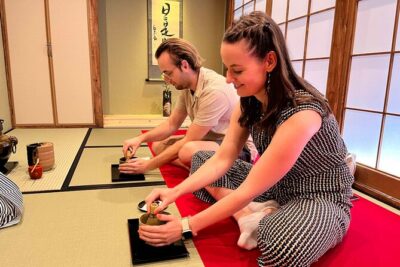
The hands-on portion follows the demonstration. With help from the host, you use the traditional tea-making utensils to whisk your own matcha. You are not expected to perform every detail of the full ceremony. The focus is on understanding the preparation and creating a smooth, foamy bowl.
This is where the experience becomes personal. Watching an expert move with complete control is one thing. Trying to create the foam yourself shows how much technique goes into what appears to be a simple drink.
You might find the flavor stronger than expected. Matcha has an earthy, distinctly bitter taste, and the seasonal sweet helps soften it. If you have only had sweetened green tea, prepare for something quite different.
The host stays close to guide you. That support removes the pressure to get it perfect, and it gives you a useful memory to take home. Some people also purchase a matcha-making set afterward, though buying souvenirs is not part of the included activity.
Why the setting and pace matter
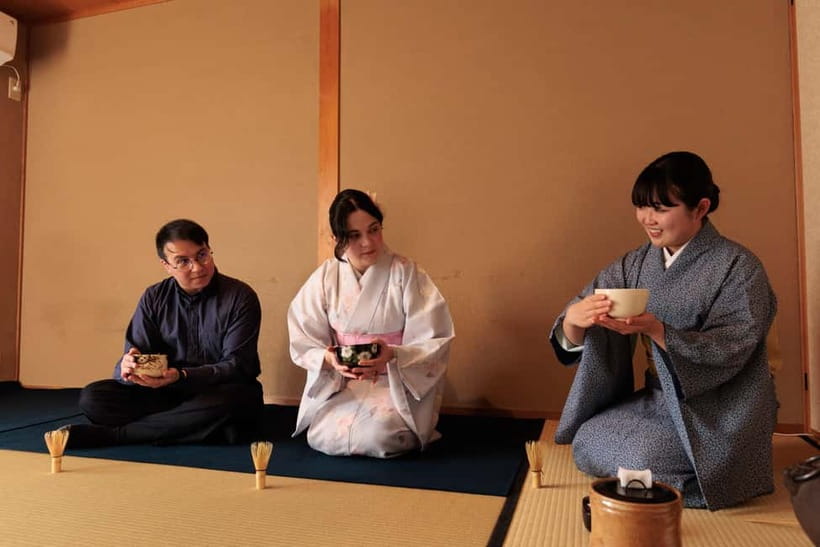
Kyoto can be tiring. Temple steps, crowded lanes, bus rides, and constant sightseeing add up quickly. This ceremony offers 45 minutes of quiet concentration without taking you far from the main sights.
I like the way the setting supports the lesson. The room layout, seasonal decoration, utensils, and movements all reinforce the same ideas of care and attention. You are not learning about Kyoto in a classroom removed from daily life. You are sitting in a traditional space and taking part in a practice that still has meaning.
The experience also gives you a more useful understanding of matcha culture. You learn about matcha grown in Kyoto, how it is prepared, and why the ceremony values precision. The lesson does not turn you into a tea expert, but it gives you enough context to notice details you might otherwise miss.
Seating, clothing, and practical comfort
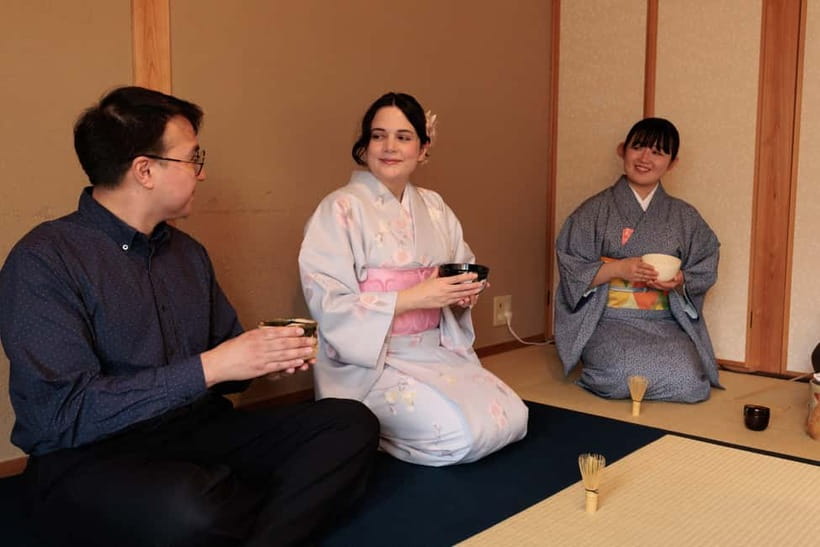
Traditional floor seating is part of the atmosphere, but it may not suit everyone for 40 minutes. One person specifically noted discomfort in the bottom and knees. Sitting formally on your knees is not required, and the hosts encourage you to make yourself comfortable.
Chairs and tables are available for anyone who finds floor seating difficult. The tea rooms are upstairs, which is important for anyone with mobility concerns. The Garden Teahouse is wheelchair accessible, so choose a private ceremony there if accessibility is a priority.
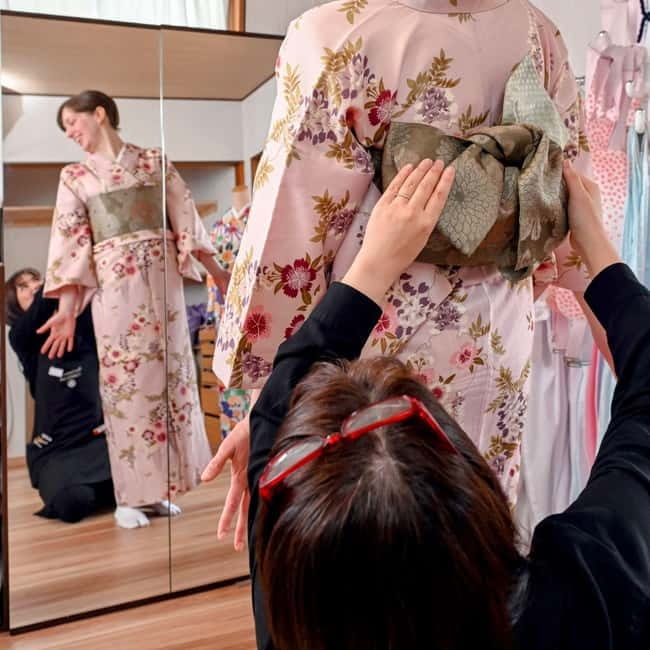
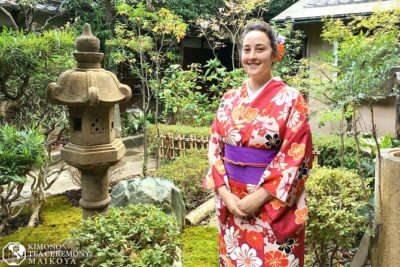
Kimono rental is not included. You can arrange a kimono nearby, and several people enjoyed combining traditional clothing with the ceremony. If that is part of your plan, arrange the kimono before the tea appointment rather than assuming it will happen automatically on arrival.
A kimono can add visual appeal and a stronger sense of occasion, but it is not needed to appreciate the ceremony. Comfortable clothing is perfectly suitable.
Still photography without flash is allowed. Video recording is not. Restrooms are available, and accompanying guides can wait in a room with Wi-Fi and refreshments.
If you are bringing an interpreter, book a private ceremony so the translation does not interrupt a shared session. The same private Garden Teahouse arrangement is requested for families bringing a baby or infant under three years old.
What you get for $32
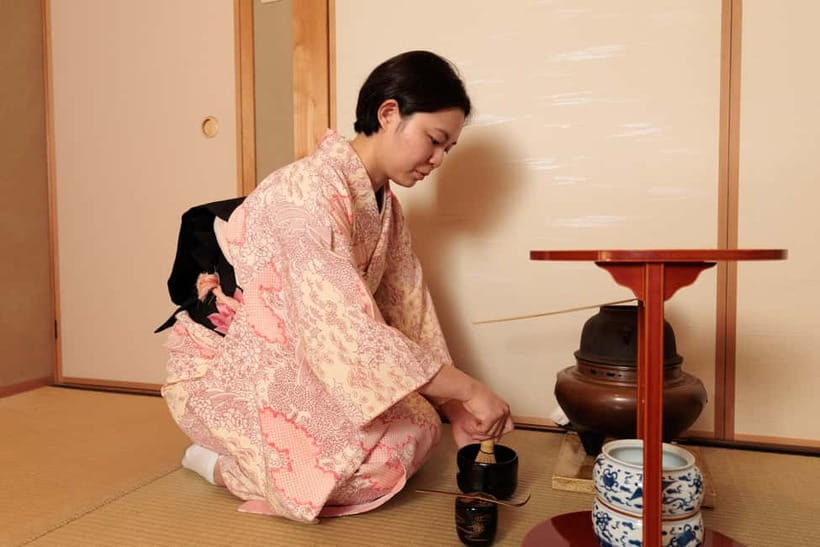
At $32 per person, the experience is fairly priced for a guided cultural activity in central Kyoto. The cost includes matcha, a seasonal traditional sweet, the utensils, and a personal host or instructor.
The value comes from the combination of demonstration and participation. A simple tea tasting would cost less, but it would not explain the room, the history, the utensils, or the steps of preparation. A longer formal tea course would offer more depth, but it would also take more time and may feel less approachable for a first visit.
This is a good price for an introduction, especially if you are already planning to be in Higashiyama. You avoid a separate cross-city trip, and the 45-minute length leaves room for temples, lunch, shopping, or an evening in Gion.
The activity is less suitable if your main goal is to master the complete ceremony. The experience teaches the basics and lets you prepare matcha, but it does not train you in the full sequence of formal movements.
Who will enjoy this most
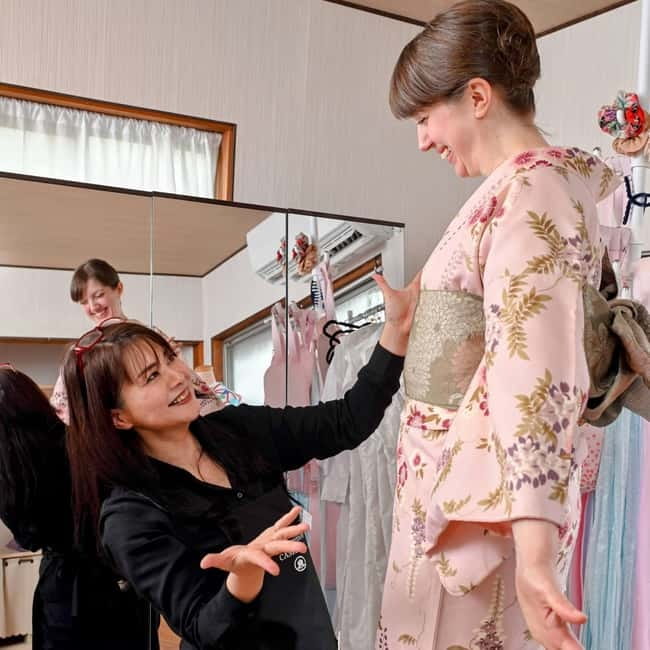
I would recommend this to first-time visitors who want a direct introduction to Japanese culture. It works especially well for couples, families with older children, solo visitors, and anyone interested in food traditions or Japanese design.
It is also a good choice for tea drinkers. You can see the care given to preparation and presentation, then taste the result yourself. If you do not like bitter drinks, the ceremony still has value, but the matcha flavor may take some getting used to.
The activity suits people who prefer smaller groups and conversation. You can ask about the history of matcha in Kyoto, the three tea schools, symbolism, or everyday Japanese customs. The English-speaking hosts make those questions easy to handle.
You may want a different experience if you dislike sitting on the floor, have limited mobility, or want a long, highly formal ceremony. In those cases, request chairs or book the wheelchair-accessible Garden Teahouse in advance.
Planning it with a Higashiyama day
The easiest plan is to place the ceremony between major sights. Visit Kiyomizu-dera and the nearby shopping lanes, then walk toward Ninenzaka and the tea house. Afterward, continue to Kodai-ji, Yasaka-jinja, Maruyama Park, or Gion.
Do not schedule it too tightly against a distant attraction. The meeting point is in a narrow alley, and Higashiyama can be slow to cross when crowded. Give yourself time to find the Studio Ghibli landmark and reach the door without rushing.
The ceremony also works well as a mid-afternoon break. You get a quiet indoor activity after sightseeing in the sun or rain, then return to the streets refreshed. Since the session is only 45 minutes, it is easy to fit into a full day.
Free cancellation is available up to 24 hours before the start time, and you can reserve now and pay later. That flexibility helps if your Kyoto plans depend on weather or temple opening times.
Should you book the Camellia Tea Ceremony?
Book it if you want a short, friendly, well-explained introduction to matcha in a traditional Kyoto setting. The combination of a formal demonstration, seasonal sweet, hands-on whisking, and thoughtful cultural explanation gives you more substance than a quick tea tasting.
I especially recommend it for first-time matcha drinkers and visitors already sightseeing around Kiyomizu-dera and Gion. Request a chair if floor seating concerns you, and choose a private Garden Teahouse session for an interpreter, a young infant, or wheelchair access.
Skip it only if you want full tea-master training or have no interest in a bitter, unsweetened green tea. For most visitors, $32 and 45 minutes buy a calm, memorable look at one of Kyoto’s most carefully practiced traditions.
FAQ
How long does the Kyoto tea ceremony last?
The experience lasts 45 minutes. It includes an introduction to matcha, an explanation of the utensils and room, a tea ceremony demonstration, a seasonal sweet, and your own matcha preparation.
What is included in the price?
Matcha, traditional seasonal sweets, tea-making utensils, and a personal instructor or host are included. Hotel transportation, meals, and kimono rental are not included.
Is the tea ceremony held in English?
Yes. The instructor language is English, and the hosts explain the ceremony, matcha, utensils, and cultural background in English.
Can I sit on a chair instead of the floor?
Yes. Chairs and tables are available for people who find floor seating difficult. The tea rooms are upstairs, while the Garden Teahouse is wheelchair accessible.
Can I take photographs or videos?
Non-flash still photography is permitted during the workshop. Video recording is not allowed.
Where is the tea house located?
It is down an alley branching from Ninenzaka in Kyoto’s Higashiyama district. Use the Park Hyatt hotel and the Studio Ghibli store opposite it as landmarks. The alley is just to the left of the store.
Just added around Kyoto
- Whisk Your Own Matcha: A Zen Matcha Experience at Temple★ 3.6 · 7 reviews
- Uji Walking Tour – Byodo-in temple and Tea Ceremony from Kyoto★ 3.5 · 3 reviews
- Traditional Tea Ceremony in Kyoto★ 4.5 · 3 reviews
- Kyoto: Authentic Tea Ceremony in a Small Group★ 5.0 · 7 reviews
- Tea ceremony at Kyoto’s Zen Temple Teahouse★ 5.0 · 2 reviews
- Tea Ceremony in 150 Years Old Townhouse with Tables and Chairs★ 5.0 · 22 reviews
- Silent Beauty of Kyoto Zen Walk and Tea Experience★ 5.0 · 2 reviews
- Tea Ceremony Experience in Traditional Kyoto Townhouse★ 5.0 · 19 reviews
Tea Ceremony Experiences, compared.
Tea Ceremony in a Traditional Tea House in Kiyomizu
Read our review →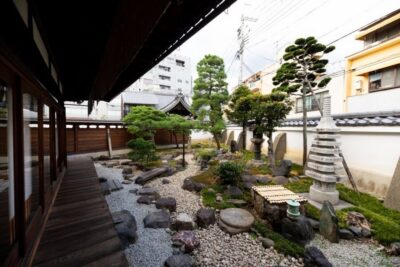
Browse the lists this tour appears in