
Review · KYOTO
Kyoto: Tea Ceremony with Kimono and Photoshoot
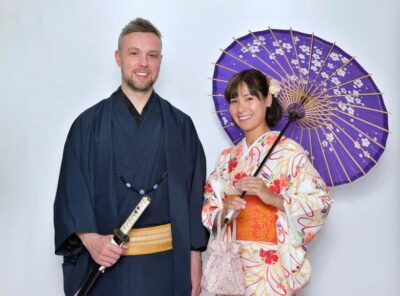
Kyoto’s tea ceremony becomes much more memorable when you are wearing the part. You choose a kimono, sit in a tea room, watch the careful preparation of matcha, then make your own cup with Japanese sweets on the side. The professional photos give you something better than a quick phone snapshot.
I like the friendly English instruction and the small group size, limited to 10 people. I also like the freedom to walk around Kyoto in your kimono afterward. The main drawback is the tight schedule: arriving more than 10 minutes late means you cannot join, and one person reported a long wait before the ceremony began.
Key points at a glance
- Choose your setting: Book the Nishiki Market location or the Gion location, and check the address carefully before setting out.
- Dress in a real kimono: Pick a kimono color, and some participants can also choose hair accessories.
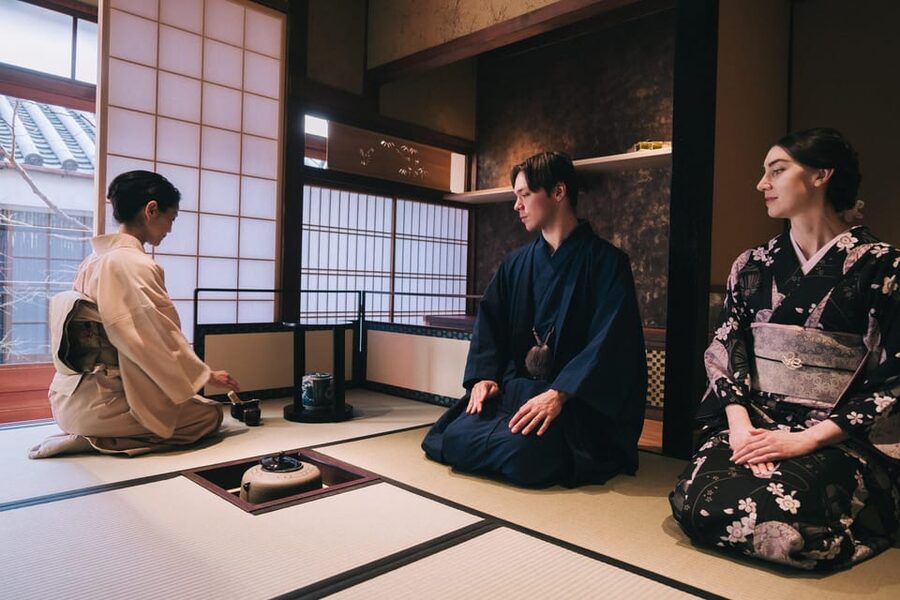
- Learn by watching first: An English-speaking tea master explains the ceremony and demonstrates its cleansing and preparation rituals.
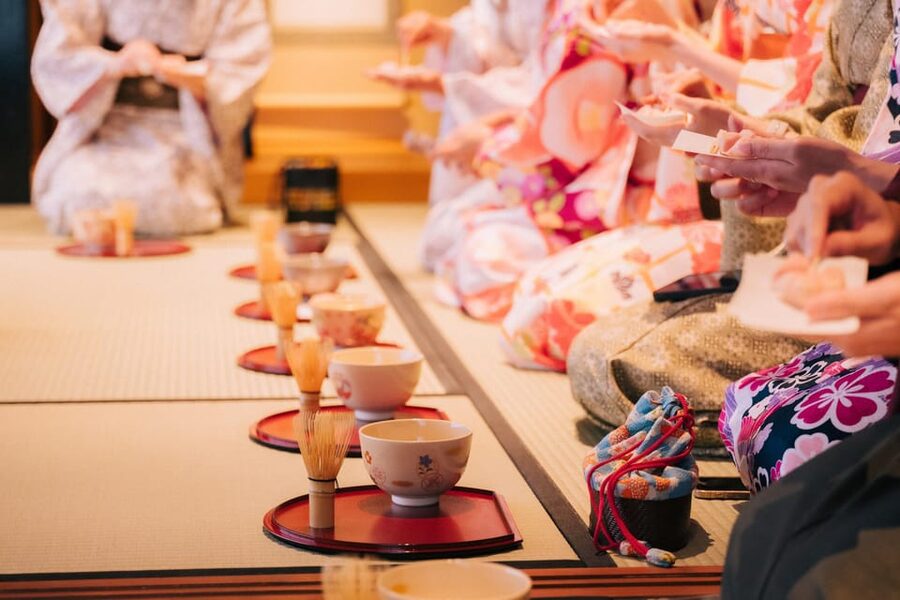
- Make matcha yourself: Prepare green tea, then drink it with Japanese sweets.
- Leave with three photos: A professional photographer captures your kimono experience and sends the images by email.
- Keep the rest of the day in mind: You can stroll outside in the kimono, but it must be returned by 6:00 PM at Nishiki Market or 5:00 PM in Gion.
Why the kimono makes this tea ceremony special
Many Kyoto dress-up activities stop at putting on a kimono and taking a few pictures. This experience adds a proper tea ceremony, so you get a little context along with the costume. That matters because the clothing feels less like a prop and more like part of a cultural activity.
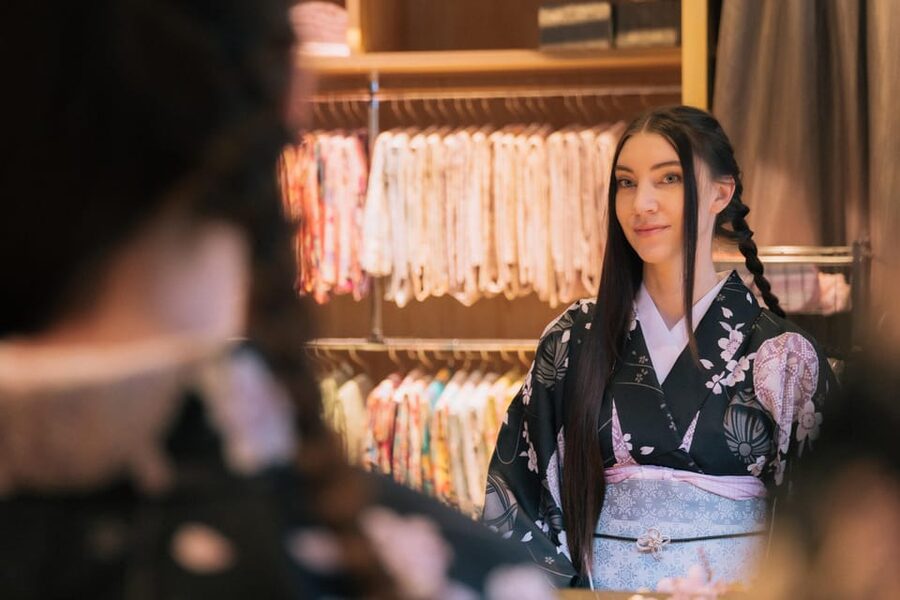
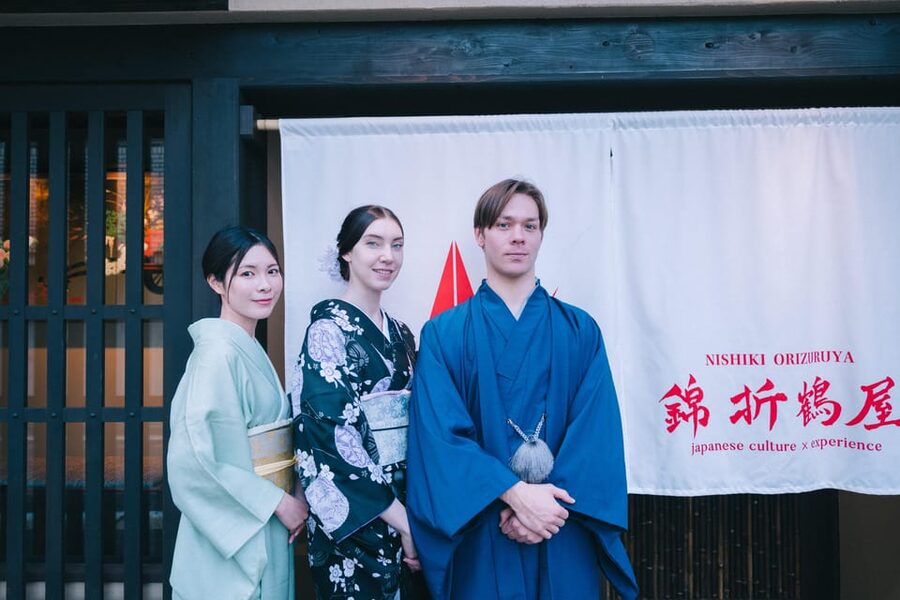
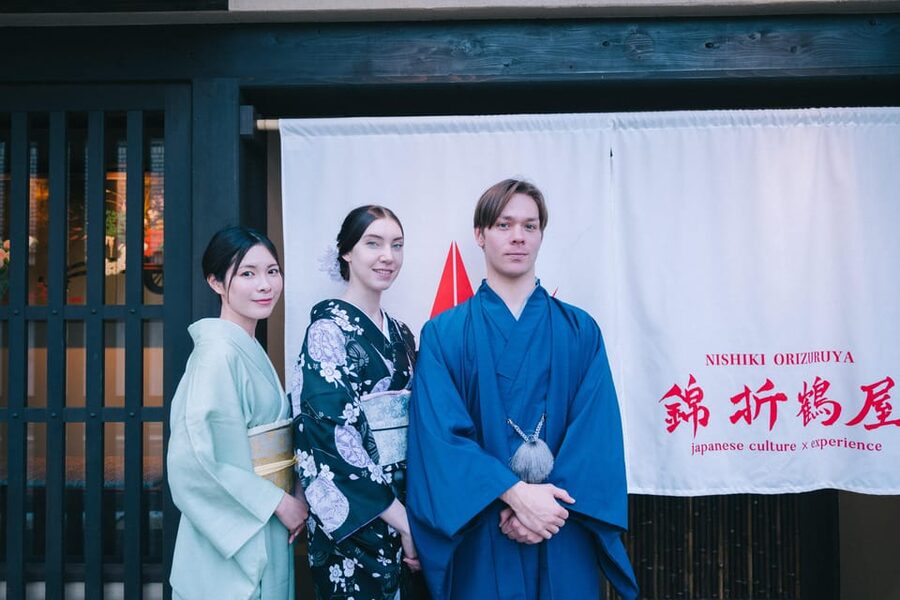
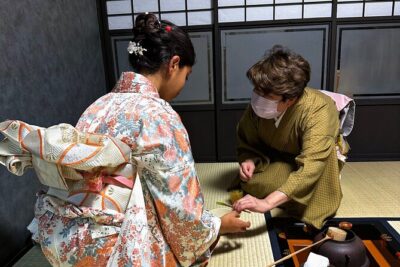
The dressing process takes place after you arrive at your chosen shop. You change in a designated area, then wait until the group is ready to enter the tea room. Female participants can choose from kimono colors and hair accessories, according to the experience details, while everyone receives help with the dressing.
You should expect the kimono to feel formal and restrictive compared with ordinary clothes. That is part of the appeal, but it also means you will want comfortable footwear for walking afterward. Shoes are not allowed indoors, so wear something easy to remove.
The staff’s attention to detail is one of the strongest parts of the experience. Mami, one of the tea guides, is specifically praised for being kind and well informed about the ceremony. The dressing team and tea staff work together, which helps the visit feel organized even though you move through several stages.
More Kimono Tea Ceremonies in Kyoto:
- Kimono Tea Ceremony at Kyoto Maikoya, NISHIKI
★ 5.0 · 911 reviews - Kyoto: Kimono Tea Ceremony at Orizuruya Gion
★ 4.9 · 618 reviews - KYOTO Tea Ceremony with kimono near by Imamiya Jinjya Shrine
★ 5.0 · 343 reviews
Choosing between Nishiki Market and Gion
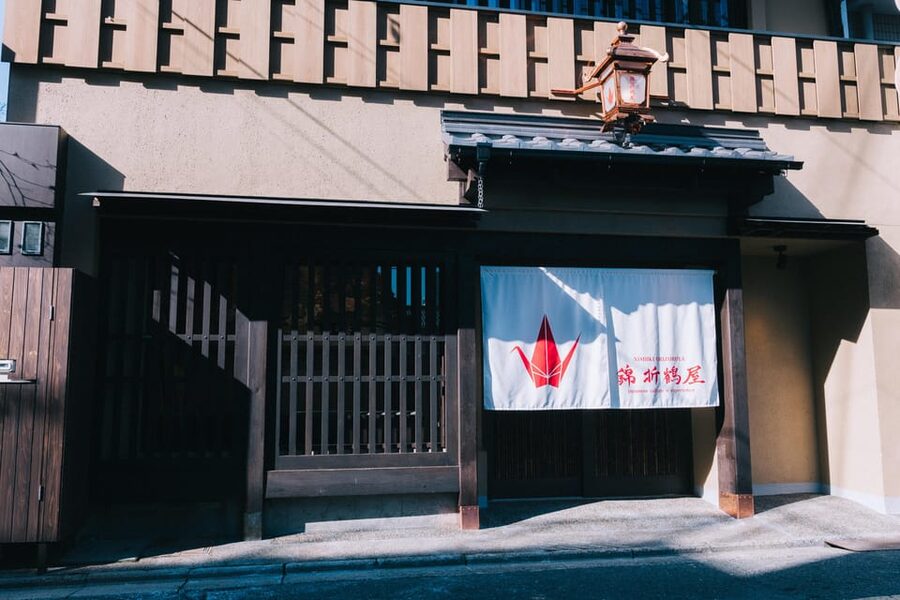
You have two locations: Nishiki Market and Gion. The meeting point depends on the option you book, so do not assume the shops are interchangeable. You must select the correct location and arrive at that shop.
The Nishiki Market location gives you a convenient base near one of Kyoto’s best-known food streets. If you plan to explore the market area, this choice may fit neatly into a day of central Kyoto sightseeing. The kimono must be returned by 6:00 PM.
The Gion location suits a day focused on Kyoto’s traditional old-town districts. Gion is closely associated with tea houses, historic streets, and evening walks, although the activity itself takes place at the designated shop rather than as a guided neighborhood tour. At this location, the return deadline is earlier, at 5:00 PM.
I would choose based on your day’s route rather than trying to guess which ceremony is better. The activity format is the same in broad terms, but arriving at the wrong shop means you cannot join. Give yourself extra time, especially if you are unfamiliar with Kyoto’s narrow streets and busy central areas.
The 90-minute schedule, from dressing room to tea room
The full experience lasts about 90 minutes. It begins with arrival, a short survey, and kimono dressing. One person reported waiting about an hour after a 2:00 PM reservation before the ceremony began, despite arriving five minutes early. That may not be typical, but it is a useful reason to keep your wider schedule flexible.
After dressing, you return to a waiting area. This gives you a chance to take a few personal photos before entering the tea room. You may also have a little time to admire the clothing and accessories before the formal part begins.
The tea ceremony demonstration follows. Your English-speaking instructor explains what is happening and why each action matters. The ceremony includes cleansing and blessing the tea, along with other formal movements that can seem mysterious if you only watch from a distance.
The setting is relaxed rather than stiff. You are not expected to arrive with detailed knowledge of tea ceremony etiquette. The instructor guides you through the process and explains the meaning behind the actions in English.
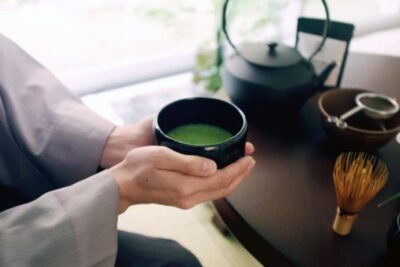
After the demonstration, you prepare your own matcha. You drink it with Japanese sweets, which provide a small sweet contrast to the grassy, slightly bitter taste of the tea. This hands-on step is important. Watching a ceremony is interesting, but making the tea helps you remember the rhythm and care involved.
The final part includes the professional photoshoot. You receive three photos as a memento, and the images are sent by email. You also have time to take your own pictures, so you are not limited to the photographer’s selection.
What the tea ceremony teaches you
The ceremony is not simply a lesson in how to mix powdered green tea. It introduces a way of thinking about hospitality, cleanliness, calm movement, and attention to detail.
You will see why the tea room has a deliberate pace. The host does not rush from one task to the next. Cleaning the equipment, preparing the tea, and presenting it to the guest are all treated as meaningful actions. The English explanation helps connect those movements to Japanese customs.
The demonstration is especially useful for first-time visitors. Without guidance, you might notice the bows and careful hand movements but miss their purpose. Here, the tea master gives you enough background to follow along without turning the experience into a long lecture.
You should not expect an advanced tea school lesson in 90 minutes. The activity is designed as an introduction, with dressing, photos, demonstration, and participation all included. That balance makes it approachable, but it also limits how much technical detail can fit into the session.
More Tea Ceremony Experiences in Kyoto:
- Kyoto: Tea Ceremony in a Traditional Tea House in Kiyomizu
★ 4.9 · 3,519 reviews - Kyoto: Tea Ceremony Ju-An at Jotokuji Temple
★ 4.9 · 3,207 reviews - Kyoto: 45-Minute Tea Ceremony Lesson Experience
★ 4.3 · 2,378 reviews - Kyoto: Table-Style Tea Ceremony at a Kyo-Machiya
★ 4.9 · 1,211 reviews
Making matcha and tasting Japanese sweets
When it is your turn to prepare matcha, the instructor guides you through the basic steps. You do not need prior experience, and the activity provides the tea and sweets.
Matcha has a stronger taste than the sweetened green tea served in many cafes. The powder is whisked into the water rather than steeped and removed, so the flavor is direct. The accompanying Japanese sweet helps soften the bitterness and gives the tasting a clear place in the ceremony.
This is one of the best parts for families with older children, couples, and solo visitors who want more than a photo opportunity. You are doing something, not merely posing. Children under five cannot join, and the ceremony requires enough patience to listen and follow instructions.
Food allergies should be reported in advance. The activity includes Japanese sweets, so do not wait until you sit down in the tea room to mention a dietary concern.
Kimono choices and the photo session
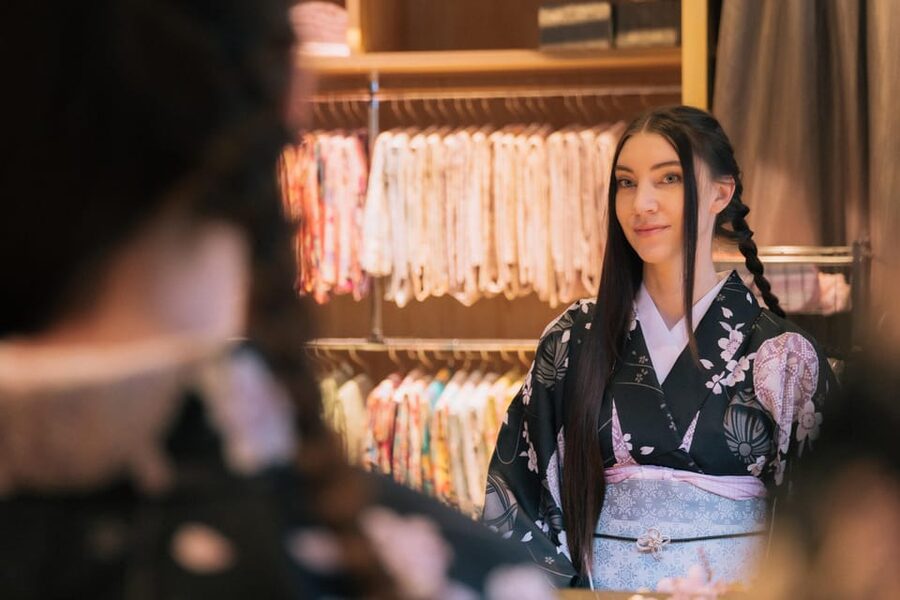
The clothing is a major reason to book this activity. You can choose the color of your kimono, and female participants can select hair accessories. The selection gives you some control over the final look, though the supplied information does not promise a particular range of colors, styles, or sizes.
The professional photos are included as three images. That is useful if you are traveling alone or if your group wants a photograph with everyone together. A phone camera can capture the moment, but it is harder to arrange a polished group shot while dressed in a formal kimono.
You should also take your own pictures during the available photo time. The professional session does not replace personal photos, and one participant appreciated having both options.
The pictures are sent by email a couple of hours later, according to the activity details provided by one participant. Make sure the email address used for booking is correct, and check your inbox after the session.
A short Kyoto stroll after the ceremony
After the tea ceremony and photos, you can walk around outside in the kimono before returning it to the shop. This is a fine bonus because it lets you carry the experience beyond the tea room.
You will need to plan around the return deadline. At Nishiki Market, the kimono must be back by 6:00 PM. At Gion, it must be returned by 5:00 PM. The activity does not provide an all-day rental, so do not plan a late dinner or evening sightseeing walk while still dressed.
Walking in a kimono also calls for a slower pace. You might find stairs, crowded streets, and long distances tiring, especially in warm weather. Keep your stroll modest and stay aware of the clothing. The experience is best treated as a pleasant extension of the ceremony, not as a full-day costume rental.
Is $127 a fair price?
At $127 per person, this is not a cheap way to put on a kimono. The price makes more sense when you count the separate pieces: kimono dressing, an English tea ceremony demonstration, matcha and sweets, professional photography, and three finished photos.
A simple rental and self-guided photo session would likely cost less, but it would not give you the tea lesson or the guided preparation of matcha. A formal tea ceremony without dressing might cost less as well, but you would miss the clothing and photos.
I see the value here in the combination. You get an activity, a cultural explanation, and a keepsake in one 90-minute visit. The price is easier to justify for a special occasion, a first visit to Kyoto, or a solo booking where the professional photos solve the problem of finding someone to take your picture.
The value is weaker if you mainly want to wear a kimono for a long day of sightseeing. In that case, a longer rental may suit you better. It is also not the right choice if you only want the tea ceremony or only want kimono dressing, since both parts are required.
Who will enjoy this Kyoto experience most?
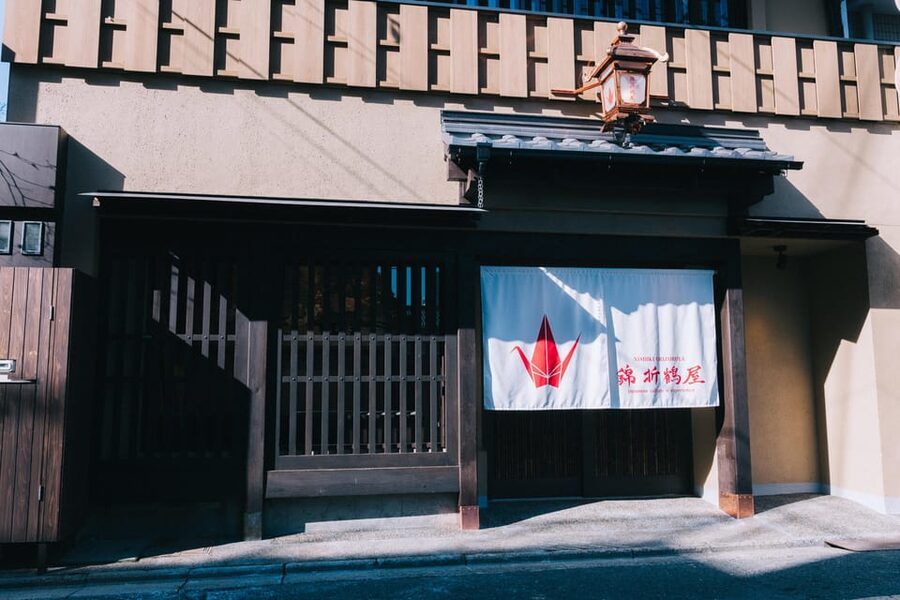
I would recommend it to you if you want a gentle introduction to Japanese customs without committing to a long formal ceremony. The English instruction, small group format, and hands-on matcha preparation make it easy to follow.
It suits couples, friends, solo visitors, and families with children aged five and older. The professional photos are particularly useful for solo visitors and groups who want a shared record of the day.
It may not suit you if you use a wheelchair, since the activity is not wheelchair accessible. You should also reconsider it if you dislike sitting in formal clothing, removing your shoes indoors, or following a fixed schedule.
The group is limited to 10 participants, which keeps the session more personal than a large staged performance. Still, timing can vary, so avoid booking it immediately before a train, dinner reservation, or timed attraction.
Practical details before you book
Tell the operator everyone’s height and gender in advance so the correct kimono sets can be prepared. This is not a detail to leave until arrival.
Arrive early. If you are more than 10 minutes late, you will not be allowed to join and there is no refund for that missed start. Confirm the exact location on your booking, since the Nishiki Market and Gion shops are separate.
Smoking is not allowed, and shoes must be removed indoors. The activity is conducted in English, and the group size is limited to 10 people.
You can cancel up to 24 hours before the start for a full refund. A reserve-now, pay-later option is also available, which helps if your Kyoto schedule is still taking shape.
Should you book it?
Book this experience if you want Kyoto memories that combine clothing, food, learning, and photographs rather than a quick dress-up session. The English tea lesson, kind staff, careful kimono dressing, and three professional photos give the $127 price a reasonable purpose.
Skip it if you only want to rent a kimono for the day, need wheelchair access, or have a packed schedule with no room for delays. For everyone else, choose your location carefully, arrive early, provide the requested height information, and leave enough time for a short kimono stroll before the return deadline.
FAQ
How long does the tea ceremony and kimono experience last?
The scheduled experience lasts 90 minutes.
Where does the activity take place?
You can choose between a Nishiki Market location and a Gion location. The exact meeting point depends on the option you book.
Is the tea ceremony conducted in English?
Yes. The instructor speaks English, and the tea ceremony demonstration and explanations are provided in English.
What is included in the price?
The experience includes kimono dressing, an English tea ceremony demonstration, matcha green tea, Japanese sweets, and three photos taken by a professional photographer.
Can I walk around Kyoto in the kimono afterward?
Yes. You may stroll outside in the kimono after the ceremony, but you must return it by 6:00 PM at the Nishiki Market location or by 5:00 PM at the Gion location.
How many photos do I receive?
You receive three professional photos as a memento. You also have time to take your own pictures.
What information is needed before booking?
You must provide the height and gender of each participant so the kimono sets can be prepared. Tell the operator about any food allergies in advance.
What happens if I arrive late?
If you arrive more than 10 minutes after the starting time, you cannot join the experience and no refund is available. Make sure you go to the correct location, since arriving at the wrong shop also prevents participation.
More Photography Sessions in Kyoto
- Kyoto Tea Ceremony and Samurai Photo Session
★ 5.0 · 70 reviews - Tea Ceremony with Kimono and Professional Photoshoot in Kyoto
★ 5.0 · 44 reviews - Tokyo:Genuine Tea Ceremony, Kimono Dressing, and Photography
★ 5.0 · 33 reviews - Private Tour in Kamakura: Matcha Tea Tasting & Photo Session
★ 5.0 · 6 reviews
Just added around Kyoto
- Whisk Your Own Matcha: A Zen Matcha Experience at Temple★ 3.6 · 7 reviews
- Uji Walking Tour – Byodo-in temple and Tea Ceremony from Kyoto★ 3.5 · 3 reviews
- Kyoto: Authentic Tea Ceremony in a Small Group★ 5.0 · 7 reviews
- Tea ceremony at Kyoto’s Zen Temple Teahouse★ 5.0 · 2 reviews
- Traditional Tea Ceremony in Kyoto★ 4.5 · 3 reviews
- Tea Ceremony in 150 Years Old Townhouse with Tables and Chairs★ 5.0 · 22 reviews
- Silent Beauty of Kyoto Zen Walk and Tea Experience★ 5.0 · 2 reviews
- Tea Ceremony Experience in Traditional Kyoto Townhouse★ 5.0 · 19 reviews
Kimono & Tea Ceremonies, compared.
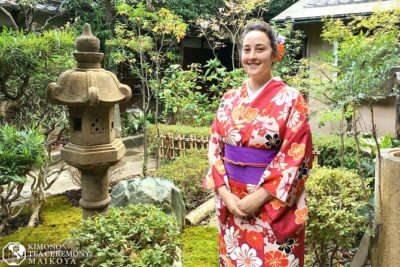
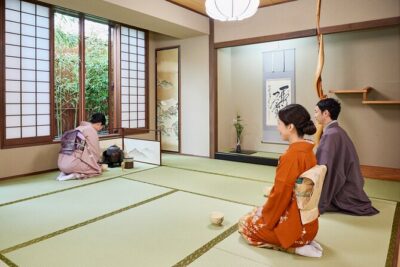
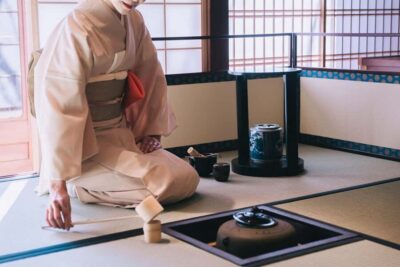
KYOTO Tea Ceremony with kimono near by Imamiya Jinjya Shrine
Read our review →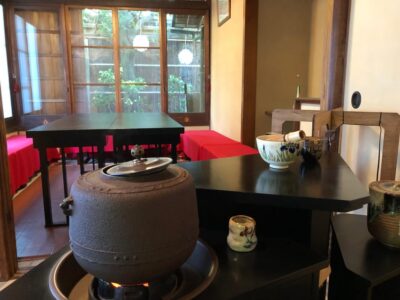
Kimono and Tea Ceremony Experience at Cultural Asset
Read our review →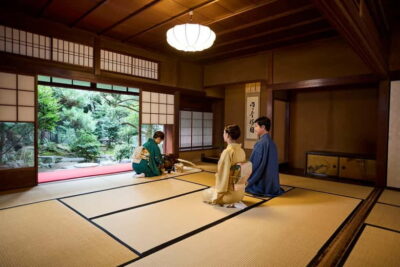
Browse the lists this tour appears in