
Review · JAPAN
Live the Shōgun Story Samurai Knives and Tea Ceremony in Sakai
Sakai’s samurai story comes to life through things you can taste, touch, and use. You’ll trace the city’s old trade routes, sit for a traditional tea ceremony, and fit a handle to a Japanese knife that can be engraved with your name. The hands-on blade work is the tour’s most memorable feature.
I like the thoughtful mix of food, history, and craft. I also like that guide Junya keeps the history easy to follow and can adjust the meal if traditional Japanese flavors are not your thing. The main consideration is price: at $379 per person, this is a special-occasion outing rather than a casual half-day activity.
Key points at a glance

- Fit and personalize a knife handle at Sakai Tōji, then take home your engraved blade.
- Taste seasonal kaiseki cuisine at Ume-no-Hana, with vegan options available.
- Join a traditional tea ceremony at Rishō-no-Mori in the city linked to tea master Sen no Rikyu.
- Hear Sakai’s Edo-period trade story at Porto no Suke Bridge.
- Visit Xavier Park to learn about 16th-century European missionaries in Japan.
- Tour privately with Junya, with only your own group taking part.
Why Sakai is the right place for this experience
Osaka is often treated as a food city or a convenient base for Kyoto, but Sakai offers a different angle. This port city developed as a major trade center during the Edo period, and its old commercial role helped support skilled makers, merchants, and cultural figures.
Sakai is also closely linked with Japanese knife production. Its blade tradition gives the workshop portion a real sense of place. You are not simply buying a kitchen tool in a shop. You are learning about a craft associated with the city and taking part in a small piece of its production.
The tea connection matters, too. Sen no Rikyu, one of Japan’s most important tea masters, was born in Sakai. That makes the tea ceremony more than a standard cultural add-on. It connects the quiet ritual to the city itself.
I like the way this tour brings together three different sides of Sakai: commerce at Porto no Suke Bridge, refined food and tea culture, and practical craftsmanship. The result feels more personal than a sightseeing route built around monuments alone.
More Tea Ceremony Experiences in Japan:
- Kyoto: Tea Ceremony in a Traditional Tea House in Kiyomizu
★ 4.9 · 3,519 reviews - Kyoto: Tea Ceremony Ju-An at Jotokuji Temple
★ 4.9 · 3,207 reviews - Kyoto: 45-Minute Tea Ceremony Lesson Experience
★ 4.3 · 2,378 reviews
Starting at Sakai Station at 10:50 a.m.
Your meeting point is the taxi stand at Sakai Station’s east exit, at 3 Chome Ebisujimacho in Sakai Ward. The start time is 10:50 a.m., so plan to arrive with enough time to find the correct exit and meeting area.
The tour is private, which is important here. Only your group takes part, so the pace can be more relaxed than on a large bus outing. You can ask Junya to explain a historical point again, and the food discussion can be adjusted to suit your preferences.
The route is near public transportation, and the activity ends back at the same meeting point. That makes it easier to fit into a day based in Osaka, provided you allow enough time to reach Sakai before the start.
The total duration is about five hours. That is long enough for several substantial stops, but short enough to leave your evening open. Since the tour includes lunch, tea, walking, history, and workshop time, expect a full cultural program rather than a quick photo stop.
Porto no Suke Bridge and Sakai’s trading past
The first stop is Porto no Suke Bridge, where you learn why Sakai mattered during the Edo period. The bridge provides a useful opening because it places the city’s crafts and culture within a larger story of trade.
This part should appeal to you if you enjoy knowing how a place developed, not just seeing its current streets. Sakai’s position as a trade hub helped connect goods, people, and ideas. The city’s later reputation for knives and tea makes more sense once you understand this commercial background.
Junya’s approach is a practical strength. He has a friendly way of explaining Sakai’s past without turning the morning into a formal lecture. One piece of feedback specifically praised his ability to make the city’s history fun and educational at the same time.
That balance matters. The tour gives you context, but the emphasis stays on memorable places and activities. If you prefer a long, detailed academic history talk, this may feel light. If you want clear explanations tied to the streets around you, it should work well.
A seasonal kaiseki lunch at Ume-no-Hana
After the first history stop, you sit down for a multi-course lunch at Ume-no-Hana. The meal is seasonal kaiseki, a style built around several carefully prepared courses rather than one large plate.
Kaiseki is valuable here because it adds another form of Japanese craftsmanship to the day. The knife workshop shows precision through tools. The tea ceremony shows precision through movement. Kaiseki presents the same care through food, arrangement, and seasonal ingredients.
You should expect the meal to be a cultural experience as well as a chance to eat. The course format may include flavors and textures that are unfamiliar, and the meal is not designed like a quick Western lunch. Take your time and treat each course as part of the program.
Vegan options are available, which is useful for plant-based diners. The tour can also be adjusted when traditional Japanese food does not suit your taste. Junya has shown flexibility in this area, so tell him your preferences clearly rather than forcing yourself through a meal you will not enjoy.
The main limitation is that the exact dishes are not specified. Seasonal menus change, and the experience is not ideal if you want to choose from a broad menu or control every part of your lunch. For most people booking a culture-focused tour, that fixed seasonal structure is part of the appeal.
A few more tea experiences around Japan worth a look
- Osaka: Tea Ceremony Experience
★ 4.9 · 1,426 reviews - Kyoto: Table-Style Tea Ceremony at a Kyo-Machiya
★ 4.9 · 1,211 reviews - Kanazawa: Kenrokuen Tea Ceremony Experience
★ 4.8 · 1,139 reviews - Kimono Tea Ceremony at Kyoto Maikoya, NISHIKI
★ 5.0 · 911 reviews
Quiet time at Rishō-no-Mori
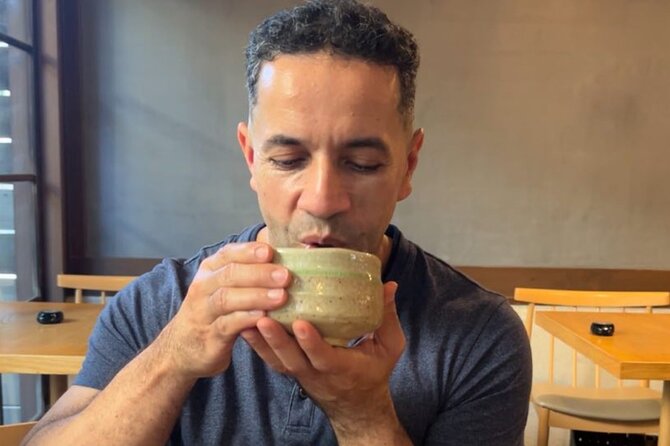
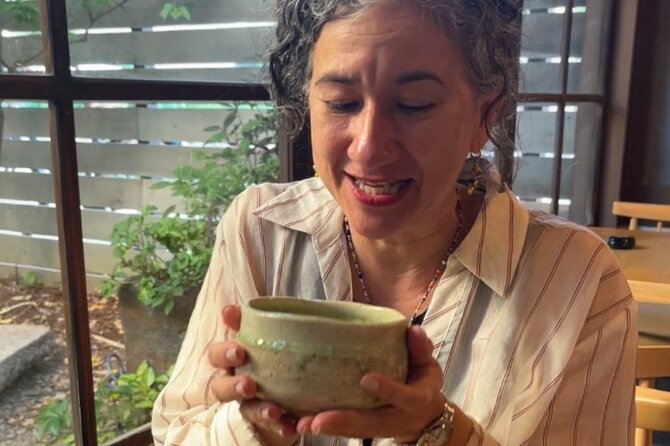
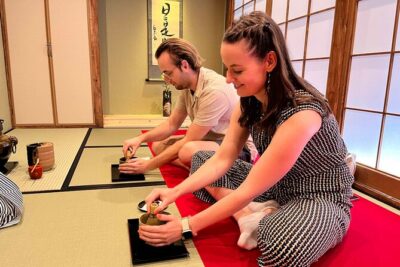
After lunch, you visit Rishō-no-Mori for a traditional Japanese tea ceremony. The mood shifts here. Porto no Suke Bridge introduces trade and movement, while the tea setting offers a slower period of observation.
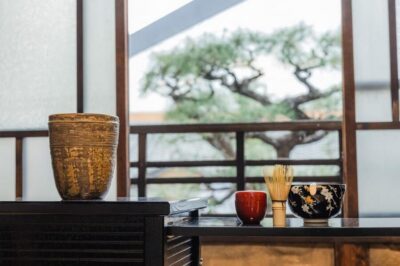
A tea ceremony can be easy to misunderstand if you expect a simple cup of green tea. Its value comes from the setting, the order of actions, and the attention given to a small number of objects and gestures. You are asked to pause and notice details that might otherwise pass quickly.
Because Sakai is associated with Sen no Rikyu, this stop has strong local meaning. The ceremony is tied to a figure whose influence shaped Japanese tea culture, not simply added to the tour as a generic cultural performance.
You may find this the calmest part of the day. It also requires patience and respect for the ritual. If you prefer constant activity, the pace may feel slow. I see that as a useful contrast to the workshop, where you will be handling tools and making something with your hands.
The description gives no specific information about the length or format of the ceremony, so you should not expect a detailed lesson plan in advance. The clear promise is a traditional tea experience in a place connected to Sakai’s tea heritage.
Making your knife at Sakai Tōji
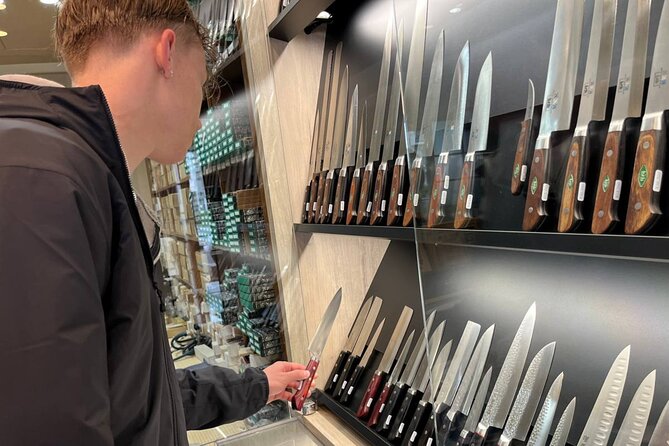
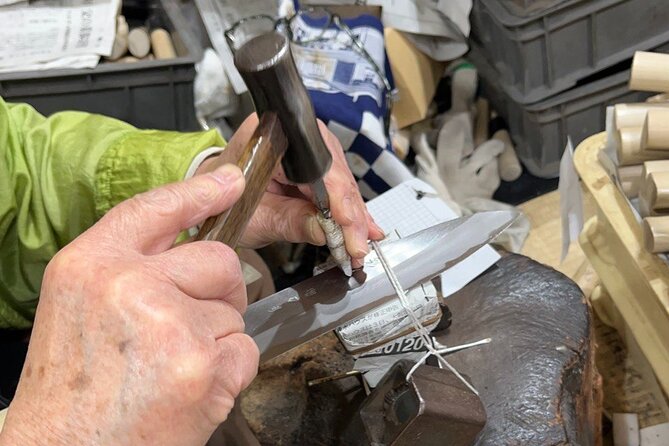
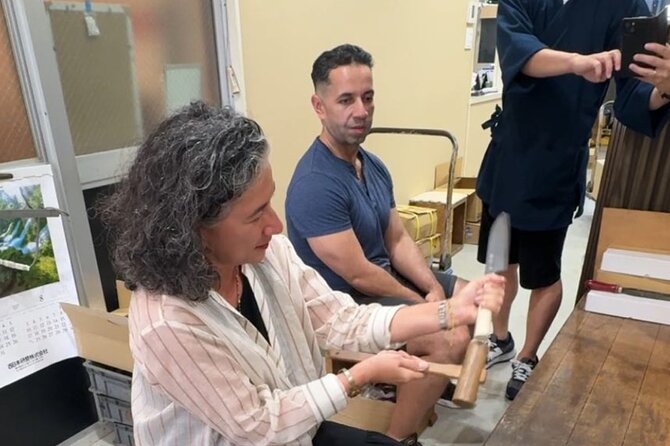
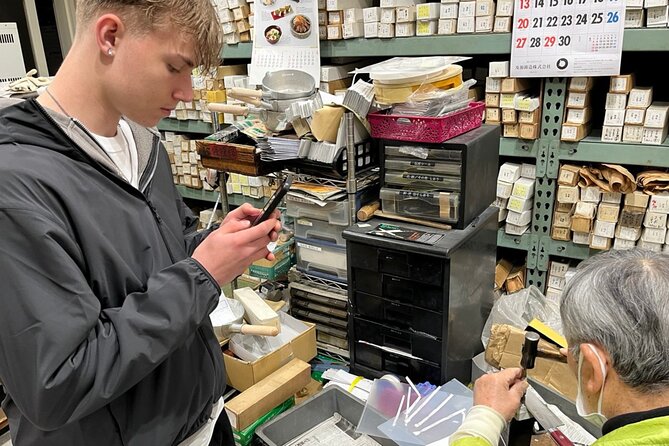
The workshop at Sakai Tōji is the centerpiece for many people. Here, you take part in fitting a knife handle, guided by local artisans familiar with traditional blade-making.
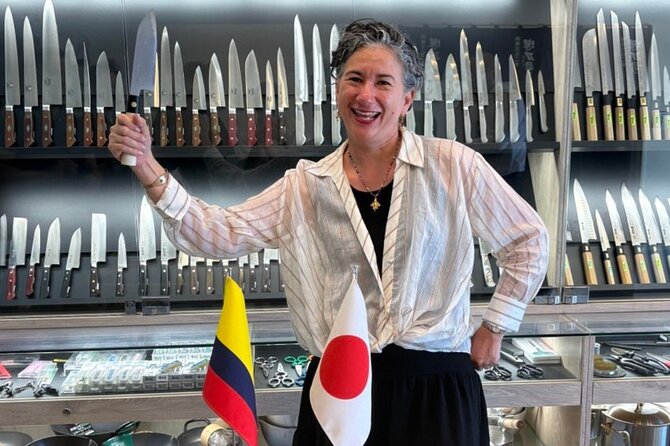
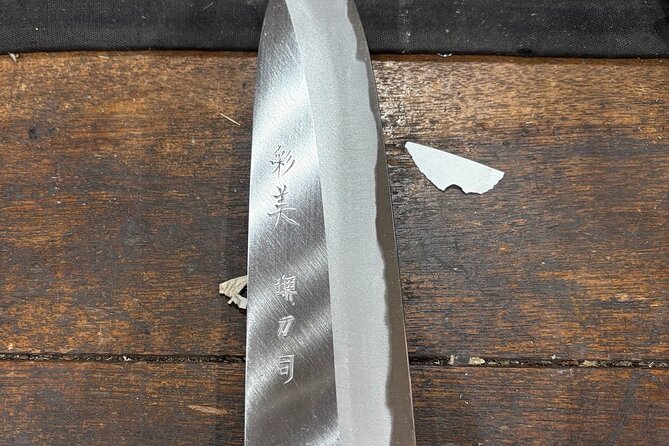
This is not just a demonstration. You get a practical role in finishing your own knife, and the blade can be engraved and personalized. You leave with an object tied to the day, rather than a souvenir that could have been bought anywhere.
That personal connection is the strongest reason to choose this tour over a standard city walk. A knife is useful, durable, and connected to Sakai’s best-known craft. The activity also gives you a better sense of the care involved in making a tool that is often treated as an everyday object.
The exact handle materials, engraving options, and knife specifications are not provided, so do not book expecting to choose from a full technical catalog. The confirmed experience is handle fitting and a personalized blade to take home.
You should also follow the workshop guidance closely. Traditional tools deserve care, and the point is to work with the craft rather than rush to the finished item. The supplied feedback describes the experience of making something beautiful with local help and keeping it as a lasting memory. That is a fair description of the value here.
If you cook, this part may have special appeal. If you do not, the knife still works as a meaningful object connected to Sakai. The activity suits couples, families with older children, and small groups who prefer making something together instead of collecting more photographs.
Xavier Park and the European connection
The final stop is Xavier Park, reached by a short walk from the workshop. Here, you learn about European missionaries who visited Japan in the 16th century, including Francis Xavier.
This stop broadens the story again. The morning begins with Sakai as a Japanese trading city, moves into tea and craftsmanship, and ends with contact between Japan and Europe. It shows that Sakai’s past was shaped not only by local traditions but also by international connections.
Xavier Park is not presented as the main attraction, so keep your expectations measured. It is a short historical stop that rounds out the tour rather than a long visit to a major museum or religious site.
I like its place in the itinerary because it prevents the day from becoming only a lesson in samurai culture. You get a wider view of Sakai as a city where merchants, artisans, tea figures, and foreign visitors crossed paths.
After the park, you walk back to the original meeting point. The activity ends where it began, making the route straightforward for your onward plans.
What the $379 price really covers
At $379 per person, this is expensive compared with a basic walking tour or a stand-alone tea ceremony. The price needs to be judged against the full package: about five hours, a private guide, a multi-course lunch, tea ceremony, local history, artisan instruction, and a personalized engraved knife.
The knife is the key value question. If you would happily spend money on a quality Japanese blade and a craft workshop, the price becomes easier to justify. You are combining the purchase with instruction, local context, and a memory made during the visit.
The food and tea ceremony add value for people who want a broad introduction to Sakai. If you are mainly interested in knives, a cheaper workshop might suit you better. If you mainly want lunch and sightseeing, a private five-hour package may be more than you need.
The private format also affects the cost. Your group does not share the guide with strangers, which allows for personal questions and some flexibility with food preferences. Solo visitors should think carefully about the per-person price, while couples or small groups may find the private arrangement more reasonable.
The experience is non-refundable and cannot be changed after booking. That makes careful planning important. Confirm that the time, meeting point, food style, and full five-hour commitment fit your schedule before paying.
Who will enjoy this Sakai day most
I would recommend this tour to you if you want an activity with a physical result. The engraved knife gives the day a clear finish and helps the history stay with you after you leave Sakai.
It is especially well suited to:
- People interested in Japanese blades and traditional craft
- Visitors who want a private guide instead of a large group
- Food lovers open to seasonal kaiseki cuisine
- Anyone curious about tea ceremony and Sen no Rikyu
- Couples or small groups looking for a special Osaka-area experience
- History fans who prefer stories tied to places and activities
You may want to skip it if you dislike formal meals, quiet ceremonies, or fixed itineraries. It may also feel costly if you are looking for a low-price introduction to Sakai.
The food flexibility helps, but it does not turn the tour into a fully customizable dining experience. Vegan choices are available, and Junya can adjust the meal when traditional Japanese food is not to your taste. Still, you should be comfortable with the idea of a seasonal multi-course lunch.
Practical details before booking
The tour starts at 10:50 a.m. at Sakai Station’s east exit taxi stand and lasts approximately five hours. It ends at the same meeting point, which keeps the transport plan simple.
A mobile ticket is provided, and booking confirmation arrives at the time of reservation. The activity is near public transportation, but the exact train route is not included in the supplied details, so check your own route to Sakai Station before the day.
You will walk between several stops, including the short walk to Xavier Park. The itinerary combines outdoor city movement, a meal, a tea ceremony, and workshop participation. Wear something comfortable for a half-day that is active but not strenuous by the information provided.
The tour is private, and only your group participates. That makes it easier to ask questions and speak openly about food preferences. It also means the quality of your experience will depend greatly on how well the tour style matches your interests.
Should you book this Sakai experience?
Book it if you want to connect with Sakai through craft, food, tea, and local history rather than simply check off sights. The engraved knife is a strong keepsake, and Junya’s friendly, flexible guiding style suits people who want history explained without a dry lecture.
Think twice if $379 feels high for a five-hour activity, or if you have little interest in kaiseki food and tea ceremony. The price makes the most sense when you value the private format and would genuinely enjoy taking home a Sakai-made blade.
For the right person, this is a focused cultural day with a clear sense of place. You do not just hear about Sakai’s traditions. You eat within one of them, pause within another, and help finish an object shaped by the city’s craft tradition.
FAQ
Where does the tour begin?
The tour begins at the taxi stand outside the east exit of Sakai Station, at 3 Chome Ebisujimacho, Sakai Ward, Sakai, Osaka 590-0985, Japan.
What time does the experience start?
The start time is 10:50 a.m.
How long does the tour last?
The experience lasts approximately five hours.
Where does the tour end?
The tour ends back at the original meeting point.
Is the tour private?
Yes. Only your group takes part in the activity.
Is lunch included?
Yes. The tour includes a multi-course seasonal kaiseki lunch at Ume-no-Hana. Vegan options are available.
Can I take home a personalized knife?
Yes. At Sakai Tōji, you take part in fitting a knife handle and receive your own engraved, personalized blade to take home.
Just added around Japan
- Yokohama : Tea Ceremony with Sweets and Souvenir★ 5.0 · 5 reviews
- Whisk Your Own Matcha: A Zen Matcha Experience at Temple★ 3.6 · 7 reviews
- Walking Tour: Yanaka,Nezu& Sendagi: Tea Ceremony & Old Tokyo★ 5.0 · 3 reviews
- Visit local home for music and tea ceremony near Disney★ 4.9 · 13 reviews
- Yokohama: Sushi & Gyoza Cooking with Matcha & GreenTea Experience★ 5.0 · 3 reviews
- Trip to Kamakura & Enoshima: Shrines, Seaside, Temples &Tea★ 5.0 · 11 reviews
- Kyoto tea town for matcha lovers★ 5.0 · 16 reviews
- Uji: Private immersion into Kyoto’s tea and reglious culture★ 5.0 · 17 reviews
Tea Ceremony Experiences, compared.
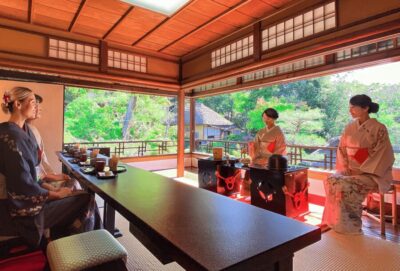
Tea Ceremony in a Traditional Tea House in Kiyomizu
Read our review →
Browse the lists this tour appears in