
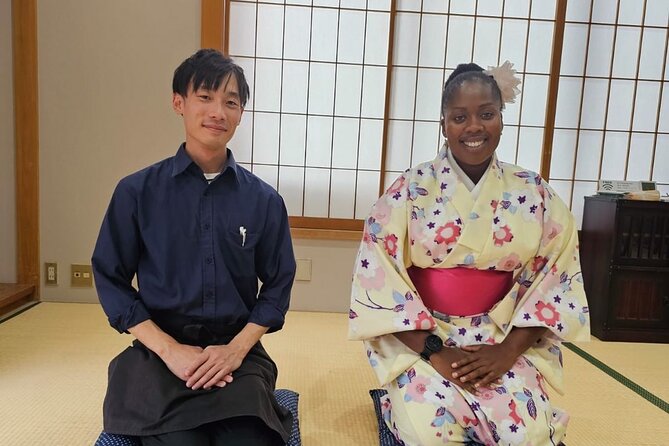
Review · TOKYO
Kimono and Tea Ceremony in Asakusa Private Food Tour With Guide
The best part of this Asakusa experience is the chance to wear a real kimono while exploring one of Tokyo’s most photogenic temple districts. You get dressed with help, add the obi sash and wooden sandals, then head out for Senso-ji, Nakamise Shopping Street, and the Kaminarimon gate before sitting down for tea and Japanese treats.
I like the small maximum of eight people, which keeps the outing personal, and I like the food built into the price: A5 wagyu, ice cream, drinks, and local desserts. Guide Adam has also been praised for adding personal stories about life in Japan and for adapting the plan when a group wanted more time for other activities.
The main drawback is cost. At $290 per person, this is not a cheap way to see Asakusa, and hairstyling or an overnight kimono rental costs extra. You are paying for a guided cultural package, not simply temple sightseeing.
Key points to know before booking
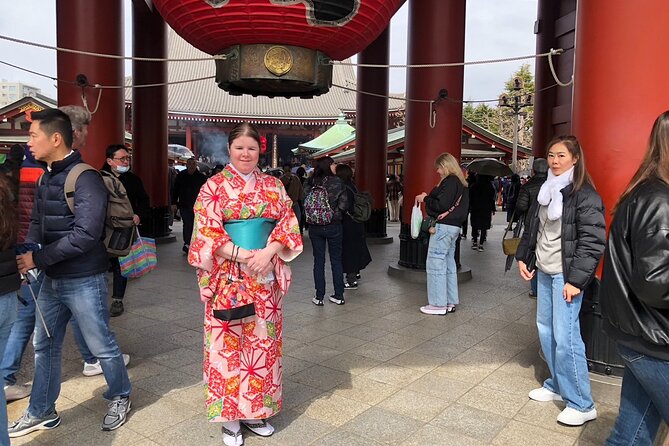
- Kimono dressing is part of the experience: Choose a traditional or modern style, then wear it with an obi sash and wooden sandals.
- Adam may be your guide: He is noted for personal stories, local facts, and a flexible approach to the schedule.
- The group is limited to eight: That matters when you need help with the kimono or want time for questions.
- Food is more than a tea service: A5 wagyu, two soft drinks, water, ice cream, and local desserts are included.
- The walking route centers on Asakusa’s icons: Senso-ji, Nakamise Shopping Street, and Kaminarimon all fit into the four-hour outing.
- Extra styling costs more: Hairstyling and overnight kimono rental are available, but neither is included in the $290 price.
Getting dressed for Asakusa
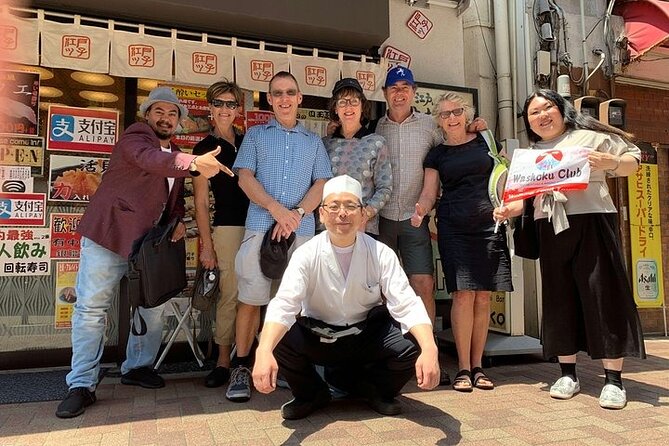
You meet at 11:00 a.m. outside the Asakusa Culture Tourist Information Center at 2-chōme-18-9 Kaminarimon. This is a practical meeting point near public transportation and close to the district’s main sights.
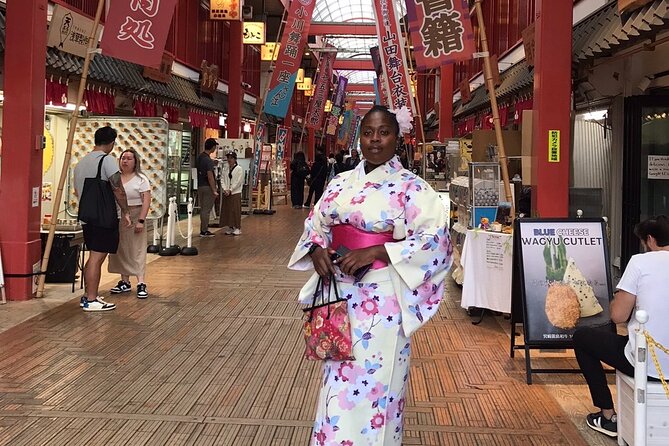
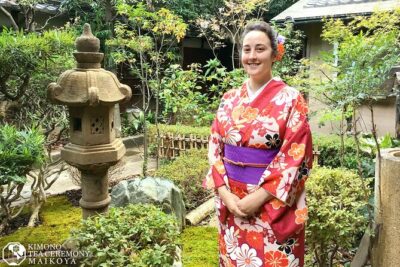
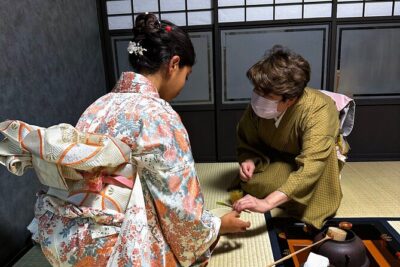
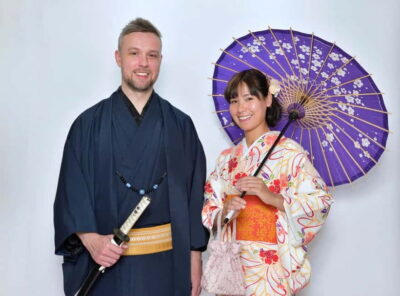
The kimono fitting gives the tour its shape. You choose between a traditional or modern design, then receive help with the garment, obi sash, and wooden sandals. That assistance matters. A kimono is not a quick costume you throw on over street clothes, and the right fit makes walking and sitting easier.
The outfit also changes how you see Asakusa. Instead of passing through the temple district in ordinary sightseeing clothes, you become part of the visual scene. The wooden sandals and formal layers may make you walk more slowly, which is useful here. Asakusa rewards a slower pace, with lanterns, shop fronts, temple gates, and snack stalls competing for your attention.
Come prepared for a few practical limits. The tour description specifically warns against arriving in jeans and sneakers for the ceremony, so dress with the fitting in mind. Hairstyling is not included, but you can add it for an extra charge. If you want to keep the kimono beyond the tour, an overnight rental is also available at added cost.
More Kimono Tea Ceremonies in Tokyo:
- Kimono Tea Ceremony at Tokyo, Asakusa Maikoya
★ 5.0 · 638 reviews - Tokyo: Matcha and Kimono Experience
★ 4.7 · 219 reviews - Tokyo: Asakusa Kimono Dressing and Matcha Experience
★ 4.9 · 173 reviews
Senso-ji and the first look at old Asakusa
The route includes about an hour at Senso-ji, Tokyo’s oldest temple and one of the city’s most important Buddhist sites. Admission is free, so the value here comes from having a guide explain the setting and help you make the most of your time in costume.
Senso-ji is more than a quick photo stop. Its large gates, temple buildings, and long approach give you a clear sense of Asakusa as a traditional center within modern Tokyo. Wearing a kimono here creates natural photo opportunities, especially around the temple entrance and the broad approach.
Your guide can also help with the small cultural details that are easy to miss when you visit alone. Adam has been singled out for sharing backstory about living in Japan and for adding interesting local facts. That kind of commentary is useful at a major sight where it is easy to take pictures without understanding what you are seeing.
The tradeoff is that Senso-ji is one of Tokyo’s best-known attractions, so it can feel busy. The kimono experience does not turn the temple into a private site. It does give you a more memorable way to see it, and the small group should make it easier to stay together than on a large coach tour.
Nakamise Shopping Street and Kaminarimon
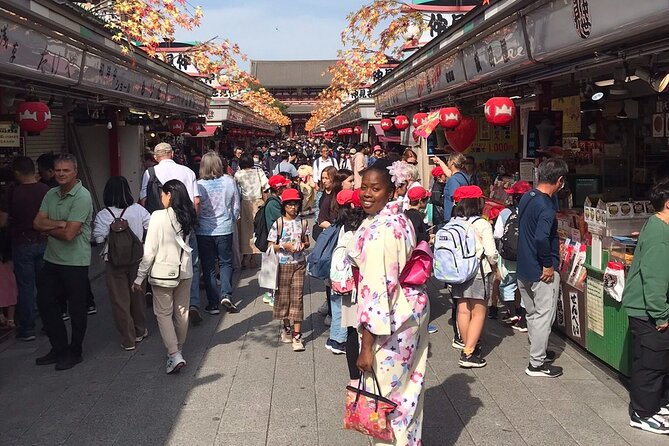
The next part of the outing focuses on Nakamise Shopping Street, the approximately 250-meter approach to Senso-ji. Shops line both sides, selling traditional souvenirs, snacks, and sweets.
This is a good place to connect the food portion of the day with everyday shopping in Asakusa. You are not only looking at temple architecture. You can see the kinds of small gifts and treats that make the district popular with first-time visitors.
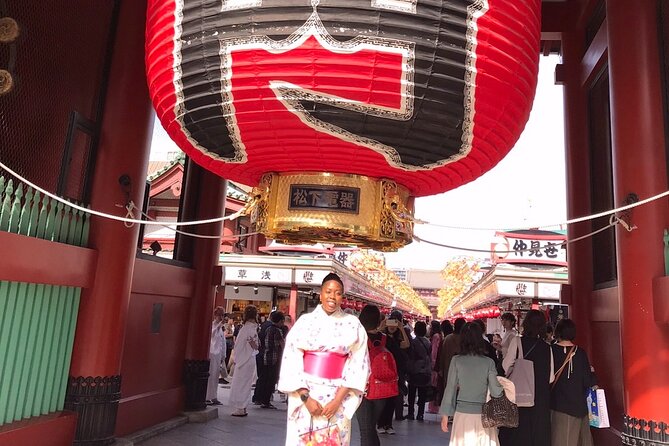
The tour also includes Kaminarimon, the outer gate leading toward Senso-ji. Its huge lantern and guardian statues make it one of Asakusa’s easiest landmarks to recognize. The gate is about 11.7 meters tall and 11.4 meters wide, so it has the scale to make even a short stop feel significant.
The listed schedule gives one hour to Senso-ji, two hours to Nakamise and the surrounding approach, and one hour to Kaminarimon. These times should be treated as a broad plan rather than a promise that you will spend each block in isolation. The sights are close together, and the walking, photos, food, and cultural explanations overlap.
For you, the important point is pace. A four-hour tour can cover these landmarks without taking your whole day. You finish back at the meeting point, leaving the afternoon open for more Asakusa, a museum, shopping, or another Tokyo neighborhood.
Tea ceremony with a proper Japanese setting
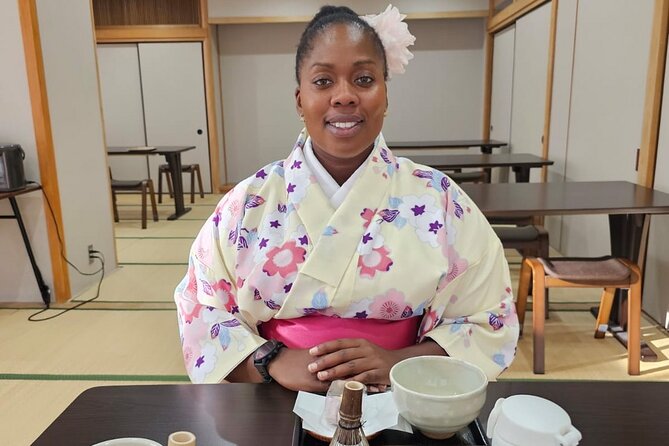
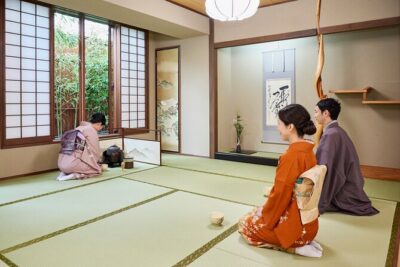
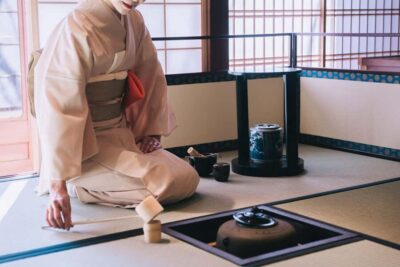
The tea ceremony is the cultural center of the experience. After getting dressed and walking through Asakusa, you take part in a Japanese tea ceremony rather than simply drinking tea at a café.
The ceremony gives the kimono rental a purpose. You are not wearing traditional clothing only for photographs. You are using it in a setting connected to Japanese customs, attention to presentation, and hospitality.
The supplied details do not specify the exact tea, room layout, ceremony length, or whether you prepare the tea yourself. I would not book this expecting a long formal lesson in every rule of tea etiquette. Think of it as an accessible introduction paired with food, walking, and dress.
That format suits first-time visitors who want culture without committing to a full-day class. It also works for couples, families, and small groups with different interests. One person can enjoy the clothing and photos, another can focus on the temple history, and everyone has the food stops in common.
More Tea Ceremony Experiences in Tokyo:
- Tokyo: Traditional Tea Ceremony with a Tea Master
★ 5.0 · 528 reviews - Tea Ceremony Workshop in Tokyo by the Experienced Instrucor
★ 5.0 · 189 reviews - Asakusa: Kimono Tea Ceremony with Matcha and Sweet
★ 4.9 · 153 reviews - Tea Ceremony Experience in a Private Tea Room in Shibuya
★ 4.9 · 125 reviews
A5 wagyu, drinks, ice cream, and local desserts
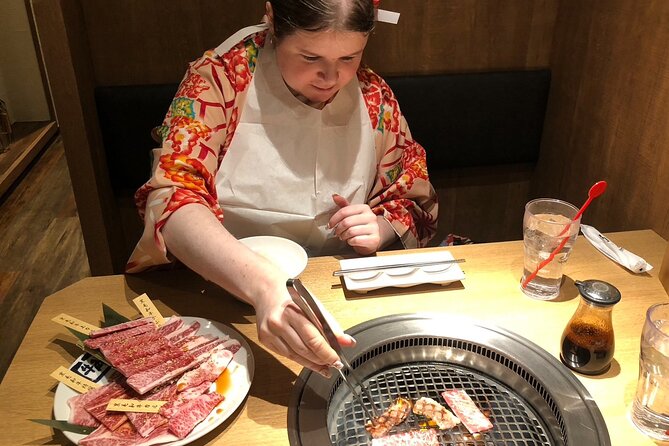
Food is a major reason this tour costs more than a basic Asakusa walk. Included items are an A5 wagyu beef experience, two soft drinks, water, ice cream, and local desserts. Tea is also part of the ceremony.
That mix gives the outing a broad taste of Japanese food rather than one large meal. Wagyu provides the premium item, while sweets and ice cream keep the experience casual. Soft drinks and water are included, which helps on a four-hour outing, especially while wearing layered clothing and wooden sandals.
Alcohol is not included, but it is available to purchase for people aged 18 and above. Since the tour begins at 11:00 a.m., the food serves as a substantial part of the midday plan, though the information does not describe it as a full lunch with a set menu.
Food quality and portion size can affect how you judge the $290 price. If you mainly want a cheap meal and a temple walk, this is poor value. If you want a private-feeling cultural outing that combines clothing, a ceremony, sightseeing, and tastings, the food helps make the price easier to understand.
The menu also removes some planning work. You do not need to search for a wagyu stop, a dessert shop, and a tea activity between temple visits. Your guide keeps the day connected, which is useful in a first visit to Tokyo.
What the guide adds to the day
A good guide matters here because the experience has several moving parts. You need help with the kimono, context at the temple, direction through the shopping street, and timing for the ceremony and food.
Adam is the guide named in the available feedback, and his strengths are described in practical terms. He shares stories about living in Japan, points out small facts, and has been flexible when a group wanted to skip an onsen and spend more time on other activities. The listed version of this tour does not promise an onsen, so do not assume one is included. The useful takeaway is that the guide may adjust the rhythm when possible.
The small group limit of eight improves this setup. Eight is large enough to create a social outing but small enough for a guide to help with clothing and answer questions. It is also more manageable for photos than a large bus group.
Still, this is not a private tour in the strict sense unless your own booking fills the group. You may share the day with people you have not met. One piece of feedback describes three couples getting along well despite arriving as strangers, which suggests the format can work socially, but group chemistry is never guaranteed.
Is $290 per person fair?
At $290 per person, this tour sits in the premium half-day category. The price includes the kimono experience, tea ceremony, culture walk, A5 wagyu, drinks, ice cream, local desserts, and a group capped at eight.
You are not paying admission to Senso-ji, since that is free. You are paying for the services wrapped around the sightseeing: clothing support, a guide, food, a ceremony, and a planned route through central Asakusa.
I would call it fair value for someone who wants convenience and a polished cultural experience. It is less convincing for an independent visitor who already knows Asakusa, speaks Japanese, has no interest in dressing up, or would rather choose individual restaurants.
The extra charges matter. Hairstyling costs more, and keeping the kimono overnight also costs more. Add those only if they are central to your plans. For a simple four-hour outing, the standard package already gives you the main elements.
Booking demand is another practical point. The experience is booked, on average, 67 days in advance. That is a sign to plan ahead if your Tokyo dates are fixed, especially since the group limit is only eight people.
Who will enjoy this most?
This tour suits you if you want several Japanese experiences in one morning or afternoon and do not want to organize each part yourself. It is especially fitting for first-time visitors, couples, families, and small groups looking for photos with a clear cultural setting.
It also works well for people who prefer a moderate four-hour commitment. You get the ceremony and Asakusa highlights, then still have the rest of the day available.
You may want to skip it if you dislike formal clothing, have trouble walking in wooden sandals, or want a quiet temple visit away from popular shopping streets. The route is in a busy sightseeing district, and the kimono adds style but also some physical fuss.
The tour is open to most participants, and it is near public transportation. Hotel pickup and drop-off are not included, so you need to reach the meeting point yourself and return from there after the activity.
Practical details that affect your day
The experience lasts about four hours and begins at 11:00 a.m. It ends back at the Asakusa Culture Tourist Information Center, not at a hotel or a separate restaurant.
A mobile ticket is provided, and confirmation arrives at booking. Free cancellation is available if you cancel at least 24 hours before the start time. Changes or cancellations inside that window are not accepted for a refund.
Bring a phone or camera if photos matter to you. The route includes the temple, shopping street, and Kaminarimon, and the kimono is clearly meant to be part of the visual experience. Ask about hairstyling when booking if that detail is important, since it costs extra.
I would also leave your schedule loose after the tour. The four-hour estimate gives you a useful half-day plan, but dressing, photos, food, and group timing can affect the exact pace.
Should you book the Asakusa kimono and tea tour?
Book it if you want a ready-made cultural outing with clothing, food, a tea ceremony, and Asakusa’s major sights in one compact package. The eight-person limit, guide Adam’s personal approach, and included A5 wagyu and sweets give it more substance than a simple costume rental.
Skip it if your priority is low cost, independent wandering, or a long formal tea lesson. At $290, this is best viewed as a special Tokyo activity rather than an economical sightseeing tour.
For many first visits, the strongest reason to book is the combination. You dress for the setting, walk through Senso-ji and Nakamise, learn from a guide, sit for tea, and taste several Japanese treats before lunch or afternoon plans. That is a lot to fit into four hours, and the structure is useful when you want a memorable Asakusa experience without doing the planning yourself.
FAQ
Where does the tour begin?
It begins at the Asakusa Culture Tourist Information Center, located at 2-chōme-18-9 Kaminarimon, Taito City, Tokyo 111-0034, Japan.
What time does the activity start?
The start time is 11:00 a.m.
How long does the tour last?
The experience lasts approximately four hours and ends back at the meeting point.
How many people can join the tour?
The tour has a maximum of eight participants.
What food and drinks are included?
The package includes the tea ceremony, two soft drinks, water, an A5 wagyu beef experience, ice cream, and local desserts.
Is hotel pickup included?
No. Hotel pickup and drop-off are not included, so you need to make your own way to the meeting point and return from there.
More Food Tours in Tokyo
- Tokyo Vegan Tour : Miso Making, Tea Ceremony, Rickshaw Ride
★ 5.0 · 2 reviews - Jakarta: Volcano, Tea/Rice Fields, Hot Spring, Local Food
★ 4.9 · 515 reviews - SF’s Chinatown: Tea & Dim Sum Food Tour – Includes full meal, 3hr
★ 5.0 · 153 reviews - Cairo Food Tour in local places & Egyptian Mint Tea
★ 4.5 · 102 reviews
More Food and Drink Tours in Tokyo
- Experience all of Japanese culture and Japanese food experience classes “origami, udon, Japanese food, green tea, calligraphy” in 4 hours
★ 5.0 · 105 reviews - Tokyo Sushi Making Class : Sake Ceremony & Matcha Experience
★ 5.0 · 44 reviews - Matcha Experience with of Japanese Tea Tasting in Tokyo
★ 5.0 · 31 reviews - Tokyo: Matcha Tasting and Making Experience
★ 4.9 · 21 reviews
Just added around Tokyo
- Yokohama : Tea Ceremony with Sweets and Souvenir★ 5.0 · 5 reviews
- Walking Tour: Yanaka,Nezu& Sendagi: Tea Ceremony & Old Tokyo★ 5.0 · 3 reviews
- 2 Hours Mochi &Nerikiri Making & Matcha Class in Bunkyo★ 5.0 · 21 reviews
- Private Kimono and tea ceremony at local home near Tokyo Disney★ 5.0 · 6 reviews
- Private Mochi・Matcha sweets Making Class Near Shibuya Area★ 5.0 · 22 reviews
- Tokyo Sweets Tour: Hidden Gems & Matcha at an Old Tea House★ 5.0 · 6 reviews
- Giant Sushi Cooking Class: Make a 1.5m Sushi Roll in Tokyo★ 5.0 · 9 reviews
- Tokyo: Tea Ceremony & Japanese Sweets Making★ 5.0 · 10 reviews
Kimono & Tea Ceremonies, compared.
KYOTO Tea Ceremony with kimono near by Imamiya Jinjya Shrine
Read our review →
Kimono and Tea Ceremony Experience at Cultural Asset
Read our review →
Browse the lists this tour appears in