
Review · TOKYO
Tokyo: Matcha Tasting and Making Experience
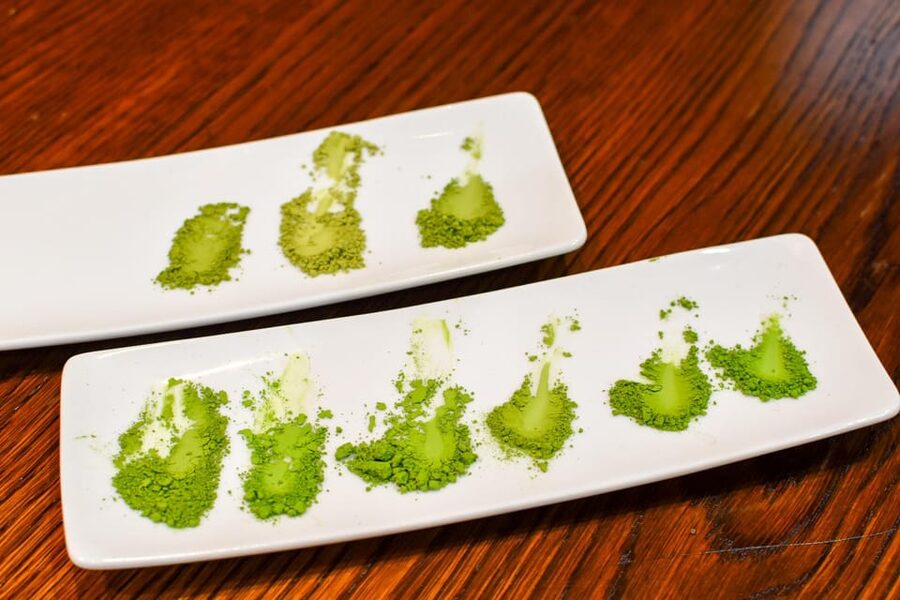
The most interesting part of this 90-minute class is the side-by-side tasting. You sample matcha from five Japanese production areas, compare color, fragrance, and flavor, then choose a favorite and whisk it yourself. It turns the familiar green drink into something you can actually understand.
I like the small group size, limited to five people, and the guide’s practical background as a former Kyoto tea farmer. I also like that the class includes both traditional matcha and modern drinks, including a matcha latte, hojicha latte, and matcha sweets.
The main consideration is the price: $63 per person is fair for a focused lesson, but it may feel high if you only want a quick cup of matcha. This is a class first and a cafe visit second.
Key Points
- Five tea-producing areas: Compare eight matcha samples, plus two powders sold as matcha but not technically defined as matcha.
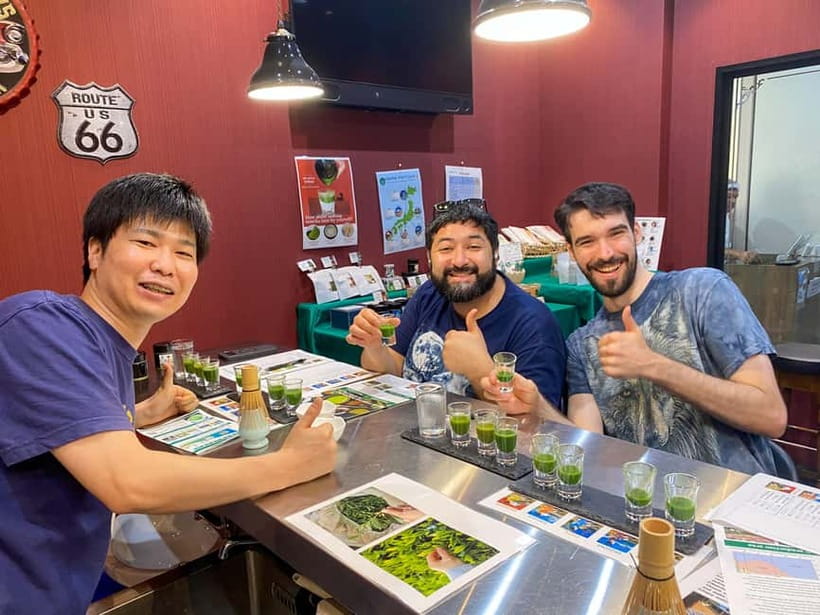
- Former Kyoto tea farmer: Your English-speaking guide, Chisei, brings six years of hands-on tea-growing experience.
- Make your own cup: Learn to use a bamboo whisk and prepare traditional ousucha.
- Small and focused: The group is limited to five participants, allowing room for questions.
- Modern finish: Try an original matcha blend with milk, along with hojicha latte and matcha sweets.
- Convenient Asakusa location: The cafe is on the second floor of Henn na Hotel Asakusa Tawaramachi, above a FamilyMart.
A Matcha Lesson That Goes Beyond the Green Powder
Many visitors first meet matcha as a sweet latte or a bright green dessert. This class takes you a step earlier, before sugar and milk enter the picture. You begin by looking at the powder itself, then taste it as tea and compare how its origin changes the cup.
That comparison is the heart of the experience. A single bowl of matcha can be hard to judge if you have nothing beside it. Here, you taste several samples in one sitting, so differences in color, aroma, texture, and flavor become easier to notice.
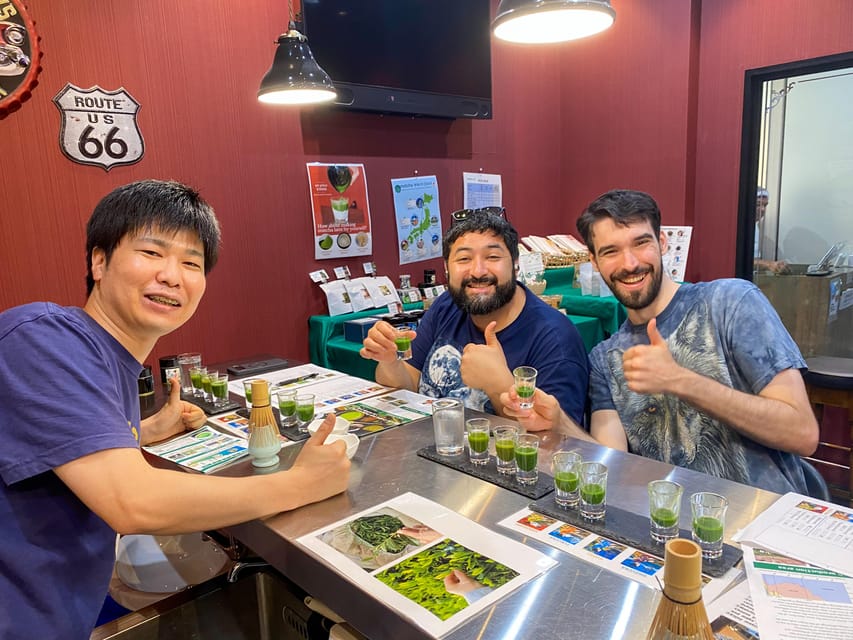
The class is taught in English and limited to five participants. That matters in a tasting session. You are not simply watching a demonstration from the back of a room. You have a chance to ask about cultivation, production, and preparation as the class moves along.
The guide is Chisei, a former tea farmer who grew tea in Kyoto for six years. His working experience gives the lesson a useful connection to the fields, not just the finished drink. The strongest praise for this experience focuses on his clear explanations, practical expertise, and easy manner.
More Matcha Experiences in Tokyo:
- Matcha Making Class in Tokyo with Authentic Japanese Sweets Set
★ 5.0 · 744 reviews - Tokyo: Matcha Making Experience with Mochi Sweets in Asakusa
★ 4.9 · 388 reviews - Asakusa Cultural Walk & Matcha Making Tour
★ 5.0 · 245 reviews
Finding the Cafe Inside Henn na Hotel
The meeting point is easy to describe but worth noting carefully. Enter Henn na Hotel Asakusa Tawaramachi, where a FamilyMart occupies the first floor, then go to the second floor for the cafe.
Transportation to the cafe is not included, so you need to make your own way there. The location puts the class in the Asakusa area, a handy choice if you are already spending part of your day nearby. Check the starting time when booking, since the activity runs at set times rather than on an open drop-in basis.
Once you arrive, the welcome drink gets things moving without fuss. This first drink is not just a refreshment. While you sip, Chisei explains what matcha is, how it is grown and produced, and how the drink developed over time.
That opening talk gives the tasting some needed context. You will hear about cultivation methods and the definition of matcha before being asked to compare one powder with another. For a first-time drinker, this helps prevent the session from becoming a parade of unfamiliar Japanese terms.
Eight Matcha Samples, Five Japanese Regions
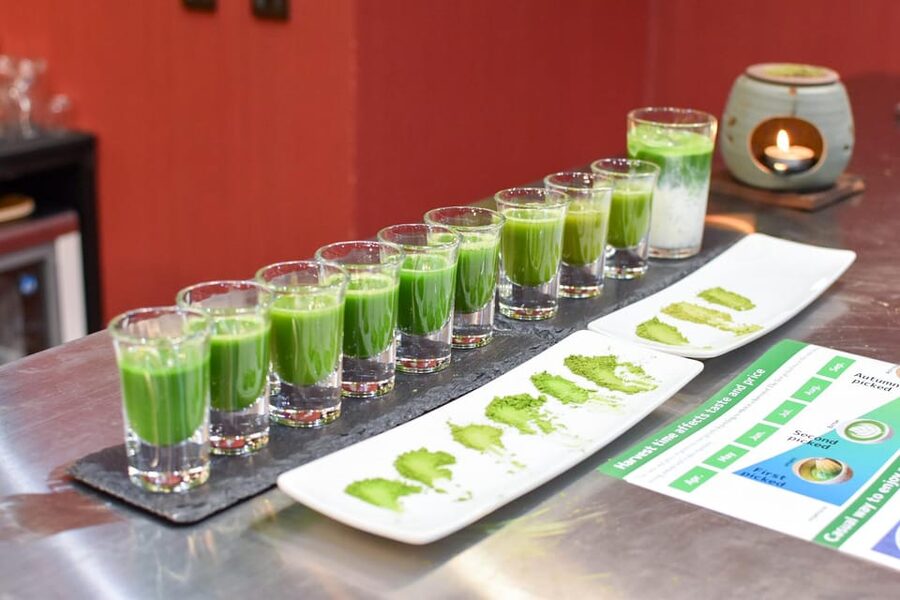
The main tasting includes eight kinds of matcha from five representative tea-producing areas in Japan. Six are ceremonial grade. Two are not technically defined as matcha, though they are sold as matcha in markets around the world.
That second group is a useful detail. It shows that the word matcha is not always used in the same way by producers, sellers, and consumers. You get to compare the traditional product with powders that may look similar but do not fit the same definition.
The tasting is served in small portions, allowing you to try all eight without being overwhelmed by quantity. You first look at the color. Then the tea is prepared and served so you can consider fragrance and taste as well.
I would pay attention to how your impressions change from one sample to the next. You may find that one tea seems especially smooth, another more aromatic, and another better suited to milk. The point is not to pick the objectively best matcha. It is to learn what you like.
The class is particularly helpful for anyone who has bought matcha in Japan and felt unsure what to do with it at home. You gain a basic vocabulary for comparing powders, along with a clearer idea of which style fits your taste.
From Tea Farmer to Tea Bowl
Chisei’s background is one of the strongest reasons to choose this experience. Six years of growing tea in Kyoto gives him a direct connection to the farming side of matcha, an area that is often missing from short tea demonstrations.
You learn about cultivation and production rather than only the ceremonial motions of whisking. That difference gives the experience more substance. You are not just copying a hand movement. You are hearing how the raw material reaches the bowl and why different production areas can produce different results.
The guide’s style also matters in a small class. The strongest comments about the experience point to detailed explanations and a high level of practical skill. One bilingual comment also describes Chisei as charming in the way he passes on his knowledge.
The lesson is designed for general visitors, not for commercial research or business inquiries. If you are looking for product sourcing, professional consultation, or a commercial matcha session, you should contact the provider before booking. For ordinary travelers who want to understand Japanese tea, the format is a good fit.
More Tea Tastings in Tokyo:
- Matcha Experience with of Japanese Tea Tasting in Tokyo
★ 5.0 · 31 reviews - Authentic Japanese tea tasting: sencha, matcha and gyokuro
★ 5.0 · 12 reviews - Authentic Japanese tea tasting session: sencha, matcha, gyokuro
★ 5.0 · 11 reviews - Private Tea Ceremony and Sake Tasting in Kyoto Samurai House
★ 5.0 · 163 reviews
Whisking Your Own Ousucha
After tasting the samples, you choose the matcha you liked best and prepare it yourself. The final traditional drink is ousucha, a lighter style of matcha made with water and whisked using a bamboo tea whisk.
This is the hands-on part of the class, and it adds value beyond the tasting. You learn the basic process instead of leaving with only a memory of someone else preparing the tea. The class is intended to give you enough understanding to make matcha at home after you return.
Do not expect a formal tea ceremony with an elaborate series of movements. This is a practical class for general visitors. The goal is to help you understand the drink and gain confidence using a whisk.
For me, that makes the activity more useful than a standard tasting. You can buy a whisk and matcha later, try the process in your own kitchen, and remember the differences you noticed during the comparison. The lesson gives you a small skill to take home, not just another photograph.
Matcha Latte, Hojicha Latte, and Sweets
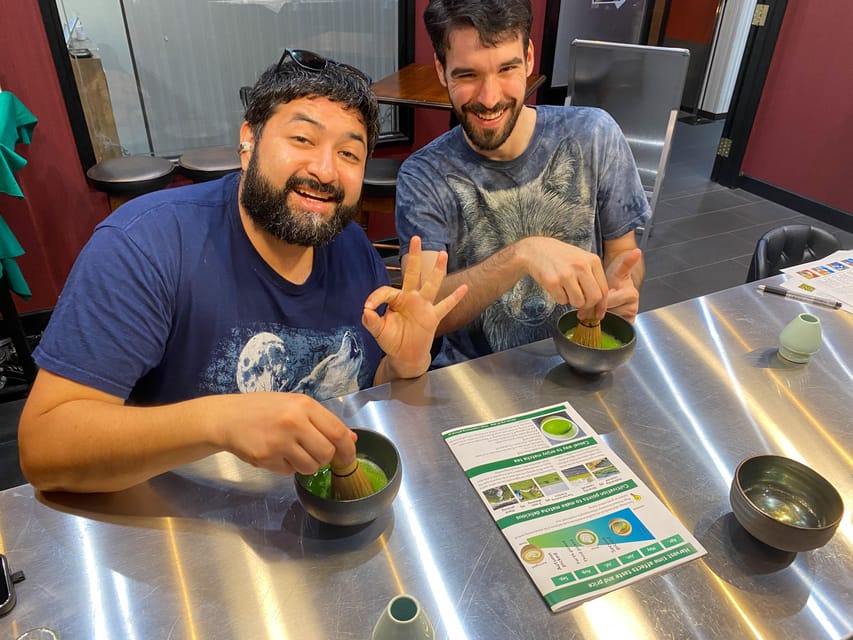
The class ends with a more relaxed selection of drinks and food. You receive a matcha latte, a hojicha latte, and matcha sweets. The original matcha blend used for the lattes is designed to work well with milk.
This final course also shows how Japanese tea appears outside the traditional bowl. The earlier tasting asks you to focus on the powder itself. The latte portion shows how a blend can be adjusted for a different purpose, with milk softening and changing the flavor.
Hojicha gives you a useful contrast. It is roasted tea, not matcha, so the flavor profile is different from the green, fresh character of whisked matcha. Having both lattes lets you compare two popular cafe drinks in one sitting.
The sweets make the ending feel less formal and help balance the bitter edge that some matcha can have. Still, the food is an add-on to the lesson rather than the main reason to book. If your priority is a large dessert spread or a long cafe stop, this may not be the right activity.
Is $63 a Fair Price?
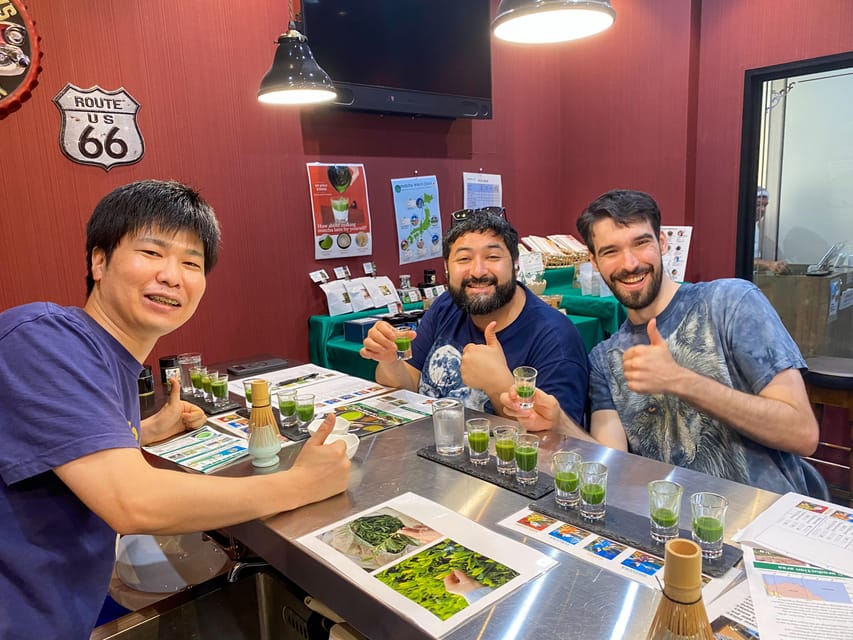
At $63 per person, this is not the cheapest way to drink matcha in Tokyo. You can find a simple tea or latte for much less. The price makes more sense when you count the tasting, the instruction, the hands-on preparation, the small group, and the extra drinks and sweets.
The strongest value comes from the eight-sample comparison and the guide’s farming background. A single cup tells you very little about the range of matcha. Tasting products from five areas gives you a point of comparison that would be difficult to arrange on your own.
The small group also supports the price. With no more than five participants, the class can stay personal, and you are less likely to lose the demonstration in a crowd. The session lasts 90 minutes, long enough for the tasting and preparation without taking over your entire day.
I would recommend it to someone who has a real interest in Japanese tea, someone who wants a guided food experience with a clear educational side, or anyone hoping to learn a skill they can repeat at home. I would be more hesitant to suggest it to a person who simply wants a sweet matcha drink before sightseeing.
Timing, Language, and Booking Details
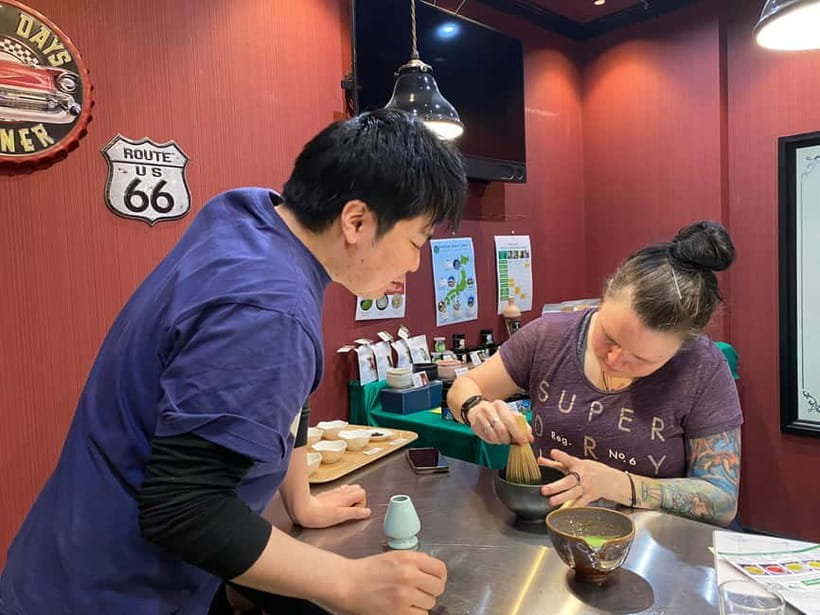
The class lasts 90 minutes and is taught in English. You can reserve now and pay later, which helps if your Tokyo plans are still shifting. Free cancellation is available up to 24 hours before the experience for a full refund.
The group is limited to five participants, so available starting times may matter. Check the schedule before building the rest of your Asakusa day around it.
The activity is held indoors at the cafe on the second floor of the hotel. Transportation is not included, and the meeting point is the cafe itself rather than a separate city meeting place.
A rating of 4.9 from 21 reviews supports the overall quality of the experience, with particular praise directed at the guide’s explanations and tea expertise. Still, your enjoyment will depend on your interest in learning. This is a focused class, not a quick photo stop.
Who Should Book This Matcha Experience?
I would choose this class if you want to understand why matcha tastes different from one source to another. The five-area comparison gives you the clearest reason to attend, while the farming background adds a human connection to the lesson.
It also suits couples and solo visitors who prefer small groups. The maximum of five participants leaves more room for questions than a large demonstration. Families may enjoy the whisking and sweets, though the class is described as a general tea lesson rather than a children’s activity.
You do not need to be a matcha expert. In fact, a beginner may get the most from it, since the class starts with basic definitions and builds toward tasting and preparation.
Bring curiosity rather than expectations of a formal ceremony. You will learn the fundamentals, compare several teas, make ousucha, and finish with cafe-style drinks.
Should You Book It?
Book this experience if you want more than a matcha latte and would enjoy meeting a former Kyoto tea farmer who can explain how matcha is grown, made, compared, and whisked. The eight-sample tasting and small group make the $63 price reasonable for tea fans.
Skip it if you are looking for a short, inexpensive drink or a grand traditional tea ceremony. For everyone in between, this is a practical Asakusa activity that leaves you with a better palate and the basic skill to make matcha at home.
FAQ
Where does the matcha experience take place?
It takes place at a cafe inside Henn na Hotel Asakusa Tawaramachi in Tokyo. Enter the hotel and go to the second floor. A FamilyMart is on the first floor.
How long does the experience last?
The class lasts 90 minutes.
How many people can join the class?
The group is limited to five participants.
Is the experience taught in English?
Yes. The listed language is English.
How many types of matcha will I taste?
You will taste eight types during the main comparison, from five tea-producing areas. The highlights also describe the experience as including 10 different types of matcha, with two samples not technically defined as matcha but sold as matcha around the world.
Will I make matcha myself?
Yes. You choose a preferred matcha from the tasting and prepare ousucha using a bamboo tea whisk.
What drinks and food are included?
The experience includes a welcome drink, matcha latte, hojicha latte, and matcha sweets. It also includes the matcha tasting and matcha-making activity.
Is transportation included?
No. You are responsible for getting to the experience location.
More Food and Drink Tours in Tokyo
- Experience all of Japanese culture and Japanese food experience classes “origami, udon, Japanese food, green tea, calligraphy” in 4 hours
★ 5.0 · 105 reviews - Tokyo Sushi Making Class : Sake Ceremony & Matcha Experience
★ 5.0 · 44 reviews - Kimono and Tea Ceremony in Asakusa Private Food Tour With Guide
★ 5.0 · 4 reviews - Arashiyama Bamboo, Temple, Monkeys, or Secret Sake Brewery
★ 4.8 · 886 reviews
Just added around Tokyo
- Yokohama : Tea Ceremony with Sweets and Souvenir★ 5.0 · 5 reviews
- Walking Tour: Yanaka,Nezu& Sendagi: Tea Ceremony & Old Tokyo★ 5.0 · 3 reviews
- Private Kimono and tea ceremony at local home near Tokyo Disney★ 5.0 · 6 reviews
- Private Mochi・Matcha sweets Making Class Near Shibuya Area★ 5.0 · 22 reviews
- 2 Hours Mochi &Nerikiri Making & Matcha Class in Bunkyo★ 5.0 · 21 reviews
- Tokyo Sweets Tour: Hidden Gems & Matcha at an Old Tea House★ 5.0 · 6 reviews
- Giant Sushi Cooking Class: Make a 1.5m Sushi Roll in Tokyo★ 5.0 · 9 reviews
- Tokyo Tea Ceremony Class at a Traditional Tea Room★ 5.0 · 2 reviews
Matcha Experiences, compared.
World Heritage Kyoto & Nara Uji Authentic Matcha Experience
Read our review →
Matcha Making Class in Tokyo with Authentic Japanese Sweets Set
Read our review →
Tea Museum Tickets and Matcha Grinding Experience
Read our review →
Matcha Making Class in Osaka with Authentic Japanese Sweets Set
Read our review →
Tea Ceremony Meditation – Make Matcha with Tea Master
Read our review →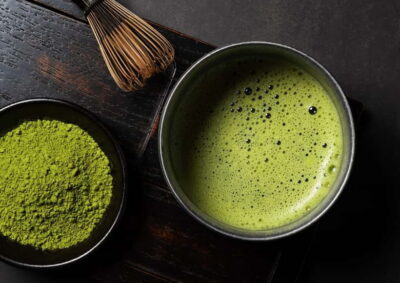
Matcha Making Experience with Mochi Sweets in Asakusa
Read our review →
Browse the lists this tour appears in