
Review · OSAKA
Osaka: Castle, Tea Ceremony, Calligraphy, and Samurai Armor!
Osaka Castle is only the opening act here. This experience pairs the city’s best-known landmark with hands-on Japanese culture: tea preparation, brush calligraphy, a samurai show, and traditional instruments. You finish in Dōtonbori, where neon, shopping, and street food take over.
I like the mix of big sightseeing and personal activities, since you do more than look at displays. I also like the family appeal, especially the child-sized samurai armor option and the chance to add a kimono or armor session for extra photos.
The main consideration is the extra cost. Samurai armor and women’s kimono experiences are not included in the $135 price, and each costs ¥4,820 under the stated temporary rate. The walking and transport also make this a poor fit if you have back problems or are over 70.
Key points to know before booking
- Osaka Castle leads the day: Enter the famous castle and visit its museum before moving on.
- Tea and calligraphy are hands-on: You learn basic cultural practices rather than simply watching a guide talk.
- Samurai extras cost more: Armor and women’s kimono sessions require an additional ¥4,820 fee.
- Traditional music is part of the cultural program: You may play instruments such as shamisen, koto, and shinobue.
- Dōtonbori closes the tour: Leave time for photos, shopping, and Osaka street food.
- The route starts and ends at Namba Walk: Meet at the Osaka JOINER base near Exit B23, underground in Namba Walk.
Why this Osaka tour works well
Many Osaka sightseeing plans split the city’s famous sights from its cultural activities. This tour puts them together in one day. You get the grand setting of Osaka Castle, then move into smaller activities where you use a brush, handle tea utensils, and see samurai gear up close.
I like that balance. Osaka Castle gives you the city’s historic symbol, while the tea ceremony and calligraphy make the day feel more personal. You are not just taking photographs and moving on. You get a chance to try a few customs, even if only at an introductory level.
The tour costs $135 per person. That is not a budget walk, so the value depends on what you want from your day. If you would otherwise pay separately for a castle visit, a cultural workshop, and a guided visit to Dōtonbori, the combination can make sense. If your main goal is simply to see Osaka Castle and eat in Dōtonbori, you can spend less by visiting those places independently.
The English-language guide is an important part of the experience. One of the strongest comments about the tour describes a warm, friendly, professional guide who helped with the local train system and kept the day moving. The guide’s name is not consistently clear in the supplied information, so do not book this expecting a particular named guide.
More Tea and Calligraphy Classes in Osaka:
- Osaka: Tea Ceremony, Calligraphy, and Kimono Experience
★ 4.9 · 130 reviews - Osaka: Private Tea Ceremony and Calligraphy Experience
★ 5.0 · 50 reviews - Samurai dress-up and shows, plus Tea Ceremony & Calligraphy
★ 5.0 · 27 reviews
Meeting at Namba Walk near Exit B23
Your day begins at the Osaka JOINER base in the B1 level of Namba Walk, an underground shopping area. The shop is near Exit B23, between Mizuno and Docomo. If you are standing near Starbucks, walk to the other side of the passage.
This detail matters in Namba. The underground walkways can feel confusing, particularly if you arrive from a different station entrance. Give yourself extra time to find the shop rather than aiming to arrive at the last minute. The tour also ends at this same meeting point, which makes it easier to continue your evening in Namba after the program.
Bring cash. That is especially important if you decide to add the armor or kimono option on the day. The tour information says you can tell the guide then, or contact the organizer through WhatsApp to arrange it in advance.
Osaka Castle and the city’s power center
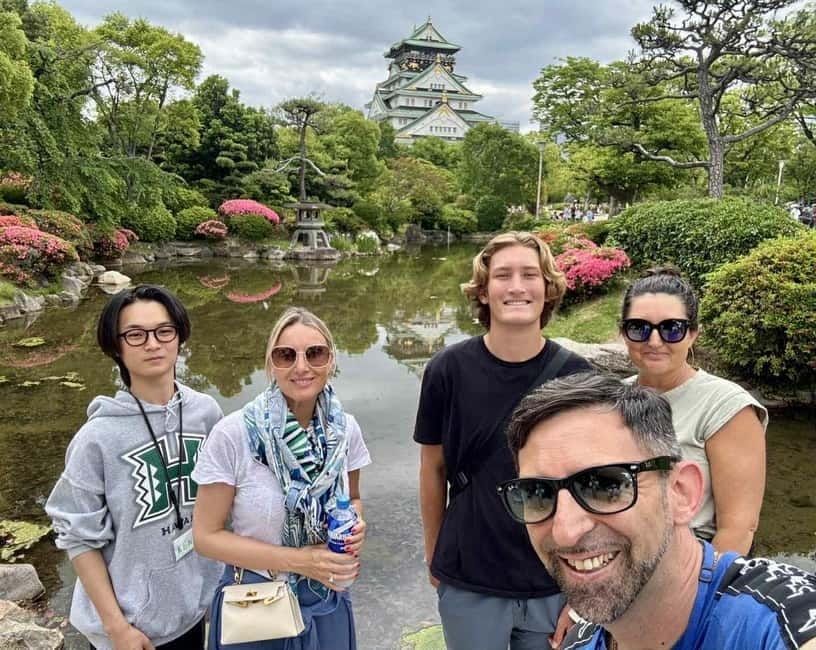
The first major stop is Osaka Castle. You enter the castle and visit its museum, an important distinction from simply photographing the exterior. The castle is one of Osaka’s defining sights, and the museum gives you a way to connect the building with the city’s past.
The castle is also a strong first stop because it gives the tour a clear sense of place. Osaka is often introduced through food and shopping, but the castle points you toward the political and military story behind the city. You can take photographs outside and then spend time inside with the museum displays.
Keep your expectations sensible. This is one section of a wider cultural day, not a long specialist museum tour. You are unlikely to get the same amount of time here as you would on a dedicated Osaka Castle visit. Still, the guided format helps you see the castle as more than a pretty landmark.
The tour uses local trains between activities. That is useful if you want help handling Osaka’s rail system, especially on a first visit. One detailed account of the day specifically praised the guide for helping with the trains. You should still wear comfortable shoes and expect a day that includes walking, station transfers, and time on your feet.
Tea ceremony: a quiet change of pace
After the castle, the mood shifts. The tea ceremony offers a slower, more focused part of the day. You learn about the basic form of a traditional Japanese tea gathering and take part rather than only observing.
A short tea ceremony cannot cover every detail of Japanese tea culture, and this experience is not presented as advanced instruction. Its value is that it gives you a direct introduction. You can see how much care goes into simple movements, the preparation of the tea, and the setting around the ritual.
I especially like this stop for first-time visitors. Food tours and city walks show you what Osaka tastes like, but the tea ceremony gives you a quieter look at social customs and attention to detail. It also breaks up the larger sightseeing stops.
If you prefer fast-paced sightseeing from morning to night, this portion may feel slow. That is part of its purpose. The day works best when you are willing to pause and follow the ceremony rather than treat it as another photo stop.
More Tea Ceremony Experiences in Osaka:
- Osaka: Tea Ceremony Experience
★ 4.9 · 1,426 reviews - Tea Ceremony Experience in Osaka Doutonbori
★ 5.0 · 754 reviews - Osaka: Japanese Traditional Sweets Making and Tea Ceremony
★ 4.7 · 118 reviews - Samurai Show, Tea Ceremony, Japanese Traditional Activities
★ 5.0 · 56 reviews
Calligraphy gives you something to take home
The calligraphy session follows the tea experience and adds a practical activity. You learn how to use the brush and take part in Japanese writing rather than simply looking at examples.
Calligraphy is a good choice for a mixed-age group because you do not need prior skill. Children can take part, and adults get a souvenir that feels more personal than another photograph. Your result may not look like a master’s work, of course, but that is not the point. The value is in trying the technique and seeing how brush pressure and movement affect the characters.
The session also helps explain why calligraphy is treated as a disciplined art. A few strokes can require patience and control. If you have never tried it, you will quickly see that it is harder than it looks.
The tour information does not state exactly which characters you will write or whether materials are included, so ask the guide on the day if that matters to you. The activity is clearly included, while armor and kimono use are separate add-ons.
Samurai show, armor, and traditional instruments
The cultural program also includes a samurai show and the chance to play traditional instruments. The listed instruments are shamisen, koto, and shinobue. These give the day more variety than a program built only around a tea demonstration and calligraphy.
The samurai show adds energy and visual drama. It is a good bridge between the castle visit and the optional costume session. You can learn about the image of the samurai while seeing how armor and performance shape popular ideas about Japan’s past.
The armor experience is optional and costs an additional ¥4,820. The same stated fee applies to the women’s kimono option, which is listed as available for women only. The temporary price is stated as valid through the end of August, so check the current amount before booking.
Children can use specially designed samurai armor. That makes the add-on particularly appealing for families, since younger children are not left out of the main photo opportunity. If you want the costume experience, arrange it before the day when possible, or bring enough cash to ask the guide at the meeting point.
You should also understand what the base price includes. The included program lists the samurai show and traditional instruments, but not wearing the armor. The phrase taking photos in samurai armor appears with the optional activities. Do not assume the $135 price covers every costume or photograph.
Dōtonbori brings the day back to modern Osaka
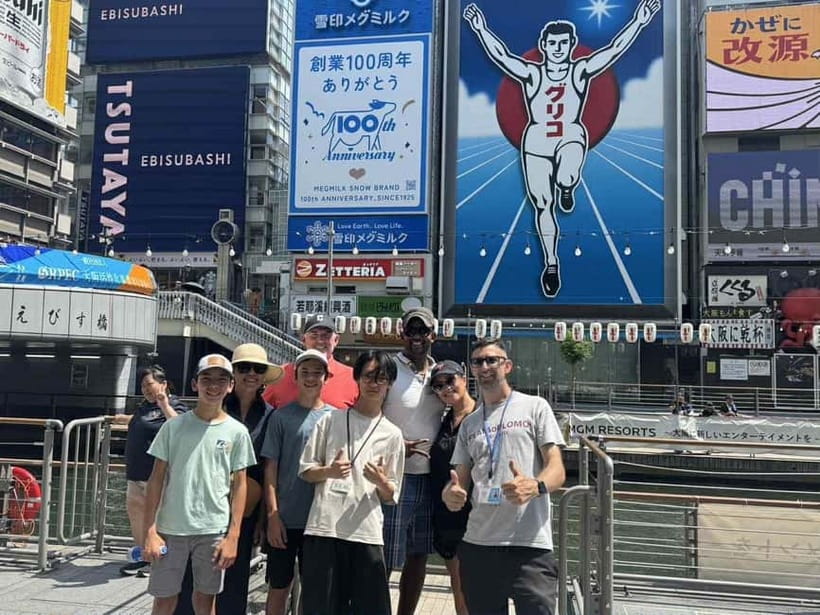
The final stop is Dōtonbori, Osaka’s famous entertainment and street food district. It is a sharp contrast to the castle, tea room, and calligraphy session. Here, the focus is on bright signs, shopping, photographs, and local food.
Dōtonbori works well at the end because you can continue exploring after the organized portion finishes. The tour ends back at the Osaka JOINER meeting point, so you have a simple return route before deciding what to do next.
You can use this stop to try Osaka specialties, browse shops, or take photographs along the canal area. The tour information does not specify a meal or food tasting, so budget separately for anything you want to eat. This is an important value detail: Dōtonbori is included as a visit, not as an included dining package.
I like the contrast between the formal activities earlier in the day and Dōtonbori’s playful atmosphere. You see two sides of Osaka in one outing: the castle city and the food-loving entertainment center. The drawback is that a short guided stop may not satisfy you if you want a long, unhurried food crawl.
What the $135 price really gets you
At $135 per person, this is best understood as a guided culture sampler rather than a low-cost sightseeing transfer. You are paying for several linked experiences, an English-language guide, the castle visit, tea ceremony, calligraphy, samurai show, traditional instruments, and a visit to Dōtonbori.
The strongest value comes from the variety. A family or first-time visitor can cover several major interests without having to plan separate reservations and train routes. The guide’s help with local trains also has practical value if Osaka’s transport system feels intimidating.
The price is less attractive if you do not care about the workshops. Osaka Castle and Dōtonbori are easy to place on an independent itinerary, and the optional armor and kimono fees raise the total further. Before booking, decide if the hands-on culture sessions are the reason you want this day. If they are, the package is easier to justify.
The tour has a perfect rating from four supplied reviews, with praise focused on the friendly guide, the fun format, Osaka Castle, the museum, and the chance to learn about Japanese culture. That is a small sample, so I would treat it as encouraging rather than final proof. The repeated theme is clear: the tour works best for people who want an active, social day with several different stops.
Who should book this experience
I would recommend this tour to first-time visitors who want a broad introduction to Osaka. It suits couples, families, and small groups who prefer a planned day to figuring out each train journey and activity themselves.
It is also a good match if you want photographs in a kimono or samurai armor, provided you understand that the costume fee is extra. Families should pay attention to the child-sized armor option, which adds a memorable element for younger participants.
You may want another plan if you have back problems, since the day includes walking and transport between locations. It is also listed as unsuitable for people over 70. The program is offered in English, so you should be comfortable following an English-language guide.
Smoking is not allowed indoors. That is a small point, but it matters because some of the cultural activities take place inside.
Cancellation is flexible up to 24 hours in advance for a full refund, and the reserve-now, pay-later option can help if your Osaka schedule is still shifting. Check the current optional-fee terms before you commit, especially if your visit is after the stated August pricing period.
Should you book it?
Book this tour if you want Osaka Castle, a tea ceremony, calligraphy, samurai culture, and Dōtonbori in one organized day. The strongest reasons are the variety, the hands-on activities, and the help with local trains.
Skip it if you want a slow castle visit, a dedicated food tour, or the freedom to set your own pace. Also calculate the total cost if armor or a kimono is important to you. At $135 before those extras, this is a good fit for an active cultural introduction, not the cheapest way to see Osaka.
FAQ
Where does the tour start?
It starts at the Osaka JOINER base on the B1 floor of Namba Walk, near Exit B23. The shop is between Mizuno and Docomo.
Where does the tour end?
The activity ends back at the same Osaka JOINER meeting point.
Is the samurai armor included in the $135 price?
No. The samurai armor experience costs an additional ¥4,820 under the stated temporary price.
Is kimono wearing included?
No. Women’s kimono wearing is an optional extra costing ¥4,820 under the stated temporary price.
What languages are available?
The tour is offered in English.
Is the tour suitable for children?
Children can take part in the samurai experience with specially designed armor. The supplied information does not list a minimum age.
What should I bring?
Bring cash, especially if you plan to pay for an optional armor or kimono experience on the day.
Just added around Osaka
- Osaka: Tea Ceremony, Calligraphy, and Kimono Experience★ 5.0 · 6 reviews
- Osaka: Nara, Todaiji, Uji Matcha, and Hot Spring Tour★ 4.0 · 7 reviews
- Nara Deer Park, Uji Matcha, & Hot Spring Full-Day Tour from Osaka★ 4.0 · 21 reviews
- Osaka:Zen Tea Ceremony and Foot Bath Experience<45min>★ 5.0 · 7 reviews
- Premium Kimono Dressing, Tea Ceremony, Calligraphy, Samurai show★ 5.0 · 18 reviews
- Osaka Japanese Cooking And Matcha Class near Osaka Castle★ 5.0 · 22 reviews
- ZEN therapy | Shiatsu-style massage, EnergyTherapy & Japanese Tea★ 5.0 · 5 reviews
- Discover Japanese Tea Blending Techniques in Osaka★ 5.0 · 19 reviews
Tea & Calligraphy Classes, compared.
Tea Ceremony, Calligraphy, and Kimono Experience
Read our review →
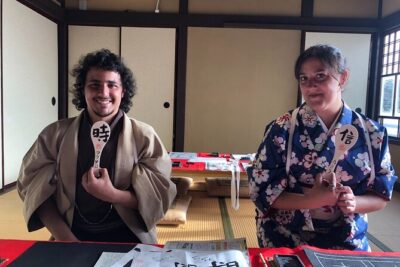
An Amazing set of Cultural experience: Kimono, Tea Ceremony and Calligraphy
Read our review →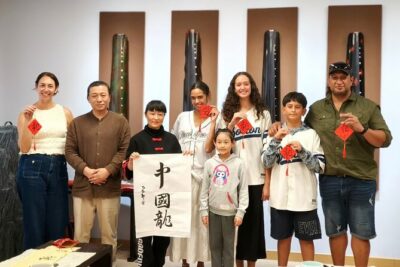
Beijing Culture: Tea Ceremony, Heritage Instrument & Calligraphy
Read our review →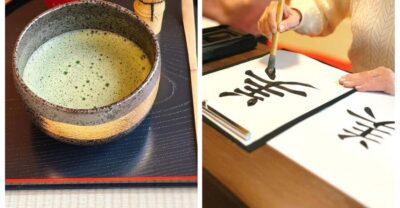
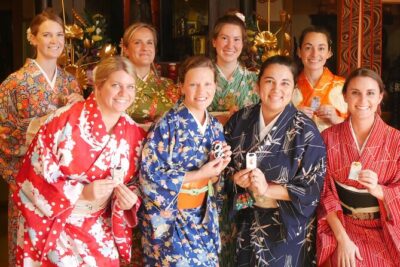
Cultural Activities :Kimono, tea ceremony, Calligraphy and Amulet
Read our review →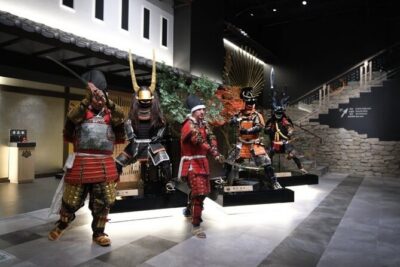
Samurai dress-up and shows, plus Tea Ceremony & Calligraphy
Read our review →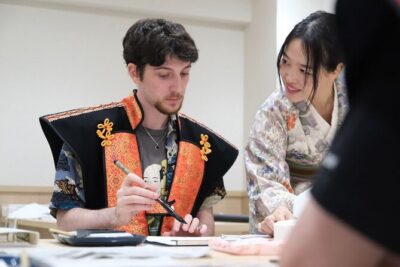
Premium Kimono Dressing, Tea Ceremony, Calligraphy, Samurai show
Read our review →Browse the lists this tour appears in