
Review · OSAKA
Osaka:Zen Tea Ceremony and Foot Bath Experience<45min>
A 500-year-old temple setting gives this short Osaka activity its real appeal. In about 45 minutes, you move from worship and incense to matcha, wagashi, meditation, and a cooling foot bath with a light scrub massage. It is a compact cultural break, not a full formal tea-school lesson.
I like the tiny group size, capped at three, and the calm attention that can come with it. I also like the mix of ceremony and simple comfort: you learn how to prepare and enjoy matcha, then sit back while your feet get some care. The main consideration is timing. At roughly 45 minutes, each part is necessarily brief, and the price of $42.35 is fair mainly if you value the personal setting and foot treatment as much as the tea.
Key points at a glance
- A 500-year-old temple atmosphere: The setting gives the rituals more meaning than a standard shop or classroom.
- Only three people maximum: You can expect a small, personal session rather than a crowded demonstration.
- More than a tea lesson: Worship, incense offering, kneaded incense, meditation, matcha, wagashi, and a foot bath are all included.
- Arisa may lead your session: One account specifically praises her gentle massage and matcha instruction.
- Smartphone photos are included: Staff take pictures during the visit and give them to you.
- Easy rainy-day option: The meeting point is near public transportation, and the activity returns to that same location.
Why this small temple visit works in Osaka
Osaka is famous for food, shopping, neon, and quick-moving streets. That makes a quiet temple room feel like a useful change of pace. This activity does not ask you to spend half a day studying tea ceremony rules. Instead, it gives you a short introduction to several linked parts of Japanese religious and tea culture.
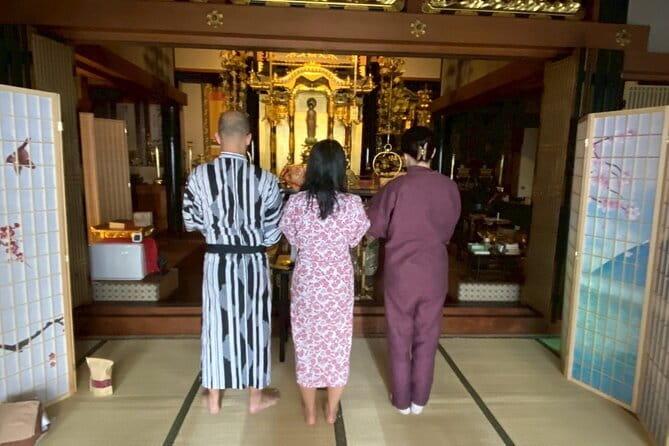
You begin with an explanation of the temple, how to worship, and the background of matcha. Guidebooks are used to help explain the steps. That matters if you have never visited a Japanese temple before and are unsure when to bow, where to offer incense, or how the ritual fits together.
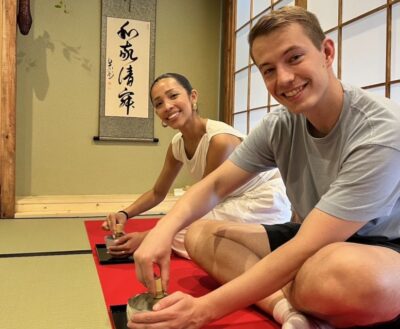
The space is described as a small temple, and that scale is part of its charm. You are not being swept through a major tourist site with a large group. With no more than three people, you can ask questions and watch the demonstrations closely. If you are alone, you may receive very direct attention from two staff members, which makes the visit feel personal.
There is also a practical advantage: the whole program is short. You can fit it between other Osaka plans without losing a full morning or afternoon. The trade-off is that the ritual elements are an introduction rather than an in-depth study. If your goal is to learn the precise movements and philosophy of a formal tea school, you will need a longer class.
More Tea Ceremony Experiences in Osaka:
- Osaka: Tea Ceremony Experience
★ 4.9 · 1,426 reviews - Tea Ceremony Experience in Osaka Doutonbori
★ 5.0 · 754 reviews - Osaka: Tea Ceremony, Calligraphy, and Kimono Experience
★ 4.9 · 130 reviews
Worship and incense before the tea
The visit starts with basic temple guidance. Staff explain the temple’s origins, how to worship, and the meaning behind the actions. You are not simply handed a bowl of matcha and told to copy someone. The opening gives you enough context to understand why you are doing each step.
The incense portion includes an offering and the use of kneaded incense. You also have time for meditation. These details help slow the pace before the tea preparation begins. I like this order because it prevents the ceremony from feeling like a costume photo stop with refreshments added at the end.
For first-time visitors, the incense and worship steps may be the most unfamiliar part. Instructions and guidebooks make them easier to follow, but you should still expect a gentle introduction rather than a lecture on Buddhist practice. The atmosphere is intended to be quiet and reflective, yet the experience remains accessible to people with no background in Japanese religion.
The meditation element is also short, based on the total duration. Think of it as a pause to settle your mind, not a full meditation class. On a rainy day, this can be especially appealing. One account describes the temple as a peaceful place to escape the weather, helped by its location near a train station and public transportation.
Preparing matcha in a temple setting
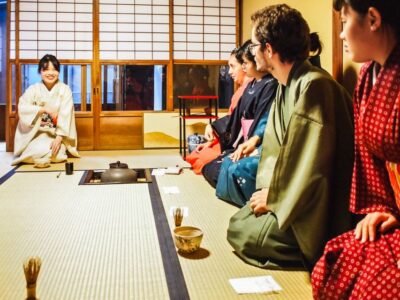
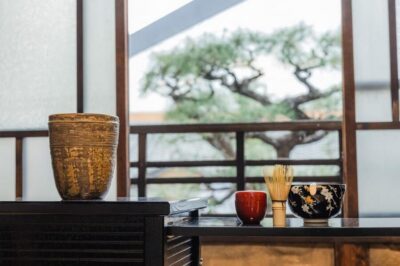
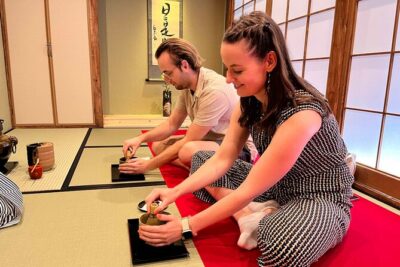
The matcha portion is the heart of the visit for many people. Staff explain the traditions and history of matcha, then show you how to prepare it in the traditional manner. You get to enjoy the finished tea in the quiet temple setting.
Matcha has a flavor that can surprise first-time drinkers. It is grassy, concentrated, and sometimes bitter, especially compared with ordinary green tea. The wagashi, a small Japanese sweet, provides a gentle balance. This pairing is not just decorative. Sweetness helps soften the strong tea, and the contrast is part of the pleasure.
The activity is well suited to someone who wants cultural context without committing to a long formal ceremony. You can learn the basic sequence, understand how the tea is served, and enjoy the drink without needing to memorize every rule.
You should also keep your expectations sensible. A 45-minute session cannot cover every detail of matcha production, tea-room design, utensil etiquette, and the many schools of tea ceremony. It gives you a thoughtful taste of the tradition. That is enough for many visitors, especially if this is your first introduction.
The staff take photographs with your smartphone during the visit and give them to you. That is a useful extra, since your hands may be occupied with incense, tea utensils, or the foot bath. You can leave with a few personal images rather than spending the entire session trying to document each step yourself.
The cooling foot bath and light massage
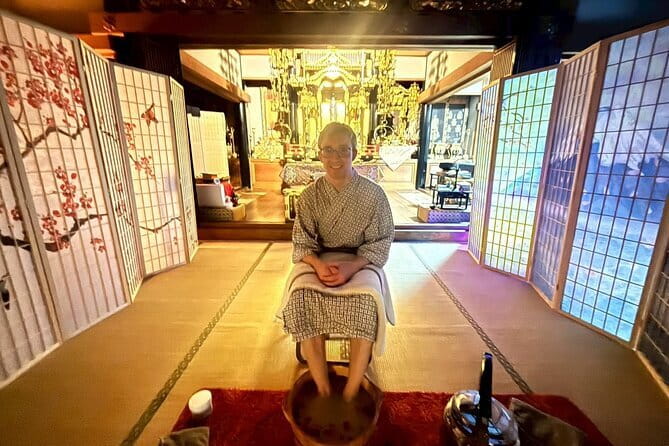
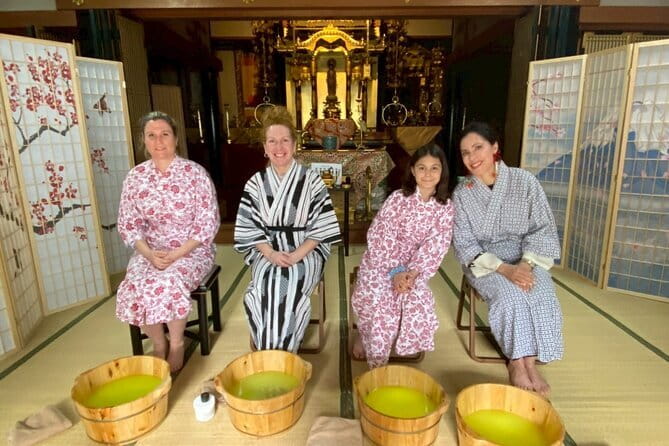
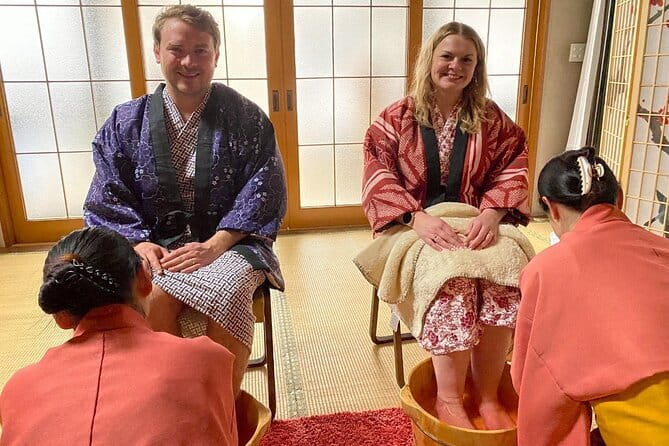
The foot bath changes the mood from observation to relaxation. You soak your feet in cooling water and receive a light scrub massage. The treatment is not presented as a long spa appointment, but it adds a physical element to the temple visit.
This is where the activity becomes more than a standard tea ceremony. You are not only learning a custom. You are also given time to sit still, refresh your feet, and let the pace of the day drop. That can be welcome after walking through Osaka or spending hours shopping.
One account specifically praises Arisa for her gentle manner during the massage and matcha ceremony. Staff are described as kind and skilled, and the small group limit allows them to pay close attention. If you are hoping for a strong therapeutic massage, this may feel too light. The wording points to a soothing scrub and gentle treatment, not a full body massage.
The foot bath is also worth considering if you dislike having wet feet or prefer to keep a traditional ceremony strictly focused on tea. For most people, though, the contrast works well. The tea engages your attention, while the foot bath encourages you to relax.
A few more tea experiences around Osaka worth a look
- Osaka: Japanese Traditional Sweets Making and Tea Ceremony
★ 4.7 · 118 reviews - Samurai Show, Tea Ceremony, Japanese Traditional Activities
★ 5.0 · 56 reviews - Osaka: Private Tea Ceremony and Calligraphy Experience
★ 5.0 · 50 reviews - Osaka; Japanese Tea ceremony experience, Macha and Sencha
★ 4.9 · 29 reviews
Clothing, photos, and the feeling of the visit
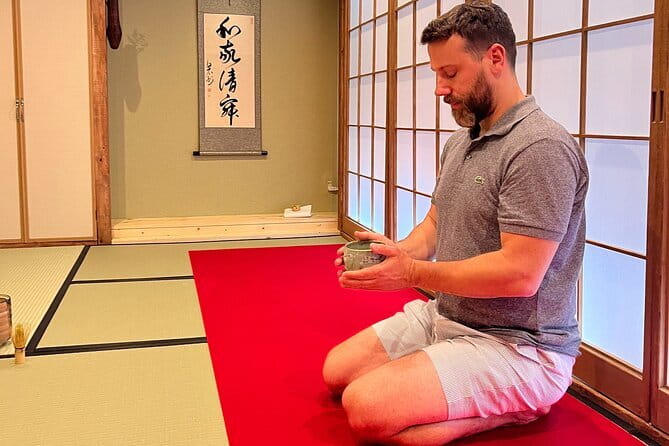
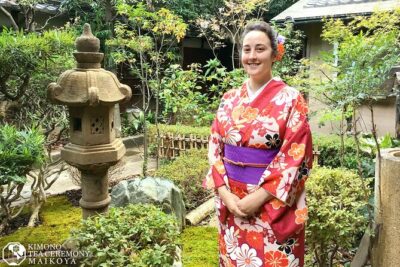
An account of the activity describes changing into a yukata, while another refers to a kimono. Since the formal details do not specify clothing for every booking, you should treat this as something that may be offered rather than a guaranteed part of every session. If wearing traditional clothing is important to you, confirm it before booking.
When available, the clothing adds a visual and physical connection to the setting. It can make the ceremony feel more special and gives the photographs a stronger Japanese character. It may also require a little extra time, which matters in a program already limited to 45 minutes.
The smartphone photos are a practical touch. Staff can help capture the ceremony, the tea, or your time in the temple without requiring you to hire a photographer. You should bring a charged phone and enough storage if you want the full benefit of this feature.
The atmosphere is consistently described as comfortable, friendly, and relaxing. The staff’s manner seems central to the appeal. This is not a place where you are expected to know the correct etiquette before arriving. You are guided through the process, which makes the activity suitable for curious beginners.
What the $42.35 price includes
At $42.35 per person, this is not the cheapest way to drink matcha in Osaka. You can find tea in cafés for far less. The value comes from the combined program: temple guidance, worship, incense, meditation, a matcha lesson, wagashi, a cooling foot bath with scrub massage, and staff-taken photos.
The maximum of three people also matters. A small session can offer more personal attention than a large group demonstration. If you are traveling alone, the price may feel more reasonable because you can receive direct guidance. If three friends book together, you share the setting while keeping the group private and relaxed.
The strongest value comes if you want several experiences in one compact visit. You receive cultural instruction, a calm setting, a small refreshment, and a foot treatment. If you only want to taste matcha, the price is less compelling. If you want a short cultural activity with a wellness element, it becomes easier to justify.
The activity is booked, on average, 32 days in advance. That suggests you should not assume you can wait until the same week, particularly if your Osaka schedule is fixed. Free cancellation is available up to 24 hours before the start time. Cancellations within 24 hours are not refunded, and changes during that period are not accepted.
Meeting point and timing

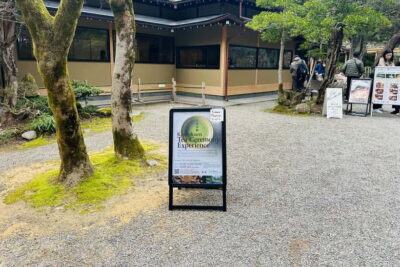
The meeting point is at Tossa de coracao, 1-chōme-6-19 Kitahorie, Nishi Ward, Osaka, 550-0014. The activity ends at the same place, so you do not need to arrange a separate return transfer.
The location is near public transportation, which helps when you are fitting the visit into a day of sightseeing. Still, allow time to find the exact entrance. A temple or small studio can be easier to miss than a large attraction, and arriving late could cut into an already short program.
The listed duration is about one hour, while the detailed activity is described as 45 minutes. You should plan for roughly an hour overall, with a little breathing room for arrival and departure. That makes it a good choice between other plans, but not something to combine with a tight train connection.
Service animals are allowed. The small group limit may also make the setting feel less crowded, though the provided information does not describe specific physical access arrangements for the temple or foot bath.
Who will enjoy this most
I would choose this for a first visit to Osaka when you want a cultural activity that is easy to fit into a busy schedule. It also suits couples, close friends, and solo visitors who prefer quiet instruction over a large group show.
It is a particularly good rainy-day plan. You can step indoors, slow down, and replace some outdoor sightseeing with a temple ritual, tea, and foot care. The short duration means you still have most of the day available.
Families with older children may enjoy the hands-on nature of the incense and matcha steps, but the calm atmosphere requires respectful behavior. Young children who cannot sit quietly may not get much from the meditation and ceremony.
You should also consider this if you want photographs in traditional clothing or a temple setting. The photo service is included, and some sessions may involve a yukata or kimono. Confirm the clothing detail if it is a deciding factor.
I would look elsewhere if your main goal is a long, highly formal tea ceremony, a full spa treatment, or a detailed historical tour of a major temple. This visit offers a compact blend of culture and relaxation. Its strength is variety, not depth in one subject.
Should you book the temple tea and foot bath?
Book it if you want a small, peaceful introduction to Japanese customs with a little comfort built in. The three-person maximum, temple atmosphere, matcha and wagashi pairing, incense rituals, foot bath, and staff photos give the 45-minute visit more substance than a simple tea tasting.
The $42.35 price is reasonable when you value the personal attention and massage as well as the tea. It is less attractive if you only want an inexpensive cup of matcha. Plan ahead, arrive with time to spare, and confirm whether traditional clothing will be part of your session.
For a quiet break from Osaka’s fast pace, this is a well-balanced choice. You leave with a better sense of temple etiquette, a taste of matcha culture, and feet that have had a welcome rest.
FAQ
How long does the tea ceremony and foot bath activity last?
The detailed program lasts about 45 minutes, while the overall duration is listed as approximately one hour. You should allow extra time for arrival and departure.
What is included in the experience?
The activity includes temple worship, an incense offering, kneaded incense, meditation, a cooling foot bath with scrub massage, matcha preparation and tasting, and Japanese wagashi.
How many people can join the activity?
The maximum group size is three people.
Where does the activity start and finish?
It starts at Tossa de coracao, 1-chōme-6-19 Kitahorie, Nishi Ward, Osaka, 550-0014, Japan. It ends back at the same meeting point.
Are photographs included?
Yes. Staff take photographs with your smartphone during the activity and give them to you.
What is the cancellation policy?
You can cancel for a full refund up to 24 hours before the experience starts. Cancellations or changes made within 24 hours are not accepted and are not refunded.
Just added around Osaka
- Osaka: Tea Ceremony, Calligraphy, and Kimono Experience★ 5.0 · 6 reviews
- Osaka: Nara, Todaiji, Uji Matcha, and Hot Spring Tour★ 4.0 · 7 reviews
- Nara Deer Park, Uji Matcha, & Hot Spring Full-Day Tour from Osaka★ 4.0 · 21 reviews
- Premium Kimono Dressing, Tea Ceremony, Calligraphy, Samurai show★ 5.0 · 18 reviews
- Osaka Japanese Cooking And Matcha Class near Osaka Castle★ 5.0 · 22 reviews
- ZEN therapy | Shiatsu-style massage, EnergyTherapy & Japanese Tea★ 5.0 · 5 reviews
- Discover Japanese Tea Blending Techniques in Osaka★ 5.0 · 19 reviews
- Tea and Calligraphy Session at a Table in Osaka★ 5.0 · 4 reviews
Tea Ceremony Experiences, compared.
Tea Ceremony in a Traditional Tea House in Kiyomizu
Read our review →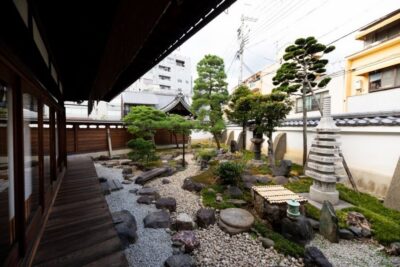
Browse the lists this tour appears in