
Review · OSAKA
Osaka: Tea Ceremony, Calligraphy, and Kimono Experience
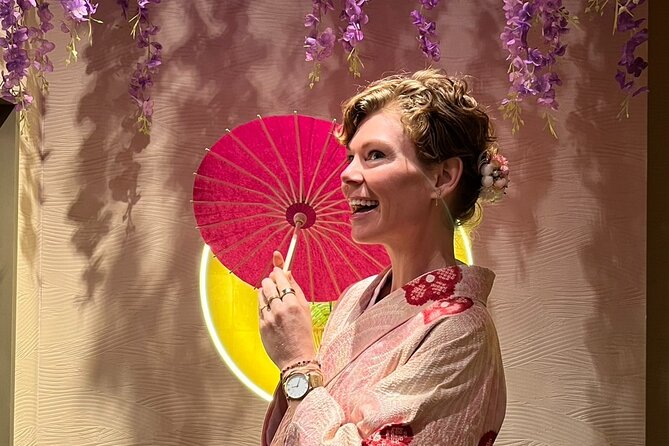
The best part of this Osaka experience is its neat three-part design: you dress in a kimono, practice calligraphy, then sit down for a traditional tea ceremony. It gives you a taste of Japanese customs without asking you to spend a full day at a museum or formal cultural school. The setting at Sazanka is private, peaceful, and indoors.
I like the private format, since your group can ask questions without feeling rushed or watched by strangers. I also like the practical keepsakes: you can take photos in your kimono and bring your calligraphy home. The main consideration is the price, $97.73 per person, which is fair for three guided activities and dressing help, but more than a simple kimono rental or short cultural demonstration.
Key points to know before booking
- Three Japanese traditions in about three hours: Kimono, matcha tea, and calligraphy are all part of one session.
- Private participation: Only your group takes part, giving the experience a calm and personal pace.
- Full kimono service: Rental includes the kimono, obi, accessories, and professional dressing.
- English support: Instructions and cultural explanations are provided in English.
- A useful souvenir: Your calligraphy is yours to take home, and you can make photos in traditional clothing.
- Weather-proof planning: The climate-controlled indoor setting works well during Osaka’s heat, rain, or cold.
A calm cultural stop in central Osaka
Sazanka offers something many busy Osaka itineraries lack: a quiet block of time. The activity takes place in a private indoor setting at 5-chome 7-21 Uehonmachi, Tennoji Ward, on the second floor of Hayakawa Building. The Japanese address is 山茶花 Sazanka Osaka, Osaka 543-0001.
You do not need to travel far outside the city to find this experience. The meeting point is near public transportation, though transportation to the store is not included. Plan your route before the appointment, especially if you are fitting this between sightseeing stops.
The climate-controlled room is a real practical advantage. Osaka can be intensely hot and humid, and one person particularly valued the three-hour break from the heat. You get the visual appeal of traditional clothing without spending the afternoon outdoors.
Because this is a private activity, the mood should suit families, couples, friends, and small groups who want time to ask questions. It also works well for first-time visitors who may feel uncertain about the rules of a tea ceremony or the correct way to wear a kimono.
More Kimono Tea Ceremonies in Osaka:
- Osaka: Tea Ceremony, Calligraphy, and Kimono Experience
★ 4.9 · 130 reviews - Premium Kimono Dressing, Tea Ceremony, Calligraphy, Samurai show
★ 5.0 · 18 reviews - Sheraton Miyako Hotel Osaka: Tea Ceremony with Kimono Rental
★ 5.0 · 2 reviews
Kimono dressing comes first
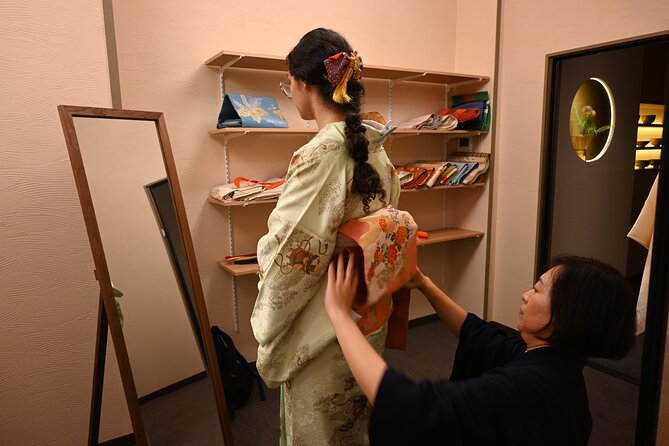
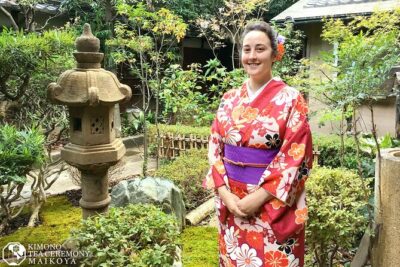
The kimono portion is not just a quick costume change. Your booking includes a full kimono rental, obi, accessories, and private dressing service. That matters because a kimono is not something most people can put on correctly without help. The layers, belt, and final adjustments need careful handling.
You can choose from a selection of kimonos, based on the available choices at the time of your visit. The clothing is one of the most memorable parts of the session, and it gives you photos that look and feel different from the usual Osaka sightseeing snapshots.
The dressing service also helps you settle into the experience. Instead of worrying about loose fabric or an uneven obi, you can focus on the patterns, colors, and customs being explained. Some bookings have included hair styling, but the supplied details do not promise this for every appointment, so ask ahead if hair arrangement is important to you.
Expect the outfit to be traditional rather than casual. You may find it less comfortable than everyday clothing after a while, particularly during warm weather, but the indoor room and three-hour schedule keep the commitment manageable. Wear something that makes changing easy, and avoid planning strenuous sightseeing immediately afterward.
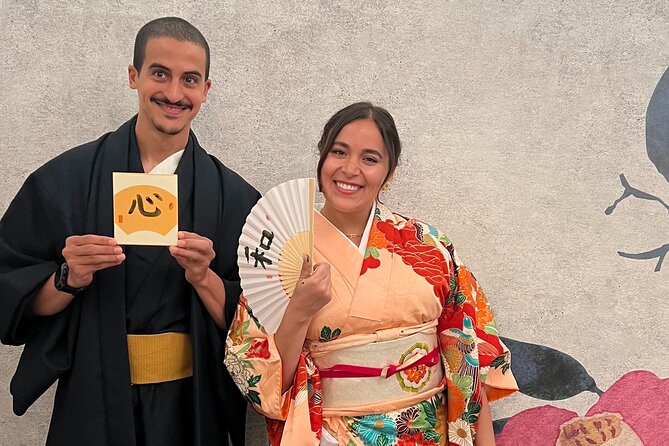
Photos are encouraged as part of the memory-making side of the activity. You can photograph yourself in the kimono during the session, though the supplied information does not specify professional photography or a dedicated photo shoot. Bring your own phone or camera if you want personal pictures.
Calligraphy turns a lesson into a keepsake
After dressing, you receive the tools and paper for a calligraphy session. This is a hands-on activity, not just a demonstration. You get to hold the brush, work with the ink, and create your own piece to take home.
Calligraphy can look simple from a distance, but brush control and spacing take practice. That makes the session appealing even if your handwriting is not artistic. English guidance helps you follow the steps, and the private setting gives you room to try again without embarrassment.
One version of the activity included creating a fan as a souvenir. The exact paper or project can depend on the session, so think of the main promise as making and keeping your calligraphy, rather than receiving a specific finished item every time.
This part is especially good for families and friend groups. Everyone can work at the same time, compare results, and leave with something personal rather than a mass-produced souvenir. It also gives children and teenagers a clear task between the quieter kimono and tea portions.
Do not expect a full course in Japanese writing during one visit. The value is in trying the tools and learning how brush writing feels. You get a small, memorable introduction, not advanced instruction.
The tea ceremony provides the quiet center
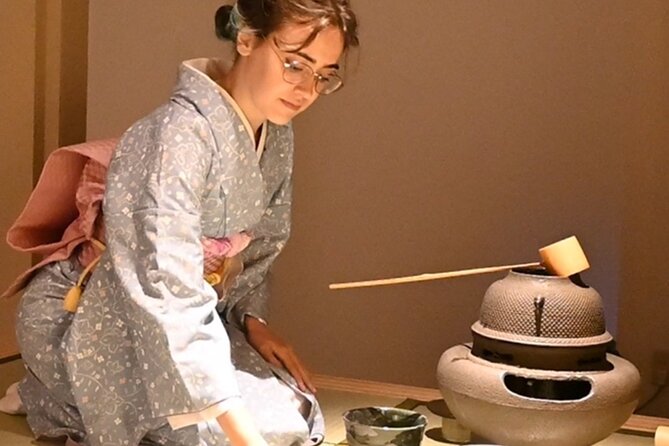
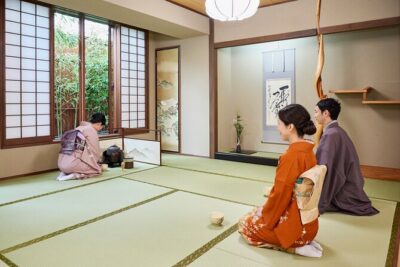
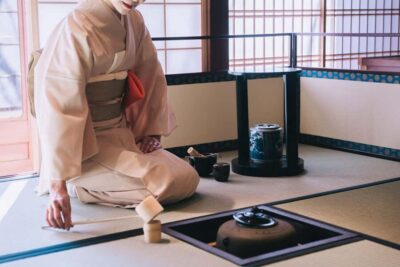
The matcha tea ceremony is the most reflective part of the experience. You receive Japanese tea and sweets while learning about the meaning and customs connected with the ceremony. The explanations help turn a sequence of movements into something understandable.
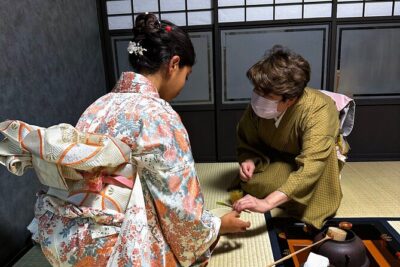
Tea ceremony etiquette can seem formal at first. There are ways to sit, receive the bowl, and drink, but English support means you are not left to guess. The hosts guide you through the process in a friendly manner, which is important for beginners who may worry about making a mistake.
The ceremony also gives the whole booking a slower rhythm. Kimono dressing is visual and practical. Calligraphy is active and focused. Tea asks you to pause and pay attention to small details. That change of pace is one reason the session feels like more than three separate tourist activities.
The word ceremony should not make you expect an intimidating religious event. This is presented as a cultural experience for beginners, with explanations of the history and significance behind the tea service. You are learning by taking part, not sitting silently through a formal performance.
Matcha has a strong, grassy taste that not everyone enjoys. The sweets help balance it, but you should book this for the ritual, setting, and cultural lesson as much as for the flavor of the tea itself.
More Tea and Calligraphy Classes in Osaka:
- Osaka: Private Tea Ceremony and Calligraphy Experience
★ 5.0 · 50 reviews - Samurai dress-up and shows, plus Tea Ceremony & Calligraphy
★ 5.0 · 27 reviews - Tea and Calligraphy Session at a Table in Osaka
★ 5.0 · 4 reviews - Osaka: Castle, Tea Ceremony, Calligraphy, and Samurai Armor!
★ 5.0 · 4 reviews
What the three-hour schedule means for you
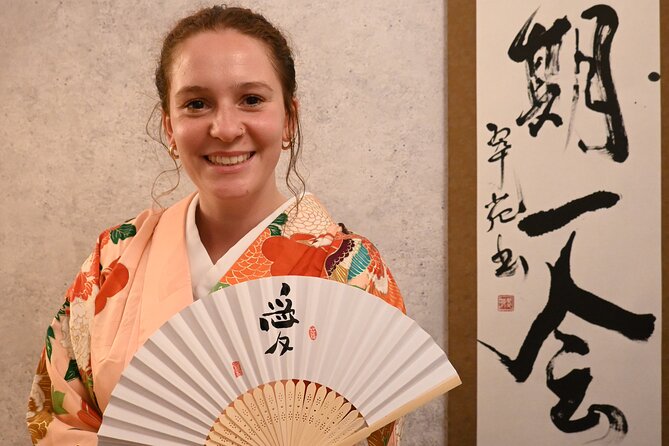
At approximately three hours, this is long enough to feel substantial but short enough to fit into a busy Osaka visit. You have time for dressing, calligraphy, and tea without turning the activity into an all-day commitment.
The precise order and timing may vary, but the experience is built around three clear stages. First comes the kimono fitting and dressing. Next is the calligraphy practice. The tea ceremony completes the cultural introduction, with matcha and sweets included.
That mix works because each section has a different purpose. The kimono gives you a visual connection to Japanese tradition. Calligraphy lets you make something. Tea teaches manners, attention, and the meaning behind a familiar Japanese custom.
I would reserve this early in your Osaka stay if you want to use it as a gentle introduction to local culture. You will then recognize more of the clothing, writing, and tea customs you encounter elsewhere. It can also work near the end of a trip, when a quiet indoor activity offers a break from trains, shopping, and crowded streets.
The activity ends back at the meeting point. You are not dropped at another attraction, so allow extra time if you have a dinner reservation or a timed ticket afterward.
Private attention and English guidance
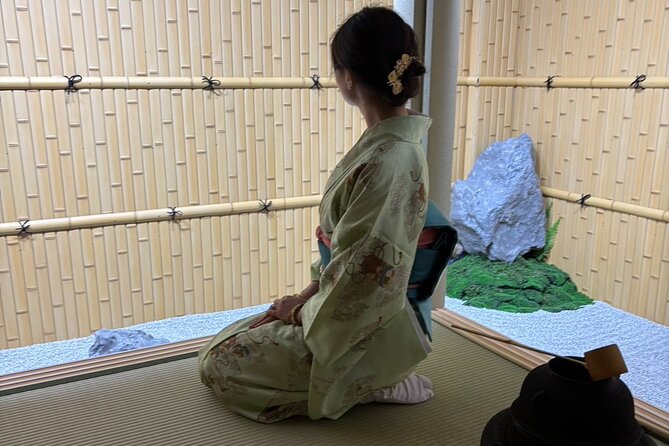
The English-speaking support is central to the booking’s value. You are not simply handed a kimono and told to copy someone else. The staff guide you through the clothing, calligraphy, and tea activities, explaining what you are doing and why.
The hosts are described as warm, welcoming, kind, and gracious. That matters in a cultural activity where tone can shape the whole experience. Friendly instruction makes it easier to ask simple questions about etiquette, clothing, or the meaning of the tea steps.
Only your group participates, so the session can feel more personal than a large demonstration. A couple can move at its own pace. A family can share the process across ages. Friends can make a relaxed event of it rather than splitting up into separate activities.
English is the supported language. Interpretation in other languages is not included, so non-English speakers should arrange their own language support if needed. The experience is designed for beginners, but that does not mean every cultural question can be answered in every language.
Is $97.73 good value?
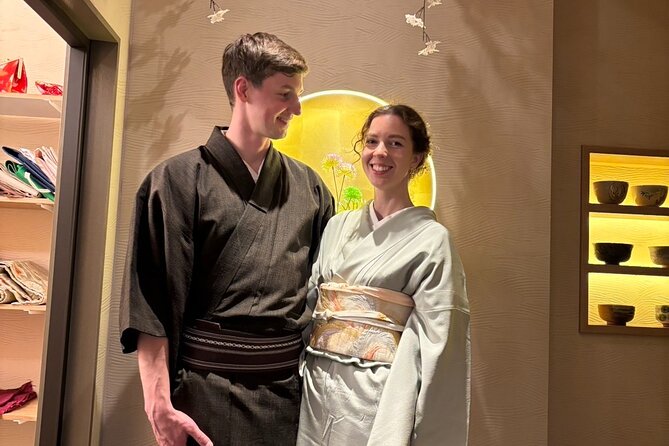
At $97.73 per person, this is not the cheapest way to wear a kimono for an hour. The price makes more sense when you count the full package: kimono rental, obi and accessories, private dressing, matcha, sweets, calligraphy tools and paper, English guidance, and a private room.
You are paying for convenience as well as instruction. A separate kimono rental would not necessarily include help getting dressed, a tea ceremony, or a calligraphy lesson. Combining all three avoids extra bookings and transport across Osaka.
The private setting also adds value for people who dislike large groups. You get direct help and a chance to ask questions. For a family or group of friends, the cost can feel easier to justify because everyone shares the same appointment and takes part together.
The price is less compelling if you want only a quick photo in traditional clothing. In that case, a shorter rental may suit you better. This booking is aimed at people who want several connected cultural activities and a few hours of guidance.
Who should book this Osaka experience?
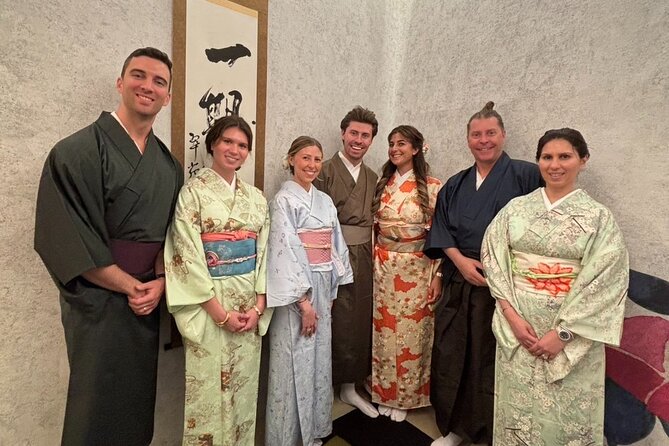
I would recommend it to first-time visitors who want an accessible introduction to Japanese culture. You do not need previous tea ceremony or calligraphy experience, and the English explanations remove much of the uncertainty.
It is also a strong choice for families and friend groups. The activities appeal to different personalities: one person may love the kimono selection, another may focus on calligraphy, and someone else may remember the tea ceremony most clearly.
Couples and adult children traveling together can make the session feel like a shared occasion. It is particularly suitable if someone in your group has always wanted to wear a kimono but does not want to manage the dressing process alone.
You may want to skip it if your schedule is extremely tight, your budget is limited, or you are seeking a formal, highly specialized tea school. This is a friendly cultural introduction, not an advanced course in tea ceremony, calligraphy, or kimono construction.
Book at least 24 hours before the start time if you want to keep the full-refund option. Cancellations made less than 24 hours before the appointment are not refunded, and late changes are not accepted.
My recommendation
Book this if you want a comfortable, private way to try three classic Japanese activities in one sitting. The strongest reasons are the full dressing service, English guidance, personal calligraphy keepsake, and calm indoor room.
The $97.73 price is reasonable for the amount included, especially for a group that values privacy and convenience. Just keep your expectations clear: you are receiving a well-rounded introduction, not expert-level training.
For many Osaka visitors, this is a smart break from shopping districts and crowded sightseeing routes. You leave with photos, calligraphy, and a better sense of how clothing, writing, and tea connect to Japanese culture.
FAQ
Where does the experience take place?
It takes place at 山茶花 Sazanka Osaka, at 5-chome 7-21 Uehonmachi, Tennoji Ward, Osaka 543-0001, on the second floor of Hayakawa Building.
How long does the experience last?
The activity lasts approximately three hours.
What activities are included?
You take part in a kimono experience, a Japanese tea ceremony with matcha and sweets, and a calligraphy session.
Is kimono rental included?
Yes. The package includes a full kimono rental, obi, accessories, and private kimono dressing.
Is the tea included?
Yes. The tea ceremony includes matcha and sweets.
Are calligraphy materials provided?
Yes. Calligraphy tools and paper are included.
Is English support available?
Yes. English-speaking support and guidance are included.
Is this a private activity?
Yes. Only your group participates in the activity.
Does the activity take place indoors?
Yes. It takes place in a climate-controlled indoor setting.
Is transportation included?
No. Transportation to the Sazanka store is not included. The activity ends back at the meeting point.
Can I cancel for a full refund?
Yes, if you cancel at least 24 hours before the experience start time. Cancellations made less than 24 hours before the start time are not refunded.
More Tea Ceremony Experiences in Osaka
- Osaka: Tea Ceremony Experience
★ 4.9 · 1,426 reviews - Tea Ceremony Experience in Osaka Doutonbori
★ 5.0 · 754 reviews - Osaka: Japanese Traditional Sweets Making and Tea Ceremony
★ 4.7 · 118 reviews - Samurai Show, Tea Ceremony, Japanese Traditional Activities
★ 5.0 · 56 reviews
Just added around Osaka
- Osaka: Nara, Todaiji, Uji Matcha, and Hot Spring Tour★ 4.0 · 7 reviews
- Nara Deer Park, Uji Matcha, & Hot Spring Full-Day Tour from Osaka★ 4.0 · 21 reviews
- Osaka:Zen Tea Ceremony and Foot Bath Experience<45min>★ 5.0 · 7 reviews
- Premium Kimono Dressing, Tea Ceremony, Calligraphy, Samurai show★ 5.0 · 18 reviews
- Osaka Japanese Cooking And Matcha Class near Osaka Castle★ 5.0 · 22 reviews
- ZEN therapy | Shiatsu-style massage, EnergyTherapy & Japanese Tea★ 5.0 · 5 reviews
- Discover Japanese Tea Blending Techniques in Osaka★ 5.0 · 19 reviews
- Tea and Calligraphy Session at a Table in Osaka★ 5.0 · 4 reviews
Kimono & Tea Ceremonies, compared.
KYOTO Tea Ceremony with kimono near by Imamiya Jinjya Shrine
Read our review →
Kimono and Tea Ceremony Experience at Cultural Asset
Read our review →
Browse the lists this tour appears in