
Review · KYOTO
Kyoto: Arashiyama Bamboo Forest, Monkeys, Matcha & Temple Tour
Arashiyama packs Kyoto’s best contrasts into four hours: a quiet Zen temple, a famous bamboo path, a mossy shrine, a matcha stop, a river bridge, and a hilltop troop of Japanese macaques. The Monkey Park hike is the tour’s finale and its biggest physical test.
I like the way this route joins culture and nature without wasting time on long transfers. I also like that Tenryu-ji admission, Monkey Park entry, and a matcha drink are included, so the $53.06 price covers more than a guided walk.
The main caution is the uphill climb to the monkeys. It can feel slippery or tiring in poor weather, and some people may prefer to stop before the top. Also, the tour can lose time if late arrivals hold up the group.
Key points to know before booking
- Five Arashiyama highlights in one walk: Visit Tenryu-ji, the Bamboo Forest, Nonomiya Shrine, Togetsukyo Bridge, and Monkey Park Iwatayama.
- The macaque hike is real exercise: Expect about an hour at the park, including the climb to the mountaintop.
- Matcha is included: The tea break gives you a calm pause before or around the hill walk.
- Small-group format: The maximum group size is 15, though one group included 12 people.
- Guides shape the experience: Tim, Gabriele, Amy, Nay, Sofia, and others have been praised for history, local tips, and keeping the group together.
- Four hours moves quickly: Wear comfortable shoes and plan to stay on your feet for most of the outing.
Why this Arashiyama route works so well
Arashiyama is one of Kyoto’s easiest districts to understand on foot. The river, mountains, temple grounds, bamboo paths, shrines, and monkey park all sit close enough to connect in one outing. You get a strong first look at the area without spending half the day figuring out directions.
I especially like the order of the stops. Tenryu-ji gives you a calm start, the Bamboo Forest supplies the famous Kyoto photo, and Nonomiya Shrine adds a smaller and more intimate religious site. The bridge then opens up the scenery before the walk turns uphill toward the monkeys.
The tour lasts about four to four and a half hours. That is long enough to cover the main sights but short enough to fit into a busy Kyoto schedule. You meet at Tully’s Coffee beside Randen Arashiyama Station, and the tour returns to that same meeting point.
The maximum group size is 15. That is small enough for a guide to give directions and answer questions, though it is not a private tour. Several guides are named in the feedback, including Tim, Gabriele, Amy, Nay, Sofia, Shin, and Pedro. The experience may vary slightly with the guide, but the strongest pattern is clear: a lively guide makes the history and local details much more useful.
More Matcha Experiences in Kyoto:
- Kyoto: Tea Ceremony Meditation – Make Matcha with Tea Master
★ 4.8 · 406 reviews - Kyoto: Kimono Tea Ceremony with Matcha and Sweet
★ 4.9 · 249 reviews - Kyoto: Arashiyama Bamboo, Temple, Matcha, Monkeys & secret spots
★ 5.0 · 219 reviews
Tenryu-ji opens the day with Zen calm
Tenryu-ji is a UNESCO World Heritage Site and one of Arashiyama’s major temples. The tour gives you about 30 minutes here, including entry, which is enough to see the main garden and understand why the temple matters.
The garden is the real prize. Its pond, rocks, trees, and mountain backdrop are arranged for quiet viewing rather than hurried sightseeing. Seasonal color changes the mood, so spring, summer, autumn, and winter offer different versions of the same place.
I like starting here because it gives the day a measured rhythm. Before you reach the crowded bamboo path, you have time to look at a carefully designed Japanese garden and hear about Zen ideas connected to the setting. One particularly useful detail is the pond reflection, which can make the garden feel like a painting when the weather cooperates.
Thirty minutes is not enough for a slow, detailed temple visit. If you want to study every building, read every sign, or sit quietly for a long time, you may wish for more freedom. Still, the included admission improves the value, and the stop gives you a proper cultural anchor rather than treating Arashiyama as only a photo location.
The Bamboo Forest is beautiful, but timing matters
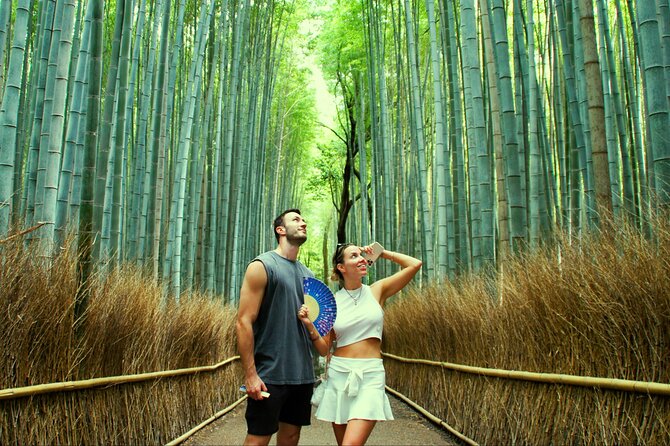
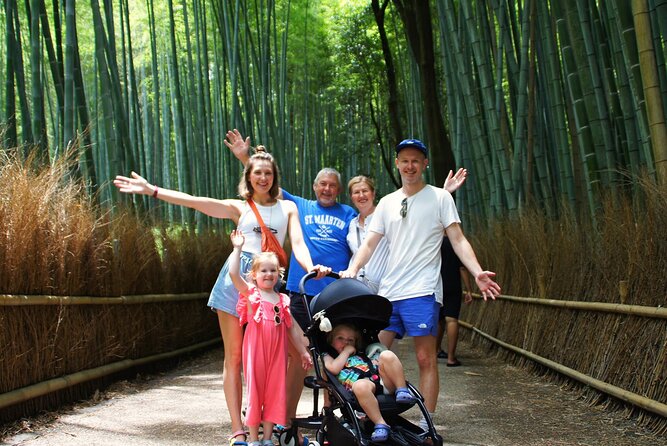
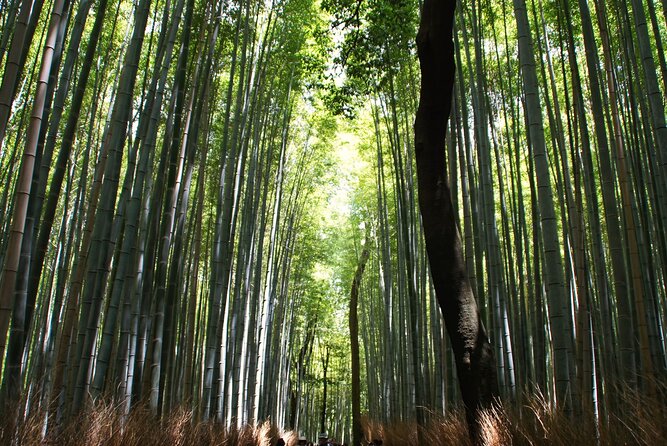
From the temple area, you walk into the famous Arashiyama Bamboo Forest for about 30 minutes. Tall bamboo rises on both sides of the path, creating a cool green corridor and a striking break from Kyoto’s stone lanes and wooden buildings.
This is one of those places that can feel almost unreal in person. The bamboo sways above you, and the narrow path gives the walk a quiet, enclosed quality. Your guide can add context about bamboo cultivation and local traditions, which helps turn a quick photo stop into something more meaningful.
The drawback is that the grove is famous for a reason, so it can be busy. The tour does not promise an empty path, and thirty minutes leaves little room to wait for a perfectly clear photo. I would focus on the whole setting rather than trying to capture a single flawless image.
The short visit is useful if you want to see the grove as part of a larger Arashiyama day. It is less suitable if the bamboo is your only reason for coming and you want to linger. Your guide may also need to keep the group moving so the later stops fit within the four-hour schedule.
Nonomiya Shrine adds a quieter stop
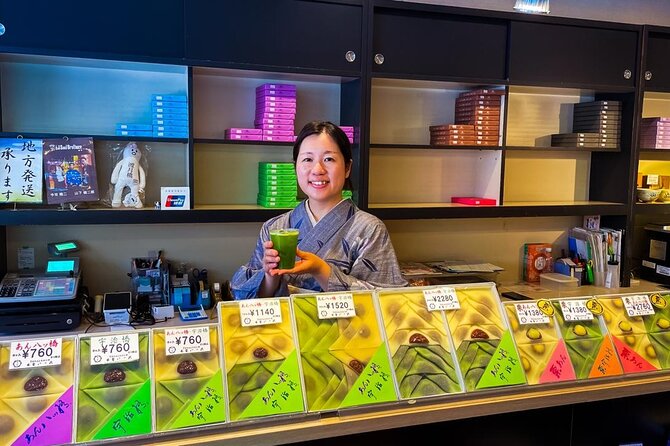
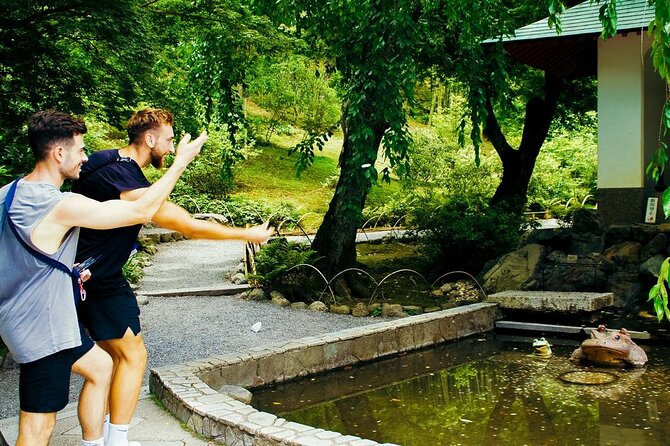
Nonomiya Shrine receives about 15 minutes, but it offers a different kind of atmosphere. Tucked among mossy woods near the bamboo area, this small Shinto shrine is linked with old purification rituals.
I like this stop because it slows the pace again. Tenryu-ji is a major temple with famous gardens, while Nonomiya feels more modest and tucked away. The contrast helps you see that Kyoto’s religious life is not limited to grand gates and large temple compounds.
Fifteen minutes is enough to hear the key story, look around, and take a few pictures. It is not a full shrine visit, and you should not expect an extended ceremony or meditation session. The value comes from the setting and the guide’s explanation of how older customs connect with present-day practice.
Same place, a different pot:
- Kyoto: Tea Ceremony in a Traditional Tea House in Kiyomizu
★ 4.9 · 3,519 reviews - Kyoto: Tea Ceremony Ju-An at Jotokuji Temple
★ 4.9 · 3,207 reviews - Kyoto: 45-Minute Tea Ceremony Lesson Experience
★ 4.3 · 2,378 reviews - Kyoto: Table-Style Tea Ceremony at a Kyo-Machiya
★ 4.9 · 1,211 reviews
Matcha provides a welcome pause
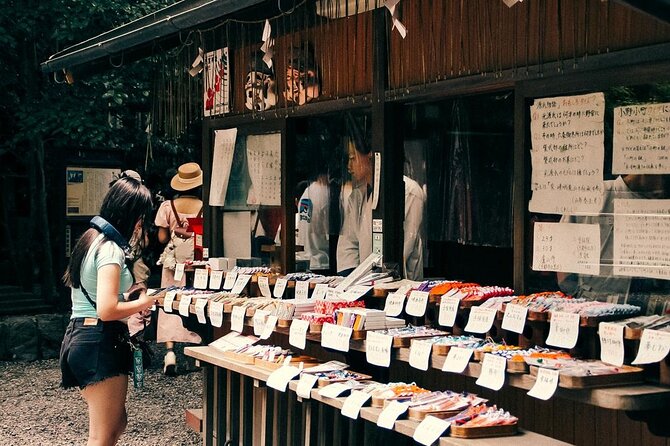
A Uji matcha drink is included, giving you a small but welcome taste of Japanese tea culture. The tea stop breaks up the walking and gives you time to rest before the more demanding part of the route.
The exact feel of the stop can depend on the day’s pacing, but the drink is a useful inclusion. Matcha has a distinct, earthy flavor that some people love and others find strong. Think of this as a cultural sample, not a full tea ceremony.
Several comments also refer to matcha ice cream as an enjoyable treat. The stated inclusion is one Uji matcha drink, so you should not count on extra food or ice cream unless you choose to buy it. Bring some water and a small snack if you know you get hungry during a half-day walk.
Togetsukyo Bridge gives you the classic river view
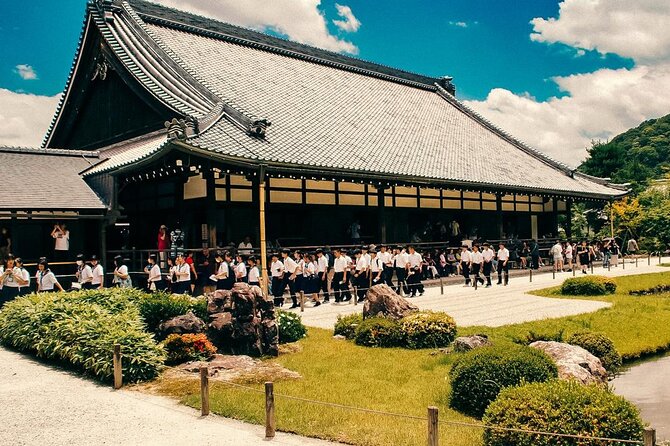
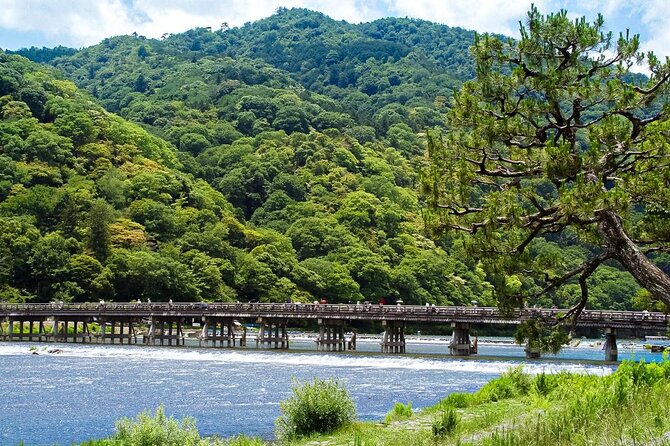
Togetsukyo Bridge takes only about 10 minutes, but it is one of Arashiyama’s most recognizable sights. The bridge crosses the river with mountains behind it, creating the broadest view of the district so far.
The name means Moon Crossing Bridge, and the setting explains its lasting appeal. Here, the view opens up after the enclosed bamboo paths and temple gardens. It is a good place to take photographs, listen to the river, and see how the district’s buildings sit beside the water and hills.
The short stop means you will not spend much time lingering on the bridge. That is reasonable because the tour still has Monkey Park ahead. If you want longer river views, the activity ends back at the starting point, leaving you in a convenient part of Arashiyama for your own follow-up walk.
Monkey Park Iwatayama is the grand finale
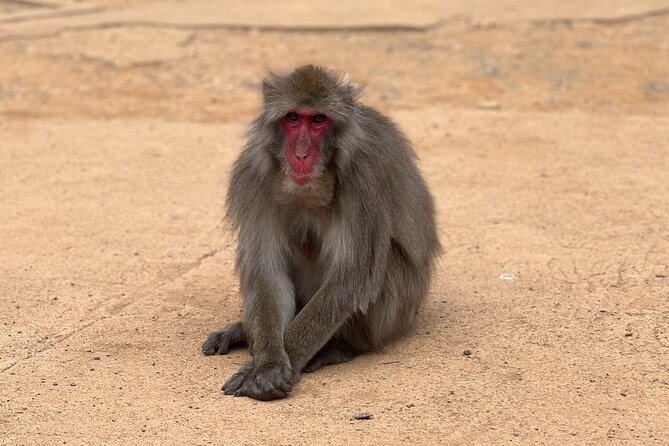
The route’s most memorable stop is Monkey Park Iwatayama. You walk uphill for about an hour to reach a mountaintop area where wild Japanese macaques live. The macaques are not presented as tame pets, and you should watch them without trying to touch or approach them.
The park combines wildlife with a wide view over Kyoto. From the top, the city spreads out below, with mountains in the distance. The sight of macaques moving, playing, and caring for their young makes the stop more than a standard viewpoint.
The climb is the part to take seriously. Multiple people describe the uphill walk as demanding, especially for anyone with limited fitness, recent health problems, or concern about wet conditions. One person skipped the climb while companions continued and brought back photographs. That is a practical reminder that the tour can still offer value even if you cannot reach the top, but the park’s main reward requires going uphill.
Wear shoes with a solid grip. The route is not described as technical, but rain can make it harder and potentially slippery. Comfortable clothing, water, and a realistic attitude toward the climb will make a big difference.
At the monkey area, follow the guide’s instructions and the park rules. The macaques are wild animals, and the feeding area is the place where you can observe them most closely. The setting is exciting without needing close contact.
The guides make or break the four-hour pace
The strongest part of this experience is often the human connection. Guides such as Tim, Gabriele Cammisuli, Amy, Nay, Sofia, Pedro, Shin, and others have been praised for explaining the sites, sharing food suggestions, answering questions, and making sure the group stays together.
Tim is repeatedly described as entertaining and well informed about the area. Gabriele is praised for detailed explanations and for giving people time to ask questions and take photos. Nay receives high marks for enthusiasm and cultural information, while Amy is described as flexible with the group’s pace.
That matters because the route has several transitions. You are not simply walking from one attraction to the next. You are moving between a temple, a grove, a shrine, a refreshment stop, a bridge, and a hill path. A good guide gives the day shape and prevents the stops from feeling like disconnected photo calls.
There is one clear caveat. At least one outing began late because some people arrived after the scheduled start, and that person found the explanations limited and too scripted. This is a group tour, so your experience can be affected by the punctuality and pace of others. Arrive early at the Tully’s Coffee meeting point, and do not assume the group will move at your personal speed.
Is $53.06 a fair price?
At $53.06 per person, the tour offers solid value if you want a guide and plan to visit all these places anyway. The price includes Tenryu-ji entry, Monkey Park entry, one Uji matcha drink, and an English-speaking professional guide.
You are also paying for route planning. Arashiyama is easy to reach but not always easy to organize efficiently, especially when you want to combine the temple, grove, shrine, bridge, and monkey park in a single half-day. The guide keeps the route moving and adds context that you would miss by simply following a map.
The price is less compelling if you prefer to explore slowly, skip the monkey hike, or spend long stretches taking photographs. You can visit the area independently, but then you give up the explanations, group coordination, and included admissions.
Tips are optional. The tour has free cancellation up to 24 hours before the start time. After that point, the paid amount is not refunded, and changes are not accepted.
Who should book this walk?
I would recommend it to a first-time Kyoto visitor who wants a clear introduction to Arashiyama without spending a full day there. It is also a good fit if you like a mixture of temples, scenery, local flavor, and wildlife rather than a tour focused only on architecture.
Families and mixed-age groups can enjoy the variety, provided everyone understands the hill climb. The macaques are entertaining, and the bamboo path gives the day an immediate visual highlight. The guide can also help younger participants stay interested during the temple and shrine sections.
You should think twice if you have difficulty with uphill walking or poor balance. The Monkey Park section is optional in practical terms, but it is a central part of the route. If you want a relaxed, mostly level stroll, choose a different Arashiyama plan.
Should you book the Arashiyama tour?
Book it if you want efficient sightseeing with context and you are comfortable walking uphill. The combination of Tenryu-ji, bamboo, Nonomiya Shrine, matcha, Togetsukyo Bridge, and Monkey Park is unusually varied for a four-hour outing.
Skip it if you want complete independence, long photo stops, or a slow temple visit. For most active visitors, though, the included admissions, small maximum group size, city views, and chance to see wild macaques make this a sensible way to get your bearings in Arashiyama.
FAQ
How long does the Arashiyama tour last?
The tour lasts approximately four to four and a half hours.
Where does the tour start?
It starts at Tully’s Coffee Randen Arashiyama Station Shop, located at 20-2 Sagatenryuji Tsukurimichicho, Ukyo Ward, Kyoto.
Where does the tour end?
The activity ends back at the meeting point.
Is the tour conducted in English?
Yes. An English-speaking professional guide is included.
What is included in the price?
The price includes entry to Tenryu-ji Temple, entry to Monkey Park Iwatayama, one Uji matcha drink, and an English-speaking guide.
How many people can join the tour?
The maximum group size is 15 people.
Is the Monkey Park suitable for everyone?
Most people can participate in the activity, but reaching Monkey Park requires an uphill hike. People who are not in good health may find the climb difficult.
Can I cancel for a full refund?
Yes. You can cancel at least 24 hours before the experience start time for a full refund. Cancellations made less than 24 hours before the start time are not refunded.
Just added around Kyoto
- Whisk Your Own Matcha: A Zen Matcha Experience at Temple★ 3.6 · 7 reviews
- Uji Walking Tour – Byodo-in temple and Tea Ceremony from Kyoto★ 3.5 · 3 reviews
- Traditional Tea Ceremony in Kyoto★ 4.5 · 3 reviews
- Kyoto: Authentic Tea Ceremony in a Small Group★ 5.0 · 7 reviews
- Tea ceremony at Kyoto’s Zen Temple Teahouse★ 5.0 · 2 reviews
- Tea Ceremony in 150 Years Old Townhouse with Tables and Chairs★ 5.0 · 22 reviews
- Silent Beauty of Kyoto Zen Walk and Tea Experience★ 5.0 · 2 reviews
- Tea Ceremony Experience in Traditional Kyoto Townhouse★ 5.0 · 19 reviews
Matcha Experiences, compared.
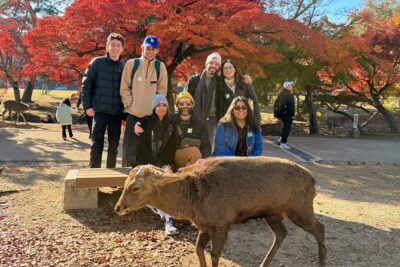
World Heritage Kyoto & Nara Uji Authentic Matcha Experience
Read our review →
Matcha Making Class in Tokyo with Authentic Japanese Sweets Set
Read our review →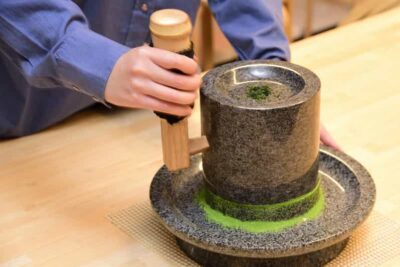
Tea Museum Tickets and Matcha Grinding Experience
Read our review →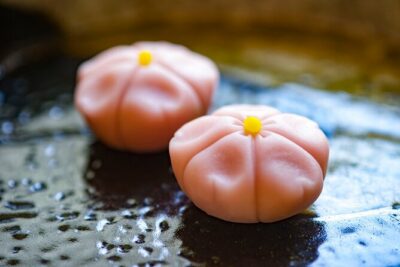
Matcha Making Class in Osaka with Authentic Japanese Sweets Set
Read our review →
Tea Ceremony Meditation – Make Matcha with Tea Master
Read our review →
Matcha Making Experience with Mochi Sweets in Asakusa
Read our review →
Browse the lists this tour appears in