
Review · KYOTO
Kyoto Tea Ceremony and Samurai Photo Session
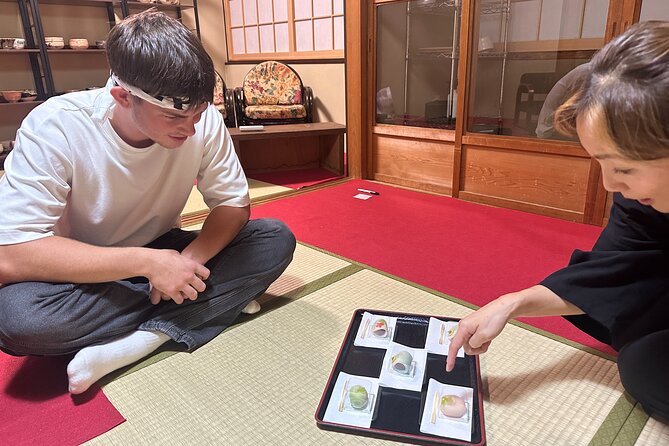
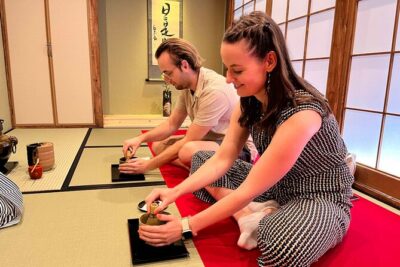
Kyoto’s tea culture gets a playful update here. You learn how to whisk matcha in a 100-year-old machiya, taste a seasonal wagashi sweet, make a creamy latte, and finish with photos in samurai armor. It is a compact way to try several Japanese traditions without giving up half a day.
I like the hands-on format and the warm teaching style of Maya, whose clear English, humor, and patience make the class easy for first-timers. I also like the balance between ceremony and useful fun: you learn the proper method, then leave with a matcha latte recipe you can try at home.
The main consideration is the pace. The tea portion is about 50 minutes, with the full activity lasting roughly 1 hour 20 minutes, so this is an introduction rather than a long, formal tea ceremony. The armor photos add charm, but anyone seeking a quiet, highly formal ritual may find the modern approach more casual.
Key Points
- A 100-year-old machiya: The setting gives the short class a genuine Kyoto feel rather than placing it in a generic modern studio.
- You make two matcha drinks: Learn traditional matcha preparation, then switch to a Kyoto-style matcha latte.
- Maya leads the lesson: Expect clear English, light humor, historical background, and patient instruction.
- Seasonal wagashi is included: The Japanese sweet provides the classic matcha pairing and changes with the season.
- Samurai armor photos finish the visit: You get a memorable visual souvenir as part of the experience.
- Small groups keep it personal: The maximum is 10 people, a useful size for asking questions and taking part.
What This Kyoto Tea Class Actually Offers
This is a short cultural workshop with three connected parts: tea ceremony instruction, hands-on matcha making, and samurai photography. The tea portion takes about 50 minutes, while the whole booking is listed at approximately 1 hour 20 minutes.
That timing matters. You can fit the activity into a busy Kyoto day, perhaps between sightseeing in central Kyoto and dinner. You also get more than a demonstration. You are invited to prepare your own matcha, taste the result, and make a latte in a more modern style.
I see this as a friendly introduction, not a full study of tea ceremony. You will learn the basic ideas, watch a demonstration, and practice the main steps. If you already know Japanese tea well, the class may feel simple. If you are new to matcha, it gives you enough context to make later tea experiences more meaningful.
The small-group limit of 10 helps. You are not simply watching a distant performance. You have a chance to follow along, handle the tea tools, and ask for help when the whisking does not go quite as planned.
More Tea Ceremony Experiences in Kyoto:
- Kyoto: Tea Ceremony in a Traditional Tea House in Kiyomizu
★ 4.9 · 3,519 reviews - Kyoto: Tea Ceremony Ju-An at Jotokuji Temple
★ 4.9 · 3,207 reviews - Kyoto: 45-Minute Tea Ceremony Lesson Experience
★ 4.3 · 2,378 reviews
Entering a 100-Year-Old Kyoto Machiya
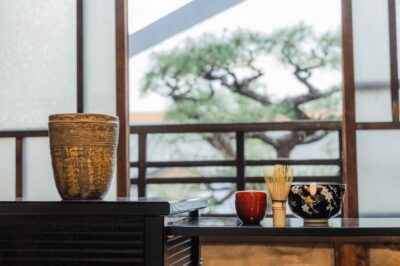
The setting is one of the best reasons to book this activity. A machiya is a traditional Kyoto townhouse, and a 100-year-old building gives the class a sense of place that a hotel meeting room cannot match.
The age of the building is not just decoration. It helps connect the tea lesson to the kind of domestic spaces where Japanese customs developed and were practiced. You are learning about tea while sitting in an environment shaped by Kyoto’s older urban life.
The address is Samurai Gyoza Factory Kyoto, at 230-1 Kamimyōkakujichō in Nakagyo Ward. The activity begins and ends at this meeting point, and the location is near public transportation. You will want to allow time to find the entrance, since traditional streets and addresses can be less obvious than a large hotel lobby.
Mobile tickets make the arrival simple. Keep the ticket available on your phone, and check the local start time carefully. The operator is Japan food entertainment Ltd.
Maya’s Introduction to Tea Ceremony
The class begins with background on tea ceremony and its place in Japanese culture. Maya explains the history in clear English, then demonstrates how the ceremony is performed.
Her teaching style is important here. The lesson is not presented as a test of etiquette. You can expect encouragement, humor, and practical guidance. That makes a difference for anyone worried about holding the whisk incorrectly or missing a step.
The class also brings out the mindful side of tea. Tea ceremony is not only about drinking powdered green tea. It asks you to slow down, pay attention to the movements, and treat the moment with care. Even in a short workshop, that idea gives the activity more weight than a standard cooking demonstration.
You should still keep expectations realistic. A 50-minute tea session cannot cover every rule, school, utensil, and historical period. It gives you an accessible starting point, with enough explanation to understand why the movements and setting matter.
Making Traditional Matcha and Eating Wagashi
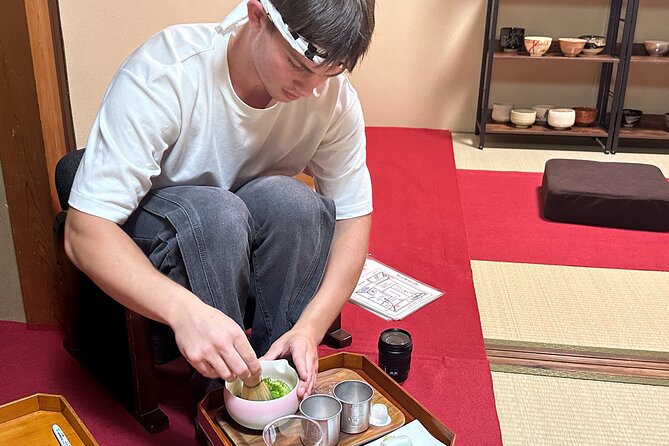
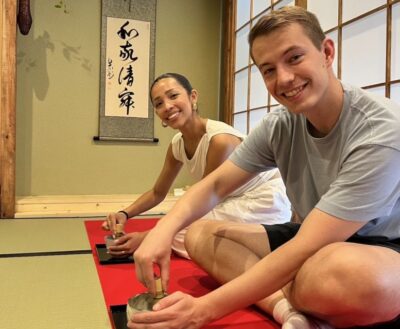
After the demonstration, you get to make your own matcha. This is where the activity earns its keep. Seeing someone prepare tea is pleasant, but whisking it yourself makes the process stick.
The matcha is described as good quality, and the instruction focuses on the proper traditional method. You will learn how to work with the tools and create the drink rather than simply receiving a finished bowl.
The result can vary from person to person. Your first bowl may not have the same smooth texture as the instructor’s, and that is part of the appeal. Maya’s patient approach means you can try without feeling awkward.
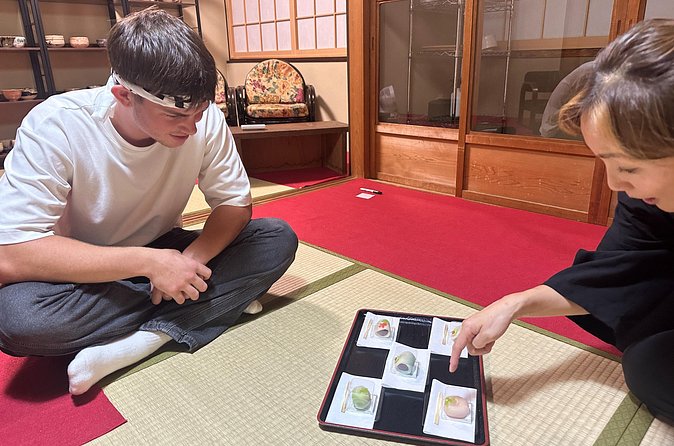
The tea is paired with seasonal wagashi, traditional Japanese sweets. Wagashi are designed to complement the bitterness of matcha, so the pairing is not just a snack. The sweet taste helps balance the tea and shows how Japanese confectionery fits into the ceremony.
Seasonal sweets also give the class a changing detail. The exact wagashi is not specified, so you should not book this expecting one particular flavor or shape. You can expect a traditional sweet chosen for the season.
A few more tea experiences around Kyoto worth a look
- Kyoto: Tea Ceremony with Kimono and Photoshoot
★ 4.9 · 90 reviews - Tea Ceremony with Kimono and Professional Photoshoot in Kyoto
★ 5.0 · 44 reviews - Tokyo:Genuine Tea Ceremony, Kimono Dressing, and Photography
★ 5.0 · 33 reviews - Private Tour in Kamakura: Matcha Tea Tasting & Photo Session
★ 5.0 · 6 reviews
The Matcha Latte Adds a Modern Kyoto Twist
The second drink changes the mood. After learning the traditional preparation, you make a matcha latte.
I like this part because it connects the old custom with something you may already enjoy at home. The latte is easier to picture in everyday life, and the lesson includes a recipe so you can practice later. That take-home detail adds value, especially for anyone who regularly orders matcha drinks.
The latte also makes the activity work well for mixed groups. A tea enthusiast may enjoy the traditional preparation, while someone less familiar with Japanese tea may prefer the creamy modern drink.
You should not mistake the latte for the formal heart of the ceremony. It is a separate, relaxed step that follows the traditional lesson. That contrast is deliberate: first you learn the classic method, then you see how the same ingredient can be used in a contemporary drink.
Samurai Armor Photos Close the Session
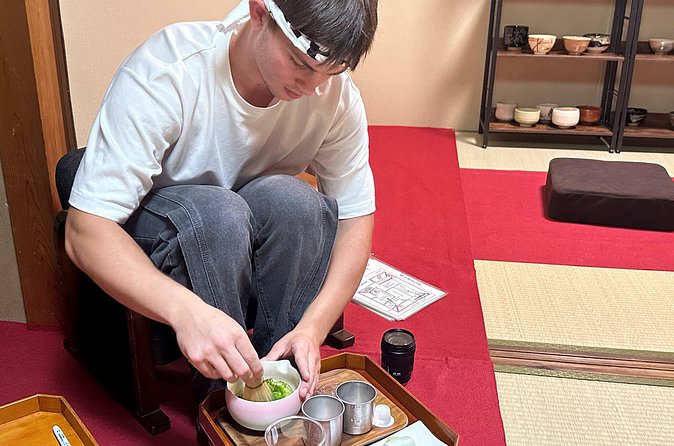
The final feature is the photo session in authentic samurai armor. It gives the activity a memorable ending and adds something beyond taste and instruction.
Putting on armor changes the tone again. The class moves from quiet tea preparation to a playful portrait opportunity. You can expect time for photos that capture the samurai theme, making this especially appealing for families, friends, and anyone who wants a visual souvenir from Kyoto.
The armor session is also why the full activity lasts longer than the tea portion. The tea lesson takes around 50 minutes, while the overall experience is approximately 1 hour 20 minutes.
This is not the same as visiting a historic samurai site or studying Japanese warfare. It is a themed photo opportunity connected to the tea workshop. I would treat it as a fun bonus, not the reason to book if your main interest is serious historical interpretation.
Is $71.74 a Fair Price?
At $71.74 per person, this is not the cheapest way to drink matcha in Kyoto. You could buy a tea and sweet for much less. The value comes from the combination of instruction, participation, food, setting, and photos.
You are paying for a guided cultural activity in a historic-style space, not just for a beverage. The price makes more sense if you would otherwise book separate activities for a tea lesson and a themed photo session.
The small group also matters. With a maximum of 10 people, the host can give direct help, and you are more likely to participate instead of watching from the back. The recipe adds a little lasting value, since you can continue the matcha latte lesson after leaving Kyoto.
For a budget-conscious visitor, the price may feel high for an activity lasting about 80 minutes. For someone with limited time who wants one easy, organized introduction to tea culture, it is more reasonable.
I would compare it with what else you plan to do that day. If you are already booking a long formal tea ceremony, this may overlap. If you want a relaxed first lesson with a strong photo element, the combination is more distinctive.
Who Will Enjoy This Most?
This experience suits first-time visitors who want to understand matcha without committing to a long or highly formal ceremony. You do not need previous tea knowledge, and the instruction is designed to be easy to follow.
It also works well for:
- Friends who want an activity with photos at the end
- Couples looking for a short cultural stop
- Families with older children who can take part in the preparation
- Matcha fans who want a recipe to use at home
- Visitors who prefer English-language instruction
- Anyone looking for a rainy-day plan near public transportation
The class may be less suitable for someone who wants a completely silent, highly formal ritual. The teaching style is friendly and humorous, and the latte and armor portions give it a modern, entertainment-focused feel.
The maximum group size is 10, but the actual number at your session may be smaller. You should expect a shared class rather than a private appointment.
Planning Your Visit in Kyoto
The meeting point is Samurai Gyoza Factory Kyoto, 230-1 Kamimyōkakujichō, Nakagyo Ward, Kyoto, 604-0025, Japan. The experience returns to the same place, so you do not need to arrange a separate end point.
Since the activity is near public transportation, it is practical to combine with other central Kyoto plans. Still, give yourself enough time to reach the address. A short tea class leaves little room for a late arrival.
The ticket is mobile, and confirmation is received when you book. The experience is usually reserved well ahead of time, with bookings averaging about 72 days in advance. That does not guarantee every date will sell out, but it is a useful signal to reserve early if your Kyoto schedule is fixed.
Free cancellation is available up to 24 hours before the start time for a full refund. Cancellations or changes made less than 24 hours before the start are not accepted for a refund, and the cut-off follows Kyoto local time.
My Verdict on the Tea and Samurai Combination
I like this activity because it does not force you to choose between tradition and easygoing fun. You learn the proper way to make matcha, taste wagashi, prepare a latte, and finish with a samurai portrait. Maya’s clear English, patience, and humor make the lesson approachable.
The trade-off is depth. In about 80 minutes, you get a taste of several ideas rather than a long, formal examination of tea ceremony. The armor photos are entertaining, but they make the experience feel more like a cultural workshop than a solemn ritual.
Book it if you want a short, interactive introduction to matcha in an old Kyoto townhouse, especially if you like taking photos and want a recipe to use at home. Skip it if you are looking for an extended, deeply formal tea ceremony or a dedicated samurai history program.
For many first-time visitors, the mix is the point. You leave with a better sense of how matcha is made, a sweet seasonal pairing, a modern drink to recreate, and a photograph that looks distinctly Kyoto.
FAQ
How long does the Kyoto tea ceremony and samurai photo session last?
The full activity lasts approximately 1 hour 20 minutes. The tea ceremony and matcha portion takes about 50 minutes, with the remaining time connected to the rest of the experience, including the samurai armor photos.
Where does the activity start and finish?
It starts and ends at Samurai Gyoza Factory Kyoto, 230-1 Kamimyōkakujichō, Nakagyo Ward, Kyoto, 604-0025, Japan.
How many people can join the activity?
The experience has a maximum of 10 people.
Is the activity available with a mobile ticket?
Yes. A mobile ticket is provided, and confirmation is received at the time of booking.
Is public transportation available near the meeting point?
Yes. The meeting point is near public transportation.
Is this activity suitable for beginners?
Yes. The session is designed for beginners and curious visitors. You learn about tea ceremony history, watch a demonstration, make matcha, and prepare a matcha latte.
What is the cancellation policy?
You can cancel up to 24 hours before the start time for a full refund. Cancellations or changes made less than 24 hours before the start are not accepted for a refund.
Just added around Kyoto
- Whisk Your Own Matcha: A Zen Matcha Experience at Temple★ 3.6 · 7 reviews
- Uji Walking Tour – Byodo-in temple and Tea Ceremony from Kyoto★ 3.5 · 3 reviews
- Kyoto: Authentic Tea Ceremony in a Small Group★ 5.0 · 7 reviews
- Tea ceremony at Kyoto’s Zen Temple Teahouse★ 5.0 · 2 reviews
- Traditional Tea Ceremony in Kyoto★ 4.5 · 3 reviews
- Tea Ceremony in 150 Years Old Townhouse with Tables and Chairs★ 5.0 · 22 reviews
- Silent Beauty of Kyoto Zen Walk and Tea Experience★ 5.0 · 2 reviews
- Tea Ceremony Experience in Traditional Kyoto Townhouse★ 5.0 · 19 reviews
Tea Ceremony Experiences, compared.
Tea Ceremony in a Traditional Tea House in Kiyomizu
Read our review →
Browse the lists this tour appears in