
Review · KYOTO
Tea Ceremony Experience in Traditional Kyoto Townhouse
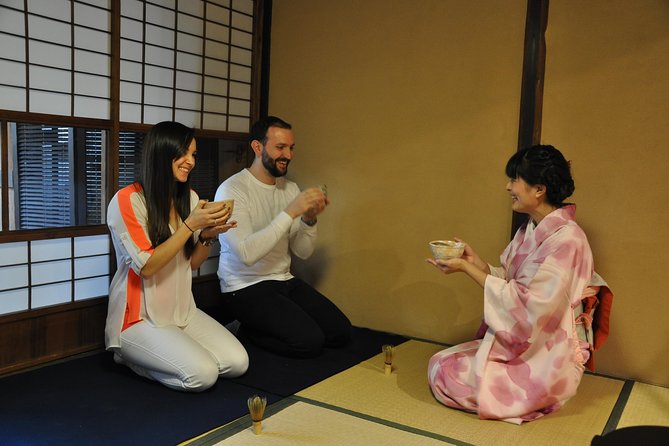
Kyoto’s tea culture makes the most sense when you can see, smell, and prepare the tea yourself. At Ami Kyoto, you step into an 80-year-old machiya, learn how to whisk organic matcha, watch a careful tea ceremony, and enjoy Japanese sweets in the same traditional townhouse. It is a compact experience, but it gives you more to do than a ceremony where you only sit and watch.
I like the hands-on preparation, since you leave with a practical sense of how matcha becomes smooth rather than lumpy. I also like the small maximum of six people, which gives the hosts room to explain the details and adjust demonstrations to the group. The main consideration is time: at about one hour, this is an introduction, not a full study of tea culture.
Key points to know before booking
- An 80-year-old machiya: See one of Kyoto’s remaining traditional wooden townhouses from inside.
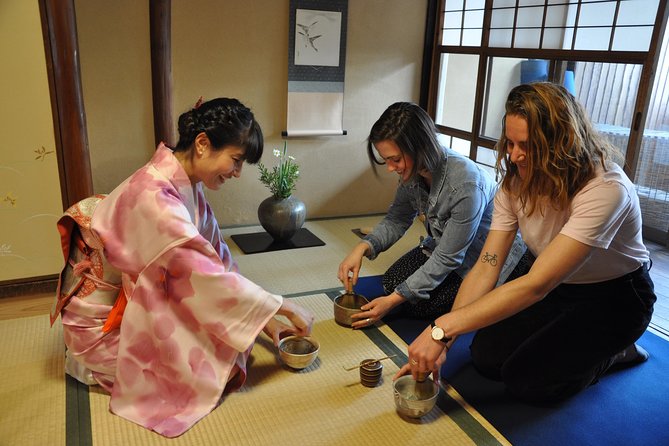
- You make your own matcha: The session includes instruction in brewing and whisking the tea.
- A real ceremony demonstration: The host explains the movements and meaning in clear, simple language.
- Organic matcha and Kyoto sweets: Your bowl of tea comes with Japanese confectionery.
- Small group size: No more than six people can join, which suits visitors who prefer personal attention.
- Good value for a short cultural stop: The price is $27.59 per person, with free cancellation up to 24 hours before the start time.
Entering an 80-year-old Kyoto machiya
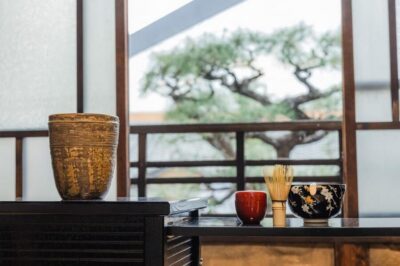
The setting gives this experience much of its character. Ami Kyoto occupies a traditional wooden townhouse, or machiya, built about 80 years ago. Kyoto once had many such homes, but far fewer remain, so the building itself is part of what you are paying to see.
A machiya was designed as a practical urban home and working space. Here, you get a chance to spend time inside one without having to visit a museum or simply view the exterior from the street. The townhouse is described as quaint and elegant, and the tea activity benefits from that quieter, more intimate setting.
I like this combination of place and activity. Matcha preparation can feel abstract if you only hear about it in a busy classroom. In a traditional wooden house, the ceremony has a clearer sense of place. You are not just learning a drink recipe. You are seeing how a simple ritual fits into Kyoto’s built heritage.
Still, keep your expectations sensible. The activity does not promise a full architectural tour of the house, and the total visit lasts about an hour. The machiya is a meaningful setting, but the main focus remains tea.
More Tea Ceremony Experiences in Kyoto:
- Kyoto: Tea Ceremony in a Traditional Tea House in Kiyomizu
★ 4.9 · 3,519 reviews - Kyoto: Tea Ceremony Ju-An at Jotokuji Temple
★ 4.9 · 3,207 reviews - Kyoto: 45-Minute Tea Ceremony Lesson Experience
★ 4.3 · 2,378 reviews
What happens during the one-hour session
The experience takes place at one stop, Ami Kyoto, and both the start and finish are at the same meeting point: 605 Nishidacho, Shimogyo Ward, Kyoto, 600-8397, Japan. The activity is near public transportation, though the available information does not specify a station or give walking directions.
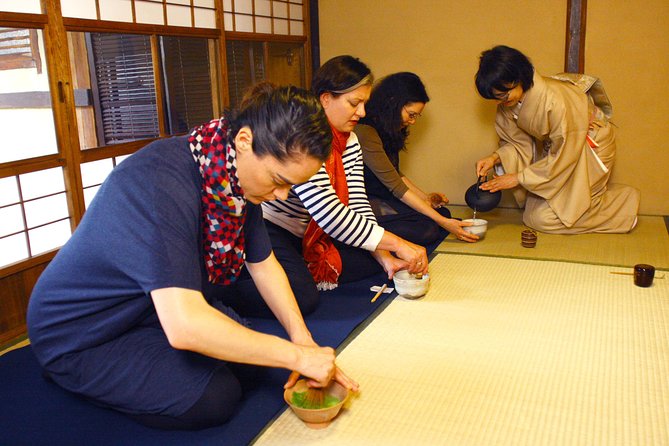
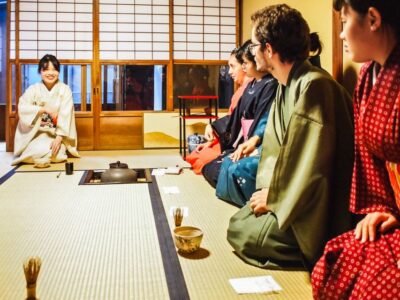
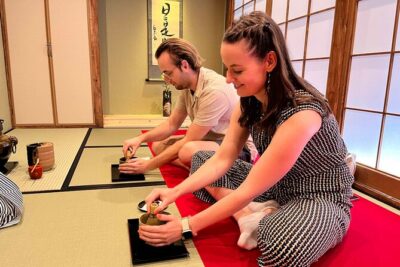
The session combines explanation, demonstration, and your own attempt at making matcha. You learn about the basic preparation of the tea, then watch the host perform a tea ceremony. The demonstration is not treated as a silent display. The hosts explain what they are doing and provide background on the ceremony’s history and place in Japanese culture.
That teaching style matters. A formal tea ceremony can seem slow or mysterious if you do not know what to notice. Clear explanations help you understand why the host handles the bowl, tools, and tea with such care. The experience also connects the ceremony with monks and samurai, giving you a useful starting point for understanding how the practice developed.
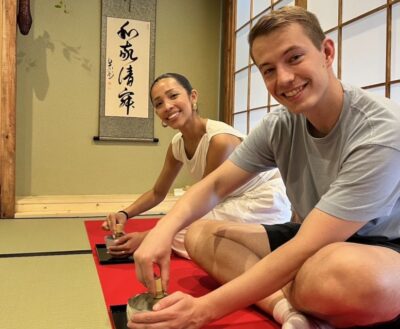
You then prepare your own bowl. The activity includes matcha from an organic farm, and the practical lesson is meant to help you brew a good cup rather than merely copy a few movements. The information provided does not give a detailed list of tools or a step-by-step recipe, so you should see this as a guided introduction rather than a professional tea-making class.
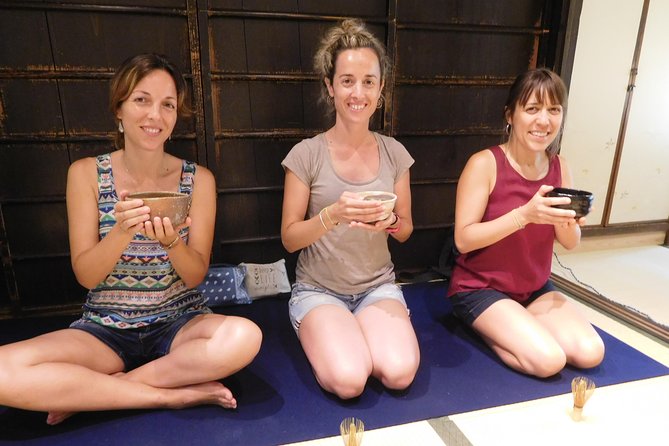
The visit ends with matcha and Japanese sweets from a famous Kyoto confectionary. The sweets are not an afterthought. Traditional Japanese confectionery is often served with matcha because its sweetness balances the tea’s bitter, grassy edge. Here, the pairing gives you a better sense of how the drink is meant to be enjoyed.
Why the hands-on matcha lesson works
Watching a ceremony has value, but making the tea yourself changes your understanding. You notice the texture, the color, and the effort required to produce a smooth bowl. Even a short lesson can show you why matcha is whisked rather than brewed like loose-leaf tea.
The experience promises a chance to master the art of brewing the perfect cup. I would read that as friendly instruction, not a guarantee that you will reach professional level in 60 minutes. Matcha preparation has enough small details to reward practice, and this session gives you a first try in a supportive setting.
This is especially useful if you are curious about Japanese food and drink but do not want a long, formal cultural class. You get a physical activity, a drink, a sweet, and a story about the ceremony’s roots. That mix keeps the hour moving.
The small group limit also helps. With no more than six people, the hosts can give each person a clear demonstration and watch you prepare your tea. The experience is likely to feel more personal than a large presentation, although the exact amount of one-to-one help will depend on the group.
The ceremony demonstration and its cultural context
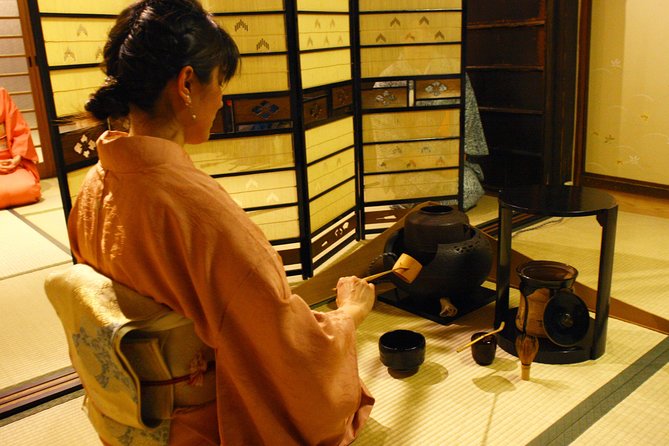
The ceremony is one of the strongest reasons to book this experience. The hosts explain the form in simple, clear terms, then give a thorough demonstration. You are able to watch the sequence before trying the preparation yourself.
The background includes the ceremony’s connection with monks and samurai, along with its place as one of Japan’s most cherished cultural forms. That context is useful because tea ceremony is not only about drinking matcha. The gestures, order, and attention to presentation all contribute to the experience.
You should also remember that a short tourist activity cannot cover every school, rule, or historical period connected with Japanese tea. The value here is accessibility. You receive enough explanation to understand what you see, without needing prior knowledge or a command of Japanese.
The hosts have been described as kind and professional, with explanations that are easy to follow. That is important for families and first-time visitors. The session is not built around showing off specialist vocabulary. It is meant to help you take part.
A few more tea experiences around Kyoto worth a look
- Kyoto: Table-Style Tea Ceremony at a Kyo-Machiya
★ 4.9 · 1,211 reviews - Kimono Tea Ceremony at Kyoto Maikoya, NISHIKI
★ 5.0 · 911 reviews - Kyoto: Kimono Tea Ceremony at Orizuruya Gion
★ 4.9 · 618 reviews - Kyoto: Tea Ceremony in 100-year-old Kyo-Machiya Townhouse
★ 4.8 · 546 reviews
A bowl of organic matcha with Kyoto sweets
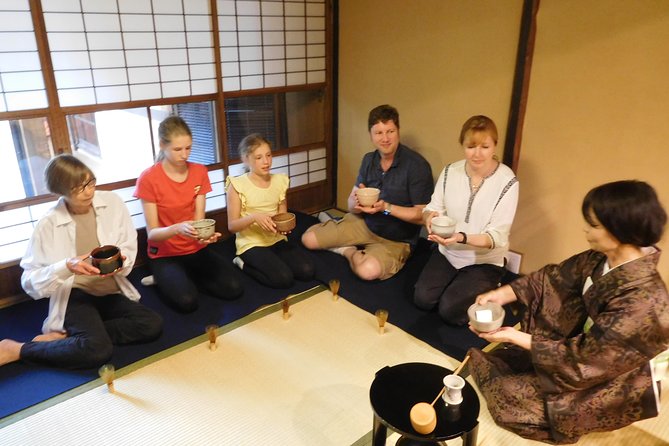
The included food and drink are modest but well chosen. Each participant receives a bowl of matcha and Japanese sweets. Since the price is $27.59, having both refreshments included makes the experience feel like a complete cultural stop rather than a talk with an extra charge at the end.
The matcha comes from an organic farm. The supplied details do not name the farm or describe its growing methods, so I would not book this expecting a farm-to-cup tasting lesson. Still, the use of a specified organic product gives the tea portion a little more care than an anonymous powdered drink.
The sweets come from a famous Kyoto confectionary, though its name is not provided. You should expect Japanese confectionery served as part of the ceremony, but the exact type and flavor may vary. If you have food allergies or strict dietary needs, the available information does not confirm ingredients or substitutions, so ask the provider before booking.
The balance of bitter matcha and sweet confectionery is part of the lesson. It helps you understand why the tea is served with a small sweet instead of being treated like a standalone café drink.
Is $27.59 good value for one hour?
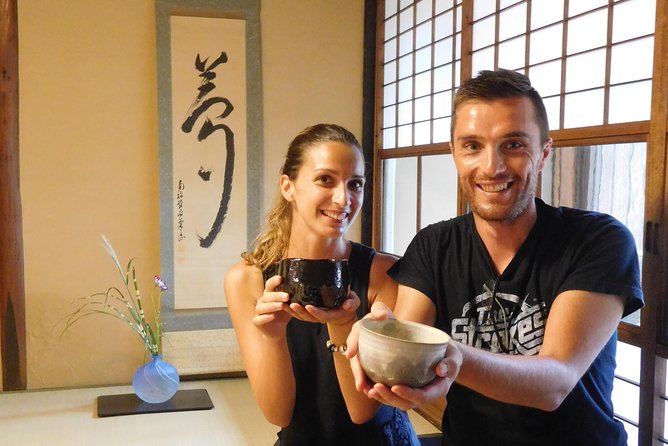
At $27.59 per person, this is not the cheapest cup of tea you will have in Kyoto. But the comparison is not really with a café. The fee covers access to a traditional townhouse, cultural explanation, a ceremony demonstration, hands-on preparation, matcha, and Japanese sweets.
I consider that fair value for visitors who want a focused cultural activity without giving up half a day. You are paying for instruction and setting as much as for the drink. The small group maximum makes the price more appealing, since personal demonstrations are harder to provide in a large class.
The value is weaker if you only want to taste matcha. Kyoto has plenty of places where you can buy tea and sweets for less. This activity makes sense when you want to understand the preparation, observe the ceremony, and see a machiya from inside.
It also suits a crowded sightseeing schedule. One hour is long enough to feel like a real activity, but short enough to fit around temples, shopping, or an evening meal. Since the experience starts and ends at the same location, you do not need to arrange a separate return transfer.
Who will enjoy this experience most?
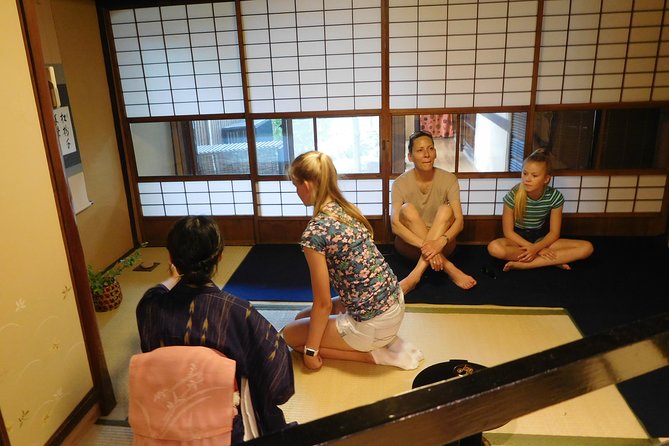
I would recommend it to first-time visitors who want a simple introduction to Japanese tea culture. You do not need previous knowledge, and most people can take part. The clear explanations and practical lesson make it approachable for adults, families, and anyone who wants more than a photo opportunity.
It is also a good choice for matcha fans. You can learn how the tea is prepared, sample an organic product, and compare the taste with matcha drinks you may have had elsewhere. The sweets add a useful point of contrast.
The activity may suit families with older children or teenagers who can follow a calm demonstration and take part in the preparation. The information provided does not state a minimum age, so confirm that point if you are booking for young children.
Couples and small groups may appreciate the townhouse setting and the six-person limit. Solo visitors can also fit comfortably into the format, since the activity does not require you to arrive with a group.
You might choose another experience if you want an extended tea ceremony, a full meal, several kinds of tea, or a lesson in the broader history of Japanese tea schools. None of those are promised here. This is a short, hands-on introduction with a strong setting.
Practical details that matter
The meeting point is at Ami Kyoto, 605 Nishidacho in Kyoto’s Shimogyo Ward. The activity is near public transportation, but hotel pickup and drop-off are not included. Plan to reach the townhouse on your own and allow time to find the exact address.
A mobile ticket is provided, which is convenient for keeping the booking on your phone. Confirmation is sent within 48 hours, subject to availability, so do not assume the reservation is final until you receive it.
Free cancellation is available if you cancel at least 24 hours before the local start time. Cancellations or changes made inside that window are not refunded or accepted. That policy is fairly flexible for a scheduled activity, but you should check your Kyoto plans before booking.
The experience has a maximum of six people, and the available information says most participants can take part. No specific accessibility details are given, so contact Ami Kyoto directly if you need information about the townhouse layout or physical access.
The activity is typically booked about 19 days ahead. That does not mean every date sells out, but it is a useful signal for planning. If this is important to your Kyoto itinerary, reserve before the final few days.
Should you book the Ami Kyoto tea ceremony?
Book it if you want a short, practical introduction to matcha in a traditional Kyoto setting. The combination of an 80-year-old machiya, a careful ceremony demonstration, hands-on preparation, organic matcha, and Japanese sweets gives the hour real substance.
The experience is especially appealing at $27.59 when you value personal attention and a small group. The main limitation is its short length. You will not become a tea master or explore every side of Japanese tea culture, but you will leave with a clearer idea of how the ritual works and why the tea is prepared with such care.
For a first taste of Kyoto’s tea tradition, I would book it. If you already know matcha well or want a long, formal ceremony, choose a more advanced experience instead.
FAQ
How long does the tea ceremony experience last?
The activity lasts approximately one hour.
Where does the experience take place?
It takes place at Ami Kyoto, 605 Nishidacho, Shimogyo Ward, Kyoto, 600-8397, Japan.
Does the experience include matcha and sweets?
Yes. The experience includes one bowl of matcha green tea and Japanese sweets.
Do I get to make my own matcha?
Yes. The activity includes a hands-on lesson in preparing matcha, along with demonstrations from the host.
How many people can join?
The maximum group size is six people.
Is transportation included?
No. Hotel pickup and drop-off are not included. The activity is near public transportation, and you meet at the stated Kyoto address.
Can I cancel for a full refund?
Yes, if you cancel at least 24 hours before the experience start time. Cancellations or changes made less than 24 hours before the start are not refunded or accepted.
Just added around Kyoto
- Whisk Your Own Matcha: A Zen Matcha Experience at Temple★ 3.6 · 7 reviews
- Uji Walking Tour – Byodo-in temple and Tea Ceremony from Kyoto★ 3.5 · 3 reviews
- Traditional Tea Ceremony in Kyoto★ 4.5 · 3 reviews
- Kyoto: Authentic Tea Ceremony in a Small Group★ 5.0 · 7 reviews
- Tea ceremony at Kyoto’s Zen Temple Teahouse★ 5.0 · 2 reviews
- Tea Ceremony in 150 Years Old Townhouse with Tables and Chairs★ 5.0 · 22 reviews
- Silent Beauty of Kyoto Zen Walk and Tea Experience★ 5.0 · 2 reviews
- Sencha-do the Japanese Tea Ceremony Workshop in Kyoto★ 5.0 · 21 reviews
Tea Ceremony Experiences, compared.
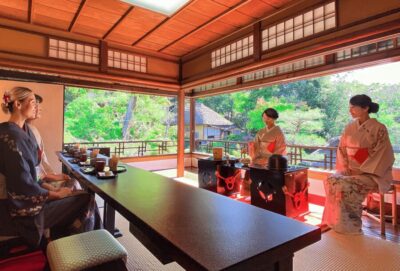
Tea Ceremony in a Traditional Tea House in Kiyomizu
Read our review →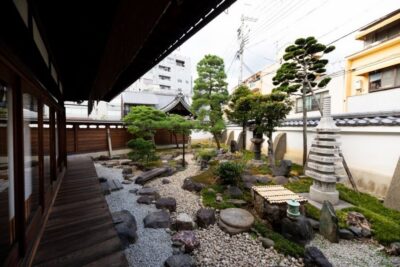
Browse the lists this tour appears in