
Review · KYOTO
Sencha-do the Japanese Tea Ceremony Workshop in Kyoto
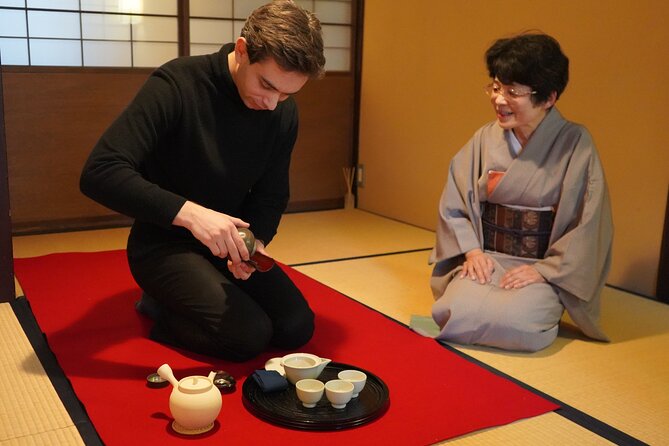
Senchado gives you a different look at Japanese tea culture. Instead of watching a matcha ceremony from a respectful distance, you handle the utensils, brew sencha from steamed tea leaves, and serve the tea yourself under the calm guidance of a Higashi Abe school master. The hands-on lesson and the chance to ask detailed questions make this more than a staged demonstration.
I like two things right away: the tiny group size, capped at four, and the focus on sencha rather than the matcha most visitors already know. I also like that the school welcomes photos, shares its family and school history, and lets children take part. The main drawback is practical: the address can be difficult to find, even though it is near Kitano Tenmangu Shrine and public transportation.
Key points to know before booking
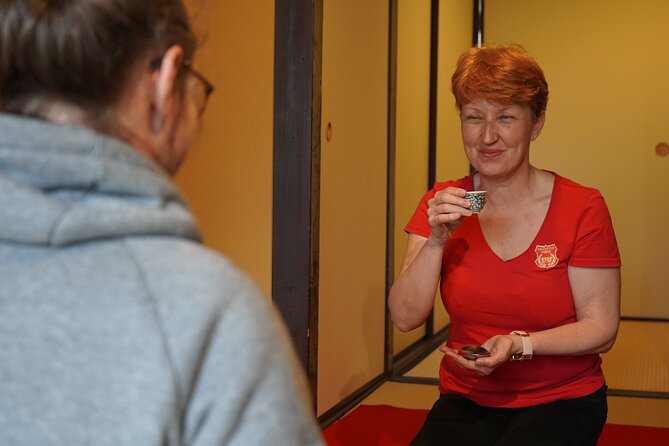
- You brew the tea yourself: The class moves from demonstration to guided practice with the actual tea utensils.
- This is sencha, not a standard matcha lesson: You learn the careful brewing of loose steamed tea leaves.
- The group is capped at four people: That makes the instruction personal and leaves room for questions.
- Kyo has been praised for patient teaching: The school’s instruction is respectful, gentle, and suited to families, couples, and solo visitors.
- Wagashi is included: Your freshly prepared tea is served with Japanese sweets.
- Allow extra time to find the studio: One visitor had trouble locating it from the online directions, so do not arrive at the last minute.
Senchado offers a hands-on side of Kyoto tea culture
Kyoto has no shortage of tea experiences. Many introduce you to matcha, explain a few formal gestures, and serve you a cup. This workshop takes another path. Senchado uses sencha, a brewed green tea made from steamed tea leaves, and asks you to take part in the process.
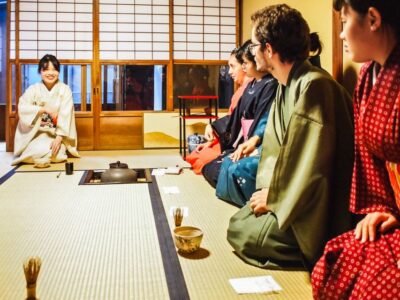
That distinction matters. You are not simply watching a host prepare tea while you sit quietly. First, you watch a formal demonstration by a master of the Higashi Abe school. Then you repeat the process with step-by-step help. You touch the utensils, measure your actions, and learn why each movement matters.
The ceremony is refined, but the teaching is not stiff. The instructor explains the history and traditions of the school, then gives you room to ask questions. The experience can be especially rewarding if you already know the basic matcha ceremony and want to see how another Japanese tea tradition works.
I also like the scale. With a maximum of four people, this is not a large cultural presentation where you can disappear in the back row. The small setting gives the teacher time to correct your technique and explain details that might otherwise be skipped.
More Tea Ceremony Experiences in Kyoto:
- Kyoto: Tea Ceremony in a Traditional Tea House in Kiyomizu
★ 4.9 · 3,519 reviews - Kyoto: Tea Ceremony Ju-An at Jotokuji Temple
★ 4.9 · 3,207 reviews - Kyoto: 45-Minute Tea Ceremony Lesson Experience
★ 4.3 · 2,378 reviews
Entering the Higashi Abe school near Kitano
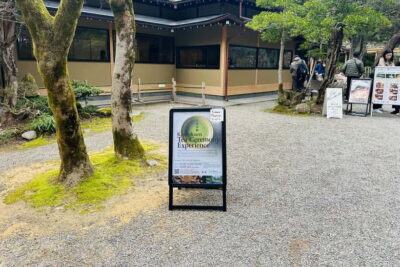
The meeting point is Higashi Abe School, also identified as Gaisuian, at 668-12 Toriimaecho in Kyoto’s Kamigyo Ward. It is near public transportation and the Kitano area, close to the well-known Kitano Tenmangu Shrine.
The location works well as part of a half-day around northwestern Kyoto. You can pair the tea workshop with a visit to the shrine and nearby streets, although the tea class itself begins and ends at the school. No private transportation is included, so you will need to make your own way there.
Give yourself extra time for arrival. The address is specific, but one visitor found the online directions hard to follow and needed help locating the school. That is a small issue, but it can become stressful if you are trying to arrive exactly on time. Save the address before leaving your hotel, check your route in advance, and avoid treating this as a place you can find casually while rushing from another sight.
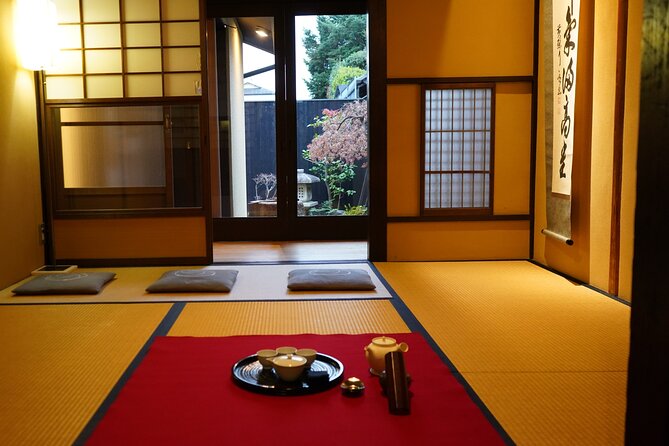
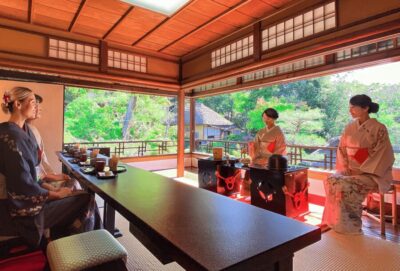
The studio is described as traditional, which adds to the value of the visit. You are learning in a school connected to the tea tradition, not in a generic room arranged only for tourists. The setting helps the ceremony make sense, especially when the instructor explains the school’s background and the family history tied to its practice.
The opening demonstration sets the tone
The first part is a sencha tea ceremony demonstration. Watch closely, because the demonstration gives you a visual map for the practical lesson that follows.
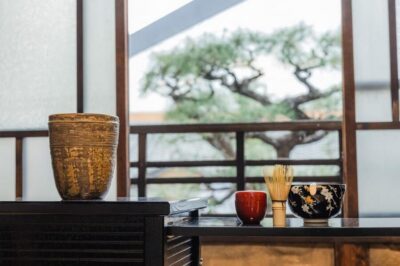
Senchado pays close attention to placement, movement, timing, and the way tea is offered. The point is not speed. Each step shows care for the tea, the utensils, and the person who will drink it. The instructor explains the meaning and background of the actions instead of asking you to copy a set of gestures without context.
This is where the class differs from a quick tasting. You learn that Japanese tea ceremony is not one single practice. The school introduces the Higashi Abe tradition and explains how senchado differs from other ceremonies in Kyoto. You might also hear about how long it takes to master the full form, a useful reminder that a 90-minute workshop is an introduction, not professional training.
The demonstration should appeal to people who enjoy watching skilled handwork. It also gives children a clear visual focus before they begin. Families who want an activity beyond temples and gardens may find this a good change of pace, as long as children can listen and follow careful instructions for part of the session.
Photography is allowed, so you can take pictures during the experience. Still, use common sense and let the instructor lead the rhythm. A camera or phone should record the lesson without turning your attention away from the actions you are there to learn.
Brewing your own sencha is the heart of the class
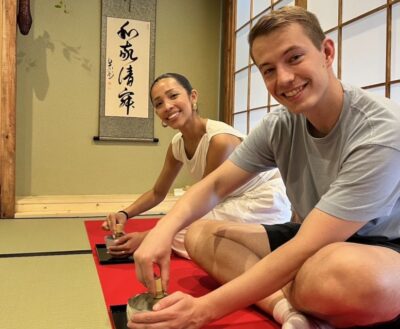
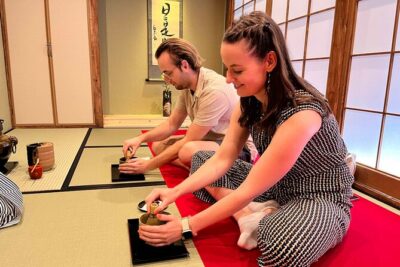
After the demonstration, you become the participant. Under the master’s guidance, you learn how to prepare and serve sencha with the school’s utensils.
This is the strongest reason to choose this workshop. In many tea ceremony introductions, you are not allowed to handle the tools. Here, the class gives you an active role. You learn through your hands, not just through a speech about tea culture.
Expect careful instruction rather than a rushed recipe. Senchado values precise technique and attention to detail, so the teacher may guide how you hold an item, place it, or serve the tea. The aim is not to turn you into a tea master in one sitting. It is to help you understand the discipline and thought behind the ceremony.
Kyo is specifically praised for patient and respectful teaching. The class also has access to the school’s grandmaster on some occasions, although the exact instructor can vary. The school identifies its instructor as a master of the Higashi Abe school, with experience teaching many students.
That level of instruction makes this useful for several kinds of visitors:
- If you are new to Japanese tea, you get a clear introduction without needing prior knowledge.
- If you already know matcha, you can compare a brewed sencha tradition with the powdered tea ceremony you may have seen elsewhere.
- If you are traveling with children, they can take part rather than only observe.
- If you are traveling alone, the small group gives you a natural setting for questions and conversation.
- If you care about craft and ritual, you get a closer look at the technique behind the finished cup.
The only caution is that this is a formal tradition. If you want a casual drink with little explanation, this may feel too structured. The careful pace is the point, so come ready to pay attention.
More Workshops in Kyoto:
- Private Kyoto Sushi Cooking Class & Tea Ceremony with Emika
★ 5.0 · 66 reviews - Nerikiri and Matcha Making Class in Kyoto
★ 5.0 · 13 reviews - Matcha Making Class in Tokyo with Authentic Japanese Sweets Set
★ 5.0 · 744 reviews - London: Traditional English Scone Making and Tea Workshop
★ 5.0 · 702 reviews
Sencha and wagashi finish the lesson
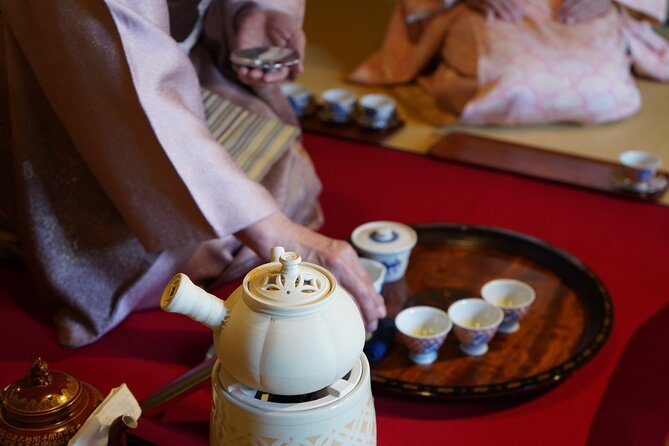
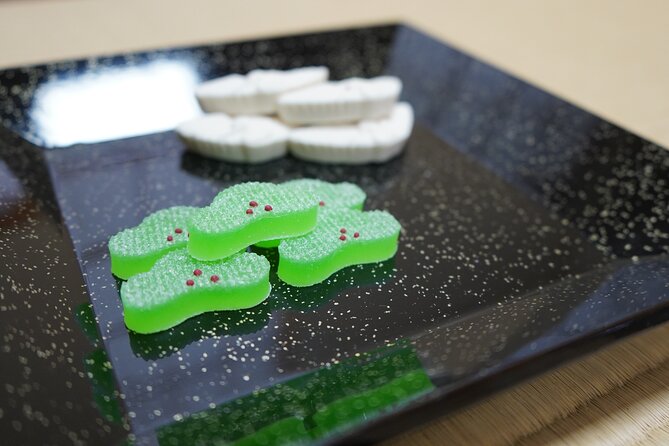
Once you prepare the tea, you drink it with wagashi, traditional Japanese sweets. Green tea and Japanese sweets are included in the price.
This final portion gives the ceremony a pleasant payoff. You can taste the tea you made and consider how brewing choices affect the result. The sweets provide a traditional partner to the tea and turn the lesson into a full cultural experience rather than a utensil demonstration.
One useful detail is that sencha may surprise visitors who know only matcha. Sencha is brewed rather than whisked, and it can have a sweet, flavorful character. If your idea of Japanese green tea is limited to strong powdered matcha, this workshop gives you a broader picture.
The food offering is modest, not a meal. Plan to eat before or after if you need lunch or a substantial snack. The value is in the tea, sweets, instruction, and setting, not in the amount of food served.
Why the 90-minute format works
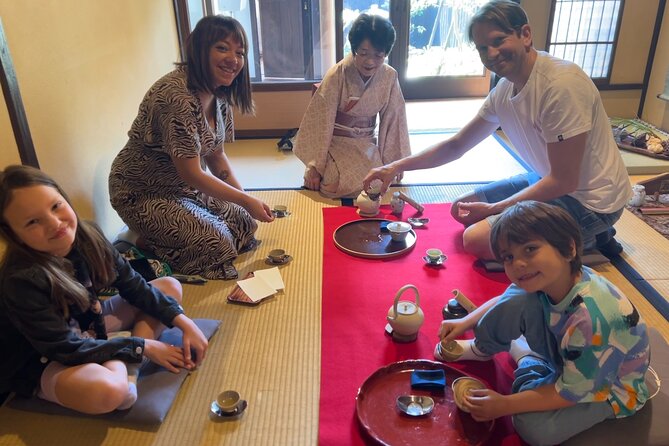
The experience lasts about one hour and 30 minutes. That is enough time for a demonstration, explanation, hands-on brewing, questions, and tea with wagashi without taking over your whole day.
I think the length suits Kyoto well. You can fit the class between sightseeing plans, then continue exploring the Kitano area. At the same time, the workshop is long enough to avoid the rushed feeling of a short photo stop.
The small group helps the timing. With no more than four participants, the teacher can give individual attention while keeping the ceremony calm. A larger class might be cheaper, but it would likely offer less time with the utensils and fewer chances to ask about the school’s customs.
The booking pattern suggests that people often reserve around three weeks ahead, with an average of 23 days. That does not mean you must book exactly that far ahead, but it is sensible to reserve early if your Kyoto dates are fixed. The group is tiny, and a popular time can fill faster than a large bus tour.
Is the $107.45 price good value?
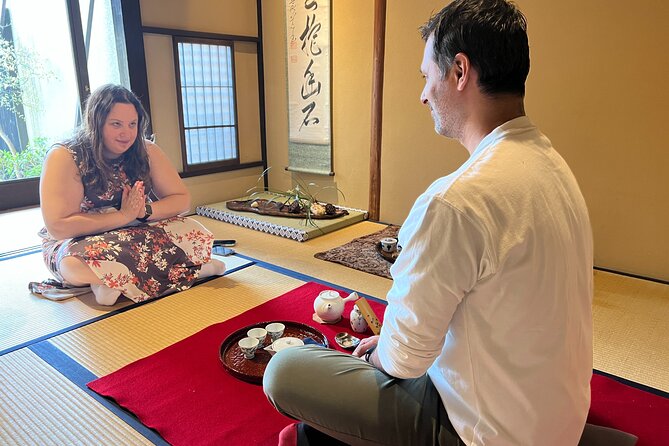
At $107.45 per person, this is not a budget tea tasting. You are paying for a specialized cultural lesson, a traditional setting, direct teaching from a Higashi Abe school master, green tea, wagashi, and a small group capped at four.
I see the value if you care about participation and context. A cheaper tea stop may give you a cup and a short explanation. This workshop gives you access to the utensils and teaches you how to prepare and serve sencha yourself. That personal instruction is the feature that justifies the higher price.
The cost makes less sense if you mainly want to sample Japanese tea or take a few photographs. You can find simpler tea experiences for that purpose. This class is for someone who wants to understand the ceremony and try the movements under guidance.
Group discounts are available, which may help if you are booking for a family or several companions. Since the maximum is four, larger parties may need to check how the booking is arranged. The listed price is per person, so confirm the total when you reserve.
The best fit for families and curious first-timers
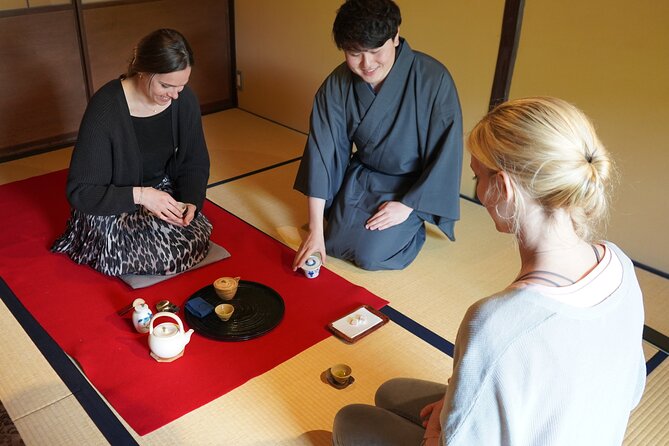
This workshop has a welcoming shape for families, couples, and solo visitors. Children can take part in the ceremony with step-by-step instruction, and the intimate group keeps the session from feeling anonymous.
It also suits anyone who wants more than the usual Kyoto checklist. Temples and gardens show you the city’s public face. A tea school gives you a quieter look at a tradition practiced through discipline, etiquette, and repeated gestures.
The class is less suitable if you want a fast, informal activity. It asks you to slow down and respect the order of the ceremony. That is not a flaw, but it is a clear choice.
Most people can participate, and service animals are allowed. The available information does not give specific details about seating, stairs, or other mobility arrangements, so you should contact the provider directly if you need those details before booking.
Booking, weather, and cancellation details
You receive confirmation at the time of booking, and a mobile ticket is available. The activity ends back at the meeting point, so you do not need to arrange a separate return transfer.
Free cancellation is available if you cancel at least 24 hours before the local start time. Changes or cancellations made within 24 hours are not accepted for a refund. The experience may also be canceled because of poor weather or because the minimum number of participants is not reached. In either case, you are offered another date or experience, or a full refund.
The weather rule is worth noting because it is unusual for an indoor tea class. Check the final booking terms and keep some flexibility in your Kyoto schedule if possible.
Should you book the Sencha-do workshop?
Book this experience if you want to handle the tea utensils, learn a less familiar Japanese tea tradition, and spend 90 quiet minutes with a skilled teacher in a very small group. It is especially well suited to families, first-time visitors interested in Japanese culture, and anyone who already knows matcha and wants to compare it with sencha.
Think twice if you only want a quick cup of tea, if $107.45 feels high for a cultural lesson, or if your schedule cannot allow extra time to find the studio. For the right visitor, the hands-on teaching, personal attention, school history, and wagashi make this one of Kyoto’s more useful cultural activities. Save the address, arrive early, and come ready to brew.
FAQ
How long does the Sencha-do workshop last?
The experience lasts approximately one hour and 30 minutes.
What is included in the price?
Green tea and Japanese sweets are included. Private transportation is not included.
How many people can join the class?
The activity has a maximum of four participants.
Where does the workshop take place?
It begins at Higashi Abe School, also identified as Gaisuian, at 668-12 Toriimaecho, Kamigyo Ward, Kyoto. The activity ends back at the meeting point.
Can I take photographs during the ceremony?
Yes. You are welcome to take as many pictures as you like during the experience.
What is the cancellation policy?
You can cancel at least 24 hours before the local start time for a full refund. Cancellations or changes made less than 24 hours before the start time are not accepted for a refund. If the activity is canceled because of poor weather or because the minimum number of participants is not reached, you are offered another date or experience, or a full refund.
Just added around Kyoto
- Whisk Your Own Matcha: A Zen Matcha Experience at Temple★ 3.6 · 7 reviews
- Uji Walking Tour – Byodo-in temple and Tea Ceremony from Kyoto★ 3.5 · 3 reviews
- Kyoto: Authentic Tea Ceremony in a Small Group★ 5.0 · 7 reviews
- Tea ceremony at Kyoto’s Zen Temple Teahouse★ 5.0 · 2 reviews
- Traditional Tea Ceremony in Kyoto★ 4.5 · 3 reviews
- Tea Ceremony in 150 Years Old Townhouse with Tables and Chairs★ 5.0 · 22 reviews
- Silent Beauty of Kyoto Zen Walk and Tea Experience★ 5.0 · 2 reviews
- Tea Ceremony Experience in Traditional Kyoto Townhouse★ 5.0 · 19 reviews
Tea Ceremony Experiences, compared.
Tea Ceremony in a Traditional Tea House in Kiyomizu
Read our review →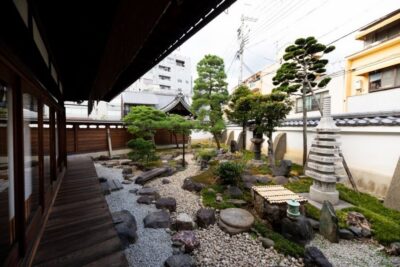
Browse the lists this tour appears in