
Review · KYOTO
Tea Ceremony in 150 Years Old Townhouse with Tables and Chairs
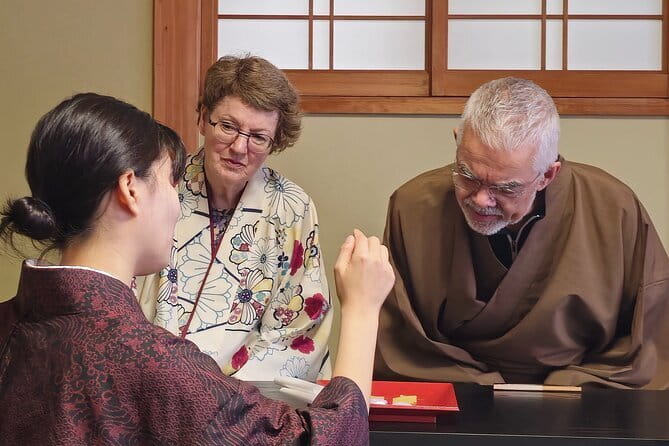
Kyoto’s tea ceremony is not just a quiet cup of green tea. It is a carefully ordered lesson in respect, movement, and attention, held here inside a 150-year-old townhouse near Ninenzaka. In about 50 minutes, you learn the meaning behind the tools and gestures, then prepare matcha yourself.
I like the hands-on preparation, since you do more than sit and watch. I also like the setting and the two handcrafted seasonal sweets, which give the ceremony a pleasant, edible finish.
The main thing to consider is the group format. The maximum is 15 people, and one delayed group has caused a late start before. Arrive promptly, dress modestly, wear socks, and treat the room with the quiet respect the ceremony asks for.
Key points at a glance
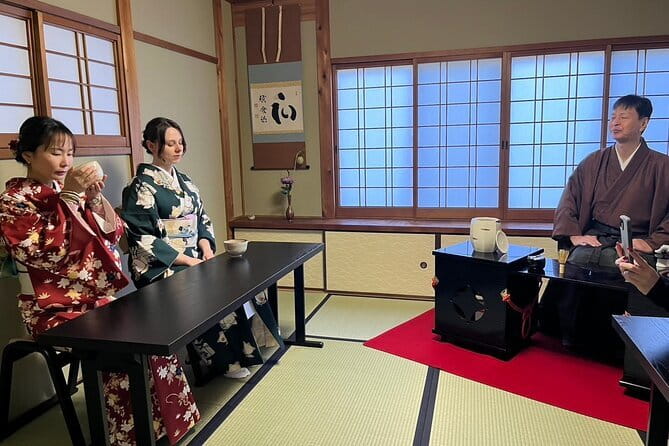
- A 150-year-old townhouse near Ninenzaka: You experience the ceremony in one of Kyoto’s best-known traditional districts.
- You make your own matcha: The tea master explains each step, so this is more than a demonstration.
- Two cups of Uji matcha and two sweets: The price includes high-quality tea from Kyoto and seasonal Japanese confections.
- English instruction every day: A tea master leads the ceremony with help from an assistant or interpreter.
- Small-group setting: Groups can reach 15 people, but the room still offers a personal cultural lesson.
- Simple dress rules matter: Wear socks, avoid strong perfume, and choose clothing that does not expose much skin.
A quiet lesson in Kyoto tea culture
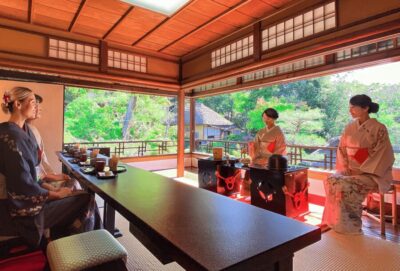
This experience works because it connects three things that are easy to separate on a standard sightseeing day: place, ritual, and taste. You are not learning about tea in a modern classroom. You are sitting in a traditional townhouse in Higashiyama, close to the stone lanes and wooden buildings of Sannenzaka and Ninenzaka.
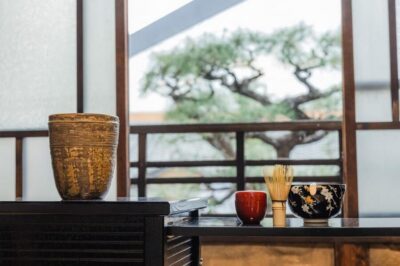
The setting gives the lesson some weight. A tea ceremony can feel abstract when explained in a hotel or tour office. Here, the old building helps you understand why tea rooms value simplicity, careful movement, and respect for the moment.
The course is designed for first-time participants. You do not need to know Japanese etiquette, understand the tools, or recognize the difference between matcha styles before you arrive. The tea master explains what is happening and why, with English support available every day.
That makes this a good choice if you want cultural context without committing to a long formal ceremony. At 50 minutes, it fits neatly before or after a walk through Higashiyama.
More Tea Ceremony Experiences in Kyoto:
- Kyoto: Tea Ceremony in a Traditional Tea House in Kiyomizu
★ 4.9 · 3,519 reviews - Kyoto: Tea Ceremony Ju-An at Jotokuji Temple
★ 4.9 · 3,207 reviews - Kyoto: 45-Minute Tea Ceremony Lesson Experience
★ 4.3 · 2,378 reviews
What happens inside the Ninenzaka townhouse
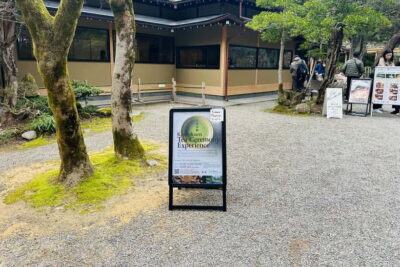
Your meeting point is Tea Ceremony and Cultural Experience Kangetsu Kyoto, at 349-19 Masuyacho in Higashiyama Ward. The activity begins and ends there, so you will not need to follow a guide through several parts of the city.
The nearby Ninenzaka area is one of the more atmospheric parts of Kyoto, but it can also be busy. Give yourself time to find the townhouse. The staff send location details by text, and the address is close to public transportation, but arriving at the last minute is not wise.
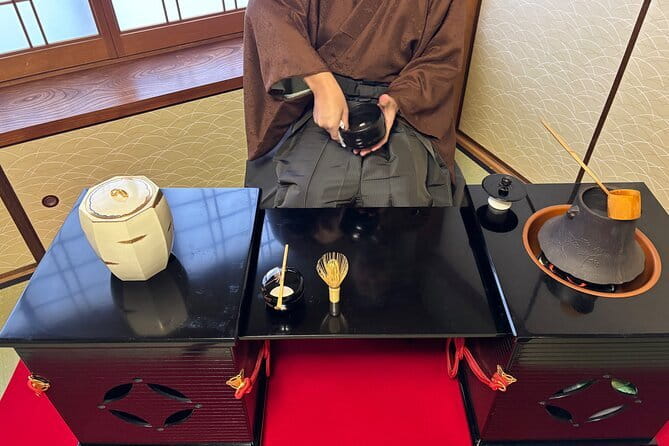
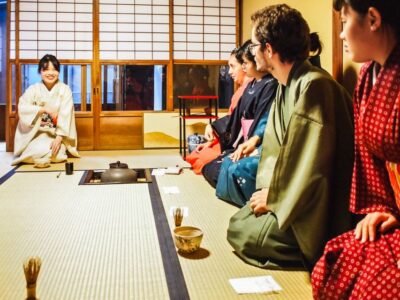
The session begins with an explanation of the ceremony and its background. You learn about the role of matcha in Japanese culture, the purpose of the utensils, and the meaning of basic etiquette. This opening matters because it turns the ceremony from a sequence of unfamiliar motions into something you can follow.
The tea master demonstrates the preparation. Watch closely, since video recording during the demonstration is not allowed. You may use a smartphone in the tea room, but only smartphones are permitted there, and the demonstration itself must remain off camera.
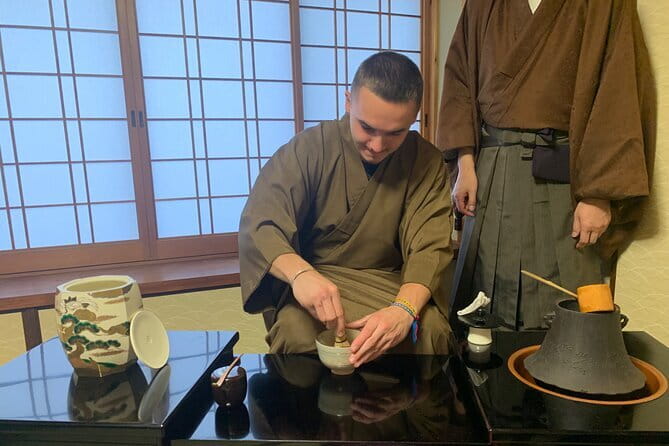
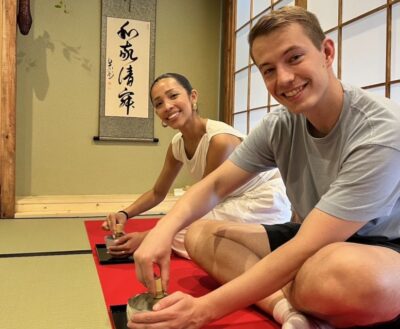
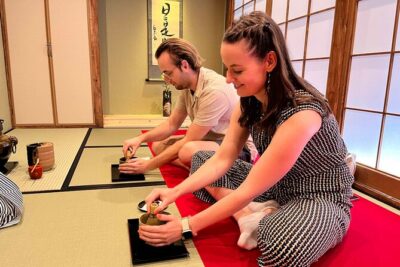
Then the focus shifts to you. Using the provided tools, you prepare your own cup of matcha. The instructions are given step by step, so you are not expected to guess how to handle the whisk or mix the tea.
This practical part is the heart of the course. You learn by doing, and you can taste the difference between simply drinking matcha and taking part in its preparation. The tea master or assistant can also answer questions as the session proceeds.
Why making your own matcha matters
Matcha is powdered tea, not loose leaves steeped in hot water. The powder is whisked into the water, so you drink the whole tea leaf. That is why the preparation method and the texture matter so much.
The course gives you a chance to see this process at close range. You handle the tea tools, follow the movements, and drink what you make. Even if your cup is not perfect on the first try, that is useful. You leave with a basic understanding of what makes matcha smooth, foamy, and pleasant rather than bitter or lumpy.
The included tea is high-quality matcha from Uji, the Kyoto area famous for tea production. Two cups are included, along with two different seasonal Japanese sweets. The second cup gives you another chance to enjoy the tea after the demonstration and your own preparation.
The sweets are not just a snack on the side. Traditional Japanese confections are often chosen to balance the taste of matcha. Their sweetness prepares your palate for the tea’s stronger, slightly bitter flavor.
You can also ask questions during the final part of the session. This is useful if you want to know more about tea etiquette, the equipment, the meaning of the gestures, or the place of matcha in Japanese life.
The townhouse setting and the feel of the room
The old townhouse is an important part of the appeal. You are in a building with a long connection to Kyoto’s traditional streets, not an attraction built only for a quick photo.
The room is meant to be calm and focused. Perfume is prohibited because it can interfere with the smell of the incense and tea. This may sound strict, but it makes sense once you are seated in a small tea room. Scents become part of the experience, and strong fragrance can distract from them.
Clothing also matters. Wear socks, and choose clothes that do not show too much skin. If you forget socks, you will need to buy them. These rules are practical signs of respect for the room, the tea master, and the other people sharing the session.
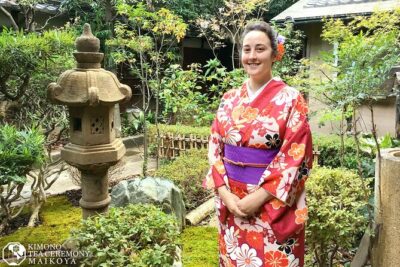
A kimono is not included, but you can rent a two-piece kimono for an additional 1,000 yen. That option can make the occasion feel more special, especially if you are already spending the day around Ninenzaka and want photographs in traditional clothing.
Do not assume the kimono rental is part of the basic booking. The included experience is the tea ceremony, tools, tea, and sweets. If wearing traditional clothing is central to your plan, confirm the arrangement before you arrive.
A few more tea experiences around Kyoto worth a look
- Kyoto: Table-Style Tea Ceremony at a Kyo-Machiya
★ 4.9 · 1,211 reviews - Kimono Tea Ceremony at Kyoto Maikoya, NISHIKI
★ 5.0 · 911 reviews - Kyoto: Kimono Tea Ceremony at Orizuruya Gion
★ 4.9 · 618 reviews - Kyoto: Tea Ceremony in 100-year-old Kyo-Machiya Townhouse
★ 4.8 · 546 reviews
A small group, with one important caveat
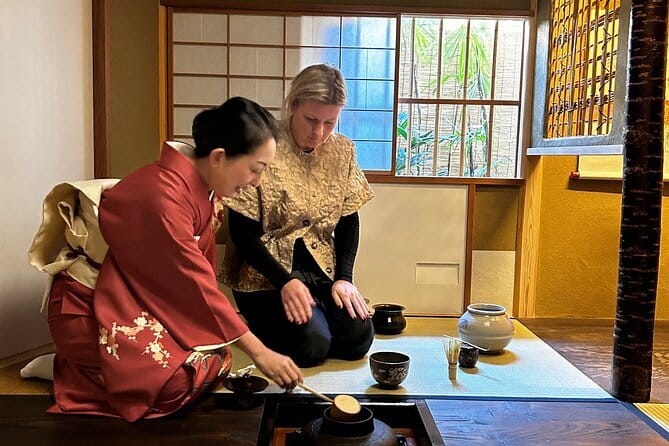
The activity allows up to 15 people. That is small enough for the tea master and assistant to explain the process, but it is not a private ceremony.
This distinction matters. Some people book a tea ceremony expecting a one-to-one lesson. This experience is a group session, so you may share the room with families, couples, and solo participants. The group size can make the atmosphere friendly and accessible, but it also means the pace must work for everyone.
Children under seven are not permitted. Older children can take part, and the activity can work well for families with school-age children or teenagers who enjoy learning by doing. The quiet setting and formal rules may not suit every child, so consider your child’s patience before booking.
The strongest sessions depend on everyone arriving on time and behaving respectfully. A late group has previously kept others waiting, which is especially awkward in an activity built around punctuality and courtesy. You can help protect the tone of the ceremony simply by arriving early and silencing your phone.
What the English instruction is like
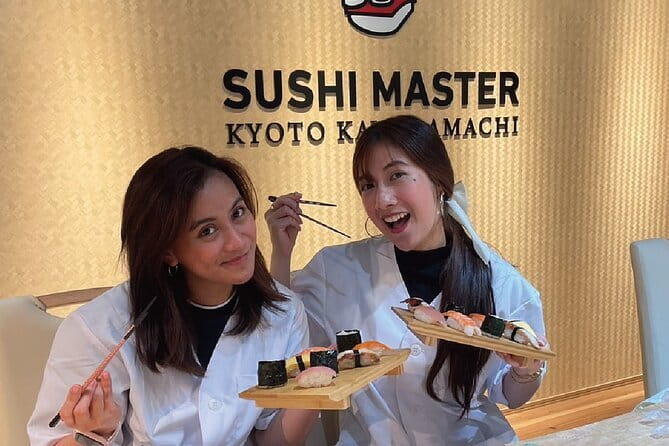
The experience is offered in English every day. The tea master leads the ceremony, while an assistant or interpreter helps explain the process and answer questions.
This arrangement is useful because the ceremony has two layers. You need to understand the practical steps, but you also want to know why they matter. Clear interpretation helps connect the hand movements, utensils, and etiquette to Japanese tea culture.
The instruction is intended to be approachable rather than overly formal. You will receive guidance before preparing your own tea, and the activity includes time for questions at the end.
Still, this is not an academic course in tea history. The 50-minute format gives you a focused introduction, not a detailed study of every tea school or ceremony style. If you want a short cultural lesson that leaves room for the rest of your Kyoto day, the length is a strength.
Is $28.90 a fair price?
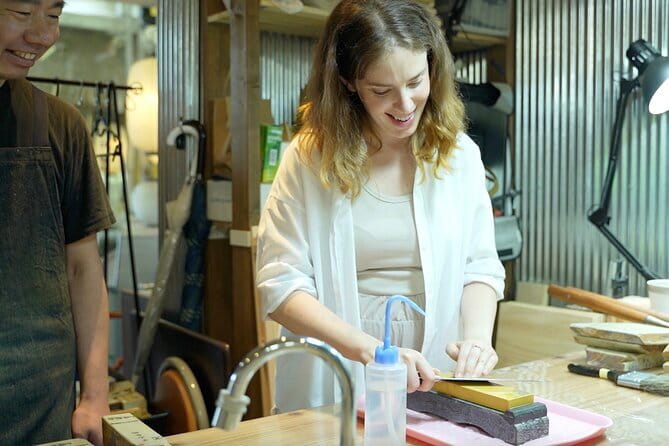
At $28.90 per person, the cost is reasonable for a structured cultural activity in central Kyoto. You receive instruction from a tea master, use of the tea tools, two cups of Uji matcha, two seasonal sweets, and access to the townhouse setting.
The value depends on what you want. If you only want to taste matcha, you can spend less at a café. But a café will not usually explain the etiquette, show the tools, guide you through preparation, or give you a chance to make the tea yourself.
The price also avoids a common problem with cultural activities: paying extra for every central feature. Here, the basic cost includes the main lesson and refreshments. The main additional expense is the optional kimono rental, plus socks if you arrive without them.
For couples, families with older children, and first-time visitors to Kyoto, this is a sensible way to add cultural depth without giving up half a day. It is short enough to fit around sightseeing, yet substantial enough to feel like an activity rather than a quick tasting.
Who will enjoy this most
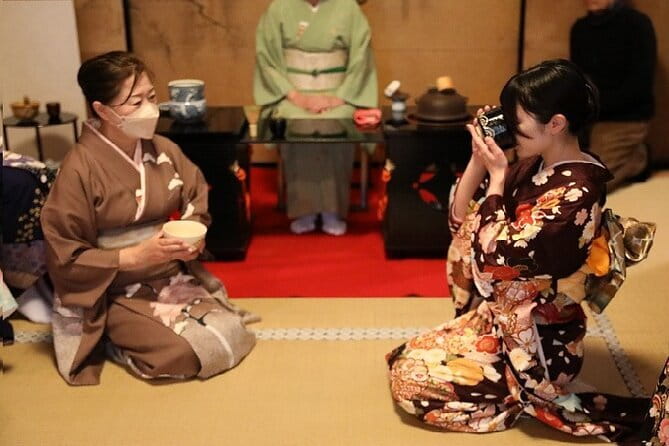
I would recommend this to you if you want a calm, guided introduction to Japanese culture. It suits people who are curious about matcha but do not know where to begin.
It is especially fitting for:
- First-time visitors who want more than temple photographs
- Tea drinkers who want to understand how matcha is prepared
- Couples looking for a quiet cultural activity
- Families with children aged seven and older
- Anyone interested in Japanese etiquette and traditional spaces
- People staying near Higashiyama who want an activity close to Ninenzaka
You may want to skip it if you dislike group activities, have strong perfume you cannot go without, or expect a private ceremony with traditional clothing included. It is also not the right choice if you want to record the full demonstration on video.
The experience asks you to slow down. That is part of its value, but it also means you should not treat it like a fast stop between major sights.
Practical details that affect your visit
The course lasts about 50 minutes. It starts and ends at the Kangetsu Kyoto townhouse, so plan your transport around that address rather than a general Ninenzaka landmark.
Wear socks and modest clothing. Avoid perfume completely. Inform the provider about allergies in advance, particularly because the experience includes traditional sweets.
Bottled water, soda, and alcohol are not included. You receive tea and sweets, not a full meal, so plan lunch or dinner separately.
The experience requires good weather. If poor weather causes cancellation, you are offered another date or a full refund. Otherwise, you can cancel for a full refund up to 24 hours before the start time. Changes or cancellations made inside that 24-hour window are not accepted for a refund.
The activity has a 4.8 rating from 22 ratings and a 95 percent recommendation rate. Those figures suggest a reliable experience, but the most useful lesson is that the quality depends partly on group behavior. Arrive on time, follow the room’s rules, and keep your expectations focused on a shared cultural lesson rather than a private performance.
My verdict: a strong short cultural experience
I would book this tea ceremony if I had one morning or afternoon in Kyoto and wanted to understand matcha rather than simply drink it. The old townhouse, Uji tea, seasonal sweets, and hands-on preparation create a well-balanced 50-minute lesson.
The best part is the chance to make your own cup after watching the tea master. That small act gives the ceremony a personal finish and helps the etiquette stick in your memory.
Book it if you value setting, explanation, and participation. Skip it if you want complete privacy, a long formal ceremony, or a kimono included in the base price. For most first-time visitors, the cost is fair and the short format makes it easy to add to a Ninenzaka sightseeing day.
FAQ
Where does the tea ceremony take place?
It takes place at Tea Ceremony and Cultural Experience Kangetsu Kyoto, at 349-19 Masuyacho, Higashiyama Ward, Kyoto. The activity begins and ends at this meeting point.
How long does the experience last?
The tea ceremony lasts approximately 50 minutes.
Is the experience offered in English?
Yes. English experiences are provided every day, with the tea master and an assistant or interpreter explaining the ceremony and preparation.
Is the tea ceremony private?
No. This is a group activity with a maximum of 15 participants.
What is included in the price?
The price includes all fees and taxes, use of the tea tools, two cups of high-quality Uji matcha, and two different seasonal Japanese sweets.
What should I wear or bring?
Wear socks and clothing that does not expose too much skin. Do not wear perfume, since it can affect the smell of the tea and incense. Only smartphones are allowed in the tea room, and video recording during the instructor’s demonstration is prohibited.
Just added around Kyoto
- Whisk Your Own Matcha: A Zen Matcha Experience at Temple★ 3.6 · 7 reviews
- Uji Walking Tour – Byodo-in temple and Tea Ceremony from Kyoto★ 3.5 · 3 reviews
- Traditional Tea Ceremony in Kyoto★ 4.5 · 3 reviews
- Kyoto: Authentic Tea Ceremony in a Small Group★ 5.0 · 7 reviews
- Tea ceremony at Kyoto’s Zen Temple Teahouse★ 5.0 · 2 reviews
- Tea Ceremony Experience in Traditional Kyoto Townhouse★ 5.0 · 19 reviews
- Silent Beauty of Kyoto Zen Walk and Tea Experience★ 5.0 · 2 reviews
- Kyoto Private Tea Ceremony at a Japanese Inns★ 5.0 · 12 reviews
Tea Ceremony Experiences, compared.
Tea Ceremony in a Traditional Tea House in Kiyomizu
Read our review →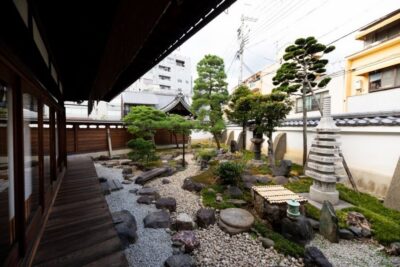
Browse the lists this tour appears in