
Review · OSAKA
Discover Japanese Tea Blending Techniques in Osaka
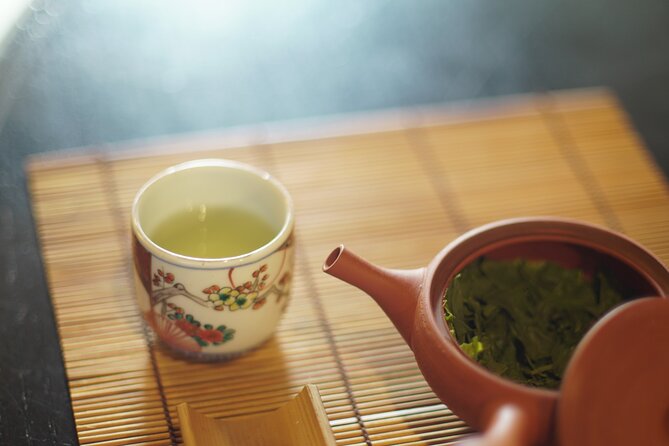
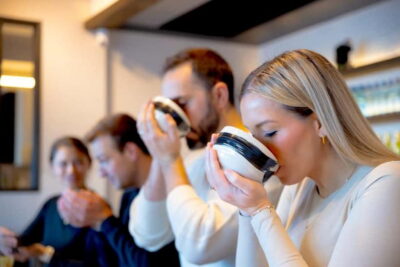
Japanese tea is more than a hot drink here. In this small workshop near Namba Yasaka Jinja, Ko shows you how temperature, timing, pouring, and even the way you hold a teapot can change the cup. You’ll taste sencha, wakocha, oolong, hojicha, and matcha, then use tea in modern drinks.
I like the maximum group size of three, which gives the session a personal feel rather than a classroom shuffle. I also like the mix of old and new: careful traditional brewing followed by fruit-based drinks and a tea cocktail. The main consideration is the price, $54.46 per person, which is fair for a private-feeling lesson but more than a simple tea tasting.
Key points at a glance

- Small-group teaching: The workshop accepts no more than three people, so you can ask questions and get hands-on help.
- Five tea styles: You’ll work with sencha, Japanese black tea called wakocha, Japanese oolong, hojicha, and matcha.
- Brewing skills you can use: Learn about water temperature, timing, tools, pouring, and proper teapot handling.
- Tea with a modern twist: The session includes fruit-based drinks and an alcohol-infused tea cocktail.
- A quieter Osaka setting: The meeting point is at Namba Yasaka Jinja, outside the busiest sightseeing areas.
- Useful take-home items: You receive recipes and small tea samples to brew after returning home.
Starting at Namba Yasaka Jinja
The workshop begins at 3:00 p.m. at Namba Yasaka Jinja, 2-chōme-9-19 Motomachi, in Osaka’s Naniwa Ward. This is a useful meeting point if you are already exploring the Namba area, yet the workshop gives you a reason to step away from the main shopping and entertainment streets.
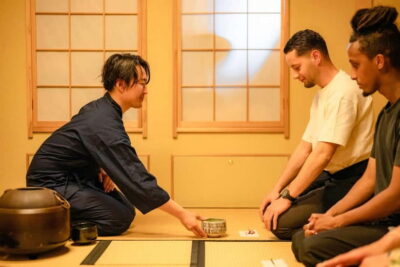
The location matters because the experience is designed to feel like a visit to a real tea space, not a large attraction built around a quick demonstration. The surrounding streets offer a calmer change from central Namba, and the tea room itself is described as cozy, with antique objects and a relaxed atmosphere.
You should plan your route before 3:00 p.m. and arrive with enough time to find the meeting point. The activity ends back where it starts, so you will not need to arrange a separate pickup or work out a second destination afterward.
The booking includes a mobile ticket, and confirmation arrives at the time of booking. Public transportation is nearby, which makes this a practical afternoon stop. Since the session is limited to three people, a late arrival could matter more than it would on a large group tour.
More Tea Making Classes in Osaka:
- Matcha Making Class in Osaka with Authentic Japanese Sweets Set
★ 5.0 · 509 reviews - Osaka: Matcha Making Experience with Japanese Sweets
★ 5.0 · 146 reviews - Matcha Making Class in Tokyo with Authentic Japanese Sweets Set
★ 5.0 · 744 reviews
Ko teaches tea as a practical skill
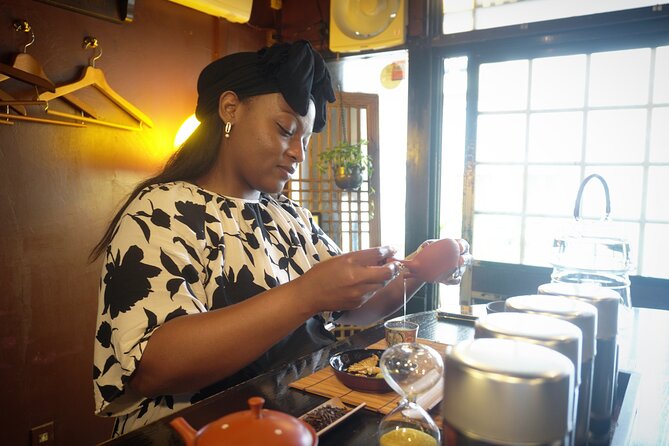
Ko is the host, teacher, and tea mixologist. The strongest part of the workshop is his ability to connect small physical details with the final taste. You will not just be told to wait a certain number of seconds. You’ll learn why brewing temperature matters, how to handle the teapot, and why the way you pour affects the drink.
That level of instruction makes the session useful after your holiday. By the end, you should feel more confident brewing loose-leaf tea at home, rather than treating Japanese tea as something that only works in a specialist shop.
Ko also brings a light, conversational approach. The setting is casual, so you can ask questions as you brew instead of sitting through a formal lecture. His English is described as very good, which is important for a workshop built around fine distinctions in flavor, technique, and history.
The small group helps here. With only three people allowed, you have a better chance to handle the tools yourself, watch closely, and get corrected when needed. If you prefer a quiet, personal lesson to a crowded cultural demonstration, this format is a strong match.
Five Japanese teas, five different lessons
The workshop covers several kinds of Japanese tea, and each one gives you a different way to think about brewing.
Sencha
Sencha is the familiar green tea many people associate with Japan, but this session treats it as more than a default beverage. You’ll consider the water temperature and brewing time needed to bring out its flavor without making it harsh.
This is one of the most useful parts for beginners. Many people use boiling water for every tea, then wonder why green tea tastes bitter. Learning to adjust the water and timing gives you a simple skill you can repeat at home.
A few more tea experiences around Osaka worth a look
- Osaka: Tea Ceremony Experience
★ 4.9 · 1,426 reviews - Tea Ceremony Experience in Osaka Doutonbori
★ 5.0 · 754 reviews - Osaka: Tea Ceremony, Calligraphy, and Kimono Experience
★ 4.9 · 130 reviews - Osaka: Japanese Traditional Sweets Making and Tea Ceremony
★ 4.7 · 118 reviews
Wakocha
Wakocha is Japanese black tea. It shows that Japanese tea culture is not limited to green tea and matcha. Its inclusion broadens the lesson and gives you a chance to compare how a different style responds to heat and brewing time.
For someone who already drinks black tea, this part may be especially interesting. You can place a Japanese-made black tea beside the green teas in the workshop and notice how the country’s tea traditions extend beyond the styles most often sold to visitors.
Japanese oolong tea
Japanese oolong adds another point of comparison. Since it is neither a standard green tea nor a black tea, it helps demonstrate how processing changes the character of the leaf.
The workshop discusses how each tea is made, not only how to pour hot water over it. That connection between production and preparation gives the tasting more meaning. You’re learning why the teas behave differently, not just memorizing a list of names.
Hojicha
Hojicha is roasted tea, and it is likely to be one of the most approachable cups for people who prefer a mellow, toasted flavor. It also offers a useful reminder that Japanese tea can taste very different from fresh green tea.
The workshop gives you a chance to prepare hojicha properly rather than judging it from a bottled drink or convenience-store version. If you enjoy roasted flavors, pay close attention here. The difference between carefully brewed hojicha and a ready-to-drink bottle can be striking.
Matcha
Matcha brings the lesson into another part of Japanese tea culture. You’ll learn about its place in the country’s tea traditions, then use it in a modern drink as well as a more traditional preparation.
Matcha can be intimidating at home because it requires different tools and handling from loose-leaf tea. This workshop gives you a chance to watch the process closely and ask questions before trying it yourself.
From tea history to the tools in your hands
The workshop includes an explanation of tea’s place in Japanese culture and the philosophy that has shaped tea practice. This is not simply background information to fill time. It helps explain why the preparation receives so much attention.
You’ll learn that a tea ritual is built from small choices: the tool you use, the way you hold it, the temperature of the water, and the timing of each step. Those details make the experience more than a tasting flight.
I especially like that the lesson connects history with action. You hear about tea culture, then immediately apply the idea by brewing the tea yourself. That keeps the session practical and makes it easier to remember.
The tools also become less mysterious. Instead of watching an expert move quickly, you can focus on the correct grip, pouring motion, and handling technique. This is a good fit for anyone who wants to prepare Japanese tea at home but has never felt sure where to begin.
The hands-on part is the real payoff
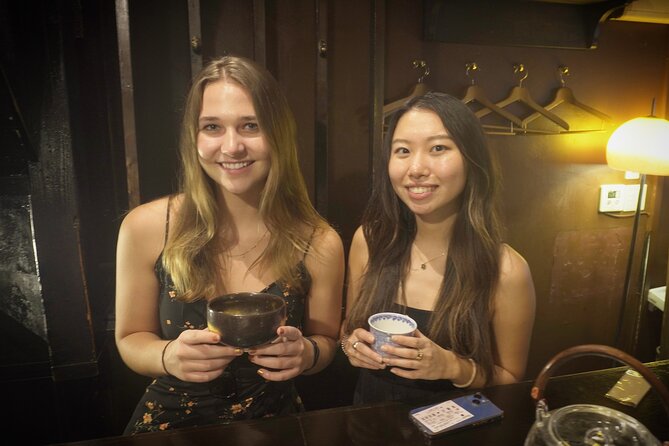
After the explanation and tasting, you apply the techniques yourself. You’ll prepare several drinks and work with natural ingredients such as fruit. The activity is not built around watching Ko perform the whole session while you sit back.
That hands-on approach makes the $54.46 price easier to justify. You are paying for instruction, tea, equipment, tasting, and the chance to practice, rather than simply receiving a cup and a short talk.
The small group also changes the pace. You can take your time with the technique and ask why a particular step matters. If you make an awkward pour or lose track of the timing, you can correct it with help rather than quietly falling behind a larger group.
The session remains relaxed rather than rigid. Tea brews slowly, and the pauses give you room to talk with Ko about Japanese tea, preparation, and everyday use. That informal rhythm suits the subject. Tea is not something you need to rush.
Tea cocktails bring Osaka into the present
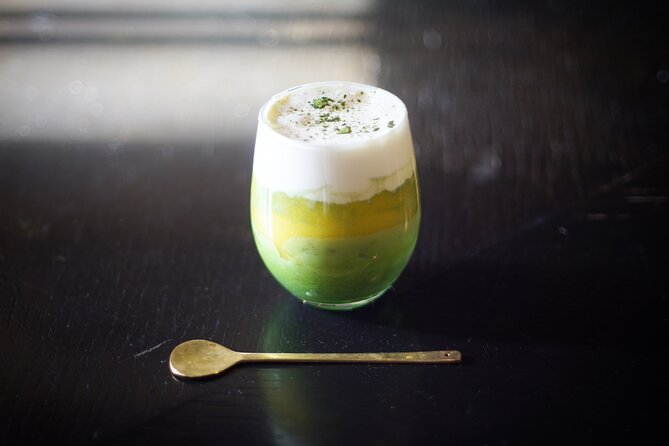
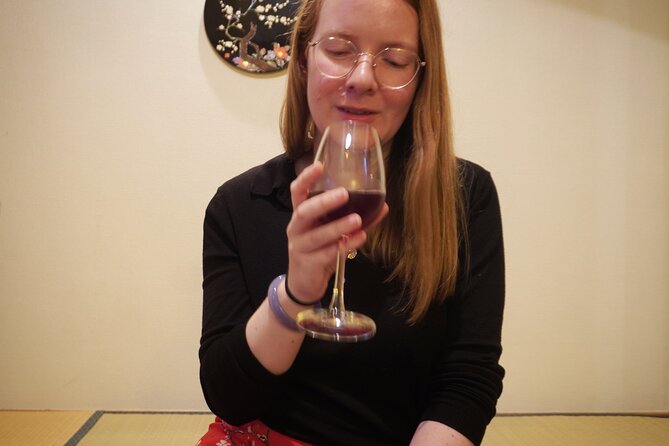
The modern section is what keeps this from being a standard tea ceremony lesson. You’ll use tea in drinks made with fruit and natural ingredients, and you’ll also try a cocktail infused with alcohol.
This part may appeal to people who enjoy food and drink experiences but do not consider themselves serious tea fans. It shows how tea can work as a base for a contemporary beverage, not only as a traditional cup served on its own.
The exact drinks can vary, but the workshop includes a tea cocktail and examples such as a mango matcha macchiato have been part of the experience. You also receive recipes for the drinks you learn to make, so the lesson has a practical afterlife once you are home.
There is one sensible limitation. If you do not drink alcohol, the cocktail portion may be less interesting, though the workshop still covers several nonalcoholic teas and drinks. The supplied information does not specify alcohol-free alternatives, so ask Ko when booking if that point matters to you.
Traditional sweets and a calm tea-house setting
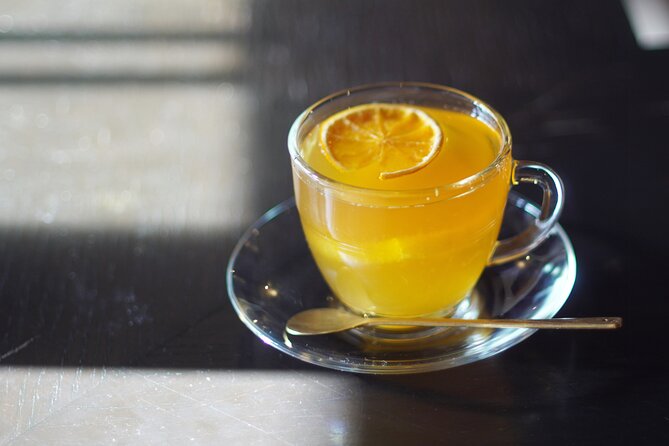
The workshop includes traditional Japanese sweets alongside the tea. This pairing helps you notice how sweetness changes the way tea tastes, especially with more delicate green teas and matcha.
The space itself adds to the mood. It is described as a real tea house with antique pieces rather than a classroom set up only for short-term visitors. That gives you a closer look at tea as part of daily food culture, not just a staged cultural display.
I would not choose this activity if you want a major Osaka attraction or a packed schedule of famous sights. Its value is quieter. You spend two hours paying attention to taste, tools, and conversation, then step back outside with a better sense of how tea fits into Japanese life.
The listed duration is approximately two hours. One practical account suggests allowing at least an hour and a half, but you should keep the full afternoon window free instead of booking a tight next stop. The activity ends at the original meeting point.
What the $54.46 price really buys
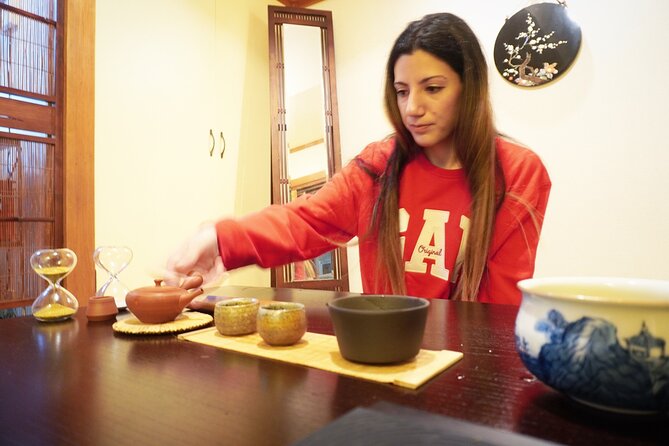
At $54.46 per person, this is not the cheapest way to drink Japanese tea. You can buy a bottle of hojicha or matcha drink for a small amount, and many cafes offer a quick cup without a lesson.
The comparison is not quite fair, though. Here you receive instruction across several tea types, guided practice, a tea cocktail, traditional sweets, recipes, and samples to take home. You also receive personal attention because the group is capped at three people.
I see the value most clearly if you are curious about tea but lack confidence at home. The workshop gives you repeatable skills, not just memories. You can use the brewing lessons after the trip and share the tea samples with family or friends.
The price is less attractive if you only want a short tasting or if you already brew Japanese tea regularly. In that case, the historical and cultural discussion may still interest you, but the practical instruction may cover ground you already know.
Who should book this workshop
I would recommend it most strongly to:
- Tea drinkers who want to understand the difference between sencha, hojicha, matcha, oolong, and wakocha
- Couples looking for a low-key afternoon activity
- Visitors who prefer local neighborhoods and small groups to large sightseeing tours
- People interested in Japanese food, drink, and mixology
- Beginners who want to prepare tea properly at home
- Anyone seeking an activity that works well in rainy weather or between Osaka sightseeing stops
It also suits a honeymoon or special trip because the group size can make the session feel almost private. Couples may find the hands-on format more memorable than simply ordering another tea at a cafe.
You may want to skip it if your schedule is packed, you dislike sitting for a slow-paced activity, or you are looking only for a formal tea ceremony. This workshop includes tradition, but it also moves into fruit drinks, recipes, and alcohol-infused tea.
Practical booking advice for Osaka
The activity begins at 3:00 p.m., and the meeting point is near public transportation. Check the exact route to Namba Yasaka Jinja before leaving your hotel, especially if you are unfamiliar with Osaka’s station system.
The group maximum is three people. That is excellent for personal attention, but it also means availability can be limited. The experience is booked an average of 60 days ahead, so reserving early makes sense if the date matters to you.
You can cancel for a full refund if you do so at least 24 hours before the local start time. Cancellations or changes made inside that 24-hour window are not accepted for a refund.
Bring curiosity rather than specialist tea knowledge. You do not need to arrive knowing the difference between every tea style. The point is to taste, handle the tools, and learn through practice.
Should you book it?
Book this workshop if you want more than a quick cup of matcha and you enjoy learning by doing. Ko’s teaching, the three-person limit, the range of teas, and the shift from traditional brewing to tea cocktails give the afternoon a clear sense of purpose.
The best reason to go is that you leave with skills you can use. You’ll understand why your tea tastes the way it does, and you’ll have recipes and samples to continue the habit at home.
Skip it if $54.46 feels too high for a drink-focused activity or if you want a major sightseeing landmark instead. For tea lovers, curious beginners, couples, and visitors seeking a quieter side of Osaka, this is a thoughtful and unusually personal choice.
FAQ
Where does the tea workshop begin?
It begins at Namba Yasaka Jinja, located at 2-chōme-9-19 Motomachi, Naniwa Ward, Osaka, 556-0016, Japan.
What time does the activity start?
The workshop starts at 3:00 p.m.
Where does the activity finish?
It ends back at the original meeting point.
How long does the workshop last?
The listed duration is approximately two hours.
How many people can join?
The activity has a maximum of three travelers.
Which teas are included?
The workshop covers sencha, Japanese black tea called wakocha, Japanese oolong tea, hojicha, and matcha.
Will I learn how to brew the teas?
Yes. The workshop covers brewing temperature, timing, technique, tool handling, and the correct way to hold a teapot.
Does the workshop include tea cocktails?
Yes. The modern section includes drinks made with natural ingredients such as fruit and a tea cocktail infused with alcohol.
Do I take anything home?
You can take home recipes and small tea samples from the beverages prepared during the workshop.
What is the cancellation policy?
You can cancel at least 24 hours before the local start time for a full refund. Cancellations and changes made less than 24 hours before the start time are not accepted for a refund.
Just added around Osaka
- Osaka: Tea Ceremony, Calligraphy, and Kimono Experience★ 5.0 · 6 reviews
- Osaka: Nara, Todaiji, Uji Matcha, and Hot Spring Tour★ 4.0 · 7 reviews
- Nara Deer Park, Uji Matcha, & Hot Spring Full-Day Tour from Osaka★ 4.0 · 21 reviews
- Osaka:Zen Tea Ceremony and Foot Bath Experience<45min>★ 5.0 · 7 reviews
- Premium Kimono Dressing, Tea Ceremony, Calligraphy, Samurai show★ 5.0 · 18 reviews
- Osaka Japanese Cooking And Matcha Class near Osaka Castle★ 5.0 · 22 reviews
- ZEN therapy | Shiatsu-style massage, EnergyTherapy & Japanese Tea★ 5.0 · 5 reviews
- Tea and Calligraphy Session at a Table in Osaka★ 5.0 · 4 reviews
Tea Making Classes, compared.

Matcha Making Class in Tokyo with Authentic Japanese Sweets Set
Read our review →
Traditional English Scone Making and Tea Workshop
Read our review →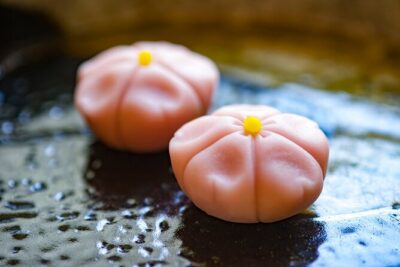
Matcha Making Class in Osaka with Authentic Japanese Sweets Set
Read our review →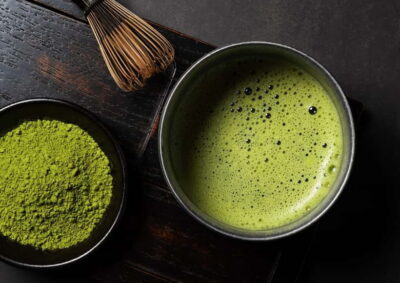
Matcha Making Experience with Mochi Sweets in Asakusa
Read our review →London Traditional English Scone Making and Tea Workshop
Read our review →
Nara:Authentic Tea Ceremony(Max 5 ppl) -Master Matcha Making
Read our review →Browse the lists this tour appears in