
Review · OSAKA
Matcha Making Class in Osaka with Authentic Japanese Sweets Set
The best part of this Osaka class is that you do not just watch a tea ritual. You make your own bowl of matcha, with an instructor correcting your technique as you go. The class also explains where matcha comes from and why the preparation matters, then pairs the tea with Japanese sweets.
I like the small maximum of six people, which gives the teacher time to answer questions. I also like the useful, down-to-earth focus: hosts such as Momo, Fuko, Matty, and Yui explain the process in clear English, often using visuals and short quizzes. The main drawback is finding the meeting point. Some people needed extra time, so check the location carefully and allow a little margin.
Key points to know before booking
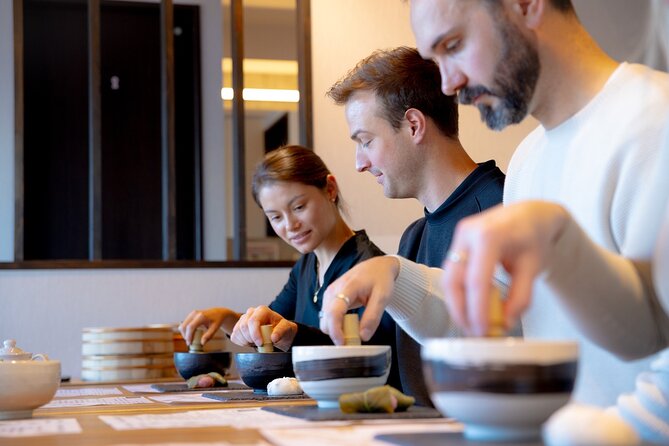
- You whisk the matcha yourself, rather than simply watching a demonstration.
- The class lasts about one hour, with morning and afternoon start times.
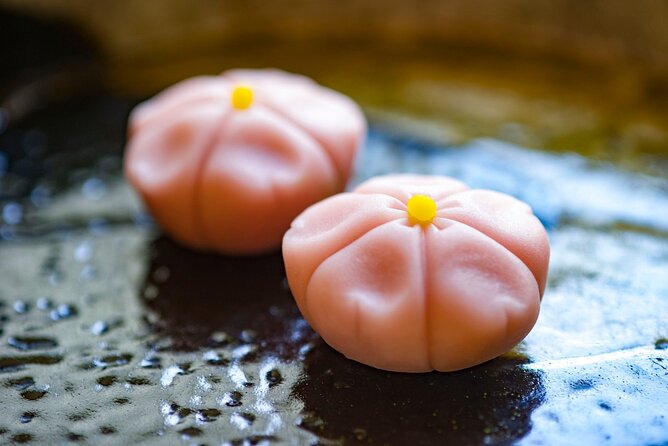
- Japanese sweets are included, giving you a traditional pairing for the slightly bitter tea.
- The group is capped at six people, making this more personal than a large workshop.
- No previous experience is needed, and the hosts teach in English.
- The class is held at 1-chōme-16-20 Higashishinsaibashi, with the activity ending at the same place.
A one-hour introduction to matcha in Osaka
Osaka offers plenty of food experiences, but this one gives you a quiet pause between busy sightseeing stops. For about an hour, you step away from the noise of the city and learn a simple part of Japanese tea culture through your hands, eyes, and taste buds.
The setting is not presented as a formal, highly ceremonial tea school. It is a friendly class for people who want to understand matcha and prepare it properly. That makes it a good fit for a first visit to Japan, a rainy morning, or an afternoon when you want something more focused than shopping and sightseeing.
You receive the ingredients and equipment at the meeting point. The instructor guides you through the preparation in stages, then gives you time to try it yourself. If your whisking or technique needs work, the teacher can correct it on the spot. That small detail matters. Matcha can look simple, but the texture depends on how you handle the whisk and mix the powder with water.
The tone is relaxed and beginner-friendly. You are not expected to know the etiquette of a tea ceremony or the difference between every type of Japanese tea. You simply need an interest in matcha and a willingness to take part.
More Japanese Sweets and Tea Sessions in Osaka:
- Osaka: Matcha Making Experience with Japanese Sweets
★ 5.0 · 146 reviews - Osaka: Japanese Traditional Sweets Making and Tea Ceremony
★ 4.7 · 118 reviews - Osaka : Exclusive Tea Ceremony & Wagashi Cooking
★ 5.0 · 2 reviews
What happens before you pick up the whisk
The class begins with context. You learn about the background of matcha, how it is produced, and its place in Japanese tea culture. This gives the drink more meaning than the sweet green powder often found in café drinks outside Japan.
The teaching style varies a little by host, but the class is built around clear explanations and participation. Fuko has used a quiz to help people remember the material, while another host used visuals and short questions to make the introduction more engaging. These touches are useful because the class is only about an hour long. You get the key ideas without sitting through a long lecture.
You may learn the difference between simply drinking powdered green tea and preparing matcha in a more traditional way. You also get practical guidance that can help you repeat the process at home. The point is not to turn you into a tea master in sixty minutes. The point is to give you enough understanding to prepare a better cup and appreciate what you are drinking.
I especially like this balance. The cultural background is present, but it does not crowd out the hands-on part. If you already drink matcha, the information may fill in gaps in your knowledge. If you are new to it, the class gives you a clear starting point.
Making your own matcha, step by step
The central part of the activity is the preparation itself. Your tools and ingredients are prepared for you, so you do not need to bring equipment or spend time figuring out what to use.
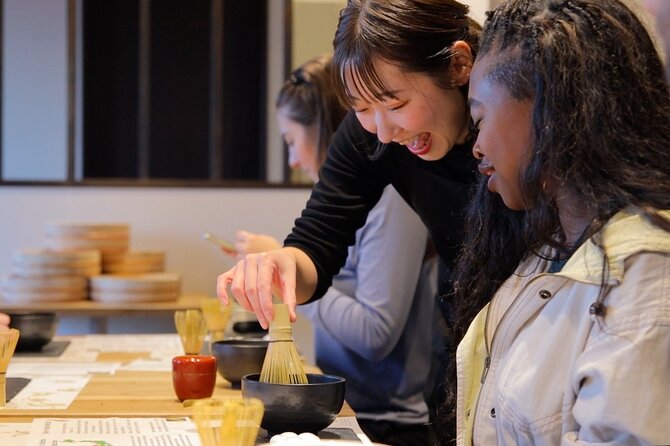
The instructor demonstrates the process and then lets you work. You learn how to combine the matcha powder and water, use the whisk, and aim for the right consistency. The host watches your technique and can point out mistakes before you settle into habits that produce a flat or lumpy drink.
This is where the small group becomes important. With no more than six people, the host can keep an eye on each person. In a much larger class, you might copy the demonstration and hope you have it right. Here, you have a better chance to ask a question and get a direct answer.
Do not expect a long, elaborate tea ceremony. This is a practical introduction with some ceremonial elements and cultural explanation. You get the calm rhythm of preparing the tea, but the atmosphere remains informal enough for questions, photographs, and a few laughs.
Several hosts receive special praise for making the class easy to follow. Momo is described as warm and pleasant, while Fuko is noted for clear English and an effective quiz. Matty brings an interactive style, and Yui is easy to understand and gives simple instruction. Since the host can vary, the exact presentation may not be identical each time, but the basic experience remains the same.
Why the Japanese sweets matter
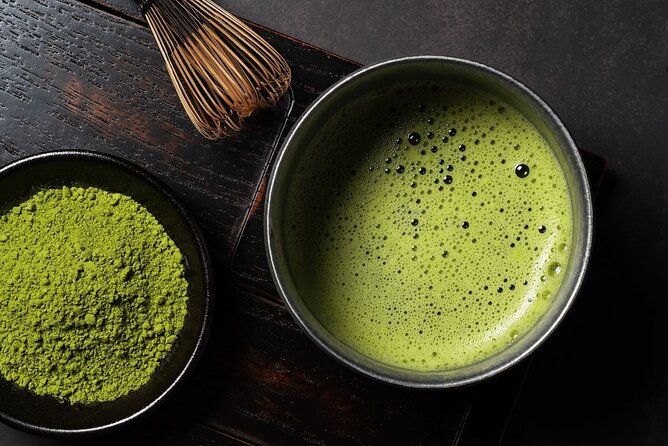
The tea comes with Japanese sweets, and this is more than a decorative extra. Matcha has a strong, grassy bitterness. A small sweet helps balance that flavor and gives you a better sense of how matcha is traditionally enjoyed.
The sweets also make the tasting more approachable if you are unsure about matcha. You can try the tea on its own, then taste it with the sweet and notice how the flavor changes. Even people who do not normally like matcha can find the pairing easier than drinking the tea by itself.
The portion is described as a set of Japanese sweets rather than a full meal. You should book this as a cultural snack, not as lunch or dinner. If you are planning the class around a meal, leave room for another stop in Higashishinsaibashi.
The tea and sweets are included in the $21.89 price. For Osaka, that is a modest cost for a hosted activity that includes instruction, ingredients, equipment, and a tasting. The value is strongest if you want to learn a skill you can repeat at home. If you only want a quick matcha drink, a café will cost less and take less time, but it will not give you the same practical lesson.
More Matcha Experiences in Osaka:
- Osaka Temple Cool Foot Bath & Matcha Experience〈45min〉
★ 4.9 · 82 reviews - Osaka Temple Head Spa &Matcha Facial – Refresh & Glow〈90min〉
★ 5.0 · 24 reviews - Osaka Japanese Cooking And Matcha Class near Osaka Castle
★ 5.0 · 22 reviews - Nara Deer Park, Uji Matcha, & Hot Spring Full-Day Tour from Osaka
★ 4.0 · 21 reviews
A useful souvenir you can take home
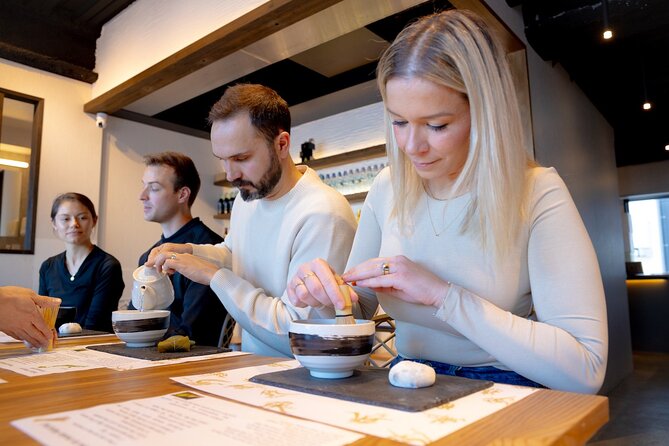
The most lasting part of the experience is not a physical souvenir. It is the ability to prepare matcha with more confidence after you leave.
You may have bought matcha in Kyoto or tried matcha desserts in Japan, but those experiences do not necessarily show you how to make the drink. This class fills that gap. You learn enough about the tools, ingredients, and method to try again in your own kitchen.
That makes the activity a particularly good choice for someone who already enjoys matcha but has never prepared it properly. It also suits a person who likes food classes but does not want a long cooking session. You work with one drink, not a full menu, so the lesson stays focused.
The practical advice is also more useful than a simple demonstration. You can ask about the process as you go, watch how the host handles the whisk, and compare your result with the prepared example. Those small corrections are hard to pick up from a video alone.
Choosing a morning or afternoon time
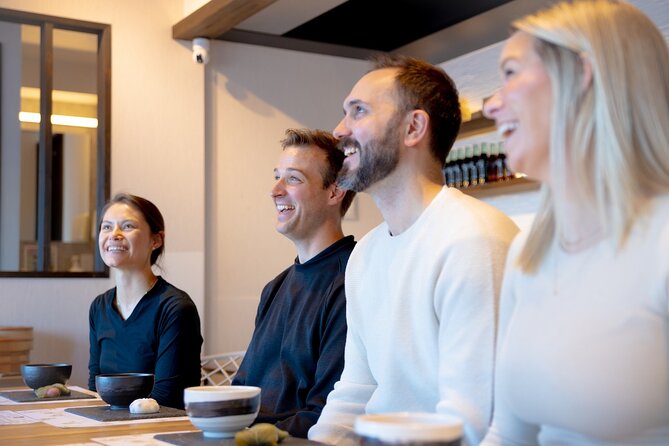
Morning and afternoon classes are available, so you can fit the activity around your Osaka plans. A morning session can work before a day of sightseeing, while an afternoon session gives you a quiet break after exploring.
The one-hour length is easy to manage. You do not need to give up half a day, and the class ends back at the meeting point. That makes it simple to continue into the surrounding area afterward.
The timing also suits people who want a low-pressure activity. You are not rushing from one stop to another, and you do not need hotel pickup or drop-off. You are responsible for reaching the meeting point, so check your route in advance.
The address is Matcha Making Osaka, 1-chōme-16-20 Higashishinsaibashi, Chuo Ward, Osaka, 542-0083, Japan. It is near public transportation, but locating the correct building may take longer than expected. One useful tip is to study the provider’s location guidance or video before you set out. Once you arrive, the activity finishes at the same location.
Who will enjoy this class most
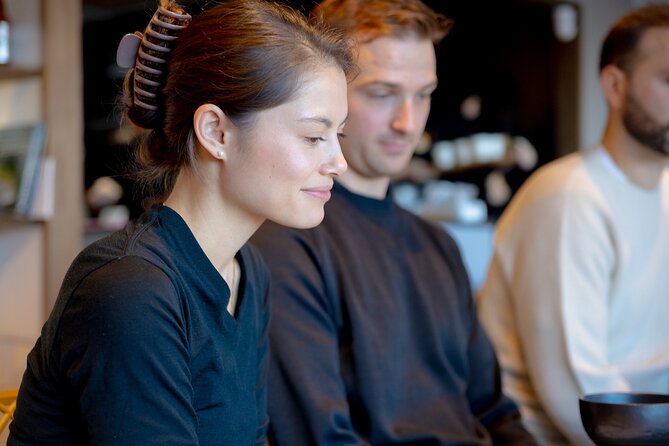
I would recommend this class to several kinds of people:
- First-time matcha drinkers who want an easy introduction without formal pressure.
- Matcha fans who drink it often but have never learned the proper preparation.
- Solo visitors who want a small, social activity with a teacher and a few other people.
- Couples and small groups looking for a short cultural experience between Osaka attractions.
- Families with older children, provided everyone can take part in the hands-on lesson.
- People who enjoy food and craft classes but prefer a one-hour activity over a full cooking workshop.
The English instruction is a major advantage if you do not speak Japanese. You can follow the explanations, ask questions, and understand the corrections without relying on translation.
This may not be the right choice if you want a grand, formal tea ceremony in a historic setting. The class is casual and instructional. It focuses on making and tasting matcha, not on an extended performance or a full day of tea culture.
It is also not a good substitute for a meal. The sweets are included, but they are a small accompaniment to the tea.
The practical details that affect your decision
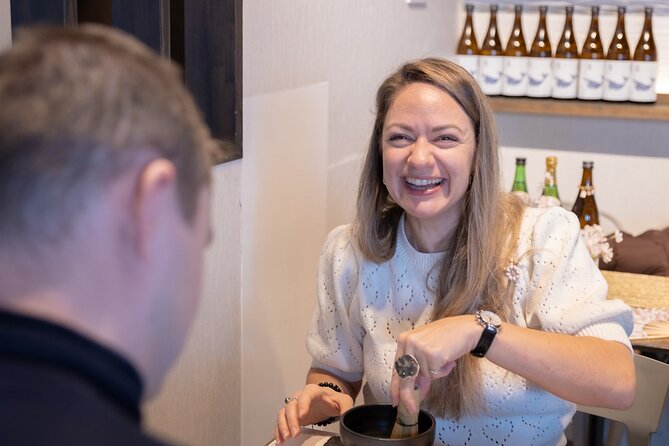
The advertised price is $21.89 per person, and the activity includes an English-speaking instructor, matcha, and Japanese sweets. Tools and ingredients are prepared for you, which keeps the experience simple and means you do not need to buy supplies before arriving.
The class accepts mobile tickets, so you can keep your booking on your phone. Confirmation is provided when you book. The group maximum is six people, which is one of the strongest reasons to choose this class over a larger demonstration.
Service animals are allowed, and the meeting point is near public transportation. Hotel pickup and drop-off are not included. Plan to reach the location independently and allow extra time for finding the building.
Free cancellation is available if you cancel at least 24 hours before the start time. Cancellations or changes made less than 24 hours before the activity are not refunded or accepted, and the cut-off uses Osaka local time.
The experience has a perfect five-star score from 509 ratings and is recommended by 100 percent of the people who rated it. It has also received TripAdvisor Best of the Best recognition twice. Those figures suggest a very consistent experience, though you should still book it for the format itself: a short, hands-on matcha lesson with sweets, not simply for the award.
Should you book the Osaka matcha class?
Book it if you want to learn by doing, especially if you already like matcha or want a gentle introduction to Japanese tea culture. The short duration, modest price, English instruction, and six-person limit make it easy to add to an Osaka itinerary.
I would place it high on the list for solo visitors, food-minded people, and anyone who wants a practical memory of Japan rather than another sightseeing stop. The Japanese sweets improve the tasting, and the advice on preparing matcha at home gives the class value after your trip.
Think twice if you are searching for a formal, highly traditional tea ceremony or a substantial food experience. For everyone else, this is a calm, friendly way to spend an hour in Osaka. Just allow extra time to find the building, bring your mobile ticket, and arrive ready to whisk.
FAQ
How long does the matcha class last?
The activity lasts approximately one hour.
Where does the class begin?
It begins at Matcha Making Osaka, 1-chōme-16-20 Higashishinsaibashi, Chuo Ward, Osaka, 542-0083, Japan.
Where does the activity finish?
The class ends back at the meeting point.
Is the instructor English-speaking?
Yes. An English-speaking instructor leads the class.
Are matcha and Japanese sweets included?
Yes. The experience includes matcha with Japanese sweets.
Do I need previous matcha-making experience?
No. The class is designed for beginners, and the instructor guides you through each step.
How many people can join the class?
The maximum group size is six people.
Are morning and afternoon classes available?
Yes. You can choose from morning and afternoon class times.
Can I cancel for a full refund?
Yes, if you cancel at least 24 hours before the experience start time. Cancellations made less than 24 hours in advance are not refunded.
More Dessert Stops in Osaka
- Kyoto: Japanese Traditional Sweets Making and Tea Ceremony
★ 4.4 · 314 reviews - Make Traditional Nerikiri Sweets & Matcha experience in Shibuya
★ 5.0 · 130 reviews - Marrakech: Moroccan Pastries and Tea Class with a Local
★ 4.7 · 84 reviews - Nagoya: Japanese Traditional Sweets making and Tea Ceremony
★ 4.9 · 76 reviews
More Tea Making Classes in Osaka
- Discover Japanese Tea Blending Techniques in Osaka
★ 5.0 · 19 reviews - Matcha Making Class in Tokyo with Authentic Japanese Sweets Set
★ 5.0 · 744 reviews - London: Traditional English Scone Making and Tea Workshop
★ 5.0 · 702 reviews - Tokyo: Matcha Making Experience with Mochi Sweets in Asakusa
★ 4.9 · 388 reviews
Just added around Osaka
- Osaka: Tea Ceremony, Calligraphy, and Kimono Experience★ 5.0 · 6 reviews
- Osaka: Nara, Todaiji, Uji Matcha, and Hot Spring Tour★ 4.0 · 7 reviews
- Nara Deer Park, Uji Matcha, & Hot Spring Full-Day Tour from Osaka★ 4.0 · 21 reviews
- Osaka:Zen Tea Ceremony and Foot Bath Experience<45min>★ 5.0 · 7 reviews
- Premium Kimono Dressing, Tea Ceremony, Calligraphy, Samurai show★ 5.0 · 18 reviews
- Osaka Japanese Cooking And Matcha Class near Osaka Castle★ 5.0 · 22 reviews
- Discover Japanese Tea Blending Techniques in Osaka★ 5.0 · 19 reviews
- ZEN therapy | Shiatsu-style massage, EnergyTherapy & Japanese Tea★ 5.0 · 5 reviews
Japanese Sweets & Tea, compared.

Matcha Making Class in Tokyo with Authentic Japanese Sweets Set
Read our review →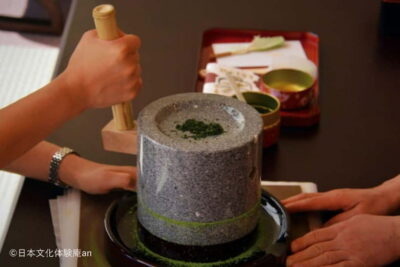
Japanese Traditional Sweets Making and Tea Ceremony
Read our review →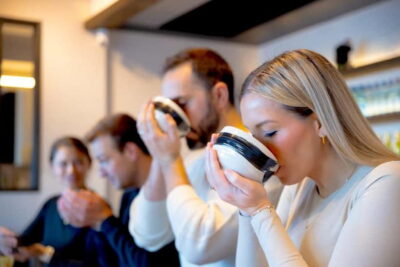
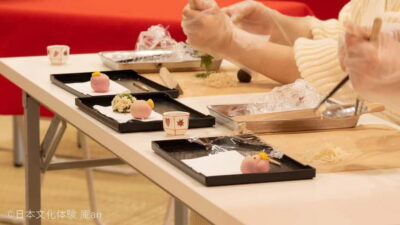
Japanese Traditional Sweets Making and Tea Ceremony
Read our review →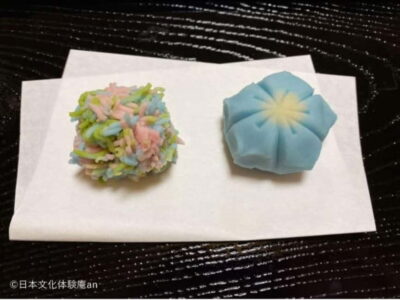
Nagoya: Japanese Traditional Sweets making and Tea Ceremony
Read our review →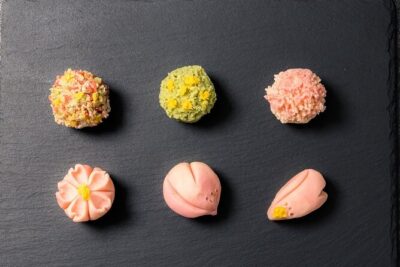
Sweets Making and Kimono Tea Ceremony at Tokyo Maikoya
Read our review →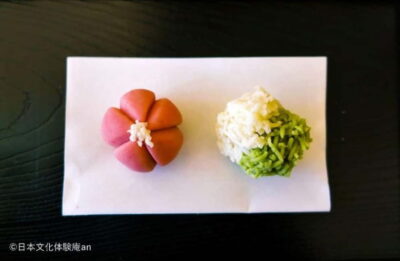
Japanese Traditional Sweets making and Tea Ceremony
Read our review →
Two Types of Japanese Sweets Making and Tea Ceremony
Read our review →Browse the lists this tour appears in