
Review · TOKYO
Tokyo Sushi Making Class : Sake Ceremony & Matcha Experience
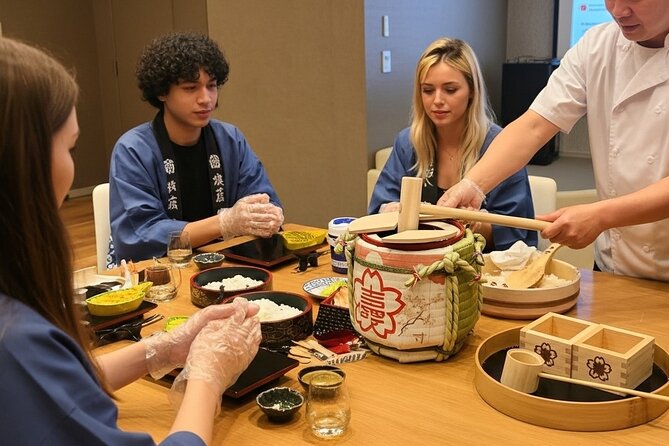
The most memorable part of this Asakusa class may be the kagami-biraki, a traditional sake barrel opening used to mark new beginnings. You join the group chant of Yoisho, raise a toast, and then move from ceremony to hands-on sushi making. I like that the class mixes old and new Japan: classic nigiri skills sit beside torched salmon mayo gunkan, a playful modern Tokyo-style bite.
I also like the calm finish. After the lively sake ceremony and Wasshoi chant, you whisk your own matcha and enjoy it with the sushi you made. The main consideration is time: 90 minutes goes quickly, so this is a compact introduction rather than a full sushi apprenticeship. The class can host up to 20 people, so personal guidance may vary with group size.
Key points at a glance
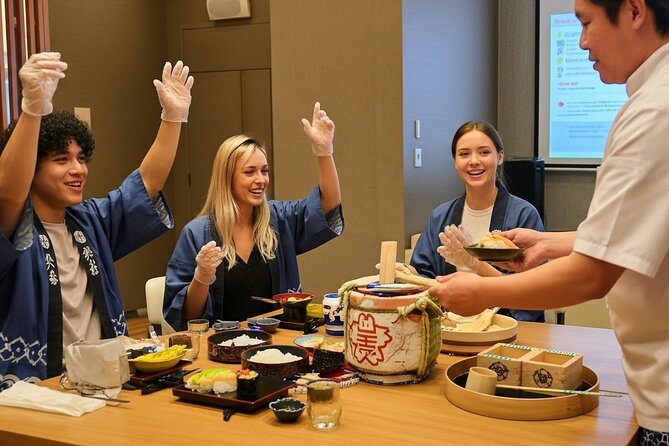
- Kagami-biraki ceremony: Help open a sake barrel and join the Yoisho chant before the lesson begins.
- Six to 12 pieces of sushi: Practice nigiri and rolls, with guidance on rice shape, toppings, and presentation.
- Torched salmon mayo gunkan: Build a modern sushi bite, add mayonnaise, and finish it with a quick torch.
- Matcha finale: Whisk your own bowl of matcha for a quiet finish after the hands-on cooking.
- Asakusa location: Meet at Sushi Meets Matcha, 1-chōme-10-16 Hanakawado, near public transportation.
- Short, well-priced format: At $45.77 per person, the 90-minute session offers food, instruction, cultural activities, and a mobile ticket.
Starting with a sake barrel in Asakusa
This class begins at Sushi Meets Matcha in Hanakawado, a convenient part of Tokyo’s Taito City and a natural base for an Asakusa outing. You return to the same location at the end, so there is no need to follow a complicated route between activities.
The opening ceremony gives the session a clear sense of occasion. Kagami-biraki involves opening the lid of a sake barrel, traditionally linked with good beginnings and celebration. You take part in the group action, chant Yoisho, yoisho, yoisho, and share a toast.
You do not have to drink alcohol. Water or warm Japanese tea is available instead, which makes the ceremony workable for children, nondrinkers, and anyone who simply wants to stay focused on the food. The sake opening is not just a drink service. It sets a playful tone and gives you a small piece of Japanese custom to remember beyond the sushi itself.
The group energy may not suit someone seeking a quiet private lesson. With a maximum of 20 people, the atmosphere is likely social and active. That is part of the fun, but it also means you should expect a shared workshop rather than one-on-one instruction throughout.
More Matcha Experiences in Tokyo:
- Matcha Making Class in Tokyo with Authentic Japanese Sweets Set
★ 5.0 · 744 reviews - Tokyo: Matcha Making Experience with Mochi Sweets in Asakusa
★ 4.9 · 388 reviews - Asakusa Cultural Walk & Matcha Making Tour
★ 5.0 · 245 reviews
Learning the basics of nigiri
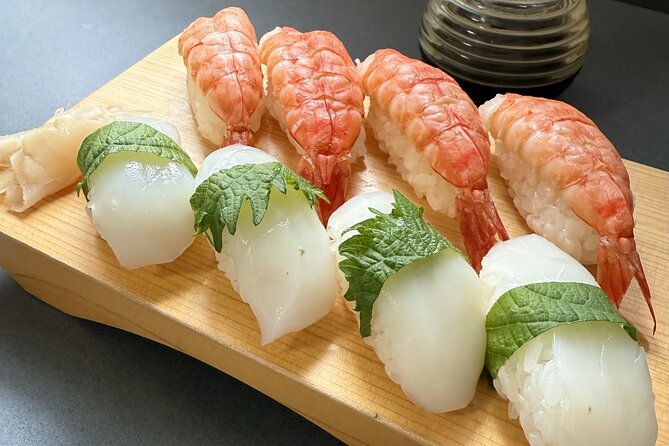
The central lesson covers the building blocks of nigiri sushi. You learn how to shape the rice with the right pressure, manage the topping, and place it neatly. These are small movements, but they matter. Too much pressure makes rice dense. Too little leaves the piece unstable. A short class like this helps you understand the balance through practice rather than simply watching someone else make sushi.
You can expect to make between six and 12 pieces, including nigiri and rolls. The exact number may depend on the pace of the group and how quickly you become comfortable with the techniques. That range is enough to give you repeated practice without turning the class into a long kitchen session.
I especially like the practical nature of this portion. You are not just hearing about sushi customs or taking a demonstration. You are handling the rice, placing the toppings, and assembling pieces you can eat at the end. For first-time sushi makers, that makes the lesson useful. You leave with a basic sense of what goes into a tidy piece of nigiri, even if your first attempts are not perfectly shaped.
The class is designed for beginners, so you do not need previous sushi-making skill. Still, do not expect to master professional knife work or the full range of Edomae sushi techniques in 90 minutes. The focus is on approachable assembly and confidence, not on advanced chef training.
The modern Tokyo twist: torched salmon mayo gunkan
After the classic nigiri work, the class shifts to a more playful creation: Wasshoi torched salmon mayo gunkan. This is not presented as traditional Edomae sushi. Instead, it brings in a modern Tokyo flavor that you might find at a popular casual sushi spot.
Gunkan sushi has a rounded rice base with a topping piled on top, usually held in place by a strip of nori. Here, you add salmon, zigzag mayonnaise over it, and finish the piece with a quick torch. The heat gives the salmon and mayonnaise a smoky, creamy flavor, adding a little theater to the lesson.
This part should appeal to anyone who likes food with a bit of show. The group chants Wasshoi three times, and the torching creates a natural photo moment. You can capture the finished bite at the point when the flame has done its work, giving you a more memorable image than a standard table snapshot.
There is also a useful contrast here. Nigiri teaches restraint, balance, and clean placement. The torched gunkan is more generous and expressive. It shows that sushi in Tokyo is not limited to one strict style, and it gives beginners a forgiving format in which a slightly imperfect shape still looks inviting.
You should know that the gunkan is a modern variation, not a formal lesson in old-style Edomae sushi. That is not a weakness unless you want a strictly traditional menu. For most visitors, the mix makes the class more approachable and fun.
Making matcha after the noise
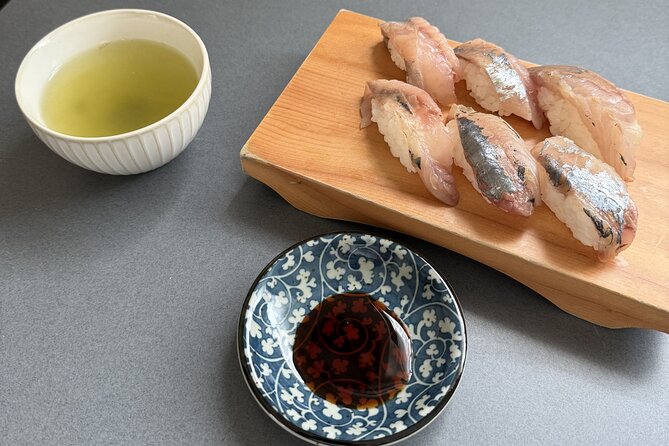
The matcha session closes the class. You learn to whisk your own bowl, aiming for a smooth, foamy drink. This gives the experience a slower final rhythm after the chants, torch, and group activity.
I like the order of the program. The sushi work is tactile and social, while matcha asks for a little more care and patience. You finish with something you have prepared yourself, rather than simply receiving a cup at the end.
The matcha portion also adds cultural range. A sushi class alone would teach one famous part of Japanese food culture. Adding the tea preparation gives you a second ritual with different movements and a different mood. It remains a short introduction, not a formal tea ceremony, but it adds meaning to the final 10 or 15 minutes of the visit.
The details do not state how much matcha you receive or how long the whisking portion lasts. You should think of it as a hands-on tasting and preparation lesson rather than a full tea-school course.
A few more tea experiences around Tokyo worth a look
- Making Japanese desserts Nerikiri & drinking matcha in Tokyo
★ 5.0 · 20 reviews - Arashiyama Bamboo, Temple, Monkeys, or Secret Sake Brewery
★ 4.8 · 886 reviews - Private Tea Ceremony and Sake Tasting in Kyoto Samurai House
★ 5.0 · 163 reviews - Kyoto Local Gourmet Night Experience: Kaiseki & Izakaya & Matcha
★ 5.0 · 22 reviews
What the $45.77 price includes in practical terms
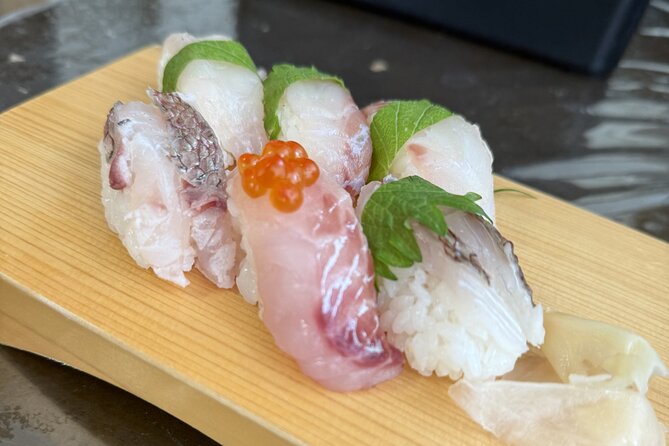
At $45.77 per person, this is a reasonable price for a 90-minute Tokyo activity if you want more than a meal. You receive instruction, ingredients for six to 12 pieces, the sake-barrel ceremony, the torched salmon activity, matcha preparation, and the chance to eat what you make.
The value improves if you are already planning to visit Asakusa. The class takes place at a fixed meeting point and ends there, so you can fit it around other sightseeing without arranging a second transfer. Its mobile ticket also keeps the booking simple on the day.
The price is less compelling if your only goal is to eat the largest possible amount of sushi. This is a lesson with food, not an all-you-can-eat meal. You are paying for participation, instruction, cultural touches, and the fun of making the pieces yourself.
For families, couples, and friends, the shared format adds value. You can compare your finished nigiri, take photos during the torching, and enjoy the matcha together. Solo visitors can also join, though the group setup means the social mood may depend on the people booked for that session.
Timing, location, and group size
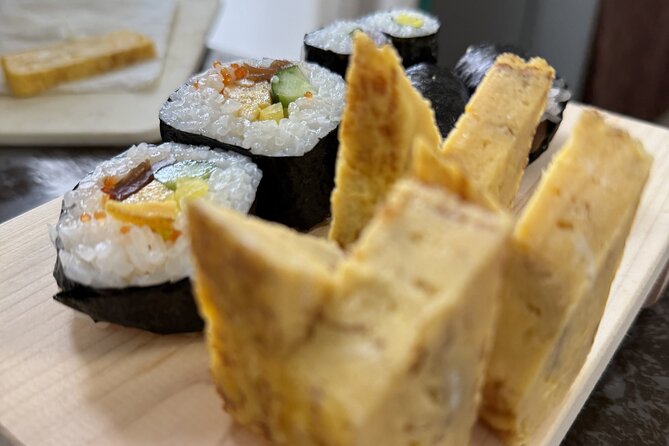
The activity lasts approximately one hour and 30 minutes. That is long enough for several separate parts, but short enough to fit into a busy Tokyo day. I would allow extra time before the start to reach 1-chōme-10-16 Hanakawado, Taito City, Tokyo 111-0033, Japan, since the class itself begins at the stated meeting point and does not include a sightseeing walk.
The venue is near public transportation, which is useful in Asakusa, where you may be combining temples, shopping streets, and riverfront sights. The exact station route is not provided, so check your map app on the day and use the full address rather than relying only on the business name.
The maximum group size is 20. That is not a tiny cooking class, but it is still limited enough to keep the format organized. If you need very detailed personal correction on every piece, a smaller private lesson would likely suit you better. If you enjoy group energy and do not mind sharing the instructor’s attention, the size should work well.
The experience ends back at the meeting point. That makes it easy to continue around Asakusa, return to your hotel, or plan a meal afterward. Since you will already have eaten several sushi pieces, you may prefer to treat the next meal as a lighter stop.
Who will enjoy this class most
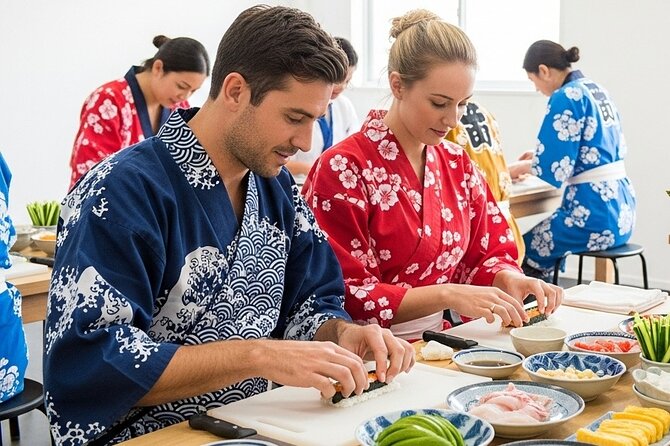
This class is a good match for first-time sushi makers. The lesson explains the basic movements and lets you repeat them, rather than assuming you already know how to form rice or handle toppings.
It also suits visitors who want a cultural activity that does not take half a day. The sake-barrel opening and matcha preparation give the session more depth than a simple cooking demonstration, while the short length keeps it manageable for families and busy sightseers.
Food-focused couples and friends should enjoy the balance of instruction and spectacle. The Wasshoi chant and torch finish create shared moments, and the final sushi gives you something concrete to show for the time.
I would be more cautious about booking it if you want a serious professional-level lesson, a fully traditional Edomae menu, or a private setting. The class deliberately mixes tradition with a modern salmon and mayonnaise creation, and the group can reach 20 people.
The available rating is 5 out of 5 from 48 reviews, with 100 percent recommendation. One especially strong response describes the instructor as fun, welcoming, and helpful, and praises the session for feeling relaxing and special. Since no instructor names are provided, you should judge the class by its format rather than expect a particular named teacher.
Small details that improve the decision
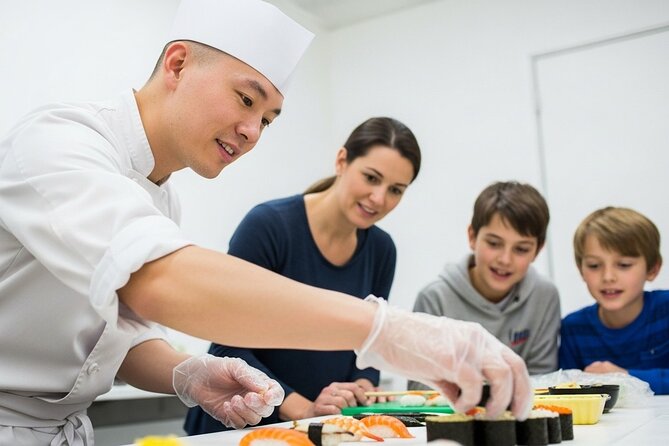
Bring an appetite, but do not arrive expecting a full restaurant meal. The stated serving is six to 12 pieces, made during the class, so the food is part of the activity rather than its only purpose.
If you avoid alcohol, select the nonalcohol option of water or warm Japanese tea for the toast. You can still join the kagami-biraki ceremony and the group chant without drinking sake.
Keep your phone ready for the torching moment. The experience specifically builds in a photo opportunity when the salmon mayo gunkan is finished, and a mobile ticket means you can keep your booking accessible on the same device.
The cancellation terms are friendly but strict close to the start. You can cancel for a full refund up to 24 hours before the local start time. Changes or cancellations made inside that 24-hour window are not accepted and are not refunded.
Should you book Tokyo Sushi Making Class: Sake Ceremony & Matcha Experience?
I would book this class if you want a compact, social introduction to several Japanese food customs in one stop. The strongest reasons are the hands-on nigiri practice, the memorable sake-barrel opening, the smoky salmon mayo gunkan, and the matcha finish.
The $45.77 price is fair for the amount of participation packed into 90 minutes. Just keep your expectations in the right place: this is a beginner workshop with a lively group atmosphere, not an advanced chef course or a long traditional tea ceremony.
Book it if you are staying near Asakusa, enjoy making your own food, and want photos and practical skills to take home. Skip it if you prefer a quiet private lesson, a strictly traditional sushi menu, or a large restaurant-style meal.
FAQ
How long does the sushi and matcha experience last?
The experience lasts approximately one hour and 30 minutes.
Where does the class begin?
It begins at Sushi Meets Matcha, 1-chōme-10-16 Hanakawado, Taito City, Tokyo 111-0033, Japan.
Where does the activity end?
The activity ends back at the meeting point.
How many people can join the class?
The class has a maximum of 20 participants.
How much sushi will I make?
You will make approximately six to 12 pieces, including nigiri and rolls.
Is sake included in the experience?
The class includes a sake-barrel opening and group toast. Water or warm Japanese tea is available as a nonalcohol option.
Do I need previous sushi-making experience?
No. The class is beginner-friendly and includes step-by-step guidance on shaping rice, handling toppings, and assembling sushi.
Can I cancel for a full refund?
Yes. You can cancel at least 24 hours before the local start time for a full refund. Cancellations or changes made less than 24 hours before the start are not accepted or refunded.
More Workshops in Tokyo
- Tea Ceremony Workshop in Tokyo by the Experienced Instrucor
★ 5.0 · 189 reviews - Mochi Matcha Gluten Free Japanese Sweets Class near Shibuya area
★ 5.0 · 26 reviews - Private Mochi・Matcha sweets Making Class Near Shibuya Area
★ 5.0 · 22 reviews - 2 Hours Mochi &Nerikiri Making & Matcha Class in Bunkyo
★ 5.0 · 21 reviews
More Food and Drink Tours in Tokyo
- Experience all of Japanese culture and Japanese food experience classes “origami, udon, Japanese food, green tea, calligraphy” in 4 hours
★ 5.0 · 105 reviews - Matcha Experience with of Japanese Tea Tasting in Tokyo
★ 5.0 · 31 reviews - Tokyo: Matcha Tasting and Making Experience
★ 4.9 · 21 reviews - Authentic Japanese tea tasting: sencha, matcha and gyokuro
★ 5.0 · 12 reviews
Just added around Tokyo
- Yokohama : Tea Ceremony with Sweets and Souvenir★ 5.0 · 5 reviews
- Walking Tour: Yanaka,Nezu& Sendagi: Tea Ceremony & Old Tokyo★ 5.0 · 3 reviews
- 2 Hours Mochi &Nerikiri Making & Matcha Class in Bunkyo★ 5.0 · 21 reviews
- Private Kimono and tea ceremony at local home near Tokyo Disney★ 5.0 · 6 reviews
- Private Mochi・Matcha sweets Making Class Near Shibuya Area★ 5.0 · 22 reviews
- Tokyo Sweets Tour: Hidden Gems & Matcha at an Old Tea House★ 5.0 · 6 reviews
- Giant Sushi Cooking Class: Make a 1.5m Sushi Roll in Tokyo★ 5.0 · 9 reviews
- Tokyo Tea Ceremony Class at a Traditional Tea Room★ 5.0 · 2 reviews
Matcha Experiences, compared.
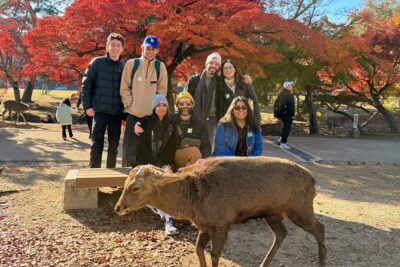
World Heritage Kyoto & Nara Uji Authentic Matcha Experience
Read our review →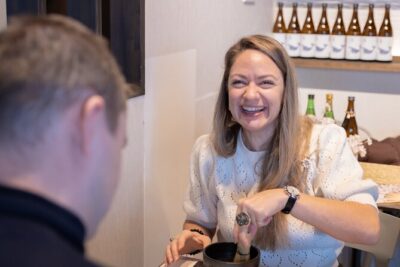
Matcha Making Class in Tokyo with Authentic Japanese Sweets Set
Read our review →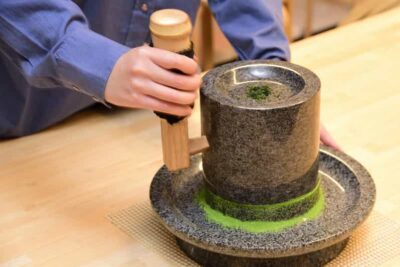
Tea Museum Tickets and Matcha Grinding Experience
Read our review →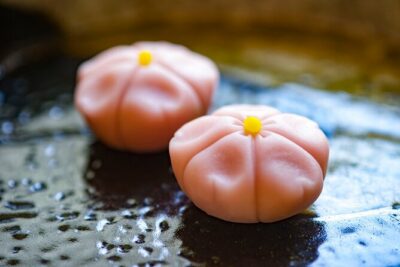
Matcha Making Class in Osaka with Authentic Japanese Sweets Set
Read our review →
Tea Ceremony Meditation – Make Matcha with Tea Master
Read our review →
Matcha Making Experience with Mochi Sweets in Asakusa
Read our review →
Browse the lists this tour appears in