
Review · KYOTO
Kyoto: Tea Ceremony in 100-year-old Kyo-Machiya Townhouse
A tea ceremony in a 100-year-old Kyo-Machiya townhouse gives you more than a cup of matcha. You learn how to bow, eat the sweet, turn the bowl, and whisk tea under a master’s guidance. I like the calm setting and the chance to prepare your own tea. I also like that the lesson explains the meaning behind the movements instead of treating the ceremony as a photo prop.
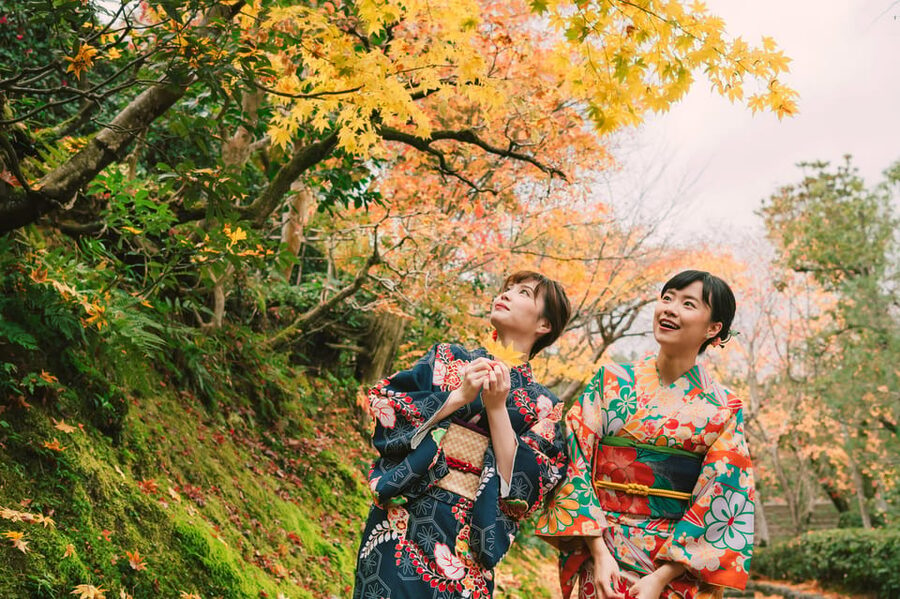
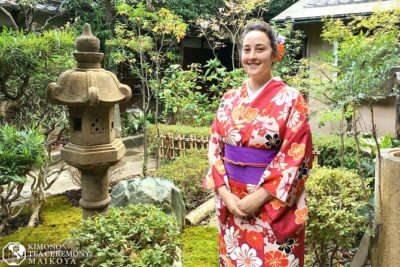
The kimono option adds color and time to the outing, with a chance to stroll around Kyoto before returning the outfit. The main drawback is the schedule: kimono renters must allow two hours between dressing and the tea ceremony, and hot weather can make the layered clothing uncomfortable. The ceremony itself is also a group session, with up to 20 people.
Key points to know before booking
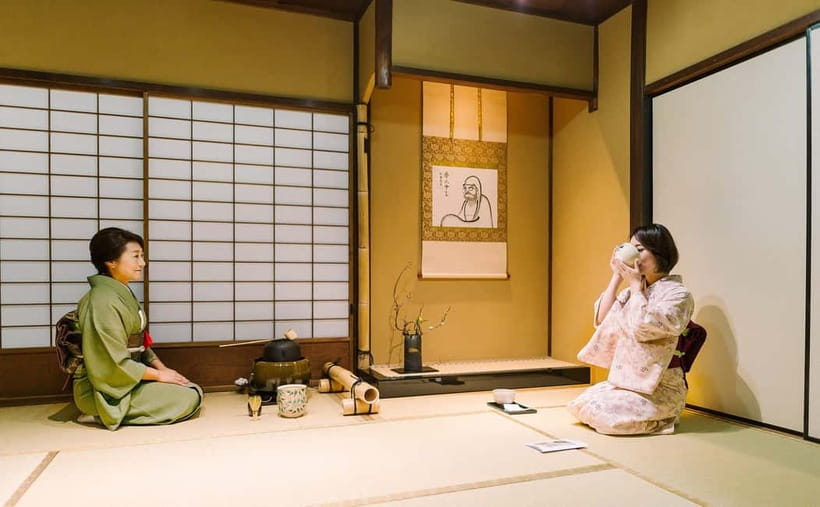
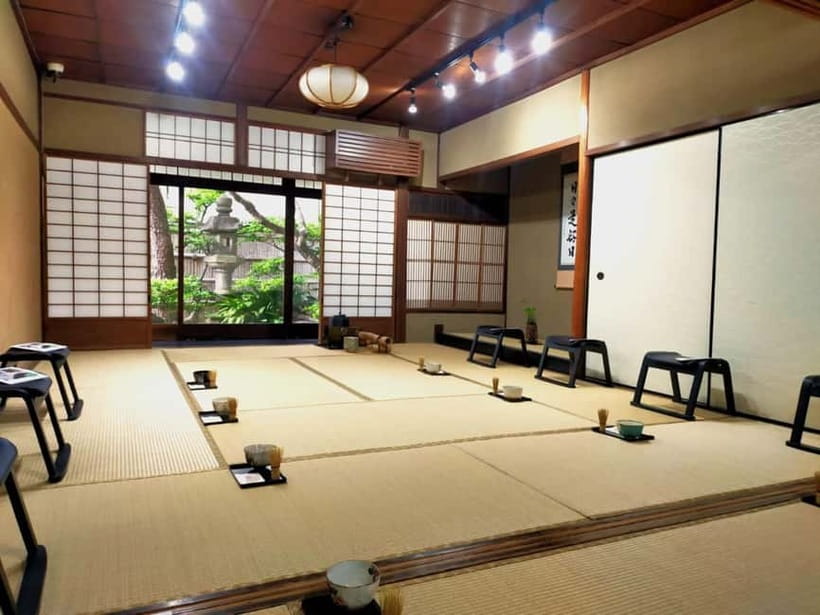
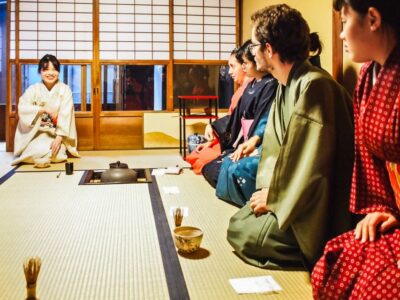
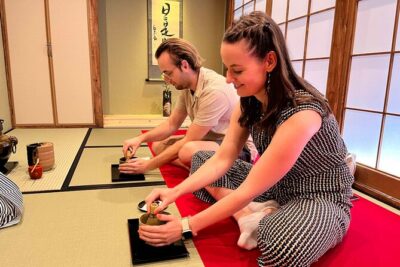
- Tea in a century-old machiya: Tatami, paper screens, wooden details, and a traditional room create the right setting for the ritual.
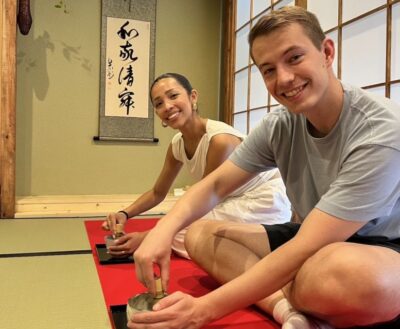
- You make your own matcha: After watching the tea master prepare a bowl, you whisk one yourself under supervision.
- The lesson is practical: You learn greetings, bowing, sweet etiquette, tea-drinking customs, and how to appreciate the bowl.
- Kimono rental changes the length: Pick up your outfit at the Gojo shop, travel to the townhouse on your own, and return the kimono by 5:30 PM.
- Small chairs are available: You do not have to sit on the floor, though the room remains quiet and formal.
- Add-ons go beyond dressing up: Hair, makeup, a formal Houmongi kimono, and a 30-minute machiya tour are available.
A quiet lesson inside an old Kyoto townhouse
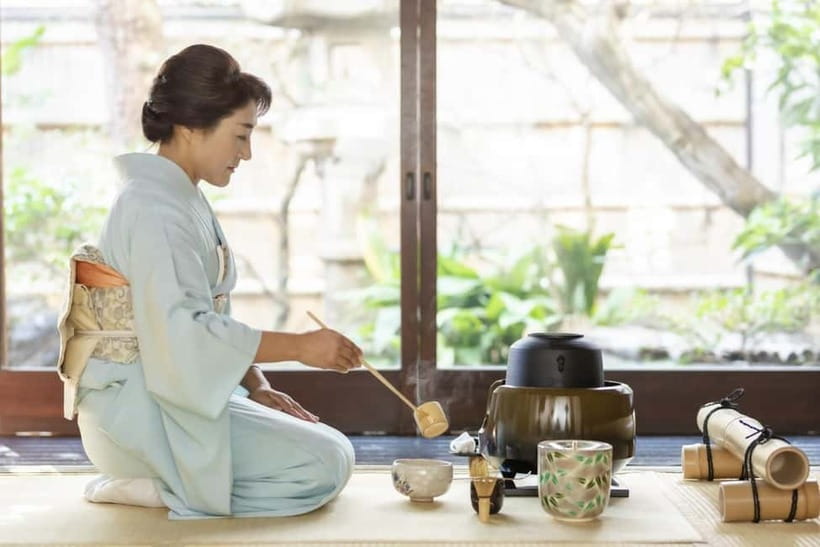
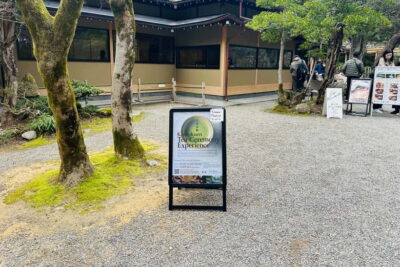
The setting does much of the work here. Yumeyakata Oike Bettei is a traditional machiya near Kyoto Imperial Palace, in an area linked for centuries with the imperial court, aristocratic gatherings, poetry, and refined arts.
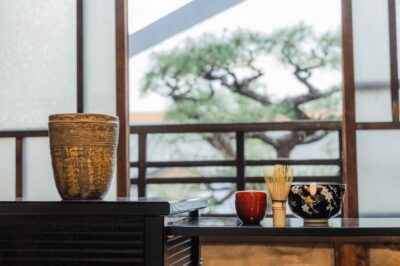
You enter a house built for a different pace of life. Tatami mats, wooden gates, paper screens, and carefully arranged tea utensils give the ceremony a sense of place that a hotel meeting room could never match. The house is not simply a backdrop for photographs. Its layout helps you understand why Japanese tea developed around restraint, hospitality, attention, and silence.
I like that the experience does not assume you already understand the rules. The guide explains what will happen before the formal preparation begins, so you can pay attention to the gestures instead of worrying about making a mistake.
The room size can change with the number of people booked. The session may include as many as 20 participants, so you should not expect a private lesson unless your particular date happens to be lightly booked. Even so, the format gives first-time visitors a clear introduction without requiring a full day of study.
More Tea Ceremony Experiences in Kyoto:
- Kyoto: Tea Ceremony in a Traditional Tea House in Kiyomizu
★ 4.9 · 3,519 reviews - Kyoto: Tea Ceremony Ju-An at Jotokuji Temple
★ 4.9 · 3,207 reviews - Kyoto: 45-Minute Tea Ceremony Lesson Experience
★ 4.3 · 2,378 reviews
What happens during the 50-minute tea ceremony
For the tea-only option, arrive at Oike Bettei five to 10 minutes before the time printed on your voucher. The ceremony lasts about 50 minutes, though the exact flow can vary with the group.
The first part covers the background of tea in Japan. The tradition arrived from China about 1,200 years ago and gradually developed into the Japanese Way of Tea. You receive enough context to see the ceremony as a cultural practice, not just a method for making matcha.
Your instructor then explains the basic conduct:
- How to bow
- Which greetings to use
- When and how to eat the traditional sweet
- How to hold and drink the tea
- How to turn and appreciate the tea bowl
- How to behave while another person is being served
These instructions matter because the ceremony is built from small choices. The order of movements, the handling of the bowl, and the quiet attention given to another person all carry meaning.
The tea master then brings in the utensils and prepares the first bowl for a guest. This is the best time to watch closely. You can see the whisking, the measured movements, and the care given to each object. Some sessions include an interpreter or English-speaking guide who explains the master’s actions as they happen.
After the demonstration, you prepare your own matcha. The master supervises and helps you follow the correct sequence. This hands-on part keeps the session from becoming a lecture. You get to feel how the whisk works, see the texture change, and drink something you prepared yourself.
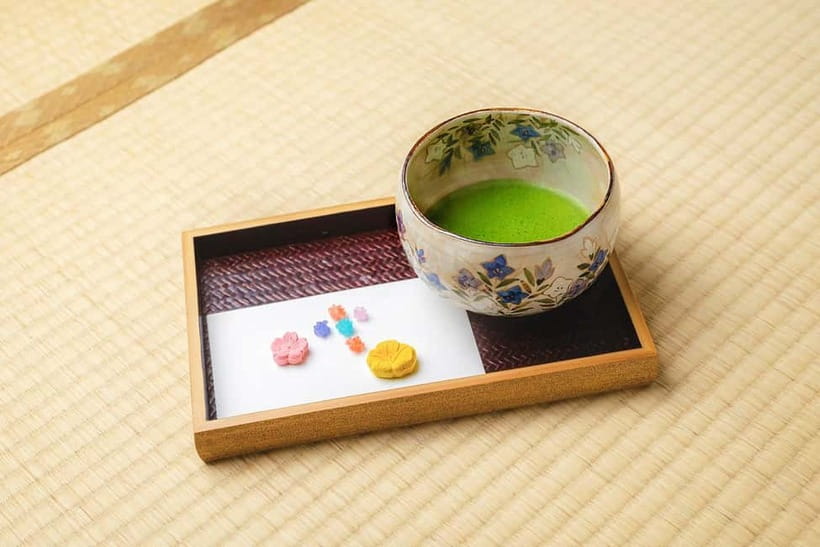
The matcha is served with a traditional Japanese sweet. The sweet is not just a snack. Its sweetness balances the bitter tea and follows the order of the ceremony. You will have time to ask questions before the master closes the session.
The guides named in individual experiences include Lim, Ling, and Maki, though the staff member assigned to your booking can vary. The strongest feature of the instruction is its patience. You are shown the movements clearly, then given room to practice without being made to feel clumsy.
Why the tea lesson feels authentic without being difficult
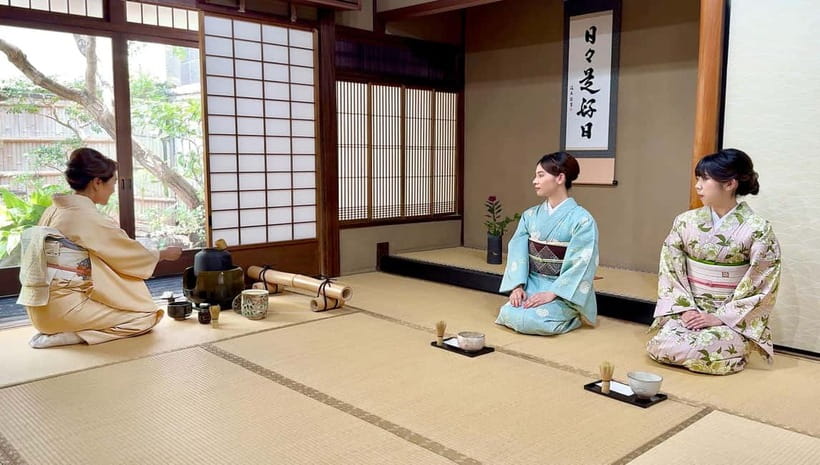
A formal tea ceremony can seem intimidating if you imagine strict rules and no room for questions. This experience softens that barrier without stripping away the ceremony’s structure.
You are welcome to sit on a small chair if sitting on the floor is uncomfortable. That is an important practical detail, especially for anyone with stiff knees or limited flexibility. The chairs do not turn the session into a casual tasting, but they make the experience more manageable.
You should still expect a quiet room. Noisy behavior can lead to removal from the session, and flash photography is not allowed. Food and drinks other than those provided are also prohibited indoors. The calm is part of the experience, not an inconvenience to work around.
English and Japanese are offered. The tea master may conduct the ceremony in Japanese while an interpreter explains the details in English. English ability can vary by staff member, but the sequence is demonstrated as well as described, so you can follow the main actions even when a phrase is unclear.
The ceremony is especially useful if you want cultural context. You learn about the social and artistic world in which tea gatherings took place, including their links with court life, poetry, hospitality, and Japanese aesthetics. It is a compact lesson, not a full academic history, but it gives your sightseeing in Kyoto more meaning.
Adding kimono rental to the experience
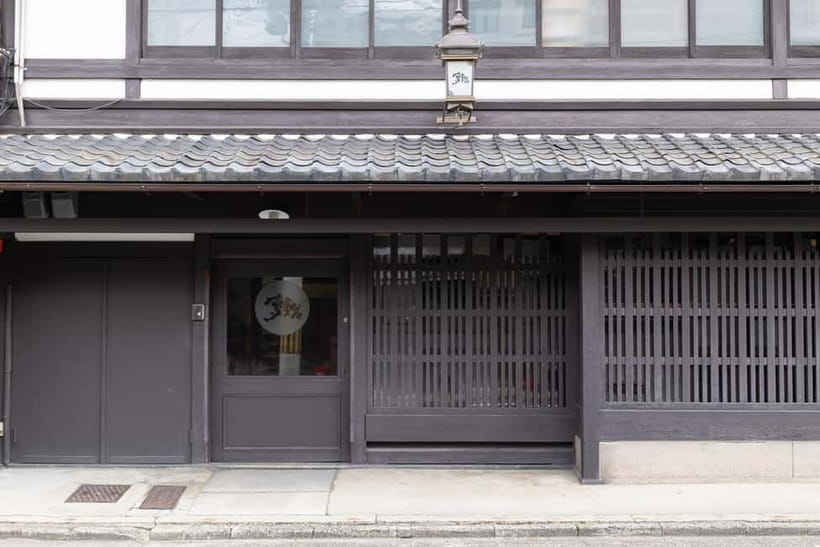
The kimono option changes this from a one-hour cultural lesson into a longer half-day plan.
You begin at the Yumeyakata Gojo Shop at the starting time selected on your voucher. There, you choose from a range of casual kimonos in different colors, patterns, and sizes. Staff help dress you, then you travel to Yumeyakata Oike Bettei on your own.
The tea ceremony begins two hours after your selected starting time. If you book an 11:00 AM start, for example, the ceremony begins at 1:00 PM. That gap is intentional. It gives the shop time to dress you and allows you to reach the townhouse before the lesson.
The kimono option works best if you want photographs and a slower cultural day. You can wear the outfit around Kyoto after the ceremony, then return it to the Gojo shop by 5:30 PM on the same day. Transportation between the shop and townhouse is not included, so plan your route and allow enough time.
The clothing includes several layers. That is part of the fun, but it can also be warm and restrictive, particularly in summer. Walking in a kimono takes shorter steps, and you will not move through Kyoto as quickly as you would in ordinary clothes. Treat the outing as a gentle stroll rather than a fast sightseeing circuit.
Women can add hairstyling, makeup, a hair accessory, and an upgrade from a casual kimono to a formal Houmongi. The premium dressing option is useful if you want a more complete traditional look rather than simply putting on a robe. It costs more, so I would choose it mainly for special photographs or a celebration.
A few more tea experiences around Kyoto worth a look
- Kyoto: Table-Style Tea Ceremony at a Kyo-Machiya
★ 4.9 · 1,211 reviews - Kimono Tea Ceremony at Kyoto Maikoya, NISHIKI
★ 5.0 · 911 reviews - Kyoto: Kimono Tea Ceremony at Orizuruya Gion
★ 4.9 · 618 reviews - Kyoto: Tea Ceremony Experience
★ 4.8 · 511 reviews
The optional 30-minute machiya moment
After the tea ceremony, the add-on experience includes a 30-minute townhouse segment. This consists of roughly 20 minutes touring the machiya and 10 minutes for photographs.
The tour explains the architecture, social role, and less obvious functions of a Kyoto townhouse. You look at how the building works as a living space and cultural object, rather than simply posing in a historic room.
The location near Kyoto Imperial Palace adds useful context. The former residence of Nijō Yoshimoto, a high-ranking court noble from the 14th century, is next door. Yoshimoto was also connected with the development of renga, or linked verse poetry. The neighborhood’s old court associations help explain why tea, poetry, and visual beauty became so closely tied together in Kyoto.
The photo time may include traditional props such as an umbrella or katana, along with garden settings. Professional photographs and videos are not included, but you can take your own pictures where permitted. Flash photography is prohibited, so your phone or camera should be ready for quiet, non-flash shots.
Is the $31 starting price good value?
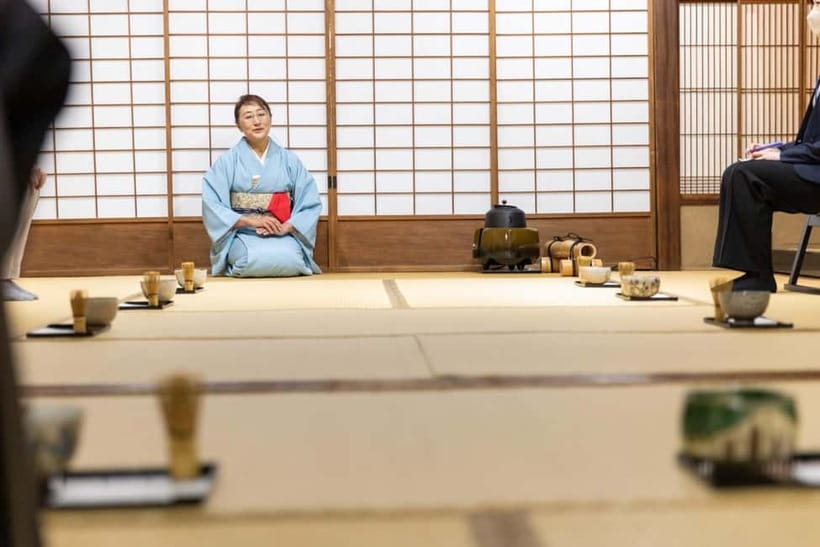
At about $31 per person, the tea-only option is fairly priced for a guided cultural activity in central Kyoto. You are paying for the tea master, interpretation, sweets, the traditional venue, the utensils, and the chance to prepare matcha yourself.
The strongest value comes from the instruction. A simple bowl of matcha costs far less, but a café cannot teach you the etiquette, explain the history, or place the drink in a 100-year-old townhouse.
The kimono package is a different calculation. It takes longer and includes the rental, but it also adds transport planning, a return deadline, and the discomfort of wearing several layers in warm weather. I would choose it if photographs and dress-up appeal to you. If your main goal is learning about tea, the 50-minute session is enough.
The 30-minute machiya add-on makes sense for architecture lovers and anyone who wants more time in the house. It is less useful if you already have a packed sightseeing day or mainly want to sample matcha.
Free cancellation is available up to 24 hours before the activity, and you can reserve now and pay later. That flexibility helps if your Kyoto plans are still shifting.
Who should book this Kyoto tea ceremony?
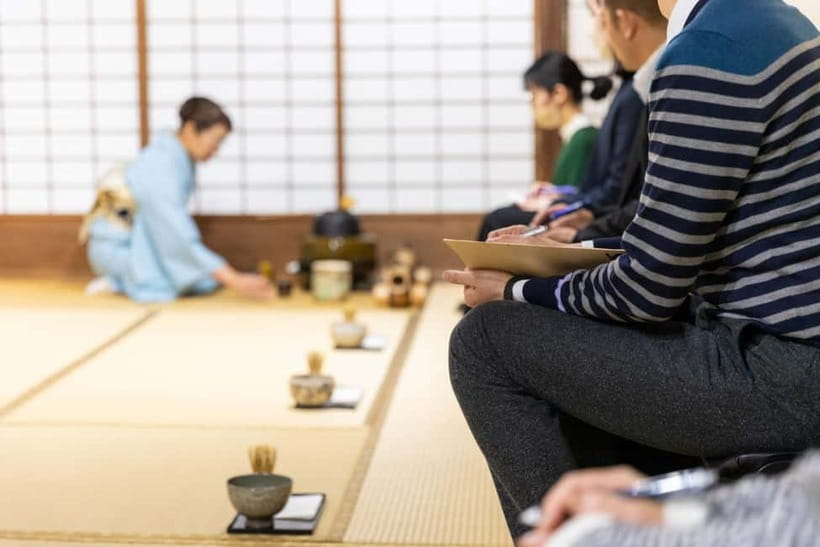
This experience suits first-time visitors who want a clear introduction to Japanese tea without committing to a long formal course. It also works well for couples, small groups, and families with children aged 10 and older who can remain quiet for the session.
I would particularly recommend it if you want to understand what you are seeing at temples, gardens, and cultural sites across Japan. The tea ceremony gives you a practical lesson in the attention to detail that appears throughout Japanese arts.
The kimono version is best for people who enjoy dressing up and taking photographs. It also gives you a different way to walk through Kyoto, though you should keep the outing gentle and watch the clock for the 5:30 PM return.
The experience is not suitable for children under 10, pregnant women, wheelchair users, babies under one year, people over 200 centimeters or 95 kilograms, or people with visual impairments. Bring socks, since sandals and flip-flops are not allowed. Electric wheelchairs are not permitted.
Tips for getting the most from the session
Arrive early. Late arrivals may still enter, but the session will not be extended, and you may miss the explanation that makes the movements easier to follow.
Wear socks even if you plan to arrive in sandals. This is a small detail, but it avoids a problem at the door.
Ask questions at the end. The formal portion requires quiet, but the closing discussion is the right time to ask about the tea bowl, the gestures, the history, or the meaning of the sweets.
If you choose the kimono package, keep your afternoon open. You need time to dress, reach the townhouse, complete the ceremony, walk around Kyoto, and return the outfit to Gojo by 5:30 PM.
Do not judge the matcha by café standards. It has a clean, bitter taste, and the sweet is meant to prepare your palate. The value is in the ritual and preparation as much as in the drink.
Should you book it?
Book this experience if you want a respectful, well-explained introduction to tea in a genuine old Kyoto house. The chance to make your own matcha, combined with the historical setting and patient instruction, gives the session more substance than a quick tea tasting.
Choose tea only if you prefer a focused 50-minute activity. Add the kimono if you want photographs and a longer Kyoto outing, and consider the machiya tour if architecture interests you. Just remember that group size, language support, clothing comfort, and the same-day return deadline all shape the experience.
FAQ
How long does the tea ceremony last?
The tea-only session lasts about 50 minutes. The full experience can take up to three hours when kimono rental, walking time, and add-ons are included.
Where does the tea ceremony take place?
It takes place at Yumeyakata Oike Bettei, a traditional machiya townhouse near Kyoto Imperial Palace.
What do I learn during the ceremony?
You learn about the history of tea in Japan, how to bow, suitable greetings, how to eat the sweet, how to drink the matcha, and how to appreciate the tea bowl.
Do I get to make my own matcha?
Yes. The tea master first prepares tea for a participant, then guides you as you prepare your own bowl.
Is the tea ceremony held in English?
English and Japanese are available. An interpreter or English-speaking guide explains the tea master’s actions and instructions.
Can I sit on a chair instead of the floor?
Yes. Small chairs are available for people who prefer not to sit on the floor.
What happens if I choose the kimono option?
You pick up your kimono at the Gojo Shop at the selected starting time. The tea ceremony begins two hours later at the townhouse, and you may wear the kimono around Kyoto before returning it to the Gojo Shop by 5:30 PM.
Are hairstyling and makeup included?
They are included only when the relevant add-on is selected. The add-on can also include a hair accessory and an upgrade to a formal Houmongi kimono.
What should I bring?
Bring socks. Sandals and flip-flops are not allowed.
Can children join the experience?
The activity is suitable for people aged 10 and older. Children under 10 are not permitted.
Just added around Kyoto
- Whisk Your Own Matcha: A Zen Matcha Experience at Temple★ 3.6 · 7 reviews
- Uji Walking Tour – Byodo-in temple and Tea Ceremony from Kyoto★ 3.5 · 3 reviews
- Traditional Tea Ceremony in Kyoto★ 4.5 · 3 reviews
- Kyoto: Authentic Tea Ceremony in a Small Group★ 5.0 · 7 reviews
- Tea ceremony at Kyoto’s Zen Temple Teahouse★ 5.0 · 2 reviews
- Tea Ceremony in 150 Years Old Townhouse with Tables and Chairs★ 5.0 · 22 reviews
- Silent Beauty of Kyoto Zen Walk and Tea Experience★ 5.0 · 2 reviews
- Tea Ceremony Experience in Traditional Kyoto Townhouse★ 5.0 · 19 reviews
Tea Ceremony Experiences, compared.
Tea Ceremony in a Traditional Tea House in Kiyomizu
Read our review →
Browse the lists this tour appears in