
Review · OSAKA
Osaka : Exclusive Tea Ceremony & Wagashi Cooking
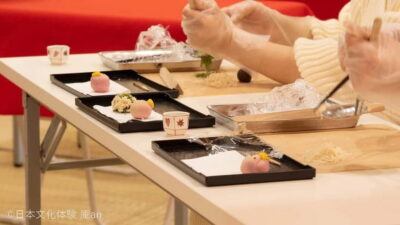
The best part of this two-hour experience is that you do not only watch a tea ceremony. You make wagashi, the small Japanese sweet served with tea, then prepare green tea according to the ceremony’s rules and enjoy the results in the proper setting. That hands-on order makes the customs easier to understand.
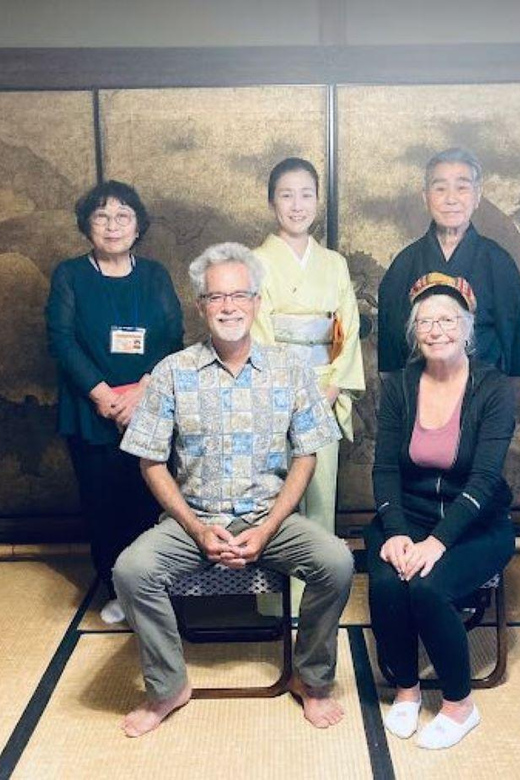
I like the small group of six or fewer, since tea ceremony manners are much easier to follow when you can ask questions. I also like the family setting: the hosts come from a three-generation business with more than a century of experience, and the premises include a small collection of artifacts and textiles.
The main consideration is location. You will need to get to Izumisano in the Kansai Region rather than simply walk in from central Osaka. The experience is also structured and calm, so it suits you best if you enjoy careful craft and ceremony more than a fast-moving sightseeing stop.
Key points to know before booking
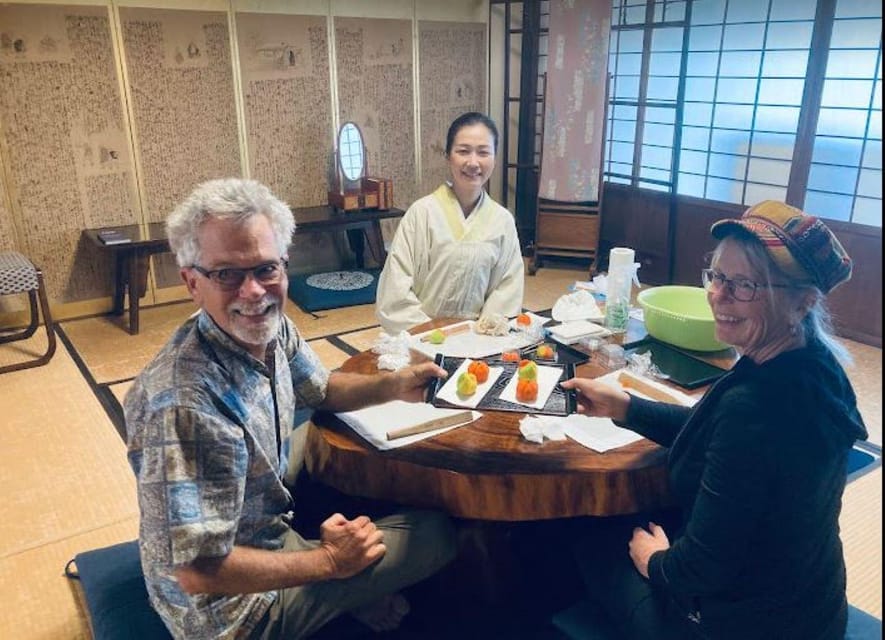
- Make your own wagashi: Prepare a Japanese confectionery before the tea ceremony, then eat it with the green tea you make.
- Learn the rules behind the ritual: An English-speaking guide explains the history and spirit of tea ceremony as well as the practical steps.
- Meet a long-established family business: The hosts represent three generations and more than a century of work.
- Keep the group personal: The activity is limited to six participants, which leaves room for questions and guidance.
- See kimono and Nishijin textiles: After the ceremony, you can view examples of kimono and woven fabric from Kyoto’s Nishijin district.
- Add a kimono option: You can select kimono wear during booking if you want photos in traditional clothing.
Why the wagashi lesson makes the tea ceremony better
A formal tea ceremony can seem mysterious when you only sit and watch. There are set movements, quiet pauses, and rules about how tea and sweets are served. Without context, the details can blur together.
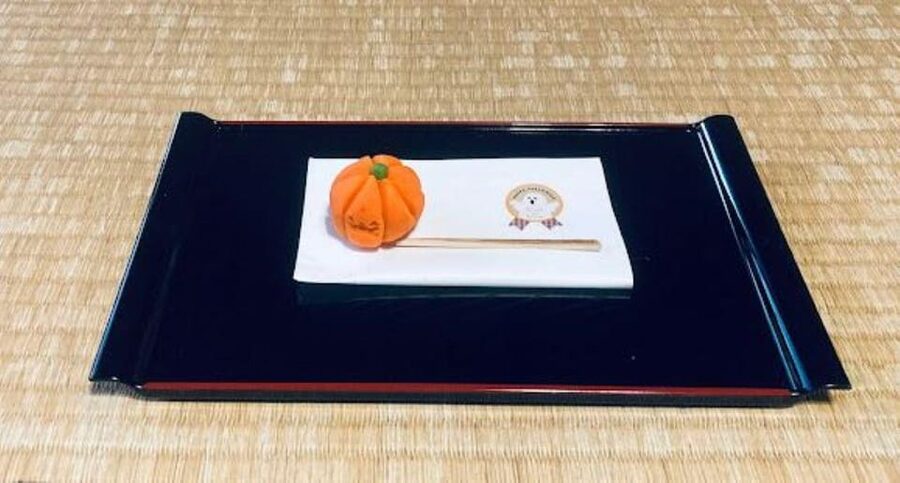
Here, you first make the sweet that will accompany the tea. That gives you a practical reason to pay attention to the order of service. You are not just looking at an attractive confectionery. You have handled the ingredients and shaped it yourself, so the sweet becomes part of the ceremony rather than a decoration.
The lesson also gives the experience a useful rhythm. The cooking portion is active, while the tea ceremony is slower and more reflective. I like that contrast. You get a chance to work with your hands, then settle into the customs you have just been learning about.
The available information does not specify the exact wagashi design, ingredients, or recipes. You should therefore expect instruction in making a Japanese confectionery, but not book this as a specialized pastry class with a fixed menu. The ingredients and seasonings are provided.
More Japanese Sweets and Tea Sessions in Osaka:
- Matcha Making Class in Osaka with Authentic Japanese Sweets Set
★ 5.0 · 509 reviews - Osaka: Matcha Making Experience with Japanese Sweets
★ 5.0 · 146 reviews - Osaka: Japanese Traditional Sweets Making and Tea Ceremony
★ 4.7 · 118 reviews
Understanding tea ceremony without getting lost in the rules
The guide explains the history and spirit of Japanese tea ceremony in English. That matters because the ceremony is about more than making a cup of green tea. The careful movements, presentation, and behavior all create a respectful setting for host and guest.
You will learn how to make tea according to the rules of the ceremony. The wording does not promise professional tea-school training, and this is not meant to turn you into a tea master in two hours. It is a compact introduction that lets you take part with some understanding of what you are doing.
I find this kind of explanation especially useful for first-time visitors to Japan. It gives you enough background to recognize the care behind the ritual without burying you in technical detail. You will also have a finished sweet to eat with the tea, which keeps the lesson connected to everyday enjoyment.
The mood is likely to be quiet and deliberate. That can be a welcome change after busy streets, crowded stations, and packed sightseeing schedules. It also means you should arrive ready to slow down. If you prefer constant movement, the ceremonial portion may feel longer than expected.
Starting at the former Shinkawa residence in Izumisano
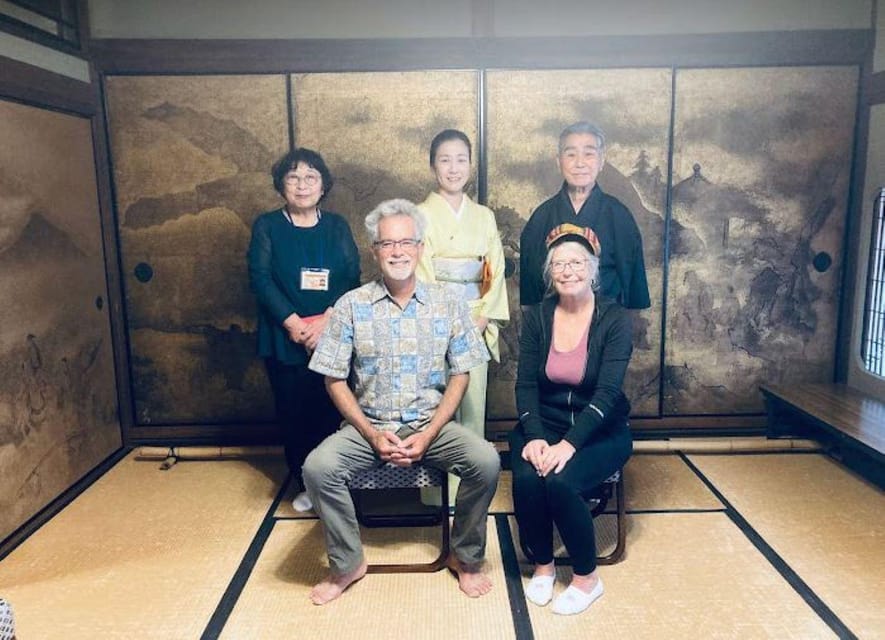
The meeting point is Izumisano Furusato Machiya-Kan, the former Shinkawa residence, written in Japanese as 泉佐野ふるさと町屋館(旧新川家住宅). The activity begins near Nankai Izumisano Station.
From the station, leave through the Nankai Izumisano Station exit, go to the right, and turn right at the Tsubasadouri shopping district. Then turn left at Uniform Noguchi and right at the next corner. The Furusato Machiya-Kan is there, and the organizers will pick you up.
That route is useful to save on your phone before leaving the station. The directions include several turns, and the meeting point is not described as being directly outside the ticket gates. Give yourself enough time to find it without rushing.
The former residence gives the opening a local setting instead of a generic classroom. The activity also includes a walking portion, class, and cooking class over about two hours. Since the group is small, the setting should feel more personal than a large cultural demonstration.
What happens during the two-hour session
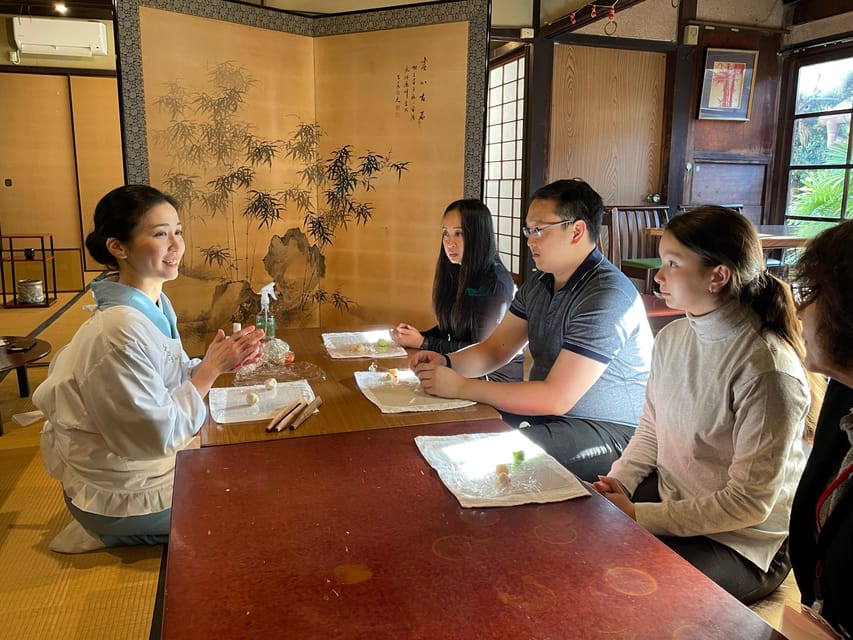
The experience combines three linked parts: walking, wagashi preparation, and tea ceremony. The full activity lasts two hours, though the supplied details do not divide that time into exact blocks.
You begin at the former Shinkawa residence and take part in the scheduled walk and class. The cooking portion supplies the ingredients and seasonings, so you do not need to bring food products for the lesson.
Next comes the wagashi preparation. You make a Japanese sweet under guidance, then use it as part of the tea service. This is the practical center of the experience, since you are learning a small piece of Japanese food culture rather than simply tasting a finished product.
The tea portion follows the traditional format. You learn how to prepare green tea according to the ceremony’s rules and then experience the ceremony with the confectionery you made.
After the ceremony, you can take photos and see examples of kimono and beautiful woven textiles made in Kyoto’s Nishijin district. The activity also finishes around the meeting-point area, with the listed final stop at くらふとや. The information provided does not specify how long you can spend taking photos or viewing the textiles, so treat that as a closing opportunity rather than a separate museum visit.
More Tea Ceremony Experiences in Osaka:
- Osaka: Tea Ceremony Experience
★ 4.9 · 1,426 reviews - Tea Ceremony Experience in Osaka Doutonbori
★ 5.0 · 754 reviews - Osaka: Tea Ceremony, Calligraphy, and Kimono Experience
★ 4.9 · 130 reviews - Samurai Show, Tea Ceremony, Japanese Traditional Activities
★ 5.0 · 56 reviews
The family setting and small museum collection
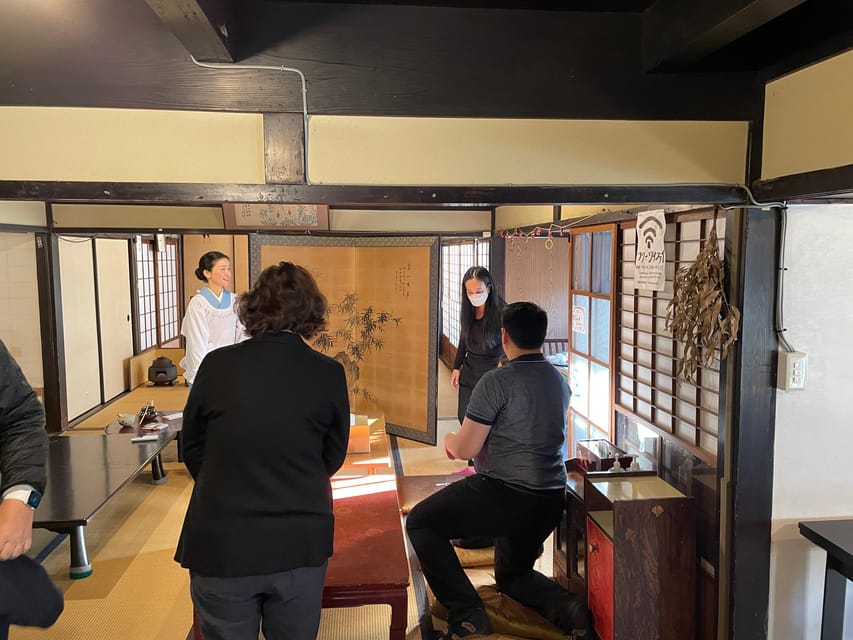
One of the most appealing details here is the family connection. The hosts are a three-generation family, and the business has been in operation for more than a century. That does not turn the visit into a theatrical show. Instead, it gives the tea and sweets a clear link to a real family enterprise.
You can also see a small museum collection with different artifacts around the shop at no extra charge. This adds something to do before or after the main session, especially if you are interested in household objects, traditional crafts, or the way older Japanese businesses preserve their surroundings.
The collection is described as small, so do not plan this as a major museum visit. Its value is that it supports the main activity. You can connect the tea ceremony and wagashi lesson with physical objects, clothing, and craft material rather than treating the session as an isolated class.
You will also see examples of kimono and woven textiles made in Kyoto’s Nishijin district. Nishijin is particularly associated with high-quality weaving, and these textiles give you a visual sense of the work behind traditional clothing. The details do not state that the textiles are made at the Izumisano venue, so consider them examples on display rather than a full weaving demonstration.
Kimono photos and what the add-on means
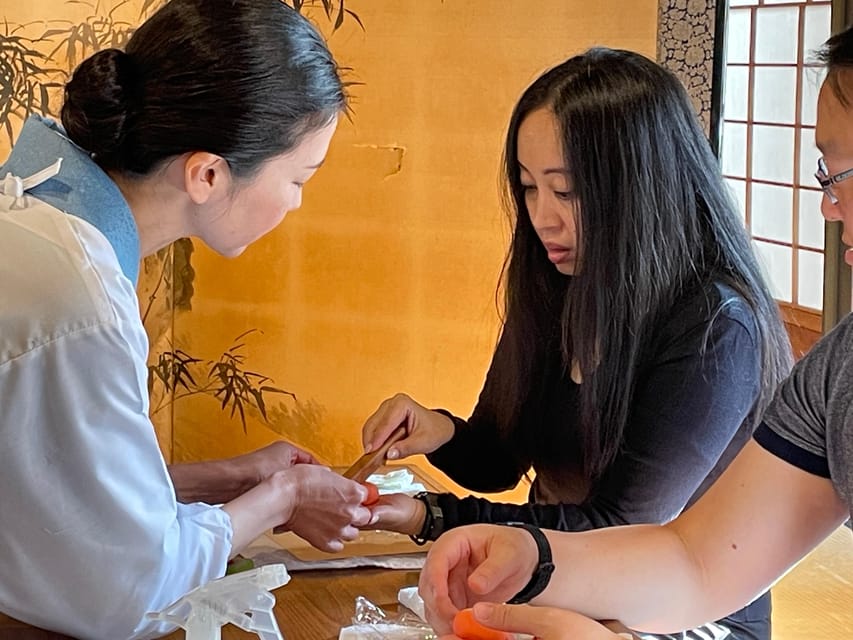
Kimono wear is available as an add-on during booking. If you choose it, you can take photos during the experience and keep a visual record of the occasion.
This option is best for you if clothing is an important part of your interest in Japanese culture. It adds a photo element without changing the main focus on wagashi and tea. You should select it in advance rather than assume it will be available after you arrive.
The provided details do not state the rental duration, the exact garments, or whether dressing assistance is included. Check those points when selecting the add-on. The basic experience includes the tea ceremony, cooking ingredients, guide fee, and taxes, but kimono wear is separate.
A good choice for vegetarian and vegan visitors
Vegetarians are welcome, and the experience is described as vegan-friendly. You should still tell the organizer about dietary restrictions in advance. That is the sensible step for any cooking activity, especially when ingredients and seasonings are prepared for a shared class.
No detailed ingredient list is provided. If you have allergies or follow a strict diet, ask for confirmation before booking rather than relying only on the general vegan-friendly description.
The food element is modest but meaningful. You make one Japanese confectionery and pair it with green tea. This is not a full meal, so plan separate food if you need lunch or dinner around the two-hour session.
Price, group size, and overall value
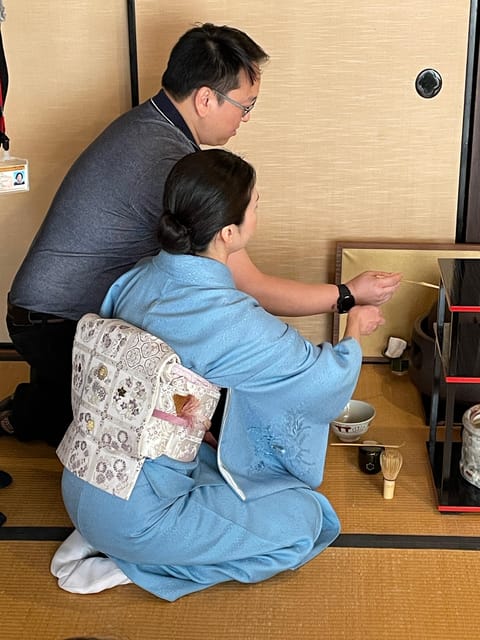
At $98 per person, this is not the cheapest way to spend two hours in the Kansai Region. The value depends on what you want from a cultural activity.
You are paying for a small group, an English-speaking guide, the cooking ingredients and seasonings, all taxes and fees, and a guided tea ceremony. The three-generation family setting, artifact collection, and kimono and textile viewing add character that a basic tea tasting may not offer.
The group limit of six is important. A larger demonstration might cost less, but it would give you less direct attention when shaping wagashi or learning tea preparation. With only a few people, you have a better chance to ask about etiquette and repeat a step if it is not clear.
I would call the price reasonable for you if you want a focused cultural class and value personal instruction. It is less attractive if you only want a quick cup of matcha or a short photo opportunity. The two-hour format gives the activity enough time to connect making, learning, and ceremony.
Free cancellation up to 24 hours before the start protects your plans, and you can reserve now and pay later. Those terms are useful when your Kansai schedule is still changing. Insurance is not included, so you would need to arrange your own coverage.
Access, language, and practical comfort
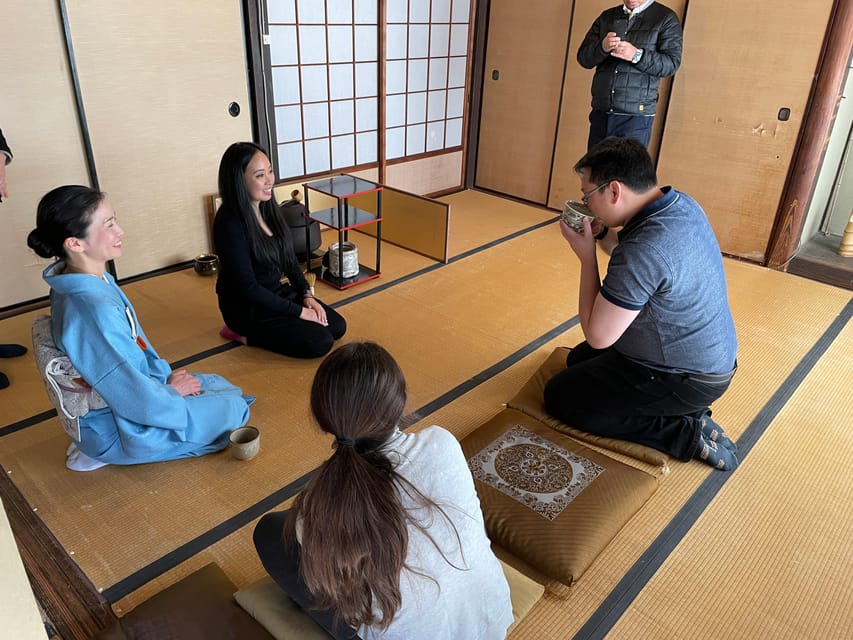
The activity is wheelchair accessible, which is an important point to confirm when planning a cultural class. The listed language is English, and an English interpreter can accompany you if you book that option.
The information does not describe the exact seating arrangement, floor surfaces, restroom access, or whether any part of the tea ceremony requires kneeling. If you use a wheelchair or have mobility needs, contact the organizer before booking so you can confirm how the ceremony and cooking lesson are arranged.
The group is small, with no more than six participants. That makes the English instruction easier to follow and keeps the room from feeling crowded.
Alcohol and drugs are not allowed. The activity is also marked as not suitable for people with altitude sickness, although Izumisano is not presented as a high-altitude destination. If that warning applies to your health situation, ask the provider before booking.
Who will enjoy this most
I would recommend this for first-time visitors who want an introduction to tea ceremony without committing to a full-day cultural course. It also suits couples, families, and small groups who like making something together.
Food-minded visitors will appreciate the wagashi portion. Craft enthusiasts will find the kimono and Nishijin textiles useful. Anyone interested in local family businesses gets a little extra context from the three-generation hosting family and the century-long business connection.
This may not suit you if you want a large-scale performance, a full meal, or an extensive museum tour. It is also not the right pick if you dislike quiet, formal customs or do not want to travel out to Izumisano.
Should you book the Izumisano tea ceremony?
Book it if you want more than a staged tea presentation. The strongest reason to choose this activity is the sequence: make wagashi, learn the tea rules, and then use both in the ceremony. Add the small group, family-run setting, artifacts, and textile displays, and the $98 price has a clear purpose.
I would check the meeting directions carefully, disclose any dietary or mobility needs early, and confirm the details of the kimono add-on before paying. If that practical side works for you, this is a thoughtful two-hour introduction to Japanese tea culture with a real hands-on reward at the end.
FAQ
Where does the tea ceremony experience start?
It starts at Izumisano Furusato Machiya-Kan, the former Shinkawa residence, written as 泉佐野ふるさと町屋館(旧新川家住宅).
How do I reach the meeting point from Nankai Izumisano Station?
Exit Nankai Izumisano Station, go to the right, and turn right at the Tsubasadouri shopping district. Turn left at Uniform Noguchi, then right at the next corner. The Furusato Machiya-Kan is there.
How long does the activity last?
The experience lasts two hours. Starting times vary, so check availability when booking.
What will I make during the class?
You will make wagashi, a Japanese confectionery, and green tea according to the rules of the tea ceremony.
Is the tea ceremony explained in English?
Yes. The activity has an English-speaking live guide, and an English interpreter can accompany you if you book that option.
How many people can join the group?
The group is limited to six participants.
Is the activity wheelchair accessible?
Yes, the activity is listed as wheelchair accessible.
Can vegetarians and vegans participate?
Vegetarians are welcome, and the activity is described as vegan-friendly. Tell the organizer about dietary restrictions in advance.
Is kimono rental included?
No. Kimono wear is an optional add-on selected during booking.
What is included in the price?
The price includes cooking ingredients and seasonings, all fees and taxes, and the guide fee. Insurance is not included.
More Cooking Classes in Osaka
- Osaka Japanese Cooking And Matcha Class near Osaka Castle
★ 5.0 · 22 reviews - Osaka: Japanese Cooking Class with Matcha Experience
★ 5.0 · 4 reviews - Xiao Long Bao, Beef Noodles & Boba Tea Cooking Class in Taipei
★ 5.0 · 159 reviews - Xiao Long Bao, Chicken vermicelli with mushroom and sesame oil, Tofu strips salad, Bubble milk tea. Taiwan Traditional Delicacies Experience-A (Taipei Cooking Class)
★ 5.0 · 79 reviews
Just added around Osaka
- Osaka: Tea Ceremony, Calligraphy, and Kimono Experience★ 5.0 · 6 reviews
- Osaka: Nara, Todaiji, Uji Matcha, and Hot Spring Tour★ 4.0 · 7 reviews
- Nara Deer Park, Uji Matcha, & Hot Spring Full-Day Tour from Osaka★ 4.0 · 21 reviews
- Osaka:Zen Tea Ceremony and Foot Bath Experience<45min>★ 5.0 · 7 reviews
- Premium Kimono Dressing, Tea Ceremony, Calligraphy, Samurai show★ 5.0 · 18 reviews
- Osaka Japanese Cooking And Matcha Class near Osaka Castle★ 5.0 · 22 reviews
- ZEN therapy | Shiatsu-style massage, EnergyTherapy & Japanese Tea★ 5.0 · 5 reviews
- Discover Japanese Tea Blending Techniques in Osaka★ 5.0 · 19 reviews
Japanese Sweets & Tea, compared.

Matcha Making Class in Tokyo with Authentic Japanese Sweets Set
Read our review →
Matcha Making Class in Osaka with Authentic Japanese Sweets Set
Read our review →
Japanese Traditional Sweets Making and Tea Ceremony
Read our review →
Japanese Traditional Sweets Making and Tea Ceremony
Read our review →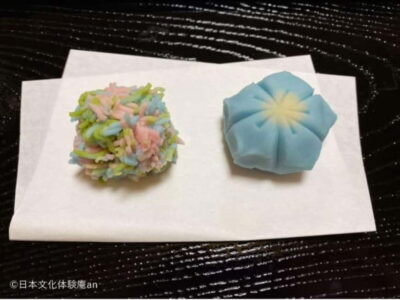
Nagoya: Japanese Traditional Sweets making and Tea Ceremony
Read our review →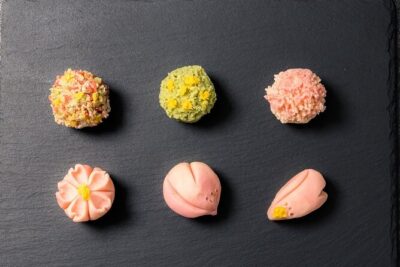
Sweets Making and Kimono Tea Ceremony at Tokyo Maikoya
Read our review →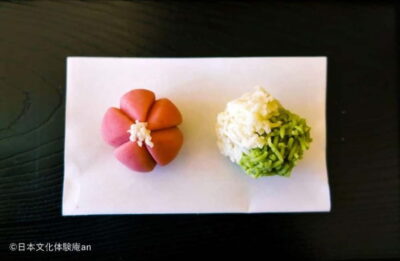
Japanese Traditional Sweets making and Tea Ceremony
Read our review →Browse the lists this tour appears in