
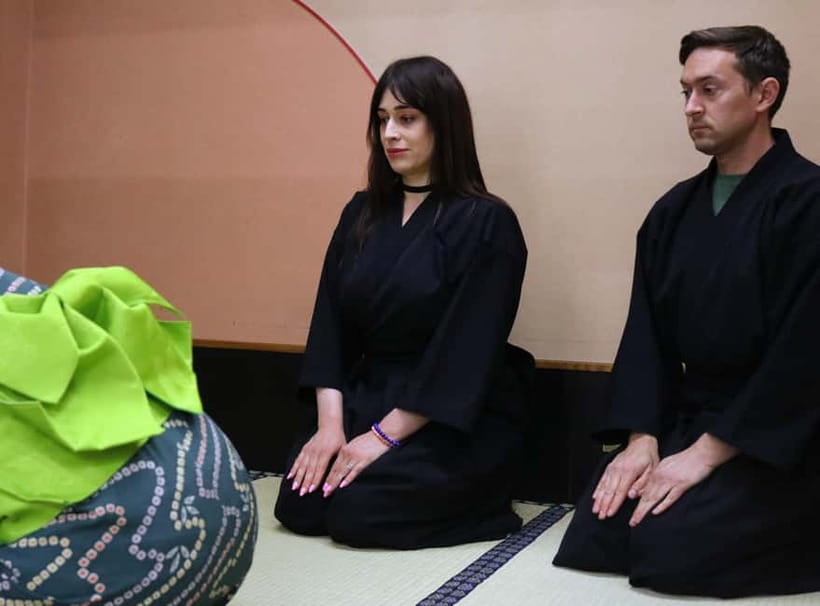
Review · OSAKA
Learn Zen in a class of making Matcha tea near Osaka Castle
Passing through the low entrance to the tea room is the heart of this class. Inside, social rank, nationality, age, and gender are set aside, and you learn how tea ceremony turns simple movements into hospitality. I like the small six-person limit and the chance to prepare matcha yourself, not just watch a demonstration. The kimono, hakama, traditional hairstyles, and professional photos also give the hour a special sense of occasion.
The main catch is the tight schedule. One hour goes quickly once you include changing clothes, explanations, tea, sweets, and photographs. The location can also confuse visitors because Apple Maps reportedly places the address incorrectly, so use Google Maps and arrive 30 minutes early.
Quick reasons to consider this class
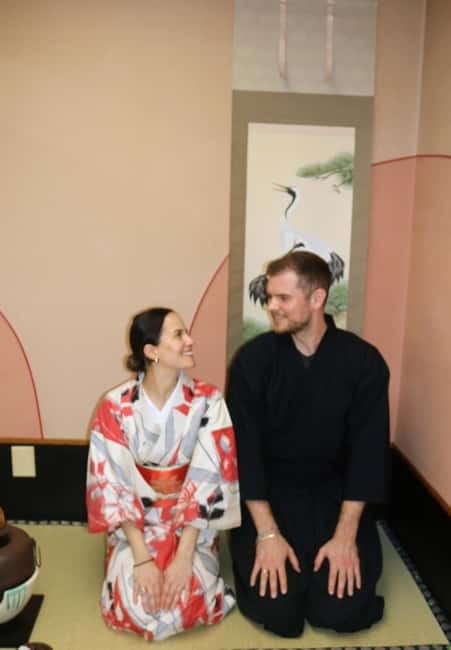
- Samurai-style dress: Men wear hakama and dogi, while women wear kimono, with optional hairstyling and hair ornaments.
- Hands-on matcha: You learn how to whisk and serve tea, then take part in the ceremony rather than sitting through a simple show.
- Wagashi with meaning: Handmade Japanese sweets introduce seasonal design, wabi-sabi, and Japanese food culture.
- Professional photographs: Photos are taken during the activity and sent to your designated email address.
- A very small group: The class accepts no more than six participants, allowing time for personal instruction.
- Central Osaka planning: The class takes place at Samurai Honor in Joto-ku, not directly inside Osaka Castle.
Entering Samurai Honor in Osaka
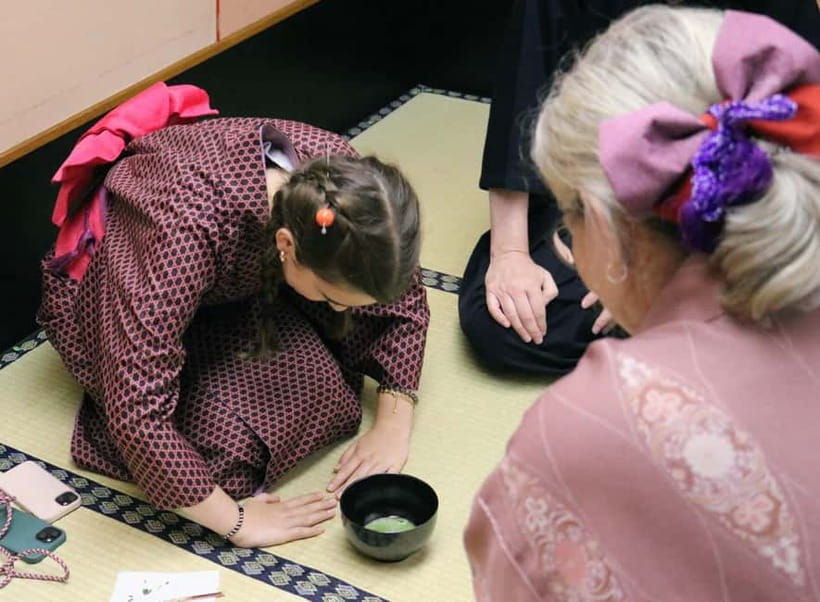
The activity takes place at Bushi no Homare, also called Samurai Honor, at Excellence Takayama 1F, 2-3-19 Shiginonishi, Joto-ku, Osaka-shi. The provider offers several traditional activities at this address, including martial arts, calligraphy, and tea ceremony.
Do not rely on Apple Maps for this booking. Use the supplied Google Maps location instead. At the site, look for a wooden sign reading Honor of the Samurai, a rack holding Samurai Honor pamphlets, and traditional clothing hanging near the store. Those details matter because the venue may not look like a grand tea house from the street.
Plan to arrive 30 minutes before your reserved start time. That early arrival is not wasted time. You need it for instructions and changing clothes, and arriving late would eat into an already short class.
The published price is $40 per person. For Osaka, that is a fair price if you value the clothing, instructor, matcha, wagashi, and photographs as one package. You are not paying for a long formal tea ceremony in a historic temple. You are paying for an approachable cultural lesson with dressing, participation, and a keepsake photo service included.
More Matcha Experiences in Osaka:
- Matcha Making Class in Osaka with Authentic Japanese Sweets Set
★ 5.0 · 509 reviews - Osaka: Matcha Making Experience with Japanese Sweets
★ 5.0 · 146 reviews - Osaka Temple Cool Foot Bath & Matcha Experience〈45min〉
★ 4.9 · 82 reviews
Changing into kimono or hakama
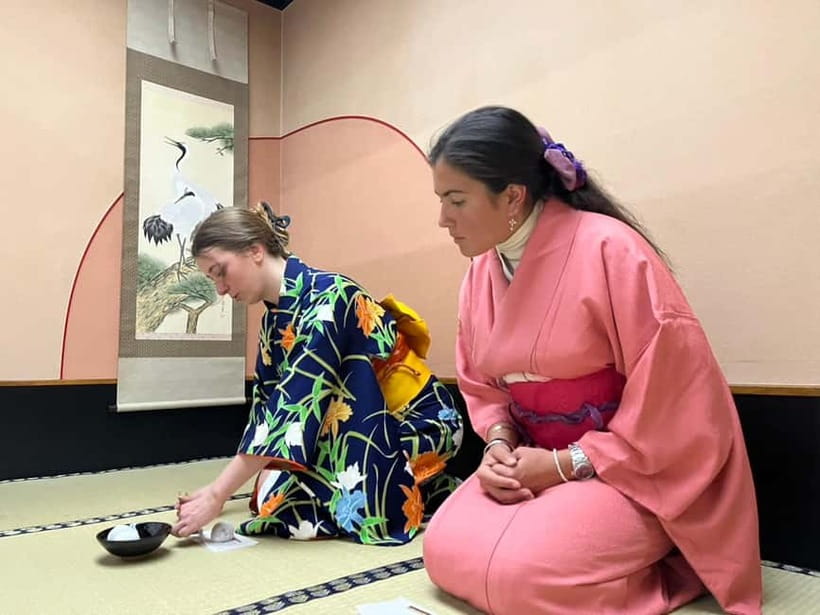
The class begins with traditional clothing. Men wear dogi and hakama, creating a samurai-style appearance. Women wear kimono and are presented in the style of Yamato Nadeshiko, a traditional ideal of Japanese womanhood.
The basic package includes kimono clothing, but several extras are listed as paid options. For women, additional styling may include arranged hair with kanzashi, an ornamental hairpin, plus kimono accessories, tabi socks, zori sandals, a basket bag, and outdoor photography. For men, paid additions can include kimono, obi, tabi socks, geta clogs, and outdoor photographs.
The included clothing is enough to take part in the class, but check the booking details carefully if you want a full outdoor photo session or a more elaborate hairstyle. One useful point from the available experience details is that some women received carefully arranged hair with flowers at no extra charge. Since the activity information also lists hair styling as a paid option, confirm what is included for your date rather than assuming it.
Wear a T-shirt underneath. This is the only clothing item specifically requested, and it makes changing simpler. Comfortable clothing is sensible because a kimono or hakama can feel restrictive compared with ordinary sightseeing clothes.
Learning the rules of tea ceremony
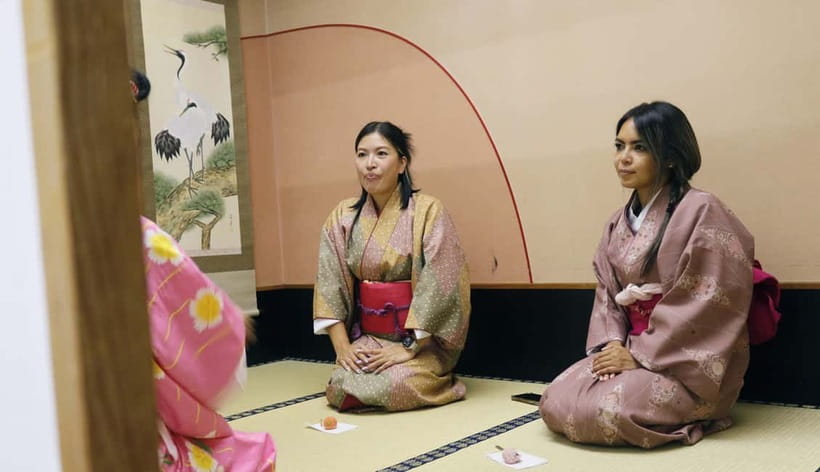
Once dressed, you are introduced to chanoyu, the Japanese tea ceremony. The instructor explains that the ceremony is not only about the person preparing the tea. Hospitality works in both directions. The host offers care, and the person receiving the tea responds with attention and respect.
That idea gives the class more substance than a costume photo stop. You learn how to sit, bow, stand, walk, and handle the tea. These actions are practiced rather than merely described, so the class gives you a feel for the discipline behind the ceremony.
The tea room follows the idea that everyone is treated equally after passing through the nijiriguchi, the low entrance associated with a tea room. The symbolism is easy to understand: you must lower yourself physically to enter, and ordinary status stays outside.
The experience is presented in English and Japanese. English interpretation is included by default. Staff may be able to arrange Italian, Spanish, French, Chinese, Thai, or Indonesian interpretation, but availability is limited, so ask before booking rather than counting on it.
Because the group is capped at six people, you should have a better chance to ask questions and practice movements than in a large demonstration. That small-group format is especially useful for families and first-time visitors who might feel awkward trying to copy formal gestures in front of a crowd.
Preparing and drinking matcha
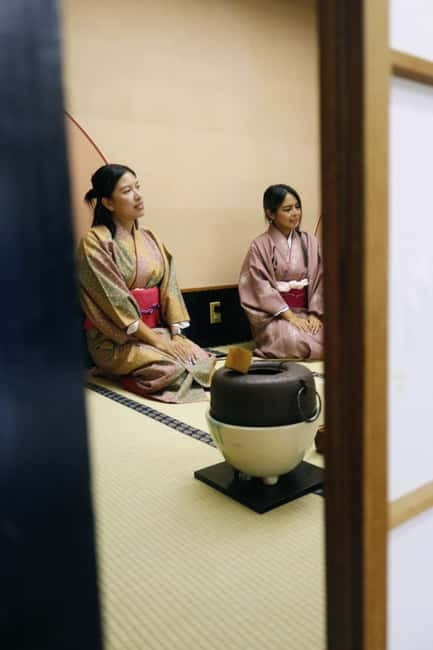
The instructor or tea master serves matcha according to traditional manners, then guides you through the proper response. You do not need prior experience. The point is to learn the sequence, pay attention to small gestures, and understand why the ritual is performed with such care.
A particularly valuable part of the class is the opportunity to prepare tea for one another. This changes the mood from passive observation to shared practice. You get to see both sides of the exchange, as the person offering hospitality and the person receiving it.
Matcha is strong, grassy, and bitter compared with many Western teas. That is where wagashi comes in. The sweet is not an unrelated snack. It balances the tea and forms part of the ceremony.
Do not expect a long tea tasting. The complete activity lasts one hour, and that time includes dressing and photographs. If you want a detailed lesson on every tool used in a formal tea gathering, this class may feel brief. If you want a clear introduction with actual participation, the short format works well.
More Workshops in Osaka:
- Osaka Japanese Cooking And Matcha Class near Osaka Castle
★ 5.0 · 22 reviews - Osaka: Tea Ceremony and Matcha Tea Bowl Making Workshop
★ 5.0 · 6 reviews - Osaka: Japanese Cooking Class with Matcha Experience
★ 5.0 · 4 reviews - Kyoto: 45-Minute Tea Ceremony Lesson Experience
★ 4.3 · 2,378 reviews
What wagashi teaches about Japan
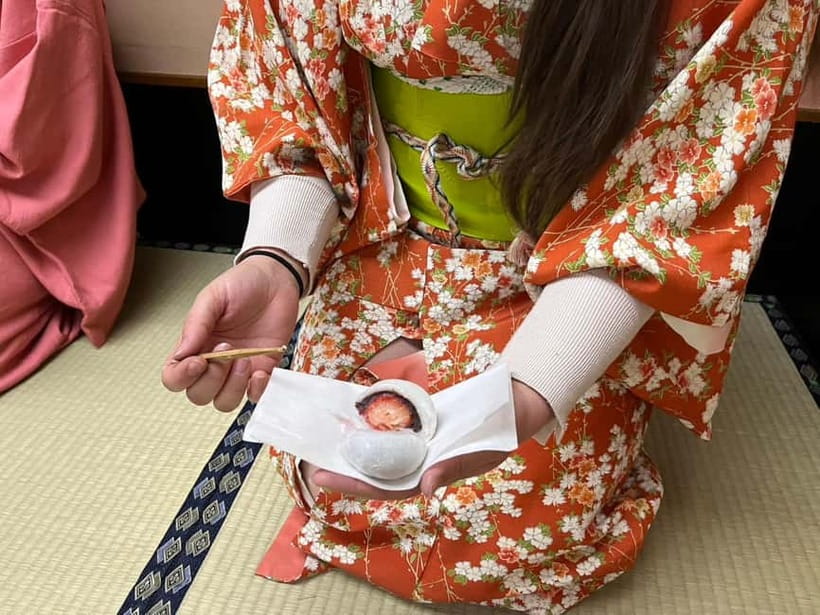
Wagashi are traditional Japanese sweets that developed alongside tea culture, with roots reaching back to the Kamakura period. Their appeal is visual as well as edible. Handmade designs may suggest flowers, leaves, seasonal colors, or other images connected with the time of year.
The class uses wagashi to explain wabi and sabi, ideas linked with simplicity, restraint, imperfection, and the beauty of age. You also learn how Japanese culture expresses the four seasons through food. That seasonal focus is one of the most memorable parts of the program because it turns a small sweet into a lesson about Japanese taste and aesthetics.
The sweets are often so carefully made that you may hesitate before eating them. That reaction is part of the point. Their shape and color ask you to slow down and notice detail before the sweet disappears.
This section also helps explain why the ceremony is more than a method for making powdered tea. Food, clothing, posture, seasonal awareness, architecture, and hospitality all meet in the same short ritual. You will not become an expert in wabi-sabi in an hour, but you can leave with a clearer sense of how those ideas appear in ordinary cultural practices.
Photos, hairstyles, and the visual side
Photography is built into the activity. A photographer takes pictures during the ceremony, and the image files are sent to your designated email address. This lets you focus on the lesson instead of constantly asking a companion to take pictures.
The photos are a strong part of the value for couples, families, and friends. Traditional dress changes the feel of ordinary snapshots, especially when everyone is seated in the tea room and taking part in the same formal gestures.
Women who choose the hairstyle option may receive an arranged style with kanzashi or flowers. Men can add traditional footwear and outdoor photography for an additional charge. The key point is to separate the included photo shooting from the paid outdoor session. The standard activity includes photographs, but not every styling or location option.
You should also understand that this is a cultural photo opportunity, not a fashion studio appointment. The photographs document the tea ceremony and clothing experience. If you want a long portrait session outside, reserve the paid option and allow for the extra cost.
How the one-hour schedule feels
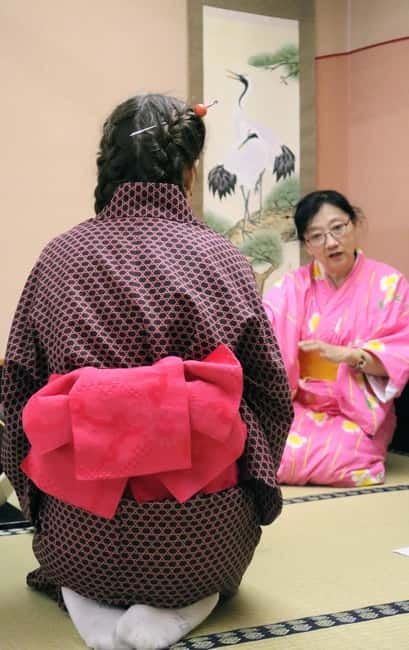
The hour has several jobs to perform:
- Arrive early for instructions and changing.
- Learn the meaning and etiquette of the ceremony.
- Watch the host prepare matcha.
- Practice tea preparation yourself.
- Receive wagashi and matcha.
- Take photographs during the activity.
- Change back after the ceremony.
That is a full program for 60 minutes. I would not schedule a tight train connection immediately afterward. The formal activity may last one hour, but changing and getting clear directions at the beginning require extra time.
The small group helps the schedule. With no more than six participants, the instructor can give each person a turn. Still, the exact balance between explanation, practice, and photos may vary with the group. A private or longer tea lesson would offer more time, but it would also cost more.
The class is aimed at people aged 10 and older. Children under 10 are not accepted. It is also listed as unsuitable for people with altitude sickness and people over 95. Those restrictions are unusual for an Osaka activity, so check them before reserving for a multigenerational group.
Who will enjoy this most
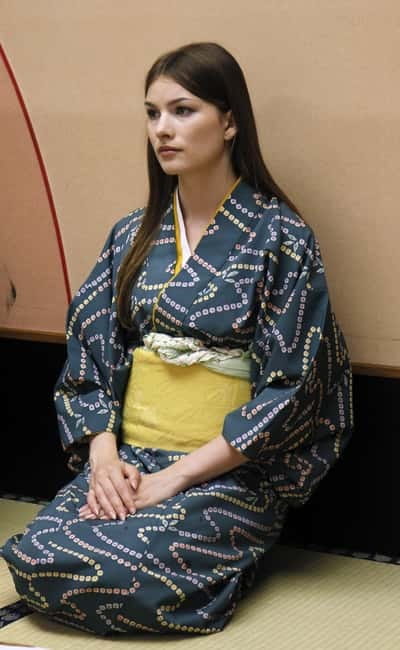
I would recommend the class to you if you want a cultural activity with a clear structure and a visual souvenir. It suits first-time visitors who want to try matcha without committing to a full-day cultural program.
Families with children aged 10 and up can use the class as a shared activity. Everyone changes clothes, learns the same etiquette, prepares tea, and appears in the same photographs. That shared process is more engaging than splitting up for separate adult and child activities.
It also works well for couples and friends. The small group makes the experience feel personal, while the professional photos spare you from taking turns behind the camera.
You may want another option if you dislike formal sitting, changing clothes, or following precise rules. The ceremony asks you to slow down and copy gestures carefully. It is not a casual drop-in tea tasting.
You should also consider your language needs. English and Japanese are the standard languages. Other languages may be possible, but only if staff are available on your date.
Planning around Osaka Castle
The activity is described as being near Osaka Castle, but the listed venue is in Joto-ku at Samurai Honor. Do not assume the class takes place inside the castle grounds or at a historic castle building. Treat Osaka Castle as a nearby sightseeing reference, then follow the exact Google Maps address for the class.
No transportation, hotel pickup, or train-station pickup is included. You need to make your own way to the venue. Since the address on Apple Maps is incorrect, this is one of the few details worth checking twice before you leave.
The cancellation policy is friendly: you can cancel up to 24 hours before the activity for a full refund. A reserve-now-and-pay-later option is also offered, which helps if your Osaka schedule is still shifting.
Is $40 a fair price?
At $40, the value depends on what you want from a tea ceremony. The price includes clothing, an English interpreter, matcha, wagashi, a certified professional instructor, tax, tips, and photo shooting with the files sent by email.
That is a useful bundle. Renting traditional clothing and arranging photographs separately could quickly make the activity more expensive, even before paying for instruction. The six-person limit also gives the class a more personal feel than a large cultural demonstration.
The price does not include transportation, elaborate hair and accessory packages, outdoor photography, or movie shooting. Those extras can change the final cost, so decide in advance whether you want the basic indoor lesson or a fuller dress-up session.
My view is that the standard package is best treated as a one-hour introduction and photo experience. It offers solid value when you want participation, not a long academic lesson.
Should you book it?
Book this class if you want to wear kimono or hakama, learn the manners behind matcha, taste seasonal wagashi, and leave with photographs. The strongest features are the intimate group size, hands-on tea preparation, patient explanations, and the chance to experience both host and recipient roles.
Skip it if you are seeking a lengthy, highly formal tea gathering or if you want the entire event outdoors. Also check the age rules, language options, map location, and paid styling choices before booking.
For most first-time visitors to Osaka, this is a practical way to meet Japanese culture at close range. Arrive early, use Google Maps, wear a T-shirt, and let the hour move at the deliberate pace the ceremony demands.
FAQ
Where does the tea ceremony class take place?
It takes place at Samurai Honor, also called Bushi no Homare, at Excellence Takayama 1F, 2-3-19 Shiginonishi, Joto-ku, Osaka-shi, Osaka 536-0014.
Is the class inside Osaka Castle?
No specific information says it takes place inside Osaka Castle. The venue is Samurai Honor in Joto-ku, described as being near Osaka Castle.
How long does the activity last?
The tea ceremony class lasts one hour. You should arrive 30 minutes before your reserved time for instructions and changing clothes.
What languages are available?
English and Japanese are available. Italian, Spanish, French, Chinese, Thai, and Indonesian interpretation may be possible, but staff availability is limited and should be checked before booking.
What clothing is included?
Kimono clothing is included. Men wear hakama and dogi, while women wear kimono. Some additional clothing, footwear, hairstyling, and outdoor photography options cost extra.
Is matcha and wagashi included?
Yes. Matcha and wagashi are included in the activity price.
Are photographs included?
Photo shooting is included, with the image data sent to your designated email address. Outdoor photography and movie shooting are paid options.
Can children take part?
Children under 10 are not suitable for this activity. The class is intended for children aged 10 and older, subject to the other stated requirements.
Just added around Osaka
- Osaka: Tea Ceremony, Calligraphy, and Kimono Experience★ 5.0 · 6 reviews
- Osaka: Nara, Todaiji, Uji Matcha, and Hot Spring Tour★ 4.0 · 7 reviews
- Nara Deer Park, Uji Matcha, & Hot Spring Full-Day Tour from Osaka★ 4.0 · 21 reviews
- Osaka:Zen Tea Ceremony and Foot Bath Experience<45min>★ 5.0 · 7 reviews
- Osaka Japanese Cooking And Matcha Class near Osaka Castle★ 5.0 · 22 reviews
- Premium Kimono Dressing, Tea Ceremony, Calligraphy, Samurai show★ 5.0 · 18 reviews
- ZEN therapy | Shiatsu-style massage, EnergyTherapy & Japanese Tea★ 5.0 · 5 reviews
- Discover Japanese Tea Blending Techniques in Osaka★ 5.0 · 19 reviews
Matcha Experiences, compared.
World Heritage Kyoto & Nara Uji Authentic Matcha Experience
Read our review →
Matcha Making Class in Tokyo with Authentic Japanese Sweets Set
Read our review →
Tea Museum Tickets and Matcha Grinding Experience
Read our review →
Matcha Making Class in Osaka with Authentic Japanese Sweets Set
Read our review →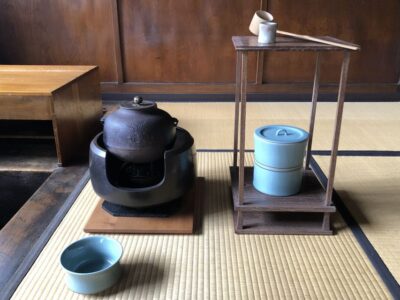
Tea Ceremony Meditation – Make Matcha with Tea Master
Read our review →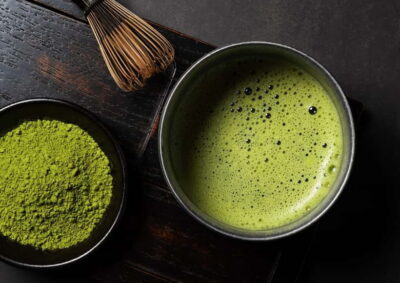
Matcha Making Experience with Mochi Sweets in Asakusa
Read our review →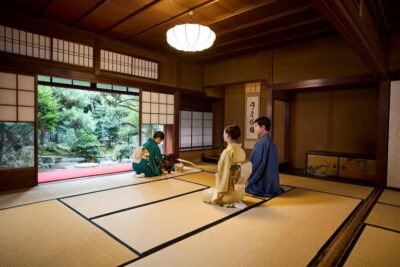
Browse the lists this tour appears in