
Review · KYOTO
2 Types of Japanese Sweets making and Tea Ceremony
The best part of this Kyoto experience is that you make three different Japanese treats and drinks in one sitting. You shape dry Wasanbon sweets, prepare two seasonal nerikiri, then grind matcha and make your own tea. It gives you more to do than a simple demonstration, and the $28 price is appealing for a 125-minute cultural activity.
I especially like the use of bean paste from long-established Kyoto shops and the chance to work with single-origin matcha. The seasonal designs give the class a local touch, too. The main consideration is that this is a casual, classroom-style workshop, not a quiet, highly formal tea ceremony. English help is available as much as possible, but the instructor’s main language is Japanese.
Key points to know before booking
- Three hands-on activities in 125 minutes: Make Wasanbon ohigashi, two nerikiri sweets, and matcha.
- Kyoto-made ingredients: The white and red bean pastes come from long-established Kyoto shops.
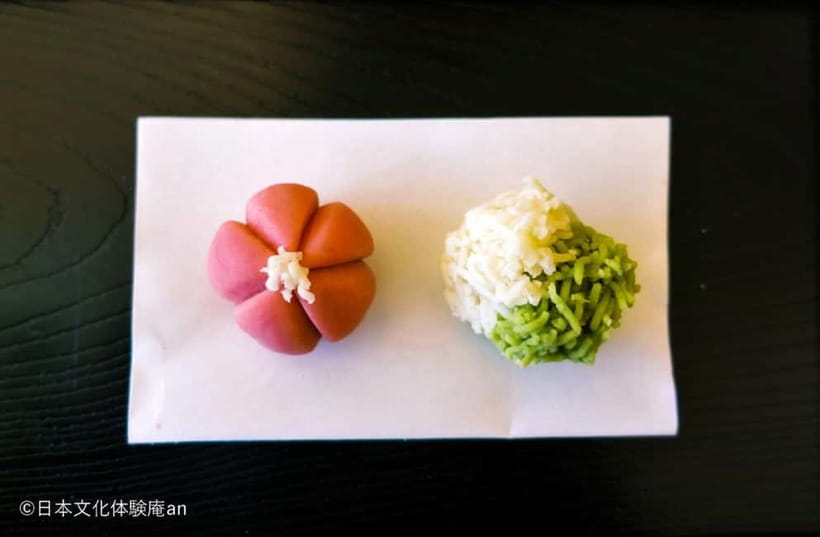
- Seasonal designs: Your nerikiri shapes change with the season, including a flower design and a kinton-style sweet.
- Casual tea experience: You grind matcha, prepare your own cup, and learn about tea, but this is not a full formal tea ceremony.
- Convenient Gojo location: The venue is about one minute from Exit 1 of Gojo Station on the Karasuma Subway Line.
- Good value with a language caveat: The base price is $28, but English translation is provided only as much as possible.
Three Japanese sweets in one compact workshop
This activity works well because it avoids making you choose between a sweets class and a tea experience. In just over two hours, you get a taste of both. The program begins with an explanation of traditional Japanese sweets, then moves straight into making them.
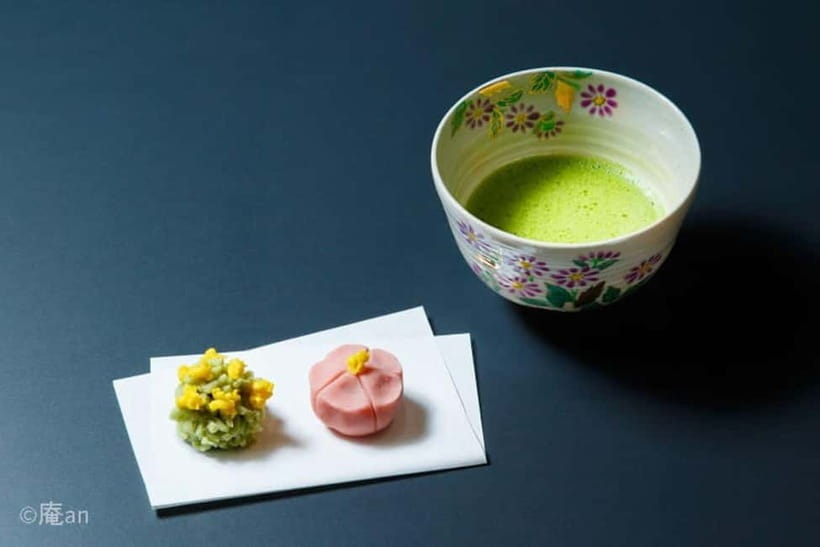
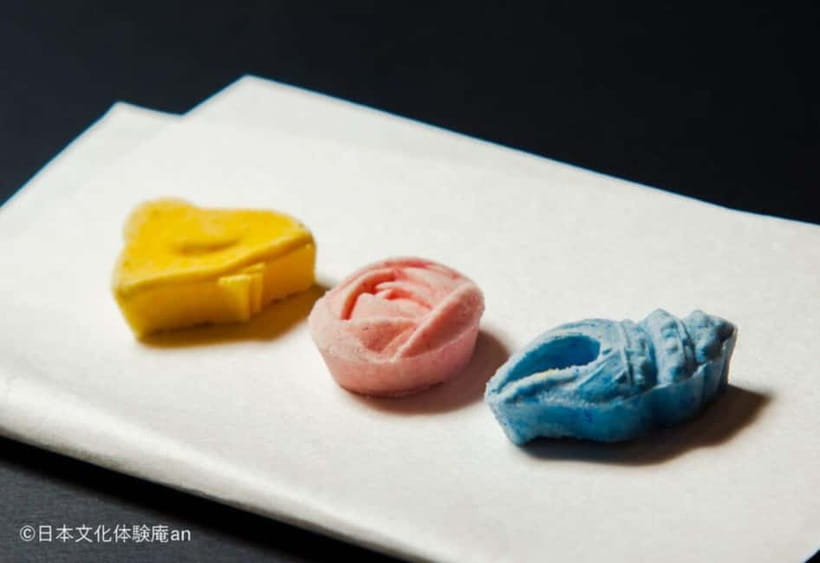
The sweets are not all the same. Ohigashi is a dry Japanese sweet made with Wasanbon, a traditional Japanese sugar. Nerikiri is softer and made with white or red bean paste. The textures, ingredients, and shaping methods give the class useful variety.
At $28 per person, that combination is the main value. You are not paying only to watch a tea demonstration. You are taking part in several activities and then eating and drinking what you make. Optional extras cost 200 Japanese yen for added color, 100 yen for a take-out sweets box, and 300 yen for a completion certificate.
The workshop is especially suitable if you want a gentle introduction to Japanese food culture without committing to a full cooking class. It also gives you something to do on a rainy Kyoto afternoon, when a long outdoor walk may not be appealing.
More Japanese Sweets and Tea Sessions in Kyoto:
- Kyoto: Japanese Traditional Sweets Making and Tea Ceremony
★ 4.4 · 314 reviews - Kyoto near Fushimiinari Wagashi making&Small Group Tea Ceremony
★ 5.0 · 14 reviews - Kyoto Fushimiinari:Wagashi Making & Small Group Tea Ceremony
★ 5.0 · 14 reviews
Making Wasanbon ohigashi in the first 20 minutes
The class opens with an explanation of traditional Japanese sweets before you make ohigashi. This first section lasts about 20 minutes. Ohigashi is a dried sweet made from Wasanbon, a fine traditional sugar with strong ties to Japanese confectionery.
This is a useful starting point because ohigashi does not look or feel like the soft bean-paste sweets that follow. You begin with a dry, molded confection, then later work with smoother nerikiri. That contrast helps you see that Japanese sweets are not one single category.
The activity uses traditional Japanese sugar rather than a generic substitute. That detail matters if you care about ingredients and technique. You also get an early success before moving into the more delicate flower-shaped sweets.
The description does not specify every tool or mold used, so you should expect guided instruction rather than a fully independent recipe session. The instructor leads the process, and the language of instruction is Japanese. English translation can be provided as much as possible, and Maiko has offered clear English support in at least some sessions.
A short break before the softer sweets
After the ohigashi portion, the schedule allows a break before the nerikiri work begins. The timing is compact, so you will not be sitting idle for a long stretch. Use the pause to reset your hands and pay attention to the next set of instructions.
The break also makes the experience feel less rushed than one continuous 125-minute class. You are handling sweet paste and shaping small designs, so a moment between activities is welcome.
One practical point: other people in the room affect the mood. A quiet group can make this feel focused and personal, while a noisy group can make it feel more like a classroom. The workshop itself cannot control everyone’s behavior, so do not book it expecting complete silence.
Shaping two seasonal nerikiri sweets
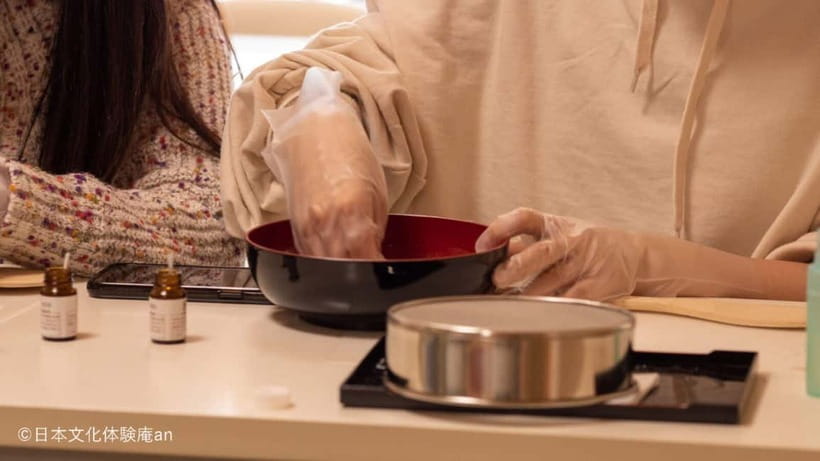
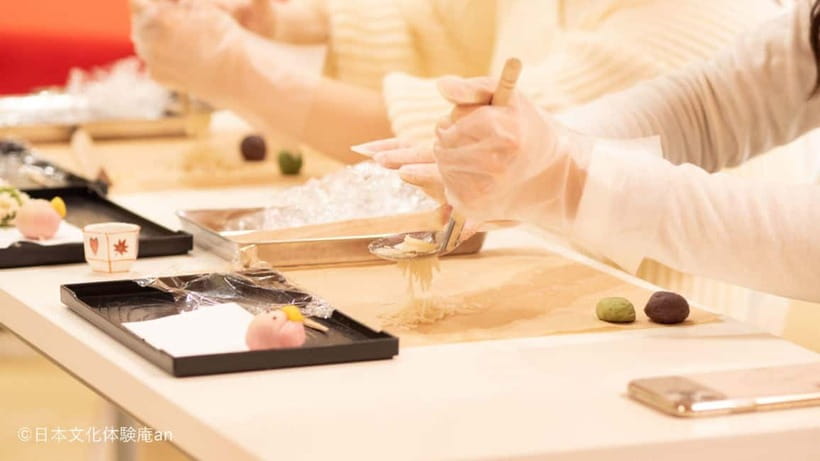
The main hands-on section is the nerikiri making. You prepare two sweets that match the season. The schedule specifically includes a flower-shaped nerikiri and a kinton nerikiri.
Nerikiri is made from white or red bean paste and shaped into detailed forms. The use of bean paste from long-established Kyoto shops adds a strong local connection. You are not simply decorating a mass-produced sweet. You are working with the basic material used in a traditional Kyoto confectionery style.
The flower shape gives you a clear visual goal. Kinton nerikiri has a different look and texture, which helps keep the second sweet from feeling like a repeat of the first. Seasonal designs also mean the exact appearance may change depending on when you visit.
This is the part where patience helps. Fine shaping can be more exacting than it first appears, especially if you want a neat final result. The point is not to produce a perfect professional sweet. The value is in learning how the paste responds and seeing how a simple mass becomes a recognizable seasonal form.
You may pay an extra 200 yen for added color. If presentation matters to you, that small charge may be worthwhile. A take-out box costs 100 yen, but the base experience already includes the chance to eat the sweets during the session.
More Tea Ceremony Experiences in Kyoto:
- Kyoto: Tea Ceremony in a Traditional Tea House in Kiyomizu
★ 4.9 · 3,519 reviews - Kyoto: Tea Ceremony Ju-An at Jotokuji Temple
★ 4.9 · 3,207 reviews - Kyoto: 45-Minute Tea Ceremony Lesson Experience
★ 4.3 · 2,378 reviews - Kyoto: Table-Style Tea Ceremony at a Kyo-Machiya
★ 4.9 · 1,211 reviews
Matcha grinding and a casual tea experience
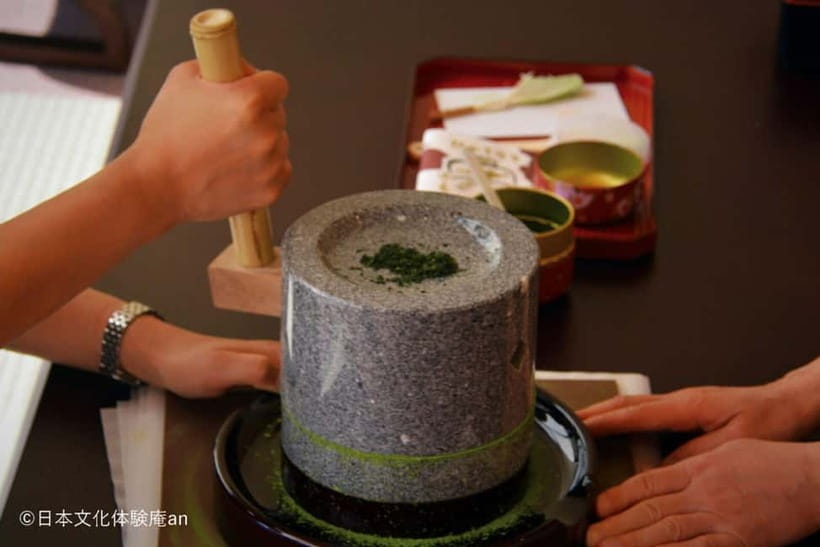
After the nerikiri work and another short break, the class turns to tea. The schedule sets aside about 20 minutes for an explanation of tea, a matcha grinding demonstration, the tea experience, and photos.
The matcha is described as single-origin and special, which gives this section more substance than simply adding green powder to hot water. You first learn about the tea, watch the grinding demonstration, and then make your own matcha.
This is a casual tea ceremony experience, not a strict formal ceremony with a long series of traditional movements. That distinction is important. One participant expected a full ceremony and found the session closer to an informative introduction followed by making a cup of matcha.
I see that as a strength if you want to take part rather than sit quietly through a highly structured ritual. You get to prepare the drink yourself and understand the basic action behind it. If your main goal is a formal tea ceremony in a traditional setting, this workshop may feel too instructional.
The tea is served with the sweets you have made, giving the final part a clear purpose. You can taste the difference between the dry ohigashi, the soft nerikiri, and the bitter matcha. The pairing is simple, but it brings the three sections together.
What the class feels like in practice
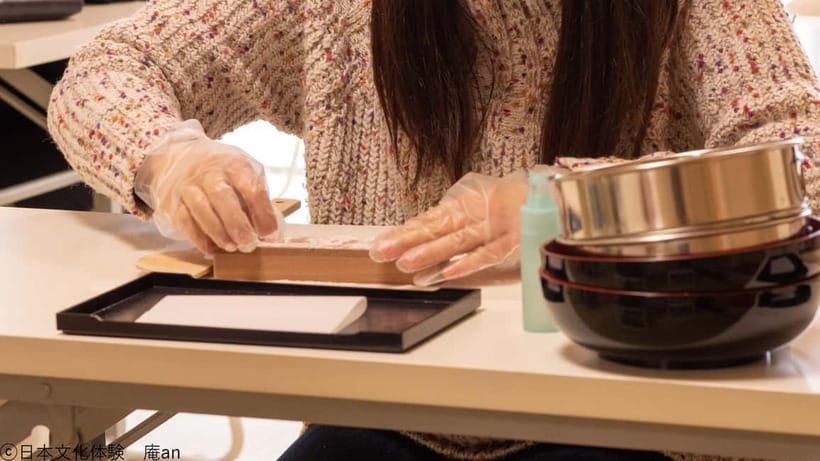
The instructor is Japanese, and English translation is provided as much as possible. Maiko is specifically described as attentive and informative, and another session had an instructor who was friendly and enthusiastic with good English.
You should still contact the provider if English guidance is important to you. The stated language is Japanese, so translation may vary by instructor and session. The class is workable for English-speaking visitors, but it is not advertised as a fully English-led experience.
The room can also shape your impression. This is a group activity, and the atmosphere may feel more like a classroom than an intimate tea room. That is not necessarily a problem. A classroom format makes it easier to follow a set sequence and complete three activities in a limited time. It does mean you should adjust your expectations about quiet, private attention.
The program includes a picture time near the end. That gives you a chance to photograph your sweets and the tea experience before the final eating and drinking period. A completion certificate is available for an additional 300 yen.
Location near Gojo Station
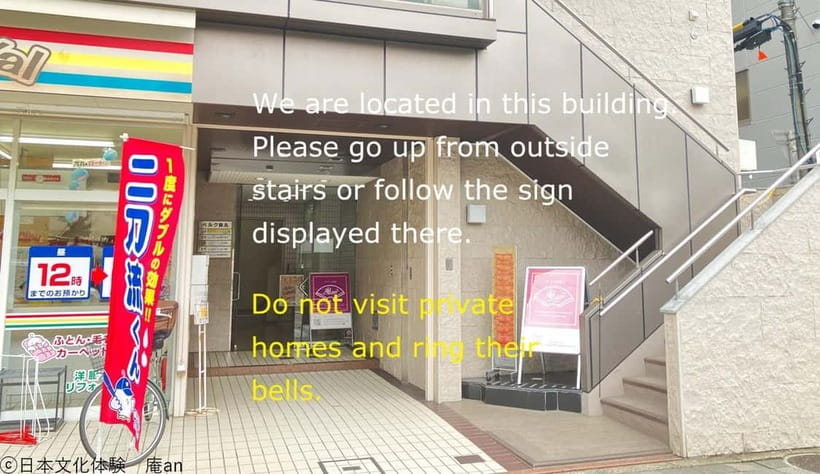
The venue is about one minute on foot from Exit 1 of Gojo Station on the Karasuma Subway Line. The entrance faces Gojo-dori, the main street, so you do not need to search through a quiet side lane.
That location is a real advantage in Kyoto. You can reach the workshop by subway and avoid spending extra time on a taxi or a long walk. Check the station exit carefully, then look for the entrance facing the main road.
The building has no elevator, and you will need to use stairs to reach each venue. The activity is listed as wheelchair accessible, but this stair information is important. If you use a wheelchair or have trouble with stairs, contact the provider before booking to confirm how access will work for your specific session.
The operation hours are 10:00 to 17:00. Reservations or messages received after 17:00 are processed the next day, so do not expect an immediate evening response.
Timing, lateness, and the real value of $28
The full experience lasts 125 minutes. The schedule is carefully divided:
- The opening explanation and ohigashi making take about 20 minutes.
- A short break follows.
- The flower-shaped and kinton nerikiri sections run until about the 85-minute mark.
- Another break comes before the tea portion.
- Tea instruction, matcha preparation, photos, and eating take the final 40 minutes.
You need to arrive on time. The provider will not hold the event for delays, regardless of the reason. This matters in Kyoto, where a small subway delay, a wrong station exit, or a crowded street can quickly cost several minutes.
At $28, the experience offers good value if you want active participation. You receive instruction in three connected activities, use Kyoto bean paste and Wasanbon, work with single-origin matcha, and eat what you prepare.
The price becomes less attractive if you mainly want a formal tea ceremony. In that case, the sweets class makes up much of the value, while the tea portion may feel short and casual. Optional extras are modest, but they can raise the final cost slightly.
Who should book this Kyoto sweets class
I would recommend this for first-time visitors who want a simple introduction to Japanese confectionery. It is also a good choice for families, couples, and solo visitors who prefer doing something with their hands rather than watching a cultural display.
The under-two policy may help families: children who sit on a parent’s lap are free. Children who take part in the activity are not covered by that specific note, so check the booking details if you are bringing older children.
This is also a good fit for anyone curious about matcha but unsure about joining a formal ceremony. You can learn the basics, make a cup yourself, and enjoy the drink with sweets without needing to know traditional etiquette in advance.
I would be more cautious if you need full English instruction, want a private or quiet setting, or expect a formal ceremony. Contact the provider about translation and accessibility before paying, and allow extra time to find the entrance.
Should you book the Gojo sweets and matcha experience?
Book it if you want a well-priced, hands-on look at three Japanese traditions in one session. The seasonal nerikiri, Kyoto bean paste, Wasanbon ohigashi, and matcha preparation give you more variety than a basic tea tasting.
Skip it if the tea ceremony itself is your main reason for booking. This is better understood as Japanese sweets making plus a casual tea lesson, not a formal ceremonial performance.
For most visitors, the strongest choice is to treat it as a practical Kyoto food-culture workshop. Arrive early, confirm English support if needed, and expect a friendly class rather than an intimate tea room.
FAQ
Where is the Japanese sweets and tea experience located?
It is about a one-minute walk from Exit 1 of Gojo Station on the Karasuma Subway Line. The entrance faces Gojo-dori.
How long does the activity last?
The experience lasts 125 minutes, including the sweets making, breaks, tea instruction, photo time, and eating and drinking.
What sweets will I make?
You will make one traditional dry sweet called ohigashi and two seasonal nerikiri sweets. The nerikiri portion includes a flower-shaped sweet and a kinton-style sweet.
What ingredients are used?
The ohigashi is made with Wasanbon, a traditional Japanese sugar. The nerikiri uses white and red bean paste produced by long-established Kyoto shops. The matcha is single-origin.
Is this a formal Japanese tea ceremony?
No. It is a casual tea experience that includes an explanation of tea, a matcha grinding demonstration, and making your own cup. It is less formal than a traditional full tea ceremony.
Is the class taught in English?
The instructor’s language is Japanese. English translation is provided as much as possible. You can contact the provider if you would like to request English support.
Is the activity wheelchair accessible?
The activity is listed as wheelchair accessible, but the building has no elevator and stairs are required to reach each venue. Contact the provider before booking to confirm the arrangements.
What optional extras are available?
Adding color costs 200 Japanese yen, a sweets take-out box costs 100 yen, and an experience completion certificate costs 300 yen.
What happens if I arrive late?
The event will not be held for delayed arrivals, regardless of the reason. Plan to reach Gojo Station early and allow time to locate the entrance.
More Dessert Stops in Kyoto
- Kyoto: Traditional Tea Ceremony with Matcha & Sweets in Gion
★ 4.9 · 27 reviews - Traditional Tea Ceremony with Matcha and Sweets in Kyoto
★ 5.0 · 13 reviews - Japanese Traditional Sweets making with Tatedashi Matcha
★ 4.3 · 6 reviews - Kyoto WAKIMIZU Half Day Tour: Secrets of Matcha & Wagashi Sweets
★ 5.0 · 2 reviews
Just added around Kyoto
- Whisk Your Own Matcha: A Zen Matcha Experience at Temple★ 3.6 · 7 reviews
- Uji Walking Tour – Byodo-in temple and Tea Ceremony from Kyoto★ 3.5 · 3 reviews
- Traditional Tea Ceremony in Kyoto★ 4.5 · 3 reviews
- Kyoto: Authentic Tea Ceremony in a Small Group★ 5.0 · 7 reviews
- Tea ceremony at Kyoto’s Zen Temple Teahouse★ 5.0 · 2 reviews
- Tea Ceremony in 150 Years Old Townhouse with Tables and Chairs★ 5.0 · 22 reviews
- Silent Beauty of Kyoto Zen Walk and Tea Experience★ 5.0 · 2 reviews
- Tea Ceremony Experience in Traditional Kyoto Townhouse★ 5.0 · 19 reviews
Japanese Sweets & Tea, compared.

Matcha Making Class in Tokyo with Authentic Japanese Sweets Set
Read our review →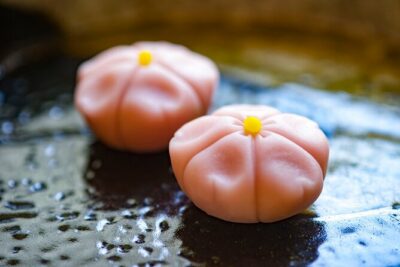
Matcha Making Class in Osaka with Authentic Japanese Sweets Set
Read our review →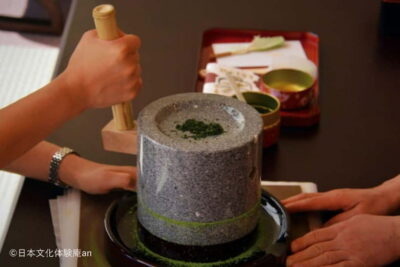
Japanese Traditional Sweets Making and Tea Ceremony
Read our review →
Japanese Traditional Sweets Making and Tea Ceremony
Read our review →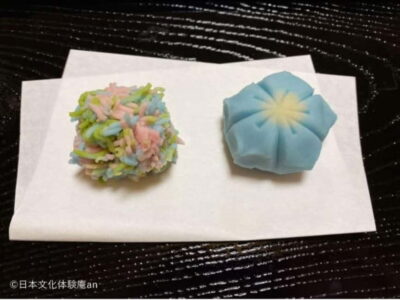
Nagoya: Japanese Traditional Sweets making and Tea Ceremony
Read our review →
Sweets Making and Kimono Tea Ceremony at Tokyo Maikoya
Read our review →
Japanese Traditional Sweets making and Tea Ceremony
Read our review →Browse the lists this tour appears in