
Review · OSAKA
Samurai Show, Tea Ceremony, Japanese Traditional Activities
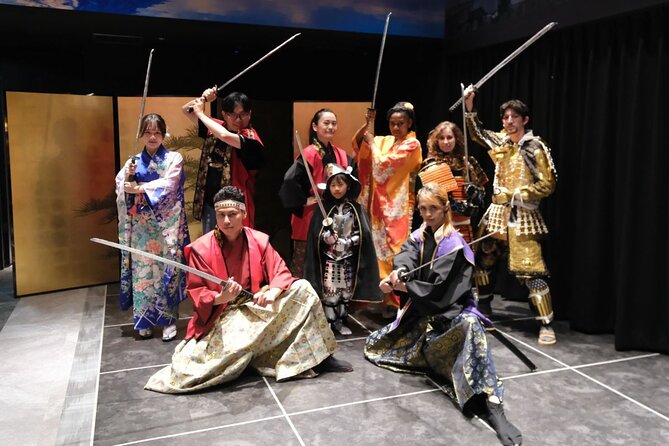
Osaka’s samurai performance is only the opening act. This two-and-a-half-hour cultural program lets you handle traditional instruments, practice calligraphy, prepare green tea, and join a staged sword demonstration. It is less a quiet museum visit and more a lively lesson where you are expected to take part.
I like the mix of hands-on activities and short performances. I also like the indoor setting near Dotonbori, which makes this a useful choice on a rainy day or when you need a break from Osaka’s crowded streets. The main thing to consider is that the basic price does not include samurai armor, kimono, or ninja dress-up, and the full visit can run closer to three or four hours.
Key points to know before booking
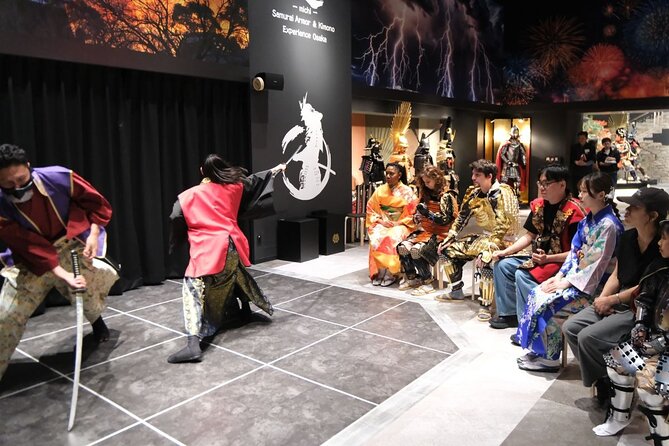
- Samurai show with audience participation: Watch a staged battle, then practice simple movements with a performer using safe practice weapons.
- Tea and calligraphy are taught, not just displayed: You prepare green tea and create calligraphy to take home, including a personalized fan.
- Traditional music is interactive: You may watch several performances and try instruments such as a Japanese guitar, flute, harp, or other traditional instruments.
- Good value at about $44.92: The ticket includes the main shows, tea ceremony, calligraphy, and music activities.
- Costumes are optional extras: Samurai armor, kimono, and ninja clothing are not part of the standard ticket.
- Plan more than 150 minutes: The advertised program is about two and a half hours, but many people spend three to four hours completing the activities.
What this Osaka culture experience is really like
This is built for people who want to do more than look at Japanese culture from behind a glass case. You move through a large facility near Osaka’s Dotonbori area, taking part in several short demonstrations and workshops.
The tone is friendly, active, and sometimes deliberately silly. You may be asked to try a musical instrument, copy Japanese characters, follow tea ceremony steps, or face a samurai performer in a lighthearted practice scene. That makes the program a good fit for families, couples, and first-time visitors who want a clear introduction without needing previous knowledge of Japanese customs.
The standard program lasts about 150 minutes. In practice, you should leave three hours if you want to take photographs, ask questions, and finish every station at an easy pace. Some visitors have stayed three and a half to four hours, especially after adding a kimono experience.
The venue is near public transportation, and the meeting point is Shinsaibashi ARTY Inn at 2-chōme-17-3 Nishishinsaibashi, in Osaka’s Chuo Ward. The activity returns to this same meeting point, so you do not need to arrange a separate end location.
More Tea Ceremony Experiences in Osaka:
- Osaka: Tea Ceremony Experience
★ 4.9 · 1,426 reviews - Tea Ceremony Experience in Osaka Doutonbori
★ 5.0 · 754 reviews - Osaka: Tea Ceremony, Calligraphy, and Kimono Experience
★ 4.9 · 130 reviews
Samurai action without the serious sword fight
The samurai section gives the program its strongest sense of theater. You first watch a staged performance, then get a chance to practice basic samurai movements with the performers. The swords used for audience participation are not real swords, so the activity is designed as a playful introduction rather than combat training.
The show can be dramatic, but it is also comic. A performer may ham up the scene and invite children or adults into the action. That balance works well for families. Younger children get a clear story and movement to watch, while adults can enjoy the humor and the chance to try something new without feeling they are signing up for a serious martial arts class.
You may see more than one samurai presentation during a longer visit. The program can include a main battle scene followed by instruction and audience practice. That extra participation is important. Watching a sword performance for a few minutes is one thing; trying the movements yourself gives you a better sense of how carefully staged such a scene must be.
There is one fair warning. If you want a polished historical theater production with elaborate costumes, complex choreography, and a serious dramatic tone, this may feel light. One account found the samurai section weaker than the tea, music, and calligraphy. I would treat it as family-friendly entertainment with cultural context, not as a formal stage drama.
Tea ceremony that gives you something to do
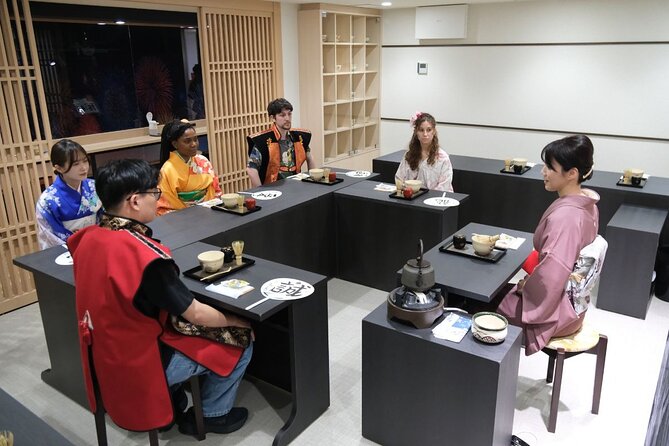
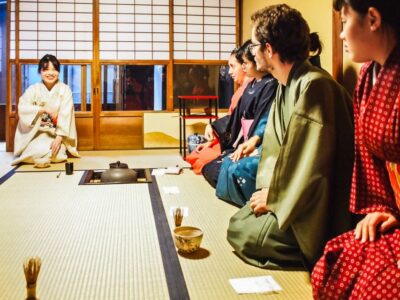
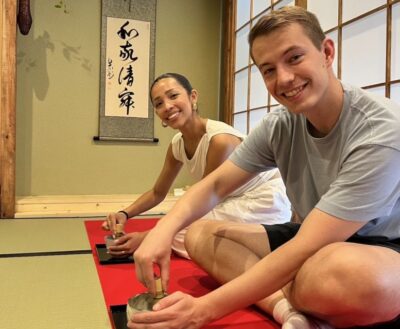
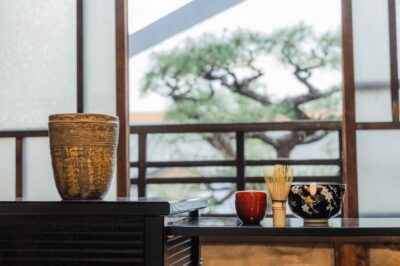
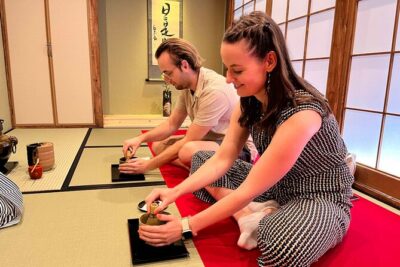
The tea ceremony is one of the more useful parts of the program because you are not simply watching a host perform. You learn the basic order of the ritual and prepare a cup of green tea yourself.
That hands-on approach helps explain why the ceremony moves slowly and why each gesture matters. You get a practical look at the care involved in serving tea, along with a chance to ask questions through the English-speaking staff and interpreters available around the facility.
Do not expect a private, highly formal tea ceremony in a traditional tea house. This is a group cultural lesson, and the setting includes several other activities. The benefit is that the format feels approachable. You can make mistakes, laugh, and try again without worrying that you have broken a solemn ceremony.
The tea session also gives the afternoon a calmer rhythm after the samurai show. I like that contrast. The program moves from energetic performance to quiet hand movements, attention to detail, and a simple cup of green tea.
Calligraphy with a take-home keepsake
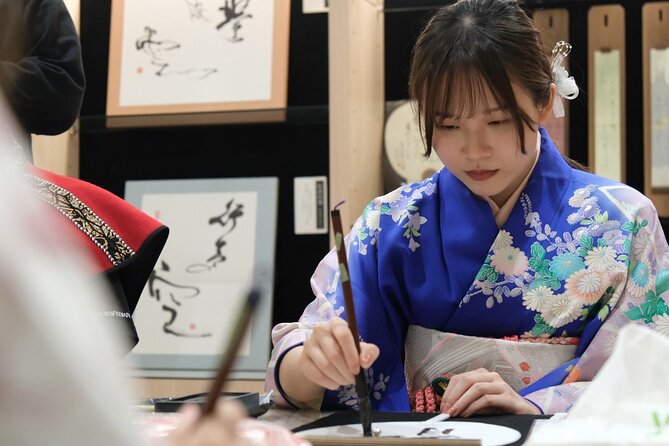
The calligraphy activity is another strong point, especially if you want to leave with something more personal than photographs. You practice writing Japanese characters with guidance, then create a piece to take home. A personalized fan is included in the hands-on work described by the venue.
This station suits both adults and children. You do not need to know Japanese before starting, and the point is not perfect penmanship. You learn how the brush is held, how strokes are formed, and why order and pressure matter.
I see this as better value than a quick demonstration because it gives you a physical reminder of the activity. A small calligraphy piece or fan can be more meaningful than another souvenir bought from a shop, particularly if you write a name, word, or phrase connected with your Osaka visit.
The quality of the finished work will depend on your patience and the amount of help you accept. If you rush, it may look rough. That is part of the fun, and the staff are there to guide you rather than judge the result.
A few more tea experiences around Osaka worth a look
- Premium Kimono Dressing, Tea Ceremony, Calligraphy, Samurai show
★ 5.0 · 18 reviews - Kyoto: Wazuma Magic Show & Tea Ceremony
★ 4.8 · 29 reviews - Chengdu: Sichuan Opera Show ShufengYayun & Covered Bowl Tea
★ 4.2 · 14 reviews - Agadir/Taghazout: Sandboarding & Sunset Tea with Fire Show
★ 5.0 · 6 reviews
Traditional music you can try yourself
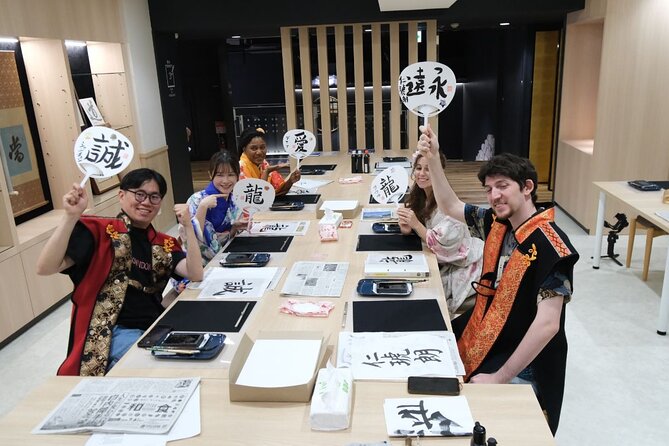
Music adds another layer to the program. You watch performances on traditional Japanese instruments, then get opportunities to try some of them. The activities described include a Japanese guitar, a complex Japanese keyboard-like instrument, flute, harp, and other traditional instruments.
You should not expect to master an instrument in one afternoon. The value is in feeling the shape, strings, keys, or breath control for yourself. Even a short attempt explains why these instruments demand such careful technique.
This section can be especially entertaining for children because it turns a performance into a personal challenge. Adults may enjoy it for a different reason: you get a closer look at instruments that are often difficult to encounter during a normal sightseeing day.
The musical performances also help broaden the program beyond the familiar samurai image. If you came expecting only swords and costumes, the music and tea ceremony provide a more rounded picture of Japanese cultural practices.
Optional kimono and samurai armor
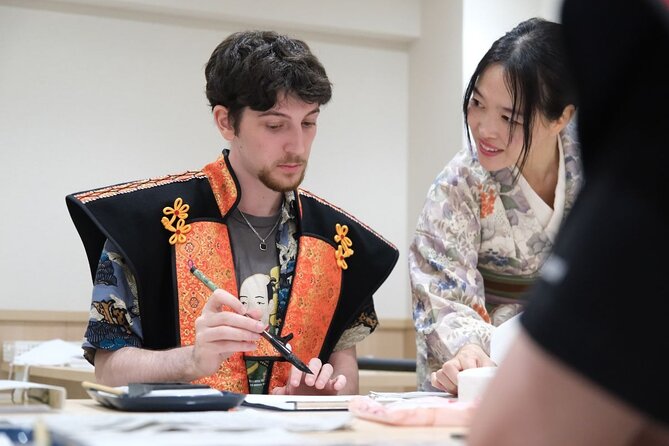
The basic ticket includes the cultural activities, but not samurai armor, kimono, or ninja dress-up. This distinction matters when you compare the advertised price with the total cost of your day.
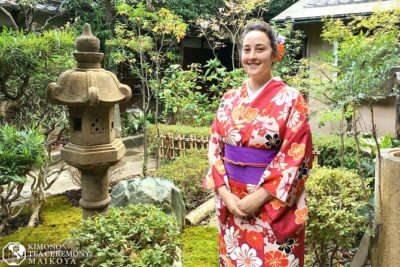
A kimono upgrade has been offered for about 5,000 yen. Staff dress you, help with photographs, and assist you while you move around the facility. The clothing option can add a memorable visual element, especially for couples and families who want group photos.
Samurai armor is also available as an option, according to the venue’s information. The standard ticket does not include it. Ask about the current add-on price when booking, since the supplied details give no fixed amount for armor or ninja clothing.
I would not add a costume simply because you feel you must complete the theme. The tea, calligraphy, music, and samurai show already make up a full visit. Choose the kimono or armor if photographs and dress-up are a main goal, or if you have extra time and budget.
Why the $44.92 price can be good value
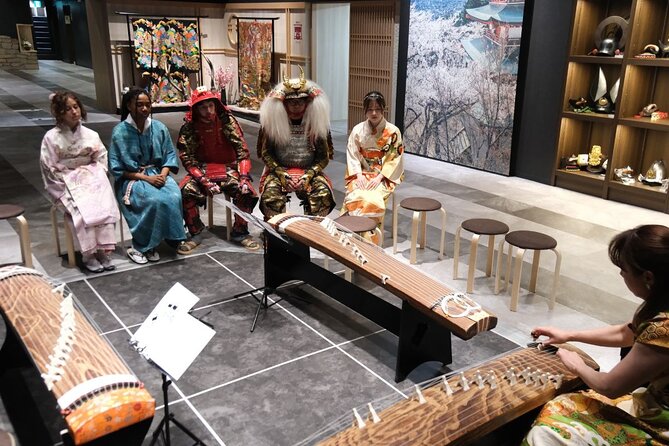
At about $44.92 per person, the ticket is not the cheapest cultural activity in Osaka. It can still be good value because several separate elements are grouped together: a samurai show, tea ceremony, calligraphy, traditional music, and instrument practice.
If you paid individually for a formal tea class, a calligraphy workshop, a music demonstration, and a stage performance, the cost could rise quickly. Here, you get a broad introduction in one indoor visit. That makes the program useful for a short Osaka stay or a rainy afternoon when outdoor sightseeing is less appealing.
The value is strongest if you participate in everything. Someone who only watches the shows may feel the price is high. Someone who tries the instruments, prepares tea, practices calligraphy, joins the samurai activity, and stays for the music receives much more from the ticket.
The costume upgrades change the calculation. A kimono or armor session may be worth it for photographs, but you should treat it as an optional purchase rather than part of the core deal.
Who will enjoy this most
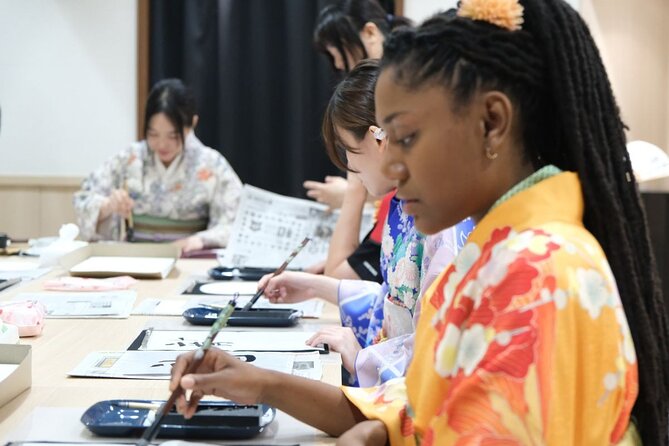
I would recommend this for families with children, couples, and adults who want a broad cultural introduction without a formal lecture. Most people can participate, and the program is designed around simple instruction and guided activities.
It is also a good choice when you have a free half-day in central Osaka. The location near Shinsaibashi and Dotonbori makes it easy to combine with shopping, food, or an evening walk through the area.
The program is less suitable if you want a quiet, private ceremony or an in-depth study of samurai history. The group can include up to 20 people, and the atmosphere is lively. You should expect interaction, photographs, and occasional comic performance rather than silence and strict formality.
The language support is another plus. English interpreters and staff help explain the activities, and the staff have also helped visitors practice Japanese phrases. Names praised in the supplied material include Yui and Miyu, though staff assignments can change.
Timing, group size, and practical planning
The listed duration is about two hours and 30 minutes, but I would block out at least three hours. If you want a kimono session, allow three and a half to four hours.
The maximum group size is 20 people. That is large enough for a shared class but small enough for staff to guide people through stations. If you dislike group participation, the show-and-workshop format may feel busy.
You receive confirmation when booking, and the ticket is mobile. The meeting point is near public transportation, at Shinsaibashi ARTY Inn. The activity ends where it starts, which keeps the rest of your Osaka plans simple.
The cancellation rule is straightforward: cancel at least 24 hours before the local start time for a full refund. Changes made inside that window are not accepted, and late cancellations are not refunded. The experience also requires good weather according to the booking conditions, so a weather-related cancellation may result in another date or a full refund.
Should you book it?
Book this if you want an active introduction to Japanese culture and like the idea of trying things yourself. The strongest parts are the tea ceremony, calligraphy, traditional music, and audience participation, with the samurai show providing the big visual hook.
I would be more cautious if you want a serious historical performance or a polished theater production. The samurai section is playful, and some props are reproductions. That is not a flaw for families or first-time visitors, but it may disappoint anyone expecting museum-level authenticity.
For most people, the basic ticket offers enough to fill a half-day. Add a kimono or armor session only if photographs and dress-up matter to you. If you arrive ready to participate rather than simply watch, the $44.92 price makes this one of the more useful all-in-one culture activities in Osaka.
FAQ
Where does the activity start?
It starts at Shinsaibashi ARTY Inn, 2-chōme-17-3 Nishishinsaibashi, Chuo Ward, Osaka, 542-0086, Japan.
Where does the activity end?
The activity ends back at the meeting point.
How long does the program last?
The listed duration is approximately two hours and 30 minutes. You may want to allow three hours or more, since some people stay three and a half to four hours to complete the activities.
What is included in the standard ticket?
The standard ticket includes a tea ceremony experience, calligraphy experience, traditional Japanese music, and a samurai performance.
Are kimono and samurai armor included?
No. Samurai armor, kimono, and ninja clothing are not included in the standard ticket. These are optional extras.
Can children participate?
Most people can participate, and the activities are suitable for all ages according to the supplied information. The program includes guided, hands-on activities for families.
How many people can join the activity?
The maximum group size is 20 people.
Can I cancel for a full refund?
Yes. You can cancel at least 24 hours before the local start time for a full refund. Cancellations or changes made less than 24 hours before the start are not accepted for a refund.
Just added around Osaka
- Osaka: Tea Ceremony, Calligraphy, and Kimono Experience★ 5.0 · 6 reviews
- Osaka: Nara, Todaiji, Uji Matcha, and Hot Spring Tour★ 4.0 · 7 reviews
- Nara Deer Park, Uji Matcha, & Hot Spring Full-Day Tour from Osaka★ 4.0 · 21 reviews
- Osaka:Zen Tea Ceremony and Foot Bath Experience<45min>★ 5.0 · 7 reviews
- Premium Kimono Dressing, Tea Ceremony, Calligraphy, Samurai show★ 5.0 · 18 reviews
- Osaka Japanese Cooking And Matcha Class near Osaka Castle★ 5.0 · 22 reviews
- ZEN therapy | Shiatsu-style massage, EnergyTherapy & Japanese Tea★ 5.0 · 5 reviews
- Discover Japanese Tea Blending Techniques in Osaka★ 5.0 · 19 reviews
Tea Ceremony Experiences, compared.
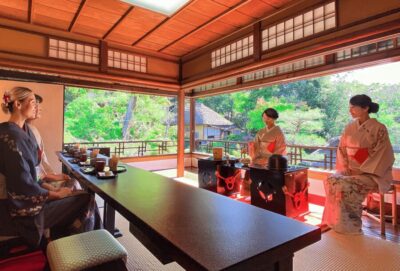
Tea Ceremony in a Traditional Tea House in Kiyomizu
Read our review →
Browse the lists this tour appears in