
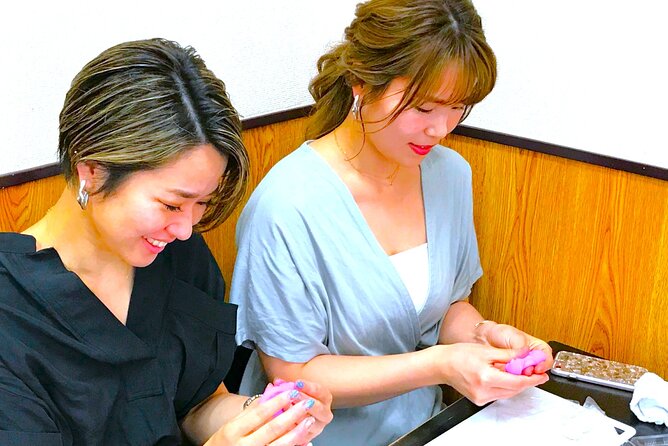
Review · TOKYO
A perfect Japanese experience: Tea Ceremony and Mochi Forming
Tokyo’s best food experiences often happen away from the big sights. Here, you shape delicate nerikiri wagashi inside a century-old antique shop in Yanaka, then move into a dedicated tea room for matcha and a taste of your own work. It is part cooking class, part craft lesson, and part cultural visit.
I like the setting, which feels far more personal than a class in a plain apartment room. I also like the hands-on work: you use colored mochi-based dough and bean paste much like modeling clay, creating seasonal forms such as flowers, fans, plum blossoms, hydrangeas, or cherry blossom designs.
The main consideration is communication. The host is a Japanese artisan who may speak limited English, so demonstrations and gestures can carry much of the lesson. The activity is also non-refundable, and late arrivals still finish at the scheduled time.
Key points to know before booking
- Century-old Yanaka setting: You begin in an antique store with Japanese tableware on display.
- Seasonal nerikiri craft: The designs change with the time of year, so your sweets may feature flowers, fans, plum blossoms, hydrangeas, or spring motifs.
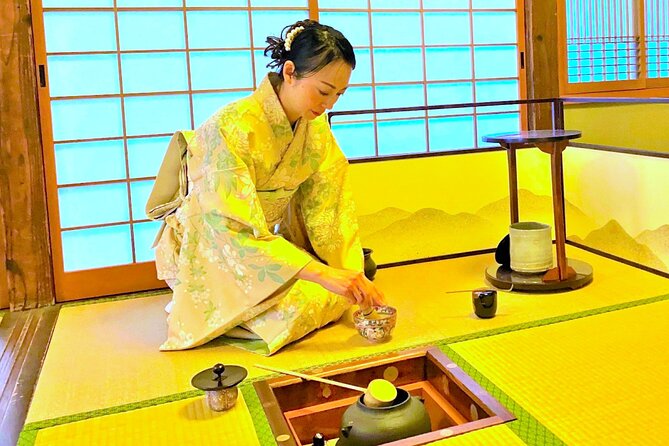
- Tea ceremony with a chair: You finish in a dedicated tea room designed for sitting in a chair rather than kneeling.
- Small group of five maximum: The compact class allows close attention, though the shop and work area may feel intimate.
- Tools and ingredients included: You arrive ready to work, with no special equipment needed.
- Best for ages 13 and up: Anyone under 18 must attend with an adult.
Making wagashi in a Yanaka antique shop
The first surprise is the venue. You do not walk into a modern cooking studio with stainless-steel counters and a printed recipe sheet. You meet at 6-chōme-2-40 Yanaka, Taito City, and begin in an antique shop filled with old Japanese tableware.
That setting gives the activity a sense of place before the hands-on work starts. You can take time to look at the shop’s antique tables and dishes, which helps connect the sweets to the wider Japanese tradition of careful presentation. The setting has also attracted international attention, including a feature on CNN.
The shop is described as a local favorite and a quiet hideaway, but keep expectations sensible. This is a small working venue, not a large museum or formal cultural center. With a maximum of five participants, you should expect a close, intimate room rather than lots of space to wander.
The activity lasts about one hour and 40 minutes, with the entire program beginning and ending at the meeting point. It is near public transportation, but the supplied details do not identify a specific station or give walking directions. Check the exact route before setting out, and allow extra time. The lateness rule is strict: arriving late does not extend the session.
More Tea Ceremony Experiences in Tokyo:
- Kimono Tea Ceremony at Tokyo, Asakusa Maikoya
★ 5.0 · 638 reviews - Tokyo: Traditional Tea Ceremony with a Tea Master
★ 5.0 · 528 reviews - Tea Ceremony Workshop in Tokyo by the Experienced Instrucor
★ 5.0 · 189 reviews
Shaping seasonal nerikiri from mochi flour
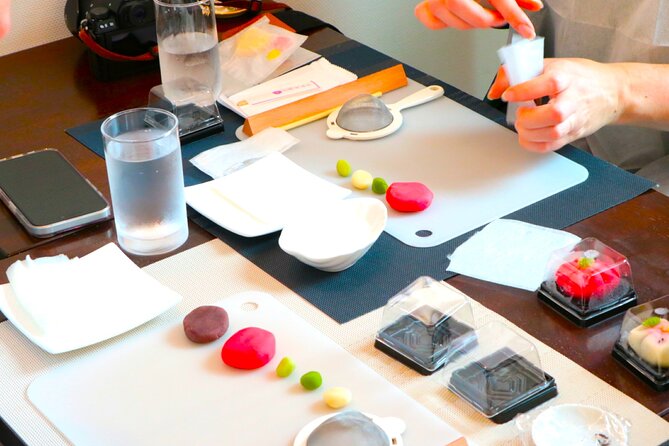
The main craft uses nerikiri, a type of wagashi made with mochi flour and bean-based ingredients. The description compares the work to colorful clay modeling, which is a useful way to picture it. You are not expected to perform advanced pastry work or bring professional skills. Instead, you form, layer, and shape colored materials into a target design.
That makes this a good pick if you like crafts but do not consider yourself a cook. The work is precise, though not presented as a difficult technical class. Your hands do the important work, while the artisan demonstrates how the pieces should come together.
The seasonal theme is central. One session may feature a plum and a hydrangea. Another may use a fan and a flower. Spring classes have included cherry blossom designs. The exact shapes are selected according to the season, so you should not book expecting one fixed menu.
There is a small wrinkle in the supplied information. The program description says you will learn four different styles of sweets, while individual class accounts describe making two designs during a session. The safest expectation is that you will work on several seasonal forms, with the exact number and designs depending on the day’s lesson.
The sweets are made without artificial additives. That is a plus if you want to taste them soon after making them, but it also means they are not souvenirs for the end of a long trip. They last only about two days when refrigerated.
Why the craft matters more than the finished sweet
Nerikiri is designed to be beautiful as well as edible. The colors, shapes, and seasonal symbols matter almost as much as the flavor. A flower-shaped sweet is not simply decoration. It reflects the Japanese habit of noticing the season through food, flowers, colors, and presentation.
You get to see that idea from the inside. Rather than buying a perfect sweet from a department-store food hall, you handle the ingredients and discover how much work goes into a small finished piece. Your result may not look as polished as the artisan’s example, and that is part of the fun.
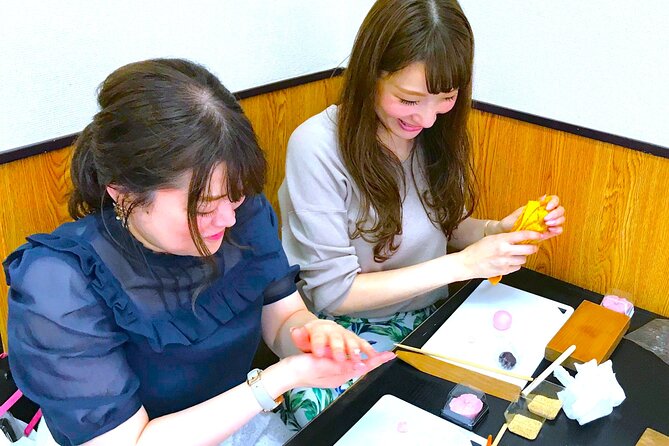
The class also gives you something to do with your hands. Tokyo sightseeing can involve plenty of walking, train rides, and standing in crowded attractions. This session slows the pace without becoming passive. You sit at your station, follow the demonstration, and focus on the shape in front of you.
Past class sessions have been praised for their humor and relaxed mood. The artisan’s style is not described as polished commercial performance. Instead, the host is presented as a real Japanese craftsperson, kind and sometimes funny, with English ability that may be limited. If you need a detailed English lecture, this could frustrate you. If you are comfortable watching carefully and enjoying a few comic misunderstandings, it may add character.
From the worktable to the tea room
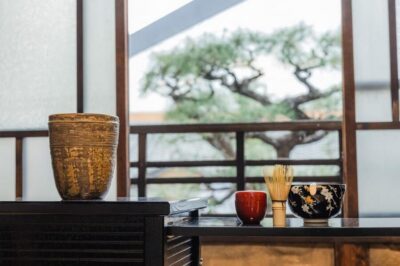
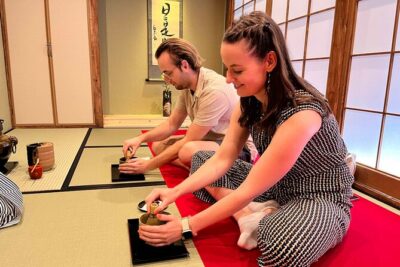
After the sweets are formed, you move to a dedicated tea room. The room is arranged for sitting in a chair, which is useful if kneeling on the floor is uncomfortable or unfamiliar. You then take part in a tea ceremony and eat one of the sweets with Japanese matcha.
The tea is described as real matcha and not sweetened. That matters because matcha has a distinct bitter, grassy flavor that balances the sweetness of nerikiri. If you usually drink sweetened tea, the contrast may surprise you. It is also the point where the craft lesson makes practical sense: Japanese sweets are often served with tea precisely because their sweetness softens the tea’s sharper taste.
The ceremony is not presented as a long formal ritual course. You receive the confection from the host, follow the tea service, and taste the finished sweet. The focus is on experiencing the connection between the sweet, the tea, and the setting.
You should not expect a full meal. The included tasting is a small cultural and culinary experience, not lunch or dessert service. Eat beforehand if you need something substantial, especially since the class takes less than two hours and the amount of food is limited.
A few more tea experiences around Tokyo worth a look
- Dynamic Tokyo: Tokyo Tower, Tea Experience, Bay Cruise Day Tour
★ 4.5 · 521 reviews - Asakusa: Kimono Tea Ceremony with Matcha and Sweet
★ 4.9 · 153 reviews - Tokyo: Full-Day Tour w/Tea Experience,Buffet Lunch & Cruise
★ 4.9 · 151 reviews - Tea Ceremony Experience in a Private Tea Room in Shibuya
★ 4.9 · 125 reviews
A small group with a personal feel
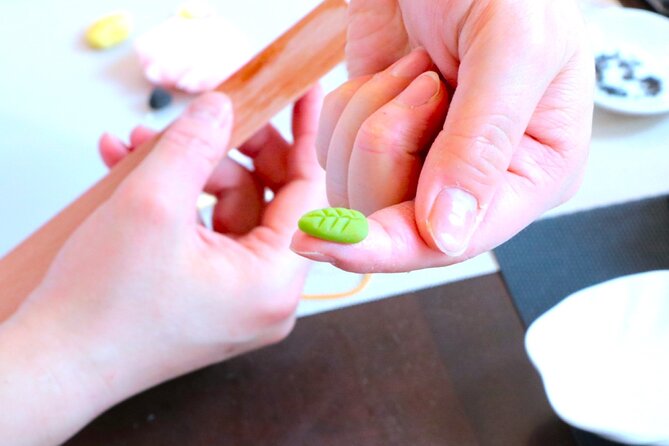
The maximum group size is five. That is one of the strongest practical features of the experience. A small class makes it easier to see the artisan’s demonstration and get help with shaping the sweets. It also keeps the antique-shop atmosphere from turning into a crowd.
The tradeoff is that the venue is likely to feel compact. The information emphasizes an antique shop rather than a purpose-built classroom, so do not expect wide worktables or lots of room for luggage. Arrive with only what you need.
The small group also affects the mood. One class had four people, and the format allowed everyone to work at the same time. The session can feel social, but it does not sound like a large tour with a guide speaking continuously to a group.
English support is the other important factor. The host will do their best to help you enjoy the activity, but the artisan does not necessarily speak English well. Visual instruction is built into the craft, and the process is described as easy and fun, yet you should still be ready to ask simple questions and copy the demonstrated movements.
I would not choose this activity if you need a detailed lecture on Japanese confectionery in fluent English. I would choose it if you care more about making something, seeing a traditional setting, and sharing a lighthearted class.
What the $55.38 price includes
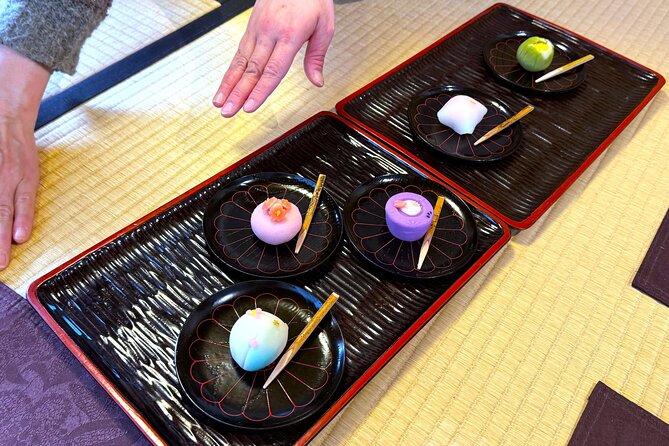
At $55.38 per person, the cost covers more than a snack. You receive the workshop, tools, ingredients, seasonal instruction, a sweet tasting, and Japanese tea. The intimate group size and unusual venue also add value.
The price makes the most sense for someone who would otherwise spend money on both a cultural demonstration and a food tasting. You get the chance to handle the ingredients rather than simply watch. The antique shop and tea room also give the hour and 40 minutes a stronger sense of place than a generic confectionery lesson.
Still, value depends on what you want. If you mainly want to eat Japanese sweets, you can buy excellent wagashi for much less. If you want a long tea ceremony with extensive historical explanation, this may feel brief. You are paying for participation, not quantity of food or a full academic lesson.
The average booking lead time is 16 days. That suggests you should not leave this until the final morning of your Tokyo plans, particularly because the group is limited to five people. Confirmation arrives within 48 hours of booking, subject to availability.
Who will enjoy this activity most
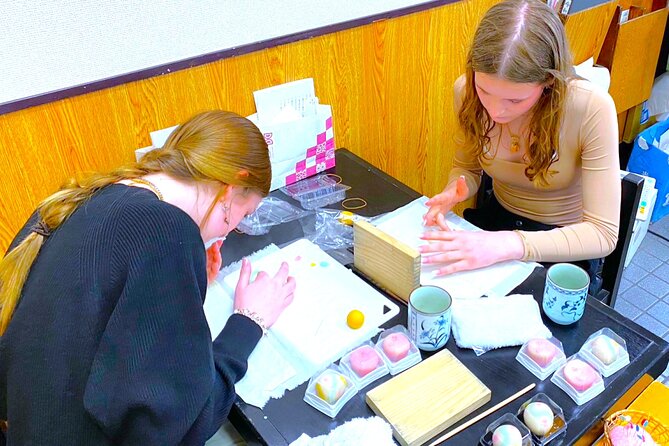
I would recommend this for adults, older children, couples, and friends who like food crafts. The minimum age is 13, and anyone under 18 must attend with an adult. The activity suits people who want a quieter Tokyo stop and do not mind following visual instruction.
It is also a good choice for anyone who has already seen Tokyo’s major temples and shopping districts and wants a more focused local experience. Yanaka provides a different setting from the city’s large commercial areas, while the antique store gives the class a distinct character.
People with a sweet tooth will enjoy the tasting, but you do not need to be passionate about dessert. The craft itself is the main event. You might enjoy this just as much if you like pottery, paper crafts, flower arranging, or other careful handwork.
I would be cautious if you are under the weather, uncomfortable with small rooms, or dependent on a highly polished English-speaking instructor. Anyone who is unwell or under the influence of alcohol will not be admitted, with no refund.
Timing, meeting point, and small practical details
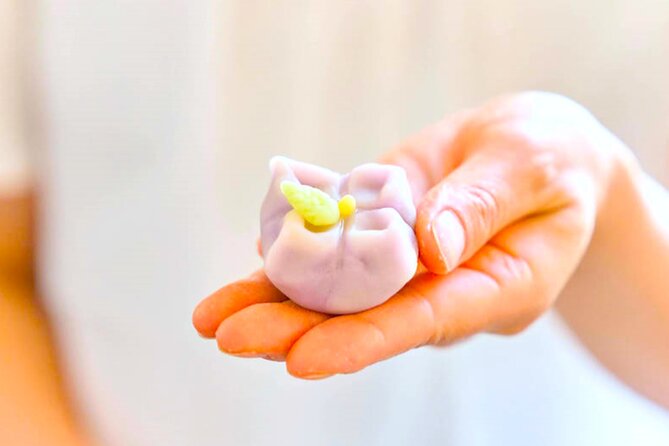
The activity starts and ends at 6-chōme-2-40 Yanaka, Taito City, Tokyo 110-0001. The experience does not include a separate drop-off elsewhere, so plan your next stop from the same area.
The mobile ticket is convenient. Keep it available when you arrive, and check your confirmation for the exact start time. Since the session ends on schedule even if you arrive late, punctuality matters more than it might for a casual food stop.
You do not need to bring tools or ingredients. The class supplies what you use. Clothing details are not specified, so sensible everyday clothes are the safest choice, especially since you will be handling colored sweets.
The confectionery contains no artificial additives and should be refrigerated if you plan to keep it for up to two days. That makes it a short-lived keepsake, not a gift to carry around Tokyo for a week.
The cancellation terms are unusually firm. The booking is non-refundable and cannot be changed for any reason. Only book once your schedule is settled.
Should you book the Yanaka wagashi and tea ceremony?
Book this if you want a small, hands-on experience with a strong sense of place. The century-old antique shop, seasonal nerikiri, chair-style tea room, and maximum group size of five make it more personal than a standard tea demonstration.
The best reason to go is the combination of craft and tea. You first shape the sweet, then taste it with unsweetened matcha in a traditional setting. That connection gives the activity more meaning than a simple dessert tasting.
Skip it if you want a fluent English lecture, a full meal, a long formal ceremony, or flexible cancellation. You should also accept that the exact designs may change, the class may involve visual communication, and your sweets will not keep for long.
For visitors who enjoy Japanese food, crafts, and quieter neighborhood experiences, this is a worthwhile use of 100 minutes and a fair use of $55.38. Book ahead, arrive early, and treat the finished wagashi as both a snack and a small piece of seasonal art.
FAQ
Where does the tea ceremony and wagashi activity take place?
It takes place at 6-chōme-2-40 Yanaka, Taito City, Tokyo 110-0001, Japan.
Where does the activity end?
The activity ends back at the meeting point.
How long does the experience last?
The activity lasts approximately one hour and 40 minutes.
How many people can join the class?
The maximum group size is five participants.
What kind of wagashi will I make?
You will make seasonal nerikiri, a mochi-based Japanese sweet. The designs can change with the season and may include flowers, fans, plum blossoms, hydrangeas, or spring motifs.
Are tools and ingredients provided?
Yes. All tools and ingredients needed for the activity are included.
Is tea included?
Yes. A sweet tasting and Japanese matcha are included in the tea ceremony portion.
Can children participate?
Participants must be at least 13 years old. Anyone under 18 must be accompanied by an adult.
What happens if I arrive late?
The activity ends at its originally scheduled time even if you arrive late.
Can I cancel or change my booking?
No. The experience is non-refundable and cannot be changed for any reason.
Just added around Tokyo
- Yokohama : Tea Ceremony with Sweets and Souvenir★ 5.0 · 5 reviews
- Walking Tour: Yanaka,Nezu& Sendagi: Tea Ceremony & Old Tokyo★ 5.0 · 3 reviews
- 2 Hours Mochi &Nerikiri Making & Matcha Class in Bunkyo★ 5.0 · 21 reviews
- Private Kimono and tea ceremony at local home near Tokyo Disney★ 5.0 · 6 reviews
- Private Mochi・Matcha sweets Making Class Near Shibuya Area★ 5.0 · 22 reviews
- Tokyo Sweets Tour: Hidden Gems & Matcha at an Old Tea House★ 5.0 · 6 reviews
- Giant Sushi Cooking Class: Make a 1.5m Sushi Roll in Tokyo★ 5.0 · 9 reviews
- Tokyo Tea Ceremony Class at a Traditional Tea Room★ 5.0 · 2 reviews
Tea Ceremony Experiences, compared.
Tea Ceremony in a Traditional Tea House in Kiyomizu
Read our review →
Browse the lists this tour appears in