
Review · KYOTO
Kyoto: Kimono Tea Ceremony with Matcha and Sweet
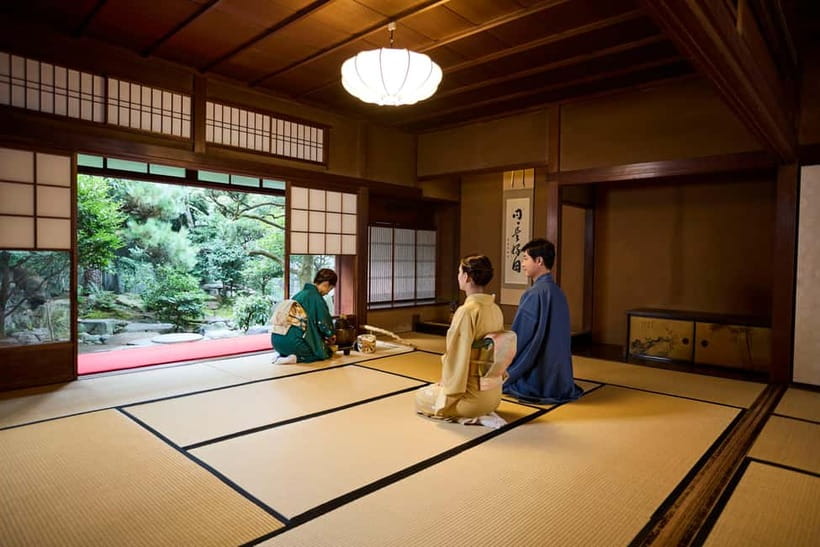
Kyoto’s tea ceremony is a careful art of movement, respect, and quiet attention. This experience lets you take part rather than simply watch: you choose a kimono, sit in a traditional tea room, learn the meaning behind the utensils and gestures, then prepare your own bowl of matcha. Maki and Megumi are among the warm, patient hosts praised for making the explanations easy to follow.
I like the wide kimono selection and the seasonal wagashi, which give the session a personal touch. I also like that wooden chairs are available by advance request, a useful comfort option when kneeling on tatami mats is not practical. The main consideration is that this is a shared group activity, usually with about 12 to 14 people, and the hands-on matcha portion may feel more like a workshop than a formal ceremony where you only receive tea.
Key points at a glance
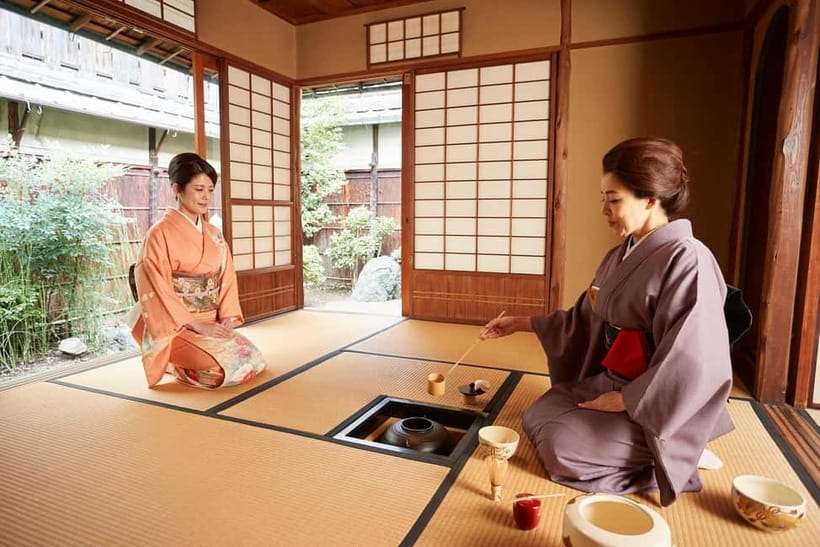
- Kimono dressing comes first: Choose your outfit, obi, and, for women with long hair, receive included hairstyling before the tea begins.
- You prepare your own matcha: A tea master demonstrates the process, then you whisk a bowl with premium matcha.
- Seasonal wagashi are part of the lesson: The Japanese sweets change in appearance and flavor with the time of year.
- English guidance keeps the ritual clear: You learn about tea tools, customs, movements, and the Zen ideas of harmony, respect, purity, and tranquility.
- Comfort can be arranged: Tatami seating is customary, but bamboo chairs are available if requested ahead of time.
- Plan on more than 90 minutes: The stated duration is 90 minutes, though the full session may run approximately 90 to 120 minutes.
Choosing a Kyoto kimono for the ceremony
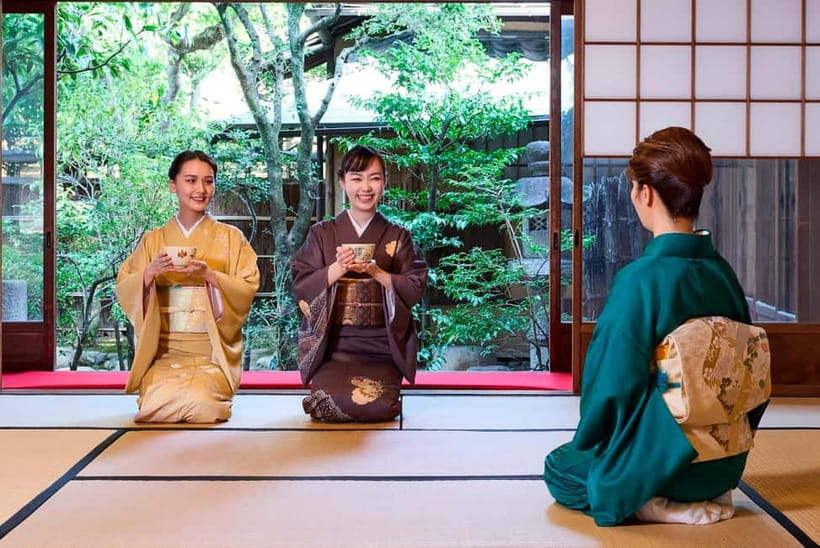
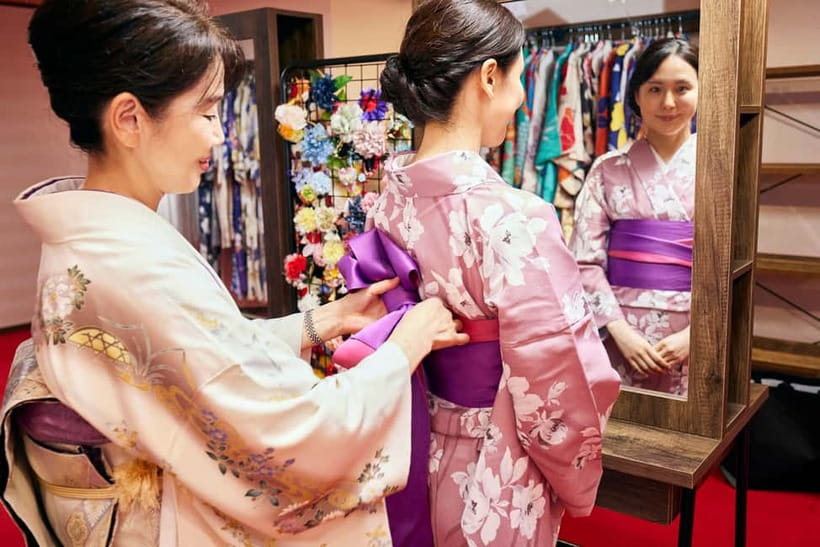
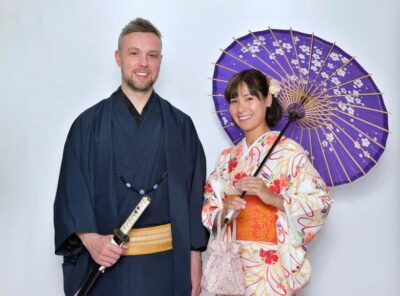
The experience begins before anyone makes tea. You choose a kimono from a selection of colors, patterns, and sizes, then staff help dress you and secure the obi. This is not a quick costume change. The layers, belt, and finishing touches are part of the cultural lesson, even though the dressing itself is handled efficiently.
For many people, this is the most memorable part. You are not simply borrowing a robe for a photograph. The clothing changes how you move, sit, and pay attention to the ceremony. Several people particularly enjoy choosing their own kimono, socks, obi, and hair decorations.
Women with long hair can receive hairstyling as part of the package. The hair arrangement helps complete the look, and you may have time for photographs before and after the tea session. If photographs matter to you, arrive with that in mind and allow a little extra time around the scheduled activity. One practical point: the dressing process can move quickly, so you may want to do your makeup before arriving rather than counting on time for it afterward.
The clothing is beautiful, but it also has limits. A kimono is more fitted and structured than everyday clothing, and sitting on the floor in one can feel awkward at first. Wear simple underlayers and avoid anything that makes changing difficult. Children under seven are not permitted, so this suits older children, couples, friends, and adults better than families with very young children.
More Kimono Tea Ceremonies in Kyoto:
- Kimono Tea Ceremony at Kyoto Maikoya, NISHIKI
★ 5.0 · 911 reviews - Kyoto: Kimono Tea Ceremony at Orizuruya Gion
★ 4.9 · 618 reviews - KYOTO Tea Ceremony with kimono near by Imamiya Jinjya Shrine
★ 5.0 · 343 reviews
Entering the tea room and settling on tatami
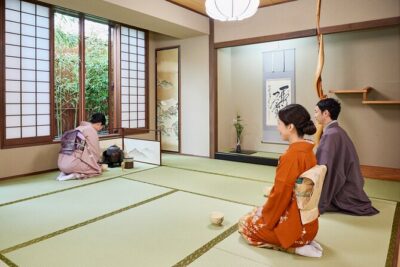
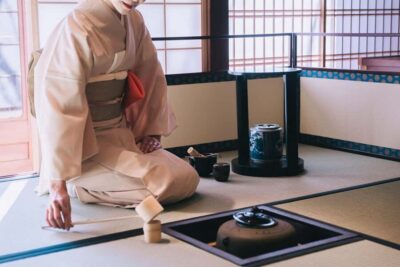
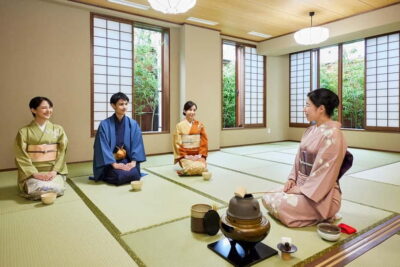
Once dressed, you move into a traditional tea room where the utensils are arranged for the ritual. The setting is intentionally spare. Instead of a busy demonstration filled with props, you get a room where the bowl, whisk, scoop, container, and other tools each have a clear role.
Tatami seating is customary, and sitting on the floor helps you understand why posture and movement matter in tea ceremony. Still, you do not need to force yourself into a position that causes pain. Bamboo chairs are available on advance request, and the staff emphasize that comfort matters. Ask for this option when booking rather than assuming one will be ready on arrival.
The group size is usually about 12 to 14 people because bookings from several places may be combined. That is not the same as a private tea lesson. On the positive side, a group gives the room a friendly energy and lets you share the small surprises of making matcha for the first time. On the other hand, personal instruction will be limited compared with a private appointment.
The ceremony and explanations are conducted in English. The pace is designed for an international audience, and hosts have been praised for speaking slowly and clearly. That matters here, since the meaning is in the small gestures. If you miss why a bowl is turned or how a utensil is handled, much of the lesson becomes a sequence of attractive movements without context.
Learning the four ideas behind the ritual
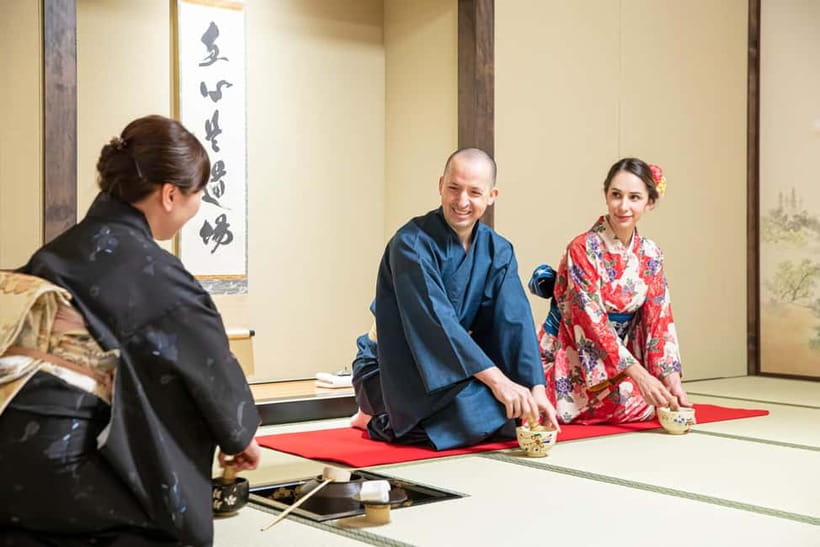
The tea ceremony is not just a method for preparing a drink. The tea master explains the principles often associated with the practice: Wa, harmony; Kei, respect; Sei, purity; and Jaku, tranquility.
These ideas give the ceremony a useful frame. Harmony appears in the relationship between host, participants, room, utensils, and season. Respect is shown through how objects are handled and how attention is given to the person serving tea. Purity refers to cleanliness and preparation, while tranquility describes the calm state the ritual seeks to create.
You also learn about the tea tools and the customs surrounding them. The details may include how the utensils are placed, how the tea is presented, and how you are expected to receive it. This explanation is what makes the activity more than a photo opportunity. You begin to see why a seemingly simple bowl of green tea can involve so much care.
The hosts named in the feedback, including Maki and Megumi, are praised for their patience and clear instruction. You should expect a friendly teaching style rather than a stern formal lesson. That makes the activity approachable, particularly if this is your first contact with Japanese tea ceremony.
Making a bowl of premium matcha
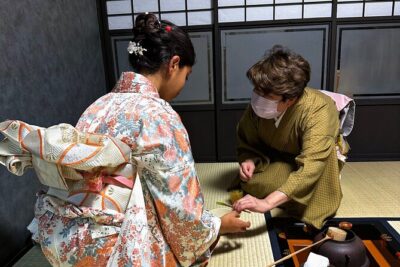
After watching the demonstration, you prepare your own matcha. The tea master guides you through the steps, and you use a bamboo whisk to combine the powder and water into a smooth, frothy drink.
This hands-on portion is a strong reason to choose this activity over a ceremony where you only sit and receive tea. You learn how much movement is required, how the whisk feels in your hand, and how easy it is to create bubbles without quite producing the texture you expected. The first attempt is part of the fun.
The activity uses premium matcha, but you should not expect a sweet café drink. Matcha has a distinct vegetal, slightly bitter flavor, and the traditional serving is balanced by a Japanese sweet. That contrast is deliberate. Eating the wagashi before drinking the tea helps prepare your palate for the matcha.
One fair criticism is that the practical lesson may feel less formal than a ceremony in which a tea master prepares and serves the bowl directly to you. If your goal is to study strict tea procedure at a high level, a more specialized tea school may be a better choice. If you want to understand the basics and take part, preparing your own bowl gives you more to remember.
More Matcha Experiences in Kyoto:
- Kyoto: Arashiyama Bamboo Forest, Monkeys, Matcha & Temple Tour
★ 5.0 · 759 reviews - Kyoto: Tea Ceremony Meditation – Make Matcha with Tea Master
★ 4.8 · 406 reviews - Kyoto: Arashiyama Bamboo, Temple, Matcha, Monkeys & secret spots
★ 5.0 · 219 reviews - Kyoto Matcha Green Tea Tour
★ 4.7 · 28 reviews
Tasting seasonal wagashi with matcha
The wagashi are small Japanese sweets served with the tea. Their flavor, color, and design change with the seasons, so the plate is not identical throughout the year.
That seasonal element is easy to overlook, but it is one of the best details in the session. Japanese food culture often pays close attention to the calendar, and wagashi give you a direct, edible example. The sweet may look delicate, but its role is practical as well as decorative: it softens the bitterness of matcha.
The sweets are presented as part of the ceremony rather than as a separate dessert course. You receive an introduction to the custom of pairing the two, then taste the tea you made. This creates a clear beginning, middle, and end to the lesson: prepare yourself in a kimono, learn the ritual, make the tea, and share the sweet.
If you have a strong sweet tooth, keep your expectations modest. Wagashi are usually small and carefully made, not a large dessert. Their value is in the connection to the season and the tea, not in quantity.
Photographs, timing, and the feel of the visit
The kimono naturally makes this a photo-friendly experience. You can take pictures in the outfit before and after the ceremony, and some people use nearby photo spots to remember the occasion. The calm setting also gives you a chance to enjoy the clothing without being rushed through every moment.
The stated duration is 90 minutes, but the complete experience can take about 90 to 120 minutes. Since dressing comes first, do not schedule a train, restaurant reservation, or major sightseeing stop too tightly afterward. The activity does not include transportation to or from the venue, so you need to arrange your own route.
The pace is usually relaxed, though the group format affects how much time you receive for individual attention. A smaller session can feel more personal, while a full session of 12 to 14 people will have more of a class atmosphere. If you are hoping for quiet reflection, the ceremony itself provides that mood, but the dressing and instruction stages are social and shared.
The experience is also suitable for couples and families with children over seven. One useful surprise for some participants is that everyone may be dressed for the occasion, not only women. Men can also change into Japanese clothing, which makes this a better group activity than an arrangement designed only around women’s kimono styling.
Is $66 good value in Kyoto?
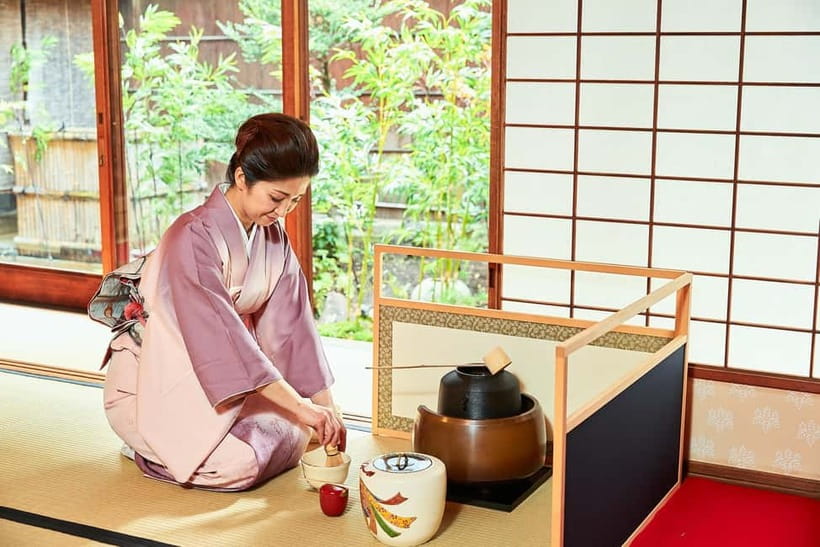
At $66 per person, the price covers several separate services: kimono dressing, women’s hairstyling for long hair, English assistance, the tea ceremony, hands-on matcha preparation, and wagashi.
I consider that fair value if you want a compact cultural activity with photographs and instruction in one package. Paying for kimono dressing alone can be worthwhile to some visitors, but this experience adds a structured lesson and food element. The price is easier to justify if you would otherwise book separate kimono rental and tea activities.
The value is less obvious if you want a very formal, private tea ceremony. This is a shared activity, and you participate in preparing the matcha rather than simply watching a tea master serve it. The group size, generally around 12 to 14 people, keeps the cost manageable but means the experience is designed for accessibility rather than specialist study.
Free cancellation up to 24 hours before the activity and the reserve-now, pay-later option add useful flexibility. Still, read the timing carefully. The session can run longer than the headline 90 minutes, and transportation is your responsibility.
Small details that make the experience easier
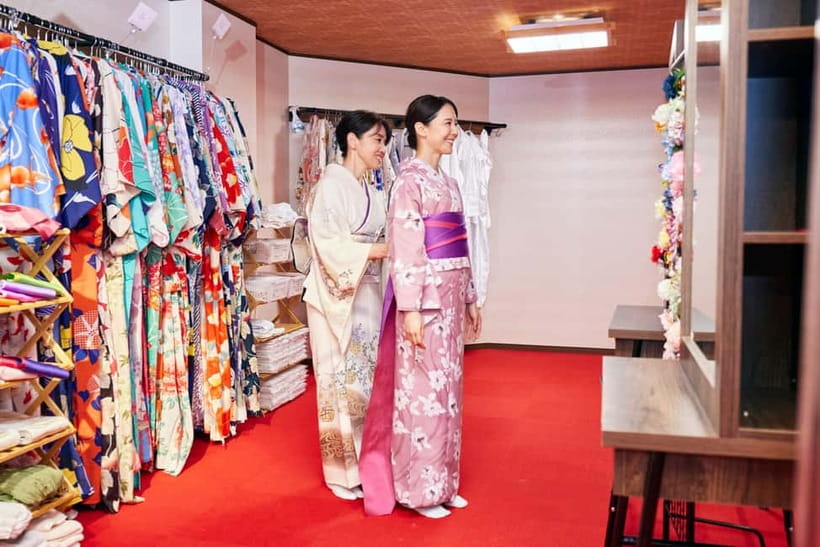
Plan your clothing with the kimono in mind. Simple layers are easier for the staff to work around, and comfortable footwear will help before and after the ceremony. If you want hairstyling, remember that the included service is for women with long hair.
Request a bamboo chair in advance if sitting on tatami is uncomfortable. Do not wait until you arrive, since chair availability needs to be arranged.
Arrive ready for photographs if that is important to you. The kimono fitting can be efficient, and you may not have much spare time to prepare your appearance after you arrive.
Finally, keep an open mind about the matcha. The purpose is not to make the sweetest or strongest drink. It is to learn the motions, taste the pairing with wagashi, and notice the care that goes into an ordinary-looking bowl.
Who should book this Kyoto tea ceremony?
I would recommend it to first-time visitors who want a clear introduction to Japanese tea culture without committing to a full-day class. It also works well for couples, families with older children, and anyone who wants a meaningful photograph in traditional clothing rather than a simple rental appointment.
You should book it if you value explanation, participation, and an easy English-language format. The hosts are described as warm and patient, and the structure gives you a useful introduction to both kimono customs and tea ceremony.
I would look elsewhere if you want a private ceremony, advanced instruction, or a highly formal setting where the tea master does all the preparation. This session is social and hands-on. That is its strength for most visitors, but it is also the main limitation for serious tea students.
For $66, the combination is appealing: dress in a kimono, learn why the ceremony works as it does, prepare matcha, taste seasonal wagashi, and leave with a better understanding of four ideas that shape the ritual. If that sounds like your kind of Kyoto afternoon, it is a sensible booking.
FAQ
How long does the Kyoto kimono tea ceremony last?
The stated duration is 90 minutes, but the full activity may take approximately 90 to 120 minutes, including kimono dressing.
What is included in the price?
The price includes kimono dressing, the traditional tea ceremony, hands-on matcha preparation, Japanese sweets, bilingual staff assistance, and hairstyling for women with long hair.
Is the activity conducted in English?
Yes. The instructor language is English, and bilingual staff assistance is included.
Do I prepare the matcha myself?
Yes. The tea master first explains and demonstrates the process, then you make your own bowl of matcha using premium matcha powder.
Are Japanese sweets included?
Yes. You receive wagashi, traditional Japanese sweets that change in flavor, color, and design with the seasons.
Can I sit on a chair instead of the tatami floor?
Yes. Bamboo chairs are available for people who prefer not to sit on tatami mats, but you need to request one in advance.
Are young children allowed?
Children under seven are not allowed to join this activity.
Is transportation included?
No. Transportation to and from the venue is not included, so you must make your own way there and back.
More Tea Ceremony Experiences in Kyoto
- Kyoto: Tea Ceremony in a Traditional Tea House in Kiyomizu
★ 4.9 · 3,519 reviews - Kyoto: Tea Ceremony Ju-An at Jotokuji Temple
★ 4.9 · 3,207 reviews - Kyoto: 45-Minute Tea Ceremony Lesson Experience
★ 4.3 · 2,378 reviews - Kyoto: Table-Style Tea Ceremony at a Kyo-Machiya
★ 4.9 · 1,211 reviews
Just added around Kyoto
- Whisk Your Own Matcha: A Zen Matcha Experience at Temple★ 3.6 · 7 reviews
- Uji Walking Tour – Byodo-in temple and Tea Ceremony from Kyoto★ 3.5 · 3 reviews
- Traditional Tea Ceremony in Kyoto★ 4.5 · 3 reviews
- Kyoto: Authentic Tea Ceremony in a Small Group★ 5.0 · 7 reviews
- Tea ceremony at Kyoto’s Zen Temple Teahouse★ 5.0 · 2 reviews
- Tea Ceremony in 150 Years Old Townhouse with Tables and Chairs★ 5.0 · 22 reviews
- Tea Ceremony Experience in Traditional Kyoto Townhouse★ 5.0 · 19 reviews
- Silent Beauty of Kyoto Zen Walk and Tea Experience★ 5.0 · 2 reviews
Kimono & Tea Ceremonies, compared.
KYOTO Tea Ceremony with kimono near by Imamiya Jinjya Shrine
Read our review →
Kimono and Tea Ceremony Experience at Cultural Asset
Read our review →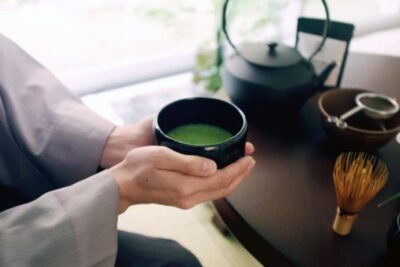
Asakusa: Kimono Tea Ceremony with Matcha and Sweet
Read our review →Browse the lists this tour appears in