
Review · YOKOHAMA
Japanese Sweets Making & Tea Ceremony in Yokohama, suburban Tokyo
The unusual part of this Yokohama experience is that you learn two Japanese traditions in one sitting: shaping wagashi sweets by hand, then serving and drinking matcha in a tatami room. Ikuyo-san leads the class in her private home, where the charcoal procedure for heating the water gives the tea ceremony a sense of occasion that even many Japanese people rarely see.
I like the hands-on format, especially the chance to make five sweets rather than simply watch a demonstration. I also like the small maximum of four people, which should give you room to ask questions and avoid the hurried feel of a large cultural show. The main consideration is the price, $97.55 per person, and the fact that the class begins at 1:30 pm in suburban Yokohama rather than central Tokyo.
Key points to know before booking
- Five seasonal wagashi to shape yourself: The exact sweet depends on the season and may include nerikiri, gyuhi, or manjyu.
- A real charcoal procedure: You watch charcoal being added to heat the water, an uncommon sight even for many Japanese people.
- Two bowls of matcha: Ikuyo-san makes one for you, then teaches you to whisk another yourself.
- Four sweets to take home: You eat one during the ceremony and one afterward, leaving four from your batch to carry away.
- A private-home setting: The class takes place in a traditional tatami room, with a maximum of four people.
- A useful Yokohama pairing: The Shin-Yokohama Ramen Museum is said to be about 15 minutes from Azamino Station.
Why this class feels different from a staged tea demonstration
Many tea experiences show you a polished ceremony and ask you to sit quietly. This one gives you work to do first. You handle the sweet dough, shape each piece, and then see how the finished wagashi fits into the ceremony.
That order matters. Wagashi is not just a snack served beside matcha. Its sweetness balances the bitter tea, and its shape and ingredients can change with the season. You learn that connection by eating something you made yourself, not by hearing a long explanation in a museum.
The private-home setting also changes the mood. You meet at Azamino Station, then enter a home where the tea ceremony takes place in a traditional tatami room. The supplied information does not spell out the exact walking or pickup arrangement, so confirm the meeting instructions after booking. Pickup is offered, but the published meeting point remains Azamino Station.
The class has a maximum of four people. That is a major plus if you want to ask about etiquette, sweets, or Japanese customs without raising your voice across a crowded room. It also makes this a better fit for a couple, a small family, or friends traveling together than for someone looking for a large social group.
More Japanese Sweets and Tea Sessions in Japan:
- Matcha Making Class in Tokyo with Authentic Japanese Sweets Set
★ 5.0 · 744 reviews - Matcha Making Class in Osaka with Authentic Japanese Sweets Set
★ 5.0 · 509 reviews - Kyoto: Japanese Traditional Sweets Making and Tea Ceremony
★ 4.4 · 314 reviews
Making five seasonal wagashi by hand
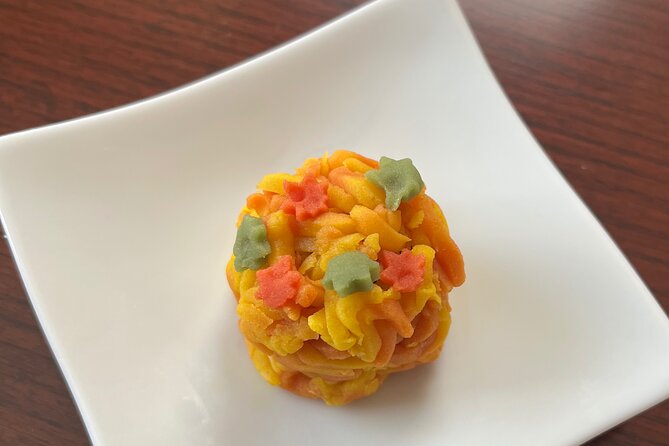
The first part takes about an hour and a half. Ikuyo-san provides the ingredients and decides which type of wagashi you will make based on the season. Possible styles include nerikiri, gyuhi, and manjyu, though you should not book this expecting one fixed recipe every time.
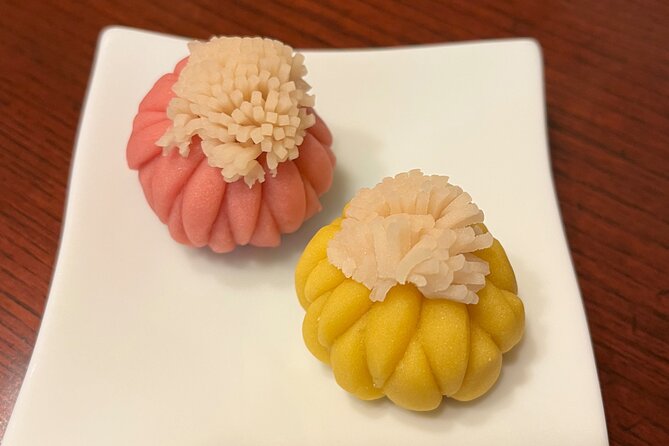
The exact sweet is part of the appeal. Seasonal change is central to Japanese food culture, and wagashi often reflects that change through color, shape, and ingredients. Nerikiri, for example, is formed from a smooth dough and can be shaped into delicate seasonal designs. Gyuhi has a soft mochi-like texture, while manjyu is another traditional sweet with its own method and feel.
You make five pieces. One is set aside for the tea ceremony, and the other four go home with you. That is a practical detail, since the class does not end with a quick taste and an empty plate. You leave with a small edible reminder of the lesson, though you should handle the sweets carefully after the class.
The information provided does not specify how much Japanese language is used, so ask about language support if that matters to your booking. The instructor is described as welcoming and relaxed, and the experience is designed for people with no prior tea ceremony or sweets-making experience. You do not need to bring equipment or ingredients.
For families, the making portion is likely the strongest part. One review specifically notes that two 13-year-old boys enjoyed making both the sweets and tea. That makes the class more active than a ceremony where children only watch. Still, shaping wagashi requires patience and careful hands, so very young children may need help.
Watching charcoal heat the tea water
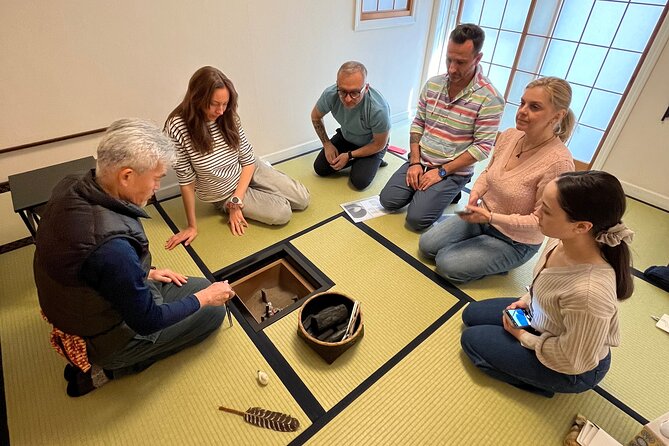
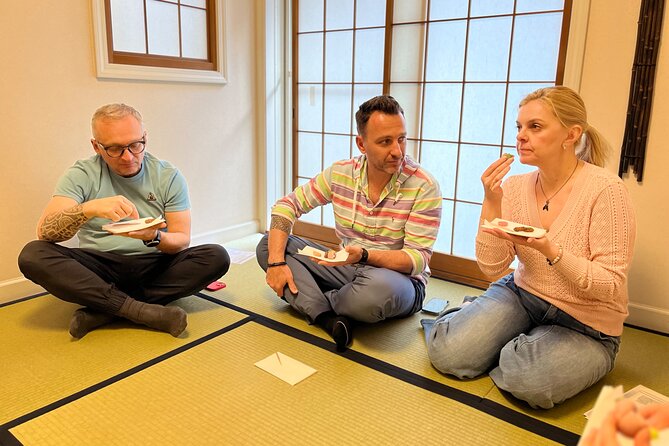
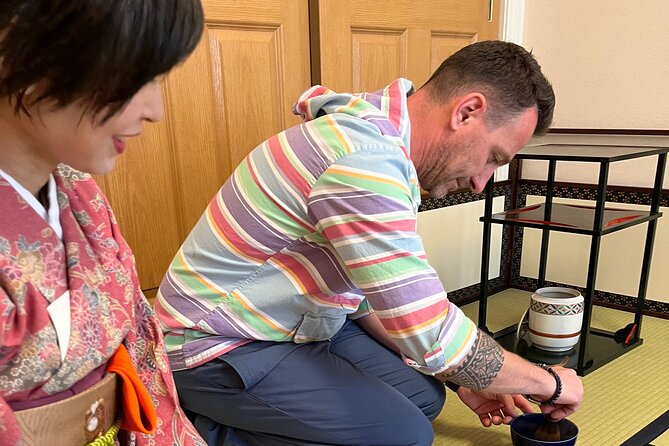
After the sweets are prepared, the focus shifts to the tea ceremony. Ikuyo-san demonstrates how to behave as a guest in the tatami room, then explains the ceremony and its background while you eat the wagashi you made.
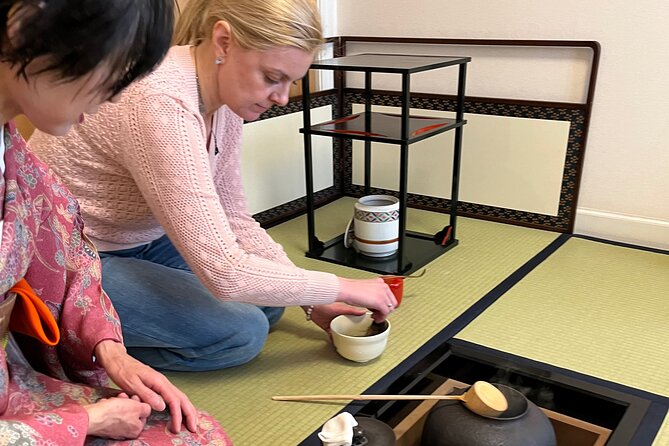
The charcoal procedure is one of the most unusual features. You watch charcoal being added to heat the water used for tea. This is not simply a decorative step. It shows the care and physical process behind the ceremony, rather than presenting matcha as a powder mixed with hot water in a modern kitchen.
You may rarely see this even in Japan, so it gives the class more depth than a basic matcha workshop. It also slows the pace. The ceremony becomes a sequence of deliberate actions: preparing the heat, arranging the setting, serving the sweet, and making the tea.
You eat one of your own wagashi during this part. Ikuyo-san then makes matcha for you, giving you a chance to watch the movements before you try them yourself. She also answers questions about the ceremony, which is useful if you want context instead of a purely visual performance.
The room is a traditional tatami space, and you must bring socks to enter it. This is not a minor packing suggestion. Bare feet are not appropriate for entering the tatami room, so put a clean pair in your day bag even if you are wearing closed shoes.
Making your own bowl of matcha
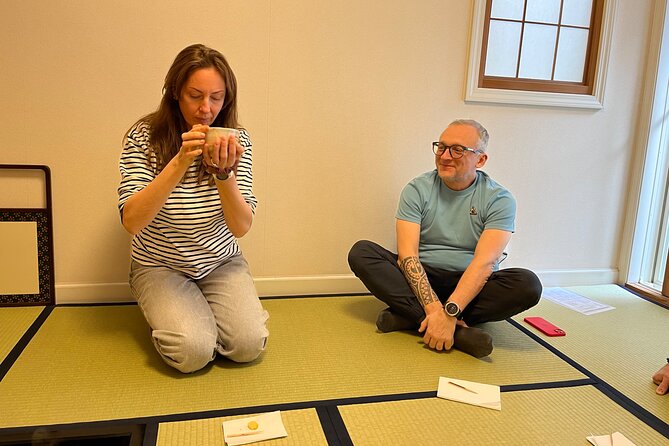
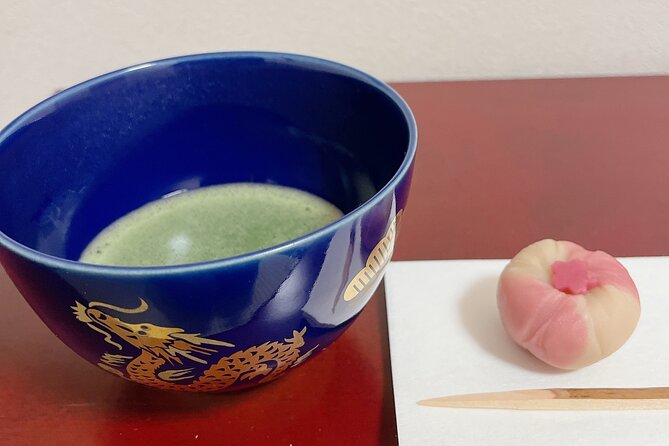
Once you have watched the demonstration, you make matcha yourself. The class gives you two bowls in total: one prepared for you by Ikuyo-san and one that you whisk on your own.
That second bowl is important. Tea ceremony can look simple until you try to control the whisk, water, and powder. You get a direct sense of the technique instead of leaving with only a general impression of the ritual.
You drink your tea with another wagashi prepared by the instructor, so the full tasting includes two pieces of sweet: one you made and one supplied for the later practice. The description also says you receive dried Japanese sweets, giving you another small taste alongside the tea.
The ceremony has etiquette, but you do not need to arrive with experience. The class teaches you how to be a guest, which may include how to receive the bowl and how to approach the sweet. If you are nervous about making a mistake, the relaxed atmosphere described by the instructor’s past participants should help. The point is to learn the customs, not to pass an exam.
One past participant arrived with no tea ceremony experience and found the atmosphere comfortable. Another described Ikuyo-san as kind and highly informed. Those details matter because formal Japanese customs can feel intimidating when you do not know the rules. A patient teacher makes the difference between feeling curious and feeling self-conscious.
More Tea Ceremony Experiences in Japan:
- Kyoto: Tea Ceremony in a Traditional Tea House in Kiyomizu
★ 4.9 · 3,519 reviews - Kyoto: Tea Ceremony Ju-An at Jotokuji Temple
★ 4.9 · 3,207 reviews - Kyoto: 45-Minute Tea Ceremony Lesson Experience
★ 4.3 · 2,378 reviews - Osaka: Tea Ceremony Experience
★ 4.9 · 1,426 reviews
Meeting in Azamino, suburban Yokohama
The meeting point is Azamino Station, at 2 Chome Azamino in Yokohama’s Aoba Ward. The class starts at 1:30 pm and lasts about three hours, so plan for an afternoon commitment rather than a quick stop between major Tokyo sights.
Azamino is outside the main tourist center. That means you need to allow time to reach the station and locate the meeting point. The activity is near public transportation, and pickup is offered, but the available information does not give a pickup schedule or exact door-to-door details. Check those arrangements when your booking is confirmed.
The suburban setting is part of the experience’s character. You are not being led into a hotel event room near a major station. You are visiting a private home for a small lesson, which feels closer to an introduction through a local host than to a standard sightseeing attraction.
You can pair the class with the Shin-Yokohama Ramen Museum, described as about 15 minutes from Azamino Station. The timing and transport details are not provided, so do not build a tight connection without checking first. Since the wagashi class begins at 1:30 pm and ends roughly three hours later, the museum may work better before or after only if your route and opening hours line up.
Is $97.55 a fair price?
At $97.55 per person, this is not a budget activity. You are paying for about three hours, the ingredients, matcha, instruction in two related traditions, a small group capped at four, and the private-home setting.
The value improves if you want participation rather than a photo opportunity. You make five sweets, drink two bowls of matcha, observe the charcoal procedure, learn guest etiquette, and take four sweets home. A short tea tasting would cost less, but it would not offer the same amount of hands-on work.
The price is harder to justify if you only want to sample matcha or see a quick ceremony. You can find simpler tea experiences that require less time and money. This class is aimed at people who want to understand how the sweet, the room, the heat, and the tea fit together.
It is also good value for a small private group. A couple pays more than at a large group event, but you get a much quieter setting and more opportunity to ask questions. Families should consider the age and patience of their children, while older children and teenagers may enjoy the creative part.
What the four ratings tell you about the experience
The available feedback is uniformly positive, with four five-star ratings. The strongest pattern is not one isolated feature. It is the combination of a warm instructor, a relaxed setting, and active participation.
Ikuyo-san receives particular praise for making first-time participants feel at home. That is useful because tea ceremony etiquette can seem formal from the outside. Her own responses also show that she enjoys spending time with families and small groups, not just delivering a fixed performance.
The class also works well for children who want to do something with their hands. A family with two 13-year-old boys found the sweet-making and tea-making engaging. If your group includes teenagers who might lose interest during a long demonstration, the first half gives them a clear task.
The praise does not remove the practical limits. Four ratings are a small sample, and the available comments do not provide detailed information about accessibility, language, dietary needs, or the exact pickup process. Contact the provider before booking if any of those points affects your plans.
Who should book this Yokohama experience?
I would choose this class if you want a gentle introduction to traditional Japanese culture with real participation. It fits first-time visitors, couples, families with older children, and anyone who enjoys food crafts more than passive sightseeing.
It is especially suitable if you are curious about tea ceremony but feel unsure about entering a formal setting. Ikuyo-san teaches you how to be a guest, explains what is happening, and lets you try the tea yourself.
You may want a different activity if you have only a few hours in central Tokyo, dislike sitting on tatami, or want a large social event. The suburban location takes planning, and the private-home format is calm rather than energetic.
The class also suits people who care about seasonal food. Since the wagashi changes with the time of year, you cannot choose every detail in advance. That is a benefit if you like local traditions as they are practiced, but a drawback if you want to make one specific sweet.
Booking details worth noting
Confirmation is sent within 48 hours, subject to availability. The experience offers free cancellation if you cancel at least 24 hours before the 1:30 pm start time. Cancellations or changes made less than 24 hours ahead are not accepted for a refund.
Bring socks for the tatami room. Ingredients and matcha are included, and you do not need to bring anything for the wagashi-making portion. The activity ends back at the meeting point.
Should you book it?
Book this experience if you want more than a ceremonial photo. The best parts are the five seasonal sweets, the rare charcoal procedure, and the chance to make your own matcha under Ikuyo-san’s guidance.
I would skip it if $97.55 feels high for a three-hour class or if your Yokohama schedule is already packed. For the right visitor, though, this is a thoughtful way to connect tea ceremony with the food served beside it, all in a small private-home setting.
FAQ
Where does the Japanese sweets and tea ceremony class meet?
It meets at Azamino Station, 2 Chome Azamino, Aoba Ward, Yokohama, Kanagawa 225-0011, Japan. The activity ends back at the meeting point.
What time does the class start?
The class starts at 1:30 pm and lasts approximately three hours.
How many people can join the activity?
The maximum group size is four participants.
Do I need to bring ingredients or equipment?
No. Ingredients for making wagashi and matcha are included. You should bring socks for entering the traditional tatami room.
How many wagashi sweets will I make?
You make five pieces. One is eaten during the tea ceremony, and the remaining four are taken home.
How much matcha will I drink?
You drink two bowls of matcha. Ikuyo-san makes one for you, and you make the other yourself.
Can I cancel for a full refund?
Yes, if you cancel at least 24 hours before the local start time. Cancellations or changes made less than 24 hours before the experience are not accepted for a refund.
More Dessert Stops in Japan
- Tokyo: Matcha Making Experience with Mochi Sweets in Asakusa
★ 4.9 · 388 reviews - Osaka: Matcha Making Experience with Japanese Sweets
★ 5.0 · 146 reviews - Make Traditional Nerikiri Sweets & Matcha experience in Shibuya
★ 5.0 · 130 reviews - Osaka: Japanese Traditional Sweets Making and Tea Ceremony
★ 4.7 · 118 reviews
Just added around Japan
- Yokohama : Tea Ceremony with Sweets and Souvenir★ 5.0 · 5 reviews
- Whisk Your Own Matcha: A Zen Matcha Experience at Temple★ 3.6 · 7 reviews
- Walking Tour: Yanaka,Nezu& Sendagi: Tea Ceremony & Old Tokyo★ 5.0 · 3 reviews
- Visit local home for music and tea ceremony near Disney★ 4.9 · 13 reviews
- Yokohama: Sushi & Gyoza Cooking with Matcha & GreenTea Experience★ 5.0 · 3 reviews
- Trip to Kamakura & Enoshima: Shrines, Seaside, Temples &Tea★ 5.0 · 11 reviews
- Kyoto tea town for matcha lovers★ 5.0 · 16 reviews
- Uji: Private immersion into Kyoto’s tea and reglious culture★ 5.0 · 17 reviews
Japanese Sweets & Tea, compared.

Matcha Making Class in Tokyo with Authentic Japanese Sweets Set
Read our review →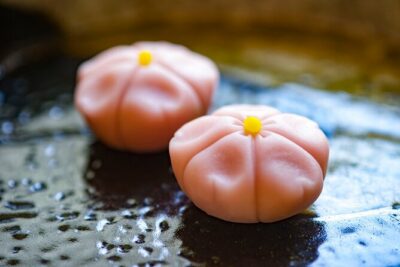
Matcha Making Class in Osaka with Authentic Japanese Sweets Set
Read our review →
Japanese Traditional Sweets Making and Tea Ceremony
Read our review →
Japanese Traditional Sweets Making and Tea Ceremony
Read our review →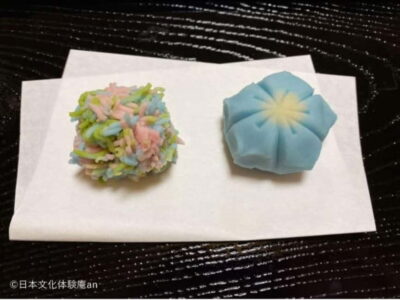
Nagoya: Japanese Traditional Sweets making and Tea Ceremony
Read our review →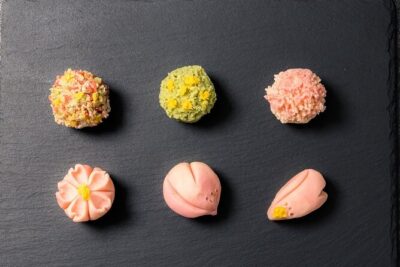
Sweets Making and Kimono Tea Ceremony at Tokyo Maikoya
Read our review →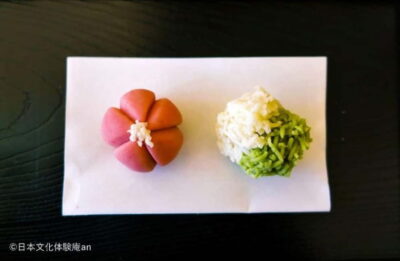
Japanese Traditional Sweets making and Tea Ceremony
Read our review →Browse the lists this tour appears in