
Review · TOKYO
Shibuya Authentic Tea Ceremony with experienced instructor
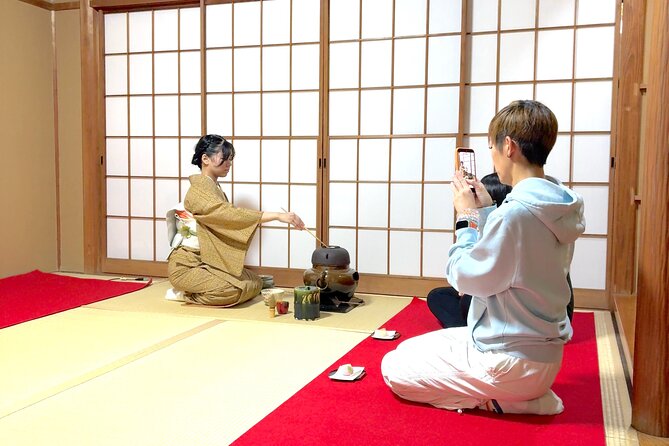
The most appealing part of this Shibuya experience is the sudden change of pace. You leave the city’s bright streets for a quiet tea house, where a Japanese tea master explains the ritual, prepares matcha, and lets you make your own bowl. I like the small maximum group of eight, which keeps the lesson personal, and I like the chance to choose a beautiful chawan for your own tea.
The session also includes nerikiri, a traditional Japanese sweet that balances matcha’s bitter edge. My one caution is the short 50-minute format: you get a clear introduction and hands-on practice, but not a long, formal tea-school lesson. Meeting details matter too, since the tea house is on Dōgenzaka in Shibuya and the activity returns to the same point.
Key Points at a Glance
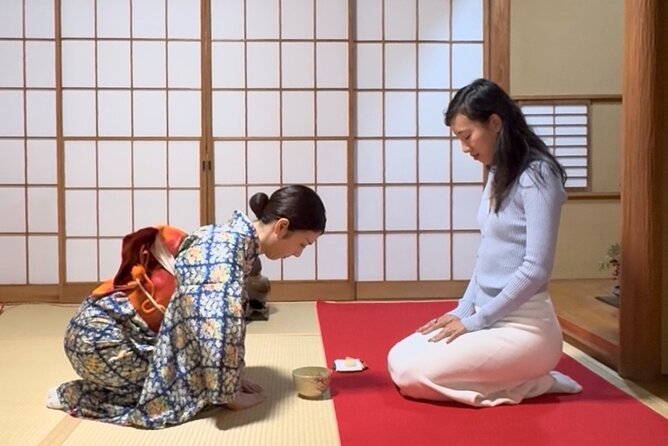
- Watch matcha made with a traditional stone mill: You receive a quick look at how tea powder is produced before the ceremony begins.
- See a tea master perform a 500-year-old ritual: The demonstration gives meaning to the careful movements and tools.
- Whisk your own bowl of matcha: You do not just watch. You prepare tea with traditional equipment.
- Taste nerikiri with freshly prepared tea: The sweet adds a classic Japanese pairing to the lesson.
- Choose your own chawan: Picking a bowl gives the practical activity a small personal touch.
- Keep the experience intimate: No more than eight people can join, and the session lasts about 50 minutes.
A Quiet Tea House Near Shibuya’s Dōgenzaka
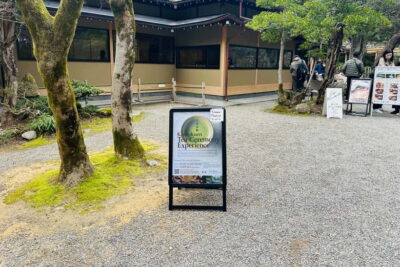
Shibuya is famous for giant screens, packed crossings, shopping, and late-night energy. This tea ceremony offers a useful counterpoint. The meeting point is at 1-chōme15 Dōgenzaka, in the small Manji Building, and the tea house is described as an old, original space on a side street.
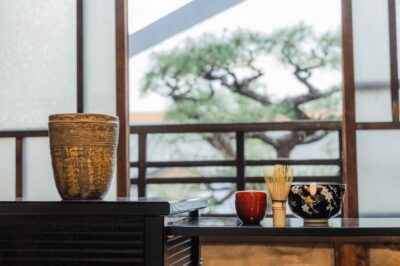
That setting matters. You are not being asked to study tea ceremony in an abstract way. You are sitting in a place designed to slow the body down and focus attention on a bowl, a whisk, hot water, and a few deliberate movements.
I would plan to arrive with enough time to locate the building before the start. The activity is near the center of Shibuya, but busy streets and side lanes can make even a short address take longer to find than expected. The end point is the same as the meeting point, so you will not need to arrange transport from a separate neighborhood afterward.
More Tea Ceremony Experiences in Tokyo:
- Kimono Tea Ceremony at Tokyo, Asakusa Maikoya
★ 5.0 · 638 reviews - Tokyo: Traditional Tea Ceremony with a Tea Master
★ 5.0 · 528 reviews - Tea Ceremony Workshop in Tokyo by the Experienced Instrucor
★ 5.0 · 189 reviews
The First Lesson: Tea in Japan and the Stone Mill
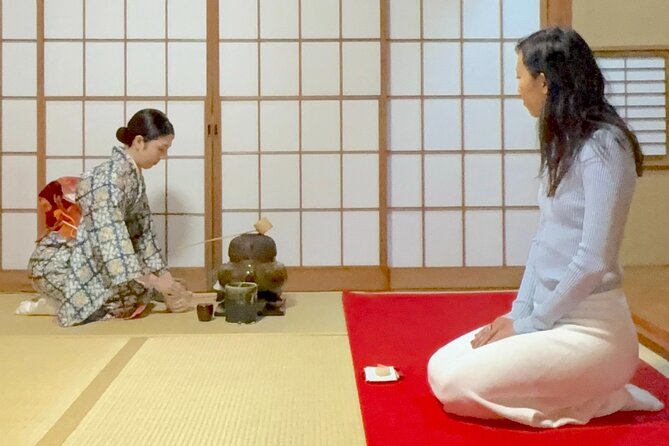
The experience begins with a short explanation of tea in Japan. This opening gives you the basic cultural frame for what follows: matcha is not simply a sweet green drink, and the ceremony is not just a set of attractive hand movements.
You also get to see a small traditional stone mill used to make matcha. That detail helps connect the powder in your bowl with the work behind it. Matcha is made from tea leaves ground into a fine powder, and the mill gives you a physical sense of that process.
The introduction is brief, which suits the total length of the activity. If you want a detailed study of tea farming, regional production, or the full development of Japanese tea schools, this is not the right format. If you want enough background to understand what you are watching, it should do the job without turning the session into a lecture.
The host’s explanations have been praised for being clear, polite, and easy to follow. Mai is named as one of the hosts, and the experience is presented in a warm, welcoming way. That is useful for first-time visitors who may worry about making a cultural mistake. You are there to learn, not to perform perfectly.
Watching the Formal Tea Ceremony
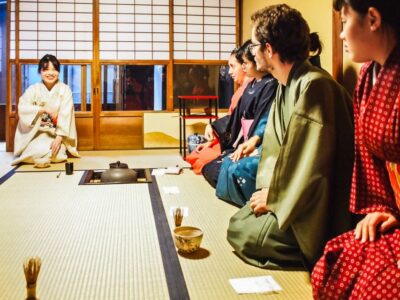
Next, the tea master performs a traditional tea-making ritual with more than 500 years of history. This is the part where you can simply watch and notice the order of the actions.
Tea ceremony can seem slow at first, especially after the quick pace of Shibuya outside. That slowness is the point. The host’s movements, the placement of each object, and the preparation of the tea all ask you to pay attention to small details.
You will see the tea made before you try it yourself. That demonstration is valuable because the whisking technique is easier to understand when you can watch the hand movement first. It also lets you see the ceremony as a cultural practice rather than rushing straight into a do-it-yourself class.
The demonstration is followed by freshly prepared matcha and nerikiri. Nerikiri is a traditional Japanese sweet made to accompany tea, and its sweetness helps soften the matcha’s strong, grassy taste. This pairing is one of the more important parts of the experience. You are not only learning how the tea is prepared, but also how it is served and enjoyed.
There is a difference between watching a formal performance and taking part in a full tea ceremony governed by every traditional rule. The information here supports the former: a demonstration, an explanation, tasting, and hands-on practice. That makes the activity approachable, but it also means you should not book it expecting an extended ceremony with a large number of formal procedures.
Making Your Own Matcha With Traditional Tools
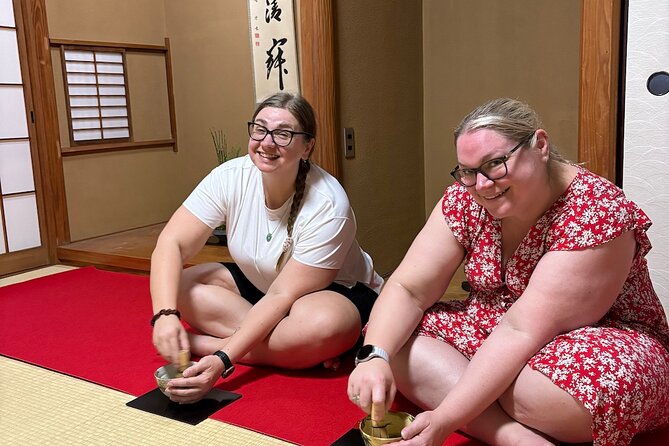
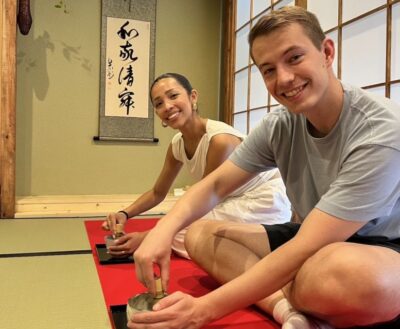
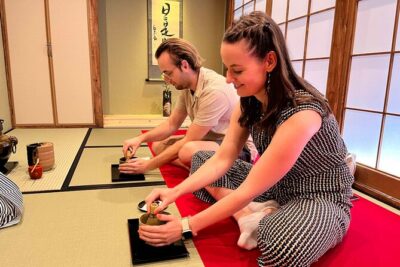
The final stage gives you the whisk. You will prepare your own bowl of matcha using traditional tea tools, following the techniques shown earlier.
This hands-on part is likely to be the most memorable for many people. Watching a tea master is useful, but whisking the tea yourself helps you understand the texture, the speed, and the small amount of effort involved. You may not produce a perfect layer of foam on the first try, and that is fine. The value is in learning a method you can repeat at home.
The activity also lets you choose a chawan, or matcha bowl, from a selection of attractive bowls. That choice adds a personal element to what could otherwise be a standard group demonstration. The bowl affects how the tea feels in your hands and how you look at the drink before tasting it.
You should expect guidance rather than a test. The hosts are there to show you how the tools work and help you through the steps. The supplied information does not give a full list of equipment or say that you take a bowl home, so think of the choice as selecting the bowl you use during the session, not as a souvenir purchase.
A few more tea experiences around Tokyo worth a look
- Dynamic Tokyo: Tokyo Tower, Tea Experience, Bay Cruise Day Tour
★ 4.5 · 521 reviews - Asakusa: Kimono Tea Ceremony with Matcha and Sweet
★ 4.9 · 153 reviews - Tokyo: Full-Day Tour w/Tea Experience,Buffet Lunch & Cruise
★ 4.9 · 151 reviews - Tea Ceremony Experience in a Private Tea Room in Shibuya
★ 4.9 · 125 reviews
Why the Small Group Size Helps
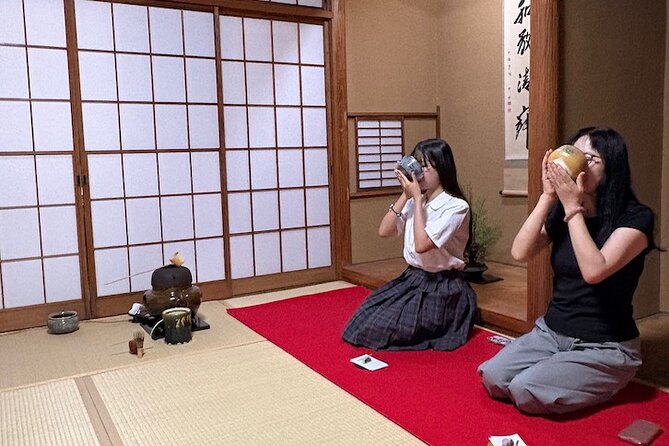
The experience accepts no more than eight people. That is a useful limit for a practical lesson involving bowls, whisks, hot water, and a tea master’s demonstration.
A large group can make a tea ceremony feel like a stage show. You may have trouble seeing the preparation, asking questions, or getting enough time with the tools. With eight or fewer people, the room should feel more focused, and the teacher has a better chance to keep an eye on each person’s technique.
Small does not mean private. You may still share the space with other people, and the experience does not promise a one-to-one lesson. Still, the group size is a strong point for anyone who wants personal instruction without paying for a fully private class.
The compact format also works well in a Tokyo itinerary. At about 50 minutes, it can fit between shopping, sightseeing, or an evening reservation in Shibuya. You get a genuine cultural activity without giving up half a day.
What the $25.76 Price Delivers
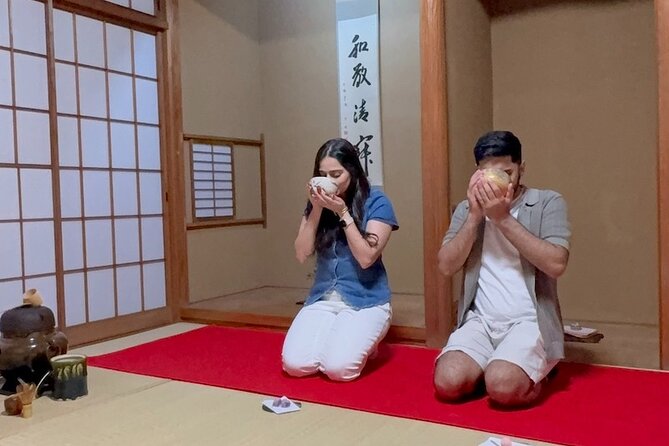
At $25.76 per person, this is priced as an accessible introduction rather than a luxury tea-school experience. The value comes from the combination of several parts: the cultural explanation, the stone-mill demonstration, the tea master’s performance, nerikiri, freshly prepared matcha, and your own chance to whisk tea.
If you only want to drink matcha, you can find simpler and cheaper ways to do that in Tokyo. The reason to pay for this session is the instruction and context. You learn why the tools matter, see the preparation performed correctly, and practice the method yourself.
The small group also improves the value. You are not paying only for a cup of tea in a busy café. You are paying for access to a teacher and a structured cultural lesson in a traditional setting.
I would consider this especially good value for a first visit to Japan, for couples, and for anyone who wants a short activity with clear participation. It may feel less worthwhile if you already study tea ceremony or want an advanced lesson. The 50-minute duration keeps the cost reasonable, but limits how far the instruction can go.
The Atmosphere: Peaceful, Traditional, and Practical
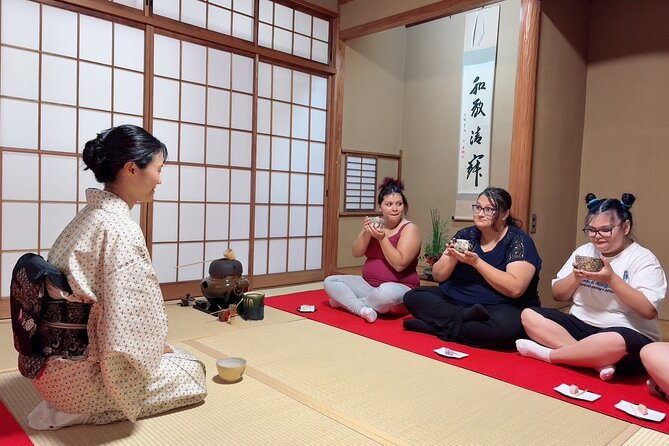
The tea house is described as peaceful and relaxing, tucked on a side street away from the noise of Shibuya. That quiet atmosphere is not just decoration. It helps you notice the contrast between ordinary city movement and the ceremony’s calm rhythm.
Several important details come together here: the old-style setting, the polite host, the traditional tools, and the chance to sit with tea and a sweet. You can expect the atmosphere to be more tranquil than theatrical.
The tea house is also close to the rest of Shibuya, which makes it easy to pair with other plans. You might schedule it during a shopping afternoon or before dinner. Just remember that the meeting point is in Dōgenzaka, not at a major sightseeing landmark, so check the address carefully before setting out.
The experience is suitable for beginners. Nothing in the format suggests that you need prior knowledge, special clothing, or experience with Japanese customs. The available information does not specify seating arrangements, accessibility details, or a dress code, so contact the provider if any of those points affect your booking.
Who Will Enjoy This Experience Most
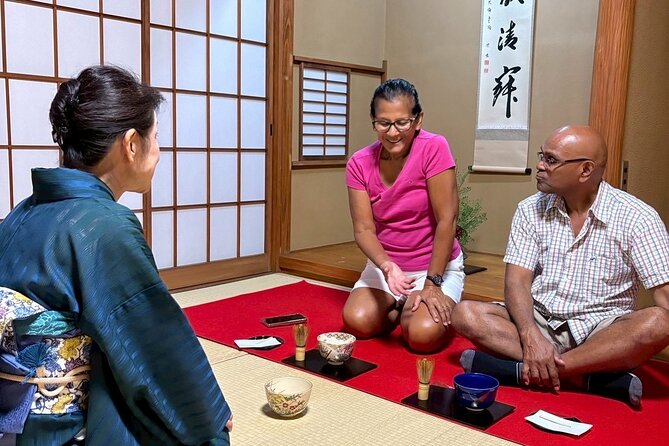
I would choose this tea ceremony if you want a short, calm cultural activity in central Tokyo. It suits people who prefer doing something hands-on instead of only taking photos or listening to a guide talk.
It is also a good match for visitors who are curious about matcha but have never prepared it. The step-by-step format removes much of the uncertainty, and the teacher can show you how the whisk works before you try.
Families and mixed-age groups may find the activity appealing, though the supplied information does not give a minimum age or specific child policy. Ask before booking if you are traveling with young children.
The experience may not suit you if you dislike quiet, careful activities or want a fast-moving tour. It also may not satisfy someone seeking a complete study of Japanese tea schools, utensils, etiquette, or regional tea production. Think of it as a polished introduction with real participation.
Booking, Cancellation, and Simple Planning Tips
You receive confirmation at the time of booking, and the experience uses a mobile ticket. The provider offers free cancellation if you cancel at least 24 hours before the local start time. Cancellations or changes made less than 24 hours before the start are not accepted for a refund.
The cleanest plan is to save the address and ticket on your phone before leaving your hotel. Allow extra time to reach the Dōgenzaka meeting point, particularly if you are coming through a crowded part of Shibuya.
The activity returns to the original meeting point. That makes your next plan easier, since you will finish in the same area where you began rather than needing to cross Tokyo after the ceremony.
Should You Book the Shibuya Tea Ceremony?
I would book this for an affordable, well-structured introduction to Japanese tea ceremony. The best features are the small group, the quiet old-style tea house, the clear historical explanation, and the chance to whisk your own matcha after watching a tea master.
The main limitation is time. Fifty minutes gives you a satisfying taste of the tradition, but not a long or advanced lesson. Book it if you want a calm break from Shibuya and a cultural activity you can actually take part in. Skip it only if you are looking for an extensive tea-study session or a fully formal ceremony with many stages.
FAQ
Where does the tea ceremony take place?
It takes place at Japan, 150-0043 Tokyo, Shibuya, Dōgenzaka, 1-chōme15, Manji Building. The activity ends back at the same meeting point.
How long does the experience last?
The tea ceremony lasts approximately 50 minutes.
How many people can join?
The activity has a maximum of eight participants.
Will I make my own matcha?
Yes. After watching the tea master and learning the basic technique, you will prepare your own bowl of matcha with traditional tools.
Is food included?
Yes. You will enjoy nerikiri, a traditional Japanese sweet, with freshly prepared matcha during the session.
Can I cancel for a full refund?
Yes, if you cancel at least 24 hours before the experience start time. Cancellations or changes made less than 24 hours before the start are not accepted for a refund.
Just added around Tokyo
- Yokohama : Tea Ceremony with Sweets and Souvenir★ 5.0 · 5 reviews
- Walking Tour: Yanaka,Nezu& Sendagi: Tea Ceremony & Old Tokyo★ 5.0 · 3 reviews
- 2 Hours Mochi &Nerikiri Making & Matcha Class in Bunkyo★ 5.0 · 21 reviews
- Private Kimono and tea ceremony at local home near Tokyo Disney★ 5.0 · 6 reviews
- Private Mochi・Matcha sweets Making Class Near Shibuya Area★ 5.0 · 22 reviews
- Tokyo Sweets Tour: Hidden Gems & Matcha at an Old Tea House★ 5.0 · 6 reviews
- Giant Sushi Cooking Class: Make a 1.5m Sushi Roll in Tokyo★ 5.0 · 9 reviews
- Tokyo Tea Ceremony Class at a Traditional Tea Room★ 5.0 · 2 reviews
Tea Ceremony Experiences, compared.
Tea Ceremony in a Traditional Tea House in Kiyomizu
Read our review →
Browse the lists this tour appears in