
Review · TOKYO
Tokyo: Tea Ceremony Experience
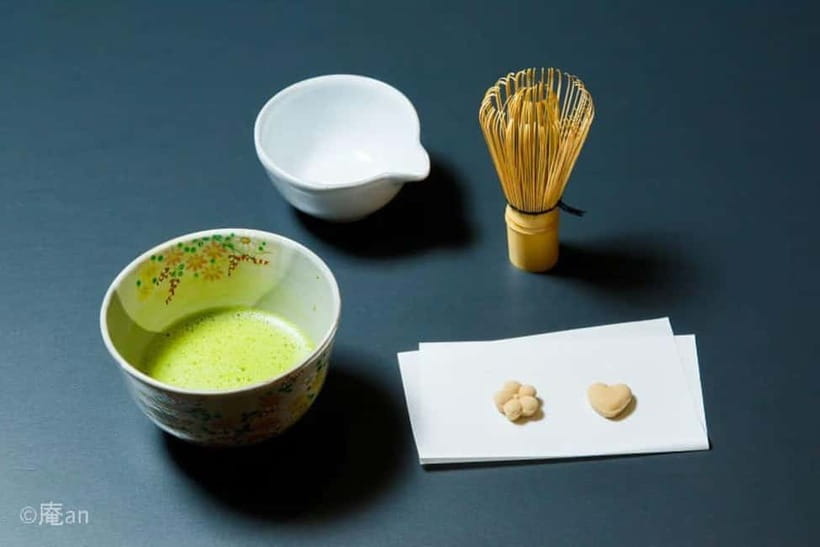
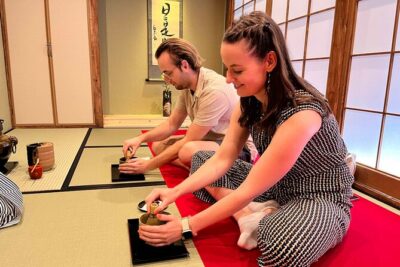
The best part of this Tokyo activity is that you do not need to know anything about tea ceremony before arriving. You receive a short introduction, watch a matcha-grinding demonstration, then make and drink your own tea with a small Japanese sweet.
I like the low price and the easy 30-minute format. I also like that the matcha is a single-origin tea, rather than an anonymous green powder, and that the activity works for one person or a group. The main thing to consider is language: the instructor is Japanese, and English translation is provided as much as possible, not guaranteed throughout every explanation.
Key points at a glance
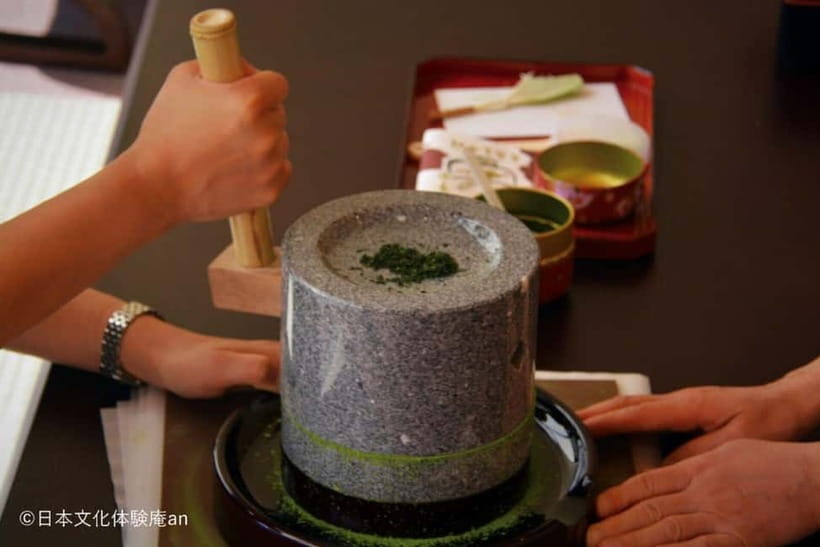
- Make your own matcha: You do not simply watch a demonstration. The experience includes preparing your own cup.
- Single-origin tea: The matcha used is a special single-origin product, giving the tasting a clearer sense of place and character.
- Ohigashi included: Your tea comes with a traditional Japanese dry sweet, which helps balance matcha’s bitter edge.
- Only 30 minutes: This fits neatly between sightseeing plans and does not require half a day.
- Very low cost: At $7 per person, it is an inexpensive way to add a hands-on cultural activity in Tokyo.
- English help is limited: The main language is Japanese, so contact the provider in advance if you need added English translation.
A gentle introduction to Japanese tea ceremony
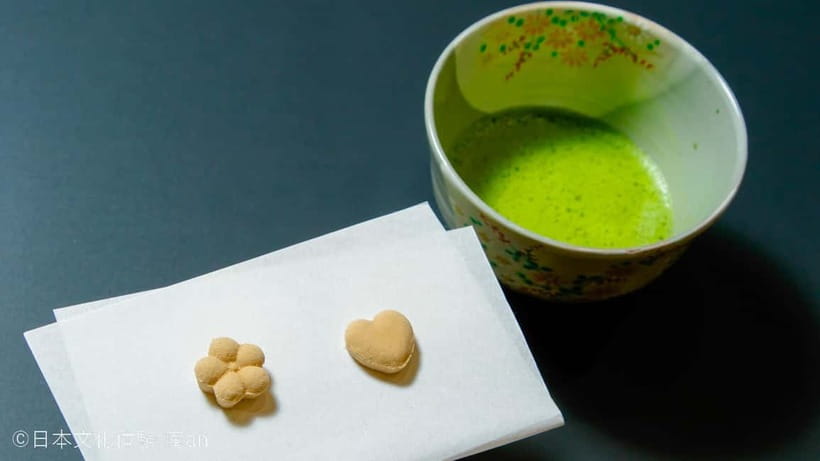
This is not a long, formal tea-school lesson. It is a compact introduction to the idea of Japanese tea ceremony, designed for people who want to try matcha without committing to a more elaborate program.
That makes it a good fit for a busy Tokyo schedule. You can step in, learn the basic rhythm, prepare a bowl, take a few pictures, and sit with the tea for a moment before heading back out into the city. I like that practical shape. A cultural activity does not need to consume your entire afternoon to be worthwhile.
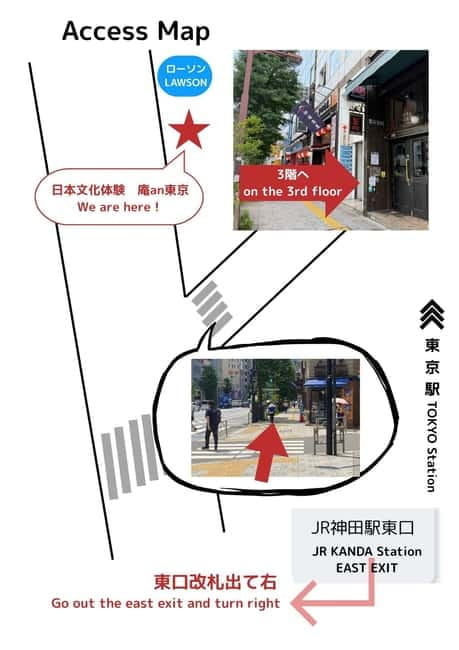
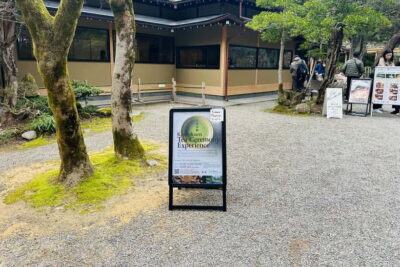
The setting is AN TOKYO Japanese Culture Experience, listed in central Tokyo at coordinates 35.6916541, 139.7715022. Use the exact venue name and coordinates when planning your route. No nearby station or transfer details are provided, so allow enough time to find the room, especially if you are coming from another sightseeing stop.
The provider is AN TOKYO, also identified as Japanese Culture Experience An Tokyo. No individual instructor name is supplied. The instructor is Japanese, and English translation can be added as much as possible if you contact the provider. That wording matters. You should expect a Japanese-led activity with language support, not necessarily a full English lesson.
More Tea Ceremony Experiences in Tokyo:
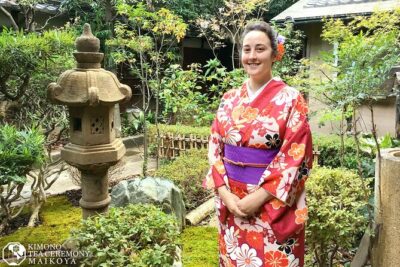
- Kimono Tea Ceremony at Tokyo, Asakusa Maikoya
★ 5.0 · 638 reviews - Tokyo: Traditional Tea Ceremony with a Tea Master
★ 5.0 · 528 reviews - Tea Ceremony Workshop in Tokyo by the Experienced Instrucor
★ 5.0 · 189 reviews
The first 20 minutes: tea, matcha, and the basic ritual
The program begins with an explanation of tea. This opening gives you the minimum background needed to understand what you are doing rather than simply copying hand movements.
The plan then moves to a matcha-grinding demonstration. Even though the activity lasts only 30 minutes, this step adds useful context. Matcha is not ordinary brewed green tea. It is prepared as powdered tea, so you drink the tea itself rather than removing the leaves after steeping. Watching the preparation helps explain why the finished drink has a different texture and intensity from a standard cup of green tea.
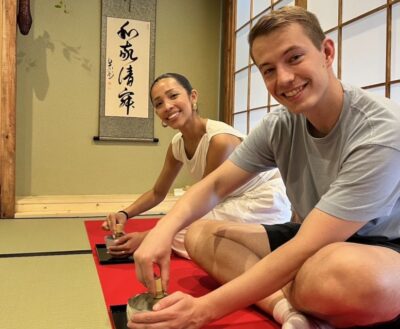
After the demonstration comes the tea ceremony experience, or otemae. You get a chance to make your own matcha in a casual format. The word casual is important here. You should not expect an extended study of every rule, gesture, utensil, or school of tea. Instead, you get a friendly first encounter that lets you take part.
I see this as the strongest part of the activity. Watching a ceremony can be pleasant, but preparing your own cup gives you a clearer memory of the process. You also have a better sense of what matcha is like when made in the traditional powdered style.
The timing information indicates that the main program reaches its end at about 20 minutes, followed by eating and drinking time. The room departure is listed at 30 minutes. In practical terms, plan on half an hour from start to finish, with the final minutes set aside to enjoy the tea and sweet.
Matcha with ohigashi, a small but useful pairing
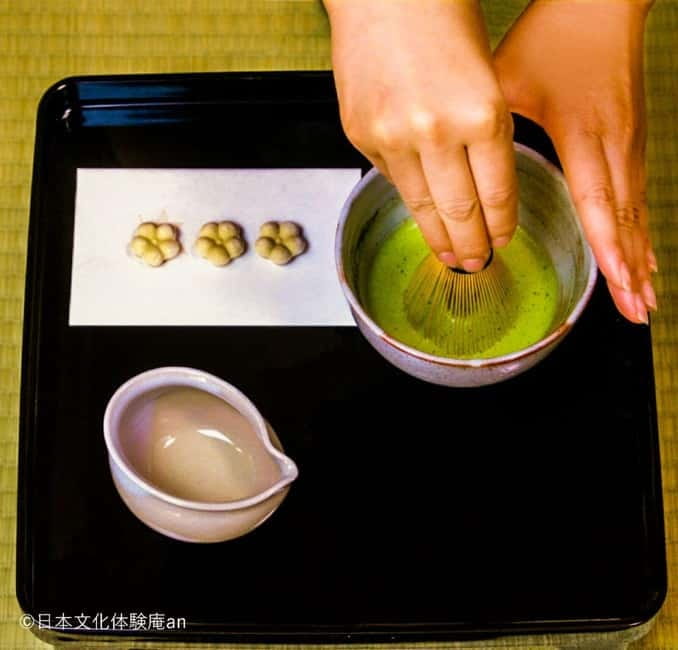
The tea comes with ohigashi, a Japanese dry sweet. This is more than a decorative extra. Matcha can have a strong bitter or grassy taste, and a sweet bite changes how your palate receives it.
The sweet gives the short activity a proper tasting element. You are not only learning a procedure. You are also trying a classic pairing and noticing how the sweetness and tea work together. If you have never had matcha prepared in this manner, the ohigashi may help make the first sip more approachable.
The experience uses special single-origin matcha. The supplied information does not identify the growing region, cultivar, or producer, so you should not expect a detailed tea-tasting lesson about those points. Still, single-origin sourcing is a worthwhile feature at this price. It suggests that the tea has been selected as a distinct product rather than treated as a generic ingredient.
I would pay attention to the contrast between the matcha’s flavor and the dry sweet. You may notice bitterness, a vegetal note, or a lingering finish, but the exact character depends on the preparation and your own taste. The activity gives you a chance to form your own opinion without paying for a full meal or a long workshop.
Why the $7 price is unusually useful
At $7 per person, this is one of the easier cultural activities to fit into a Tokyo budget. The price includes the tea ceremony experience, your matcha preparation, and the ohigashi sweet. You do not pay extra for the basic cup of tea.
The value comes from the hands-on element. Plenty of Tokyo sightseeing is visual: temples, gardens, shop windows, and city views. Here, you get a simple action to remember. You prepare, taste, and take part. For a small charge, that adds variety to a day that might otherwise be filled with walking and looking.
The low cost also makes this a sensible choice for families, solo visitors, and groups with mixed interests. Someone who would not commit to a long cultural class can still try this one. It can also work as a short rest stop during sightseeing, since the full program is only 30 minutes.
There are limits. At this price and length, you should not expect a detailed tea history, a large meal, a formal certificate, or advanced instruction. A completion certificate is available for an additional 300 JPY. If you want a nominative certificate, you need to provide names in advance. Otherwise, the name space will be left blank.
A few more tea experiences around Tokyo worth a look
- Dynamic Tokyo: Tokyo Tower, Tea Experience, Bay Cruise Day Tour
★ 4.5 · 521 reviews - Asakusa: Kimono Tea Ceremony with Matcha and Sweet
★ 4.9 · 153 reviews - Tokyo: Full-Day Tour w/Tea Experience,Buffet Lunch & Cruise
★ 4.9 · 151 reviews - Tea Ceremony Experience in a Private Tea Room in Shibuya
★ 4.9 · 125 reviews
Language and the pace of the session
The official activity language is Japanese. English translation is offered as much as possible, and the provider asks anyone wanting additional English help to make contact. I recommend doing that before booking if clear verbal instruction is important to you.
The session is short, which has two effects. First, it keeps the activity lively and easy to fit into your day. Second, explanations may move quickly. A French-speaking participant described the explanations as fast but interesting, a fair warning for anyone who needs more time with spoken instruction.
You can still get value from the demonstration even if you do not catch every word. Watch the sequence, follow the instructor’s example, and ask for clarification when needed. However, do not assume that every step will be repeated slowly in English.
This is also not the right activity if you need a long, lecture-style cultural class. It is better understood as an introduction through practice. You learn by seeing and doing, with a brief explanation around it.
Who will enjoy this 30-minute experience
I would recommend this activity to you if you want a small, affordable connection with Japanese culture and have limited time in Tokyo. It suits:
- First-time matcha drinkers
- Solo visitors who want an easy activity
- Couples and small groups
- Families looking for a short cultural stop
- People interested in Japanese sweets
- Anyone curious about tea ceremony but unsure about a formal session
- Visitors who want an inexpensive break during a sightseeing day
Children under two who sit on a parent’s lap are free. Everyone else who takes part needs a reservation according to the activity conditions. Children who do not participate cannot enter, so plan the booking around the people who will actually join.
I would be more cautious about recommending it to someone seeking a full traditional tea ceremony with detailed instruction. The 30-minute schedule is simply too short for that. It is also less suitable if you need guaranteed English interpretation, since the support is described as available as much as possible.
Timing matters more than the low price suggests
The provider operates from 10:00 to 17:00. Reservations received after 17:00 are processed the next day, so do not expect an immediate response late in the evening.
Arrive on time. The activity cannot be held for late arrivals, including delays caused by transportation. One booking received kind help after transportation problems caused a late arrival, but you should treat that as goodwill, not as a promise. The written policy is clear that the event will not wait.
This is especially important because the session is so short. Missing ten minutes of a 30-minute program takes away a large share of the experience. I would build in extra time for finding AN TOKYO Japanese Culture Experience and avoid placing a tight train connection or another prepaid activity immediately afterward.
The cancellation policy allows a full refund when you cancel at least 24 hours ahead. After that point, cancellation charges apply, and changing the date or time after a fee has been incurred can create another specified charge. Transportation costs to the venue are not covered if you cancel. These rules are ordinary enough, but the short activity does not make lateness harmless.
Photos and the final tasting minutes
The schedule includes picture time before the final eating and drinking period. That gives you a chance to record the occasion without turning the entire session into a photo stop.
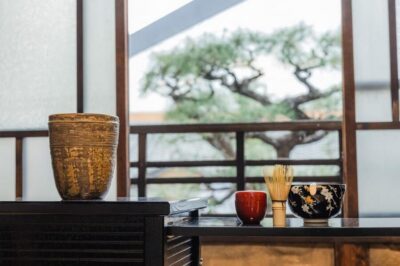
The picture time is useful because tea ceremony has a visual side: the prepared matcha, the sweet, the utensils, and the setting. Still, keep your camera ready but do not let photographs replace the short tasting. The most meaningful part of this activity is the pause after preparation, when you actually drink the tea you made.
The final minutes are also when you can notice the matcha’s texture and finish. Take a small sip, try the ohigashi, then taste the tea again. That simple order helps you understand why sweets are served with matcha.
No food substitutions or dietary details are provided. If you have a food allergy or a dietary concern about the sweet, contact AN TOKYO before booking rather than assuming an alternative will be available.
A useful stop, not a full afternoon program
The activity earns its place in a Tokyo itinerary because it is compact. You do not need to devote a morning or evening to it. A half-hour session can add a hands-on cultural moment between larger plans.
At the same time, you should set the right expectation. This is a taste of tea ceremony, not a complete education in Japanese tea culture. You will receive an explanation, see matcha grinding, prepare tea, enjoy ohigashi, and have time for pictures. That is a satisfying outline for $7, but it is still an outline.
The current score is 4.1 out of 5 from 23 ratings. The strongest praise centers on value, the pleasant nature of the activity, and the provider’s kindness when transportation trouble affected one booking. The less enthusiastic comments point to brief or fast explanations rather than a problem with the tea itself.
That pattern makes sense. If you want good value and a quick cultural experience, the program delivers a lot for little money. If your priority is detailed English instruction or a slow, formal ceremony, the limits will be more noticeable.
Should you book AN TOKYO’s tea ceremony?
Book it if you want to make matcha yourself, try a single-origin tea with ohigashi, and spend only 30 minutes and $7. It is especially practical for a first visit to Tokyo, a packed sightseeing schedule, or a group that wants a low-risk cultural activity.
Before booking, contact the provider if you need added English translation, have questions about the sweet, or want a nominative completion certificate. Plan to arrive early because late arrivals may miss the activity and the room cannot be held.
I would choose this as a short, good-value introduction, not as a substitute for a longer tea-school lesson. For the price, the chance to prepare your own matcha and sit with a traditional sweet is a fair trade for the brisk pace.
FAQ
How long does the Tokyo tea ceremony experience last?
The full activity lasts 30 minutes. The main program reaches its end at about 20 minutes, followed by eating and drinking time before departure.
How much does the experience cost?
The listed price is $7 per person. A completion certificate costs an additional 300 JPY.
What is included in the price?
The price includes a set tea ceremony experience known as otemae. The activity also includes matcha and an ohigashi sweet.
Do I make my own matcha?
Yes. After a short tea explanation and a matcha-grinding demonstration, you can prepare your own matcha.
Is English instruction available?
The instructor is Japanese and the activity language is Japanese. English translation will be provided as much as possible. Contact the provider in advance if you would like additional English support.
Where does the activity take place?
It takes place at AN TOKYO Japanese Culture Experience in Tokyo, at coordinates 35.6916541, 139.7715022.
What are the operating hours?
The operating hours are 10:00 to 17:00. Reservations received after 17:00 are processed the next day.
Can I cancel for a full refund?
You can cancel up to 24 hours in advance for a full refund. Cancellation fees apply after that point according to the stated cancellation policy.
Just added around Tokyo
- Yokohama : Tea Ceremony with Sweets and Souvenir★ 5.0 · 5 reviews
- Walking Tour: Yanaka,Nezu& Sendagi: Tea Ceremony & Old Tokyo★ 5.0 · 3 reviews
- 2 Hours Mochi &Nerikiri Making & Matcha Class in Bunkyo★ 5.0 · 21 reviews
- Private Kimono and tea ceremony at local home near Tokyo Disney★ 5.0 · 6 reviews
- Private Mochi・Matcha sweets Making Class Near Shibuya Area★ 5.0 · 22 reviews
- Tokyo Sweets Tour: Hidden Gems & Matcha at an Old Tea House★ 5.0 · 6 reviews
- Giant Sushi Cooking Class: Make a 1.5m Sushi Roll in Tokyo★ 5.0 · 9 reviews
- Tokyo Tea Ceremony Class at a Traditional Tea Room★ 5.0 · 2 reviews
Tea Ceremony Experiences, compared.
Tea Ceremony in a Traditional Tea House in Kiyomizu
Read our review →
Browse the lists this tour appears in