
Review · KYOTO
Kyoto Walking Tour with Kimono Rental Lunch and Tea Ceremony
Kyoto’s old customs come together neatly on this private day tour. You can dress in a proper kimono, walk through former Imperial grounds, visit the historic Shimogamo Shrine, eat in a restored machiya, and finish with a matcha tea ceremony. I like the balance of sightseeing and hands-on culture, plus the personal feel of a tour limited to your own group.
I also like that the kimono selection aims beyond the usual rental-shop costume look, with licensed professionals handling the dressing and basic hairstyling. The main drawback is cost control: the advertised $117.06 price is per person, while lunch is extra and the kimono option needs to be selected separately, so check exactly what your booking includes.
Key points at a glance
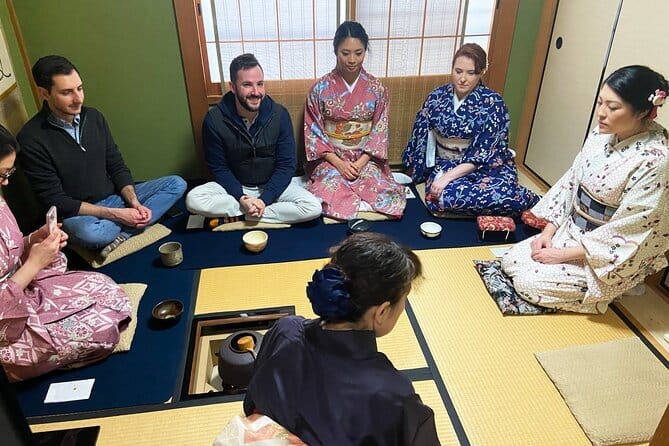
- Kimono dressing at Ume Sakura: Licensed professionals dress you in a traditional kimono, with basic hairstyling included. Makeup is your responsibility.
- A private, full-day format: Your group alone takes part, with about eight hours from the 10:30 am start back to the meeting point.
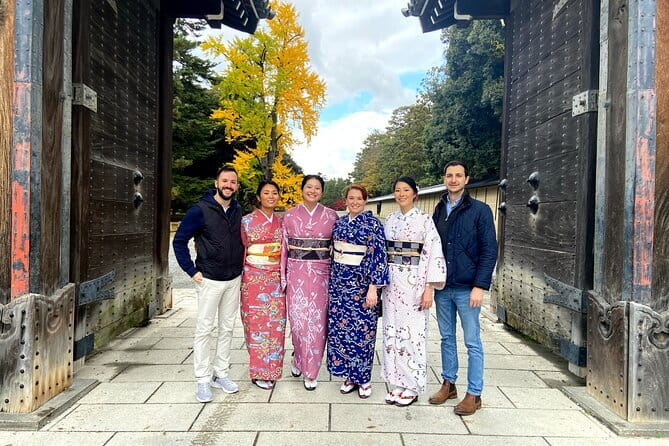
- Two very different historic stops: See the former Mitsui family villa, then visit Shimogamo Jinja, one of Kyoto’s major shrines.
- Lunch in a machiya: Choose from Japanese meal options in a renovated traditional townhouse, with lunch paid separately.
- A small-scale tea ceremony: Learn the customs of matcha and wagashi in an intimate setting, with explanations from your host and guide.
- Plan ahead: This experience averages booking about 64 days before the date, so popular dates may disappear early.
A Kyoto day built around dressing, walking, and eating
This is not a rushed checklist of Kyoto’s biggest sights. It is a day of connected experiences, beginning with the look of old Japan and ending with its etiquette and flavors.
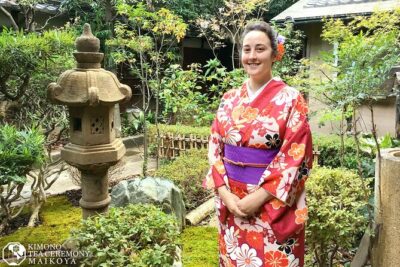
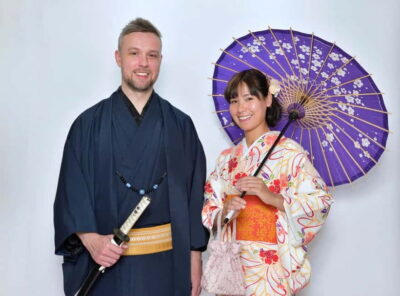
The morning starts at Ume Sakura, at 38 Fujikicho in Kyoto’s Nakagyo Ward. Your 10:30 am meeting time gives you a clear starting point in central Kyoto. If you choose the kimono option, licensed professionals dress you in a traditional garment and provide basic hairstyling. You need to do your makeup before arriving.
That first hour matters more than it might seem. A kimono changes the pace of a walking day. You will be more aware of posture, movement, sleeves, and the way you carry yourself through a shrine or garden. The dressing is part of the cultural experience, not just a photo opportunity.
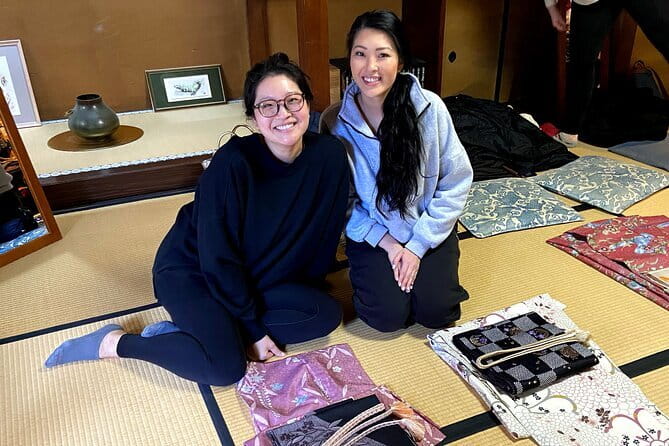
The selection is described as high quality and closer to what local wear might look like than the most basic tourist rentals. Still, check the exact kimono option while booking. The listed tour price is $117.06 per person, and the kimono stop shows admission as not included, so the final price can depend on which option you choose.
More Kimono Tea Ceremonies in Kyoto:
- Kimono Tea Ceremony at Kyoto Maikoya, NISHIKI
★ 5.0 · 911 reviews - Kyoto: Kimono Tea Ceremony at Orizuruya Gion
★ 4.9 · 618 reviews - KYOTO Tea Ceremony with kimono near by Imamiya Jinjya Shrine
★ 5.0 · 343 reviews
Former Imperial grounds and the calm of a garden walk
After dressing, you stroll through the grounds of a former Imperial family home. The gardens host festivals and other activities throughout the year, and spring and autumn are singled out as especially attractive times to visit.
This part gives the day breathing room. Kyoto can become a parade of temples, gates, and souvenir shops. A garden walk offers something quieter. You can pay attention to the shape of the grounds, the seasonal setting, and the connection between elite residences and the city around them.
The description does not name this first garden stop, so you should not expect a detailed list of every building or seasonal event in advance. That is a minor limitation if you are planning around a particular festival. The value here is the setting and the guided walk, especially when paired with the kimono.
A kimono also makes the practical side worth considering. You should be ready for walking while dressed in traditional clothing, though the tour information says most people can participate. Wear or bring anything you need for comfort, but specific footwear and garment details are not provided, so ask the operator if you have concerns.
Old Mitsui Family Shimogamo Villa in 30 minutes
The next named stop is the Old Mitsui Family Shimogamo Villa, where you spend about 30 minutes. This carefully preserved Japanese villa once belonged to the prominent Mitsui family.
Thirty minutes is enough for an introduction, a look at the architecture, and a sense of how a wealthy Japanese household lived. It is not enough for a slow, exhaustive study of every room and detail. I see that as a fair trade in a day that also includes a shrine, lunch, and a tea ceremony.
The villa is one of the stronger choices in the schedule because it adds social and architectural context. Shrines show public religious life. A family villa shows private status, taste, and domestic space. Together, the two stops make Kyoto feel less like a collection of postcard views and more like a city shaped by different layers of life.
Admission to the villa is included. That helps the tour’s value, since you do not need to make a separate decision at the entrance or handle another ticket during the day.
Shimogamo Jinja and more than 1,000 years of worship
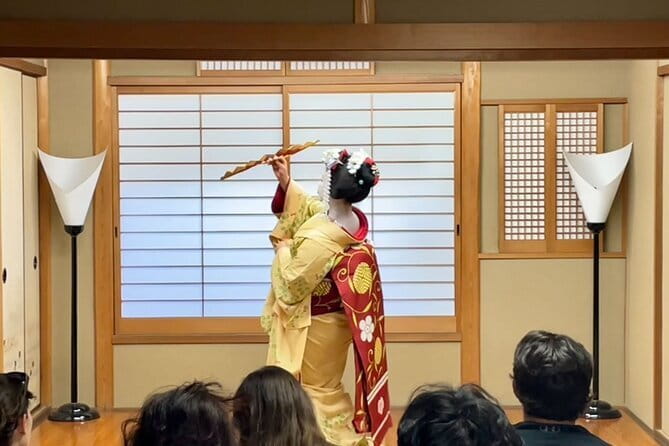
You then visit Shimogamo Jinja, one of Kyoto’s most important shrines, with more than 1,000 years of history. The visit lasts about 30 minutes and admission is free.
A short shrine visit can work well after a private residence. You get a different setting and a different kind of cultural meaning without spending hours on a single site. Your guide can help explain what you are seeing, though the exact depth of the commentary will depend on the guide assigned to your group.
Because the tour is private, you can ask questions as they arise. That is useful here. Shinto shrine customs can be easy to watch without understanding, especially if you are not familiar with shrine etiquette. A personal guide can explain the setting in plain language and adjust the pace to your group.
Do not book this day expecting extensive free time at Shimogamo Jinja. The scheduled 30 minutes makes it a focused stop. If you want a long, unhurried shrine visit, you may want to return on your own another day.
More Tea Ceremony Experiences in Kyoto:
- Kyoto: Tea Ceremony in a Traditional Tea House in Kiyomizu
★ 4.9 · 3,519 reviews - Kyoto: Tea Ceremony Ju-An at Jotokuji Temple
★ 4.9 · 3,207 reviews - Kyoto: 45-Minute Tea Ceremony Lesson Experience
★ 4.3 · 2,378 reviews - Kyoto: Table-Style Tea Ceremony at a Kyo-Machiya
★ 4.9 · 1,211 reviews
Lunch inside a renovated Kyoto machiya
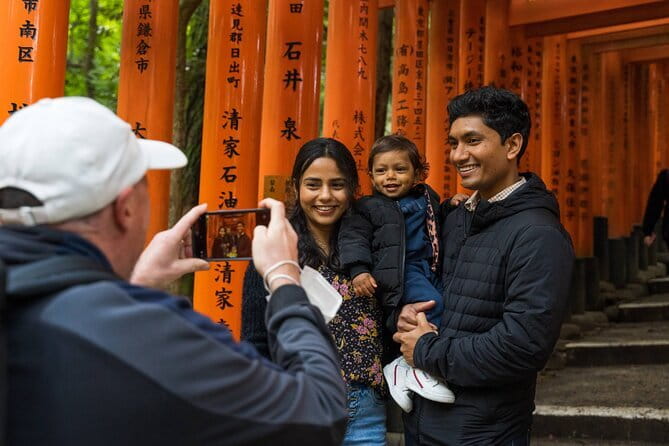
At Kyoto cuisine Teramachi Yoshikura, you sit down for about an hour in a renovated machiya, the traditional townhouse style closely associated with Kyoto.
The setting is a useful part of the meal. A machiya is not simply a restaurant with Japanese dishes on the menu. It connects lunch with the older shape of the city, where narrow townhouses combined work, family life, and limited urban space. The renovation means you get the atmosphere of a traditional building with a restaurant setting.
You will be invited to choose from meal options. Lunch is not included in the tour price, so budget for it separately. The information does not give the menu or exact cost, which makes this one of the details worth confirming if your food budget is tight.
Dietary restrictions must be stated in advance. The operator may not be able to accommodate every request. Do not wait until you sit down to explain a serious allergy or special diet. Send the details when you book, and treat any accommodation as something to confirm rather than assume.
The one-hour meal also gives you a sensible pause in the middle of a long day. After kimono dressing and several cultural stops, a seated lunch keeps the schedule from becoming a continuous walk.
A one-hour matcha ceremony with wagashi
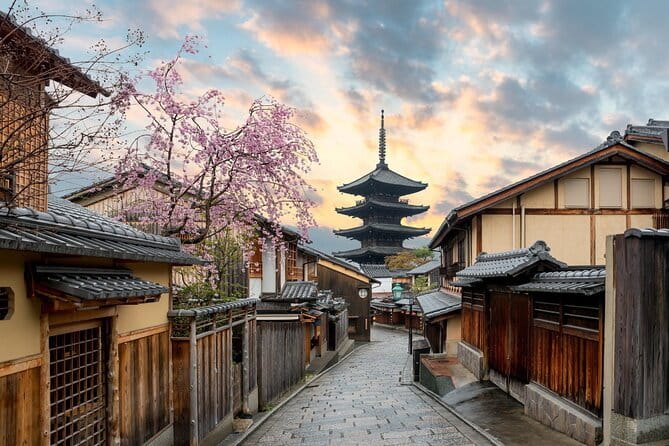
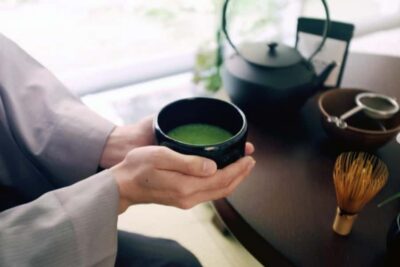
The final major stop is Tea Ceremony Experience Chisato. Here, you take part in a traditional Japanese tea ceremony and receive wagashi, the small sweets commonly served with tea.
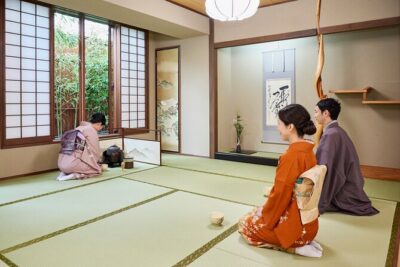
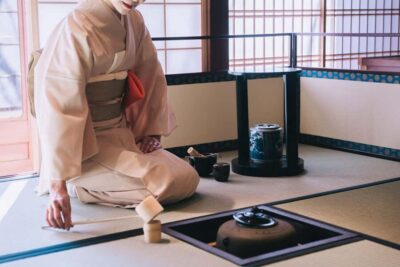
The session lasts about an hour and takes place in an intimate setting. Explanations come from the host and guide, which is important. Without context, a tea ceremony can look like a series of precise movements. With an explanation, you can notice the purpose behind the gestures, the order of service, and the care given to the bowl, tea, and sweet.
This is the cultural center of the day for me. You are not just looking at an old building. You are asked to slow down and take part in an established practice. The small setting should also make it easier to ask questions than in a large demonstration.
The tea ceremony is included in the tour price. Wagashi is part of the stated experience, but the information does not specify flavors or ingredients. If you have food restrictions, mention them in advance along with your lunch needs.
The ceremony also provides a good contrast to the kimono fitting. In the morning, you prepare to walk through Kyoto dressed in a traditional garment. In the afternoon, you learn how another traditional practice depends on stillness, attention, and form.
What the private format changes
This is a private activity, so only your group participates. That is a meaningful advantage for families, couples, and small groups who want to ask questions or move at a comfortable pace.
A private guide can also help connect the stops. The strongest version of this tour is not simply a ride from one place to the next. It is a day in which your guide explains how the shrine, villa, meal, kimono, and tea ceremony fit into Kyoto life.
One published comment praised the personal insights provided by an expatriate guide about life in Japan as a foreigner and Japanese culture. That detail suggests the conversation can extend beyond dates and architectural labels. Still, no guide’s name is provided, so you cannot request a named guide based on the available information.
Private does not mean completely flexible. The schedule has fixed durations, and the activity begins at 10:30 am and ends back at the same meeting point. If you want to add extra temples or linger much longer at one stop, this may not be the right structure.
Is $117.06 a fair price?
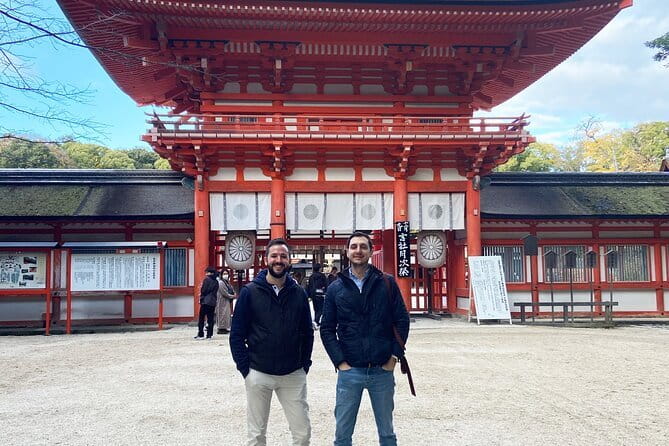
At $117.06 per person, the price looks reasonable if you use the included components: a private guide, admission to the Old Mitsui Family Shimogamo Villa, and the tea ceremony. You are also getting an eight-hour day rather than a short introduction.
But you need to price the whole experience, not just the headline amount. Lunch is extra. The kimono option must be selected appropriately, and the Ume Sakura stop lists admission as not included. Ask what the total will be for your chosen option before paying.
The private format adds value if you care about questions, family pacing, or a more personal introduction to Japanese customs. It adds less value if you mainly want transportation between major sights or prefer to explore independently.
The day also bundles several costs and decisions into one plan. You do not need to arrange a separate villa visit, tea ceremony, and cultural guide. For a first Kyoto visit, that convenience may justify the price.
Timing, meeting point, and practical planning
The tour starts at 10:30 am at Ume Sakura, 38 Fujikicho, Nakagyo Ward, Kyoto, postal code 604-0992. It ends back at the same meeting point after about eight hours.
The meeting point is near public transportation. The information does not specify the best station, route, or travel time from your hotel, so check your route before the morning of the tour. Arrive with enough time to find Ume Sakura and complete any needed preparations.
The experience is available with a mobile ticket, and confirmation is provided when you book. It is smart to keep the ticket accessible on your phone, especially if you are moving through Kyoto without printed documents.
The tour averages booking about 64 days ahead. That does not guarantee that every date sells out, but it is a useful planning signal. If you want a particular season, weekend, or kimono option, book well ahead rather than waiting until you are in Japan.
Free cancellation is available if you cancel at least 24 hours before the local start time. Cancellations or changes inside that window are not accepted for a refund.
Who should book this Kyoto experience?
I would choose this tour if you want one structured day that combines clothing, architecture, food, religion, and tea. It suits first-time visitors who want cultural explanation without arranging several separate bookings.
It is also a good fit for families and small private groups. The itinerary gives you several types of activity, so a group with mixed interests has a better chance of staying engaged. One person may care about the villa, another about the meal, and another about the kimono and tea ceremony.
You should think twice if you dislike fixed schedules, have strict dietary requirements that have not been confirmed, or want long periods of independent exploration. Lunch is not included, the kimono choice affects the arrangement, and some stops are intentionally short.
Should you book it?
Book this tour if you want a polished introduction to Kyoto culture with real participation rather than sightseeing alone. The combination of a professionally fitted kimono, the Mitsui villa, Shimogamo Jinja, a machiya lunch, and a one-hour tea ceremony gives the day a clear cultural thread.
Before booking, confirm the kimono supplement, lunch budget, and dietary arrangements. If those details work for you, the private format and included tea ceremony make the $117.06 starting price a solid value for a full Kyoto day. If you prefer to wander freely or focus on major temples, spend the money on separate visits instead.
FAQ
How long is the Kyoto walking tour?
The experience lasts approximately eight hours, beginning at 10:30 am and ending back at the starting point.
Where does the tour start?
The meeting point is Ume Sakura, 38 Fujikicho, Nakagyo Ward, Kyoto, 604-0992, Japan. The location is near public transportation.
Is lunch included in the price?
No. Lunch at Kyoto cuisine Teramachi Yoshikura is not included, and you choose from the available meal options.
Is the kimono rental included?
The kimono option must be selected when booking. The Ume Sakura stop lists admission as not included, so check the price and inclusions for the option you choose.
What is included in the tour price?
The listed inclusions are the tea ceremony and admission to the Old Mitsui Family Shimogamo Villa. The activity is private for your group.
Can I cancel for a full refund?
Yes, if you cancel at least 24 hours before the experience start time based on local time. Cancellations or changes made less than 24 hours in advance are not accepted for a refund.
More Walking Tours in Kyoto
- Kyoto Tea Ceremony & Kiyomizu-dera Temple Walking Tour
★ 5.0 · 115 reviews - The Way of Tea: Kyoto Crafts, Hidden Temples & Wabi-Sabi Walk
★ 5.0 · 41 reviews - Matcha Grinding Experience and Walking Tour in Uji Kyoto
★ 5.0 · 26 reviews - Kyoto Gion Tea ceremony & Wabi-sabi Walking Tour
★ 4.5 · 7 reviews
More Lunch Experiences in Kyoto
- Kyoto: A Walking Tour of Four Spring Waters, Tofu Lunch & Matcha
★ 4.5 · 2 reviews - Active Volcano, Rice Field, Hot Spring, Fruit market, Tea Plantation with Lunch
★ 5.0 · 513 reviews - Bandung: White Crater Hotspring Tea Plans And Lunch Included
★ 4.9 · 419 reviews - From Sapa: 1-Day Guided Trek to Lao Chai & Ta Van with Lunch
★ 4.9 · 416 reviews
Just added around Kyoto
- Whisk Your Own Matcha: A Zen Matcha Experience at Temple★ 3.6 · 7 reviews
- Uji Walking Tour – Byodo-in temple and Tea Ceremony from Kyoto★ 3.5 · 3 reviews
- Kyoto: Authentic Tea Ceremony in a Small Group★ 5.0 · 7 reviews
- Tea ceremony at Kyoto’s Zen Temple Teahouse★ 5.0 · 2 reviews
- Traditional Tea Ceremony in Kyoto★ 4.5 · 3 reviews
- Tea Ceremony in 150 Years Old Townhouse with Tables and Chairs★ 5.0 · 22 reviews
- Silent Beauty of Kyoto Zen Walk and Tea Experience★ 5.0 · 2 reviews
- Tea Ceremony Experience in Traditional Kyoto Townhouse★ 5.0 · 19 reviews
Kimono & Tea Ceremonies, compared.
KYOTO Tea Ceremony with kimono near by Imamiya Jinjya Shrine
Read our review →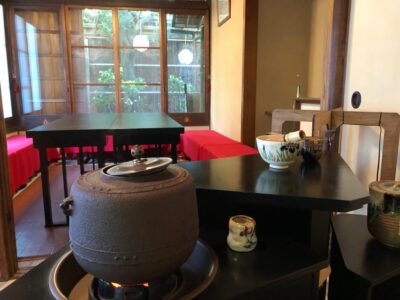
Kimono and Tea Ceremony Experience at Cultural Asset
Read our review →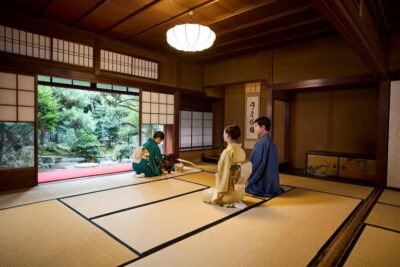
Browse the lists this tour appears in