
Review · TOKYO
Experience all of Japanese culture and Japanese food experience classes “origami, udon, Japanese food, green tea, calligraphy” in 4 hours
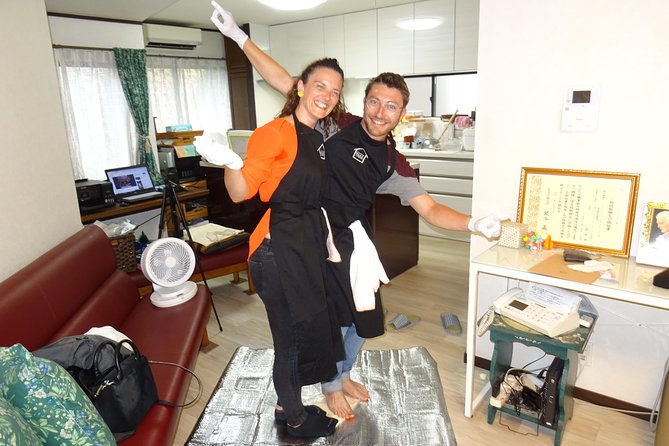
The heart of this experience is not a quick cooking lesson. It is an invitation into Taka and Keiko’s home, where you spend four hours folding paper, kneading noodles, preparing lunch, and talking over drinks. You will make an origami crane, create udon from basic ingredients, prepare sushi and other Japanese dishes, then finish with matcha and calligraphy.
I like the hands-on variety and the fact that lunch is part of the lesson, not an afterthought. I also like the personal touch: Keiko writes your name in Japanese calligraphy on colored paper, and Taka meets you at JR Omori Station for the short walk home.
The main consideration is pace. Four hours covers many activities, so this suits you if you enjoy conversation and a relaxed home visit more than a tightly timed professional cooking class. Alcoholic drinks are free, but you should pace yourself if you want to stay focused through the afternoon.
Key points at a glance
- A Tokyo home near JR Omori Station: Meet at the central exit at 10:30 a.m., then walk about eight minutes through a quiet residential area and past a shrine.
- Five kinds of Japanese culture in one visit: Origami, udon making, Japanese cooking, matcha preparation, and calligraphy all fit into the four-hour program.
- Lunch is made together: You help prepare sushi, dumplings, tempura, udon, and Japanese side dishes, with the exact menu adapted for vegetarians and vegans.
- Drinks are included: Sake, beer, shochu, and soft drinks are available at no extra charge.
- A personal souvenir: Keiko writes your name in calligraphy on colored paper for you to take home.
- Private group format: Only your own group participates, making this a good choice for families, couples, or a small party of friends.
A home visit instead of another Tokyo attraction
Tokyo offers endless restaurants, markets, shrines, and cooking schools. This experience gives you something different: time inside a local couple’s home, with the food and crafts used as a way to talk about everyday Japanese life.
That setting changes the feel of the day. You are not sitting in a demonstration kitchen while an instructor works ahead of you. You are expected to fold, mix, shape, cook, taste, and ask questions. The program also leaves room for conversation, which is one reason the four hours can feel more like a social visit than a standard class.
Taka and Keiko are the hosts. Taka meets you at the central exit of JR Omori Station, carrying a bag marked with the homecoming TAKA logo. From there, the walk takes about eight minutes. You pass a shrine and leave the busy station area for a quiet residential neighborhood.
That short walk is useful in its own right. It gives you a small look at the part of Tokyo where people live, rather than only the famous districts you may already have planned to visit. The meeting point is near public transportation, but the activity does not include transfers, so you arrange your own journey to and from Omori.
More Tea and Calligraphy Classes in Tokyo:
- Osaka: Tea Ceremony, Calligraphy, and Kimono Experience
★ 4.9 · 130 reviews - An Amazing set of Cultural experience: Kimono, Tea Ceremony and Calligraphy
★ 5.0 · 69 reviews - Beijing Culture: Tea Ceremony, Heritage Instrument & Calligraphy
★ 5.0 · 57 reviews
Origami starts the morning with a simple win
The first activity is folding a paper crane. It is an approachable opening because you can begin making something right away, even if you have never tried origami.
The crane also gives the session a clear Japanese cultural link without turning the morning into a lecture. You work with your hands, follow the folds, and leave the first activity with a small finished object. Children can take part, and families with children as young as seven have found the hands-on format useful and engaging.
Do not expect an advanced origami workshop. The value is in sharing a familiar Japanese craft with your hosts and the people in your private group. If your folding is imperfect, that is part of the fun, not a problem to solve.
Making udon from ingredients to noodles
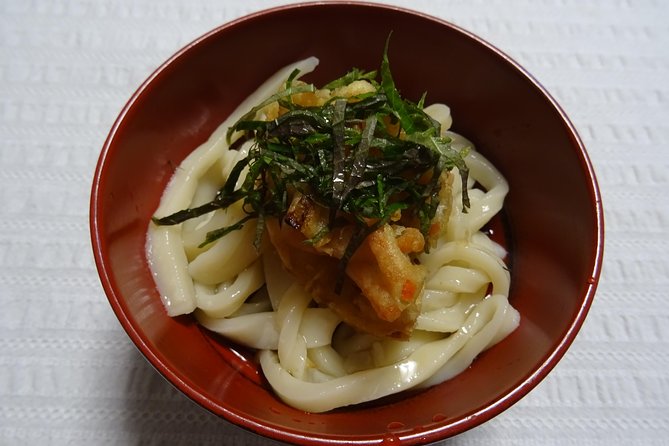
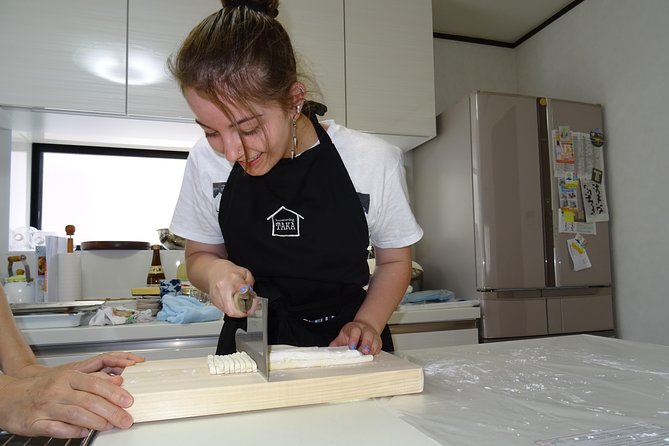
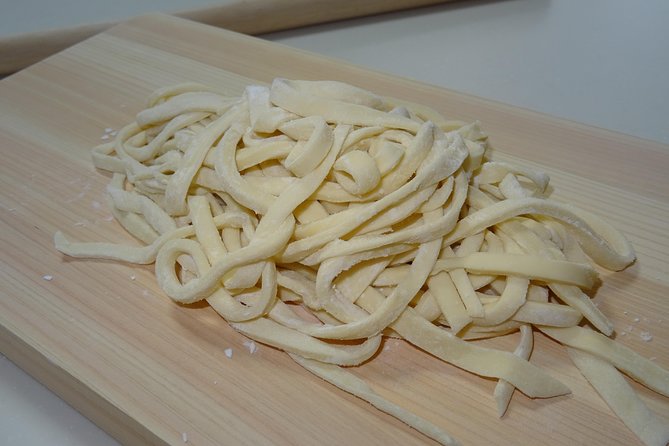
Next comes one of the most memorable parts of the day: making udon noodles from scratch. You see the process from the initial ingredients through to the finished noodles, including the unusual but traditional step of stepping on the dough.
That physical element makes the lesson especially good for children and anyone who likes food with a bit of theater. It also helps you understand that fresh noodles are not simply taken from a package. The texture and shape come from the work you put into the dough.
This is a cooking activity, not a commercial kitchen demonstration. You will take part in the process, and the hosts guide you through it. Several people have found the udon session especially enjoyable, and children often like it because it feels more like making something than following a formal recipe.
If you hope to learn precise quantities and restaurant-level technique for every dish, keep your expectations in check. The day covers many subjects, so the emphasis is on participation, cultural exchange, and enjoying the finished meal rather than mastering a single recipe in detail.
Sushi, dumplings, tempura, and a generous lunch
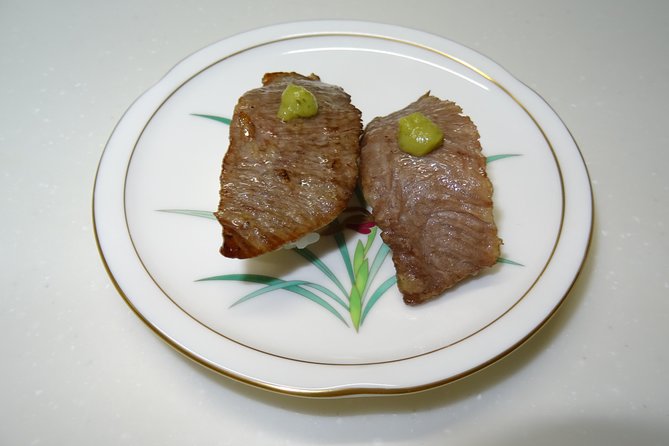
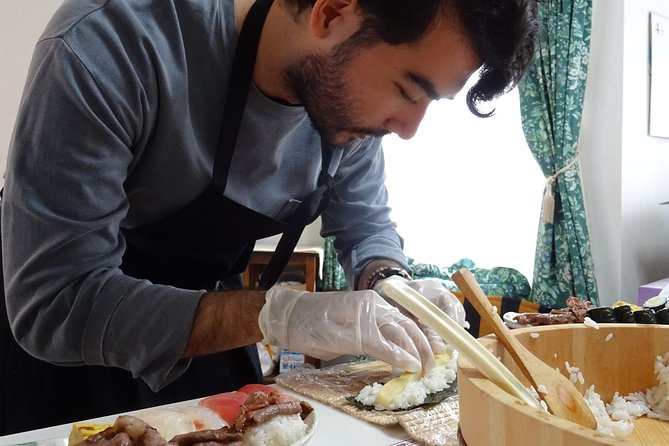
The main food portion brings the group together to prepare lunch. Sushi and gyoza are listed as central dishes, while tempura is also part of the cooking program. Keiko serves Japanese small plates alongside the food you help make.
The menu gives you several different kinds of work. Sushi involves careful assembly and presentation. Dumplings bring a different rhythm, with filling and folding. Tempura adds cooking and timing. Udon connects back to the earlier noodle-making session. You are not only eating Japanese food; you are seeing several basic methods in one sitting.
All ingredients are made in Japan, according to the experience details. The hosts can adapt the dishes for vegetarian and vegan diets, using different ingredients. It is still wise to provide your dietary needs when booking so the menu can be prepared properly.
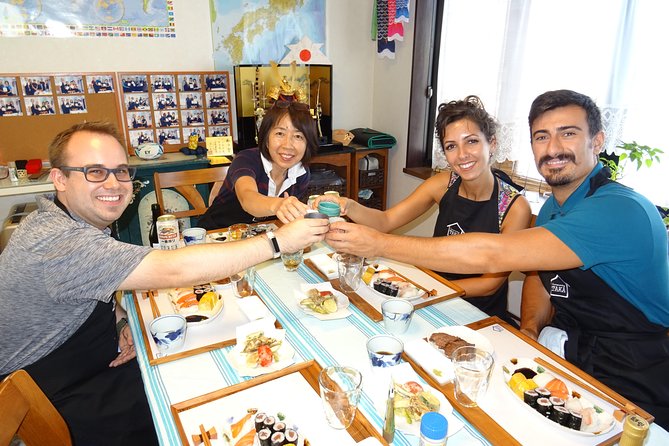
Lunch is also when the social side of the visit becomes most important. You sit down, eat what you made, and talk with Taka and Keiko. The meal is not rushed through as a final five-minute tasting. You have time to enjoy it and ask about Japanese food, daily life, and the local area.
That relaxed meal is a real part of the value. Tokyo restaurant meals can be excellent, but they rarely give you this kind of direct contact with a local household. You may leave with a better sense of how food brings people together in Japan, even if you never reproduce every dish at home.
A few more tea experiences around Tokyo worth a look
- High Tea At The Atrium Restaurant, Imperial Hotel, New Delhi
★ 5.0 · 16 reviews - Furnas in a Private Evening – Tea, Cozido Dinner and Hot Springs
★ 5.0 · 10 reviews - Private Full-Day Guided Tour in Seoul with Lunch, Tea and Dinner
★ 5.0 · 8 reviews - Nassau: Afternoon Tea at Graycliff Hotel and Restaurant
★ 4.7 · 5 reviews
Free sake, beer, shochu, and soft drinks
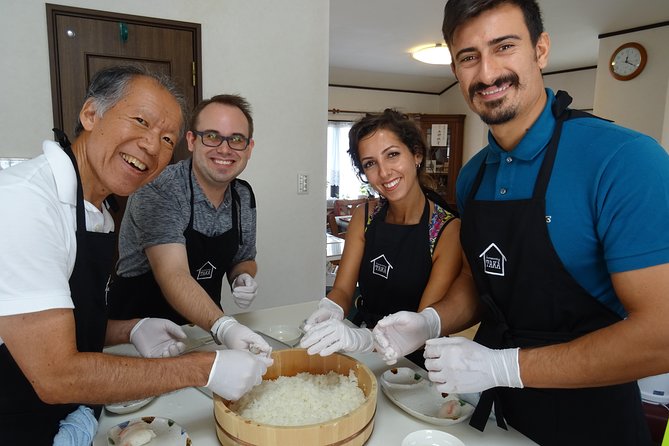
Drinks are included, which makes the listed price easier to assess. You can have sake, beer, shochu, or soft drinks without adding a separate beverage bill.
This is generous, but it is also something to manage sensibly. The class continues after lunch with matcha and calligraphy, so drinking heavily would work against the rest of the program. I would treat the drinks as a chance to sample something with your meal rather than as the main reason to book.
The inclusion also helps the lunch feel like a hosted meal rather than a paid tasting. You are free to drink soft drinks instead, so the experience works for non-drinkers and families as well.
Matcha and Japanese sweets after lunch
After the meal, you prepare matcha together and taste it with local Japanese sweets. This gives the afternoon a slower finish after the busier cooking activities.
Matcha can have a strong, grassy taste that surprises people who expect ordinary sweetened tea. The sweets provide a useful contrast, and preparing the tea yourself makes the moment more engaging than simply being handed a cup in a café.
This is not presented as a formal tea ceremony with a long list of rules. It is a chance to take part in making matcha and to learn through doing. If you are looking for a traditional ceremony in a highly formal setting, this is not that experience. If you want a friendly introduction connected to food and conversation, it fits well.
Your name in Japanese calligraphy
The final activity is one of the most personal. Keiko writes your name in calligraphy on colored paper, which you take home as a souvenir.
Unlike a standard souvenir bought from a shop, this one is prepared for you during the visit. It is small and easy to pack, but it carries a clear memory of the people and place connected with it. The calligraphy also gives the day a quiet ending after the food and conversation.
The experience details do not promise an extended calligraphy lesson, so think of this primarily as a personalized keepsake rather than a full writing workshop. You do receive a name written for you, and that is likely to be more meaningful than a generic Tokyo trinket.
At the end, Taka and Keiko walk you back to JR Omori Station. The warm send-off is part of the design of the experience. Their aim is to treat participants as returning friends, and the activity has a strong emphasis on keeping in touch.
Why the four-hour format works
Four hours sounds long for a cooking class, but the schedule includes several distinct activities. Origami provides a gentle start. Udon and lunch supply the main hands-on work. Matcha slows the pace, and calligraphy closes the visit.
You should not expect every segment to receive equal teaching time. The day is broad rather than narrowly specialized. That is the right choice if you want a sampler of Japanese crafts and food, but less useful if your only goal is to become an expert at sushi or udon.
The private format helps. Only your own group participates, so the hosts can respond to your pace and questions. Families, couples, and small groups can enjoy the day without being folded into a large tour. Solo visitors can also book, though the exact social setting depends on the booking arrangement.
The program has worked especially well for families. Children have enjoyed the origami and udon, while teenagers have taken part in the cooking, tea, and calligraphy. Adults get the added benefit of talking directly with a Japanese couple about food, customs, and everyday life.
What the price includes at $92.50
At $92.50 per person, the cost is not simply paying for lunch. It covers about four hours of hosting, instruction, ingredients, an apron, origami materials, alcoholic and nonalcoholic drinks, and the calligraphy souvenir.
That is a fair value if you will take part in most of the program and appreciate personal contact. A meal alone in Tokyo could cost less, especially if you choose a modest restaurant. But a meal does not normally include fresh udon making, sushi preparation, origami, matcha, calligraphy, and time with a local couple.
The price makes less sense if you want a short, highly focused class or prefer to explore independently. You are paying for the full home visit and the social exchange. Book it because you want that combination, not because it is the cheapest way to eat lunch.
The fact that it is often reserved around 107 days ahead is useful planning information. If your Tokyo dates are fixed, you should not assume you can leave this until the last week. Free cancellation is available when you cancel at least 24 hours before the 10:30 a.m. start time. Changes or cancellations inside that window are not accepted for a refund.
Practical details before you go
Meet at the central exit of JR Omori Station at 10:30 a.m. Look for the person carrying the homecoming TAKA logo bag. The walk to the home takes about eight minutes, so arrive with enough time to find the correct station exit.
The meeting point is 1 Chome-6 Omorikita, Ota City, Tokyo 143-0016. The activity ends back at the meeting point after Taka and Keiko escort you to the station.
Wear something comfortable for food preparation and activities involving your hands. An apron is included, but you should still choose clothes you do not mind wearing in a cooking setting. The experience has a mobile ticket, and confirmation is received at booking.
Vegetarian and vegan participants can enjoy the dishes with different ingredients. State your needs clearly in advance. The activity is private, but the information provided does not specify a maximum group size, so ask the provider if your party is larger than a typical family or small group.
Who should book this homecoming experience?
I would recommend it most to you if you want personal contact, enjoy learning by doing, and like the idea of spending part of your Tokyo trip in a residential neighborhood. It is particularly suitable for families, since the day gives children several ways to participate rather than asking them to sit quietly through a long explanation.
It also works well for couples and solo visitors who value conversation. The atmosphere is designed around friendship and hospitality, and many of the activities create natural chances to talk.
You may want a different option if you prefer a polished studio class, a formal tea ceremony, or a single detailed lesson focused on knife skills, sushi technique, or Japanese cuisine at a professional level. You should also consider the four-hour commitment and the included alcohol before booking.
Should you book it?
Book this if you want to meet Taka and Keiko, cook a broad selection of Japanese food, and take part in small cultural activities that are difficult to fit into an ordinary sightseeing day. The strongest reasons are the home setting, the amount of hands-on work, the generous lunch and drinks, and the personalized calligraphy souvenir.
Skip it if you would rather spend four hours visiting major Tokyo sights or if you prefer a tightly structured class with advanced culinary instruction. For everyone else, this offers a warm, practical way to connect food, craft, and ordinary Tokyo life in one morning and afternoon.
FAQ
Where does the experience begin?
It begins at the central exit of JR Omori Station in Tokyo at 10:30 a.m. Look for someone carrying a bag with the homecoming TAKA logo.
How long is the activity?
The experience lasts approximately four hours. It ends back at the meeting point near JR Omori Station.
What activities are included?
You fold an origami crane, make udon noodles from scratch, prepare Japanese food such as sushi, dumplings, and tempura, make matcha, taste Japanese sweets, and receive a calligraphy souvenir.
Is lunch included?
Yes. Lunch is included, along with Japanese small plates prepared by Keiko.
Are drinks included?
Yes. Sake, beer, shochu, and soft drinks are included at no extra charge.
Can vegetarians and vegans participate?
Yes. Vegetarian and vegan participants can enjoy the dishes with different ingredients. Provide your dietary requirements when booking.
Is this a private activity?
Yes. Only your own group participates in the activity.
What is the cancellation policy?
You can cancel for a full refund up to 24 hours before the local start time. Cancellations or changes made less than 24 hours before the experience are not accepted for a refund.
More Food Tours in Tokyo
- Kimono and Tea Ceremony in Asakusa Private Food Tour With Guide
★ 5.0 · 4 reviews - Tokyo Vegan Tour : Miso Making, Tea Ceremony, Rickshaw Ride
★ 5.0 · 2 reviews - Jakarta: Volcano, Tea/Rice Fields, Hot Spring, Local Food
★ 4.9 · 515 reviews - SF’s Chinatown: Tea & Dim Sum Food Tour – Includes full meal, 3hr
★ 5.0 · 153 reviews
More Food and Drink Tours in Tokyo
- Tokyo Sushi Making Class : Sake Ceremony & Matcha Experience
★ 5.0 · 44 reviews - Matcha Experience with of Japanese Tea Tasting in Tokyo
★ 5.0 · 31 reviews - Tokyo: Matcha Tasting and Making Experience
★ 4.9 · 21 reviews - Authentic Japanese tea tasting: sencha, matcha and gyokuro
★ 5.0 · 12 reviews
Just added around Tokyo
- Yokohama : Tea Ceremony with Sweets and Souvenir★ 5.0 · 5 reviews
- Walking Tour: Yanaka,Nezu& Sendagi: Tea Ceremony & Old Tokyo★ 5.0 · 3 reviews
- 2 Hours Mochi &Nerikiri Making & Matcha Class in Bunkyo★ 5.0 · 21 reviews
- Private Kimono and tea ceremony at local home near Tokyo Disney★ 5.0 · 6 reviews
- Private Mochi・Matcha sweets Making Class Near Shibuya Area★ 5.0 · 22 reviews
- Tokyo Sweets Tour: Hidden Gems & Matcha at an Old Tea House★ 5.0 · 6 reviews
- Giant Sushi Cooking Class: Make a 1.5m Sushi Roll in Tokyo★ 5.0 · 9 reviews
- Tokyo Tea Ceremony Class at a Traditional Tea Room★ 5.0 · 2 reviews
Tea & Calligraphy Classes, compared.
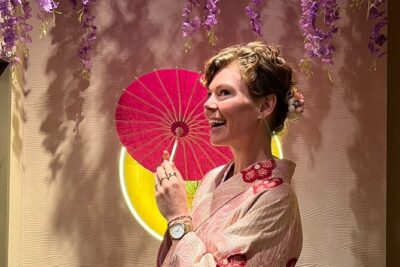
Tea Ceremony, Calligraphy, and Kimono Experience
Read our review →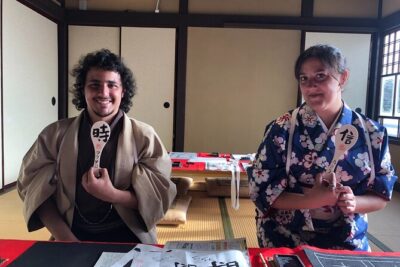
An Amazing set of Cultural experience: Kimono, Tea Ceremony and Calligraphy
Read our review →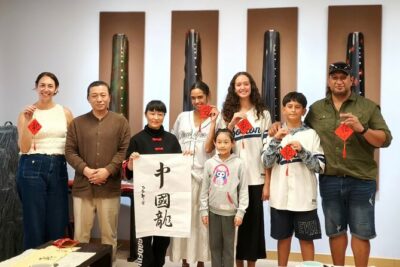
Beijing Culture: Tea Ceremony, Heritage Instrument & Calligraphy
Read our review →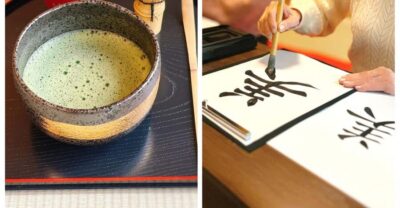
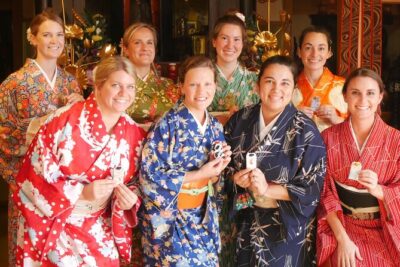
Cultural Activities :Kimono, tea ceremony, Calligraphy and Amulet
Read our review →
Samurai dress-up and shows, plus Tea Ceremony & Calligraphy
Read our review →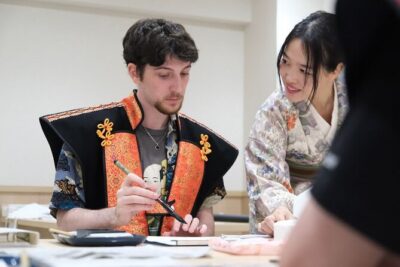
Premium Kimono Dressing, Tea Ceremony, Calligraphy, Samurai show
Read our review →
Experience Japanese calligraphy & tea ceremony at a traditional house in Nagoya
Read our review →Browse the lists this tour appears in