
Review · KYOTO
Kyoto Gion Tea ceremony & Wabi-sabi Walking Tour
Kyoto’s tea ceremony makes more sense after you have walked through the places and objects that shaped it. This 3.5-hour Gion and Higashiyama tour moves from old streets and Zen temples to tea bowls, paintings, gardens, and finally a formal matcha ceremony. It is less about quickly drinking green tea and more about learning why simplicity matters in Japanese art.
I like the small group of up to seven, which gives you room to ask questions. I also like the clever order: you first hear about wabi-sabi, then see it in pottery and a dry garden, and only afterward sit down for tea. The main caution is timing. One guest received conflicting start information and had to leave after 90 minutes, missing the ceremony, so check your meeting time carefully.
Key points at a glance
- A 210-minute cultural walk: The tour links Gion, Kenninji Temple, pottery, Japanese art, Entoku-in, and a tea ceremony.
- Tea culture explained in context: Your guide connects matcha to Zen ideas, nature, restraint, and wabi-sabi.
- A real tea ceremony at the end: You choose a tea bowl by season and taste, then receive matcha and a small seasonal sweet.
- Masa may guide the walk: A guide named Masa has led this experience, offering temple details and helping participants enjoy the route.
- Small group, but not private: No more than seven people can join, though other participants may share the tour.
- Plan for Kyoto’s conditions: Some steps and walking surfaces are not suitable for wheelchairs or strollers, and the tour begins strictly on time.
Why this Kyoto tea tour feels different
Many Kyoto tea experiences place you directly in a tea room, explain a few gestures, and serve matcha. This one takes a longer route. You spend the first part walking through Gion and Higashiyama, where the guide sets up the ideas behind the ceremony.
That preparation matters. The central idea is not simply that matcha tastes good. Japanese tea culture places value on the setting, the utensils, the movement of the host, the season, and the quiet attention given to a bowl of tea. Your guide explains how beauty can be found in natural materials, age, irregularity, and restraint.
The word wabi-sabi is often used loosely outside Japan. Here, you get several chances to see what it means rather than receiving only a dictionary definition. A handmade tea bowl, a sparse garden, an old temple, and a seasonal sweet each offer a different way to think about the idea.
I appreciate that the ceremony comes last. By then, you have looked at tea utensils and Zen spaces with a little more understanding. The tea room is not an isolated performance. It becomes the final part of a lesson that began on the streets of Kyoto.
More Tea Ceremony Experiences in Kyoto:
- Kyoto: Tea Ceremony in a Traditional Tea House in Kiyomizu
★ 4.9 · 3,519 reviews - Kyoto: Tea Ceremony Ju-An at Jotokuji Temple
★ 4.9 · 3,207 reviews - Kyoto: 45-Minute Tea Ceremony Lesson Experience
★ 4.3 · 2,378 reviews
Meeting at Gion-Shijo Station
The tour begins in front of the Izumo no Okuni statue, just outside Exit 5 of Gion-Shijo Station on the Keihan Line. Look for the guide holding an orange Magical Trip signboard.
This is a useful meeting point because Gion-Shijo Station is easy to identify, but you should still allow extra time. The tour does not wait for late arrivals. If you miss the group, you cannot join later, receive a refund, or move to another departure because of that missed start.
The group can include up to seven people. That is small enough for a more personal walk, but it is not a private tour. If you want a completely private experience, this format may not suit you. If you like asking questions without dealing with a large crowd, the group size is a real benefit.
Gion: a gentle introduction to Kyoto’s tea culture
The first walking section through Gion lasts about 30 minutes. This gives your guide time to explain the district and introduce the connection between Kyoto, matcha, and tea ceremony.
Gion is a fitting place to begin. Its traditional streets provide the setting for a conversation about Japanese customs and the importance of paying attention to place. Your guide may also point out how tea culture developed alongside architecture, food, art, and religious practice.
A famous matcha shop is part of the wider visit, adding a practical link to the tea you will later drink. The tour is not only about looking at historic buildings. It shows you how matcha remains part of Kyoto’s present-day identity.
The pace here should suit most people who can walk comfortably for several hours. Still, you will be on foot through historic areas, so supportive shoes are a smart choice. Summer can be very hot, with reported highs around 40°C, while winter temperatures can drop to about -5°C. Dress for the season rather than relying on the mild conditions you may find in photographs of Kyoto.
Kenninji Temple and the Zen roots of tea
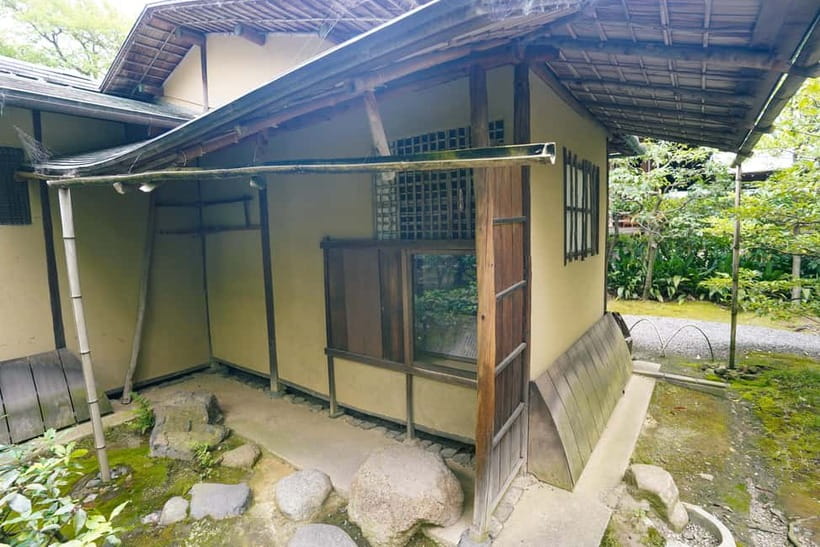
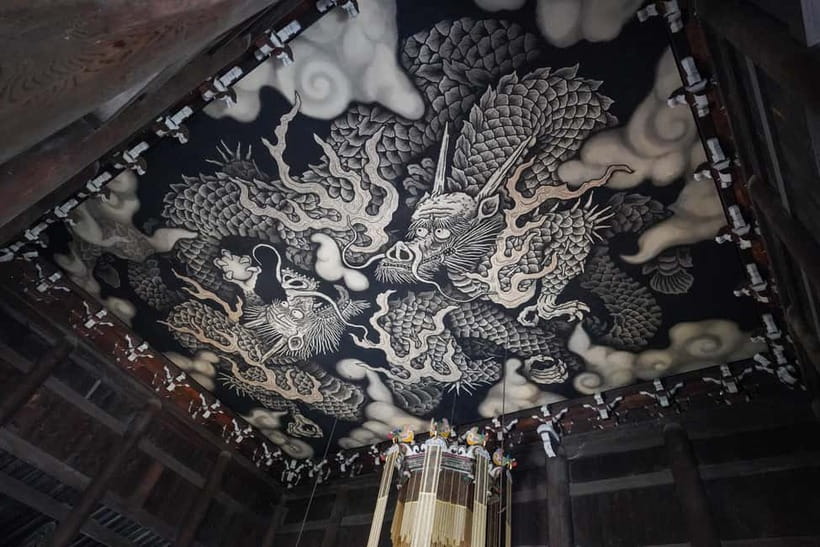
Kenninji Temple receives about 30 minutes. It is presented as Kyoto’s oldest Zen temple, and it gives the guide an important place to explain how Zen thought influenced the tea ceremony.
This stop helps separate the ceremony from the idea of a simple beverage tasting. The tea room values concentration, calm movements, respect, and awareness of small details. Zen practice is part of the background that gave those habits meaning.
You should not expect a long, silent meditation session here. The visit is guided, and the focus is on history, tea culture, and the ideas that you will use later in the tour. The value of the stop depends heavily on the guide’s explanation, so an English-speaking guide who can connect the temple to the tea ceremony is important.
Several people have enjoyed the temple and tea explanations, and Masa has received especially warm comments for sharing useful details and helping participants enjoy temple visits. The experience can also appeal to people collecting temple and shrine stamps, though stamp collecting is not listed as a formal part of the tour.
More Walking Tours in Kyoto:
- Kyoto Tea Ceremony & Kiyomizu-dera Temple Walking Tour
★ 5.0 · 115 reviews - The Way of Tea: Kyoto Crafts, Hidden Temples & Wabi-Sabi Walk
★ 5.0 · 41 reviews - Matcha Grinding Experience and Walking Tour in Uji Kyoto
★ 5.0 · 26 reviews - Kyoto Tea Ceremony & Kiyomizu-dera Temple Walking Tour
★ 4.5 · 4 reviews
Tea bowls, paintings, and the meaning of wabi-sabi
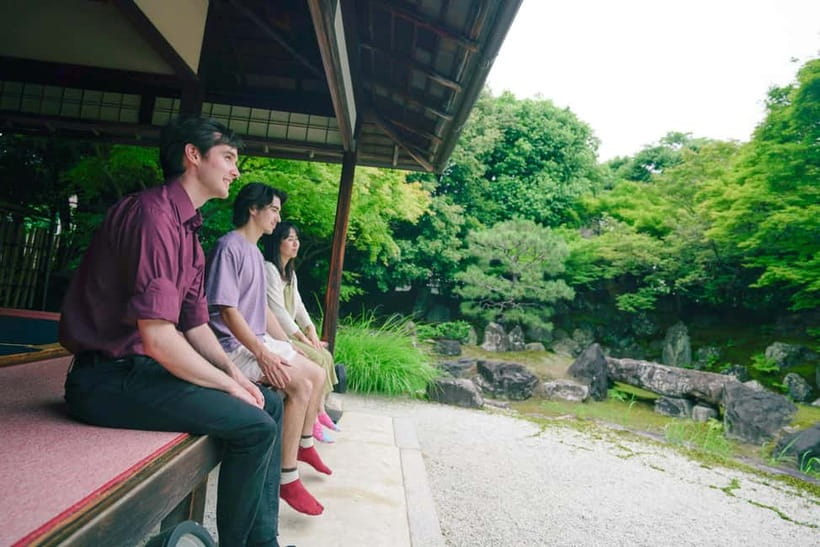
After Kenninji, the walk continues through Higashiyama with several shorter stops. These visits are brief, around 10 minutes each, but they build the visual side of the lesson.
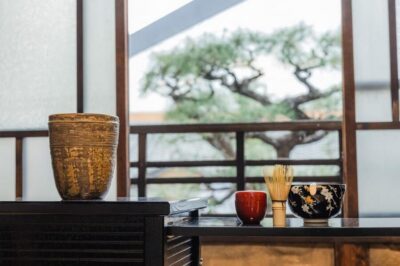
At a traditional pottery shop, you can look at tea bowls associated with wabi-sabi. The point is not to find a shiny luxury object. You are learning to notice shape, texture, imperfection, and the way an object feels in the hand.
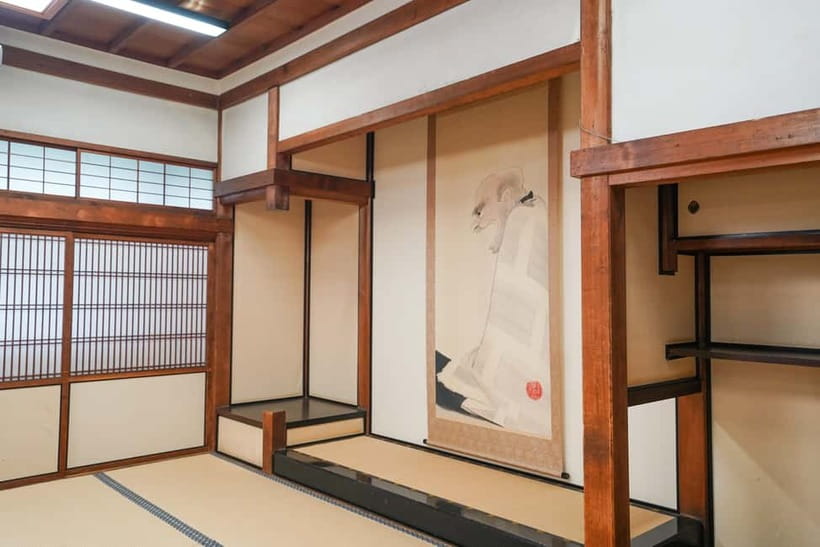
Another stop includes Japanese paintings and a karesansui dry Zen garden. A dry garden uses stones, gravel, and limited plant material rather than water as its main design language. Its quiet, spare appearance fits the tea ceremony’s preference for careful simplicity.
You also have a short shopping opportunity in Higashiyama. Since the schedule allows only about 10 minutes for this portion, treat it as a quick look rather than a dedicated shopping session. The tour’s purpose is cultural explanation, not bargain hunting or a long craft market visit.
These stops are where the tour’s theme becomes most concrete. You hear about wabi-sabi, then see it in a bowl, a painting, a garden, and an old temple setting. That variety makes the concept easier to grasp than a lecture alone.
Entoku-in: a quiet pause before the tea room
Entoku-in receives roughly 30 minutes. The temple offers another calm setting for Japanese art, garden design, and the visual qualities that support tea culture.
The stop also breaks up the walking route. Gion and Higashiyama can become crowded, but the tour’s plan includes quieter temple interiors and gardens where the guide can slow down and explain what you are seeing.
The word quiet should not be taken as a guarantee of solitude. Other people may be at the same sites, and the tour is not designed as a private temple visit. Still, the smaller group and guided format give you a better chance to focus than a fast-moving sightseeing group.
Entoku-in works as a bridge between the historical walk and the final ceremony. You have already seen objects and spaces shaped by simplicity. Now you are ready to pay attention to the ceremony’s movements and utensils.
The 45-minute matcha ceremony
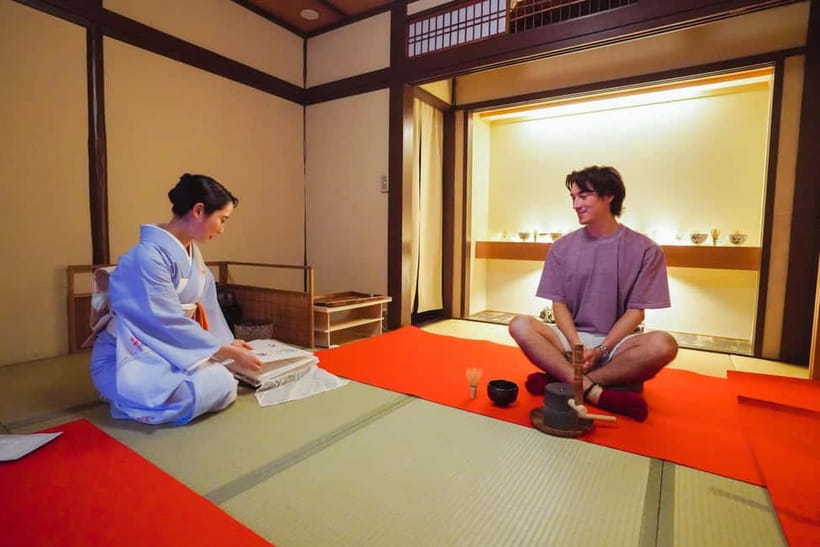
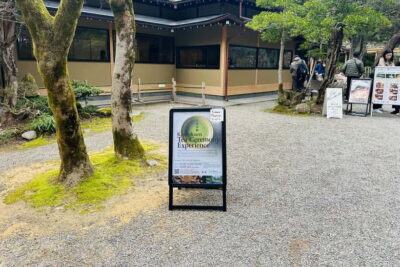
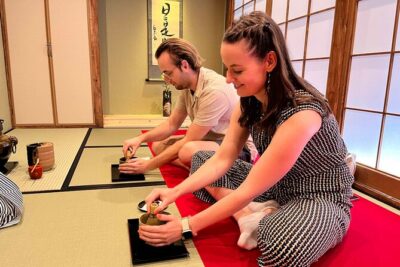
The final tea ceremony lasts about 45 minutes in Higashiyama. This is the part many people are booking the tour to experience, and it should not be treated as an optional extra.
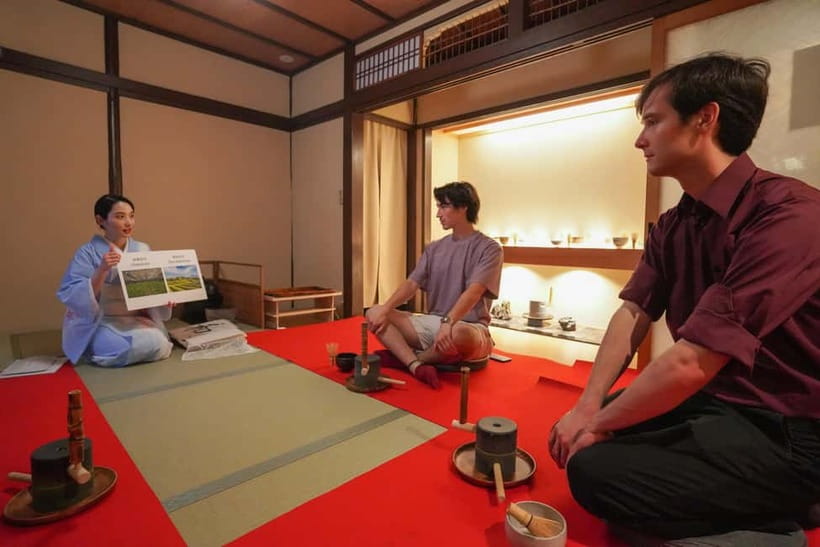
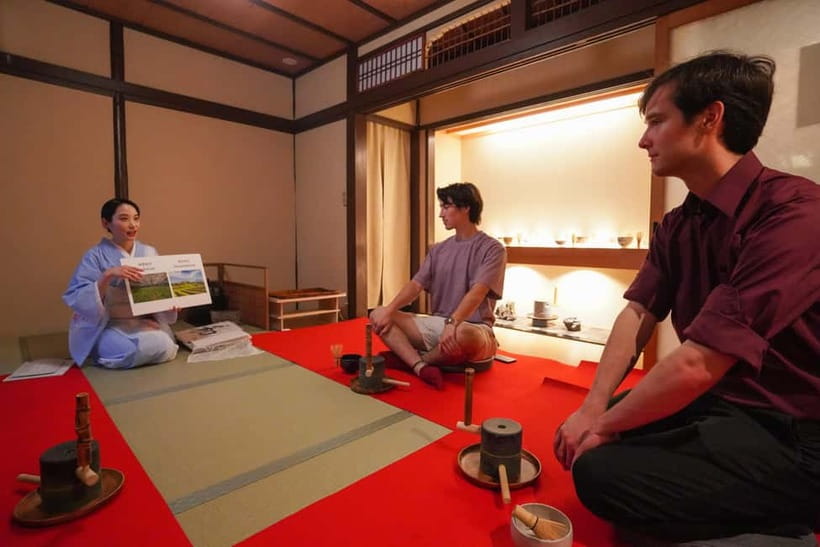
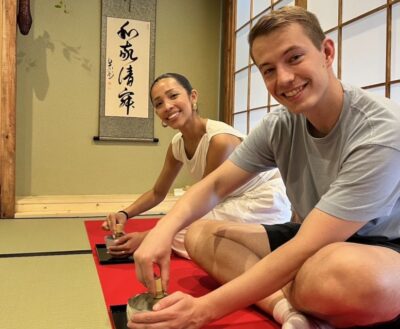
You receive matcha and a small seasonal snack. You also choose a tea bowl according to the season and your taste, a detail that gives you a personal connection to the ceremony. Instead of receiving a cup without context, you have already learned why the bowl matters.
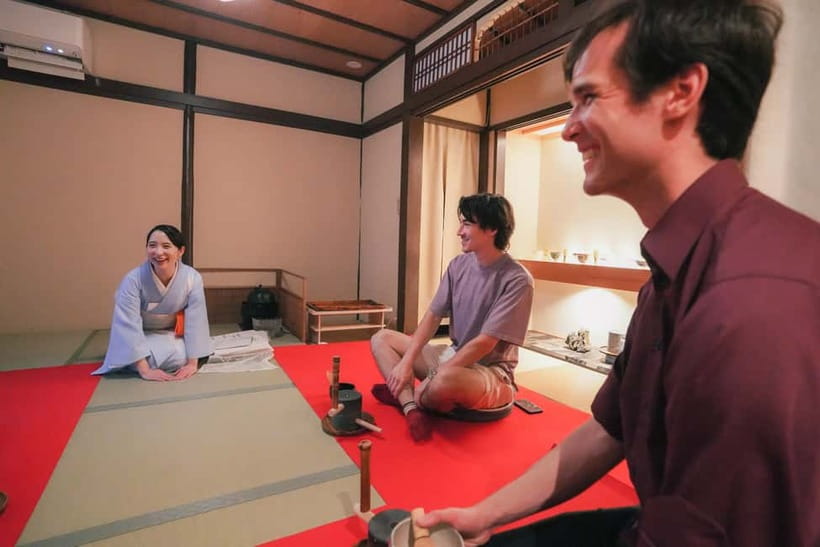
The ceremony is led by a tea master. Expect formal movements and a focus on the way tea is prepared and presented. The guide’s earlier explanations help you understand why the process takes time and why the host pays attention to utensils, season, placement, and manners.
This is not a casual café stop. If you simply want a quick matcha drink, the ceremony may feel slow. If you want to understand the cultural meaning behind the drink, the pace is part of the value.
Children must be at least six years old to take part in the ceremony. Younger children may come on the tour, but one adult must remain outside the facility with them during that part. Families should consider this carefully, since the adult who stays outside will miss the central experience.
What the $92 price includes
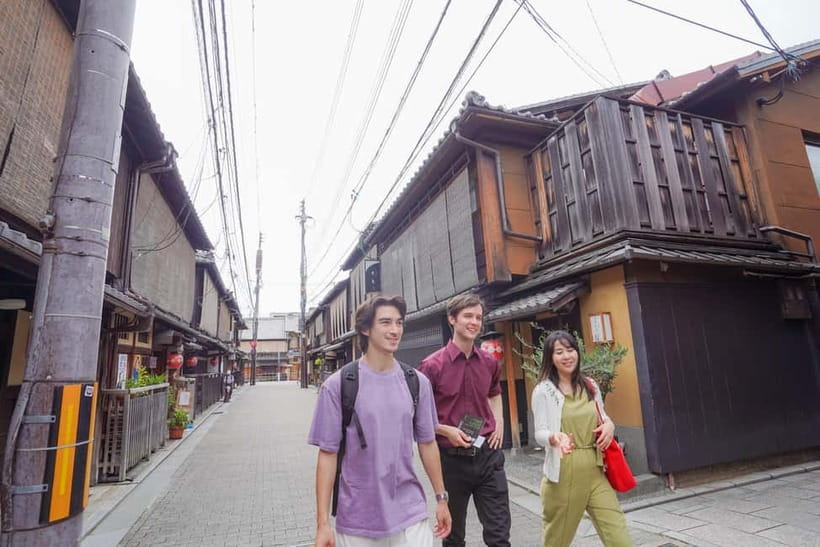
At $92 per person, this is priced above a basic tea tasting but below what you might pay for a private guide and separate temple admissions. The fee includes the tea ceremony, matcha, a small seasonal snack, entrance to two temples, an English-speaking guide, and photos taken during the tour.
The value comes from combining several costs and activities in one half-day outing. You are not only paying for tea. You are also paying for interpretation at temples, access to cultural sites, a small group, and a guide who links the stops into one subject.
The price makes the most sense if you want structure. You could visit Gion, Kenninji, Higashiyama, and a tea shop independently, but you would need to research the connections between them. You might also miss the point of the bowls, garden, and ceremony without someone explaining how they fit together.
The value is weaker if you already know Japanese tea ceremony well or mainly want to shop in Gion. The short shopping stop is secondary, and the walk is built around explanation rather than free time.
Timing, weather, and accessibility
The full experience lasts 210 minutes, or three and a half hours. The route includes several walking sections and historic locations, so allow enough energy for the entire period. You do not need to pay for the guide’s food or drinks.
Kyoto weather can change the comfort of the walk sharply. Summer heat can reach about 40°C, and winter cold can reach approximately -5°C. Carry water in hot weather, dress in layers during colder months, and use sensible shoes.
The route is not suitable for wheelchair users. Some locations are also not accessible by wheelchair or stroller. If you are traveling with a stroller, contact the provider before booking rather than assuming every section can be changed.
The tour may be cancelled for unsafe weather. Free cancellation or rescheduling is available until 24 hours before the starting time. After that point, the strict late-arrival rule becomes especially important, so double-check the start time and meeting instructions before the day of the tour.
Who will get the most from this experience?
I would choose this tour if you want Kyoto’s tea ceremony explained through places, objects, and ideas. It suits first-time visitors who want more than a quick cultural demonstration, as well as repeat visitors who are curious about Zen and Japanese aesthetics.
It is particularly useful for you if:
- You enjoy guided walks and short temple visits.
- You want an English explanation of wabi-sabi.
- You prefer a small group to a large bus tour.
- You are comfortable sitting through a formal 45-minute ceremony.
- You want temple admissions, matcha, a snack, and photos included.
- You can walk through historic areas and manage stairs or uneven access.
I would look elsewhere if you need a wheelchair-friendly route, have very young children who cannot join the ceremony, or want a private experience. I would also avoid booking it close to another fixed appointment. The tour cannot wait for you, and missing the beginning may mean missing the ceremony altogether.
Should you book the Gion tea ceremony walk?
Book it if you want to understand what a tea ceremony represents, not just sample matcha. The strongest feature is the progression from Gion and Kenninji to bowls, gardens, and finally tea. The guide’s explanations, especially when led by someone like Masa, give the experience a clear purpose.
The main risks are practical: verify the start time, prepare for the weather, and accept that this is a walking tour with limited shopping time. At $92, it is a fair choice for a compact cultural lesson with temple admissions and a genuine ceremony included.
FAQ
Where does the tour meet?
Meet in front of the Izumo no Okuni statue, directly outside Exit 5 of Gion-Shijo Station on the Keihan Line. The guide will hold an orange signboard marked Magical Trip Tour.
How long does the experience last?
The tour lasts 210 minutes, or three and a half hours.
What language is the tour conducted in?
The tour has a live English-speaking guide.
How many people can join the group?
The group is limited to seven participants, though other participants may join your departure.
What is included in the tea ceremony?
The tea ceremony includes matcha and a small seasonal snack. You also choose a tea bowl according to the season and your taste.
Are temple entrance fees included?
Yes. Entrance fees for two temples are included.
Can children join the tea ceremony?
Children must be at least six years old to take part in the tea ceremony. Younger children may come on the tour, but one adult must accompany them outside the facility during the ceremony.
Is the tour suitable for wheelchair users or strollers?
The tour is not suitable for wheelchair users, and some locations are not accessible by wheelchair or stroller.
What happens if I arrive late?
The tour starts on time. If you miss the group because you are late, you cannot join the tour, receive a refund, or reschedule for that missed departure.
Just added around Kyoto
- Whisk Your Own Matcha: A Zen Matcha Experience at Temple★ 3.6 · 7 reviews
- Uji Walking Tour – Byodo-in temple and Tea Ceremony from Kyoto★ 3.5 · 3 reviews
- Traditional Tea Ceremony in Kyoto★ 4.5 · 3 reviews
- Kyoto: Authentic Tea Ceremony in a Small Group★ 5.0 · 7 reviews
- Tea ceremony at Kyoto’s Zen Temple Teahouse★ 5.0 · 2 reviews
- Tea Ceremony in 150 Years Old Townhouse with Tables and Chairs★ 5.0 · 22 reviews
- Silent Beauty of Kyoto Zen Walk and Tea Experience★ 5.0 · 2 reviews
- Tea Ceremony Experience in Traditional Kyoto Townhouse★ 5.0 · 19 reviews
Tea Ceremony Experiences, compared.
Tea Ceremony in a Traditional Tea House in Kiyomizu
Read our review →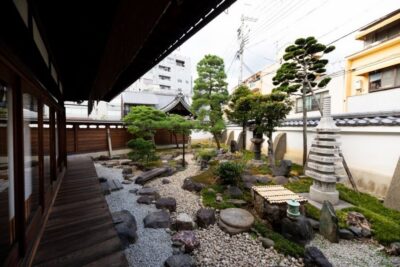
Browse the lists this tour appears in