
Review · HIROSHIMA
Private Tea Ceremony Experience in Hiroshima
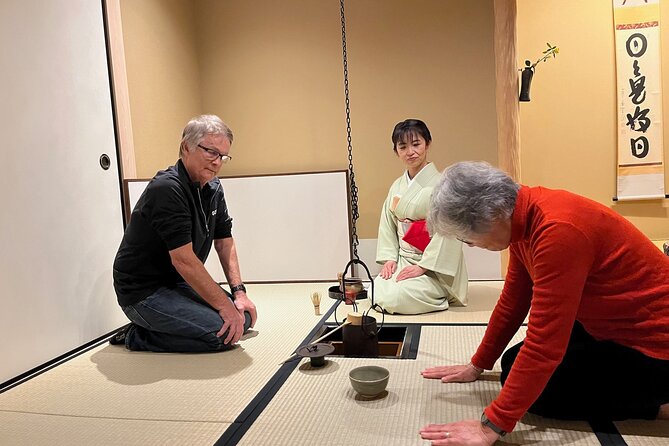
The best part of this Hiroshima experience is that you do more than watch a polished tea demonstration. You sit in a working tea room where local students practice, learn why the ceremony follows such careful steps, and then make your own bowl of matcha under a tea master’s guidance. The host gives more than 1,000 lessons a year, so the teaching is built around clear instruction rather than mystery.
I like the hands-on format, especially the chance to learn how to prepare good matcha at home. I also like the small details: a seasonal Japanese sweet, premium matcha, traditional crafts, flowers, and a calm setting that shows how tea ceremony connects food, art, manners, and attention.
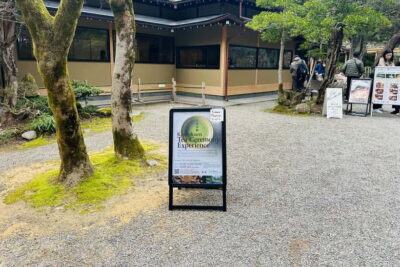
The main drawback is practical rather than cultural. The room is upstairs at 201, 1-chōme-11-12 Minamimachi, and the entrance can be hard to spot from street level. Give yourself extra time to find it, since one early arrival still turned into a late start while searching for the sign.
Key points to know before booking
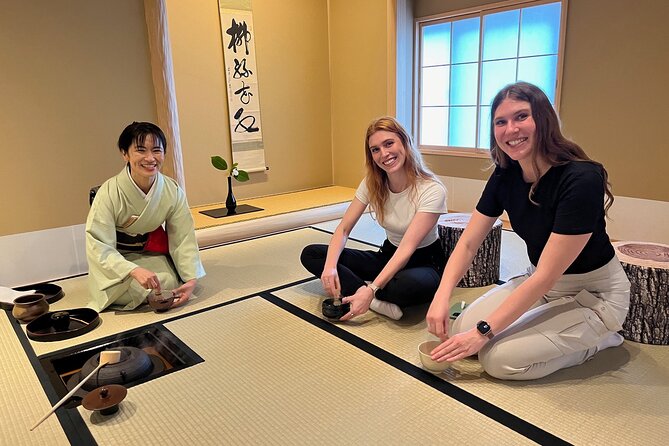
- You make the tea yourself: The session includes a guided lesson in whisking your own bowl of matcha, not just watching someone else prepare it.
- It takes place in an active tea room: Local students use the space for regular practice, giving the setting a working, lived-in feel.
- The 45-minute format is focused: You get an introduction, formal demonstration, sweet, matcha, and hands-on practice without giving up half a day.
- English or Japanese is available: The tea master explains the background and technique in either language, with etiquette guidance available on request.
- The experience is private: Only your group participates, which makes it easier to ask questions and receive help with the whisk.
- Useful souvenirs are available: You can purchase the matcha served at the 2023 G7 Summit and the bamboo whisk used for tea preparation.
Entering a real Hiroshima tea room
This experience begins at 201, 1-chōme-11-12 Minamimachi in Hiroshima’s Minami Ward. The location is near public transportation, but you should not treat that as a guarantee of an effortless arrival. The tea room is on the second floor, and a clear sign at ground level may not be easy to spot.
I would arrive early, then allow a few extra minutes to locate the entrance. This is especially important if you are walking from another nearby stop or arriving with children, luggage, or a group that moves slowly. Once inside, the upstairs setting helps separate the ceremony from the ordinary noise of the street.
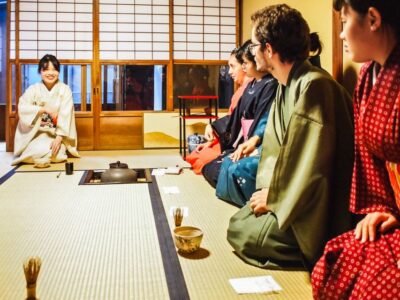
You are not entering a stage set built only for sightseeing. The room is used by local learners who practice tea ceremony, so you get a glimpse of an ongoing Japanese tradition rather than a performance created solely for visitors. That distinction matters. The room has a purpose beyond your 45-minute appointment, and the ceremony fits into a real pattern of study and practice.
The experience ends back at the same meeting point. It does not include a wider tour of Hiroshima, transportation between attractions, or kimono rental, so plan it as a compact cultural stop rather than a full city outing.
More Tea Ceremony Experiences in Japan:
- Kyoto: Tea Ceremony in a Traditional Tea House in Kiyomizu
★ 4.9 · 3,519 reviews - Kyoto: Tea Ceremony Ju-An at Jotokuji Temple
★ 4.9 · 3,207 reviews - Kyoto: 45-Minute Tea Ceremony Lesson Experience
★ 4.3 · 2,378 reviews
A short introduction to chado and Japanese hospitality
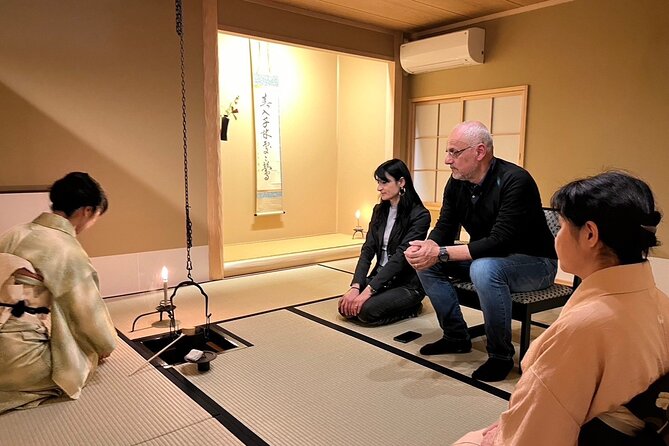
The tea master starts by explaining the background and spirit of chado, the Japanese way of tea. You learn that the ceremony is not simply about drinking powdered green tea. Its meaning also comes through in movement, manners, the arrangement of the room, seasonal flowers, the sweet served with the tea, and the tools used to prepare it.
The explanation is valuable because the formal gestures can seem puzzling if you only watch them. Why does the host handle each item in a particular order? Why is the bowl placed and turned with such care? Why does a small sweet appear before the tea? The opening talk gives you a framework for noticing these details.
You can also ask for etiquette guidance. That is helpful if you have never entered a tea room or are unsure about how to sit, receive the bowl, or handle the sweet. You do not need strong Japanese to follow along. The session is offered in English or Japanese, and the teaching is designed to make people comfortable with minimal Japanese.
I appreciate that the emphasis is not on making you memorize a long list of rules. The ceremony has formal customs, but the goal here is to help you understand them and take part with care. That makes the experience a good fit for first-time visitors who want context without a lecture that takes up the whole session.
Watching the formal tea service
After the introduction, you take the role of guest and watch a formal demonstration. The tea master prepares premium matcha and serves it with a traditional Japanese sweet. This is the quietest portion of the session, so resist the urge to rush toward the hands-on part.
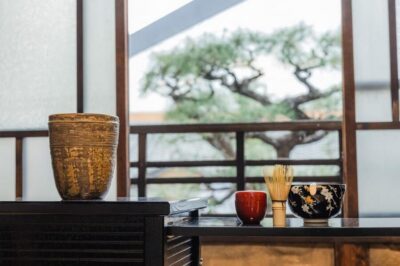
The demonstration lets you see the sequence before you try it yourself. Pay attention to the pace, the handling of the utensils, and the way the tea is presented. The tea room’s appeal lies in small actions. A bamboo whisk, a tea bowl, a scoop of matcha, and a sweet may sound simple, but the ceremony gives each object a place and purpose.
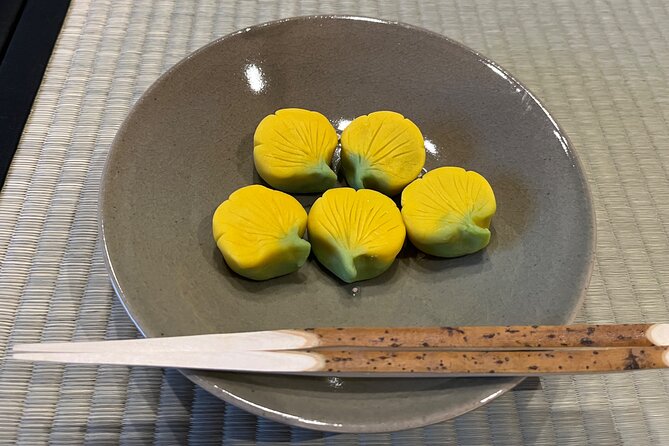
The seasonal sweet is more than a snack. In Japanese tea culture, food helps balance the bitter edge of matcha. It also reflects the season and adds another layer of visual care to the service. The exact sweet may vary, but you should expect a Japanese traditional confection alongside the tea.
The demonstration may be the most formal moment, and some people will find it meditative. Others may prefer the active portion that follows. Either response is fair. The private format helps because you can ask questions rather than simply sitting through a fixed show.
Whisking your own bowl of matcha
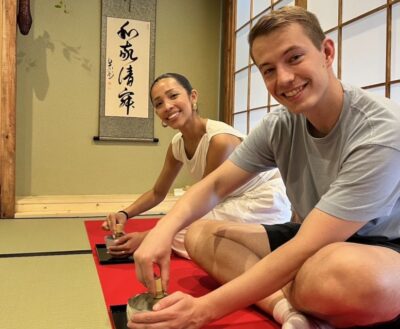
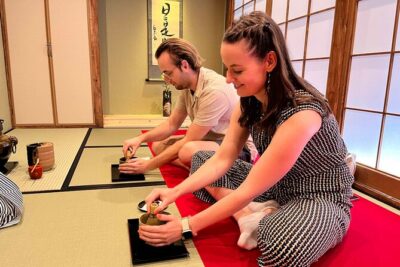
The central feature is your chance to prepare tea yourself. Once you have seen the master’s technique, you receive instruction on how to make your own bowl of matcha. The tea master guides your movements and explains practical tips for producing a pleasant drink.
This is where the experience earns its price for many people. You are not just collecting a photo or watching an elegant ritual. You learn a skill that you can repeat at home, provided you later have matcha, hot water, a bowl, and a bamboo whisk. The lesson turns a formal tradition into something you can carry into daily life.
Do not expect your first bowl to look exactly like the tea master’s. The point is to understand the basic method and feel how the whisk works. The guidance is especially useful because matcha preparation can look easy until you try to create a smooth, well-mixed drink yourself.
The private setting should help here. Only your group takes part, so the tea master can correct your technique and answer questions without a large class waiting behind you. If you are shy about trying something unfamiliar, this is less exposed than a busy group demonstration.
The activity also works well for different ages, though the formal sitting and careful movements may require patience. If you want an energetic attraction, this is not it. If you enjoy learning through touch, taste, and close instruction, the hands-on portion gives the short visit real substance.
More Private Experiences in Japan:
- Private Tea Ceremony and Sake Tasting in Kyoto Samurai House
★ 5.0 · 163 reviews - Tea Ceremony Experience in a Private Tea Room in Shibuya
★ 4.9 · 125 reviews - Private Kyoto Sushi Cooking Class & Tea Ceremony with Emika
★ 5.0 · 66 reviews - Kyoto: Private Tea Ceremony with a Garden View
★ 4.9 · 61 reviews
Why the tea room setting matters
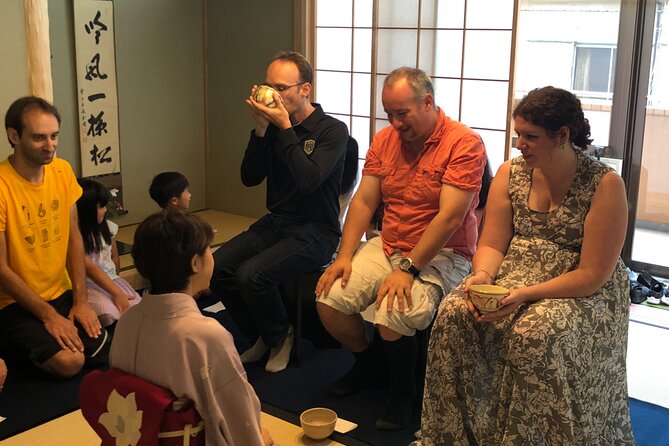
Tea ceremony can be presented as a decorative snapshot of Japan, but this session offers more useful context. The room is a place where local students practice daily, and that tells you something about the tradition’s continuing role. You are seeing a craft that depends on repetition, not a set of gestures performed once for an audience.
The tea master teaches more than 1,000 lessons a year to local learners. That experience should matter to you because clear teaching is essential in a ceremony where unfamiliar details can otherwise seem opaque. You can ask about the history, the background, or the practical side of making matcha, rather than guessing what each movement means.
The room’s seasonal elements also deserve attention. Flowers, sweets, utensils, and other objects are chosen with care, and the ceremony encourages you to notice how they work together. You do not need prior knowledge of Japanese art to appreciate this. The teacher gives you enough explanation to see the connection between the tea and its setting.
This is also a quiet way to experience Japanese hospitality. The focus is not on speed or spectacle. It is on preparing something carefully for another person, receiving it properly, and giving your attention to the moment. That may sound lofty, but the practical result is simple: you slow down and notice more.
The price and what you receive for $71.54
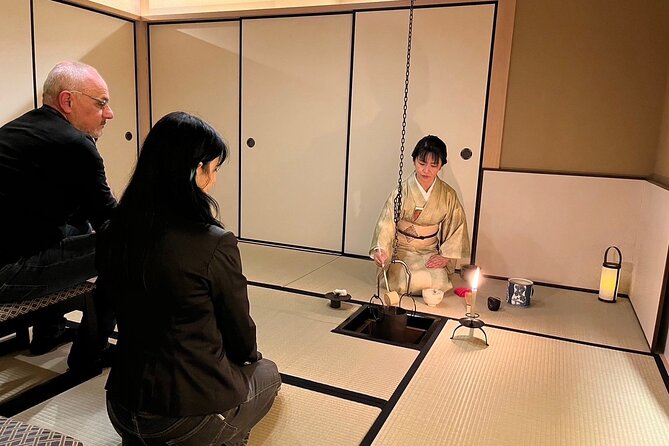
At about $71.54 per person, this is not the cheapest 45-minute activity in Hiroshima. You should judge the cost against what is included and what kind of cultural visit you want.
Your fee covers a bowl of matcha, a traditional Japanese sweet, the formal demonstration, instruction in preparing your own tea, and guidance from a licensed or certified guide. You also get a private session rather than joining an anonymous crowd. For someone who wants only to taste matcha, the price may feel high. For someone who wants instruction and cultural context, the value is stronger.
The private arrangement is the key point. A larger demonstration could offer a lower price per person, but it would likely give you less time to ask questions or practice. Here, the tea master can watch your technique and explain what you are doing as you prepare your bowl.
Group discounts may be available, and the final cost can vary by booking platform and booking method. Check the price shown at the time you reserve. The experience is commonly booked well in advance, with an average lead time of about 52 days, so I would not assume you can always find a convenient last-minute place.
You can also buy the tea used at the 2023 G7 Summit and a bamboo whisk on site. These purchases are optional, not part of the stated price, but they give the lesson a practical afterlife. If you enjoy the tea and want to repeat the method at home, the whisk is a more useful souvenir than another generic trinket.
Language, comfort, and group size
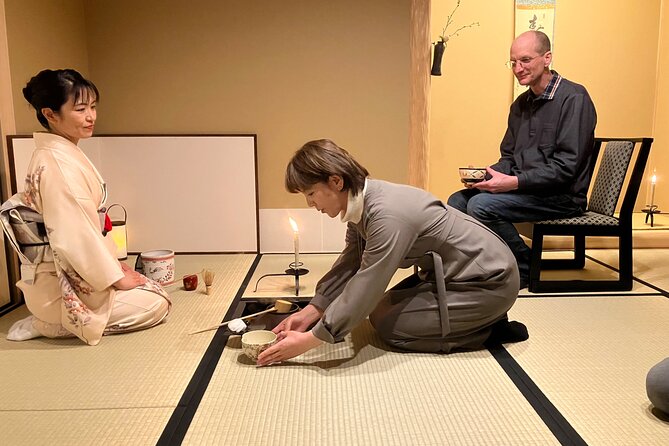
The session is conducted in English or Japanese. That makes it accessible to people who know little Japanese, and the calm pace of the activity should help you follow the demonstration even if you need an occasional explanation repeated.
Etiquette can be explained if you request it. I recommend doing so if you are curious about the customs rather than trying to copy every motion in silence. Asking questions is part of getting value from a private class.
Only your group participates. This is useful for couples, families, and small groups of friends who want to learn together. It also gives you a little more control over the tone of the visit. A group that wants a quiet lesson can keep it quiet, while a curious group can ask more questions.
Dietary restrictions such as vegetarian and vegan needs can be accommodated. You must provide those requirements when booking, not simply mention them after the sweet is served. The experience includes a traditional sweet, so advance notice is the sensible way to avoid confusion.
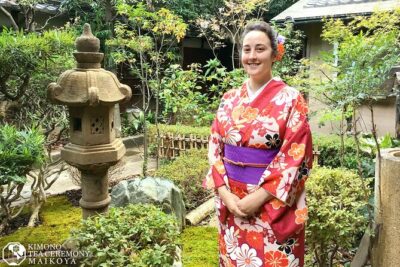
Kimono is not included. You should arrive in ordinary clothing suitable for sitting and participating, since this is a tea lesson rather than a dress-up package. If wearing traditional clothing is your main goal, you would need a different experience.
Who will enjoy this 45-minute experience
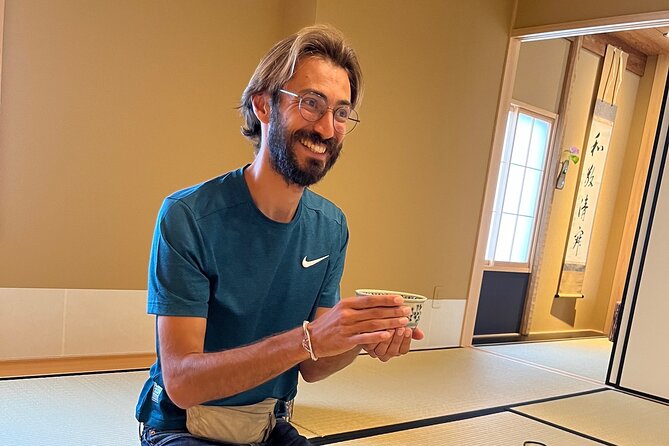
I would recommend this tea ceremony to you if you want a focused cultural activity between visits to Hiroshima’s larger sights. It suits first-time visitors because the teacher explains both the background and the basic etiquette. You do not need to arrive with knowledge of chado.
It is also a good choice if you prefer participation to passive sightseeing. The chance to whisk your own tea gives the experience a clear purpose, and you leave with a technique you can try again at home.
Couples and small private groups should appreciate the setting. Families may enjoy the hands-on element, though younger children need to be comfortable with a quiet room and careful handling of tea tools. Anyone fascinated by Japanese crafts, food presentation, mindfulness, or traditional manners will find plenty to notice.
I would be less likely to recommend it if you want a long ceremony, a kimono photo session, or a broad tour of Hiroshima. At roughly 45 minutes, the activity is compact. Its strength is focus, not variety.
Timing, cancellation, and arrival advice
The experience lasts about 45 minutes, so you can fit it into a busy Hiroshima day. Still, do not schedule it so tightly that a delayed train or a wrong turn leaves you rushing into the tea room. The upstairs entrance is the one detail most likely to cause trouble.
Confirmation is sent within 48 hours of booking, subject to availability. You can cancel for a full refund up to 24 hours before the start time. Changes or cancellations made inside that 24-hour window are not accepted for a refund, and the cut-off uses Hiroshima local time.
The activity is available with a mobile ticket. Keep the meeting address handy, and allow enough time to check the building at street level before heading upstairs.
Should you book this Hiroshima tea ceremony?
Book it if you want a genuine, small-scale lesson rather than a quick tea tasting. The combination of a working tea room, a certified teacher, seasonal sweet, formal demonstration, and hands-on matcha preparation gives you more than a ceremonial photo opportunity.
Think twice if you are mainly looking for kimono, a long cultural tour, or a low-cost drink. Those are not included. Also plan carefully for the upstairs meeting point and the possibility that the price may change by booking method.
For most people with an interest in Japanese traditions, I think the private format and the chance to make your own bowl justify the cost. Arrive early, mention any dietary needs when booking, ask for etiquette help, and treat the 45 minutes as a lesson in attention rather than a box to tick.
FAQ
Where does the private tea ceremony take place?
It takes place at 201, 1-chōme-11-12 Minamimachi, Minami Ward, Hiroshima, 734-0007, Japan. The tea room is on the second floor, and the activity ends back at the meeting point.
How long does the experience last?
The experience lasts approximately 45 minutes.
Is the activity private?
Yes. Only your group participates in the activity.
Is the tea ceremony available in English?
Yes. The experience is conducted in English or Japanese.
What is included?
The experience includes a bowl of matcha, a traditional Japanese sweet, instruction in making your own bowl of tea, and a licensed or certified guide.
Is wearing a kimono included?
No. Kimono wear is not included.
Can dietary restrictions be accommodated?
Yes. Vegetarian and vegan dietary requirements can be accommodated if you indicate them when booking.
Just added around Japan
- Yokohama : Tea Ceremony with Sweets and Souvenir★ 5.0 · 5 reviews
- Whisk Your Own Matcha: A Zen Matcha Experience at Temple★ 3.6 · 7 reviews
- Walking Tour: Yanaka,Nezu& Sendagi: Tea Ceremony & Old Tokyo★ 5.0 · 3 reviews
- Visit local home for music and tea ceremony near Disney★ 4.9 · 13 reviews
- Trip to Kamakura & Enoshima: Shrines, Seaside, Temples &Tea★ 5.0 · 11 reviews
- Yokohama: Sushi & Gyoza Cooking with Matcha & GreenTea Experience★ 5.0 · 3 reviews
- Kyoto tea town for matcha lovers★ 5.0 · 16 reviews
- Uji: Private immersion into Kyoto’s tea and reglious culture★ 5.0 · 17 reviews
Tea Ceremony Experiences, compared.
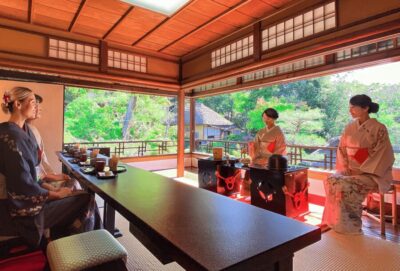
Tea Ceremony in a Traditional Tea House in Kiyomizu
Read our review →
Browse the lists this tour appears in